

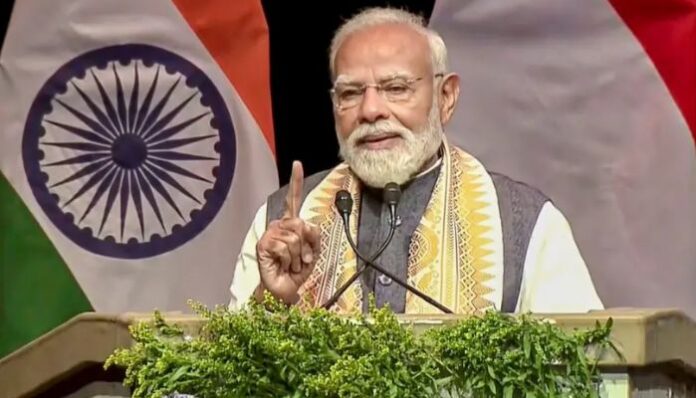
Prime Minister Narendra Modi on Saturday, 16th May, issued one of his strongest warnings yet about the global economic situation, saying the world is moving through a “decade of disasters” and that years of progress in reducing poverty could be wiped out if current global crises continue.
"A decade of crisis for the world…Majority of the population would face poverty if these are not resolved" – PM Modi on energy crisis in his address to the Indian Diaspora in the Netherlands – listen in pic.twitter.com/LZpP2VGG8S
— ET NOW (@ETNOWlive) May 16, 2026
Speaking to members of the Indian community in The Hague during the second leg of his five-nation Europe tour, PM Modi pointed to multiple international crises, including wars and the ongoing energy emergency, as serious threats to the global economy.
“The world is dealing with new challenges,” Modi said during the event. Referring to recent global developments, he added, “First came the corona pandemic; then wars began to break out, and now there is an energy crisis. This decade is turning into a decade of disasters for the world.”
Netherlands: PM Modi says this is a decade of crisis, expressing concern over energy crisis. Warns that gains of last few decades can be wiped off if the situation doesnt improves. pic.twitter.com/eTLfFG3Ahp
— Sidhant Sibal (@sidhant) May 16, 2026
He also warned that if the current situation is not controlled quickly, “achievements of the past many decades would be washed away, and a huge section of the world’s population would be pushed back into poverty.”
PM Modi calls for austerity measures
PM Modi’s remarks came at a time when concerns over rising fuel prices, inflation and energy shortages are growing in several countries, including India.
Just days before beginning his European visit, PM Modi had appealed to Indians to voluntarily adopt austerity measures to help reduce pressure on the economy and conserve resources. Speaking in Hyderabad earlier this week, he urged people to work from home wherever possible, reduce unnecessary foreign travel and limit gold purchases.
He described saving fuel and foreign exchange as an act of “patriotism” and encouraged people to use public transport, carpool and reduce excessive fertiliser usage.
Recalling the Covid period, PM Modi said people had already adapted to remote work during the pandemic, and such habits could again help manage economic pressure in difficult times.
“We must make efforts to use only as much as is needed to save foreign currency and reduce the adverse effects of war crises,” he said.
Fuel prices rise after four years
The Prime Minister’s warning also comes amid rising fuel costs in India. On Friday, 15th May, state-run oil companies Indian Oil Corporation, Bharat Petroleum, and Hindustan Petroleum increased petrol and diesel prices by ₹3 per litre, after nearly four years without a major hike.
In Delhi, petrol prices rose to ₹97.77 per litre, while diesel reached ₹90.67 per litre. Prices are even higher in some states due to local taxes.
Industry experts warned that the fuel hike could increase transportation costs and eventually affect food prices, household expenses and manufacturing costs over the coming months.
The ruling Bharatiya Janata Party (BJP) defended the decision, saying India had protected consumers from the full impact of the global oil crisis for more than two months.
According to government leaders, public-sector oil companies absorbed a large share of the rise in crude oil prices for about 76 days after tensions escalated in West Asia.
Opposition parties, however, criticised the timing of PM Modi’s austerity appeal and the fuel price increase. Several opposition leaders claimed fuel prices were deliberately kept unchanged during important state election campaigns despite lower global crude prices earlier.
Global energy crisis deepens
The current energy crisis has affected countries across Asia. The Philippines recently declared a national energy emergency, while authorities in South Korea advised citizens to reduce electricity use by taking shorter showers and charging phones during daytime hours. Japan has also released emergency oil reserves to manage supply shortages.
The crisis intensified after Iran closed the Strait of Hormuz, a crucial route through which nearly 20% of the world’s oil supply passes.
India is especially vulnerable because it imports nearly 90% of its crude oil requirements, with almost half of those supplies usually passing through the Strait of Hormuz.
