

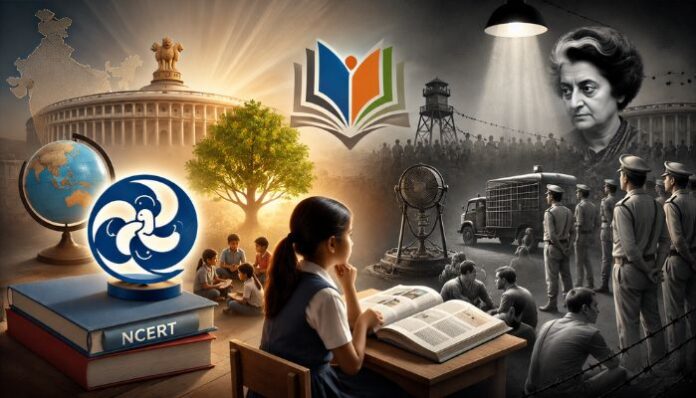
For the first time, the National Council of Educational Research and Training (NCERT) has included the 1975-77 National Emergency in the Class 9 Social Science syllabus. The topic appears in Chapter 6 of the newly released textbook, Understanding Society: India and Beyond (Grade 9, Part 1). The move is part of the changes being made under the National Education Policy (NEP) 2020 and marks a major change in the way modern Indian political history is taught in schools.
Students to learn about the Emergency at an earlier stage
Earlier, students mainly studied the Emergency in detail only in Class 12 Political Science. That chapter focused on its political, constitutional and democratic impact. With the latest curriculum revision, students will now be introduced to this important period much earlier, helping them understand India’s democracy and Constitution from the secondary school level itself.
Part of a wider curriculum overhaul
The addition is one of several changes introduced by NCERT while revising school textbooks in line with NEP 2020. The new policy aims to make learning more multidisciplinary, skill-based and connected to India’s history and constitutional values. The revised Social Science textbook also places greater focus on civic awareness, democratic institutions and a better understanding of how India’s democracy has developed over the years.
Update comes 51 years after the Emergency
The curriculum change is also significant because 2026 marks 51 years since the National Emergency was declared on 25th June, 1975. The Emergency remained in force until March 1977 and is considered one of the most important periods in independent India’s political history.
During this time, several civil liberties were suspended, the press faced censorship and elections were postponed. These developments had a lasting impact on India’s democratic system and continue to be discussed in political and constitutional debates.
Helping students understand democratic values
By moving the topic to Class 9, NCERT aims to give students an earlier understanding of this important chapter in India’s history. The inclusion is expected to strengthen their knowledge of constitutional principles, democratic values and the functioning of public institutions, while encouraging a deeper understanding of the country’s political journey from a younger age.
