

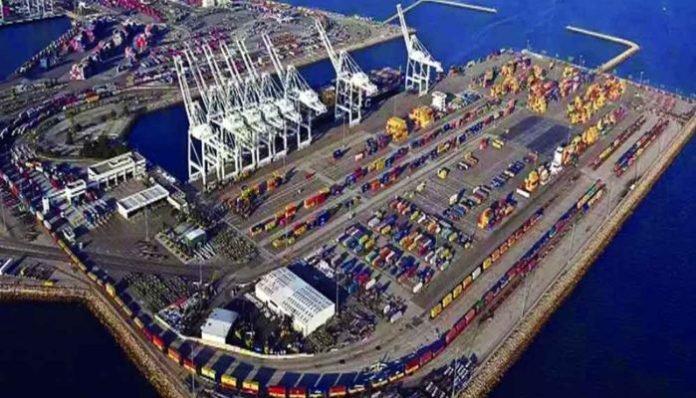
India has successfully obtained an extension of the United States’ sanctions waiver for its operations at Iran’s Chabahar Port, government sources confirmed this week. This move is a big relief for India’s connectivity and trade plans in the region.
According to a report by CNN-News18, the waiver now lets India continue to run the Shahid Beheshti Terminal through the state-run company, India Ports Global Limited (IPGL), at least until early next year. This allows India to keep operating one of its most important regional projects without running into trouble from American sanctions.
The extension provides major relief for New Delhi, as this keeps trade and humanitarian operations running through a route bypassing Pakistan and connects India with Afghanistan and Central Asia.
A key project for India’s regional strategy
The Chabahar Port, located in southeastern Iran, is one of the most strategically important maritime projects for India. It is India’s only direct access point to the Arabian Sea through Iran, bypassing Pakistan. The project aims to provide a shorter and more reliable trade route to Afghanistan and Central Asia, especially countries like Uzbekistan and Kazakhstan.
India signed a 10-year agreement in 2024 that allows it to operate the Shahid Beheshti Terminal at Chabahar, which means IPGL is in charge of everything from port operations to building up more infrastructure and pushing the usage of new trade routes.
The port also forms a part of the larger International North-South Transport Corridor, a far-reaching network connecting by road, rail, and sea India, Iran, Russia, and Central Asia. The project would reduce costs and time for cargo shipments and open up new avenues of trade with Uzbekistan and Kazakhstan.
The US sanctions issue
The US has imposed strict sanctions on Iran, mostly targeting energy, banking, and infrastructure sectors. These penalties make it very risky, and sometimes impossible, for most countries to do business in Iran. The earlier strategy, especially under former President Donald Trump, was to punish anyone getting involved with key Iranian projects, warning that companies or nations could face sanctions themselves.
On 16th September, the US Department of State reiterated that revoking sanctions waivers was part of this policy, warning that “those who continue operating at Chabahar or engage in related activities would risk exposure to sanctions.” The waiver had been set to expire on Tuesday, 28th October, after an earlier extension deadline of 29th September.
However, the Chabahar Port project has often been treated as an exception. Since 2018, the US has issued repeated waivers for this port, recognizing its role in sending humanitarian aid to Afghanistan and keeping critical trade links open. The port has become even more significant since the Taliban takeover of Afghanistan, allowing India to deliver wheat, medicine, and other supplies directly without needing cooperation from Islamabad.
A diplomatic win for India
This latest sanctions waiver means India can keep working on Chabahar Port and won’t have to halt shipments, stalls, or expansion projects. India has used the port for major humanitarian shipments, and it’s a strategic alternative route for landlocked countries in the region. The waiver also shows how important Chabahar has become not just for India, but for global trade and international politics.
Importantly, this project also fits into India’s broader regional goals. China has invested heavily in Gwadar Port in Pakistan, not far from Chabahar, as part of its Belt and Road Initiative. By making sure Chabahar stays operational and growing, India is effectively providing an answer to China’s investments and keeping a foothold in a crucial part of the region’s supply chains.
Chabahar is much more than just a port; it’s at the heart of India’s regional plans for better connectivity. The port links up to a wider web of Iranian highways and railroads that stretch all the way to Afghanistan’s Zaranj and onwards to major cities in Central Asia. This infrastructure gives Indian goods and supplies a new, much quicker path into these markets. For Afghanistan, the port offers a lifeline that doesn’t rely on Pakistani ports like Karachi or Gwadar, giving the country more independence and flexibility.
Beyond helping Afghanistan, Chabahar’s integration with the INSTC will soon let cargo move all the way from Mumbai to Russian ports on the Caspian Sea, and into Europe, much more efficiently than current routes passing through the Suez Canal. The result is faster trade, lower shipping costs, and greater options for all countries involved.
