

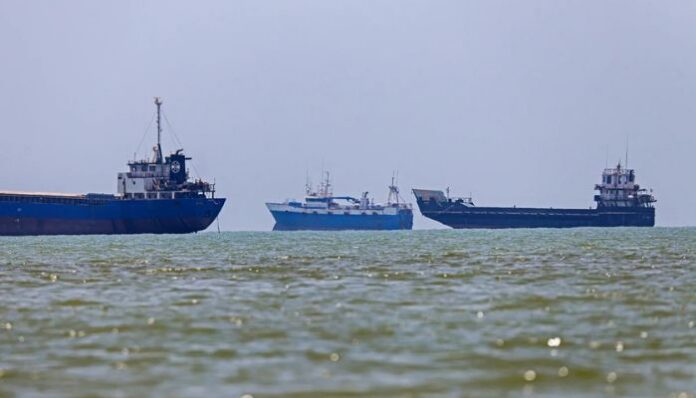
The war between the US and Iran has escalated further, with both countries claiming fresh military strikes against each other. The US said on Tuesday, 8th September, that it had destroyed five Iranian crude oil tankers after attempts by Iran’s Revolutionary Guard to attack a US Navy warship. Iran, meanwhile, claimed it attacked 8 US vessels and 2 oil tankers in the Gulf and captured a US unmanned submarine near the Strait of Hormuz on Wednesday, 9th September.
BREAKING:
— Visegrád 24 (@visegrad24) September 8, 2026
The Islamic regime in Iran has launched a massive missile attack targeting U.S. and allied military facilities in Jordan
Social media footage shows dozens of Patriot interceptors launched near the military facilities. pic.twitter.com/UlbzxS8hcJ
The US Central Command (CENTCOM) said an American warship had successfully avoided two ballistic missile attacks launched by Iran over the past two days. The warship continued to patrol regional waters and no American personnel were injured, according to CENTCOM.
CENTCOM forces destroyed five Iranian crude oil carriers, Sept. 8, after the Islamic Revolutionary Guard Corps (IRGC) targeted a U.S. Navy warship with ballistic missiles twice over the past two days. The U.S. warship successfully evaded the attempted Iranian attacks and… pic.twitter.com/Gi8a2tloN1
— U.S. Central Command (@CENTCOM) September 8, 2026
US strikes five Iranian oil tankers
CENTCOM said US forces destroyed four Iranian crude oil tankers, M/T Kaviz, M/T Charminar, M/T Horizon 1 and M/T Riesco, in the Gulf of Oman. Another tanker, M/T Derya, was reportedly struck near Iran’s Kharg Island.
The US military said the crews were given time to leave the vessels before they were attacked. “American forces directed the crews to abandon ship before the vessels were struck and rendered inoperable,” CENTCOM said.
Washington has accused Iran of using the tankers as part of a “multibillion-dollar shadow network” that generates money for the Islamic Revolutionary Guard Corps (IRGC) and its regional allies.
US Secretary of State Marco Rubio also warned Iran that further attacks on American naval vessels would lead to more strikes on Iranian tankers. “Iran continues to try to hit US naval ships. And for every time they do that or try to do that, they’re going to lose tankers. And I think you’ll see that again today,” Rubio said.
Iran claims capture of US unmanned submarine
In another major development, Iran’s Revolutionary Guard Navy claimed it had captured one of the US military’s “most modern, smart” unmanned underwater vehicles near the entrance of the Strait of Hormuz.
According to Sepah News, the IRGC’s official news outlet, the vehicle was identified as a Dive-LD and was seized during what Iran described as a complex intelligence operation. The IRGC said the submarine uses advanced underwater technology and released a video that it said showed the captured vehicle.
Iran also claimed that its air defence systems had shot down an MQ-9 Reaper drone over the Strait of Hormuz.
Iran attacks US base in Jordan, warns tankers
Iran’s Revolutionary Guards also claimed to have carried out a “punitive operation” against the US air base at Al-Azraq in Jordan. Iran said the attack damaged maintenance facilities, deployment areas and shelters for fighter aircraft. Jordan’s military said it intercepted 18 Iranian missiles launched towards the country.
Iran’s IRGC Navy also warned crews of oil tankers near ports in Kuwait and Bahrain to leave their vessels, saying they could be targeted in response to US strikes. Tehran accused Kuwait and Bahrain of allowing US forces to operate from their territory.
US expands pressure on Iran
The US has also increased economic pressure on Tehran. The US Treasury Department added 27 Iranian airlines to its Specially Designated Nationals List, targeting what it described as Iran’s remaining airlines.
The department said “Iran’s commercial airlines have long supported the Iranian regime’s destabilising activities”, alleging that the IRGC uses apparently private airlines to transport weapons and personnel.
Iranian President Masoud Pezeshkian, meanwhile, said Tehran would continue resisting what he called aggression. “The Islamic Republic of Iran has always been opposed to war and considered the preservation of the people’s interests and ensuring the (West Asia) region’s security to lie in refraining from warmongering,” he said.
جمهوری اسلامی ایران همواره با جنگ مخالف بوده و حفظ منافع مردم و امنیت منطقه را در پرهیز از آتش افروزی دانسته است. اما چنانکه تا امروز در برابر تجاوز، دلیرانه به دفاع برخاسته است این مقاومت را تا پشیمانی کامل متجاوزان با قوت ادامه خواهد داد و پاسدار حقوق ملت بزرگ ایران خواهد بود.
— Masoud Pezeshkian (@drpezeshkian) September 8, 2026
He added, “However, just as it has courageously risen to defend against aggression up to this day, Iran will continue this resistance with strength until the aggressors are brought to complete regret.”
The latest escalation comes months after Israel and the US launched joint attacks on Iran on 28th February, followed by Iranian missile and drone strikes on Israel and US assets in the region. An 18th June memorandum of understanding had raised hopes of negotiations to end the conflict, but the talks have remained uncertain amid the renewed military escalation. The Strait of Hormuz remains a major flashpoint because of its importance to global oil and gas shipments.
