

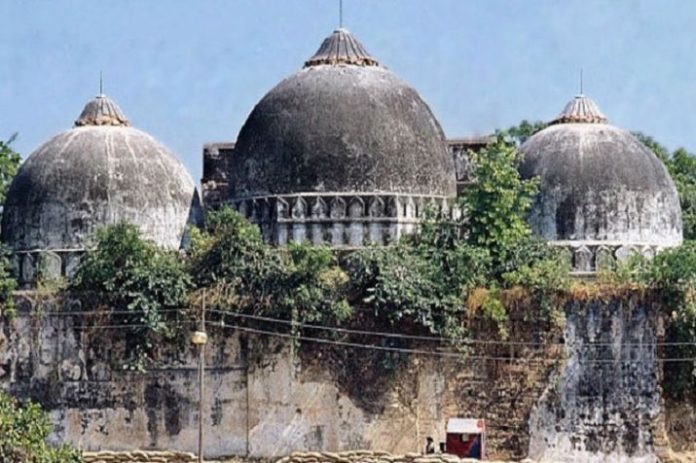
The Supreme Court has formed a Constitution Bench to hear the Ayodhya case comprising of Justice S A Bobde, Justice N V Ramana, Justice U U Lalit and Justice Chandrachud, headed by CJI Ranjan Gogoi. The five-judge bench will commence the hearing of the case from January 10.
Five-judge bench led by Chief Justice of India Ranjan Gogoi will hear the Ayodhya case. Other four judges are Justice SA Bobde, Justice NV Ramana, Justice UU Lalit and Justice DY Chandrachud. https://t.co/MeIQq64EpJ
— ANI (@ANI) January 8, 2019
On October 29, 2018, the Supreme Court had passed an order fixing Jan 4, 2019, as the next date of hearing in the Ayodhya case. On January 4, a bench of CJI Ranjan Gogoi and Justice S K Kaul had said that an appropriate bench will pass further orders on the hearing of the case on Jan 10.
The newly constituted Constitution Bench will hear the appeals on the 2010 judgement of the Allahabad High Court which had held that Lord Ram was born in the disputed premises.
Last year on September 27, the court had refused to refer the Ayodhya case to a larger bench upholding the verdict in the 1954 Ismail Faruqui case which held that offering namaz at a Mosque was not an integral part of Islam as long as the Masjid did not have any particular significance in Islam.
At that time, the 3-judge bench headed by then CJI Dipak Mishra had ruled that a 3-judge bench is competent enough to hear the Ram Janambhumi case, and a 5-judge constitutional bench is not needed. Today’s order marks a reversal of that ruling by the Supreme Court.


