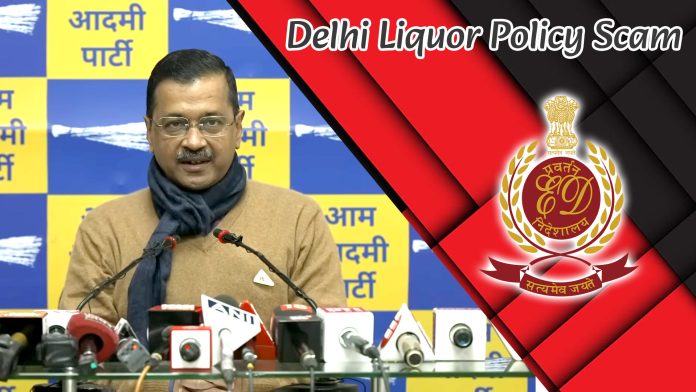
The Directorate of Enforcement (ED) has moved to Delhi’s Rouse Avenue Court and filed a complaint against Chief Minister Arvind Kejriwal for not complying with the summons issued by the agency in the liquor policy money laundering case.
The court heard some submissions on Saturday and put up the matter for the next hearing on February 7, for the remaining submissions and consideration.
Delhi Chief Minister Arvind Kejriwal skipped the Enforcement Directorate’s summons for the fifth time in connection with the money laundering probe related to irregularities in the Delhi excise policy 2021-22 case.
Kejriwal has so far skipped four previous summons issued by the ED on January 18, January 3, November 2, and December 22, calling them “illegal and politically motivated.”
The ED wants to record Kejriwal’s statement in the case on issues like the formulation of policy, meetings held before it was finalized, and allegations of bribery.
After Delhi CM Arvind Kejriwal skipped the Enforcement Directorate’s summons for the fifth time, BJP leader Dilip Ghosh said that he is not going to the probe agency office out of fear.
“ED keeps calling because their job is to investigate. The reason for an investigation can be anything. To get some information. Many people have not gone there even after ten times in West Bengal. And those who went never came out. He is not going there out of fear,” Ghosh said.
Further, reacting to Kejriwal’s claim that the summons is illegal, Ghosh said, “There is a legal process going on in the court. Go to the court.”
In its sixth charge sheet filed in the case on December 2, 2023, naming AAP leader Sanjay Singh and his aide Sarvesh Mishra, the ED has claimed that the AAP used kickbacks worth Rs 45 crore generated via the policy as part of its assembly elections campaign in Goa in 2022.
The excise policy was aimed at revitalizing the city’s flagging liquor business and replacing a sales-volume-based regime with a licence fee for traders. The policy introduced discounts and offers on the purchase of liquor for the first time in Delhi.
Two senior AAP leaders–Manish Sisodia and Sanjay Singh–are already under judicial custody in the case. Sisodia, who was the then Delhi Deputy Chief Minister, was arrested by the CBI on February 26 following several rounds of questioning, and on October 5, the ED arrested Singh, who is a Rajya Sabha member.
(This news report is published from a syndicated feed. Except for the headline, the content has not been written or edited by OpIndia staff)