

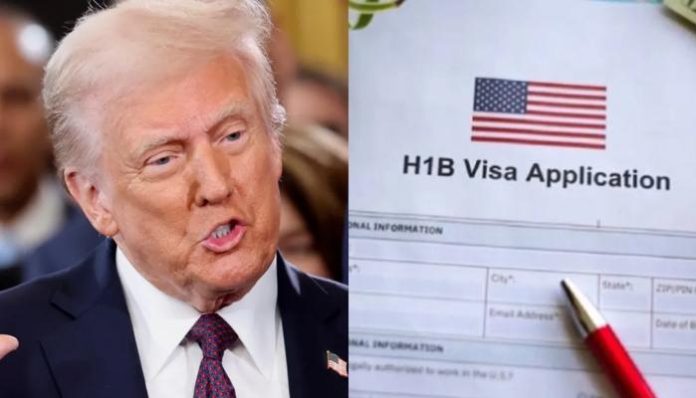
The Trump administration is implementing major reforms to the way H-1B visas are granted. In a filing submitted on July 17 to the Office of Information and Regulatory Affairs, the Department of Homeland Security (DHS) proposed a “weighted selection process” for applicants under the visa cap system.
H-1B visas have consistently sparked political debate, particularly among President Donald Trump and his supporters, who have frequently disagreed with prominent figures such as Tesla CEO Elon Musk over immigration policies.
This visa program plays a vital role for US tech companies, enabling them to recruit highly skilled foreign professionals, many of whom are from India.
Indian nationals continue to be the primary recipients of H-1B visas. In 2022, they were granted 77% of the 320,000 approved visas. This dominance remained in fiscal year 2023, with Indians receiving 72.3% of the 386,000 visas issued.
How was Trump preparing for this?
The properly planned structure and its proposal indicate, Trump and his administration were working on this for a long time. The DHS filing provides few details about the weighted selection process that will follow, which further clarifies that the change could hamper the statutorily capped portion of the programme, currently limited to 85,000 visas per year.
Out of this, 20,000 are reserved for workers having a master’s degree. It is also crucial to note that the US citizenship and Immigration Services (USCIS) will remain the key agency responsible for handling visa applications.
Currently, via a lottery system, the H-1B visas are distributed. This treats all applicants equally regardless of qualification or employer. Large firms like Amazon, Meta, and Microsoft submit high volumes of applicants. These applicants’ results in securing a bigger share of available visas. In the policy, universities and research institutions are not part of the annual cap, which allowed to hire foreign talent year-round.
How could the visa threaten Indians?
Indians have had a longstanding connection with the H-1B visa program, which has played a crucial role in shaping the Indian-American success story in the United States. According to a BBC report, the H-1B visa has been instrumental in making Indian-Americans one of the highest-earning and most highly educated groups, whether immigrant or native, in the country.
US-based scholars Sanjoy Chakravorty, Devesh Kapur, and Nirvikar Singh observed that recent Indian immigrants differ significantly from earlier arrivals. The newer wave includes more speakers of Hindi, Tamil, and Telugu, and has seen a shift in settlement patterns from traditional hubs like New York and Michigan to growing communities in California and New Jersey. This evolution, driven largely by the skilled worker visa program, has effectively redrawn the “map of Indian-Americans.”
Though the H-1B is a temporary work visa, it allows foreign professionals to live and work in the US for up to six years. During this time, many apply for permanent residency through employment-based green card categories, often with employer sponsorship. However, the process is notoriously slow. Currently, over a million Indians, including family members, are stuck in the green card backlog. “Getting a green card means signing up for an endless wait of 20 to 30 years,” says Atal Agarwal, the founder of an Indian firm that uses AI to explore global education and job visa options.
Amid this backdrop, the Trump administration’s abrupt changes to the H-1B visa policy have raised concerns. The revised regulations may pose serious challenges not only to Indian professionals already in the U.S. but also to those planning to move there under the H-1B program.


