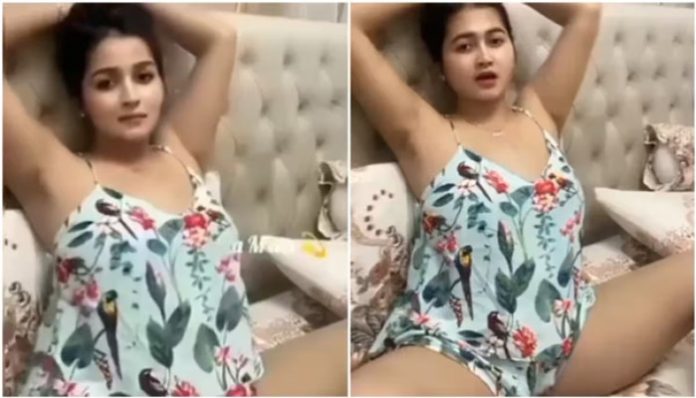
After deepfake videos of Rashmika Mandanna, Katrina Kaif, Aishwarya Rai Bachchan, Kajol, Sara Tendulkar, and industrialist Ratan went viral online, a deepfake video of actress Alia Bhatt is doing rounds on social media.
In the viral video, Alia Bhatt’s face has been edited on the video of another woman making obscene gestures. However, with little attention, one can notice that the woman seen in the video is not Alia Bhatt. Amidst the ongoing debate over threats the deepfake technology poses, the deepfake video of Alia Bhatt has sparked outrage.
This comes just days after a deepfake video of actress Rashmika Mandanna surfaced online. Earlier this month, Rashmika Mandanna expressed distress over a deep fake video using her face on the video of another woman that went viral on social media. She highlighted the urgent need to address technology misuse and emphasised potential harm, particularly for vulnerable individuals. She also called for community action against such incidents.
The video in question featured Instagram model Zara Patel with Mandanna’s face superimposed using deep fake technology. The post sparked calls for legal frameworks against such incidents in India. Bollywood veteran actor Amitabh Bachchan also endorsed the call for legal action in the matter.
Soon after the incident, the Ministry of Electronics and Information Technology of India (MeitY) issued an advisory to the social media companies to tackle the deep fake menace. he ministry reaffirmed the existing guidelines. Three main laws and guidelines are in place for such fake videos. The first is Section 66D of the Information Technology Act, 2000 and the second is Rule 3(1)(b)(vii) of IT Intermediary Rules 2021, and the third is Rule 3(2)(b) of the IT Intermediary Rules 2021.
It was recently reported that the probe into the deepfake case of Rashmika Mandana has hit a dead end as social media platforms have shown their inability to give any information about individual(s) who have allegedly made the deepfake profiles.
The surge in deepfake videos of celebrities surfacing online caught Prime Minister Narendra Modi’s attention as well. Earlier this month, PM Modi highlighted the threats of deep fakes in new-age digital media content and said that it was important to understand how Artificial Intelligence (AI) works since they could be used to purposefully spread false information or have malicious intent behind their use. “I recently saw a video in which I was seen singing a Garba song. There are many other such videos online,” PM Modi said.
Deep fakes are AI-manipulated photographs or videos that can convincingly depict events or statements that never occurred. Some apps use machine learning and face-swapping technology to create these forgeries by superimposing one person’s image onto another. The end results are often realistic and hard to detect. An OpIndia explainer on Deepfakes can be read here.