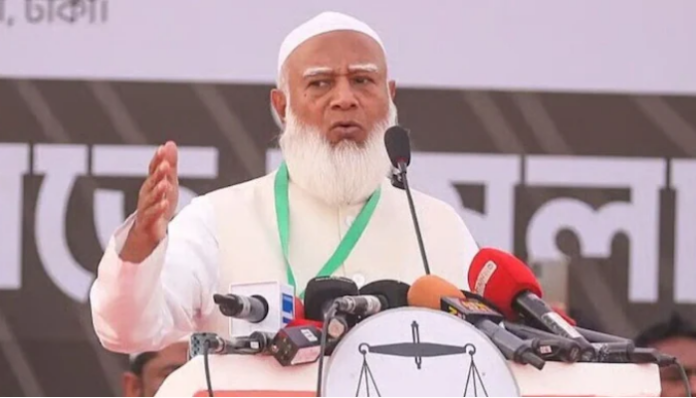
Australia is facing an uncomfortable question about the consistency of its immigration and national security policies: why was the leader of a political organisation whose senior figures have a controversial history, and who has publicly praised Hamas leaders Yahya Sinwar and Ismail Haniyeh, allowed to enter the country when other individuals accused of promoting antisemitic rhetoric have faced visa cancellations and deportation? The question has become particularly pressing following the November 2026 visit of Bangladesh Jamaat-e-Islami chief Dr Shafiqur Rahman, whose presence in Australia triggered protests from Jewish and Hindu organisations, demands for government explanations and renewed scrutiny of the country’s visa-screening procedures.
The controversy is not simply about whether a foreign political leader should be permitted to visit Australia. It concerns the standards applied when evaluating the public statements, political associations and ideological positions of visitors, particularly when those positions have the potential to aggravate religious hostility or undermine social cohesion. Australia’s response to this controversy will be watched well beyond its borders, especially in Bangladesh, where Jamaat-e-Islami has re-emerged as an influential political force following the dramatic political upheaval of August 2024.
According to The Australian, Dr Shafiqur Rahman arrived in Sydney on November 20, 2026, for a visit that included community gatherings and meetings. His itinerary included a November 21 luncheon hosted by the Australian National Imams Council (ANIC) in Chullora, Sydney. The visit was initially expected to extend beyond Australia, including a subsequent program in Malaysia. However, the visit quickly became politically contentious after Australian Jewish and Hindu organisations publicly challenged the decision to admit him.
The Australian Jewish Association (AJA) and the Australian Hindu Association (AHA), in a joint statement, expressed serious concern over Rahman’s presence in Australia. Their principal objection concerned his previous public statements about Hamas leaders Yahya Sinwar and Ismail Haniyeh.
According to the organisations, Rahman had publicly praised Sinwar as a hero and martyr following his death and had mourned Haniyeh, praying that he would be accepted as a martyr.
These statements raise an important question about the distinction between expressing sympathy for an individual and publicly celebrating the leadership of an organisation responsible for terrorism. Hamas is not simply a political movement engaged in a conventional dispute with Israel. Its October 7, 2023 attack on Israel involved mass killings, hostage-taking and atrocities against civilians. Australia has designated Hamas as a terrorist organisation.
The AJA and AHA also referred to Jamaat-e-Islami’s historical record in Bangladesh, pointing out that former senior leaders of the organisation were convicted of war crimes and crimes against humanity for their roles during the 1971 Liberation War.
The organisations were particularly concerned about the reported participation of Australian parliamentarians in the November 21 luncheon hosted by ANIC.
Their statement asked the Australian Government to explain why Rahman had been permitted to enter the country and whether government representatives had met him.
Robert Gregory, president of the Australian Jewish Association, raised an additional question concerning Australia’s treatment of Israeli political figures. He pointed out that former Israeli justice minister Ayelet Shaked had been barred from entering Australia, while the visa of Religious Zionism parliamentarian Simcha Rothman had been cancelled.
Gregory questioned how Australian authorities could exclude Israeli politicians while permitting entry to a foreign political leader who had publicly glorified Hamas figures.
The issue deserves a transparent answer from the government. Immigration decisions may involve confidential information, but the principles guiding those decisions should be consistent and understandable.
The Australian Hindu Association also expressed concern over the implications of Rahman’s visit.
Its president, Amendra Singh, referred to the continuing allegations of attacks against Hindus in Bangladesh, including murders, arson, kidnappings, looting and intimidation. He argued that welcoming individuals perceived to support, or remain silent about, such abuses could deepen divisions within Australian society.
These objections should not be dismissed as merely a political disagreement. Jewish and Hindu communities have legitimate interests in ensuring that individuals associated with inflammatory religious rhetoric are not given an uncritical public platform.
The controversy also illustrates how developments in Bangladesh can acquire significance within Australia’s multicultural society.
To understand why Shafiqur Rahman’s visit generated such strong reactions, it is necessary to examine the history of Jamaat-e-Islami in Bangladesh.
The organisation traces its ideological origins to the movement founded by Abul Ala Maududi in 1941. Its political and ideological development has frequently been compared with that of the Muslim Brotherhood, although the two are distinct organisations with separate histories and institutional structures.
For Australian policymakers, this history deserves attention when assessing the public positions and political affiliations of visiting leaders. It does not, by itself, establish that every Jamaat member or supporter presents a security threat. Nor should historical convictions automatically determine the admissibility of a contemporary political leader. However, an organization’s historical record, leadership statements and contemporary conduct are all legitimate considerations in a comprehensive assessment.
The central issue is whether Australia’s immigration authorities adequately examined the relevant information before granting Rahman permission to enter.
The controversy surrounding Rahman’s visit became more serious when registered Australian migration adviser Raymond Salomonn submitted a formal representation to Home Affairs Minister Tony Burke, urging the government to cancel the Jamaat leader’s visa.
In an article published by Quadrant on November 23, 2026, Salomonn questioned how Rahman had satisfied Australia’s character and immigration requirements, particularly in light of the controversy surrounding his previous statements.
He also raised questions about whether authorities had examined Rahman’s public record before granting the visa and whether appropriate screening procedures had been followed.
The issue became especially sensitive because Australia had already taken action against two Bangladeshi religious speakers earlier in 2026.
According to Australian media reports, the government cancelled the visa of Islamic preacher Dr Mizanur Rahman Azhari in April following controversy over his previous antisemitic statements. Azhari had reportedly described Adolf Hitler as a divine punishment for Jews and made other inflammatory remarks about Jewish people.
Australian Liberal Senator Jonathan Duniam raised concerns about Azhari’s public record in parliament. He referred to allegations of antisemitic rhetoric, hostility towards Hindu religious beliefs and attacks on Bengali culture.
Azhari disputed the interpretation of the controversy, arguing that his statements had been taken out of context and that he supported religious coexistence. Nevertheless, the Australian authorities proceeded with the visa cancellation.
Another Bangladeshi religious speaker, Shaykh Ahmadullah, also had his Australian visa cancelled in April 2026 following allegations concerning antisemitic and provocative remarks. His planned speaking engagements were subsequently abandoned.
These developments established an important precedent: Australian authorities were prepared to review and cancel visas when information about a visitor’s previous public statements raised concerns under immigration law. That is precisely why the Rahman controversy has attracted so much attention.
The question is not whether the Australian Government should automatically treat every religious speaker or political activist as a security threat. Rather, it is whether the same standards of scrutiny have been applied consistently, regardless of the visitor’s political affiliation, religious identity or international connections.
If the government concluded that Azhari and Ahmadullah did not meet the applicable requirements, it should be prepared to explain, within the limits of immigration confidentiality, how Rahman’s case was assessed differently.
The government should also clarify whether the statements attributed to him were examined during the visa application process.
Hamas and the emerging Bangladesh connection
The Australian controversy cannot be considered in isolation from the broader developments involving Hamas and Islamist political networks in South Asia.
Since the fall of Sheikh Hasina’s government on August 5, 2024, Bangladesh has undergone a dramatic political transformation. Hasina’s departure followed weeks of student-led protests, a violent government crackdown and widespread demonstrations demanding political change. An interim administration led by Nobel laureate Muhammad Yunus subsequently assumed office.
The political transition created new opportunities for previously restricted political and religious organisations to expand their public activities. Jamaat-e-Islami was among the political forces that benefited from the changed environment.
More importantly, the transition coincided with renewed public engagement between Bangladeshi Islamist organisations and international figures associated with Hamas and other Islamist movements.
On September 7, 2024, Al Markazul Islami hosted a high-profile gathering in Dhaka attended by Hamas representatives, including Sheikh Khaled Quddumi and Khaled Mashal, alongside prominent Pakistani religious figures, including Mufti Taqi Usmani and Maulana Fazlur Rahman. The gathering attracted considerable attention because of the participation of individuals associated with influential Islamist movements and networks.
India Today reported on the event, while subsequent reporting and analysis examined the implications of Hamas-linked engagement with Islamist groups in Bangladesh.
These developments deserve careful examination, particularly because Bangladesh occupies a strategically important position between South Asia and Southeast Asia.
The country shares borders with India and Myanmar and has important maritime connections to the Bay of Bengal. Any expansion of transnational extremist networks in Bangladesh could therefore have implications extending beyond its domestic political environment.
In an interview with NDTV, Israeli Ambassador to India Reuven Azar expressed concern about Hamas-linked activities in Pakistan and Bangladesh.
Ambassador Azar’s observations are significant because they reflect Israeli concerns about the possible expansion of Hamas-associated networks beyond the Middle East.
However, the distinction between political contacts, ideological sympathies, fundraising networks and operational involvement must be maintained. Evidence of meetings or public appearances does not, by itself, establish that a person or organisation is participating in terrorist operations.
That distinction should not diminish the need for serious scrutiny. Rather, it should guide intelligence assessments and immigration decisions towards verifiable evidence instead of assumptions.
For Australia, the question is whether the public statements and associations of visiting political and religious figures could create an environment conducive to extremist recruitment, antisemitism or hostility towards religious minorities.
The cases involving Azhari and Ahmadullah illustrate that visa approvals are not necessarily irreversible. Authorities can review information that emerges after admission and take appropriate action where legal grounds exist.
However, the Jamaat chief Shafiqur Rahman controversy raises a more fundamental question: should the government wait for public protests before examining the background of controversial visitors?
Australia’s immigration screening system should be capable of identifying relevant concerns before visas are issued. This is particularly important when applicants are influential political or religious figures whose public statements and international associations are already matters of public record.
The government should consider several areas when assessing such applications:
· Public statements: Whether the applicant has promoted antisemitism, religious hatred, support for terrorist violence or hostility towards minority communities.
· Organisational affiliations: Whether the applicant has meaningful associations with organisations designated as terrorist entities or other groups engaged in unlawful activities.
· Historical record: Whether credible legal proceedings, documented conduct or previous official decisions raise relevant concerns.
· National security: Whether available intelligence indicates a genuine risk to Australia’s security or public safety.
· Social cohesion: Whether the applicant’s activities could contribute to incitement, intimidation or serious communal tensions.
These assessments should be evidence-based, proportionate and consistent with Australian law. Political disagreement, religious conservatism or criticism of a foreign government should not automatically become grounds for exclusion.
The controversy surrounding Shafiqur Rahman’s visit also carries implications for Australia’s relationships with Bangladesh, India and Israel.
India has long-standing security concerns about extremist networks operating in its neighbourhood, particularly those with links to Pakistan-based organisations. Bangladesh’s political transformation has added another dimension to these concerns.
For Israel, the emergence of Hamas-linked political and ideological networks in South Asia represents a development requiring attention. The possibility that organisations and individuals associated with Hamas could establish relationships with regional Islamist groups deserves serious investigation.
Australia, meanwhile, has a responsibility to ensure that its territory does not become a platform for promoting antisemitism, glorifying terrorist violence or encouraging hostility towards religious minorities.
The government should therefore address the questions raised by the Australian Jewish Association and Australian Hindu Association. It should clarify whether the relevant public statements were considered during Rahman’s visa assessment and whether any Australian government representatives met him during his visit.
There is also a legitimate need for greater transparency concerning the standards applied to foreign political and religious visitors. The objective should not be to restrict legitimate diplomatic, political or religious engagement, but to ensure that immigration decisions are consistent with the country’s security obligations and laws.
The Australian government’s decision to admit Shafiqur Rahman, particularly following its earlier action against Azhari and Ahmadullah, has created an understandable perception of inconsistent treatment. Whether that perception reflects a genuine failure of screening procedures is something the authorities should investigate and explain.
Meanwhile, Jamaat-e-Islami should recognise that its international credibility will inevitably be judged not only by its political declarations but also by its position on terrorism, antisemitism, religious freedom and the protection of minorities.
The controversy surrounding Dr Shafiqur Rahman’s November 2026 visit should not end with his departure from Australia. Indeed, his early return to Bangladesh, rather than the originally anticipated conclusion of his wider overseas itinerary, has made the circumstances of the visit even more deserving of public examination. The reporting indicates that the controversy intensified during his stay, although it does not establish that a legal proceeding or government order forced his departure.
In a November 25 social media statement, Jamaat-e-Islami’s media wing reportedly characterised criticism from Australian Jewish and Hindu organisations as a “hate campaign”. Such a response does not resolve the substantive questions raised by those organisations. Instead of dismissing criticism, the party’s leadership should address the concerns surrounding its statements about Hamas and its historical record.
Australia, for its part, must explain how its immigration authorities evaluated the application of a political leader whose public statements had attracted international attention. If the government applied the same standards used in previous visa cancellations, it should be able to explain the relevant distinction. If shortcomings occurred, they should be addressed through appropriate institutional reforms.
The broader lesson extends beyond Australia. Western democracies cannot afford to apply one standard to individuals associated with one political or religious tradition and a different standard to those associated with another. Nor can they permit influential visitors to use the freedoms of democratic societies to legitimise terrorism, encourage antisemitism or undermine the security of minority communities.
The challenge is to defend democratic openness without allowing it to become a shield for extremism. That requires rigorous immigration screening, evidence-based security assessments, accountability for public figures and equal protection for Jewish, Hindu, Muslim and other communities.
Australia has every right to welcome legitimate political, religious and community visitors. But hospitality must never come at the expense of national security, religious freedom or social cohesion. The question raised by Dr. Shafiqur Rahman’s visit is therefore larger than one visa or one political leader: it is whether Canberra is prepared to apply its own stated principles consistently, regardless of who the visitor is or which political movement he represents.
Salah Uddin Shoaib Choudhury is editor of the Bangladesh-based publication Blitz and a commentator on Islamist extremism, terrorism, and South Asian geopolitics.