

What began as a crackdown on fake birth certificates linked to illegal migrants has snowballed into something far more unsettling inside Mumbai’s civic machinery. A sweeping internal probe by the BMC has exposed systemic irregularities in the city’s birth and death registration framework, revealing what officials describe as a shadow data pipeline operating across all 24 wards.
At the heart of the issue lies a blatant breach of protocol. Medical Officers of Health (MOHs), who are mandated to make corrections exclusively through the Civil Registration System (CRS), were found altering records simultaneously on an outdated internal platform, SAP-CPWM. This dual-entry practice runs directly against the Registrar General of India’s guidelines, raising serious concerns about data integrity and potential manipulation.
The scale of the discrepancy is striking. Between 2024 and 2026, more than 87,000 corrections were made through the SAP system, while only 33,772 were recorded on the official CRS portal. In administrative terms, that’s not a minor deviation; it points to a parallel, unauthorised ledger operating within the system.
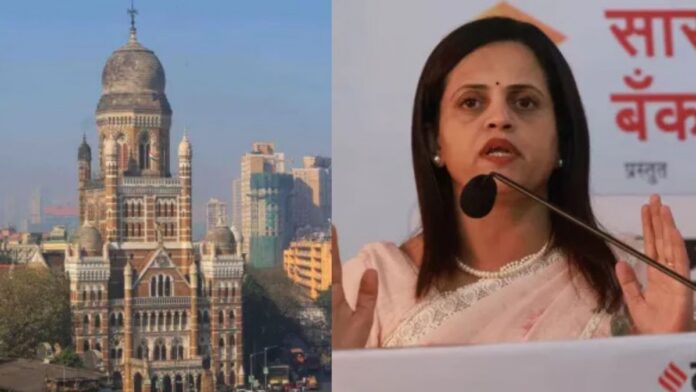
The report, submitted to BMC Commissioner Ashwini Bhide and subsequently approved, doesn’t stop at identifying lapses. It calls for concrete action. A third MOH now faces suspension in connection with the fake certificate racket, while disciplinary proceedings have been recommended against multiple officials. Former MOH of L and E wards, Dr Shailendra Gujar, has been specifically named. Earlier, two MOHs and two clerks from M-East ward were already suspended, with FIRs lodged against the officers.
Investigations have established prima facie evidence of irregularities in E ward, particularly concerning birth registrations, while a separate probe continues in L ward.
Meanwhile, administrative reshuffling is already underway. MOHs in K-West, R-North, and E wards, where an unusually high volume of corrections was flagged, are set to be transferred in phases, especially as census-related work continues.
The BMC has also moved swiftly to plug the systemic loophole. All SAP-based entries have been ordered to cease immediately, and the IT department has been instructed to revoke access privileges previously granted to MOHs.
Additionally, a restructuring of MOH responsibilities across wards is on the cards, an attempt to ensure tighter accountability going forward.
Interestingly, the issue was first brought into the spotlight by former BJP MP Kirit Somaiya, who had flagged irregularities in 2024–25.
Responding to the latest developments, Somaiya termed the action “unprecedented,” crediting the civic administration for finally acknowledging the depth of the problem and acting decisively.
What this episode ultimately underscores is not just administrative negligence, but the existence of a deeply embedded workaround culture, where parallel systems quietly undermine official protocols. The crackdown may have begun with fake certificates, but it has now laid bare a much larger governance challenge.
