

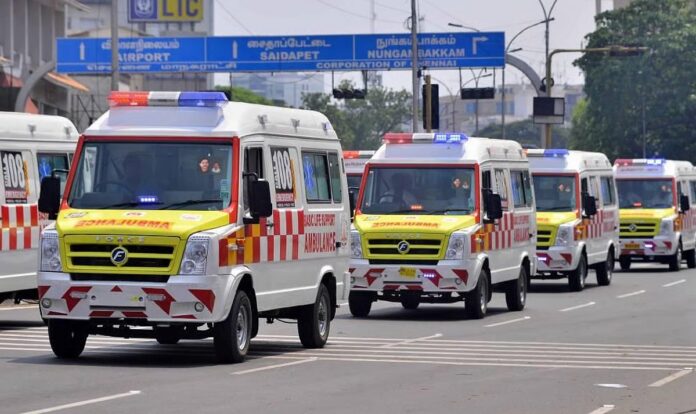
The Ministry of Road Transport and Highways (MoRTH) has proposed significant amendments to the Automotive Industry Standard (AIS)-125 to bolster the safety, functionality, and medical capabilities of road ambulances across India. These life-saving vehicles play a vital role in emergency care by transporting patients to hospitals and delivering advanced life support to critically ill individuals.
India continues to witness a high number of road accident fatalities annually, many of which could be prevented through prompt medical intervention. Studies suggest that nearly 50 per cent of such deaths can be averted if victims receive hospital admission within the critical first hour, often referred to as the “golden hour.” The amendments align with ongoing government efforts, including the Prime Minister – Road Accident Victims’ Hospitalisation and Assured Treatment (PM-RAHAT) Scheme, which ensures medical treatment coverage for road accident victims. Ensuring well-equipped and readily available ambulances is equally crucial to provide operational ease for medical personnel and maximum comfort and safety for patients during transit.
The Ministry had originally notified AIS-125 (Part 1) in September 2016 to set constructional and functional requirements for road ambulances, while AIS-125 (Part 2) outlined medical equipment guidelines for various categories. The latest draft amendments to both parts seek to further improve emergency response standards. They introduce specialised road ambulances, including the Neonatal Road Ambulance, designed for transporting sick or premature newborns to facilities offering higher levels of care, and the Multi-stretcher Road Ambulance, capable of carrying multiple stretchers with a focus on intensive care for at least one patient at a time.
In addition, all road ambulances under Class B, C, and D categories will now be mandatorily equipped with emergency and rescue tools. These provisions will aid in extracting victims from accident-damaged vehicles and provide support if the ambulance itself is involved in an incident. To promote green mobility, the amendments also mandate dedicated power sources for e-ambulances to ensure uninterrupted operation of medical equipment. Furthermore, AIS-125 (Part 2) now specifies standards for all medical devices installed in ambulances. The draft notification GSR 382(E), dated 14 May 2026, has been uploaded on the Ministry’s website to invite public comments before finalisation. Once notified, the amendments will come into effect from the date specified in the final notification. This initiative is expected to significantly strengthen India’s emergency medical services and contribute to reducing preventable road accident deaths.
