

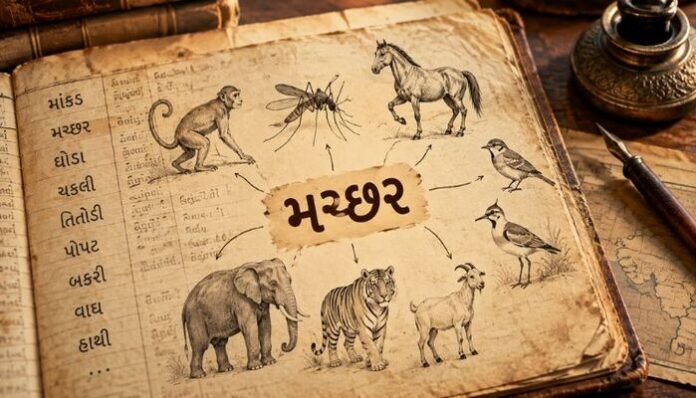
Some surnames are so unique that they stick in your memory right from the moment you hear them for the first time. One such surname is ‘Machchhar’ (Mosquito). In everyday conversation, the word ‘Machchhar’ conjures up the image of a creature buzzing near one’s ear on a summer night; yet, when the same word appears after a person’s name, one wonders about the origin of such a surname.
Captain Smit Machchhar, with his distinctive surname, is once again in the headlines. He became a global talking point after he valiantly prevented a Jihadi crashing attempt on a Flydubai flight en route from Dubai to Tel Aviv. Despite being brutally stabbed by his Omani co-pilot, Smit Machchhar managed to open the cockpit door, allowing passengers to bring the aircraft under control. The plane made an emergency landing safely at Tabuk Airport in Saudi Arabia. All 174 passengers on board landed safely, and Smit Machchhar was widely praised for his courage.
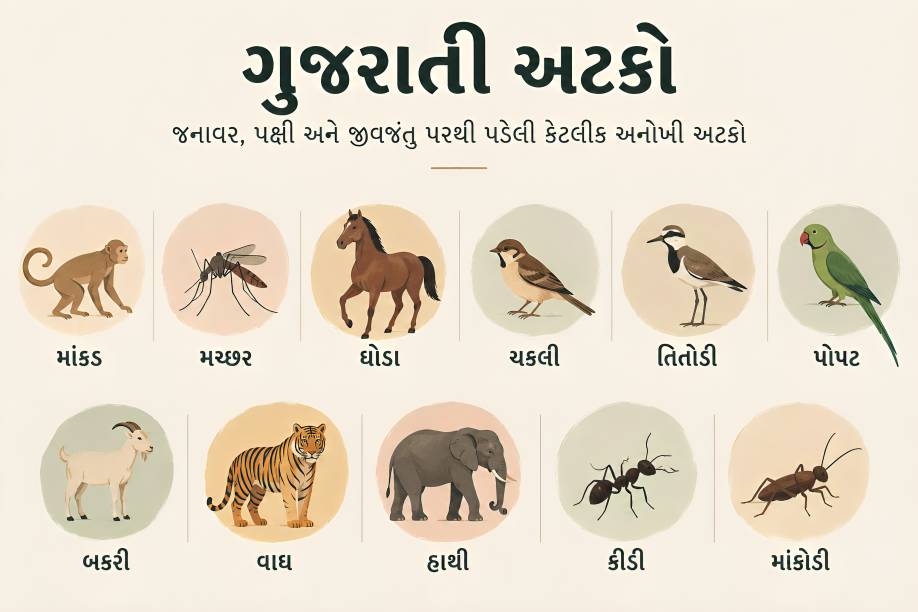
Smit Machchhar’s courage attracted global applause. However, apart from his valour, his surname also gained wider attention and made people question: how does a person come to have ‘Machchhar’ as a surname? While such a surname might surprise people around the world, in Gujarat, such surnames are common. In the state, one finds surnames like ‘Mankad’ (Bedbug), ‘Ghoda’ (Horse), ‘Chakli’ (Sparrow), ‘Titodi’ (Lapwing), ‘Popat’ (Parrot), ‘Bakri’ (Goat), ‘Tagh’ (Tiger/Leopard), and ‘Hathi’ (Elephant). These surnames are unique not only because of how interesting they sound but also because their origins are linked to simple but fascinating stories, often about a person’s life, appearance, temperament, village, home, or even a joke.
An old book titled History of Gujarati Surnames (Gujarati Upnamon no Itihas) examines surnames derived from animals, birds, or insects. Such surnames are rare and are more prevalent in the Kathiawad region of Gujarat. No conclusive account can be given regarding the origins of these surnames. There are multiple possibilities, and in many instances, conjecture outweighs concrete evidence. Therefore, it is not possible to provide an accurate account of the origins of such surnames; however, we can glance through all the stories linked to their origins.
Surnames do not always carry a single meaning
We often associate surnames with a specific meaning. For example, ‘Gandhi’ implies a particular Gandhi family, ‘Patel’ signifies a specific lineage, and ‘Desai’ denotes a particular heritage. However, the history of surnames is not so straightforward. A word can be carried by different families as a surname and can acquire a distinct meaning for specific reasons. A surname might originate from a place name, a profession, an ancestor’s name, or an existing epithet; alternatively, a nickname given in jest might evolve into a permanent surname over generations.
This holds for surnames derived from animals or insects. Just because ‘Bagh’ (Tiger) and ‘Hathi’ (Elephant) are both names of animals, it is not enough to assume that the two surnames share a common origin. Similarly, while ‘Mankad’ (Bedbug) and ‘Machchhar’ (Mosquito) might sound like equally peculiar surnames, they could well have originated under entirely different circumstances and be unrelated to one another. The origins of each such surname need to be examined individually. This is where the subject becomes intriguing; the question is no longer merely about how the name ‘Machchhar’ came to be. Instead, the question becomes: how did people in the Gujarat of the past assign such surnames to identify individuals within their society?
Sometimes surnames originate from unique nicknames.
In the old times, a person’s official name could be different from the name by which the local community knew him. For example, a person with short stature, despite having a proper assigned name, might be called using words like ‘Cheenti’ (Ant, referring to his small height). Similarly, if an individual’s face resembled a bird’s, he might acquire a bird-related name; if his temperament was like that of a certain animal, he might adopt that animal’s name as a nickname. Over time, the nickname becomes one’s identity that eventually extends to the entire family. The origin of a nickname can be just as simple as that.
The reference ‘Cheenti’ is an interesting example. An ant is a tiny insect; perhaps a person was very short, which led him to be referred to as ‘Cheenti’ by people around him. However, discussions around such surnames reveal many possibilities. While some theories suggest that such unique names, which later become surnames, might stem from ancient symbols, it is unlikely that a group chose such a small creature as an ant to represent them. This small example holds the key to the entire discussion. The story behind this nickname is not as straightforward as the name itself appears at first glance.
Three stories behind the surname ‘Ghoda’
Upon hearing the surname ‘Ghoda’, one naturally thinks of a horse. However, the book outlines several possibilities regarding the origin of this surname. The surname is found among the Nagar community of Kathiawad. One possibility links it to a village named ‘Vadadara’ in Kathiawad. People hailing from the village may have borne the surname ‘Ghoda’. A second possibility connects it to lakes and villages named ‘Ghodasar’. It is conceivable that there were multiple lakes named ‘Ghodasar’ in Kathiawad, alongside a village of the same name. People migrating from the vicinity of such a lake or village might have come to be known as ‘Ghoda’.
There is a third possibility as well, reflecting the vibrant character of Kathiawad. One belief holds that the Nagar people of Kathiawad were once so robust that they could swim across the deep waters of Ghodasar Lake, from one bank to the other, just like horses! That is why they were referred to as ‘Ghoda’. It is certainly fascinating to delve into the lore of old Gujarat; to learn how a single surname can be rooted in a village, a lake, or even a folktale concerning a person’s physique.
From ‘Chakli’ to ‘Titodi’: Appearance and manner of speaking
One story regarding the origin of the surname ‘Chakli’ states that it was used for a person who had a small mouth and was likened to a bird. The word might also have been used to refer to a person with a very soft voice. Another interesting possibility links the word to a location; for example, the junction of four roads is known as ‘Chaklo’. A person living there might have been called ‘Chaklawala,’ a term that was eventually shortened to ‘Chakli.’ The book mentions a similar possibility.
‘Titodi’ is also the name of a bird. It is possible that an individual acquired this nickname due to their physical appearance, and the name subsequently became his lineage’s identity. Therefore, one need not assume that a surname carrying a bird’s name necessarily signifies a religious symbol, a family emblem, or an ancient tradition. Sometimes, even a simple surname originating in a village persists across generations.
The same applies to the surname ‘Tota’ (Parrot). This surname is found among both the Parsi and Hindu communities. The book suggests that a person might have been called ‘Tota’ because their nose resembled a parrot’s beak. Another possibility is that an exceptionally intelligent person, someone who could recite things from memory, was compared to a parrot, which is known to have a sharp memory. While it is common to call a small child ‘Tota’ when they speak in a frail or squeaky voice, it is particularly intriguing to consider how this same term could become the permanent surname of an adult.
‘Bakri’ doesn’t just mean ‘goat’
The surname ‘Bakri’ (Goat) sounds equally amusing. It is possible that it would have been used for a person based on his temperament and behaviour. It is also possible that the name might have been given to someone who raised goats. Alternatively, the book suggests it is quite likely that the person possessed a gentle and innocent nature, much like a goat, earning them the moniker. Even a voice resembling a goat’s bleat could have led to such a surname.
In Gujarati colloquialism, there is a long-standing tradition of using animal analogies to contrast a person’s outward appearance with their inner nature. Is it really surprising that a saying about someone being ‘like a tiger in appearance, but like a goat in temperament’ becomes common in a village and, years later, turns into a family identity? The book presents a similar possibility for the surname ‘Bakri’.
‘Machchhar’ does not only mean a mosquito.o
The book records ‘Machchhar’ as a surname originating from Kathiawad. Two main reasons are cited for its origin. While the word ‘Machchhar’ immediately brings to mind the insect (mosquito), older Gujarati dictionaries reveal another meaning for the word; the Bhagavadgomandal defines ‘Machchhar’ as ‘passion’ or ‘enthusiasm’. Thus, the same word signifies a buzzing insect on the one hand, while on the other hand, it expresses intense emotion or passion within a person.
There are diverse stories linked to the origins of the surname ‘Machchhar’. Regarding its origin in Kathiawad, one theory suggests that a man in a particular family was extremely ‘Mathsarvala’—meaning full of anger, hostility, or envy. People began calling him ‘Mathsar’, and over time, the word likely morphed into ‘Machchhar’. Another possibility is that the family lived in an area infested with mosquitoes; they were referred to as ‘Machchharvala’, and eventually, ‘Machchhar’ became the surname.
It is worth noting here that neither of these explanations is a verified historical fact; the book presents them merely as beliefs and possibilities. Therefore, one cannot definitively claim that the surname ‘Machchhar’ originated in this specific manner. Nevertheless, both possibilities illustrate that a surname need not stem from a major political or religious event; an individual’s temperament or a family’s place of residence can be sufficient grounds for its adoption.
The book also highlights an interesting social aspect: children from some families bearing this surname disliked it and chose to adopt new ones. Moreover, changing surnames is not an unusual occurrence. Gujarati surnames have evolved.
Therefore, even though a ‘mosquito’ is currently being discussed worldwide as the name of a brave pilot, viewing the word ‘Machchhar’ (mosquito) solely as an insect would be to take an overly narrow view of the surname’s history. For different families, this very word could have originated from a joke, a place of residence, or an ancestor’s temperament.
‘Mankodi’ is also an old identity.
The surname ‘Mankodi’ also comes up in this sequence. ‘Mankodi’ is considered a humorous surname. It is possible that someone with a jolly nature who used to joke with, tease, or poke fun at others, and consequently acquired the nickname ‘Mankodi’. There is another possibility as well. In colloquial speech, the words ‘Keedi’ and ‘Makodi’ are often used together. Thus, it is conceivable that a close relative or friend, who was always in the company of someone nicknamed ‘Keedi’, began calling that person ‘Makodi’, and the name eventually became the family’s surname. This reinforces the point that surnames are not selected from a dictionary; rather, they emerge organically from the living language shared among people through banter, teasing, familiarity, and relationships.
The story behind ‘Mankad’
Upon hearing the word ‘Mankad’, one immediately associates it with ‘Machchhar’ (mosquito). Both are names of insects and sound peculiar. However, there is no reason to assume that these two surnames share a common origin. The book clearly states that the names ‘Mankad’ and ‘Machchhar’ likely emerged independently, without any mutual connection. The surname ‘Mankad’ is prevalent among the Nagar families of Kathiawad. An interesting possibility arises from a family’s own tradition; they trace their lineage back to the sage Markandeya. It has been suggested that the descendants of Markandeya, initially known by the name Markandeya, eventually adopted the surname ‘Mankad’ through a linguistic transformation.
Yet, this is not the only possibility. Just as it has been suggested that people living in a mosquito-infested house might be called ‘Machchhar’, it is equally plausible that a family residing in a home teeming with bedbugs (khatmal) came to be known as ‘Mankad’. Alternatively, if an individual in the family possessed a restless nature, constantly hovering like a bedbug, jumping about, and never allowing anyone to sit still, they might have been nicknamed ‘Mankad’, a moniker that subsequently became the identity of the entire family. While the book treats these as mere conjectures, the family’s actual link to the sage Markandeya makes that particular theory more compelling. Thus, ‘Mankad’ signifies more than just a bedbug; the word may well represent a surname rooted in the tradition of sages and the fabric of folk life.
‘Tiger’ is not just an animal.
Upon hearing the surname ‘Tiger’, one naturally envisions a powerful individual, a hunter, or an ancestor with a tiger-like nature. However, the story presented in the book is different. It introduces Vadheshwar Mehta, the head of a family and a man considered the most influential in his time; his presence commanded respect wherever he went. It was for this reason that he came to be known as ‘Tiger’, a name that subsequently became the surname for the entire family. Here, a subtle shift alters the entire narrative: while the name ‘Tiger’ typically evokes the image of a wild animal, the true origin of the surname may lie not in the animal itself, but in an individual’s name and social standing.
‘Hathi’ does not always refer to an elephant.
The book outlines three possibilities regarding the surname ‘Hathi’ (Elephant). A person might be called ‘Hathi’ because of an elephant-like physique or an elephant-like walk. A third possibility is that the nickname originated from a close relative or friend who bore the nickname ‘Ghoda’ (Horse). Given the association between ‘Hathi’ and ‘Ghoda’ in royal parlance, often reflected in expressions linking the two, it is suggested that the nickname could have arisen from such a social identity. Here, too, there is no definitive answer; the possibilities of an elephant-like physique, an elephant-like walk, or a connection to a relative all remain open.
Did these surnames originate from totems?
This brings us to an old and intriguing concept: the ‘totem’. In ancient times, certain human groups adopted an animal, bird, plant, or natural object as a symbol of their identity. Within such groups, the name of that animal or object became linked to the group’s identity. References to this tradition can be found in various ancient societies across the world; the concept is discussed, for instance, in the Encyclopedia of the Social Sciences. So, did Gujarati surnames also originate from the totems of such ancient groups?
While this idea is plausible, there is insufficient evidence to support it. One might conceive of totems corresponding to surnames like ‘Ghoda’ (Horse), ‘Vagh’ (Tiger), or ‘Hathi’ (Elephant). However, it seems highly unlikely that an ancient group would choose tiny insects such as ants, mosquitoes, or bedbugs to represent them. Since the custom involved creating replicas of these totems out of clay, stone, or wood and displaying them near the group’s settlement, representing such minute insects as symbols in this manner would have been difficult.
Furthermore, if we examine the history of Gujarati surnames, another issue arises. According to the book, many Gujarati surnames have not remained static, despite their antiquity. Surnames have frequently changed due to various factors such as the adoption of new professions, migration, a dislike for existing surnames, or a desire to adopt a new one. Therefore, more evidence is required to substantiate the claim that a surname originating from a totem thousands of years ago has persisted unchanged across generations. Thus, while the concept of the totem cannot be entirely dismissed, it is also inappropriate to attribute every surname derived from an animal, bird, or insect to a totem.
Sometimes, a joke becomes history.
Perhaps the most human aspect of this entire subject is humour. Someone might have an animal-like appearance, be very short, have a peculiar voice, or possess a nasty temperament. Someone else might constantly tease others. To taunt a person, villagers might start calling them by the name of an animal. Initially, it is just a joke. Even after that person is gone, the nickname remains. Eventually, people come to know their son by the same nickname. For the grandson, it becomes a family name. And after two or three generations, a child might not even know why people used to call their great-grandfather by that name.
Some surnames may have been nicknames given in jest by relatives, in-laws, or close acquaintances. Today, when we hear a surname, we immediately try to understand its meaning. However, the meaning of a surname and its origin are not the same thing. The current meaning of ‘Machchhar’ is ‘mosquito,’ but the original meaning of the nickname ‘Machchhar’ could be ‘a family living in a mosquito-infested area,’ or it could be a modified form of the word ‘Matsar,’ or something else entirely.
One word, many family stories
The list of Gujarati surnames derived from animals and insects is short, yet it offers a glimpse into the culture of Gujarat. Ant, horse, sparrow, tit, parrot, goat, mosquito, monkey, bedbug, tiger, and elephant- these surnames appear together. However, the greatest mystery of this list is not simply why so many animal names became surnames. The real intrigue lies in understanding how each name likely originated from the diverse lives of people. The reason could be a person’s physical appearance, temperament, voice, location of their home, a specific village or lake, an ancestor’s name, family ties, or even just a joke.
Thus, grouping ‘Mankad’ (bedbug) and ‘Machchhar’ (mosquito) together might lead us to think they belong to the same category, yet their backstories could be vastly different. ‘Ghoda’ (horse) and ‘Bagh’ (tiger) are both names of powerful animals; however, the former might stem from associations with a specific place, physique, or folklore, whereas the latter may refer to an influential ancestor. ‘Hathi’ (elephant) could refer to a resemblance in physique or gait; ‘Chakli’ (sparrow) to facial features or habitat; ‘Tota’ (parrot) to the shape of the nose or a habit of talking; and ‘Bakri’ (goat) to temperament. ‘Chinti’ (ant) might have related to size, while ‘Mankad’ (bedbug) could hold multiple meanings ranging from the tradition of sages and ascetics to the common household insect.
Perhaps these surnames should not merely be seen as ‘quirky’ labels. They represent the unwritten memories of a society. Things that often go unrecorded in official documents remain alive in everyday speech. The name by which a person was addressed, the reason for it, who first used it, and how it eventually became the family name- all of this is sometimes preserved within just two or three syllables of a single nickname.
Perhaps that is why it is easy to laugh at a surname like ‘Machchhar’ (Mosquito); yet, once one grasps the possibilities hidden behind it, the name becomes far more intriguing. The recent Flydubai flight incident has brought the surname into the spotlight, but the story of the origins of the surname ‘Machchhar’ is a historical one. It reflects a traditional method of identification in the folk culture of Gujarat, where a person’s home, temperament, identity, surroundings, and even their penchant for jokes could all converge to turn a single word into a family name.
A surname is often more than just a name; it can be the untold story of an obscure ancestor. Surnames like ‘Mankad’ (Bedbug), ‘Machchhar’ (Mosquito), and ‘Ghoda’ (Horse) make these stories particularly fascinating. This is because the name immediately conjures up an image of an insect or an animal rather than a human being, even though a real person lies hidden behind it.
(This article is a translation of the original article published on OpIndia Gujarati.)


