

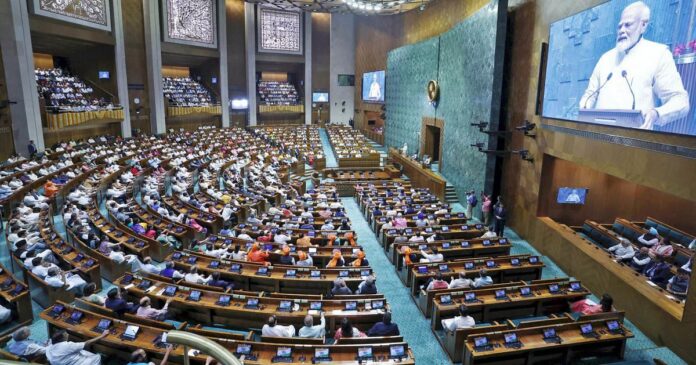
The Centre is set to introduce the Delimitation (Second) Bill, 2026, during the Special Session of Parliament beginning November 30, after the Union Cabinet approved legislation proposing a 50% increase in the number of Lok Sabha seats allocated to every state and Union Territory.
The Cabinet has also cleared the Constitution (One Hundred and Thirty Second Amendment) Bill, 2026, aimed at facilitating delimitation of parliamentary and legislative constituencies and implementing the Nari Shakti Vandan Adhiniyam, which provides for 33% reservation for women in legislatures.
The proposed Delimitation Bill includes a special provision for women’s reservation. Section 10 provides for a proportionate 50% increase in the number of Lok Sabha seats allocated to each state and Union Territory, along with a corresponding increase in the strength of state Legislative Assemblies.
The legislation also proposes the establishment of a Delimitation Commission after the Act comes into force. The commission will undertake the exercise of redrawing constituency boundaries and implementing the revised allocation of seats.
The proposed arrangement is expected to address concerns raised by southern states, which have feared that population-based delimitation could reduce their relative share of representation because they have performed better in controlling population growth.
Andhra Pradesh Chief Minister N Chandrababu Naidu has backed the proposed increase, saying a 50% expansion in seats would provide relief to southern states concerned about losing representation. The Constitution Amendment Bill also proposes freezing delimitation figures until 2051.
The proposed legislation comes after the earlier delimitation-related Bill failed to secure the required two-thirds majority in the Lok Sabha on April 17. With five vacancies in the 543-member House, the effective strength currently stands at 538, meaning the government would require approximately 359 votes to pass a constitutional amendment.
The NDA, which is estimated to have around 320 members in the Lower House, including 20 TMC rebels, will therefore need additional support to secure the required numbers. Parliamentary observers expect the government to seek backing beyond its own coalition.
The Nationalist Congress Party (Sharadchandra Pawar), which is part of the INDIA bloc, has indicated its support for the delimitation exercise. NCP leader Jitendra Awhad said the party had decided to back the process, describing delimitation as a constitutional requirement.
Awhad said discussions with party supremo Sharad Pawar had focused on the constitutional obligation of delimitation and confirmed that the party would support the exercise.
The YSR Congress Party is also reportedly inclined to support the proposed legislation, provided it contains safeguards to ensure regional balance and protects the political representation of states, particularly those in southern India.
However, opposition to the proposed exercise remains strong among several opposition parties.
The DMK has reiterated its demand for safeguards to protect Tamil Nadu’s representation in Parliament. Former Tamil Nadu Chief Minister and DMK chief MK Stalin has maintained that the state’s interests cannot be compromised during delimitation.
DMK MP P Wilson has outlined two key demands: preserving Tamil Nadu’s existing 7.18% share of Lok Sabha representation based on the 1971 Census and ensuring a 25-year freeze on population-based delimitation.
Congress and several INDIA bloc parties have maintained their opposition to the Bill, setting the stage for a potentially contentious debate during the upcoming Special Session.
The Lok Sabha will reconvene on November 30, while the Rajya Sabha is scheduled to meet from December 2. The proposed legislation, which seeks to simultaneously expand representation and implement women’s reservation, is likely to become one of the most consequential political and constitutional debates of the session.
