

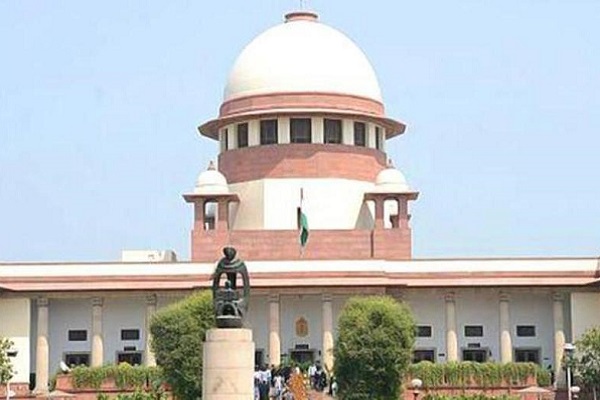
The Supreme Court in a landmark judgement on Friday legalised passive euthanasia and allowed ‘living will’. Under ‘living will’, a person is allowed to voluntarily refuse medical treatment, even if it means embracing a natural death. Passive euthanasia, on the other hand, is a process where medical treatment is withdrawn from a terminally ill patient to hasten his/her death.
In an event of the patients not being in a condition to specify their wishes, instructions are written as an “advanced medical directive” can be carried out. In this directive, the person in question can detail his/her choice regarding medical treatment in the event when he/she no longer retains the capacity to take a decision.
The instructions in the “advanced medical directive” needs to be voluntarily executed without any coercion after attaining complete knowledge of the situation. The written directive also needs to specifically mention terms and the circumstances under which medical treatment can be withheld or withdrawn. The instructions provided need to be absolutely clear and unambiguous.
The document also needs to mention the name of a close relative or guardian who would take the call if the executioner (the patient in question) is incapable of making the decision. This document needs to be signed by the executioner in presence of witnesses and countersigned by jurisdictional Judicial Magistrate of First Class (JMFC). A copy of the directive needs to be stored in both the digital and paper format, with the JMFC, a registry of the jurisdictional District Court, local government officer and the family physician (if any).
This judgement was delivered by a constitutional bench comprising of Chief Justice Dipak Misra, Justices A K Sikri, A M Khanwilkar, D Y Chandrachud and Ashok Bhushan. The bench unanimously gave the verdict that “right to die with dignity is an intrinsic facet of right to life guaranteed under Article 21”.
This landmark judgement though has angered the Kerala Catholic Bishop’s Council, which proceeded to condemn it. The President of this council Soosai Pakiam called the judgement painful and objectionable. As per the President, god is the only custodian of life. Thus he claimed, humanitarians couldn’t approve the “killing” of a fellow human, even if it involves kindness and pity towards the patient.
In a sharp contrast, Jain monk Tarun Sagar welcomed this judgement and claimed that coincided with the tenets of Jainism. While thanking the Supreme Court for the verdict, the monk talked about how Mahavira taught them to die laughing.


