Home Blog Page 1259

Religiophobia against Non-Abrahamic faith must be acknowledged: India opposes special UN envoy for Islamophobia, abstains from Pakistan’s resolution

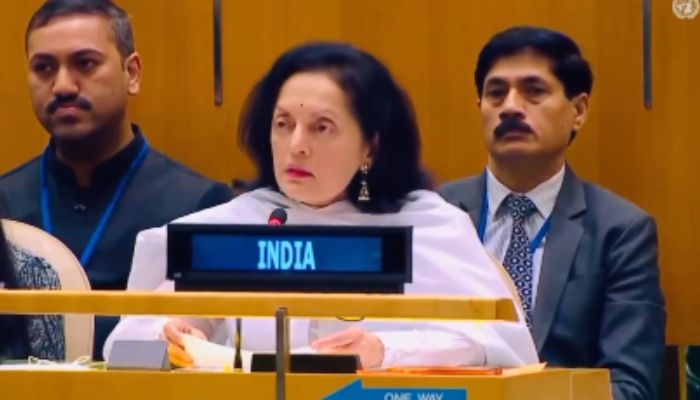
During the UN General Assembly session, India categorically asserted that it is time for the UN body to acknowledge the prevalence of religiophobia beyond Abrahamic faiths. India also, in principle, opposed the creation of the post of a special UN envoy for Islamophobia asserting that it would “potentially divide the UN into religious camps”. Further, the Indian Permanent Ambassador to the UN, Ruchira Kamboj also launched a scathing attack against her Pakistani counterpart, slamming him for making references to the Ram Mandir and Citizenship Amendment Act (CAA).

Notably, India abstained from voting on a resolution titled ‘Measures to combat Islamophobia’ which was introduced by Pakistan. The resolution was however passed with 115 votes in favour and none against, with 44 countries choosing to abstain. The general assembly called upon Member States to take all necessary measures — including legislative and policy steps — to combat hatred and violence against Muslims. It also requested the Secretary-General to appoint a United Nations Special Envoy to combat Islamophobia.

Explaining India’s stance over religiophobia, Kamboj diplomatically criticised the resolution for its narrow scope and failure to address the growing intolerance against non-Abrahamic faiths.  

Kamboj said, “India stands against all forms of religiophobia, be it anti-Semitism, Christianophobia, or Islamophobia, as we stand against all anti-Hindu, anti-Buddhist, and anti-Sikh sentiments.” 

Pointing out rising hate against non-Abrahamic faiths, she stressed, “In our world today, we are confronted with escalating geopolitical tensions and unequal developments resulting in a concerning rise in intolerance, discrimination, and violence based on religion or belief.” “India, as a proud champion of pluralism, firmly upholds the principle of equal protection and promotion of all religions and all faiths,” she added.

She added that India provides a sanctuary free from persecution or discrimination to Zoroastrians, Buddhists, Jews, and adherents of any other belief, highlighting India’s ardent belief in ‘Sarva Dharma Sama Bhava’.

She said, “At the heart of this ethos is our principle of Sarva Dharma Sama Bhava, encapsulating Indian secularism and affirming the inherent goodness of all religions, each deserving of equal respect.” 

This principle isn’t merely a facet of our culture, it is firmly enshrined within the constitution of India, Kamboj added.

Clear evidence that followers of non-Abrahamic religions have also been affected by religiophobia

She further strongly condemned the acts motivated by antisemitism, Christianophobia, or Islamophobia. 

She added, “It is therefore with deep concern, that we observe the growing manifestation of intolerance, discrimination, and violence against followers of various religions. We condemn all acts motivated by antisemitism, Christianophobia, or Islamophobia.” 

She, however, emphasised that it is crucial to acknowledge that such phobias extend beyond the Abrahamic religions. Notably, the term Abrahamic faiths is a category to group the three major religions namely Judaism, Christianity, and Islam together.

The top Indian diplomat at the UN added, “Clear evidence shows that over decades, followers of non-Abrahamic religions have also been affected by religiophobia. This has led to the emergence of contemporary forms of religiophobia, particularly anti-Islam, anti-Buddhist, and anti-Sikh elements.” 

Highlighting the increasing attacks on religious places of worship, Kamboj said that these contemporary forms of religiophobia are evident through such attacks on gurudwaras, monasteries, and temples, as well as the spreading of hatred and disinformation against non-Abrahamic religions in many countries.

She further stated, “The destruction of the Bamiyan Buddhas, violations of Gurudwara premises, massacres of Sikh pilgrims in Gurudwaras, attacks on temples, and the glorification of breaking idols in temples, all contribute to the rise of contemporary forms of religiophobia against nonabrahamic religions.”  

Hinduism, with over 1.2 billion followers, Buddhism, with more than 535 million and Sikhism, with over 30 million followers worldwide, are all subject to religiophobia, Kamboj pointed out before the UNGA. 

Pressing on the UN body, she asserted, “It is time that we acknowledge the prevalence of religiophobia rather than just single out one.”  

She urged, “I would ask all member states to consider the broader scope of religious discrimination that persists globally.”

While the issue of Islamophobia is undoubtedly significant, however, other religions are also facing discrimination and violence. 

Acknowledge religiophobia beyond Abrahamic faiths, India opposes ‘special envoy’ based on a ‘special religion’

Kamboj further said that allocating resources solely to combat Islamophobia while neglecting similar challenges faced by other faiths, might inadvertently perpetuate a sense of exclusion and inequality.

Moreover, these substantial budgetary implications of establishing such a position prompt us to pause and reflect on whether this is the most effective use of resources. 

Regarding the appointment of a United Nations Special Envoy to combat Islamophobia, Kamboj said, “We are in principle opposed to the creation of the post of a special envoy based on a special religion.”

She stressed, “We trust that the resolution adopted today does not establish a precedent that could result in numerous resolutions centred on phobias tied to specific religions, potentially dividing the United Nations into religious camps.” 

Kamboj emphasised the need for the United Nations to maintain its stance above such religious concerns adding that such a resolution would have the potential to fragment the UN body rather than unite the members under the banner of peace and harmony, embracing the world as one global family. 

Following her explanation, India abstained from voting on the resolution on Measures to combat Islamophobia. It was introduced by Munir Akram, Permanent Representative of Pakistan to the United Nations during the 62nd plenary meeting of the General Assembly on the Culture of peace.

India slams Pakistan for its “broken record”

In her concluding remarks, Kamboj also lambasted Pakistan for ranting against India and making needless references to consecration at the Ram Mandir in Ayodhya and the implementation of CAA. 

She said, “One final point concerns a delegation (and its remarks) that, much like a broken record, remains sadly stagnant while the world progresses.” 

Kamboj added, “It is unfortunate indeed to witness this delegation’s (Pakistan) limited and misguided perspective on matters relating to my country, the more so, when the General Assembly considers a matter that demands wisdom, depth, and a global outlook from the entire membership – perhaps not the forte of this delegation.”

MP: Rape accused kills girl’s father, brother after court grants him bail, victim goes missing

0

On Friday, in Madhya Pradesh’s Jabalpur district, a 52-year-old railway employee and his eight-year-old son were reportedly killed by a 19-year-old man. This man was accused of raping the government employee’s teenage daughter, who was subsequently discovered to be missing, according to the police.

According to the police, the incident was brought to light when the 14-year-old rape survivor sent a voice message from her father’s phone to her grandfather immediately after the murders committed by their neighbour and the rape accused, Mukul Kumar.

Jabalpur Superintendent of Police (SP) Aditya Pratap Singh stated, “Upon receiving information from the girl’s grandfather, a police team quickly arrived at the government quarter where the family lived. The house was found to be locked from the outside. After breaking the lock, police discovered the railway employee’s body in a pool of blood on the floor, while the son’s body was recovered from a fridge.” He added, “However, the minor girl was not found at the scene.”

Police indicated that a preliminary investigation revealed the father and son were killed with a sharp-edged weapon.

Singh mentioned, “In September, Mukul Kumar was charged under sections of the Indian Penal Code and the Protection of Children from Sexual Offences (POCSO) Act for allegedly raping the girl. He was apprehended, imprisoned, but recently released on bail.”

“The police are currently reviewing CCTV footage from the vicinity outside the railway employee’s residence, and a thorough investigation is ongoing,” Singh stated. “Efforts are underway to locate both the accused and the minor rape survivor.”

The police noted that the railway employee and his children had relocated to the government quarter following his wife’s passing last year.

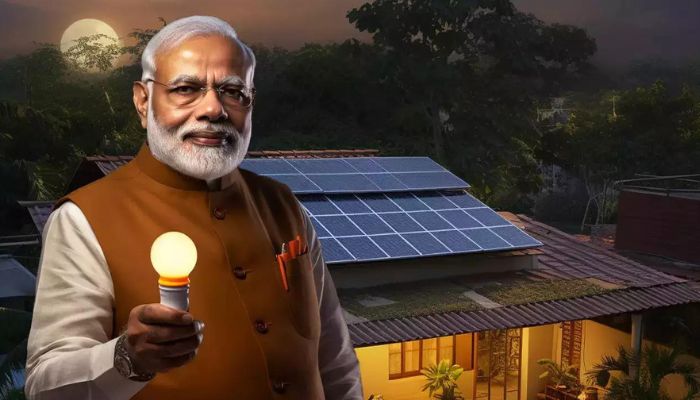
Over 1 crore households register for PM Surya Ghar Muft Bijli Yojana in 4 weeks after PM Modi launched it, read more about the free electricity scheme

On Saturday (16th March), Prime Minister Narendra Modi took to his X handle to appeal to the people in the country to register for the PM Surya Ghar Muft Bijli Yojana. He also informed that since the scheme was launched last month, over a crore households have already applied for it. The free electricity scheme encouraging people to set up roof-top solar electricity generation panels was launched in February 2024 by the government of India.

Prime Minister Narendra Modi wrote in his post, “Outstanding news! In about a month since it was launched, over 1 crore households have already registered themselves for the PM-Surya Ghar: Muft Bijli Yojana. Registrations have been pouring in from all parts of the nation. Assam, Bihar, Gujarat, Maharashtra, Odisha, Tamil Nadu and Uttar Pradesh have seen over 5 lakh registrations. Those who haven’t registered yet should also do so at the earliest.”

He further wrote, “This initiative promises substantial reductions in electricity expenses for households, along with ensuring energy production. It’s poised to encourage Lifestyle for Environment (LiFE) on a grand scale, contributing to a better planet.”

The central government has initiated numerous schemes aimed at benefiting the general populace, many of which entail subsidies for recipients. One such initiative is the PM-Surya Ghar: Free Electricity scheme, which aims to install solar panels on the rooftops of 1 crore households. This is PM Modi’s dream project, which has been started under the Ministry of New and Renewable Energy. This scheme was launched by PM Modi on 15th February 2024.

This is expected to greatly benefit the rural people. Under this scheme, the solar system is connected to the existing grid connection. The household uses electricity from the solar panels, and if there is any excess electricity generated, it is fed to the grid, and the household is paid for this electricity by the distribution company. Similarly, if the generation is less than the use, the excess power is drawn from the grid. At the end of the month, the household is billed for the net power drawn from the grid. In case more power was contributed than drawn, the house gets paid instead.

The central govt is providing subsidies to install the systems. However, obtaining the subsidy requires adherence to a detailed application process beyond the mere installation of solar panels.

How to apply?

To initiate the process, one needs to access the official website. From there, navigate to the “Apply for Rooftop Solar” section. Then proceed by selecting the respective state, electricity distribution company, electricity consumer number, mobile number, and email address. Upon clicking “Proceed,” users will be directed to a login page where they must input their consumer number and mobile number. Following this step, a form will appear allowing individuals to apply for a rooftop solar panel, following the provided guidelines.

Additionally, individuals have also the option to register offline by visiting the nearest post office.

After that, the DISCOM will conduct a feasibility study for the installation. After the company grants approval, the consumer can install the system through a registered vendor. After the installation is done, the household needs to submit the details of the system installed and apply for a net meter. After that, the DISCOM will install a net meter, and generate a commissioning certificate from the portal.

Upon installation of the system including the net meter and examination by the distribution company, beneficiaries of the scheme will receive a commissioning certificate through the portal. Upon receiving the commissioning certificate, individuals must submit a cancelled cheque and provide bank account details on the portal.

The subsidy amount will be deposited into the beneficiary’s bank account within 30 days of submitting these particulars. As per the scheme, a subsidy of ₹30,000 is allocated for a 1-kilowatt capacity solar panel, ₹60,000 for a 2-kilowatt capacity panel, and ₹78,000 for a panel with a capacity of 3 kilowatts or more. The market rate for a 1 KW solar panel is around ₹ 50,000, so the household will need to pay only ₹20,000.

The government announced that 1 crore families will receive benefits under this scheme, allowing them to install solar panels on their rooftops with subsidy. The total expenditure for the entire project is estimated to be Rs 75,021 crore.

The objective of the scheme

The objectives of the PM Surya Ghar Free Electricity Scheme include providing up to 300 units of free electricity monthly to illuminate one crore households. By installing solar panels on rooftops and harnessing solar energy, the scheme endeavours to lower household electricity expenses. Additionally, it seeks to diminish reliance on traditional energy sources by promoting the adoption of rooftop solar panels and advancing towards sustainable energy practices. The scheme underscores the importance of embracing clean and sustainable energy solutions.

Benefits of PM Surya Ghar Free Electricity Scheme

The PM Surya Ghar Free Electricity Scheme offers several advantages. Firstly, households can save between Rs 15,000 to Rs 18,000 annually by selling surplus power to distribution companies and charging electric vehicles with free solar power. Secondly, the scheme enables the charging of electric vehicles, contributing to cleaner transportation options. Moreover, it creates entrepreneurial opportunities for numerous vendors involved in the supply, installation and after sales service of solar panels. Additionally, there are employment prospects for young individuals with technical skills in solar panel installation, manufacturing, and maintenance, further boosting economic growth and sustainability initiatives.

Notably, net meters installed with solar plants allow households to sell excess electricity generated by the solar panels. When solar power generated is more than the power consumed in the house, the excess power flows into the grid. And if the consumption is more than the solar generation, and at night when there is no solar power, the house gets power from the grid. The meter keeps track of the electricity drawn from the grid and contributed to the grid, and the bill is generated for the net power consumed, if any. In case the households also invest in a battery system and uses it during the night, it is possible to not use grid power at all, and make money by selling excess power to the DISCOM.

Jal Jeevan Mission: From 16% village homes in 2019, tap water coverage rises to 75% in last 5 yrs of Modi govt; Gujarat-Haryana ensure 100% coverage, Bengal-Jharkhand lag

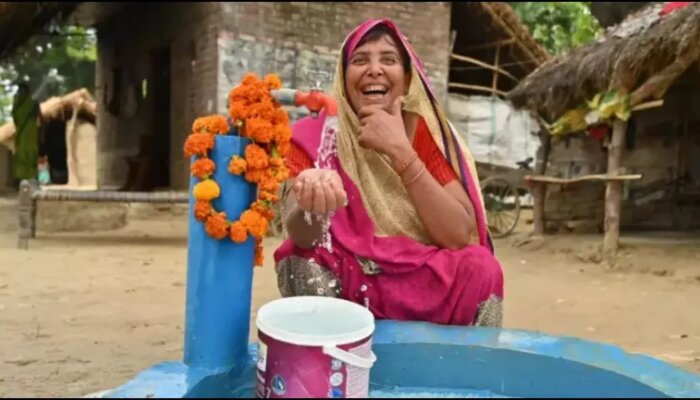
The Modi government achieved a major landmark just one day before the declaration of the dates for the 2024 Lok Sabha election. 75% of rural families in the nation now have access to tap water thanks to the efforts of the Modi administration. Running water is now available in homes even for those who live in remote places. The images of women carrying pots of water will soon become a thing of the past thanks to the efforts of Modi government. Water has been successfully provided to three-fourths of rural households in the country by the Modi government through the tap water in every house in “Jal Jeevan Mission.”

“Jal Jeevan Mission” is one of the most ambitious schemes of the Modi government. It is crucial to Prime Minister Narendra Modi’s vision for a developed India. The previous five years witnessed significant financial outlays by Modi administration to guarantee that tap water is available in every village across the country.

Currently, an assessment of the Modi government’s performance during his second term is being conducted prior to the Lok Sabha election. During this time, the government has been successful in resolving a lot of fundamental issues. During Modi government tenure, people have benefited from gas cylinders provided by “Pradhan Mantri Ujjwala Yojana”, and homes provided by “Pradhan Mantri Awas Yojana.” The Modi administration has also exceeded 75% of the target under the “Jal Jeevan Mission” scheme, the program launched to resolve the water crisis across the nation.

The majority of people in the country still reside in villages. However, before 2014, no particular action was taken to provide these villages with basic necessities like water. It never occurred to any authority that even in the nation’s villages, safe drinking water could be obtained through taps at home. Photographs of women walking several kilometres to collect water continued to surface, but the successive governments did nothing to address the problem.

The situation was not good before the “Jal Jeevan Mission”

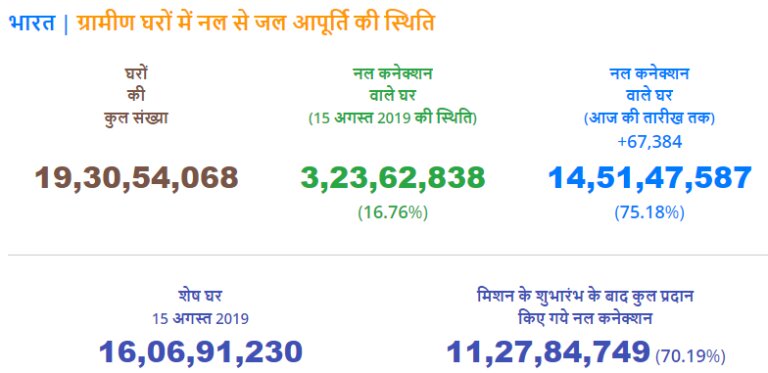
On 15th August 2019, PM Modi announced the “Jal Jeevan Mission” from Red Fort during his Independence Day speech. The Prime Minister stated that the initiative will put an end to the nation’s water crisis. It was significant because the majority of the country’s communities lacked access to tap water before the commencement of this project, and people experienced several water-related diseases due to lack of access to clean water. According to data from the Ministry of Water Resources, only sixteen per cent of the 19.3 crore rural households in the country were provided with tap water in 2019. In other words, from 1947 to 2019, just 3.23 crore rural homes nationwide recieved tap water.

Only 10 states in the union had more than 50% of their residents living in villages with the availability of safe drinking water as of 2019. Less than 5% of remote families had access to water in major states like Madhya Pradesh, Rajasthan, Bihar, Uttar Pradesh, and West Bengal. Jal Jeevan mission was brought about to combat this scarcity of water.

“Jal Jeevan Mission” transformed the situation

The Jal Jeevan Mission was started in 2019, and has since expanded swiftly, achieving village-to-village water connections. According to a Ministry of Jal Shakti report, 75% of the nation’s homes presently have tap water connections. Out of the 19.3 crore rural families in the nation, 14.5 crore at present have access to clean water.

Image via OpIndia Hindi

11.2 crore households have been linked under the scheme since the “Jal Jeevan Mission” began. More than 16 crore rural homes across the nation didn’t have a connection to tap water when the program was launched. Seventy per cent of these residences have water connection now. Water is being supplied even to far-flung regions of the country under the scheme.

The “Jal Jeevan Mission” has been the focus of government efforts during Modi administration’s second term. Villages have constructed water tanks in response to help address the water problem, through which water is being delivered. In addition, each neighbourhood now has water pipelines installed. The women in these 11 crore homes no longer have to travel great distances to get water since they have a direct supply. There is even no need to be concerned about the cleanliness and safety of the water.

70% of respondents to a News18 survey, carried out in the run-up to the upcoming general elections, reportedly benefited from the government’s “Jal Jeevan Mission” program. Together with “Ujjwala Yojana” and other schemes, the survey called the mission highly effective.

Haryana-Gujarat connect 100% of households while Bengal-Jharkhand lag behind

11 states and UTs in the country, Andaman and Nicobar Islands, Goa, Haryana, Telangana, Puducherry, Gujarat, Punjab, Himachal Pradesh, Arunachal Pradesh and Mizoram is now fully provided with access to tap water. 100% of the homes in these states now have access to tap water.

Furthermore, tap water is available to over 90% of homes in states like Uttarakhand and Bihar. All across the country, with the exception of two states, more than 50% of rural families now get water. However, it is worrisome how poorly some governments have performed in putting this plan into action. West Bengal, a state headed by the Trinamool Congress, has been dragging its feet on the program’s execution. Just 45% of homes in West Bengal now have access to tap water. Meanwhile, just 51% of homes in Jharkhand, and 52% of homes in Kerala have access to tap water. Rajasthan also has still less than 50% coverage under the scheme.

Rs 1.82 lakh crore has been spent by the central government on the project until now and is increasing its contribution to the scheme every year. Rs 66,023 crore was allocated for this scheme in the year 2023-24, while Rs 54,744 crore was given in 2022-23.

The Modi administration will put forward the development made in the last ten years before people in this Lok Sabha poll. It will continue to promote the “Jal Jeevan Mission” and link it with popular initiatives like the “Pradhan Mantri Awas Yojana” and “Pradhan Mantri Garib Kalyan Anna Yojana.” The rural population will also be significantly impacted by this appeal. The people’s standard of living has improved as a result of the water problem being resolved and consequently they might vote for the Bharatiya Janata Party in these elections on this issue.

After skipping 8 ED summons, AAP supremo Arvind Kejriwal gets bail from Delhi court in the case filed by agency

On Saturday, March 16, Delhi Rouse Avenue Court granted bail to CM and AAP supremo Arvind Kejriwal. The bail was granted on a surety bond worth Rs 15,000 and a personal bond of Rs 1 lakh after he was asked to appear before the court on the basis of two Enforcement Directorate (ED) complaints for skipping multiple summons issued in connection to the Delhi Excise Policy case.

Interestingly, the Delhi CM has skipped as many as 8 summonses sent to him by the Enforcement Directorate in connection with the probe related to the Excise Policy scam. His lawyer had argued before the court that Kejriwal’s in-person attendance before the ED would be detrimental to the Chief Minister. However, today, Kejriwal along with his lawyer Ramesh Gupta finally appeared in person in the court in connection with the case. At the last hearing, he appeared via video conferencing.

Notably, by skipping the Enforcement Directorate’s repeated summonses in the Delhi excise policy scam, Arvind Kejriwal violated Section 174 of the Indian Penal Code (IPC) – which deals with disobeying a legal order to be at a certain place in person or by agent.

The Enforcement Directorate informed the court that the Chief Minister had ignored eight summons issued under the Prevention of Money Laundering Act. The court summoned the AAP chief after the central probe agency, which wants to question Kejriwal in connection with the Delhi excise policy case, informed the court that the Chief Minister had ignored eight summonses issued under the Prevention of Money Laundering Act.

The Enforcement Directorate had filed two complaints against Kejriwal for disobeying their summonses to join the probe in the Delhi excise policy case.

On March 15, senior advocate Ramesh Gupta, who was representing Kejriwal at the hearing, alleged that ED was seeking the Chief Minister’s physical presence only for publicity. Questioning why the Enforcement Directorate wasn’t okay with Kejriwal getting an exemption from personal appearance, Gupta said, “Ye kya karna chahte hain? Juloos nikaalna chahte hain? Ye log do din pehle notice deke kehte hain aa jao…” (What do they want to do? They only want publicity in the name of the Chief Minister’s visit. They issue summons and ask him to appear within two days), his lawyer asked.

Gupta while attempting to explain the AAP leader’s rationale behind ignoring the ED summons tried his best to portray Arvind Kejriwal as an ‘Aam Aadmi’ in the process. “Inse (Kejriwal) zayada ordinary aadmi kya hoga? suit tak nahi pehena aaj tak inhone. Wo shirt pehenta hai wo bhi pant k bahar rahti hai. Joote nahi daale. Ye din m teen baar kapde nahi badalta. He is an ordinary man“, (Who can be more ordinary than him. He has till date never worn a suit, nor has he ever worn shoes. He wears only shirt and pant, that too never tucks in his shirt. He does not change his outfits thrice a day. He is an ordinary man), said Gupta, defending Kejriwal’s defiance in court.

What is the case

Arvind Kejriwal has challenged the summons issued to him by Delhi’s Rouse Avenue Court before the sessions court in connection with the Delhi excise policy case.

After the Enforcement Directorate filed a new case against the Chief Minister for failing to appear in the court on the summons, the judge summoned Kejriwal to appear on March 16.

Previous to this, the investigation agency had filed a motion in a local court to prosecute Kejriwal for failing to appear at the first three summons in the money laundering case.

The Enforcement Directorate (ED) has so far issued eight summons to Delhi Chief Minister Arvind Kejriwal in a money laundering probe related to irregularities in the Delhi Excise Policy 2021-22 case.

The ED wants to record Kejriwal’s statement in the case on issues like the formulation of policy, meetings held before it was finalised, and allegations of bribery.

Two senior AAP leaders — Manish Sisodia and Sanjay Singh — are already under judicial custody in the case. Sisodia, who was the then Delhi Deputy Chief Minister, was arrested by the CBI on February 26 following several rounds of questioning and on October 5, the ED arrested Singh, who is a Rajya Sabha member.

Yesterday (March 15), the Enforcement Directorate (ED) arrested K Kavitha, the daughter of former Telangana Chief Minister K Chandrashekar Rao and Bharat Rashtra Samithi (BRS) MLC from her house in Hyderabad. The arrest was made under the Prevention of Money Laundering Act (PMLA) in connection with the Delhi Excise Policy scam. According to the Enforcement Directorate, she is a member of the ‘South Cartel,’ which allegedly received payments in the case.

India’s foreign exchange reserves cross $636 Billion, at over two-year high

 India’s foreign exchange reserves rose by USD 10.470 billion to USD 636.095 billion in the week that ended on March 8, as per the latest data released by the Reserve Bank of India (RBI). The foreign exchange kitty rose for a third straight week to hit an over two-year high.

Before March 8 week, the foreign exchange reserves rose by USD 6.554 billion to USD 625.626 billion, data showed.

During the latest week, India’s foreign currency assets (FCA), the biggest component of the forex reserves, rose by USD 8.21 billion to USD 562.352 billion, the central bank’s weekly statistical data showed. Gold reserves during the week declined USD 2.299 billion to USD 50.716 billion.

In the calendar year 2023, the RBI added about USD 58 billion to its foreign exchange kitty. In 2022, India’s forex kitty slumped by USD 71 billion cumulatively.

Forex reserves or foreign exchange reserves (FX reserves), are assets that are held by a nation’s central bank or monetary authority.
It is generally held in reserve currencies, usually the US Dollar and, to a lesser degree, the Euro, Japanese Yen, and Pound Sterling.

In October 2021, the country’s foreign exchange reserves touched an all-time high of about USD 645 billion. Much of the decline, though marginal on a cumulative basis, since then can be attributed to a rise in the cost of imported goods in 2022.

Also, the relative fall in forex reserves could be linked to the RBI’s intervention, from time to time, in the market to defend the uneven depreciation in the rupee against a surging US dollar.

Typically, the RBI, from time to time, intervenes in the market through liquidity management, including through the selling of dollars, to prevent a steep depreciation in the rupee.

The RBI closely monitors the foreign exchange markets and intervenes only to maintain orderly market conditions by containing excessive volatility in the exchange rate, without reference to any pre-determined target level or band.

(This news report is published from a syndicated feed. Except for the headline, the content has not been written or edited by OpIndia staff)

YouTuber, who alleged that RSS-affiliated Seva Bharati Trust wants to eradicate Christians, ordered to pay ₹50 lakhs for defamation by Madras High Court

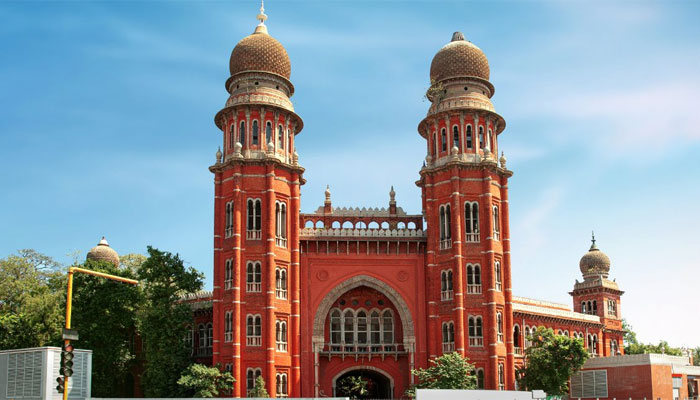
On 6th March, the Madras High Court ordered a YouTuber Surender alias Naathikan to pay ₹50 lakh as damages to Seva Bharati Trust for defamatory content. Seva Bharati is a service-oriented organisation affiliated with the RSS. Justice N Satish Kumar passed this order as the YouTuber was accused of making derogatory remarks against the trust. The YouTuber had linked the trust with the custodial death of two Christian men in 2020. While pronouncing the verdict, the court said that no one can use their constitutional freedom of speech and expression to invade the privacy of others or mar their reputation.

The court said, “Merely, under the pretext of freedom of expression, one cannot make an interview intruding the privacy of others, the Law does not give such absolute license to the YouTubers and the social media to spoil the reputation of others. Therefore, this Court cannot shut its eyes when such false allegations are circulated targeting innocent persons.”

The High Court further said, “Circulating statements nowadays are used as a tool to blackmail the people. Unless it is discouraged in the initial stage, there will not be an end and every black mailer may use the social media platform to blackmail others by spreading false and unnecessary news.”

The court’s decision stemmed from a petition filed by Seva Bharati, which sought damages and injunctions against Surender for making defamatory remarks. Seva Bharati approached the court to seek relief and restrain Surender from making any further defamatory statements against it. The trust informed the Court that despite having no involvement in the deaths of two Christian men, P Jayaraj and his son Bennix, and that it was widely acknowledged that the duo died while in police custody, Surender made baseless accusations against the organisation in a YouTube video.

Surender alleged that the Trust, associated with the RSS, aimed to “eradicate the Christian community.” The Court observed that the video’s contents were defamatory and lacked merit. Consequently, it ruled that the Trust was unquestionably eligible to seek damages.

The court said in the order, “Though the exact amount of damages in terms of monetary damages cannot be ascertained portraying the plaintiff in a bad light with allegations that their aim is only to eliminate the Christian community is nothing but serious allegations which not only causes damage to reputation but will have a serious impact in the very activity of the trust. Such view of the matter, though the nature of damages is immeasurable, considering the nature of the statement circulated on YouTube in the form of an interview, the plaintiff is certainly entitled to monetary compensation for a sum of ₹50,00,000/- which shall be paid by the defendant.”

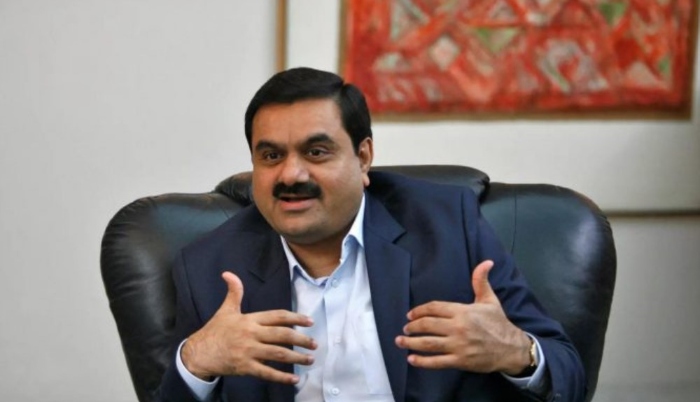
USA interfering in India once again ahead of elections: US Attorney’s Office for Eastern District of New York decides to probe Adani Group for a project in India

The United States has expanded its investigation into India’s Adani Group, focusing on whether the conglomerate, along with its founder Gautam Adani, may have engaged in bribery. US prosecutors are examining whether Adani entities, or individuals associated with the company, were involved in paying officials in India for favourable treatment on an energy project. The investigation, led by the US Attorney’s Office for the Eastern District of New York and the Justice Department’s fraud unit in Washington, also encompasses Indian renewable energy company Azure Power Global.

Adani Group, in response to the allegations, stated, “We are not aware of any investigation against our chairman. As a business group that operates with the highest standards of governance, we are subject to, and fully compliant, with anti-corruption and anti-bribery laws in India and other countries.”

While Adani Group asserted its unawareness of any investigation against its chairman and reaffirmed its commitment to the highest standards of governance and compliance with anti-corruption laws, the Justice Department and Azure Power declined to comment on the matter.

It is noteworthy that neither Gautam Adani nor his company, nor Azure Power, have been formally charged with any wrongdoing by the US Justice Department. However, US law permits federal prosecutors to pursue foreign corruption allegations if they involve certain connections to American investors or markets.

Adani Hindenburg Row

This is not the first time that the US has interfered in India using Adani. The current probe follows allegations made last year (January 2023) by US short-seller Hindenburg Research, which accused the Adani conglomerate of improper governance practices, stock manipulation, and the use of tax havens. Despite the initial selloff of Adani Group’s stocks and bonds, the company has vehemently denied these allegations and successfully rebounded from the controversy.

In May of last year, a 6-member expert panel had failed to find any wrongdoing on SEBI’s part regarding Adani Group. The committee concluded that the Adani Group had disclosed the information of all the beneficial owners of the business. The report also listed all the details of these beneficial owners as obtained from SEBI.

The Adani Group had trashed the Hindenburg Research report as a ‘malicious combination of selective misinformation and stale, baseless and discredited allegations’. The court refused to order an SIT probe on the allegations made by short-seller Hindenburg. It added that there was no evidence that SEBI was negligent in taking action and no reason to suggest any conflict of interest on SEBI’s part.

In January 2024, the Supreme Court ruled that it could not interfere with the regulatory framework or use the Hindenburg report as a justification for launching an SIT investigation. SEBI will proceed with its investigation per the law, the court said. 

Gautam Adani, the founder, has led the pushback against the claims, stating them as “malicious” and “false narratives.” Following the allegations, Adani Group’s shares have recovered substantially, with flagship Adani Enterprises Ltd. witnessing over a 70% gain in the past year. The Indian businessman’s fortune has surged again, positioning him as one of the world’s richest individuals. Despite the ongoing scrutiny, Adani Group’s continued presence in India’s economic landscape remains significant, with the company’s ventures attracting capital from around the world.

Squid Game actor O Yeong-Su, who played Player Number 001 ‘Oh IL Nam’, convicted of sexual misconduct

Actor O Yeong-Su, best known for his role in ‘Squid Game’, has been convicted of sexual misconduct over allegations he hugged and kissed a woman on the cheek against her wishes.

O was sentenced to up to eight months in prison, suspended for two years, by the Seongnam Branch of the Suwon District Court, Deadline reported, citing information from Korean reports.

The 79-year-old was charged in 2022 over allegations that he hugged a woman and kissed her on the cheek in 2017. However, he denied the charges.

After leaving the court on Friday, he told reporters that he would appeal the ruling, which included attending a 40-hour sexual offender treatment program.

O has previously said he held the woman’s hand to guide her around a lake. “I apologized because (the person) said she wouldn’t make a fuss about it but it doesn’t mean that I admit the charges,” he said.

O has been in the business of showbiz for over five decades but his role in Netflix’s show ‘Squid Game’ drew him global fame and acclaim. The series series depicts a dark world where marginalised individuals are forced to compete in deadly versions of traditional children’s games.

(This news report is published from a syndicated feed. Except for the headline, the content has not been written or edited by OpIndia staff)

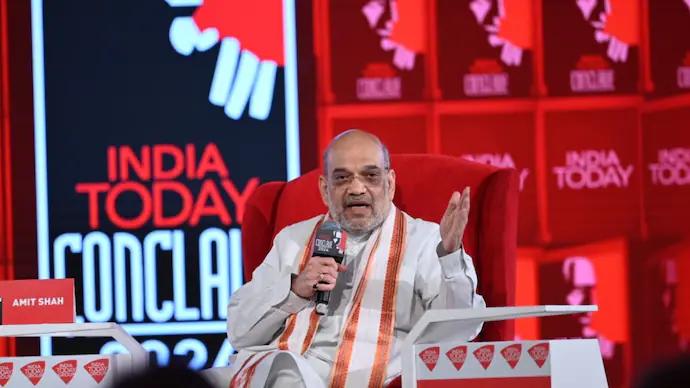
Pakistan-Occupied Kashmir belong to India, Hindus from there are also Indians, Muslims from there are also Indians: Union Home Minister Amit Shah

On Friday, March 15, Union Home Minister Amit Shah emphasised yet again that Pakistan-Occupied Kashmir (PoK) is an integral part of India. Amit Shah also added that the residents of PoK are Indian citizens irrespective of their religion. The Union Minister was speaking during an interaction on the first day of the ongoing India Today Conclave in Delhi.

Amit Shah said, “PoK is part of India. The people of PoK are also Indians, be it Hindu or Muslim. Both Hindus and Muslims of PoK are our own.”

The Home Minister was speaking for the first time since implementing the Citizenship Amendment Act (CAA) on March 11. The CAA will ensure that persecuted minorities from India’s neighbouring countries, who entered India before December 31, 2014, will be fast-tracked for Indian citizenship.

Responding to the criticism of CAA for exclusing Muslims from neighbouring countries, Amit Shah highlighted that the 3 countries included in the act, Pakistan, Bangladesh, and Afghanistan, are all Islamic countries and Muslims can’t face persecution on religious grounds there. However, he added that their persecuted minorities need a place to go.

At the India Today conclave, he asked, “At the time of Independence, there were 23 per cent Hindus in Pakistan. Today, they form just 2.7 per cent of the population. Where did they go? What happened to them? I will tell you, minor girls were forced into marriage and faced religious conversion, they faced atrocities. They took refuge in India to save their modesty. Why should we not give them nationality?”

Amit Shah also highlighted that Hindus in Bangladesh decreased from 22 per cent to 10 per cent, and in Afghanistan the number of Sikhs reduced from two lakhs to just 378 now.

He once again emphasised that no Indian is going to lose citizenship after implementation of CAA. “No one will lose citizenship because of CAA. I would ask Muslim brothers and sisters not to listen to the opposition. The opposition is merely doing politics with you again,” he said.

The CAA was passed by Parliament in December 2019 and implemented on March 11 this year.