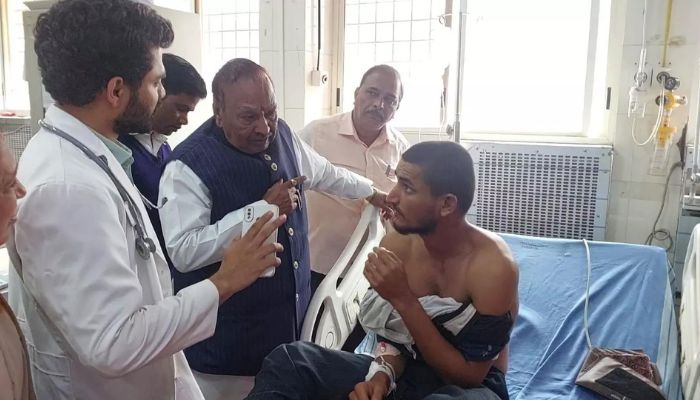
On 6th January, Gaya DIU officials of Bihar Police went to arrest a wanted criminal identified as Mohammed Sham Kareem from Fida Hussain Road in Jehanabad. When they stopped the criminal, an agitated mob attacked them and rescued the criminal from police custody. One of the persons who were involved in the mob was arrested later by Nagar Thana Police. Kareem is wanted in several cases of theft and dacoit, and he has been absconding for the last year. One police official reportedly got injured during the confrontation.
Nagar Thana Chief Inspector Nikhil Kumar said they have initiated an inquiry into the matter. Reports suggest that the police had triangulated Kareem’s location based on cell towers at Fida Hussain Road. The accused had come to attend a family function. The DIU officials reached the area in civilian clothes. Somehow, the local police could not go to the DIU officials, which led to a confrontation between DIU officials and the mob. Though the local police controlled the situation, Kareem managed to escape by then.
Videos of the incident were shared on social media. Reports suggest that the police officials who were in civil uniform were seen folding hands to save themselves from the mob.
Jahanabad SDPO said that the mob allegedly got confused as the police officials were in civil clothes and attacked them. During the confrontation, the criminal managed to escape.
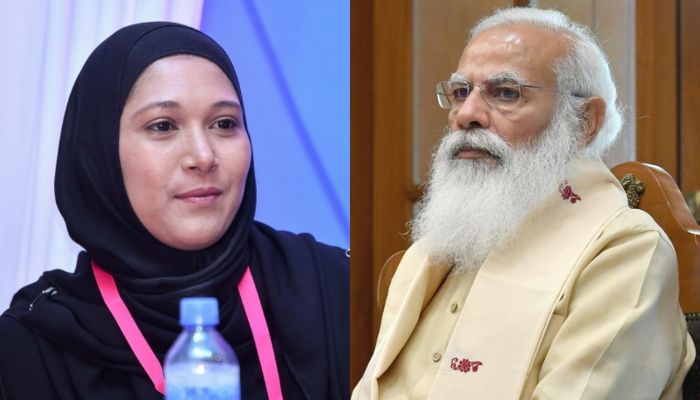
Amid outrage on social media over the derogatory remarks made by Mariyam Shiuna about Indian Prime Minister Narendra Modi, the Mohamed Muizzu-led-Maldives government has suspended her from the position of Deputy Minister of Youth Empowerment, Information and Arts on Sunday (7th January).
As per a report by Atoll Times, the government has also suspended Ministers Malsha Shareef and Mahzoom Majid . Earlier in the day, the Indian government raised strong objections with the Maldivian government against the remarks made by Mariyam Shiuna.
Following the backlash, the Government of Maldives issued a token statement of condemnation. It read, “The Government of Maldives is aware of derogatory remarks on social media platforms against foreign leaders and high-ranking individuals. These opinions are personal and do not represent the views of the Government of Maldives…Moreover, the relevant authorities of the Government will not hesitate to take action against those who make such derogatory remarks.”
On 4th January, PM Narendra Modi shared some pictures of his recent visit to Lakshadweep as he exhorted people to explore the scenic island in what could be seen as a push to his ‘vocal for local’ slogan, and an effort to give a boost to tourism in the island.
Following PM Modi’s tweet posting stunning vistas from the Lakshadweep Islands, several social media users in India called for Indians to visit the place over foreign destinations, including the Maldives, which shares similar geographical characteristics as the Lakshadweep Islands.
That touched off bitter reactions from Maldivian counterparts, including governmental functionaries and prominent citizens, many of whom resorted to making churlish remarks against India, Indians, and the Indian PM.
Screengrab of the tweet by Mariyam Shiuna
Mariyam Shiuna, Deputy Minister of Youth Empowerment, Information and Arts, recently made insulting remarks against PM Modi, referring to him as a ‘clown’ and a ‘puppet of Israel’ after he posted pictures from his visit to Lakshadweep Islands.
“What a clown. The puppet of Israel Mr Narendra diver with a life jacket #VisitMaldives,” Shiuna tweeted. The post was deleted after backlash on X, formerly known as Twitter, where Indian social media users slammed the Maldives government officials, including Shiuna, for their crass remarks against the Indian Prime Minister.
It is worth noting that PM Modi did not mention the Maldives anywhere in his tweets.
In a shocking case of moral policing, a Hindu boy and his Muslim sister were brutally assaulted by a group of Muslim youths on Saturday (6th January), in Belagavi, Karnataka. The cousins, residents of Yamnapur on the outskirts of Belagavi city, were at the Fort Lake premises. They had come to register for the Yuva Nidhi scheme. A lunch break at the cyber centre in Belagavi led them to wait at the lake, where the assault occurred.
This boy is identified as Sachin Lamani (age 18) and his cousin is identified as Muskan Patel (age 22). Sachin Lamani is a Dalit Hindu. His aunt, father’s sister, married a Muslim man, and therefore his cousin is Muslim. The police have registered a case under the SC/ST Atrocities Act.
The victims, who were mistaken for a couple by the attackers, were targeted due to their different religious identities. The brother and sister, in an attempt to clarify their relationship, faced violence when the group refused to believe they were cousins. “A group of accused rushed towards us and attacked us. They asked us who you are and how you are related to each other and dragged us to a nearby room,” the boy recounted.
He added, “They asked why a Hindu and a Muslim were sitting together. I told them she wasn’t a Muslim but my own aunt’s daughter. They took both of our phones. They snatched away Rs 7,000.”
He further said, “When we went to apply for the scheme, they asked us to come after an hour as it was lunchtime. So, we went to sit by Killa Lake. The miscreants were drunk when they came to us. They took a rod and thrashed us.”
The attackers, armed with pipes and rods, beat the siblings mercilessly for hours, causing severe injuries. The assailants also tried to strangulate Sachin by his neck. During the assault, the boy contacted the police by calling 112. Acting swiftly, the Belagavi city police traced their location and rescued them. Both victims are now receiving critical care in the Intensive Care Unit of the district hospital.
City Police Commissioner SN Sidram informed, “We have arrested eight people in connection with the case on Sunday. An FIR has been registered against 17 people. The investigation is on.”
This incident has sparked outrage and concern over the rise of moral policing incidents in the city, particularly those driven by religious biases. The swift action by the police in arresting the primary suspects has been noted, but the incident raises significant questions about the safety of citizens in public spaces.
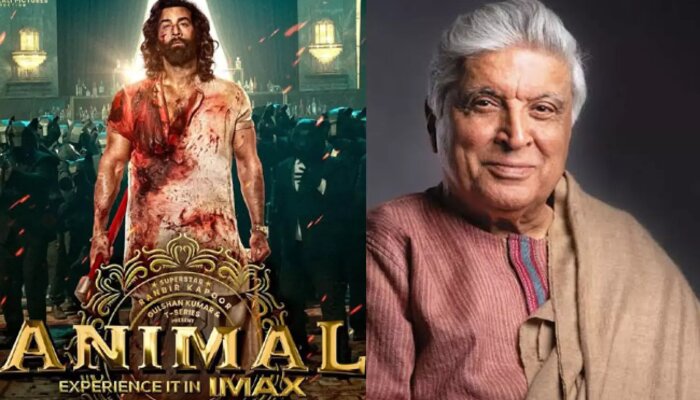
Animal movie has gained widespread popularity and minted massive amounts at the box office, however, not without its share of detractors. Now, the makers of the venture have responded firmly to the harsh statement made by veteran lyricist Javed Akhtar. The official social media account of the film called out the hypocrisy of Akhtar and mentioned that the scenes that are being deemed controversial would have gained acceptance among the critics if they were performed by females instead of males.
It charged that if a writer of Javed Akhtar’s calibre cannot comprehend a lover’s treachery between the male and female protagonists then everything about his art is blatantly false and added, “Let love be free from the politics of gender. Let’s just call them lovers. Lover cheated and lied. Lover said lick my shoe. Period,” referring to the movie sequences.
Writer of your calibre cannot understand the betrayal of a lover (Between Zoya & Ranvijay) then all your art form is big FALSE ? & If a woman (betrayed and fooled by a man in the name of love) would have said "lick my shoe" then you guys would have celebrated it by calling it…
Notably, Javed Akhtar stated that the economic success of movies featuring objectionable themes is a “dangerous” trend, seemingly aiming at Sandeep Reddy Vanga’s multilingual project Animal. He spoke out against the status of cinema at the start of this week at the 9th Ajanta Ellora International Film Festival in Chhatrapati Sambhajinagar. However, he never directly took the movie’s name.
The 78-year-old Javed Akhtar mentioned, “The image of a hero should be created with an awareness of what is right and how it should be. Today’s writers need to think because confusion has increased among them. The reason for this is that society is in confusion. Society does not decide what is right and what is wrong, but it is reflected in cinema. There was a time when the poor were good and the rich were bad. But today, we only have one thought in our head, ‘Kaun Banega Crorepati.’ So we can’t make the rich look bad now since we ourselves want to be rich.”
Akhtar added, “I believe it’s a testing time for the young filmmakers today as to what kind of characters they want to create that the society will applaud. For instance, if there’s a film in which a man asks a woman to lick his shoe or if a man says it’s okay to slap a woman, and if the film is a super duper hit, then that’s very dangerous,” discussing the volatile exchange between Ranbir Kapoor and Tripti Dimri’s characters in Animal.
Javed Akhtar noted, ‘Nowadays, I feel that more responsibility is on the audiences than filmmakers. The audiences have to decide what movies they like and what they don’t like. It is entirely up to the audience to decide what to reject. The ball is currently in the audience’s court. Even today, there are as many filmmakers making good movies. The fate of cinema depends on how long you stand with them.”
With around Rs 900 crore in global revenue, filmmaker Sandeep Reddy Vanga’s Animal, featuring Ranbir Kapoor, Anil Kapoor, Bobby Deol, Rashmika Mandanna and Tripti Dimri among others became one of the biggest Indian hits of 2023 despite criticism. There is a lot of excitement among fans for the OTT release of the film and rumours in the media say that Netflix will air it no later than end of this month.
On January 22, 2024, India will witness a historic event that marks a significant milestone in its civilisational history – the consecration ceremony of the Shri Ram Mandir at Ayodhya. This event, unfolding after five centuries of persistent struggle and devotion, symbolises not just the spiritual awakening but also the realisation of a collective aspiration of millions. The Ram Mandir, a beacon of faith and perseverance, is set to redefine India’s cultural and spiritual landscape.
Historical Background
The story of the Ram Mandir is a saga of devotion, struggle, sacrifice, and resilience that stretches back over 492 years. The temple believed to have been demolished by the Mughal tyrant Babar in 1528, has been at the centre of a historical and spiritual quest for centuries. This quest, deeply embedded in the hearts of millions, has seen countless devotees laying down their lives for the cause.
The Legal Battle and Archaeological Evidence
The legal battle for the Ram Mandir, tracing back to 1855, intensified with the discovery of Lord Ram idols inside the disputed structure in 1949. This led to a series of legal proceedings and the movement gaining momentum in the late 1980s. The late 1980s saw the movement gather unprecedented momentum thanks to the efforts of Vishwa Hindu Parishad and the Ram Rath Yatra of Lal Krishna Advani culminating in a yet intense series of legal proceedings. On 9th November 1989, Kameshwar Chaupal of Bihar played a pivotal role in the historic foundation stone-laying ceremony by placing the inaugural stone at the site.
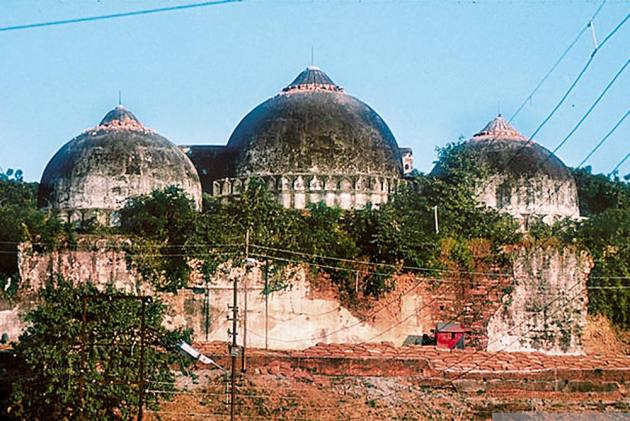
The disputed structure at the Shri Ram Janmabhoomi site was built by Mughal tyrant Babar. Image Source: Outlook India
Groundbreaking Archaeological Evidence for Ram Mandir
In a significant turn of events, the Allahabad High Court ordered a Ground Penetrating Radar (GPR) survey in 2003. This advanced survey, using radar waves for sub-surface imaging, revealed the existence of a structure beneath the Babri Mosque. To validate these findings, the High Court commissioned an excavation by the Archaeological Survey of India (ASI). The ASI’s report confirmed the remnants of a North Indian-style temple beneath the disputed site, adding a crucial archaeological dimension to the legal case.
The Allahabad High Court Verdict
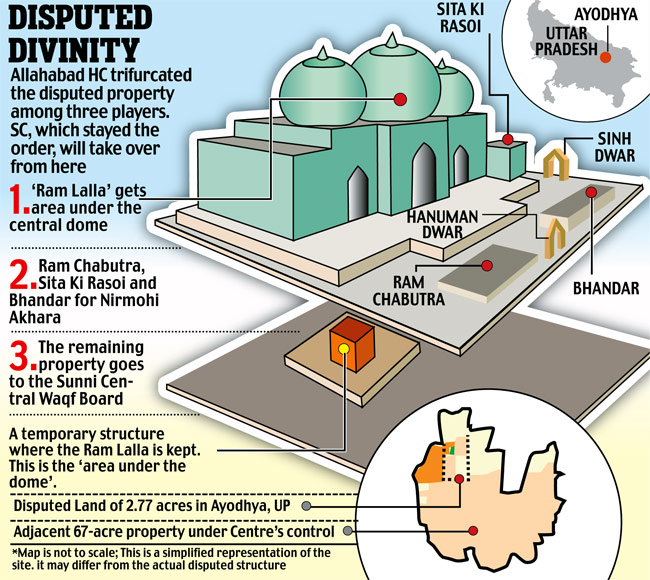
In September 2010, the Lucknow Bench of the Allahabad High Court addressed the long-standing dispute over the Ayodhya site. This crucial judgment acknowledged the demolition of the original temple, a significant point in the historical and legal narrative of the Ram Mandir. In an attempt to resolve the complex web of civil suits tied to the land, the court proposed a three-way division of the contested site. This unprecedented decision aimed to allocate separate sections to the three main parties involved in the dispute.
A pictorial representation of the Allahabad High Court’s verdict. Image Source: IAS Parliament
Despite the court’s efforts to provide a balanced resolution, the verdict did not receive unanimous acceptance. Each party involved, holding firm to their respective claims and religious convictions, found the judgment unsatisfactory. This unanimous discontent led to a swift progression of appeals to the Supreme Court, seeking a more conclusive and acceptable solution to this centuries-old conflict.
Mediation Efforts
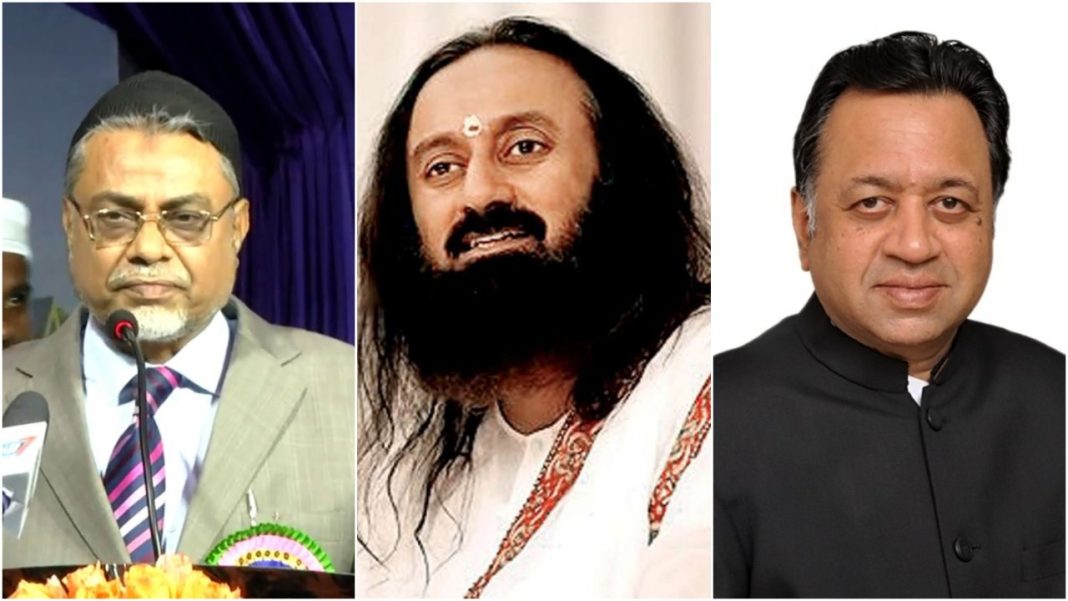
In a bid to resolve the dispute amicably, the Supreme Court, in March 2019, proposed mediation, forming a committee including Retired Supreme Court Justice Kalifulla, Senior Advocate of Madras High Court Sriram Panchu and spiritual Guru of Art of Living Sri Sri Ravi Shankar. However, by July, it became clear that mediation would not yield the desired outcome.
The mediation panel proposed by the Supreme Court. Image Source: Newsmobile
The Supreme Court verdict
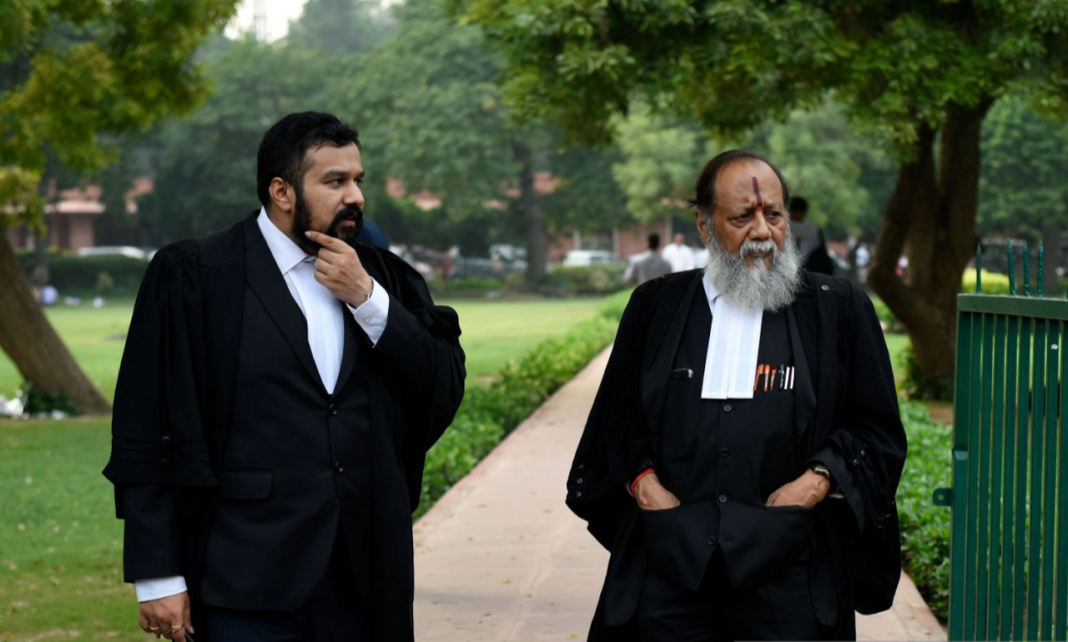
On 6th August 2019, the Supreme Court embarked on a definitive phase in the Ayodhya case, initiating daily hearings. Presided over by the Chief Justice, a five-judge bench meticulously reviewed the appeals. This judicial endeavour, spanning 40 days and encompassing 170 hours of arguments, concluded on 16th October 2019. Among the many legal luminaries who contributed to this cause, the unmatched dedication of father-son duo Hari Shankar Jain and Vishnu Shankar Jain stands out. They have also been instrumental in other significant legal battles related to Hindu, Jain, and Buddhist holy sites.
The pivotal moment arrived on 9th November 2019. The Supreme Court’s full bench, in a unanimous decision, affirmed the 1993 acquisition of the disputed 14,000 acres, including its surroundings, as the legitimate property of Lord Ram. This landmark verdict paved the way for the construction of the Ram Mandir, as the court directed the government to establish a dedicated trust. This trust was tasked with overseeing the temple’s development on the entire 70-acre land, thereby bringing a historic resolution to the centuries-old dispute.
Formation of the trust and foundation stone laying ceremony
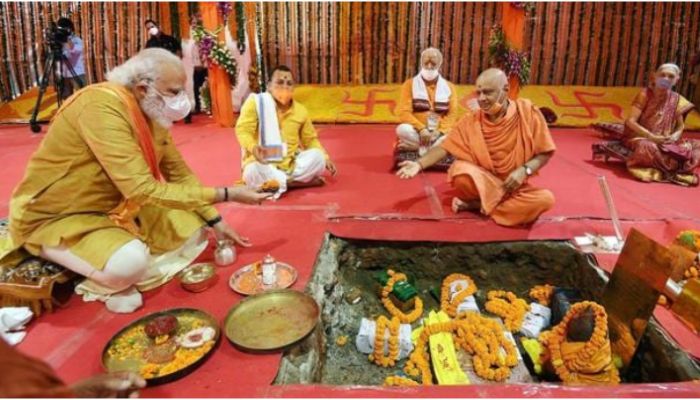
This decision led to the formation of the ‘Shri Ram Janmabhoomi Tirth Kshetra’ trust on 5th February 2020, to oversee the temple’s construction. The Bhoomi Pujan, held on 5th August 2020, saw dignitaries like Prime Minister Narendra Modi and RSS Chief Dr Mohan Bhagwat lay the foundation stone, marking the beginning of a new era. Sacred waters and soil from the country’s holy rivers and pilgrimage sites were dedicated to the ceremony.
Prime Minister Narendra Modi laid the foundation stone of Shri Ram Mandir. Image Source: Hindustan Times
Architectural and Structural Details of the Ram Mandir
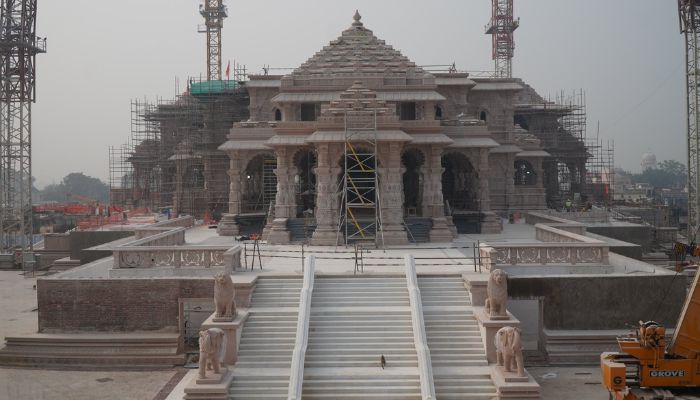
The Ram Mandir, a marvel of traditional Indian architecture, stands as a testament to the timeless Nagar style. With its grand dimensions, the temple spans a length of 380 feet from east to west, a width of 250 feet, and reaches a majestic height of 161 feet. This awe-inspiring structure is spread across three levels, each floor standing 20 feet tall. The temple’s robust design is supported by a total of 392 intricately carved pillars and is accessible through 44 ornate doors, blending strength with splendour.
At the heart of the temple, in the basement sanctum sanctorum, is the revered idol of Shri Ram Lalla, depicting the childhood form of Lord Shri Ram. Rising above, on the first floor, the temple will house a Shri Ram Darbar, a sacred space dedicated to Lord Ram and his divine assembly. Surrounding these central areas are five distinct Mandaps or Halls – the Nritya Mandap, Rang Mandap, Sabha Mandap, and areas designated for Prarthna (prayer) and Kirtan (devotional song), each reflecting a unique aspect of the temple’s spiritual and cultural significance.
You all must be curious about how the Shri Janmabhoomi Mandir in Ayodhya will look once its complete.
To give you a preview of this divine project, we have tried to present it through a 3D video.
— Shri Ram Janmbhoomi Teerth Kshetra (@ShriRamTeerth) February 13, 2022
In addition to its spiritual grandeur, the temple is designed with inclusivity in mind. Visitors will enter from the east, ascending a series of 32 stairs leading through the Singh Dwar, a gateway that symbolizes strength and valour. Recognizing the needs of differently-abled and elderly devotees, the temple’s design includes ramps and lifts, ensuring accessibility for all. The entire structure is encircled by a formidable rectangular compound wall, extending 732 meters in length and 14 feet in width, which not only adds to the temple’s magnificence but also provides a sense of serenity and containment.
More About the Shri Ram Mandir
The Shri Ram Mandir, a symbol of India’s rich spiritual and cultural heritage, extends its reverence beyond the main temple structure, encompassing a series of auxiliary temples and significant elements. At each of the four corners of the expansive compound, devotees can find temples dedicated to a pantheon of revered deities: Lord Surya, Goddess Bhagwati, Lord Ganesha, and Lord Shiva. These temples not only enhance the spiritual ambience but also represent the inclusive nature of Hindu worship.
Adding to the sanctity of the site, the northern and southern arms of the temple complex host two more significant temples. In the north lies a temple dedicated to Maa Annapurna, symbolising nourishment and sustenance, while the southern arm is graced by a temple honouring Lord Hanuman, epitomizing devotion and strength. Near the temple complex, the historic Sita Well (Sita koop), dating back to ancient times, serves as a reminder of the enduring legacy of the Ramayana.
अयोध्या में निर्माणाधीन श्रीराम जन्मभूमि मंदिर की विशेषताएं:
1. मंदिर परम्परागत नागर शैली में बनाया जा रहा है।
2. मंदिर की लंबाई (पूर्व से पश्चिम) 380 फीट, चौड़ाई 250 फीट तथा ऊंचाई 161 फीट रहेगी।
3. मंदिर तीन मंजिला रहेगा। प्रत्येक मंजिल की ऊंचाई 20 फीट रहेगी। मंदिर में कुल… pic.twitter.com/BdKNdATqF6
— Shri Ram Janmbhoomi Teerth Kshetra (@ShriRamTeerth) January 4, 2024
The temple complex also plans to house temples dedicated to a host of revered figures from the Ramayana and Hindu mythology. These include temples for Sage Valmiki, Sage Vashishtha, Sage Vishwamitra, Sage Agastya, King Nishad, Mata Shabari, and Ahilya, the wife of Sage Gautama. Each of these temples will not only offer spaces for worship but also serve as a testament to the diverse characters that enrich the epic of Ramayana.
In the southwestern part of the complex, an ancient temple of Lord Shiva has been meticulously restored on Navratna Kuber Tila, accompanied by an installation of Jatayu, symbolizing devotion and sacrifice. Remarkably, the entire temple complex adheres to ancient Vedic construction principles, with no iron used in the main temple and no concrete on the ground, preserving the sanctity and traditional authenticity of the structure. Below ground, the sanctum sanctorum boasts a 14-meter-thick layer of roller-compacted concrete (RCC), skillfully crafted to resemble artificial rock, ensuring both the stability and the aesthetic integrity of this monumental structure.
Pictures taken this morning at Shri Ram Janmabhoomi Mandir site.
— Shri Ram Janmbhoomi Teerth Kshetra (@ShriRamTeerth) December 24, 2023
A 21-foot-high granite plinth, constructed for moisture protection, reinforces the temple’s resilience. The temple complex is not just a spiritual haven but also a model of modern amenities and environmental consciousness. It includes a sewage treatment plant, a water treatment facility, and an independent power station to ensure sustainability and self-sufficiency. A Pilgrims Facility Centre is equipped to handle the belongings of 25,000 pilgrims, offering lockers and medical facilities.
Additional conveniences like bathing areas, washrooms, washbasins, and open taps are provided in the Block facilities for the comfort of visitors. Emphasizing environmental and water conservation, 70% of the 70-acre area is dedicated to green spaces, showcasing a harmonious blend of tradition and contemporary ecological awareness.
Conclusion
The Shri Ram Mandir, with its intricate design, spiritual depth, and homage to various deities and sages, stands not just as a temple but as a complex embodying the vast tapestry of Hindu mythology and spiritual practice. This architectural masterpiece, with its harmonious blend of spiritual symbolism, cultural heritage, and inclusive design, stands not just as a place of worship, but as a beacon of India’s ancient architectural prowess and its enduring spiritual ethos.
As India awaits the temple’s consecration, there’s a palpable sense of anticipation and pride. This temple is not just a structure of faith but a symbol of India’s resilience and devotion. It stands as a testament to India’s ability to reclaim and celebrate its ancient civilisational identity, potentially heralding a new era where India re-embraces its role as ‘Vishwaguru.’
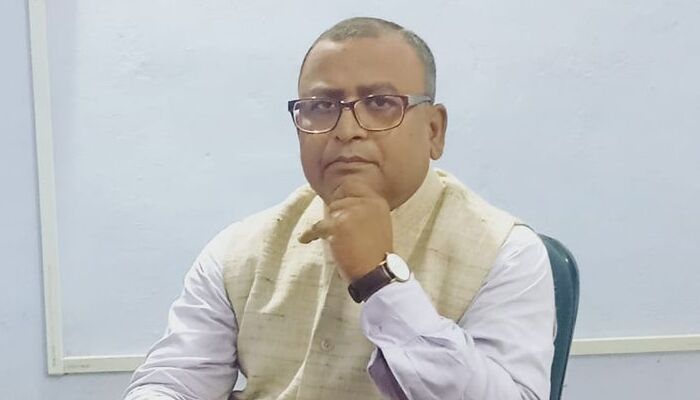
On Saturday (6th January), Bihar Police initiated an investigation against Bihar’s Jai Prakash University (JPU) professor Khursheed Alam after his anti-national Facebook posts sparked outrage. A complaint has been lodged against the accused assistant professor at JPU’s Narayan College in Siwan. The professor had called for a “separate homeland for Indian Muslims”.
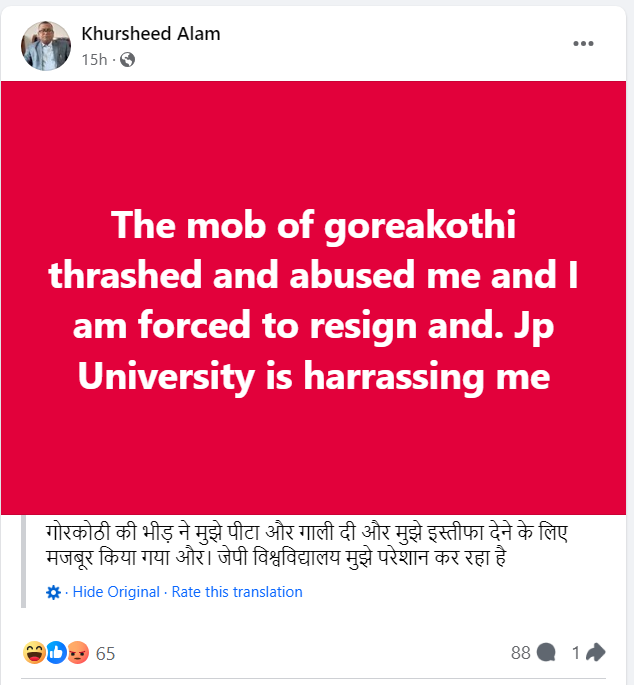
As reported earlier, the Akhil Bhartiya Vidyarthi Parishad (ABVP) members submitted a memorandum to the varsity’s Vice Chancellor Dr Ranjit Kumar seeking Khursheed Alam’s dismissal and appropriate action. Now the professor has resigned. In his Facebook post, he claimed that a ‘mob’ in Goreakothi thrashed and abused him adding that he was “forced” to resign. Further, Alam accused the JPU university authorities of harassing him.
Notably, Khursheed Alam’s resignation came after he was issued a show-cause notice yesterday asking him to explain why disciplinary action should not be taken against him over his contentious social media posts.
Speaking to TOI, JPU’s Ranjit Kumar said, “Posting such matters on social media platforms is totally wrong. It seems he is not in a good state of mind. Anyway, we have written to the SP, DM, and the Raj Bhavan to take suitable action against him.”
Siwan SP Shailesh Kumar Sinha told TOI that Khursheed Alam only expressed his opinion through his social media posts. “He (Alam) expressed his opinion through these posts. Anyway, police have made anentry of the complaint and begun an investigation,” SP Sinha said.
Making a baseless assertion, Alam told TOI that the ruling Bhartiya Janata Party (BJP) has declared in its manifesto to make India a Hindu Rashtra. Moreover, he accused the judiciary of giving judgements against the Muslim minority.
During a media interaction, Khursheed Alam said that his posts were directed against the ‘Hindu nationalist government’ in power. He further justified his Facebook posts in which he raised the slogans of ‘Pakistan Zindabad’ saying that “there is nothing wrong in it” and doing so would foster good relations with hostile neighbours. When asked to delete his anti-national posts, Alam continued to brazen it out and said that there is no question of deleting those posts. He asserted that if a Pakistani raises Vande Mataram slogans and an Indian raises Pakistan Zindabad slogans what is wrong in it?
Khursheed Alam raised the Pakistan Zindabad slogan, however, this time he also raised the Hindustan Zindabad slogan. However, when asked to say Bharat Mata Ki Jai, he refused to do so saying that it is a “Brahaminical idea” and that he is opposed to it.
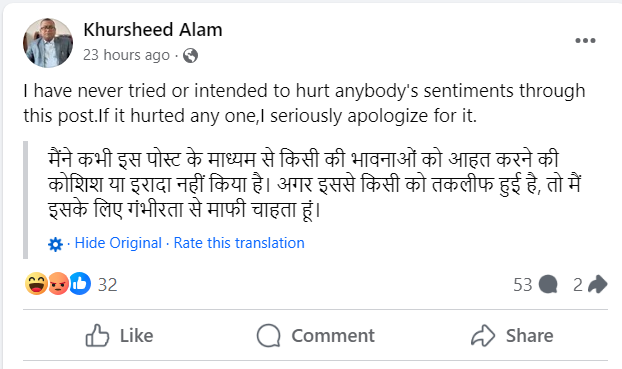
Notably, as the matter escalated on Saturday, Alam took to his Facebook account to ‘apologise’ as he wrote, “I have never tried or intended to hurt anybody’s sentiments through this post.If it hurted any one, I seriously apologize for it.”
As reported earlier, an outrage erupted after Khursheed Alam made anti-national posts on Facebook demanding a ‘separate’ nation for Indian Muslims adjoining Pakistan and Bangladesh.
All screenshots via Facebook
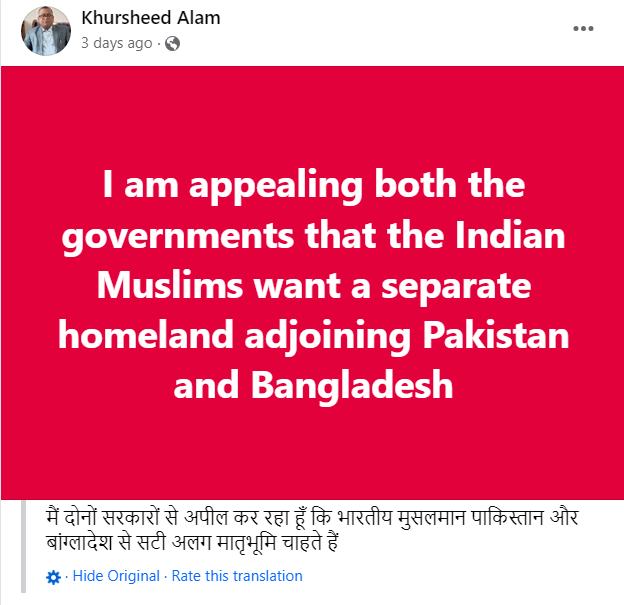
On Tuesday (2nd January), Khursheed Alam wrote on Facebook appealing to the governments of neighbouring Islamic countries Bangladesh and Pakistan that Indian Muslims want a separate nation for themselves. He wrote, “I am appealing both the governments that the Indian Muslims want a separate homeland adjoining Pakistan and Bangladesh.” In other Facebook posts, Khursheed Alam expressed his respect for the national anthems of Pakistan and Bangladesh.
On Sunday (7th January), India officially raised objections to the derogatory remarks made by a sitting Maldivian Minister Mariyam Shiuna against Prime Minister Narendra Modi.
As per a report by WION, the Indian government raised the matter with the incumbent Muizzu government in Maldives. The incident has sparked a diplomatic row between India and the island nation of Maldives.
Breaking: India raises derogatory remarks made by Maldives minister Shiuna with Muizzu Govt. https://t.co/4Gj0roY353
Following the backlash, the Government of Maldives issued a token statement of condemnation. It read,
“The Government of Maldives is aware of derogatory remarks on social media platforms against foreign leaders and high-ranking individuals. These opinions are personal and do not represent the views of the Government of Maldives…Moreover, the relevant authorities of the Government will not hesitate to take action against those who make such derogatory remarks.”
Government of Maldives issues statement – "The Government of Maldives is aware of derogatory remarks on social media platforms against foreign leaders and high-ranking individuals. These opinions are personal and do not represent the views of the Government of… pic.twitter.com/RQfKDb2wYF
On 4th January, PM Narendra Modi shared some pictures of his recent visit to Lakshadweep as he exhorted people to explore the scenic island in what could be seen as a push to his ‘vocal for local’ slogan, and an effort to give a boost to tourism in the island.
Following PM Modi’s tweet posting stunning vistas from the Lakshadweep Islands, several social media users in India called for Indians to visit the place over foreign destinations, including the Maldives, which shares similar geographical characteristics as the Lakshadweep Islands.
That touched off bitter reactions from Maldivian counterparts, including governmental functionaries and prominent citizens, many of whom resorted to making churlish remarks against India, Indians, and the Indian PM.
Screengrab of the tweet by Mariyam Shiuna
Mariyam Shiuna, Deputy Minister of Youth Empowerment, Information and Arts, recently made insulting remarks against PM Modi, referring to him as a ‘clown’ and a ‘puppet of Israel’ after he posted pictures from his visit to Lakshadweep Islands.
“What a clown. The puppet of Israel Mr Narendra diver with a life jacket #VisitMaldives,” Shiuna tweeted. The post was deleted after backlash on X, formerly known as Twitter, where Indian social media users slammed the Maldives government officials, including Shiuna, for their crass remarks against the Indian Prime Minister.
It is worth noting that PM Modi did not mention the Maldives anywhere in his tweets.
On 6th December (Saturday), Madhya Pradesh Police stated that all the 26 girls who were feared to have gone ‘missing’ from an illegally run children’s home in Bhopal were safe. They were found at their respective homes. According to the state police, all the 26 ‘missing’ girls were found living at their homes and the scare was because of a lack of paperwork maintained by the illegally run Shelter Home.
Bhopal district superintendent of police, Pramod Kumar Sinha said, “Preliminary investigation has suggested that the ‘missing’ 26 girl children have in fact returned to their respective homes when they did not feel comfortable in the shelter home.” He, however, added that statements of these children are being taken and action will be taken in the case based on their statements.
Additionally, on Saturday, Chief Minister Mohan Yadav asserted that tough action will be taken in this case of illegally run Child Shelter house. Assuring that all girls are safe, he said, “The missing girls from the children’s home have been verified. All the daughters are safe. They have been identified. Not a single culprit will be spared in this matter.”
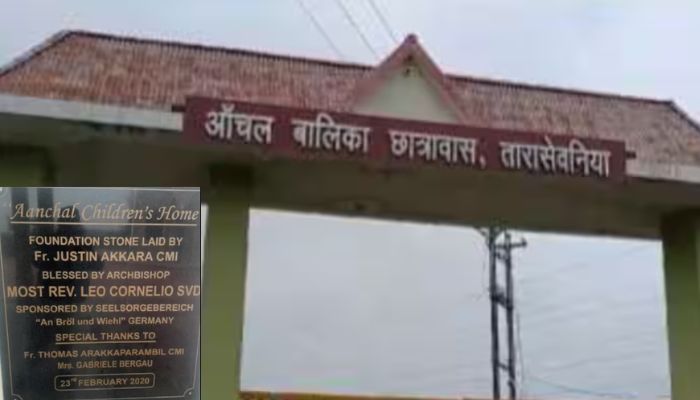
Notably, the reports of 26 girls missing from an illegally run Child Shelter home came to light on Thursday (4th December). The illegal Missionary run-shelter home was busted during a surprise inspection by National Commission for Protection Of Child Rights (NCPCR) chairman Priyank Kanungo when he visited the Aanchal Girls’ Hostel in the Parwalia area on the outskirts of Bhopal. During the inspection, Kanungo found that there were entries of 68 girls in its register, but 26 of them were ‘missing’.
कल मध्यप्रदेश की राजधानी भोपाल के तारासेवनिया में राज्य बाल आयोग अध्यक्ष व सदस्यों के साथ संयुक्त रूप से एक मिशनरी द्वारा संचालित अवैध बाल गृह का निरीक्षण किया। यहाँ की संचालक NGO हाल तक सरकारी एजेन्सी की तरह चाइल्ड लाइन पार्ट्नर के रूप में कार्यरत रही है,एवं इसने सरकारी… pic.twitter.com/yVlWt04c90
— प्रियंक कानूनगो Priyank Kanoongo (@KanoongoPriyank) January 5, 2024
He said, “Most of the more than 40 girls aged between 6 and 18 are Hindus.” According to NCPCR Chairman Kanungo, a missionary who was managing the children’s home rescued some children from the streets and was running the shelter home without any license. He added that the rescued children were kept secretly in the house and were made to “practice Christianity”.
However, it has been revealed that the girls are safe in their respective houses and it was the shelter house that failed to keep records. According to the officials, all 41 remaining girls have been shifted to registered shelters.
The authorities take stern actions against officials
Taking stern action in this case, the authorities have suspended three officials of the Women and Child Development (WCD) department for negligence. Two other officials have been served show-cause notices. Officials said that shelter director Anil Mathew has been booked under the Juvenile Justice Act following a complaint filed by a WCD official.
Asserting that the shelter was running illegally, Bhopal SP (rural) Pramod Kumar Sinha said that the home wasn’t registered and the orphans were kept there without permission from the Child Welfare Committee.
The suspended officials have been identified as WCD officials Komal Upadhyaya, Brijendra Pratap Singh, and Manjusha Raj. Deputy director Ramgopal Yadav and district programme officer Sunil Solanki have been served show cause notice.
SP Sinha said that as per the complaint, the shelter was found to be located in an agricultural field in an isolated area.
According to the FIR, Anil Mathew who earlier ran Railway ChildLine had registered many orphans through outreach programmes in various areas without obtaining permission from the CWC. Further, there were no CCTV cameras on the premises and instead of only female guards as specified in rules for girls’ shelter homes, it had two men among four security guards deployed on night duty.
Furthermore, Bhopal Collector Kaushlendra Vikram Singh on Saturday added that an investigation into foreign funding-related issues and other aspects, including religious conversions at the children’s home was also being conducted. He added that strict action would be taken against whoever was found guilty in the matter.
The FIR in the case was registered at Parwaliya Sadak Police Station in Bhopal under sections of the Juvenile Justice (Care and Protection of Children) Act, 2015. Director Anil Mathew is booked as an accused in the case.
Two days after politicians and public figures from the island nation of Maldives went on a racist diatribe against Indians, Akshay Kumar urged Indians to not tolerate such unprovoked hate and to support India’s native tourism.
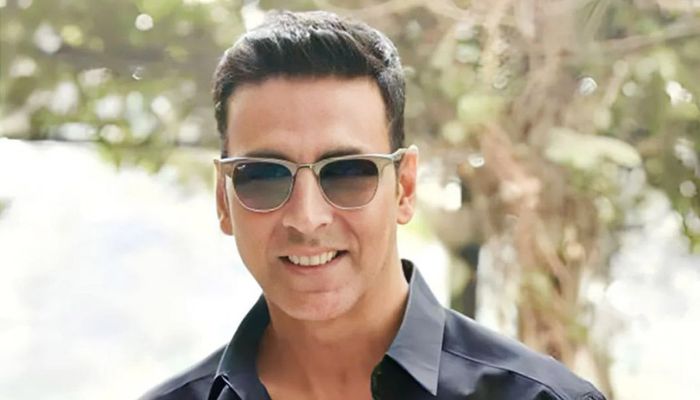
In a tweet on Sunday (7th January), the Bollywood actor wrote, “Came across comments from prominent public figures from Maldives passing hateful and racist comments on Indians. Surprised that they are doing this to a country that sends them the maximum number of tourists.”
“We are good to our neighbors but why should we tolerate such unprovoked hate? I’ve visited the Maldives many times and always praised it, but dignity first,” he emphasised.
Came across comments from prominent public figures from Maldives passing hateful and racist comments on Indians. Surprised that they are doing this to a country that sends them the maximum number of tourists. We are good to our neighbors but why should we tolerate such… pic.twitter.com/DXRqkQFguN
“Let us decide to #ExploreIndianIslands and support our own tourism,” he concluded.
The Background of the Controversy
On January 4, PM Narendra Modi shared some pictures of his recent visit to Lakshadweep as he exhorted people to explore the scenic island in what could be seen as a push to his ‘vocal for local’ slogan, and an effort to give a boost to tourism in the island.
Following PM Modi’s tweet posting stunning vistas from the Lakshadweep Islands, several social media users in India called for Indians to visit the place over foreign destinations, including the Maldives, which shares similar geographical characteristics as the Lakshadweep Islands.
That touched off bitter reactions from Maldivian counterparts, including governmental functionaries and prominent citizens, many of whom resorted to making churlish remarks against India, Indians, and the Indian PM.
Screengrab of the tweet by Mariyam Shiuna
Mariyam Shiuna, Deputy Minister of Youth Empowerment, Information and Arts, recently made insulting remarks against PM Modi, referring to him as a ‘clown’ and a ‘puppet of Israel’ after he posted pictures from his visit to Lakshadweep Islands.
“What a clown. The puppet of Israel Mr Narendra diver with a life jacket #VisitMaldives,” Shiuna tweeted. The post was deleted after backlash on X, formerly known as Twitter, where Indian social media users slammed the Maldives government officials, including Shiuna, for their crass remarks against the Indian Prime Minister.
It is worth noting that PM Modi did not mention the Maldives anywhere in his tweets. Similarly, other officials and prominent personalities too have taken to social media, making obnoxious remarks against India and Indians.
Here is Maldives govt official says "permanent smell in the rooms" after PM Modi's Lakshadweep trip triggered a meltdown and a possible reduction in number of Indian tourists visiting Maldives. Indians, stop spending money on those who don't deserve it. Make them bend! pic.twitter.com/SdLZgEAkeq
— Stop Hindu Hate Advocacy Network (SHHAN) (@HinduHate) January 5, 2024
On Friday (5th January), Zahid Rameez, a Council member of the ruling Progressive Party of Maldives (PPM) also took to the microblogging site X to mock Indians.
Priyank Kanoongo, chairperson of the National Commission for Protection of Child Rights (NCPCR) lashed out at the dilapidated condition of the unlicensed orphanage run by the Gandhi family in Anand Bhawan complex in Pragraj city of Uttar Pradesh.
He posted, “There are no doors in the restrooms of the adolescent orphan girls in the unlicensed orphanage maintained by the Gandhi family in Prayagraj’s Anand Bhawan complex where your leader Rahul Gandhi used to repose during his stay in Allahabad and gather strength amid the election campaign. Orphan girls were not adopted by families and the orphanage also received foreign funds. All of this was discovered during an inspection conducted by me and the National Commission for Protection of Child Rights and an FIR was launched.”
He added, “This did not bring national disgrace but rather showed the truth about your party and the Gandhi family. As a well-respected member of parliament, please quit referring to the Gandhi family as “country.” India is a very great country.” Furthermore, he included a link to a news story about a news report on the aforementioned orphanage and attached a picture of a tweet by Rahul Gandhi in which he is seen with the children present there.
प्रयागराज में आनंद भवन परिसर में जहां आपके नेता राहुल गांधी इलाहबाद प्रवास के दौरान रेस्ट करते थे और चुनाव अभियान के दौरान ऊर्जा ग्रहण करते थे,वहीं गांधी परिवार द्वारा चलाए जा रहे बग़ैर लायसेंस के अनाथ आश्रम में किशोर वय अनाथ लड़कियों के बाथरूम में दरवाज़े नहीं लगाए गए थे,अनाथ… https://t.co/8GqfXgAbdppic.twitter.com/RsBOzrP49K
— प्रियंक कानूनगो Priyank Kanoongo (@KanoongoPriyank) January 7, 2024
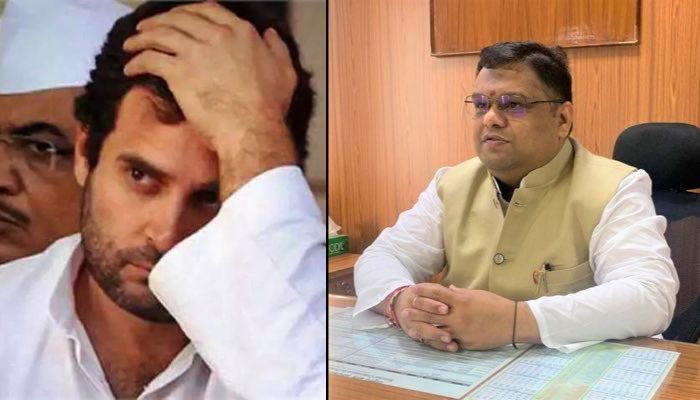
The development came hours after Congress Rajya Sabha MP Vivek Krishna Tankha accused NCPCR of ‘sensationalism’. The Congress leader tweeted that the Central Government must exercise control over organisations such as the National Commission for Protection of Child Rights.
He directed the Modi government to prevent NCPCR from becoming “wayward and sensational” if it wanted India to become a multitrillion-dollar global power.
If India wants to become a global power & a multi trillion eco the Central Govt will have to rein in & control organisations like @NCPCR_ ( National Commission f Protection f Child Rights ) fr getting way ward & sensational. Gives a bad image to t Govt. @PMOIndia@AmitShah
Notably, The Uttar Pradesh government was asked to relocate the inmates of the Children National Institute, a shelter home for girls in Allahabad’s Anand Bhawan, the ancestral home of the Nehru-Gandhi family immediately “till their living conditions are improved,” by India’s highest child rights body which exposed serious irregularities and illegalities in the institution’s operations in 2020.
The NCPCR conducted an inspection after a social audit it commissioned which revealed the state of the girls residing in the orphanage Jawaharlal Nehru established in 1947 as a temporary home for children who had lost their parents during Partition. The shelter house is operated by a trust and is housed in the Swaraj Bhawan neighbourhood of Anand Bhawan.
In a letter to the state, the Commission referred to the place as “one of the most premier and oldest in India established by the first Prime Minister” but noted that “the physical condition of the home was so pathetic that it was difficult to believe.” Its basic maintenance was far from adequate and its bathrooms lacked doors. It was recommended that girls stay in other accommodations until the shelter home’s condition is rectified.
They learned that the girls are only given one meal each day by the institute and for further meals they must rely on outside donations. According to a senior Commission official, “There is not enough staff to look after the girls, not enough beds for them to sleep in and not enough documentation about their backgrounds. After the inquiry as part of an independent agency’s social audit, Priyank Kanoongo remarked that he was “shocked at the serious violations of the Juvenile Justice (Care and Protection of Children) Act and irregularities in the running of the institute.”