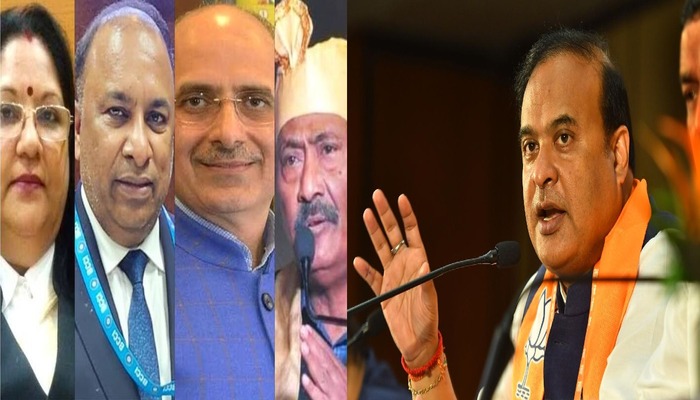
On Thursday, May 11, the Assam government, led by Chief Minister Himanta Biswa Sarma, constituted a four-member committee to examine the legal authority of the state legislature to implement a law prohibiting polygamy.
Taking to Twitter, the Assam CM announced the formation of the four-member committee and revealed the names of the committee members adding that the committee has been given a deadline of 60 days to present its report.
“Following my announcement to form an expert committee to examine the legislative competence of state legislature to enact a law to end polygamy, the state government has constituted the committee today. The committee comprises the following members: 1. Justice (Retired) Smt. Rumi Phookan as Chairperson 2. Sri Debajit Saikia, Advocate General, Assam -Member 3. Sri Nalin Kohli, Additional Advocate General, Assam – Member 4. Sri Nekibur Zaman, Advocate. The committee has been given a deadline of 60 days to submit its report,” CM Sarma tweeted.
Following my announcement to form an expert committee to examine the legislative competence of state legislature to enact a law to end polygamy, the state government has constituted the committee today. The committee comprises the following members:
1. Justice (Retired) Smt.…
— Himanta Biswa Sarma (@himantabiswa) May 11, 2023
The four-member committee is tasked with scrutinizing the provisions of the Muslim Personal Law (Shariat) Act of 1937, as well as Article 25 of the Indian Constitution, in connection to the state policy directive principle of a uniform civil code.
This comes after CM Sarma on May 9 announced that his government has decided to ban polygamy in the state and a committee will be formed to examine if banning the practice of polygamy by Muslim men falls under the purview of the state government. The committee, according to the Assam government, would undertake extensive discussions with all stakeholders, including legal experts, to arrive at a well-informed decision.
On Thursday, May 11, the Indore police informed that a class 12 student identified as Janvi committed suicide in the Hamilton Road neighbourhood in Indore. She was found hanging by one of her family members on Wednesday night. The family alleged that the 18-year-old girl was pushed to take extreme steps after she was harassed and threatened by a coconut vendor named Aman Khatik.
According to investigating officer SI Tina Shukla of the MG Road police station, an 18-year-old woman was discovered hanging at her home in the Hamilton Road area in Indore, Madhya Pradesh. She just got back from her sister’s home in Pune and was awaiting the results of her 12th board examination.
The police said that the reason she took such a drastic step could not be established yet because no suicide note was found at the scene. Police are recording family members’ statements to ascertain what pushed her to end her life.
The teenager’s father Devendra Nachan, who is a dog trainer by profession and runs and dog and dog accessories store in Shivaji Market, alleged that a coconut seller was harassing his daughter for a few days due to which she was upset. He alleged that Aman Khatik, who sells coconut water in front of the Rambagh petrol pump, would also threaten her over the phone. He used to follow Janvi while going to school and had even reached her school.
He said that he had filed a complaint against him at the Central Kotwali police station after receiving a call from the school about Aman’s presence there, but refrained from registering an FIR fearing it will hurt the girl’s reputation. Accordingly, the police let him go with a warning. The father also went to Aman’s house to ask him to stop harassing his daughter. But despite all these, he continued to harass the girl.
Fed up with the harassment, she eventually took the extreme step, he said. According to him, on Wednesday evening, his wife Yamini was talking to their daughter Vaishnavi. During this, Jhanvi went to the room. When she didn’t return for a long time, they went to her room, and found her hanging.
The police initiated an inquiry after receiving a complaint from the victim’s family. The teenager’s phone was also recovered by police. Though the accused have not yet been detained, the police have stated that they are thoroughly examining the case and that any further action would be taken based on the facts that emerge.
The prompt response of the Army and Assam Rifles averted large-scale violence in Manipur, said Defence sources on Thursday
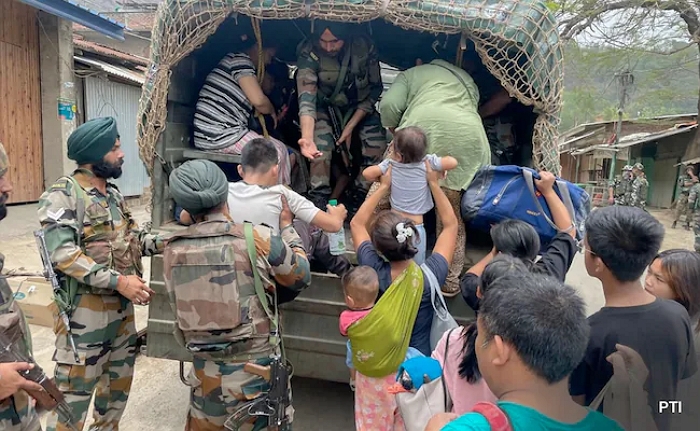
According to the sources, Army and Assam Rifles became the first responders to the request by the state government in maintaining law and order. Despite being deployed outside the municipal limits of Imphal town due to the non-applicability of the Armed Forces Special Powers Act (AFSPA), multiple columns fanned out in the city responding to hundreds of distress calls at the same time, the sources said. “Troops reassuring the beleaguered families are already viral on the media. Without making any distinction between the communities, all beleaguered families were evacuated to the safety of the Army and Assam Rifle camps. Some of them are still staying there as the process to send them back is underway”, the sources added.
As per the inputs from the sources, similar scenes were also noticed in faraway places in Churachandpur, Moreh and Kangpokpi. “Army and Assam Rifles accommodated people within their garrisons at Mantripukhri, Keithelmanbi, Pallel, Moreh, Leimakhong, Khuga and Veng to name a few amongst many places where ad hoc arrangements were made”, the sources said.
Further, the sources added, “On the first night itself, within Imphal, approximately 2300 civilians were evacuated from violence-hit areas of Langol, Lamphel and Mantripukhri with another around 1700 in Tegnoupal district in Churachandpur, on the first night alone 4600 locals were safely rescued from Khumujamba, Hmar Veng, Saikot and Mantop Leikai.”
Proactive deployment facilitated faster reaction in de-notified areas of Imphal as also in villages of Churachandpur district where Assam Rifles do not have any Company Operating Base in the vicinity, as informed by the Defence sources.
The violence in Manipur had erupted in the immediate aftermath of inter-community clashes in a few districts of the northeastern State amid protests against the inclusion of the majority Meitei community in the Scheduled Tribes (ST) category.
(This news report is published from a syndicated feed. Except for the headline, the content has not been written or edited by OpIndia staff)
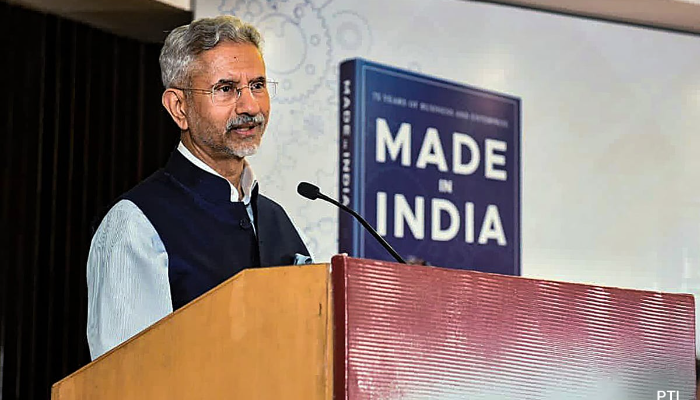
External Affairs Minister S Jaishankar on Wednesday stated that the Indian economy cannot grow on the back of Chinese efficiency and that businesses have to stop looking for “China fixes.” He was speaking at the launch of the book “Made in India: 75 Years of Business & Enterprise” by India’s G20 Sherpa Amitabh Kant.
Delighted to launch the book ‘Made in India’ authored by @amitabhk87 at India International Centre this evening.
This thoughtful and timely book raises important issues and provides a lucid explanation for Atmanirbhar Bharat.
According to the former diplomat, no major country has sustained or enhanced its global position without increasing manufacturing, and India too needs to do the same. He emphasised that India cannot allow other countries to subsidise their production or benefit from our advantages.
He mentioned that the government is committed to building deep manufacturing supply chains. ‘Make in India,’ he observed, is not just an economic programme but a strategic initiative.
“I think this country will never be a great country if it is not a great manufacturer. I think that is something we need to understand. I think we need to stop looking for a China fix. That Indian growth cannot be built on Chinese efficiency,” the foreign minister remarked.
He proclaimed, “If you are really to sustain and take the economy to a different level, we have to create a kind of domestic vendor chains that a serious manufacturing economy will do. I know that it is not something which will happen overnight but I can tell you as someone in the government, someone in the economic affairs cabinet committee, we take as a priority that how do you build deep manufacturing supply chains which will be needed to do that.”
He pointed out that the government’s attempts to revitalise the economy and encourage enterprises to feel that it is viable to produce in this country included the implementation of the Production Linked Incentive Scheme (PLI).
“There is no major country in the world which has sustained or enhanced its global position without some commensurate build-up on manufacturing. I always believed that this focus on services was actually an elegant excuse for being incompetent in manufacturing,” he commented.
The necessity to strengthen the indigenous industrial sector was also addressed by him. “In the name of opening the economy and globalisation, we should not end up de-industrialising this country. We should not allow level-playing fields in this country for others who subsidised their production. That is not a level playing field. That is economic suicide,” the union minister affirmed.
“We need to be clear. Every country must support its manufacturers, must support its businesses. We must not let other businesses enjoy advantages in our country at the expense of our own,” he voiced.
He postulated that strong business is not only about economics but also a critical segment of national security. “I fully accept there are experiences and analogies that we can take, best practices we can take from the rest of the world,” he conveyed.
“But at the end of the day, we will have to think through our growth strategy for ourselves. We will have to think through solutions to difficulties for ourselves. If you look at the last decade, every time we have actually confronted a major challenge,” he explained.
Referring to issues experienced by India during the COVID-19 epidemic, he divulged the government received assistance from overseas on how to economically tackle the pandemic.
“Honestly I would say I am glad we did not listen to much of it. I think how you come up with your own solutions, that is something which is important,” he informed.
He highlighted, “It is important for India to move to a strategic economy, have a clear sense who are our partners, where are our opportunities, where should we focus on our technology tie-ups.”
In order to stress that business or economics is sometimes actually too serious to be left to the businessmen and economists, he uttered the phrase “War is too serious to be left to the generals.”
“It is important to have a larger strategic direction. To my mind, I see ‘Make in India’ not as an economic programme, not as a manufacturing programme, I actually see it as a strategic statement,” he added.
The Kerala Story continues its record-breaking spree at the box office as it surpasses the coveted Rs 50-crore milestone on the fifth day of its release. The movie, starring Adah Sharma in the lead was released on May 5.
The unforgiving approach of showing how innocent people are brainwashed and lured into Islam and then led down the path of terrorism ruffled the feathers of many who called the film ‘Islamophobic’ and hateful. The usual set of liberals and members of the opposition parties, especially Congress went ahead to call for the film to be banned. Despite the criticism, however, the movie, based on true events, has not only been breaking box office records but also inspiring people to promote ‘The Kerala Story’ among Hindu women on their own. It has also made people realise how they didn’t recognise the efforts to influence them earlier.
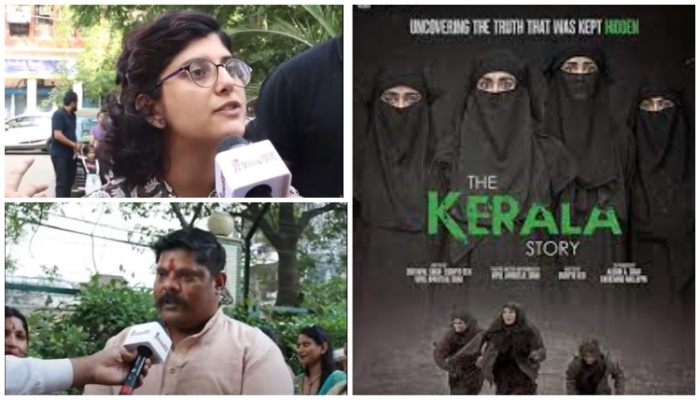
One such woman, who came out of the theatre after watching the movie told a YouTube News channel One News Hindi that she would urge every Hindu woman to watch this film so that they become aware and alert of the traps. Sharing her own life experience, the woman said that indoctrination in the name of Islam documented in the movie is not a figment of anyone’s imagination but a real problem raging across not only India but the world. She confessed how she herself had fallen prey to this trap when she was in college.
“I was a little brainwashed as well, I was a little bit influenced towards Islam as well. After watching, I realise this same scenario happened to me as well. Parents should teach you about your culture and religion,” she told the news channel, emphasising how such movies help in better understanding of such real-time issues plaguing various parts of the country.
Snubbing those who are calling ‘The Kerala Story’ a propaganda film, she said that the movie has only shown the truth. Another person standing next to this woman also asserted that the movie has only depicted the truth. “Calling a wrong thing wrong is not propaganda,” the youth asserted.
The woman is further heard saying that the movie makes a person realise how important it is to make your child aware of their religion and culture. She said that the movie throws light on the larger issue which is, why vulnerable women are being so easily lured and indoctrinated in the name of Islam. She said that the movie highlights how those women how who are not aware of their own culture and religion easily fall prey to such traps.
This moviegoer was not the only one who was impressed by how meticulously the filmmakers documented this subject, which is often ignored by the Leftists, Islamists and their apologists and their supportive media. Several others were intrigued by how Sudipto Sen’s film The Kerala Story has brought forth the conspiracies of Islamic conversion into public discussion.
Many, who came out of the theatre after watching The Kerala Story, said that they are convinced that the movie is based on true incidents. They said that issues like Love Jihad, religious conversion, indoctrination in the name of Islam etc are all real issues that are rapidly spreading their tentacles across many parts of the country. They said that it is imperative that every Hindu girl watches the movie so that they could save themselves from being brainwashed and lured into embracing another faith and then taking on to the path of terrorism.
At around 18-00 minutes into the video, a man who proudly sports a tilak on his forehead is heard saying that he was completely impressed by how the filmmakers have fearlessly explored a topic that is pressing and has been destroying the lives of numerous vulnerable and innocent Hindu women.
“Every person should take it upon themselves to get at least one girl to see the movie. If everyone can sponsor the ticket of any one girl child and get her to see the movie, it will not be less than the virtue of performing Kanyadaan,” he said.
Notably, earlier OpIndia reported about Sadhu Magar, a Hindu activist, who had flagged a banner on his autorickshaw that promised free services for people going to watch the film ‘The Kerala Story’. He has also mentioned on the banner that he will buy tickets for the first ten women who avail of his autorickshaw service to go to watch this film.
“I watched the trailer of ‘The Kerala Story’. I liked it very much, just like I liked ‘The Kashmir Files’. And I decided to start this offer because so many Hindu women have fallen prey to this love jihad. I want Hindu women to be aware and alert of the traps. I wanted to make them aware of the issue. Therefore, I wanted to promote them to watch this film, and hence I came up with this offer,” he told OpIndia.
‘The Kerala Story’
It is pertinent to note that the recently released movie named ‘The Kerala Story’ has been declared tax-free in Uttar Pradesh and Madhya Pradesh. However, reports mention that the Madhya Pradesh government has withdrawn its decision to give tax-free status to the movie in the state.
The multilingual project, featuring Adah Sharma and written and directed by Sudipto Sen, has garnered a lot of attention since its release. Liberals and the opposition particularly the Left and the Congress have labelled it as a propaganda piece and demanded a ban on its screening.
The movie revolves around Shalini Unnikrishnan, played by Adah Sharma, an innocent Hindu woman from Kerala, who is brainwashed by her Muslim friend and gets converted to Islam and marries a Muslim man. The lead actress soon realises that she has been trapped in a huge terrorist web after she is raped, separated from her only child, and then forced to serve as a sex slave.
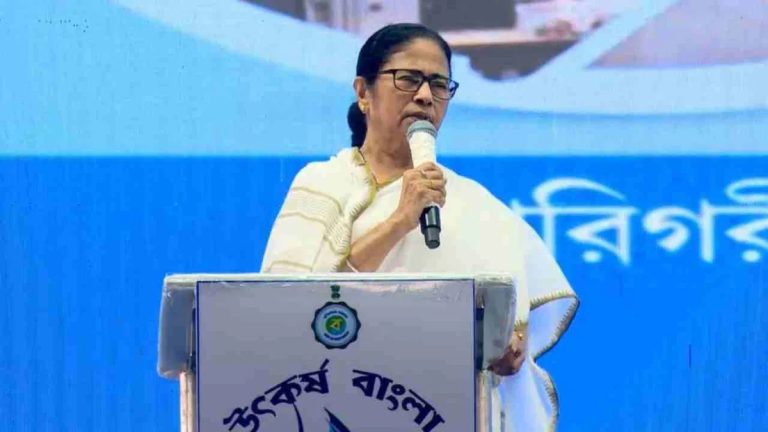
Several new hospitals have been set up in West Bengal in recent times, increasing access to healthcare by people. But the state is facing the problem of shortage of doctors to run those hospitals. Amid this, Chief Minister Mamata Banerjee has come up with ‘innovative’ ideas to address the problem. She has suggested that diploma courses should be introduced for doctors. She also suggested that senior nurses could be promoted as ‘semi-doctors’.
During a ‘Utkarsh Bangla’ review meeting at Nabanna on Thursday, Mamata Banerjee made these suggestions to address the issue of the shortage of doctors. The CM told the health department officials that they can think about starting a diploma course for doctors, similar to the existing diploma courses for engineers.
The CM said, ‘See if we can start a diploma course for doctors like engineers. Then many boys and girls will get opportunities in medical courses. It takes 5 years to train all the doctors we are getting. It takes a lot of time. We employ junior doctors. But they have to study and take exams. Apart from this if we can launch a diploma course, we can employ them in primary health centres. It will give good results.’
Mamata Banerjee further added, ‘We can start diploma courses. Check it out. Diploma training can be given in hospitals. There are big seminar halls, government convention halls, you can train there too. Professor doctors will give training.’
The West Bengal Chief Minister also repeated a suggestion she had made earlier, to employ senior nurses as doctors to provide basic healthcare. She said that nurses who are 5-6 years from retirement, or 10 years away, can be employed at primary health centres. She said that they can’t be called without a medical degree, they could be called ‘semi-doctors’.
She said that while doctors write prescriptions, nurses implement them, and they are therefore qualified to treat patients. ‘Check the legal issues. They can give first aid by giving saline, oxygen and life-giving medicine,’ the CM told the officials.
‘Those who have been for a long time, who may have 5-7-10 years left to retire… see if they can do it or not. You don’t have to go into legal matters again in everything. The aspect of humanity should also be seen. Attending to a patient is the first task of the health department. Giving the patient saline, giving oxygen and life-sustaining drugs, they can help stabilize the patient,’ she added.
In another proposal to increase the number of healthcare workers, Mamata Banerjee said that new nurses can be employed after a training of just 15 days. The CM argued that the job of a nurse is very simple and it should not take more than 15 days to train them.
‘Administering bandage, saline, injection, oxygen or proper medicine, 15 days is enough to train them for that. Nurses will not do surgery after all. Moreover, senior nurses are there for complex works,’ she said. The CM added that such nurses can be considered as junior nurses, and given training accordingly. She also asked the officials to look into opening 100 more nursing training institutes in every district.
Mamata Banerjee also made similar suggestions to fill up vacancies in other departments as well. She ordered to complete the recruitment of all police posts within the next three months, asking to reduce their training period to seven days instead of six months. She said she feels that training of six months for cops is a ‘waste of time’.
She said, “Instead of six months, send them to the police station with seven days of training. Increase the force and then call them for seven days of every month and train them. That is, they work 21 days of the month and complete the rest of the process with training for the remaining seven days. I feel that training for such a long time is a waste of time.”
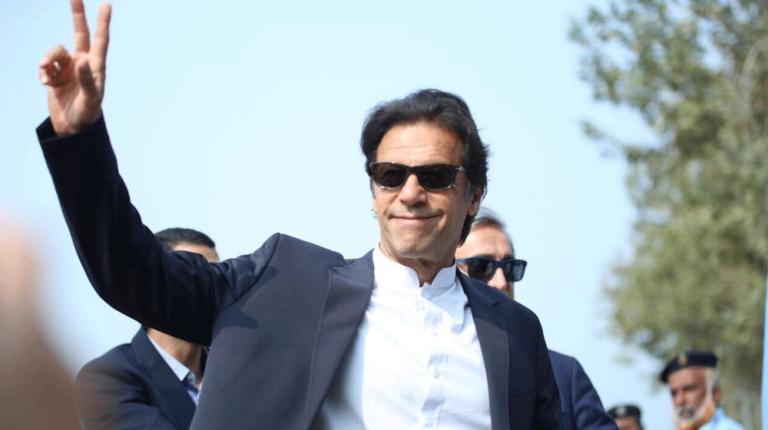
The Supreme Court of Pakistan on Thursday declared Pakistan Tehreek-e-Insaf chief Imran Khan’s arrest “illegal,” and also directed for his immediate release, reported ARY News.
The major relief for the former prime minister came shortly after he was presented in court. Khan, who was removed from office as prime minister last year in April, was ordered by the SC to present himself at 4:30 pm, but he was produced at around 5:40 pm, more than an hour later.
He was carried in a 15-vehicle convoy. Khan was ordered to appear in court after Chief Justice of Pakistan (CJP) Umar Ata Bandial described the PTI leader’s detention from the Islamabad High Court (IHC) premises as a mighty disgrace to the country’s legal system, as per ARY News.
The CJP made the comment while presiding over a three-person bench debating the PTI’s appeal challenging Khan’s arrest. The bench also contains Justices Muhammad Ali Mazhar and Athal Minallah in addition to the Chief Justice of Pakistan.
A petition was filed in the Supreme Court by PTI, a day earlier challenging the Islamabad High Court’s (IHC) decision calling Khan’s arrest by the National Accountability Bureau (NAB) “legal,” according to ARY News.
Khan was arrested on Tuesday inside the premises of Islamabad High Court when he appeared before the court in two cases.
Ever since Khan’s arrest, Pakistan has been witnessing a situation of unrest. Several protests have broken out across the country as PTI has urged its supporters to come out in support of Imran Khan.
On the other hand, the PTI has asked its supporters to stay away from the top court, ARY News reported.
(This news report is published from a syndicated feed. Except for the headline, the content has not been written or edited by OpIndia staff)
On her visit to Washington DC to hold meetings with her counterparts of different countries and heads of top international organisations, Union Finance Minister, Nirmala Sitharaman talked about negative Western perceptions.
“India has the second largest Muslim population in the world and that population is only growing in numbers. If there is a perception or in reality, their lives are difficult or made difficult with the support of the State which is what is implied in most of these write-ups, I would ask if will this happen in India, will the Muslim population be growing than what it was in 1947 as opposed to Pakistan which was formed at the same time”, Ms Sitharaman asked.
She further said, “Every minority has been dwindling in its number or decimated in Pakistan. Even some of the Muslim sects have also been decimated there. Whereas, in India, you would find every strand of Muslim doing their business, their children being educated, given fellowships.”
While any sensible Indian would completely agree with this statement of Nirmala Sitharaman, the people at the National Council of Educational Research and Training (NCERT), who prepare course material, especially for social sciences, for English medium schools would staunchly disagree with this picture of Indian Muslims being presented.
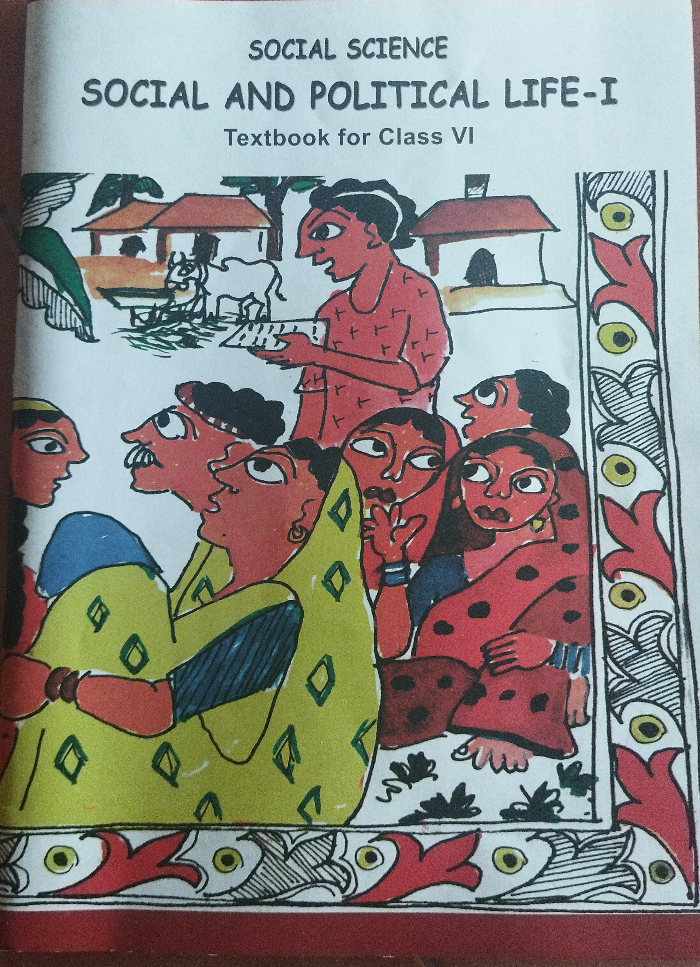
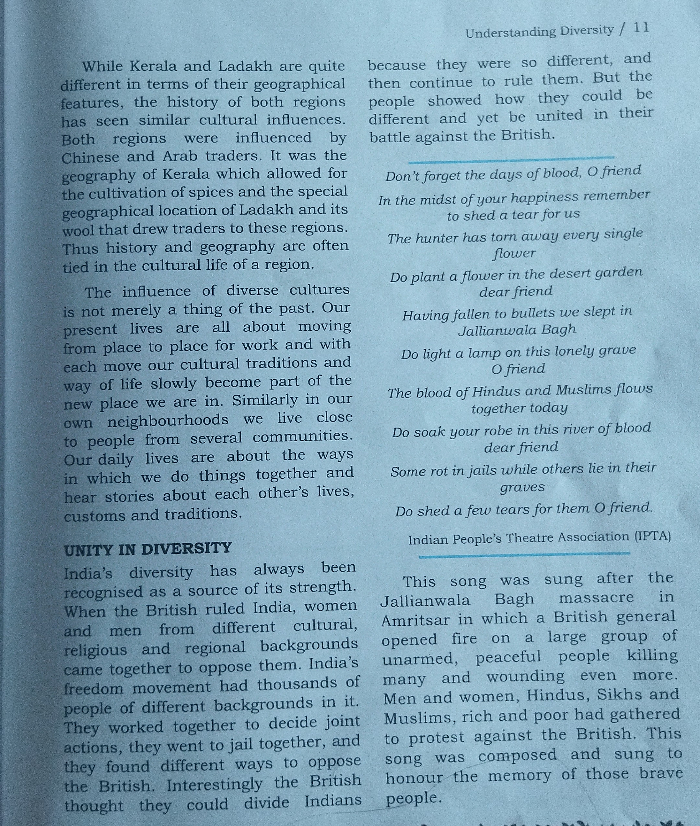
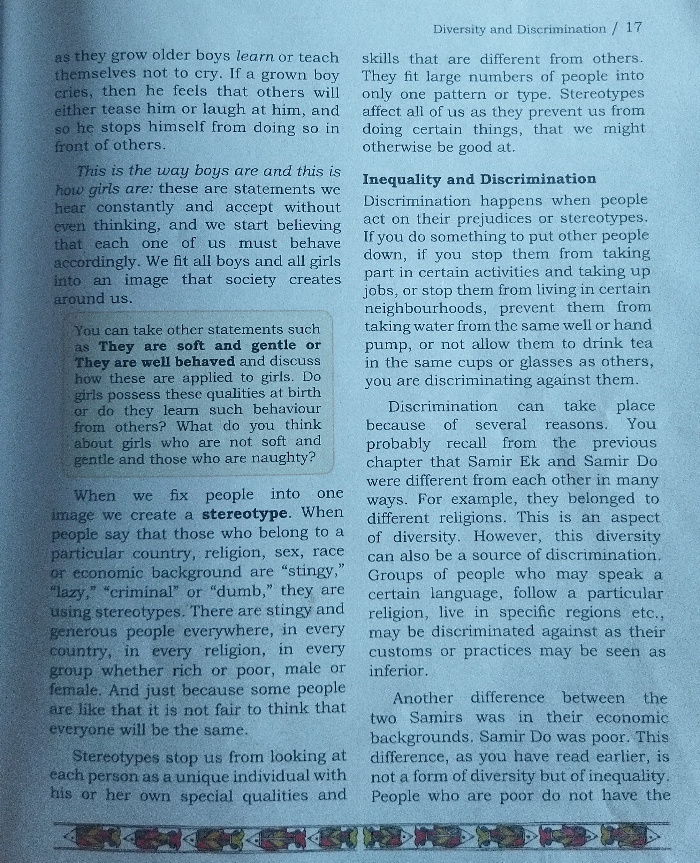
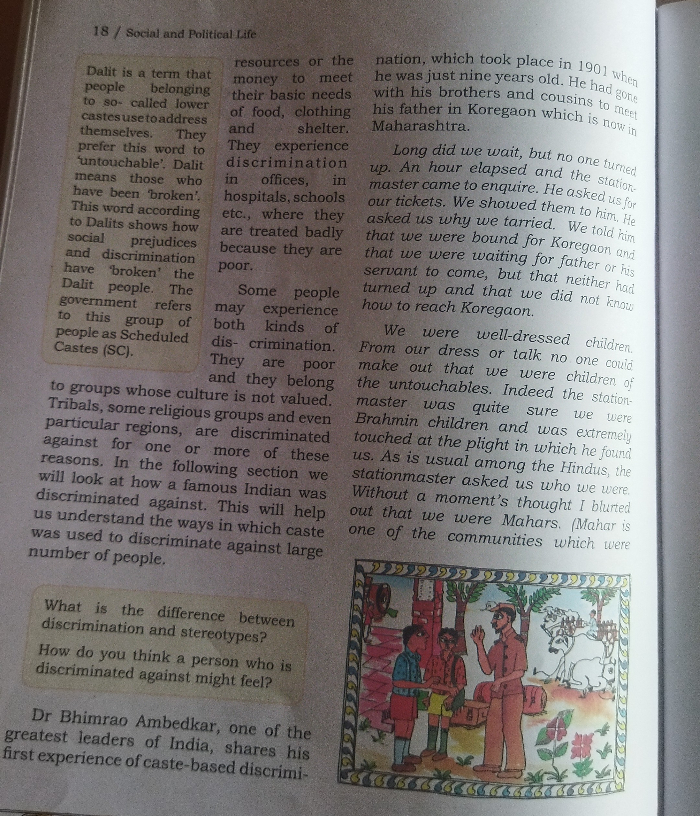
Perhaps that is why books (for Class 6) on India’s social and political life, which should comprise lessons on our governments and civic bodies, carry two additional chapters named ‘Understanding Diversity’ and ‘Diversity and Discrimination’ that are aimed at subliminally colouring a child’s mind with distorted narratives on these concepts while peddling the agenda of ‘Muslims are subjugated in India’.
The chapters further emphasise that Hindus are the majority so the onus lies on them to take care of minorities no matter what. The texts also reinforce the imbalanced notions of class, caste, and social construct.
As a mother of a ten-year-old who will be subject to this forced conditioning, it does rankle and affect me to discover noxious rhetoric channeled by pseudo-seculars whose writings are incorporated in textbooks by the NCERT.
One of those pseudo-seculars is Indian author Poile Sengupta who exposed her severe bias against Hindus of India during the hijab controversy last year through her column in The Wire. Shockingly, the hardcore hypocrisy championed by the Left-leaning, duplicitous intellectual ecosystem is influencing decisions in NCERT as well.
Excerpt from her work features in the two chapters that are not just inappropriate and irrelevant, but also guilt trip the Hindu for even the communal bigotry propagated by Muslims. Unfortunately, a Muslim student who comes from a well-to-do home will also find the lessons confusing, as well as unsettling, because they clearly won’t feel subjugated in a thriving democracy like India.
As a parent, I would then question who in NCERT is passing such content in middle school that will disrupt the clarity of perception in students regarding the status of Hindus and Muslims. The content which will plant the seed of disharmony in their impressionable minds and is ultimately aimed at benefiting the Muslim percentage by handing them over a perpetual victim card.
Moreover, discussing riots and religion, sensitive issues that need far more maturity in understanding than what ten-year-olds would have, is the NCERT being fair here? Would teachers in class be honest enough to cite real reasons behind riots? Would that not ruffle the Muslims children then? Has the NCERT dwelled on this?
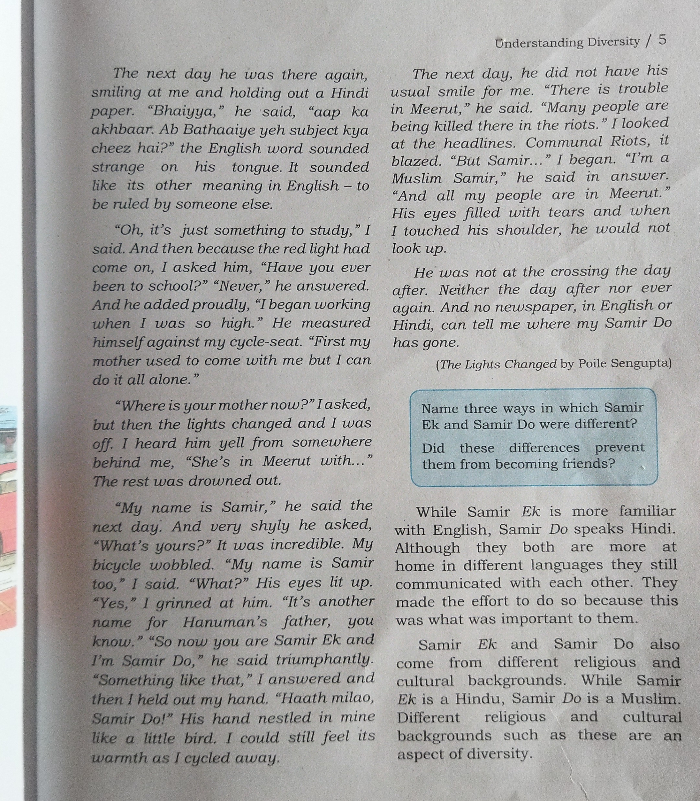
Here are some portions explaining the pure evil included. In the excerpt from The Lights Changed by Poile Sengupta, a Hindu boy meets a Muslim boy at the traffic signal every day. While both are called Samir, the Hindu boy immediately says, “I am Samir Ek, you are Samir Do!” Subconsciously, this is the reiteration of the construct of positioning Muslims as second-class citizens so that they can be used as foot soldiers to vitiate the atmosphere of harmony.
The Muslim boy is poor and uneducated. The pun on the word ‘subject’ (the Hindu boy explains what is taught in his school) is pretty obvious in the line that has the Hindu boy saying, “The English word sounded strange on his tongue… to be ruled by someone else.”
The next paragraph goes, “There is trouble in Meerut. Many people are being killed there in the communal riots. I’m a Muslim and all my people are in Meerut.” Isn’t the writer suggesting here, without explaining what triggered the riots, that Muslims are the only ones killed in them?
The extract ends with – “Samir Do was not at the crossing the day after. Neither the day after nor ever again. And no newspaper, in English or Hindi, can tell me where my Samir Do has gone.” This is devious. Communist Sengupta forced the notion of Muslims being rendered voiceless and faceless in a Hindu-majority country. In reality, though, it is the Hindus who beg to be heard (on media platforms) in India and the world.
The Muslims have plenty batting for their cause while many find representation in politics, jobs, education, and other spaces. If a Muslim is poor, the NCERT finds it easier to rest the onus on the Hindu for the inequality meted out to the Muslim without probing the real cause!
While diversity could have been deconstructed with more suited instances, the diatribe doesn’t end here. Furthering the discussion, the chapter explains how, when the British ruled India, women and men from different cultural, religious and regional backgrounds came together to oppose them in the freedom movement. This topic needs detailed analysis and cannot be brushed aside by this flaky statement.
Next up is a song that was apparently sung after the Jallianwala Bagh massacre in Amritsar where men and women, Hindus, Sikhs, and Muslims, rich and poor, were killed and wounded when they were fired upon. The credit for the song has been given to the Indian People’s Theatre Association (IPTA), a rabidly Communist-Islamist organisation that was established in 1943. Wonder then how they wrote a song sung in 1919?! The factual anomaly doesn’t end here.
Chapter Two is even more insidious where certain concepts are tackled without the nuance required to explain them to the children. For instance, read this, “Samir Ek and Samir Do belong to different religions, which is an aspect of diversity. However, diversity can also be a source of discrimination. Groups of people who may speak a certain language, follow a certain religion, may be discriminated against as their customs or practices may be seen as inferior.”
This is sheer vitriol for a young mind who is yet not equipped to sift through agendas to understand concepts of discrimination and inequality. Also, “The two Samirs were from different economic backgrounds. Samir Do was poor. This difference is not a form of diversity but of inequality.”
The paragraph goes on to put the blame of this inequality subtly on the Hindu majority simply because Samir Ek is from a well-to-do Hindu family going to study in an English medium school.
I would have brushed the mainstreaming of Muslim iconoclasm in the English medium school curriculum aside if I didn’t go through the details of what has been incorporated in my son’s social science text.
Words like ‘Ammi’ and ‘Abbu’ are being normalised for ‘Mother’ and ‘Father’ in English schools. As a Hindu mother, and a proud Indian, this propaganda peddled by the NCERT rankles me because these are formative years for children. What will it take the babus and the education secretariat to clean the muck?
It’s a matter of imparting solid education to our future generation. Shouldn’t the curriculum be cleansed of distorted Hindu-Muslim topics as well as fake narratives on gender, stereotypes, and other socially relevant issues? It’s quite a mess already. Buck up ,please!
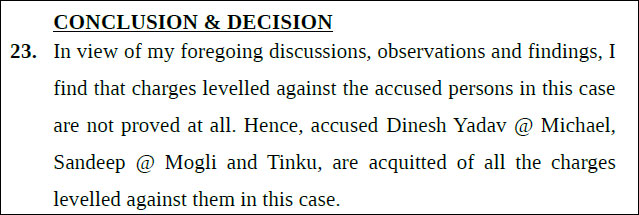
On May 10, a Delhi court acquitted Dinesh Yadav alias Michael, Sandeep alias Mogli and Tinku of the charges of rioting during the anti-Hindu Delhi Riots of 2020. While observing that the possibility cannot become evidence, the court said that there was insufficient proof against the three.
Source: Karkardooma Court, Delhi
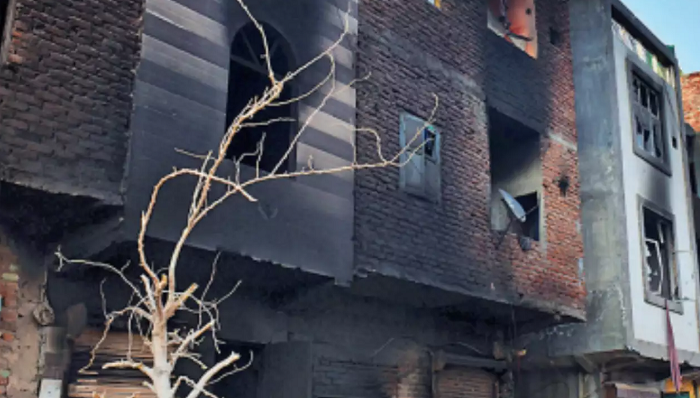
The three were accused of rioting, being members of a riotous mob that vandalised two properties and looted certain articles. Based on the complaint of Aakil Saifi and Irfan, FIR 124 was filed against the three at Gokalpuri Police Station. Charges were framed against them under Sections 147, 148, 149, 380, 188, 427 and 436 of Indian Penal Code, 1860.
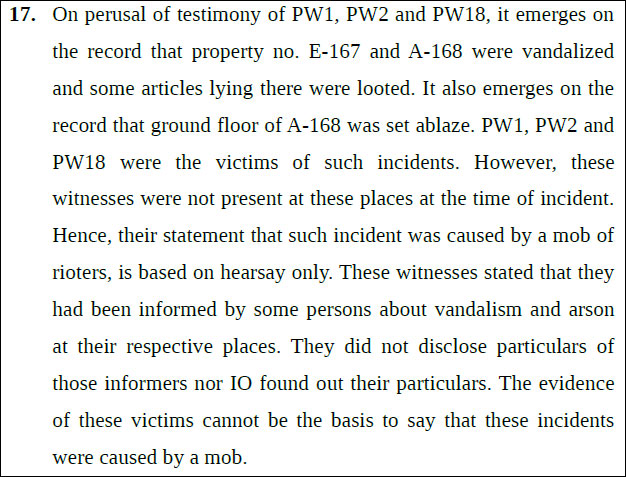
In the order, Justice Pulastya Pramachala of Karkardooma Courts observed that the victims, who were also the witnesses, were not present at the concerned places when the incident happened. Thus, their statements regarding the incident were based on hearsay only. The court said, “These witnesses stated that some persons had informed them about vandalism and arson at their respective places. They did not disclose the particulars of those informers, nor IO found out their particulars. The evidence of these victims cannot be the basis to say that a mob caused these incidents.”
Source: Karkardooma Court, Delhi
Special public prosecutor ‘led’ the witness to the identification
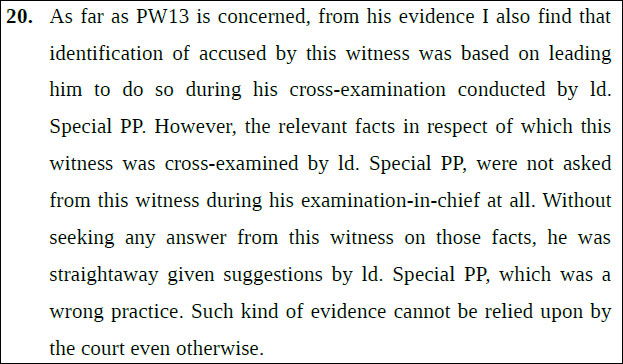
The court observed that the special public prosecutor ‘led’ the witness to the identification of the accused during his cross-examination. The questions asked by the special PP were not even asked during his examination-in-chief.
Calling it a wrong practice, the court said, “As far as PW13 is concerned, from his evidence, I also find that identification of accused by this witness was based on leading him to do so during his cross-examination conducted by ld. Special PP. However, the relevant facts in respect of which this witness was cross-examined by ld. Special PP was not asked from this witness during his examination-in-chief at all. Without seeking any answer from this witness on those facts, he was straightaway given suggestions by ld. Special PP, which was a wrong practice. Such kind of evidence cannot be relied upon by the court even otherwise.”
Source: Karkardooma Court, Delhi
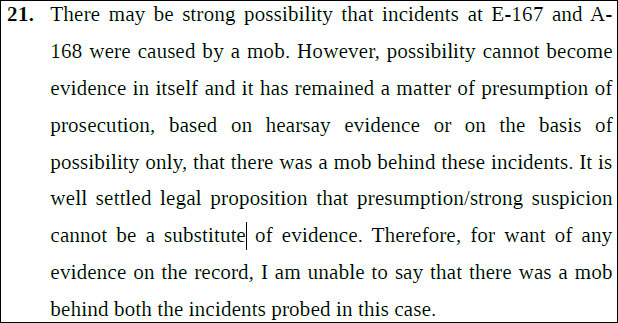
The court further observed that there was a strong possibility that a mob caused the incidents at the scene. However, “possibility cannot become evidence in itself, and it has remained a matter of presumption of prosecution, based on hearsay evidence or on the basis of possibility only, that there was a mob behind these incidents,” the court said.
‘Presumption cannot substitute evidence’
Justice Pramachala added that it is a well-settled legal proposition that strong suspicion or presumption cannot substitute evidence. “Therefore, for want of any evidence on the record, I am unable to say that there was a mob behind both the incidents probed in this case,” he said in the judgment.
Source: Karkardooma Court, Delhi
The case against Dinesh, Sandeep and Tinku
On March 4, 2020, an FIR was registered against Dinesh, Sandeep and Tinku based on the complaint of Aakil Saifi. In his complaint, Aakil claimed that on February 24, 2020, between 3 PM to 4 PM, a mob looted all precious wood, steel articles and toolbox from their shop named ‘Saifi Fabrication & Furniture Steel Gate Grill Railing’ located in Bhagirathi Vihar, Delhi.
Another complaint was filed by Irfan on March 15, 2020, in which he claimed that on February 24, 2020, around 5 PM, he closed his factory in Bhagirathi Vihar. On February 26, his relative, who lived in the same area, informed him that smoke was coming out of his factory. Someone informed him that his factory was set on fire the next day. His complaint was clubbed with Aakil’s FIR.
During the investigation, two witnesses, Sanoj and Vipin, named Dinesh, Sandeep and Tinku, for being part of the mob. In another FIR, the accused persons were allegedly seen indulging in the riots. Dinesh was arrested in FIR 78 on June 4, 2020. Sandeep was arrested in FIR 133 on August 29, 2020. Chargesheet was filed against them on September 2, 2020. A supplementary chargesheet naming Tinku in the case was filed on December 1, 2020.
On August 27, 2021, charges were framed by the court against Dinesh, Sandeep and Tinku for offences punishable under Sections 143, 147, 148, 454, 380, 436, 427 and 380 of the Indian Penal Code. The accused pleaded not guilty and claimed trial. They were later charged under Sections 188 IPC, for which they also pleaded not guilty and claimed trial. 24 witnesses were examined during the trial.
OpIndia’s detailed coverage of Delhi Riots 2020 can be checked here.
On Tuesday, a Delhi court ordered rigorous imprisonment of seven years in jail to nine men accused in a case relating to the 2020 anti-Hindu Delhi riots. The nine persons sentenced by the court have been identified as Mohammad Shahnawaz, Mohammad Shoaib, Shahrukh, Rashid, Azad, Ashraf Ali, Parvez, Md Faisal and Rashid, alias Monu. They have been charged for rioting and being part of unlawful assembly in an FIR registered at Gokulpuri police station.
“Communal riots are treated as one of the most violent forms of public disorder that afflict society. It leads to not only loss of life and property but also causes great damage to the social fabric. During communal riots, innocent ordinary people get caught in circumstances beyond their control, which leads to the violation of human rights as well,” the court led by the additional sessions judge Pulastya Pramachala said.
The court also noted that the nine men tried to create communal disturbance in the area and instilled a sense of insecurity among people. The said individuals were convicted under IPC Sections 147 (rioting),148 (rioting, armed with a deadly weapon), 380 (theft in dwelling house), 427 (mischief causing damage of Ps 50 or upwards), 436 (mischief by fire or explosive substance with intent to destroy a house, etc) 149 (every member of unlawful assembly guilty of the offence committed in prosecution of common object) and 188 (disobedience to order duly promulgated by public servant).
“Thus, the impact of the crime committed by the convicts, in this case, is not limited to loss caused to the complainant only. Rather their acts left a deep scar over the social fabric, economy and stability of our nation. The alleged acts instilled a sense of insecurity among the people while jeopardising the communal harmony in the society,” the court added.
As per the reports, the convicts have been awarded simple imprisonment of one year for an offence under Sections 148 and 427, simple imprisonment of three years for violating Section 380, rigorous imprisonment of seven years for the offence they have committed under Section 436 and simple imprisonment of six months for offences under Section 188 of IPC.
Additionally, a fine of Rs. 21,000 has also been imposed on each of the convicts. “Of the total amount, Rs 1.5 1akh is directed to be disbursed to the complainant as compensation”, the court said adding that it is not an easy task for a victim to substantiate the loss through documents in all the cases, especially if everything was burnt.
“At the same time, any claim of loss may not be a true account of loss. In such cases, a notional amount is fixed by the court, while keeping in view the nature of the incident,” the court ruled.
On February 29, 2020, an FIR was registered at Gokalpuri police station. The FIR was filed based on the complaint written by one Rekha Sharma who revealed that on February 24, 2020, an incident of stone pelting took place at her house at Chaman Park, Shiv Vihar Tiraha Road, Delhi. She said that the stones were pelted at about 1 to 2 pm.
“There was a mob in the gali, which was trying to break open the gate of her house. I made a call to her husband, who was on his duty. Her husband returned home and took her away to a safe place and locked the gate,” the complainant said.
The complainant further alleged that during the night intervening between February 24-25, 2020, the mob broke open the rear gate of her aforesaid house and robbed the goods lying therein. They also vandalized the property and set the upper floor of her house on fire.
The police identified the accused during the investigation. They checked the CCTV footage, and viral videos posted on social media and also relied on public witnesses to identify the accused.