Home Blog Page 2223

Amnesty International under fire for using AI-generated images in a post against human rights violations in Colombia: Full details

On April 28, Amnesty International published posts against systemic brutality used by Colombian police to bring down nationwide protests in 2021. Though the protests were well-documented, Amnesty International decided to use Artificial Intelligence (AI) generated images for the post.

The dubious organisation that shut down its Amnesty India office after a series of FCRA violations and investigations against them claimed they used AI images to “protect the identity of the protesters”. The images were used by Amnesty International on its Instagram account as well. However, they received a lot of flak for using AI images and eventually had to delete the posts from all platforms.

Now deleted tweet by Amnesty International’s Norway chapter. Source: Archive.org

The images that Amnesty International’s Norway chapter generated using AI were scenes from the protests that erupted in Colombia in 2021. In one of the images, a woman was seen being dragged away by the police. The images were clearly heavily edited or computer-generated, which resulted in a series of criticism on social media platforms. The smoothed-off and warped faces of the police and protesters were some of the issues mentioned by the critics.

Furthermore, the protester’s tricolour shown in the images had the correct colours that are red, yellow and blue, but they were arranged incorrectly. The police uniform shown in the images was also obsolete.

Amnesty was one of many observers that documented the unrest wave of 2021. Notably, media scholars and photojournalists have raised their voices against using AI-generated images as it undermines the matter’s sensitivity.

The Guardian quoted photojournalist Juancho Torres from Bogota, saying, “We are living in a highly polarised era full of fake news, which makes people question the media’s credibility. And as we know, artificial intelligence lies. What sort of credibility do you have when you start publishing images created by artificial intelligence?”

Speaking to Gizmodo, Amnesty claimed they decided to use AI-generated images to protect the demonstrators from possible retaliation from the government. Erika Guevara Rosas, director for Americas at Amnesty, said, “We have removed the images from social media posts, as we don’t want the criticism for the use of AI-generated images to distract from the core message in support of the victims and their calls for justice in Colombia.” She added that AI-generated images were disrespectful to the photojournalists who covered the protests.

In reply to an email query by the Guardian, Amnesty said, “Many people who participated in the National Strike covered their faces because they were afraid of being subjected to repression and stigmatisation by state security forces. Those who did show their faces are still at risk and some are being criminalised by the Colombian authorities.”

Colombia Protests of 2021

In 2021, the people of Columbia came out to protest against the divisive tax reforms. The protesters faced brutal police response. Around 38 civilians were killed during the protests. Reports suggest that women protesters were kidnapped and carried to abandoned buildings where gangs of policemen allegedly raped them.

Crimes of Amnesty

On several occasions, Amnesty International and its Indian chapter have been found to be involved in anti-India activities. In a report published in OpIndia in 2019, the connections between Amnesty International India, the British government, and radical Islamists were exposed. The organisation has a history of meddling with the internal affairs of India. It has constantly been trying to falsely project India as a violator of human rights and the ‘oppressor’ of Muslims.

Amnesty India and its former head Aakar Patel kept peddling blatant lies and fake news to portray India negatively. It also campaigned for the arrested Urban Naxals in the Bhima Koregaon violence case. Therefore, its actions are clearly tantamount to foreign interference in the domestic issues of India, and it is only appropriate that strict action is taken against it.

There is an ongoing investigation against Amnesty in India. In October 2022, the Enforcement Directorate (ED) attached assets worth Rs 1.54 crore of Amnesty International India under the anti-money laundering law for alleged violation of the Foreign Contribution Regulation Act making the total attached assets worth over 21 crores. “A provisional order for attachment has been issued under the Prevention of Money Laundering Act (PMLA). With this attachment, the total attachment now stands at Rs 21.08 crores”, the ED said.

According to the reports, the order has been issued against the so-called NGO trust named Indians for Amnesty International Trust (IAIT), in connection with a case involving an alleged breach of the Foreign Contribution Regulation Act (FCRA). The ED issued a statement that the organization carried out NGO activities in the guise of services export and Foreign Direct Investment (FDI) to escape the FCRA laws.
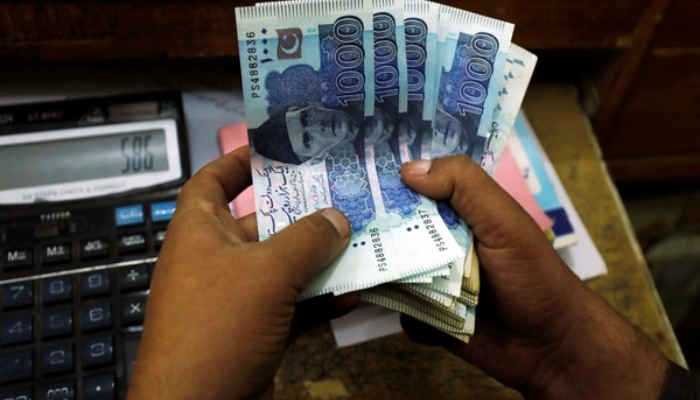
Pakistan economic crisis: Inflation hits record-high 36.42% in April, highest in South Asia

Pakistan inflation increased to a record 36.4% in the year to April driven mainly by food prices, the highest rate in the region and up from March’s 35.4%.

According to the finance ministry’s latest estimate, the devaluation of the rupee and rising administered prices, which both contributed to an increase in overall costs, will keep inflation in the 36–38 per cent range.

Pakistan’s rural areas recorded food inflation of 40.2%, the statistics bureau informed. The rate of food inflation in urban and rural areas climbed to 48.1%, which is the highest level since FY16 when the bureau began tracking the two categories separately. Prices rose 2.4% in April from March.

Due to political unrest, financial mismanagement, and a delay in reaching an agreement with the International Monetary Fund, excessive inflation has already taken a heavy toll on the lower-income groups in society.

A report from the finance ministry claimed that because of the poor recovery from the flood-related damages, the supply of vital crops has not kept pace with local demand, which has exacerbated inflation. The central bank was enacting a contractionary monetary policy, however, inflationary expectations are not abating.

Consumer Price Index (CPI), a measure of a variety of goods and services, showed monthly inflation remained above 20 per cent for the 11th consecutive month from June to April. Then it reached 31.6 per cent in February, went above 35 per cent in March, and is currently even higher at 36.4 per cent. In April of the previous year, the reading was 13.4 per cent.

Data indicated that when compared to the prior month, inflation increased by 2.4pc in April. The index surged as a result of rising food, cooking oil, and transportation costs.

The CPI basket of goods and services is broken down into 12 primary components with varying weights. Three of them, food and non-alcoholic beverages, transportation, and recreation and culture saw price hikes of about 0.5 percentage points from the year before.

Although its weight in the CPI is less than 1% compared to food’s 30.42 %, the index for the alcoholic beverages and tobacco category saw the largest annual shoot-up, at 133.70 %.

As per the figures, the annual rate of food inflation in April was 46.8 per cent in urban regions and 52.2 per cent in rural areas. Additionally, last month, annual non-food inflation in urban and rural areas was 24.9 per cent and 29.9 per cent, respectively.

Core inflation, which excludes food and energy, was 24.9 per cent in rural areas and 19.5 per cent in urban areas. Overall inflation in urban and rural areas rose to 33.5 per cent and 40.7 per cent, respectively, year over year.

In 10 months (July to April) of this fiscal year, average inflation has elevated by the most recent CPI jump of 11.04 per cent to 28.23 per cent.

The food group’s prices soared the most in April compared to the same month last year which included tea (108.76%), wheat flour (106.7%), wheat (103.52%), eggs (100.88%), rice (87.86%), potatoes (76.87%), pulse moong (57.19%), pulse mash (56.38%), gram whole (55.55%), onion (51.87%), besan (51.17%), dry fruits (49.06%), pulse gram (48.41%), beans (47.45%), chicken (43.13%), bakery and confectionary (42.5%) and sugar (42.14%).

The non-food items with the highest price increases were textbooks (106.83%), stationery (83.73%), motor fuel (75.43%), gas charges (62.82%), washing soap/detergents/matchbox (60.41%), motor vehicle accessories (42.56%), motor vehicles (41.51%), household equipment (40.94%), construction input items (37.23%), marriage hall charges (32.89%), solid fuel (31.96%), personal grooming services (31.89%), cotton cloth (31.46%), electricity charges (30.84%), plastic products (30.59%), transport services (28.77%), mechanical services (25.02%), cleaning and laundering (24.28%), doctor (MBBS) clinic fee (21.55%) and tailoring (21.22%). 

CPI MP Binoy Viswam seeks inquiry into ‘The Kerala Story’, calls it ‘politically motivated hatred campaign against Kerala, Muslim community’

On Wednesday, the CPI MP Binoy Viswam wrote a letter to the Information and Broadcasting Minister Anurag Thakur seeking an inquiry into the trailer of the upcoming movie directed by Sudipto Sen named ‘The Kerala Story’. The leader alleged that the movie ‘is nothing but a politically motivated hatred campaign against Kerala and the Muslim community’. He also said that the movie is based on the false facts.

“The film claims to unearth the story of 32000 women who went missing from the state of Kerala. This claim is based on lies and extrapolations,” the official letter written by the CPI MP Binoy Viswam read. It adds that the film deliberately misquotes and misinterprets the statements made by the then CMs of the state namely AS Achudananthan and Oommen Chandy. “The statements have been misinterpreted and translated incorrectly to malign the Muslim community,” Viswam claimed.

The leader also said that he does not believe in the love-jihad conspiracy. “The so-called Love Jihad is a baseless Islamophobic conspiracy theory aimed at polarization. The Union Ministry informed in 2020 to the parliament that no cases of love jihad have been reported. The narrative being propelled by The Kerala Story is thus, clearly based on lies and twisting facts and aims at fueling hatred,” the letter read.

It also added that the movie might prove to be dangerously harmful for the communal harmony of the country and especially the state.

This comes a day after the film was issued an ‘A’ certificate by the Central Board of Film Certification (CBFC), aka the censor board. CBFC has reportedly ordered the makers to delete and/or tweak ten scenes from the film that included an interview with a former Kerala Chief Minister who is supposed to be the Communist leader VS Achuthanandan.

Reportedly, in the interview, the former CM of Kerala stated that the state would become a Muslim-majority state in the next two decades. He had said that the youngsters in the state were being influenced to convert to Islam. The censor board has ordered to remove the interview of the former CM that was at the end of the film and ran for 26 seconds.

The teaser of the film ‘The Kerala Story’ was released in November 2022. Since then, the movie has sparked controversy over the claim that 32,000 women from Kerala have been recruited by the Islamic State (IS) terror group. The Kerala government and opposition leaders have demanded a ban on the film. Furthermore, The Muslim Youth League has announced an award of Rs 1 crore for anyone who proves that the IS radicalised 32,000 Malayali women.

The film is based on the true stories of thousands of girls from Kerala who were converted to Islam and sent to Syria to become ISIS terrorists and sex slaves. It is set for a theatrical release on May 5.

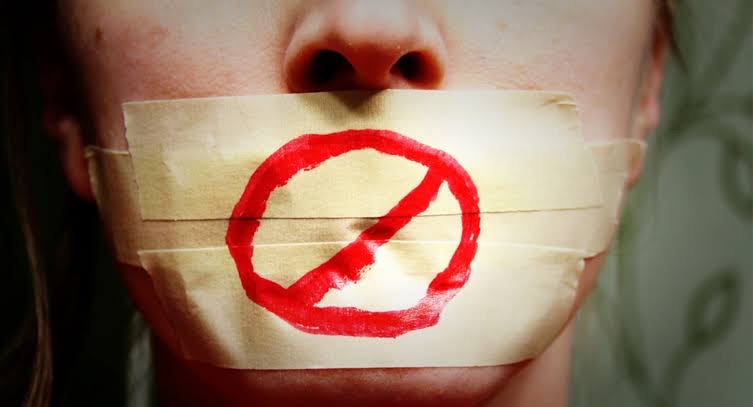
In Ireland, you could go to prison if you share anything deemed ‘hateful’ by fact-checkers: How this is a ‘liberal’ paradise

Ireland is one step closer to what left liberals and wokes across the world hanker after—a country and a region where they can impose their principles and warped sense of morality while possessing the power of prosecuting those who do not agree with their worldview.

The European country has recently passed a controversial law, the Criminal Justice Incitement to Violence or Hatred and Hate Offences Bill, which grants sweeping powers to the government to charge individuals under the guise of curbing ‘hate speech’.

The revised legislation is set to establish groundbreaking regulations for addressing hate crimes, criminalize the denial or trivialization of genocide, and extend safeguards to encompass gender identity and disability.

The legislation will provide for ‘hate crimes’ by introducing enhanced versions of specific existing criminal offenses, if such offenses are driven by bias against a safeguarded characteristic, such as race, color, nationality, religion, ethnic or national origin, sexual orientation, gender, and disability.

Besides, the revised legislation will introduce a “demonstration test,” allowing prosecutors to utilise the utilisation of derogatory or biased slurs, actions, or symbols during the time of the offence to facilitate obtaining convictions.

In layman’s terms, the newly enacted legislation will make it illegal to deliberately or negligently engage in communication or conduct that is expected to provoke violence or animosity towards a person or persons based on their association with a “protected characteristic”, with the onus of proving one’s innocence on the accused and not on the prosecutor to prove the guilt.

The aggravated offences will entail a more severe penalty than the standard offence. A person who is deemed ‘hateful’ by the perceived victims of inciting hatred with respect to race, colour, nationality, religion, gender, sexual orientation or disability could be held guilty of an offence which could carry a penalty of up to five years in prison.

In other words, the law is so radical and sweeping that merely possessing content that is deemed ‘hateful’ by the perceived victims could be enough to face prison time. Besides, the burden of the proof rests on the shoulders of the accused, who is expected to prove they didn’t intend to use the material to ‘spread hate’.

The radical new law predictably kicked up a furore, with politicians and policymakers from across the globe raising concerns and warning against the misuse of the said legislation.Donald Trump Jr responded by calling Ireland’s new hate speech legislation as ‘insane’.

Twitter CEO Elon Musk, who describes himself as free speech absolutist, responded to a tweet about Ireland’s new hate speech legislation, terming it “very concerning”. Musk had been a vocal critic of Twitter’s previous regime, which was notorious for enforcing shadow bans, de-platforming voices that did not conform to the company’s political and philosophical ideology, and using the pretext of curbing hate speech to silence dissenting opinions.

Others, too, believe that such a radical new law aimed at curbing hate speech might prove counterproductive, extinguishing dissent from public space—a thing regarded as the lifeblood of thriving democracies—where disagreements often lead to course correction and veers nations toward progress while keeping a check on human rights enshrined in their respective constitutions.

In any case, vilifying and punishing the opponents are tried and tested liberal methods to obtain obedience, with innumerable cases of arrests reported in the name of hate speech, misgendering, racial slurs, etc. Those who do not toe the liberal line often find themselves either being cancelled, vilified and ostracised for their maverick views, or subjected to prison time.

However, with the passage of the hate speech legislation by Ireland, with its broad definitions as to what constitutes an offence and stringent provisions to criminalise it, liberals are endowed with a lawful sanction to arbitrarily prosecute their ideological rivals and tangle them in legal matters. 

But for the liberal and woke ecosystem, such a country would be an ideal paradise, where they can prosecute and punish their ideological rivals and opponents, merely by labelling their views as ‘hateful’ and making them liable to be charged under the new hate speech legislation.

The wokes and the liberals, through their conduct, have long treated the rule of law and basic morality with disdain, supplanting them with their twisted notion of what’s right and wrong to support their narrative. This perversity results in the subjective application of key definitions, including that of hate speech, whereby any opinion that runs odd with the dominant leftist view gets labelled as hate speech and its purveyors condemned and stigmatised.

However, with the new law, the liberals will have yet another tool to beat their opponents: the legal sanction that the hate speech legislation provides to prosecute those perceived as ‘hateful’ by the alleged victims.

For instance, liberals in India had deemed ‘The Kashmir Files’, a movie that chronicles religious persecution faced by Kashmiri Pandits at the hands of Islamic fanatics, or the more recent one, The Kerala Story, a film that showcases the covert but rampant love jihad and indoctrination of Hindu girls underway in Kerala to turn them into ISIS fighters, as an expression of ‘hate speech’ because it brought to fore the unvarnished reality of how Islamists, whether in Kerala or Kashmir, have been hunkering down on their mission to Islamise India and irreversibly alter its pluralistic character.

If the makers of these two movies were residing in Ireland, they would have been liable for prosecution for disseminating ‘hate speech’ simply because the new law has a provision to prosecute those accused of spreading hate. The liberals would have then filed cases against these filmmakers for merely depicting the reality and busting the narrative that liberals put up to shield Islamists and their nefarious activities.

Thus, the law passed by Ireland is not only flawed but bears grave implications for the democratic world, which cherishes individual rights, welcomes dissent, and above all, respects and honours the truth. However, the passage of the new hate speech legislation renders all these aspects null and void, turning a thriving democracy into what could be described as a ‘liberal paradise’, where individual rights are susceptible to suppression, dissent could be punished, and the truth be labelled as ‘hate speech’.

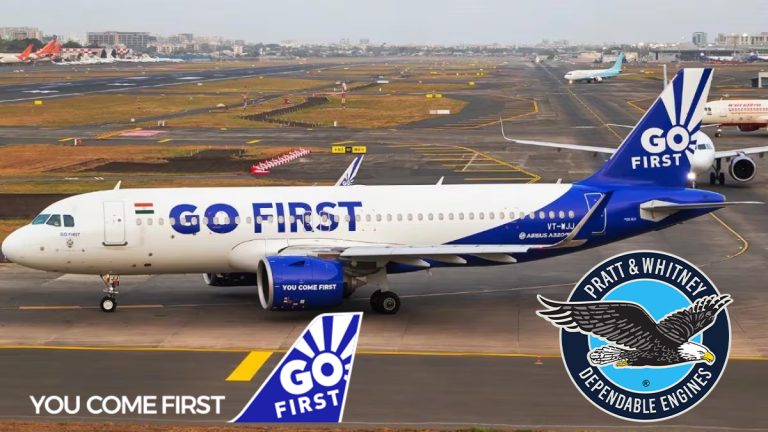
Go First files for voluntary insolvency: Here is how a faulty engine by US-based Pratt & Whitney is causing the collapse of an Indian airline

Wadia Group controlled ultra-low cost Go First Airlines filed for voluntary insolvency before the National Company Law Tribunal on Tuesday after facing acute financial troubles. The Airlines also cancelled all flights on 3, 4 and 5 May, causing DGCA to issue a show cause notice to it.

The airline blamed the “faulty” Pratt & Whitney engines used on its Airbus A320 planes, as half of its fleet was grounded due to engine issues. The airline in a statement said that it was “facing a financial crunch due to non-supply of engines by Pratt & Whitney, which has forced the company to ground 28 planes, over half of its fleet.”

Go First said that it was forced to file for bankruptcy after a refusal by Pratt & Whitney, the exclusive engine supplier for the airline’s Airbus A320neo aircraft fleet, to comply with an arbitration order to release spare leased engines that would have allowed the airline to return to full operations. It said that the number of grounded aircraft “due to Pratt & Whitney’s faulty engines” increased from 7% of its fleet in December 2019 to 50% in December 2022, costing it ₹10,800 crore ($1.32 billion) in lost revenues and additional expenses.

According to Go First, Pratt & Whitney has refused to comply with an award by an emergency arbitrator, directing the American engine maker to supply 10 engines by April 27 and 10 more engines per month till the end of 2023. The airline added that if P&W supplies the engines, it will be able to resume full operations by August/September 2023.

However, Pratt & Whitney tried to hit back at Go First, accusing the airline of having a “lengthy history of missing its financial obligations.” While the company has not issued an official statement, a spokesperson of the company told media that Go First has been missing its financial obligations to Pratt & Whitney.

At the same time, the spokesperson said that the company is committed to the success of its airline customers, and added that the company is complying with the March 2023 arbitration ruling related to Go First. They refused to divulge further details saying that it is now a matter of litigation.

While Pratt & Whitney has accused Go First of missing financial obligations, the creditors of the airline have said that the company is repaying its loans in time. A banker said that the airline was facing issues only because of the problems with aircraft engines.

A new engine facing problems since its launch

Go First operates 57 A320 aircraft made by Airbus and almost 50 of them are Airbus A320neo, powered by Pratt & Whitney PW1100G engines. This is a high-bypass geared turbofan engine, a newer technology, which consumes less fuel. However, ever since its launch, the engine has been facing various problems, reducing its reliability to a great extent. Several airlines across the world had to ground their aircraft using the engine, including IndiGo, Go Air, Lufthansa, JetBlue, Nippon, Hong Kong Express and others.

The engine was launched in 2016, and in 2017, several A320neo planes powered by the P&W engine were grounded across the world, including the planes of IndiGo and Go First.

In fact, in 2016, Qatar Airways cancelled an order for A320 Neo planes over engine issues. The Airline had said that while there were no issues with the aircraft, there were many problems with the engines.

India’s largest airline IndiGo, the biggest customer of A320 Neo, replaced all engines on its fleet of A320 Neo aircraft with modified engines provided by Pratt & Whitney, on the orders of the Directorate General of Civil Aviation (DGCA) due to problems with the engine. When IndiGo placed two orders for 590 new Airbus A320neo aircraft in 2019 and 2021, it selected the CFM International LEAP-1A engine, the only other engine available for the narrowbody aircraft.

Earlier this year when Air India ordered 470 Boeing and Airbus planes, it selected CFM International engines for 210 Airbus 320/321 Neo and 190 Boeing 737 Max planes.

Pratt & Whitney has acknowledged the problems with its geared turbofan engines. In February, P&W owner Raytheon Technologies Corp CEO Greg Hayes said that the engine’s reliability has not been up to expectations and that the company was working to fix problems.

Go First’s trouble with P&W engines and legal battle

However, Go First chose the P&W engines when it ordered 72 A320 Neo aircraft in 2011, when it was known as Go Air. The airline also bought a comprehensive service agreement which mandated compensation from the engine maker for any maintenance issues. The agreement had three main conditions: Pratt & Whitney has to provide spare engines within 48 hours of an aircraft getting grounded due to failure of its engine, the faulty engines have to be repaired free of charge as they are under warranty, and the engine maker has to pay compensation for loss of business due to grounding of its aircraft.

The airline said that it had selected the P&W engine because the American company had offered better fleet-management terms, and the engines are more fuel efficient, quieter and require less service. Go First received its first A320 Neo plane powered by Pratt & Whitney PW1100G engine in 2016, and within 6-8 months, the engines started facing issues.

Go First said that P&W honoured the provisions of the agreement till March 2020, and it provided spare engines on time, repaired without cost, and provided some compensation. However, after the Covid-19 pandemic, the engine maker has stopped providing any of this. Moreover, the airline began to to experience “more severe” engine failures in 2020, and P&W stopped providing maintenance service to the company in 2022 over financial disputes.

In February 2023, Pratt proposed to supply replacement engines at a rate “four times lower than the failure rate.” As a result, Go First moved Singapore International Arbitration Commission (SIAC) against P&W in the next month for not supplying spare engines as mandated by the maintenance agreement. In the arbitration, Pratt & Whitney’s lawyers claimed that its engines were not faulty, even if they were not performing in the expected manner. They also claimed that the airline owed them over $100 million.

The arbitration award issued on March 30 this year went in the airline’s favour. The SIAC ordered Pratt & Whitney to supply 10 engines to Go First by April 27, and then 10 spare leased engines per month until December 2023.

However, P&W refused to comply with this order, and the airline was forced to continue grounding A320 Neo planes due to faulty engines. As a result, the SIAC issued a second arbitral award on April 15, asking the US-based company to comply with its order. But P&W continued to refuse to comply, and only committed supply only three engines by May-end. While the airline needs a minimum of 103 engines from Pratt for normal operations, and only 56 engines are currently serviceable.

The battle ahead

With losses mounting due to decreased business as half of its planes are grounded, the airline decided to file for voluntary insolvency. Go First also said it suffered a loss of ₹10,800 crore in lost revenues and additional expenses due to the grounding of the planes. The airline said that it paid ₹5,657 crore to lessors in the last two years, out of which ₹1,600 crore was paid towards lease rent for non-operational grounded aircraft.

The airline is seeking compensation of approximately ₹8,000 crore from P&W.

Along with filing for bankruptcy, the airline also moved a court in Delaware, United States, seeking enforcement of the arbitration award. Go First moved an emergency petition before the Delaware Federal Court on April 28, calling for a legal order to force Pratt & Whitney to comply with SIAC’s two arbitral awards, issued on March 30 and April 15.

“If Pratt does not immediately comply with the awards, there is a significant risk that Go First will go out of business and be forced to declare bankruptcy,” the petition stated. “The court should recognize the awards due to Go First’s dire need for immediate confirmation and enforcement, without which Go First faces irreparable harm, and absent which the emergency arbitration would be rendered meaningless,” the petition further added.

The allegations of the airline against P&W made in the petition include the supply of defective geared turbofan engines, failure to repair the faulty engines, and failure to provide sufficient spare leased engines.

Pratt & Whitney on Wednesday said that it is complying with the arbitration order.

As Go First is facing trouble for no fault of it, the govt of India has said that it will help the airline. “Go First has been faced with critical supply chain issues with regard to their engines. The government has been assisting the airline in every possible manner,” civil aviation minister Jyotiraditya Scindia said in a statement.

Go First is not the only airline to be hit by faulty P&W engines. Over 30 Airbus A320 Neo planes of IndiGo are also currently grounded due to engine faults, even after the original engines were replaced by ‘modified’ engines. However, as IndiGo is a much bigger operator with several types of aircraft in its fleet, it has been able to sustain the situation without much impact on its operations.

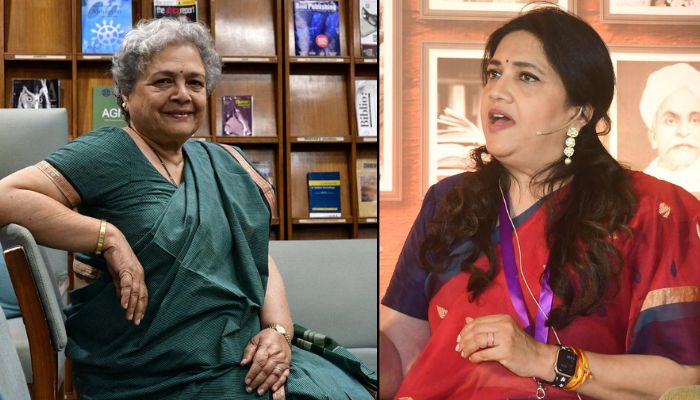
You don’t talk about spine: ANI Editor Smita Prakash lambasts former editorial advisor of Congress mouthpiece ‘National Herald’. Here is what happened

On Wednesday (May 3), the Editor-in-Chief of ANI, Smita Prakash, hit out at the former editorial advisor of Congress mouthpiece ‘National Herald’ for insinuating that she somehow lacked the spine of former Jammu and Kashmir Lt. Governor Satya Pal Malik.

In a tweet (archive), Smita Prakash wrote, “The former editor of National Herald is talking about the spine. You can leave (the virtue signalling).”

Without taking any names, the ANI Editor-in-Chief pointed out that the concerned individual had worked for the mouthpiece of a political party and thus have no right to question the ‘determination’ and ‘courage’ of other journalists.

The Background of the Controversy

The controversy ensued on Wednesday (May 3) morning when Smita Prakash posted a picture of ex-Governor of Jammu and Kashmir, Satya Pal Malik. In the said image, Malik could be seen resting his back against a stack of pillows.

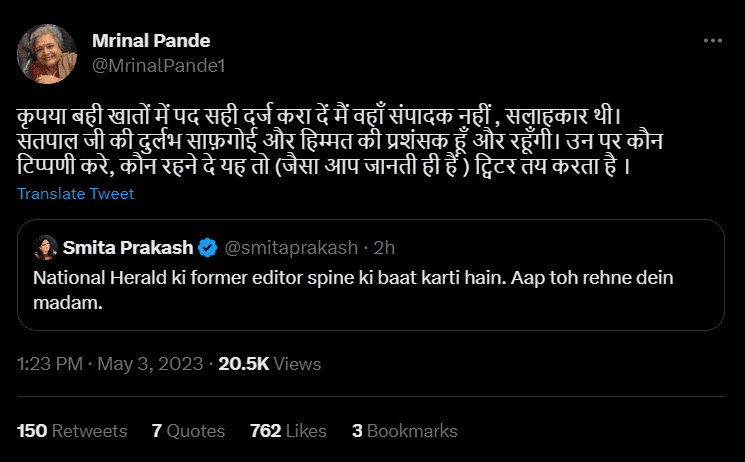
“Why?” the Editor-in-Chief of ANI asked a harmless question. Triggered by the tweet of Smita Prakash, the former senior editorial advisor of the National Herald aka Mrinal Pande wrote, “Why not? The spin is precious.”

Pande thus mocked Smita Prakash and suggested that she lacked the spine of Satya Pal Malik. The archive of the contentious tweet can be accessed here.

After being caught off guard, Mrinal Pande claimed that she worked as an ‘advisor/ consultant’ at the Congress mouthpiece. “I am and will remain a fan of Satpal ji’s rare clarity and courage. Twitter decides (as you know) who should comment on them and who should leave them,” she said.

Screengrab of the tweet by Mrinal Pande

It must be mentioned that National Herald posted a tweet on March 2018, announcing that ‘journalist’ Mrinal Pande had joined it as a ‘new Group Senior Editorial Advisor.” She has also written several op-eds and propaganda articles for the Congress mouthpiece.

Screengrab of the tweet by the National Herald

Mrinal Pande had been at the helm of fake stories, surrounding the Kashi Vishwanath Temple and the founding of the Indian Space Research Organisation (ISRO).

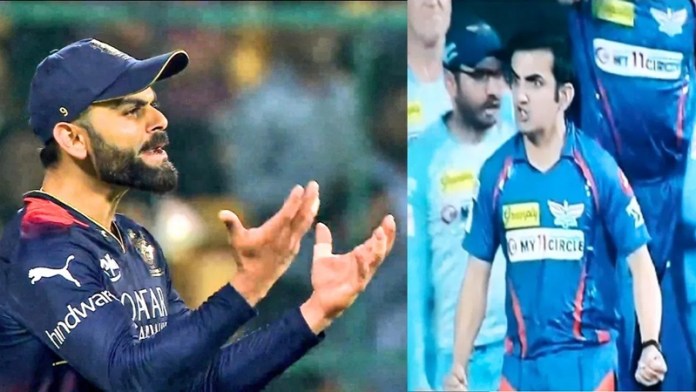
‘You abuse my team, you abuse my family’: Eye witness reveals a heated exchange between Virat Kohli and Gautam Gambhir

The ugly spat between Virat Kohli and Gautam Gambhir during an RCB versus LSG’s Indian Premier League (IPL) match sparked discussion over social media, and even the Congress party somehow dragged it into the Karnataka elections. However, people have still not been able to comprehend how an argument between LSG’s Afghani cricketer Naveen Ul Haq and RCB’s Virat Kohli turned into a verbal fight between Kohli and LSG mentor Gautam Gambhir.

News agency PTI has now quoted an eyewitness detailing what led to an argument between Gambhir and Kohli at Atal Bihar Vajpayee Ekana Stadium in Lucknow.

According to an eyewitness to the heated spat, everything started when LSG’s Kyle Mayers questioned Virat Kohli about why he was continuously abusing him and the rest of the team, and things quickly escalated.

“You saw on TV that Mayers and Virat walked side by side for a few metres after the game. Mayers questioned Kohli about why he was continually abusing them, and Virat, in turn, queried why Mayers was staring at him. “Previously, (Amit) Mishra had complained to the umpire about Virat constantly abusing Naveen ul-Haq,” the eyewitness told PTI.

When Gautam Gambhir saw Mayers and Kohli arguing, he intervened by pulling Mayers aside. The eyewitness then recounts exactly what Kohli and Gambhir said to each other during the heated exchange.

“What were you saying, say it now (kya bol raha hai bol),” Gambhir asked. To this, Kohli replied, “I didn’t say anything to you, why are you intervening (maine aapko kuch bola hi nahin, aap kyun ghus rahe ho)?”

This, however, did not go well with Gambhir who in turn said that “If you have abused my team player then you have abused my family (tune agar mere player ko gaali di hai matlab tune meri family ko gaali di hai).” Even Kohli did not back out as he responded, “Then you look after your family (toh apni family ko sambhal ke rakhiye)”. Lastly, Gambhir said, “So now you will teach me (toh ab tu mujhe sikhayega).”

The altercation happened after RCB had bowled LSG out for 108 after scoring 126/9 in 20 overs, with KL Rahul batting through a leg injury in an unsuccessful attempt to take his side to victory. After the match ended, the two shook hands and things looked fine. However,  Both the cricketers have been fined 100 percent of their match fees. In addition to this, Naveen Ul Haq was also fined 50 percent of his match fees for breaching the Code of Conduct. Naveen-ul-Haq admitted to the Level 1 offence under Article 2.21 of the IPL Code of Conduct.

IOA president PT Usha visits Delhi’s Jantar Mantar to meet protesting wrestlers

The head of the Indian Olympic Association (IOA), PT Usha, visited Delhi’s Jantar Mantar on Wednesday, where the country’s top wrestlers have been staging a demonstration for the past 11 days. They are in protest against Brij Bhushan Sharan Singh, the president of the Wrestling Federation of India (WFI), who they claim has sexually assaulted a number of female competitors.

She was spotted conversing with the wrestlers including Sakshi Malik, Vinesh Phogat, and Bajrang Punia. Nearly a week after she slammed the athletes protesting on the streets constituted indiscipline and damaged the nation’s reputation, she arrived at the protest site.

According to Bajrang Punia, she stated that she is supporting the wrestlers and will seek justice on their behalf. She also added that she is an athlete first. She promised to look into the matter and resolve it immediately. She also affirmed that she was misinterpreted.

However, the former track-and-field icon left without speaking to the media gathered at the protest site.

This fresh development was witnessed after Sports Minister Anurag Thakur emphatically mentioned that “Prime Minister Narendra Modiji’s government has always stood with players” and “sports and athletes are their priority.”  

Boxing legend MC Mary Kom, who also served as the chair of the sports ministry’s oversight committee that produced a report on the allegations of sexual harassment, has not responded to the current demonstrations.

On Tuesday, Om Prakash Karhana, a 36-year-old former shot putter and Asian champion who was on the IOA’s athletes committee, spoke out in favour of the wrestlers. “I’m not speaking on behalf of the athletes commission but my personal view is that if athletes have come out in the open to fight for their rights, the system in the country should take steps to deliver justice to them as soon as possible,” he remarked.

He further pointed out that denying the wrestlers’ accusations would damage Indian sport because the athletes would lose faith in the system. The 36-year-old retired last year.

Meanwhile, the Bharatiya Janta Party MP and WFI supremo Brij Bhushan Sharan Singh has defended himself against the wrestlers’ charges. He argued that the majority of wrestlers in the nation back him and that just a small number of wrestlers connected to a Congress leader have brought accusations against him.

“90% of the athletes & guardians of Haryana trust the Wrestling Federation of India. A few families and the girls who have levelled allegations belonged to the same Mahadev Wrestling Academy. The patron of the academy is Deepender Singh Hooda,” he countered.

Following their initial protest in January, several prominent wrestlers, including Sakshi Malik, Bajrang Punia, and Vinesh Phogat, returned to Delhi’s Jantar Mantar on April 23 to voice their opposition to the WFI chief.

Hours after the Supreme Court heard the case, the Delhi Police filed two FIRs in connection with allegations that named the six-term member of parliament as an offender.

The IOA had established a committee headed by M C Mary Kom to probe the accusations before the wrestlers made the decision to withdraw their protest. Vinod Tomar, the Wrestling Federation’s Additional Secretary, had also been suspended by the Union Sports Ministry.

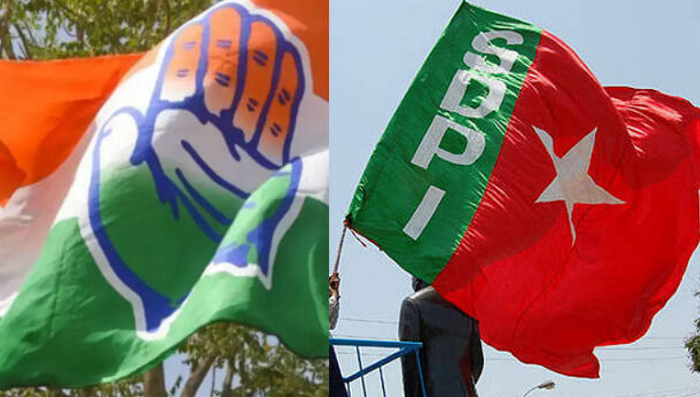
As Congress vows to ban Bajrang Dal, SDPI, political wing of banned PFI, supports Congress in Karnataka to ‘defeat BJP’: Here is how

On Wednesday, the Social Democratic Party of India (SDPI) which is the political wing of the banned Popular Front of India (PFI) declared that it would contest only 16 Assembly seats in the upcoming Karnataka Assembly Election 2023 in order to help Congress.

The SDPI had earlier said that it would field its candidates in 100 constituencies. However, today it decided to contest only 16 seats in the upcoming state elections. This is to help Congress in defeating the BJP. The decision taken by the SDPI reportedly comes a day after Congress released its manifesto for the elections and stated that it would impose a ban on Hindu organisations like Bajrang Dal.

The party stated that it is dedicated to taking a resolute and unwavering stance against people and groups who ‘incite enmity among communities on the basis of caste and religion’.

“We believe that law and Constitution is sacrosanct and can not be violated by individuals and organisations like Bajrang Dal, PFI or others promoting enmity or hatred, whether among majority or minority communities. We will take decisive action as per law including imposing a ban on any such organisations,” read the party manifesto.

SDPI national general secretary Elyas Thumbe confirmed the development to Times Now and said, “The initial plan was to contest 100 seats, we dropped the plan as the ground situation looks fertile for Congress to win and for BJP to lose the Karnataka Election 2023. We told our SDPI workers to go door to door and campaign for Congress and JD(S).”

SDPI had made covert alliance with Congress in 2018 elections also

It is interesting to note that the SDPI had made covert alliances with Congress in several seats to oust BJP from power during the Karnataka assembly elections of 2018. SDPI leader Ilyas Thumbe had revealed in March this year that SDPI in 2018 had taken back their candidates from more than 25 seats as a result of secret pacts with Congress. Congress also had withdrawn its candidacy from three constituencies with a Muslim majority for SDPI to contest. However, the Congress has denied any pact made with the Islamic organization.

Yesterday, the Hindu organisations slammed the grand old party for making such unconscionable remarks in its poll manifesto and comparing Bajrang Dal to the PFI. Vinod Bansal, the national spokesperson of Vishva Hindu Parishad said that he was not completely surprised though as the remarks made by Congress were completely in sync with the party’s “Jihadi mindset.”

He further denounced the Congress for repeatedly seeking to humiliate Hindus in an effort to placate and pacify Islamists. He asserted that Congress had a track record of supporting jihadis and sheltering Islamist terrorists.

The VHP leader claimed that equating Bajrang Dal with PFI is the final nail in Congress’s coffin. “By making such reckless comments in the poll manifesto, the party has penned its own death warrant”, he said.

VHP stage protest in Delhi, seek withdrawal of promise to ban ‘Bajrang Dal’

The VHP members also staged protest outside the Congress headquarters in Delhi today and sought immediate withdrawal of the poll promise. PM Modi also took cognizance of the event and said that the Congress party had attempted to oppose Lord Rama and Lord Hanuman.

“See the misfortune that when I have come to pay my respect to Hanuman’s land, at the same time, the Congress in its manifesto has decided to lock up Lord Hanuman. Initially, they locked up Prabhu Shri Ram (Lord Ram). And now they want to lock up people who chant Jai Bajrang Bali,” PM Modi said while addressing an election rally in Karnataka.

Legislative Assembly elections are scheduled to be held in Karnataka on May 10, 2023 to elect all 224 members of the Karnataka Legislative Assembly. The votes will be counted and the results will be declared on May 13, 2023.

Same-sex marriage row: Centre to set up a committee headed by Cabinet Secretary to address concerns of LGBTQIA+ community

On Wednesday, May 3, the Supreme Court was informed by the Union Government that a committee would be formed, led by the Cabinet Secretary, to tackle real-life issues affecting members of the LGBTQIA+ community.

Solicitor General Tushar Mehta, representing the Centre, submitted before a Constitution Bench hearing the same-sex marriage case said the government is positive on addressing the concerns raised by the LGBTQIA+ community.

“My friends [petitioners] can give me suggestions for their problems. The committee will go into them and try as far as possible and legally permissible to see they are addressed,” Mr Mehta said.

The government stated that the committee would be formed with the understanding that the challenges encountered by the community would be spread across various ministries.

A.M. Singhvi, counsel appearing for the petitioners, said the hearings should continue as the government has assured to only make administrative changes.

Mr Mehta, however, affirmed that changes that are legally permissible would be brought in.

A constitution bench of the top court has been hearing a batch of pleas seeking legal recognition of same-sex marriages in India.

The batch of petitions has sought the recognition of same-sex marriages under the law, arguing that the right to marry a person of one’s choice should extend to LGBTQIA+ citizens as well.

The Central government has opposed the petitions.

Centre, in its affidavit, had opposed the plea seeking legal recognition of same-sex marriage, saying that living together as partners by same-sex individuals, which is decriminalised now, is not comparable with the Indian family unit and they are clearly distinct classes that cannot be treated identically. 

The Centre has filed the affidavit countering the demand made by various petitioners seeking legal recognition of same-sex marriage. In the affidavit, Centre has opposed the plea and said that pleas seeking legal recognition of same-sex ought to be dismissed as there exists no merit in these petitions. 

Same-sex relationships and heterosexual relationships are clearly distinct classes that cannot be treated identically, the government said as its stand against the petition seeking legal recognition of LGBTQ marriage. 

However, the Supreme Court, during the hearing of the matter on April 27, said that the granting legal recognition to same-sex marriages is under the purview of the legislature but the court’s objective in hearing the case is to ensure that measures are devised to accord same-sex couples social and other benefits and legal rights without the label of marriage.