Home Blog Page 4409

Shiromani Akali Dal fields Indira Gandhi assassination conspiracy convict Kehar Singh’s son Charanjeet Singh in DSGMC elections

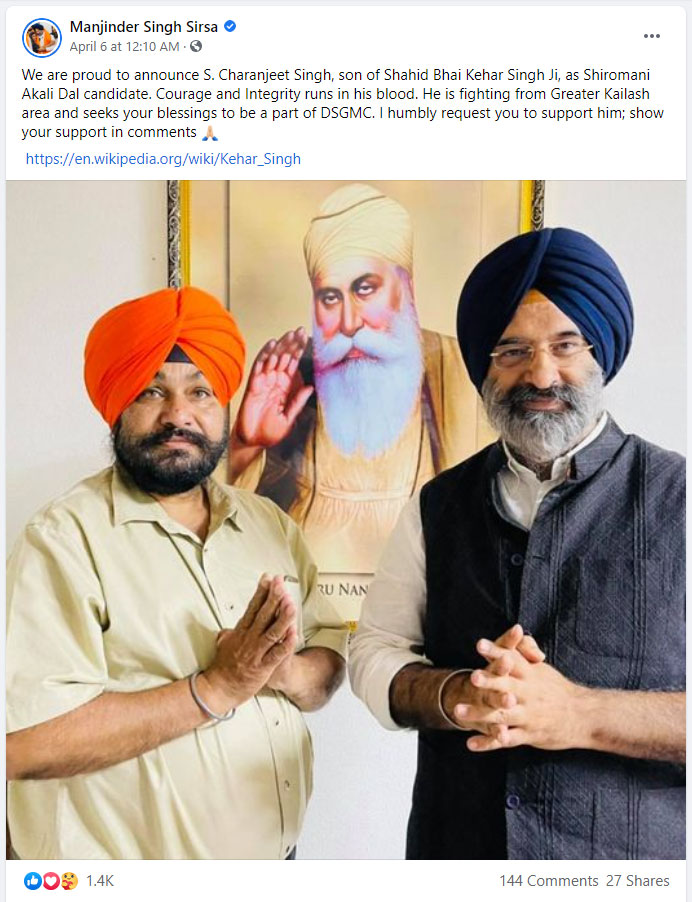
On April 6, Shiromani Akali Dal’s leader Manjinder Singh Sirsa announced on his Facebook account that his party is fielding Charanjeet Singh, son of Kehar Singh, from the Greater Kailash area for upcoming Delhi Sikh Gurdwara Management Committee (DSGMC) elections. Notably, Kehar Singh was tried and executed for conspiracy in the plot of the Indira Gandhi assassination. Beant Singh, one of the assailants who killed Gandhi, was married to the niece of Kehar Singh.

Sirsa announced Charanjeet Singh as SAD candidate on his FB profile

In his post, Sirsa wrote, “We are proud to announce S. Charanjeet Singh, son of Shahid Bhai Kehar Singh Ji, as Shiromani Akali Dal candidate. Courage and Integrity runs in his blood. He is fighting from the Greater Kailash area and seeks your blessings to be a part of DSGMC. I humbly request you to support him; show your support in comments.”

The story of Kehar Singh

On October 31, 1984, then-Prime Minister Indira Gandhi was assassinated by Beant Singh and Satwant Singh. They killed Gandhi to take revenge for Operation Blue Star, an army operation in which several Khalistanis were killed, including their leader Jarnail Singh Bhindranwale. Operation Blue Star was not an end to the insurgency in Punjab. It took several years for the security forces to wipe out the anti-India forces from Punjab.

Kehar Singh took Beant Singh to Golden Temple to take the oath to kill Gandhi

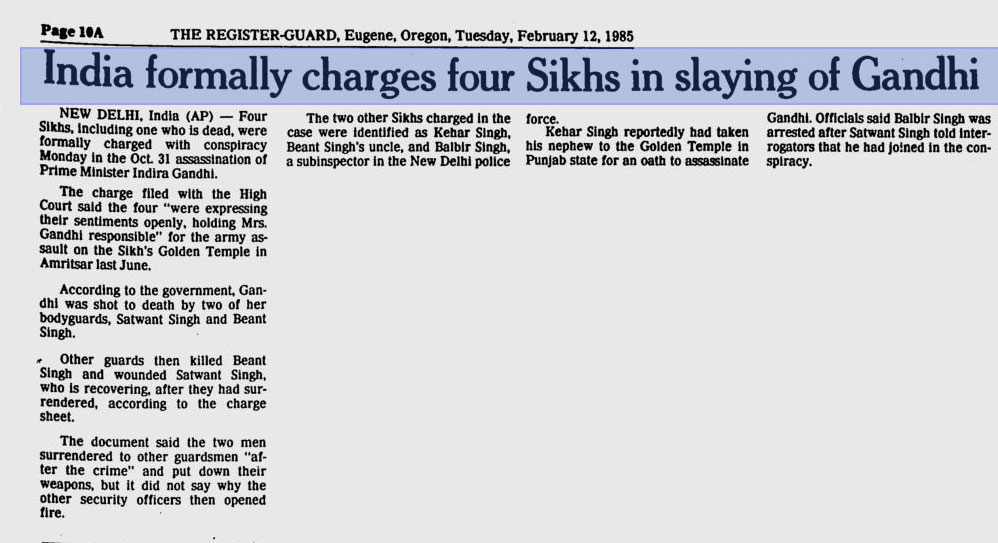
According to a report published in The Register-Guard on February 12, 1985, Kehar Singh, uncle of Beant Singh’s wife, took him to Golden Temple to take an oath to kill Gandhi. The primary evidence against Kehar Singh, who was an assistant in the Directorate General of Supply and Disposal, New Delhi, was Beant Singh’s wife’s testimony.

News clipping of The Register-Guard, February 12, 1985

Beant Singh’s wife, Bimal Kaur Khalsa, in her testimony against Kehar, said that on October 17, 1984, Beant Singh and Kehar Singh conspired to kill Gandhi on the roof of their house. Satwant Singh also joined them on the same evening for meals. On October 20, 1984, Beant Singh and Kehar Singh, along with their families, went to Amritsar. During the visit, Beant Singh took the oath to kill then-PM Gandhi.

It was mentioned in a Supreme Court Judgement that Kehar Singh started visiting Beant Singh’s house more often after `Operation Bluestar’. Both had talked about the destruction of the Akal Takht in the Golden Temple complex on two or three occasions but became silent when Bimal came.

Kehar was a religious fanatic

The court noted that Singh was a religious fanatic. He had intense hate against Gandhi for damaging Akal Takht in Golden Temple during Operation Blue Star. Being a family member, he influenced Beant Singh. “He converted Beant Singh and through him Satwant Singh to religious bigotry. He made them to undergo “Amrit Chakhan Ceremony” on October 14 and 24, 1984, respectively, at Gurdwara, R.K. Puram, New Delhi. He also took Beant Singh to Golden Temple. Amritsar on October 20, 1984. Gold `Kara’ and `ring’ of Beant  Singh were later recovered from him,” the judgement added.

In the judgement, it was mentioned that Kehar Singh and Beant Singh kept themselves away from their families during the trip to Amritsar. “The attempt of these two persons to keep themselves away from the company of their wives and children speaks volume about their sinister designs,” it added. The court also noted that they wanted to keep their plan to kill Gandhi a secret from Beant Singh’s wife.

Kehar blamed Gandhi’s death on her confrontation with the ‘Panth’

On learning about Gandhi’s death, Kehar said, “whosoever would take confrontation with the Panth, he would meet the same fate.” The court believed that such incidents indicated Kehar Singh was a co-conspirator to the assassination of then-PM Gandhi.

After investigation, the charge sheet was filed against Satwant Singh, Balbir Singh and Kehar Singh. They were accused of offences under Sections 120-B, 109, 302 of the IPC and also of substantive offences under Sections 302 and 307 of the IPC and Sections 27, 54 and 59 of the Arms Act.

Kehar Singh was hanged to death on January 6, 1989.

Amazon-owned Twitch will now ban users for harassment that does not take place on its streaming platform

In a major expansion of its misconduct policy, Twitch will now ban users for harassing members of its community, even if it takes place off the website. The Amazon-owned streaming platform announced that the updated policy allows it to take counter-measures against users who harass or mistreat members of the Twitch community, either online or offline.

The policy is divided into two sections. One section deals with harassment that takes place on and off Twitch, and the other section deals with harassment that specifically takes place off Twitch. The first section has remained unchanged. Twitch already takes into account any Twitch-related harassment that takes place on Facebook when it reviews harassment complaints that happen on Twitch.

However, the second section is part of the policy expansion. Now, if Twitch gets to know about any “serious offences that pose a substantial safety risk to the Twitch community,” the streaming platform will take action, even if it happens outside of the internet. The platform defines “serious offences” as incidents of violent extremism, credible threats of mass violence, membership in a known hate group, sexual exploitation of children, and nonconsensual sexual activities, credible threats against Twitch staff, among others.

In order to investigate these “serious offences” Twitch is bringing on a third-party law firm. “These investigations are vastly more complex and can take significant time and resources to resolve,” wrote Twitch in an official blog post.

“For behaviors that take place off Twitch, we must rely more heavily on law enforcement and other services to share relevant evidence before we can move forward.”, the streaming platform added.

Twitch had just recently overhauled its harassment policy in December last year, including stricter rules regarding sexual harassment and promotion of “hateful opinions” under the pretense of comedy. Twitch announced that it will focus on “the most egregious types of physical and psychological harm” to begin with. However there is always the possibility that Twitch’s off-site harassment policy could be expanded in the future.

Even though the policy change of banning for off-platform acts has been announced now, Twitch had already implemented this policy, when it had banned President Donald Trump after the Capitol Hills violence.

Sachin Vaze names Pradeep Sharma before NIA: All you need to know about the ex-cop who was Shiv Sena’s MLA candidate

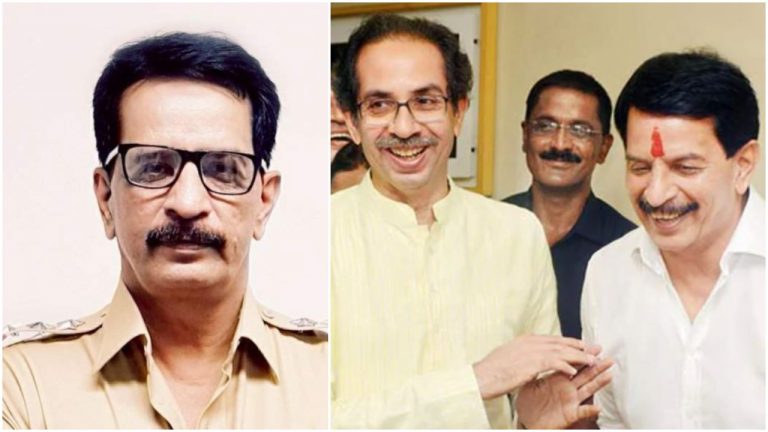
As National Investigation Agency continues to tighten its noose in the Sachin Vaze case, the central agency’s axe has fallen on the latter’s mentor Pradeep Sharma, who is one of the five officers who are under the NIA’s scanner. Currently, the central agency is interrogating the Shiv Sena leader and former policeman, ‘encounter specialist’ Pradeep Sharma, for his alleged involvement in the Antilia bomb scare case.

Earlier in the day, Republic TV had reported that Sachin Vaze named Sharma in his confession. He had reportedly confessed that Sharma had helped him procure the gelatin sticks that were planted in the SUV outside Reliance Industries chairman Mukesh Ambani’s residence. Vaze also told the central agency that he had met Pradeep Sharma on March 3rd and 4th.

Who is Pradeep Sharma?

Ex-cop Pradeep Sharma is the newest entrant in the list of Mumbai police officers who are being investigated for their alleged link with the Sachin Vaze case. Pradeep Sharma (58) is better known for being part of the Mumbai Police’s encounter squad, which Sachin Vaze and other officers were also a part of.

Sharma’s dismissal and reinstatement

Sharma joined the State Police Service in 1983 as a sub-inspector. He was first posted to the Mahim police station in Mumbai and was later moved to the special branch in Juhu, Mumbai. Rising through the ranks, Sharma went on to head the police stations in other suburbs of Mumbai. He eventually became a senior Inspector in the crime intelligence unit of the Mumbai police, until he was dismissed by the Maharashtra government on August 31, 2008, for his alleged involvement and contacts with criminals.

The dismissal of Sharma from the police force came after the Intelligence Bureau (IB) tapped an alleged telephone conversation between Sharma and Dawood Ibrahim henchman Chhota Shakeel. This resulted in an inquiry against Sharma following his dismissal.

In 2009, the Maharashtra Administrative Tribunal (MAT) quashed his dismissal order for his alleged links with the underworld don.

Subsequently, in 2010, Pradeep Sharma was arrested in an alleged 2006 fake encounter of criminal Lakhan Bhaiyya, a close aide of gangster Chhota Rajan. After spending four years in jail Sharma was acquitted in 2013.

Sharma’s acquittal was subsequently challenged in the Bombay High Court by the state. He was the only one to be acquitted as 13 other cops in his team were convicted and given life imprisonment. While three policemen were convicted for murder, 10 were convicted for aiding and abetting the encounter.

In 2017, Sharma was, however, cleared of all charges and reinstated into the police force. He was made the senior of the Anti Extortion Cell of the Thane police then led by Param Bir Singh, the former Mumbai Police Commissioner who is also being probed for his involvement in the murder of businessman Mansukh Hiren and Antilia bomb scare case.

Pradeep Sharma and his Shiv Sena links

The former encounter cop, however, quit the Mumbai Police in 2019 after having served for over 30 years following which he joined the Shiv Sena. He contested in the 2019 Maharashtra Assembly elections from the Nalasopara constituency. Sharma, however, lost to Bahujan Vikas Aaghadi’s Kshitij Thakur by over 40,000 votes. At the time of contesting elections, Sharma in his affidavit had declared assets of Rs 36.21 crore in his and his wife’s name.

Now, the trouble for this ‘encounter-cop’, who has for all these years has shared an extremely close relationship with the Shiv Sena Party, has increased after Sachin Vaze reportedly named him in his confession today.

Sachin Vaze has reportedly said that Sharma helped him procure the gelatin sticks that were implanted in the SUV found outside the residence of Mukesh Ambani. In his confession to the NIA, Sachin Vaze further claimed that Pradeep Sharma was with him during the nights of March 3 & 4 and was also present on the night when Sachin Vaze had actually called Mansukh Hiren to come and meet him. Vaze told NIA that Pradeep Sharma was using SIM cards acquired from Gujarat. Sharma is also being interrogated by NIA.

Sharma is being questioned by the NIA for his alleged connection with arrested-suspended Assistant Police Inspector (API) Sachin Vaze. He was questioned for more than 8 hours yesterday. The NIA is continuing to interrogate him today.

Madhya Pradesh: Raja Khan promises to become Hindu to marry girl, ends relationship after girl refused to convert to Islam

Madhya Pradesh assembly had passed the MP Freedom of Religion Bill 2021 on March 08, with an intention to make forceful religious conversions through fraudulent means punishable. To deter the public from doing so, the bill made provisions to imprison the culprit for a period of 10 years and levy heavy fines.

However, in just a month the capital city Bhopal witnessed 10 cases of unlawful religious conversion by force or deceit. As per a TV9 report, a 20-year old girl filed a case against a boy named Raja Khan who developed physical relations with the girl on the pretext of marrying her by changing his religion. 

Here’s what happened:

The friendship between the 20-year-old girl and Khan started on a popular social media networking site. After being good friends for five years, the duo decided to get married. The girl, however, was hesitant as both belonged to different religions. The boy then promised that he would change his religion to marry her. On March 24, the duo eloped to Delhi and stayed in a rented house for 10 days. The girl then asked Khan about his plans for marriage. He instead pressured the girl to convert to Islam. When the girl declined, Khan refused to marry her.

The duo then returned to their hometown and the girl narrated the entire incident to her family. A case has been filed against Khan under IPC section 376 at Shahjahanabad police station and has been taken into custody.

Man hid identity for a year:

A man by the name of Gabbar alias Mustafa was arrested by the Dwarakapuri police in Indore in Madhya Pradesh in connection to a grooming jihad case. The matter came to light when the accused was asked to produce his identity card at a maternity hospital by a doctor who diagnosed his wife’s pregnancy. It was then that the woman learnt that his name was not ‘Gabbar’ but Mustafa.

Grooming jihad in Madhya Pradesh:

In December last year, a Hindu woman (35) was allegedly cheated, raped and blackmailed by a Muslim man pretending to be Hindu. The woman, accompanied by few activists belonging to a Hindu outfit approached the Munninagar police station in Ujjain to lodge a complaint against one Wasim Akram, accusing him of rape, torture and blackmail under the pretext of love and marriage.

‘Won’t cancel exams’, says CBSE after students launch online petition to cancel exams and trend ‘CancelBoardExams2021’ on Twitter

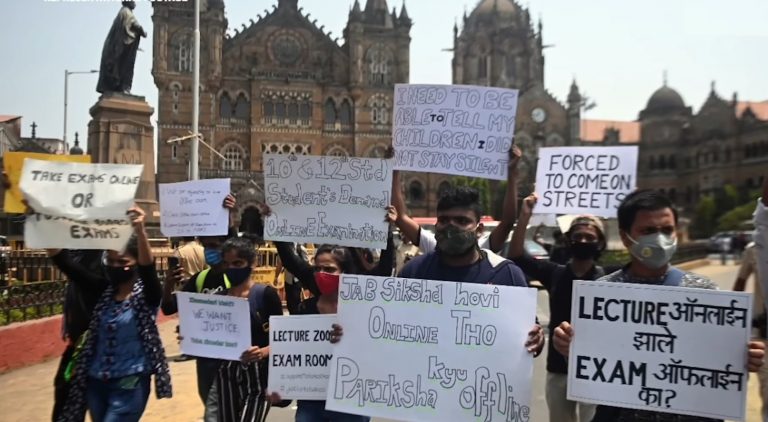
Amid the demands by students to either postpone the board examinations or to conduct them online, both the CBSE and the CISCE have said that the exams will be held as per schedule. In a joint statement issued by Central Board of Secondary Education (CBSE) and Council for the Indian School Certificate Examinations (CISCE), they said that adequate safety arrangements are being made for students taking the exams and all COVID-19 guidelines will be followed during the exams.

The CBSE confirmed that the board exams for class 10 and 12 will be conducted as per schedule, starting from May 4, 2021. The response of the two bodies came after the students had launched an online petition demanding the board exams to be cancelled.

A petition has been launched on change.org, asking for the board exams to be cancelled due to the rising COVID-19 cases in the country. The students, parents and teachers are also using the hashtag #CancelBoardExams2021 to spread their demand.

The petition on charge.org said, “the situation in India is getting worse day by day!! When there were only a few cases in the country they cancelled the remaining board exams, and now when the cases are at a peak they’re planning to open schools!! Some Great planning our government is doing for the future of the country.”

The petitioner further said, “I urge the education ministry to look into this matter and cancel all examinations to be held this year as students are already under a lot of stress and pressure due to these unfortunate times and above that they’ll have to take the pressure of examinations which could lead them into taking bad decisions if they don’t perform well”.

The petition has received over 75,000 signatures so far.

However, the CBSE and CISCE have rejected the demand, saying adequate arrangements are being made to ensure safety of the students. They also informed that the number of exam centres have be increased by 40-50 to ensure social distancing.

While the theory exams will take place as per schedule, the CBSE has announced relaxations for practical exams in view of the pandemic. In a circular issued on 1st April, the CBSE had announced that if any candidate can’t take practical exam due to being Covid positive, or due to any family member being Covid-positive, schools will be allowed to arrange alternate practical exams for such candidates by 11 June.

‘State failed to protect his life’: Patna High Court instructs Bihar gov to compensate Anurag Poddar’s family

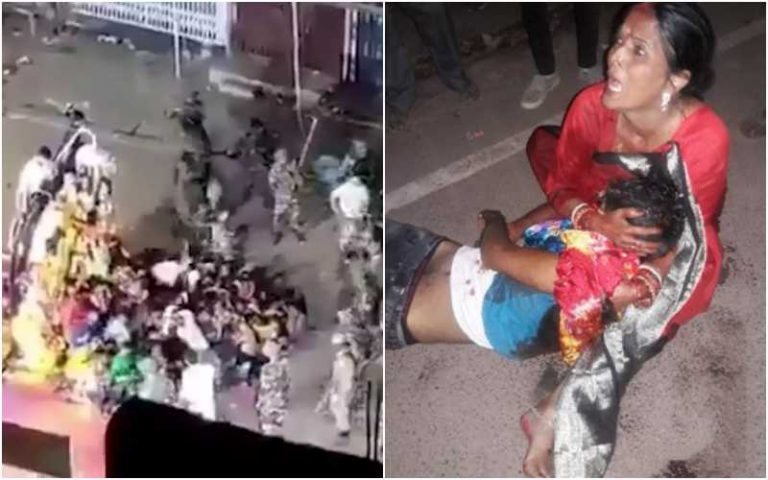
The horrific visuals from a Durga idol immersion procession in Munger, Bihar had shaken the entire nation last October due to police brutality. The devotees were charged with batons and shots were fired at them, claiming the life of one 18-year-old Hindu boy Anurag Poddar. 

While the investigation into the firing incident is still pending, the Patna High Court on Wednesday said that the state failed to protect the life of the citizen and ordered the state to grant Rs. 10 lakh as compensation to the father of Anurag Poddar within a month.

The state failed to protect Anurag Poddar’s life: Bihar HC

A single bench of Justice Rajeev Ranjan Prasad observed that it is not imperative to declare who was responsible for the firing to grant compensation to the family of the deceased in the unfortunate incident. The state had failed in its duty to protect the life of the citizen and should compensate for the same, remarked Justice Rajeev Ranjan.

The order further stated, “Whether son of the petitioner died as a result of firing by police or by any miscreants from the mob would not be relevant for the simple reason that in any case, the state had failed to protect the life of the son of the petitioner who was a spectator in the procession of Maa Durga Idol Immersion.”

The petitioner has also been given the option to claim further compensation under private law remedy against the wrongdoer, reported Live Law.

During the hearing, the High Court expressed displeasure over the government’s attitude and the police investigating the matter. Observing that no concrete results have emerged from the investigation from October last year to February, the court has ordered that the CID investigation will now take place under the monitoring of the High Court. The court has also ordered a transfer of all police officers associated with the case. 

Advocate Alakh Alok Srivastava, assisted by Advocate Manas Prasad had represented Anurag Poddar’s father in the High Court.

Police open fire at Durga Visarjan procession in Munger:

On October 26, 2020, when the campaign for Bihar assembly elections was going on, the famous Shadipur Badi Durga procession for Visarjan was attacked and allegedly fired upon by police officials. Though the police had denied firing and had claimed that the shots were fired by some members of the crowd, those claims were later dismissed by CISF.

The police had beaten up the devotees who were taking the idol for immersion. Video footage of police brutally lathi-charging devotees who were trying to shield the huge idol and pandal had created a furor on social media. In the violence that ensued, shots were also fired and the 18-year-old Anurag had lost his life. Several other persons were injured in the police brutality.

Dwarka accident: Woman who mowed down an elderly couple claims she was ‘thinking about something’ and was ‘distracted’

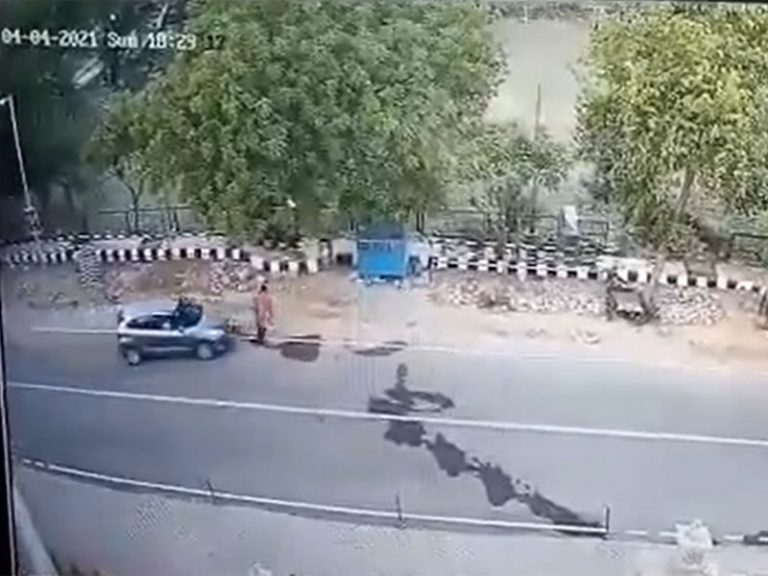
On April 4, an elderly couple was mowed down by a woman at Sector-11, Dwarka, in southwest Delhi. The incident took place at around 6:30 PM. The whole incident was captured in a CCTV camera installed at a mosque across the road.

As per reports, the accused, identified as 28-year-old Deepakshi Choudhary, had crushed 79-year-old Shanti Swaroop Arora and his 62-year-old wife Anjana Arora with her grey Baleno car. Both accused and victims were residing in Appu Enclave in Sector-11, Dwarka. Arora was a retired government official, and his wife was a homemaker. The couple was living here alone, and their children are settled in the US.

Accused Deepakshi Choudhary was arrested by the Police and booked for rash driving or riding in a public way and causing death by negligence. A case was filed under Sections 304A (causing death by negligence) and 279 (rash driving) against Choudhary. She was later released from the police station on bail. Her car was impounded by the Police. As per reports, she was not under the influence of alcohol at the time of the incident and works at a multi-national company.

Santosh Kumar Meena, Deputy Commissioner of Police (Dwarka), said that she told Police that she was thinking about something and ‘got distracted’, which resulted in the accident. She did not flee the scene and accompanied the couple to the hospital. By the time police reached the hospital after learning about the incident, Choudhary was still there.

How did the accident happen?

A video was posted on social media platforms in which the whole incident was clearly visible. The couple was seen walking on ‘Masjid Wali Road’, and two more men were visible in the frame. After crossing the building of the Mosque, the couple took a u-turn and went on the left side of the road. Suddenly, Choudhary’s car appeared in the frame, moving at a slow speed in the middle of the road. In a matter of seconds, it started moving towards the couple and hit them. The couple fell on the road, but Choudhary did not push the breaks and ran over them.

The elderly man was pinned down under the car while his wife was stuck under the back of the car. Witnesses at the scene rushed to the rescue of the couple. This was the time when Deepshika came out of the car and went to see the elderly lady who was trapped at the back. Choudhary was seen dialling someone’s number on her mobile phone and frantically talking to someone.

Within few moments, more people rushed towards the accident site. They pushed the car to rescue the woman. Once she was taken aside, some people tried to lift the front portion of the car to take the elderly man out, but they failed. They tried to lift the car from different sides but did not succeed. Somehow he was pulled out from under the car and rushed to the hospital. During the time, the elderly man was still conscious. He was taken to the hospital by one Sheikh Abdullah who was in the Mosque to perform evening prayers.

Abdullah said it was a horrible sight. While going to the hospital, the elderly man was conscious. He was talking to him and told him that he suffered a fracture in his left hand. He also enquired about his wife and requested him to stop the car, so he could see her. She was being taken in Deepshikha’s car to the hospital in an unconscious state.

Deepshikha was allegedly on the phone during accident

As per some reports, Deepshikha was allegedly talking on the phone or checking her phone while driving the car at the time when the accident happened. An officer investigating the case said that though Choudhary claimed she was thinking something and lost control, it is yet to be ascertained if she was using her cell phone while driving.

The victim’s family raised doubts over who was driving the car

A senior police officer was quoted saying that though Deepshikha claimed she was driving the car, the family of the victims believe that her sister was behind the wheels. “Hence, the facts have to be verified,” the officer added.

The false claims of COVID-19 vaccine shortage and the propaganda for American vaccines: A detailed analysis

Ever since the country has fresh wave of COVID-19 cases in the case, especially in states like Maharashtra, Chhattisgarh, Kerala etc, all ruled by non-NDA parties, the governments and ruling parties in those states have started to blame the BJP government at the centre for this surge. They are starting to claim that centre is not supplying enough vaccines to them, implying that lack of vaccines is the cause of the surge in cases.

Some of them have tried to create panic among public by claiming that their vaccine stock is running out soon. While they claim there is shortage of vaccine, they are also making a contradictory demand, that the age limit for eligibility for vaccine should be lowered, so that more people can be vaccinated.

This contradiction was seen in the comments on Maharashtra health minister Rajesh Tope yesterday, when he claimed that the state is facing acute shortages of the coronavirus vaccine, adding that the state now has just 14 lakh doses which would last for only three days. While requesting additional 40 lakh doses per day from the centre, he also demanded that COVID-19 vaccines should be made available for everyone aged 18 and above.

Similar comments and demands have been made by others, such as Shiv Sena leader Priyanka Chaturvedi in a letter to the union health minister.

Chhattisgarh and Odisha had also made similar claims, alleging inadequacy in vaccine supply.

However, these allegations received a strong rebuttal from union health minister Harsh Vardhan, who denied the claims of vaccine shortage, and showed that these states have not vaccinated their eligible population completely yet, but still asking to make more people eligible. The minister made scathing remarks for Maharashtra in particular, saying that the state government has been incompetent in managing the pandemic.

Giving vaccination data for the states demanding to open up vaccination for everyone above 18 years of age, Harsh Vardhan informed that Maharashtra has vaccinated 86% healthcare workers, 73% frontline workers, and only 25% senior citizens, the eligible groups. The corresponding numbers for Delhi and Punjab are, 72% and 64%, 71% and 65%,  and 22% and 20%. The numbers for the second dose in these categories are much lower. This means, there is a substantial number of eligible people still not vaccinated in these states.

The health minister said that the latest claims by these state governments are attempts to divert attention from their poor vaccination efforts by just continuously shifting the goalposts. Saying that the comments by leaders from Maharashtra are nothing but an attempt to divert attention from the Maharashtra government’s repeated failures to control the spread of the pandemic, he added, “the inability of Maharashtra government to act responsibly is beyond comprehension. To spread panic among the people is to compound the folly further. Vaccine supplies are being monitored on a real-time basis, and State governments are being apprised regularly about it. Allegations of vaccine shortage are utterly baseless.”

Saying that Maharashtra has bogged down the entire country’s efforts to fight the virus, Harsh Vardhan said, “I have been a witness to the misgovernance and utter casual approach of Maharashtra Government in battling the virus.”

The minister also pulled up Chhattisgarh for their flawed testing policy of depending heavily on rapid antigen tests, and refusing to use Covaxin developed by Bharat Biotech, despite cleared by the Drug Controller General of India.

It is also interesting to note that while Maharashtra govt is claiming shortage of vaccine, they top the list in the number of vaccinations. So, the question arises, if there is shortage of vaccines in Maharashtra, how it is topping the list of vaccinations, with almost 90 lakh doses administered so far. This shows that the state is getting enough supply of vaccines.

Clamour for foreign vaccines with false claims

While non-NDA ruled states are trying to spread misinformation on vaccine availability, the ecosystem sympathetic to them is busy spreading another misinformation campaign on social media. For last few weeks, left-liberal journalists and activists have been demanding that India should ‘allow’ people to get vaccines made by Pfizer, Moderna and Johnson & Johnson etc. They are alleging that Indian government is not allowing those companies to sell their vaccines in India, and demanding that they should be allowed, even if they are priced high, as those who are willing to pay should be allowed to buy them.

Activist journalist Pritish Nandy yesterday claimed that Govt of India is no allowing Pfizer, Moderna and Johnson & Johnson vaccines in the country which the world is using.

Similar claims were made by several other journalists and activists, asking the govt to allow these vaccines in India. They alleged that govt has not allowed these foreign vaccines, while Covaxin was approved even before completion of trials.

Some of them also demanded that govt of India should approve these vaccines in Indian without any trial in the country, as they had already undergone trial in other countries, and are already being administered to people, including Indians in those countries.

However, both the claim and demand, that the Indian govt has not approved these vaccines and govt should approve them suo-moto are completely incorrect. The Drug Controller General of India has not rejected any of these vaccines. And it is wrong to demand that India should approve them directly. Both Pfizer and Moderna vaccines are RNA vaccines, which is a completely new technology in vaccine development. The J&J vaccine is a single dose traditional viral vector vaccine, which has been approved in EU and USA only recently.

Most countries require that trials for health products are conducted in those countries, or at least data from trials done in other counties are shared before they can be approved. According to Indian rules, local studies for these vaccines are required before they can be administered to Indians. Moreover, the companies behind these vaccines need to be willing to market them in India, and they need to approach the regulator for approval. Let us examine the status of these processes for each of the vaccines in India.

Moderna

American company Morderna has not yet applied for approval of its vaccine, therefore that the claim that its application has been rejected by Indian government is completely false and misleading. In January this year, there were reports that Tata Medical & Diagnostics was in talks with the company to launch the vaccine in India. The Tata group company was supposed to conduct clinical trial of the vaccine in the country in collaboration with Council of Scientific and Industrial Research (CSIR). However, no development in that deal seems to have happened, as there is no news about the venture after that. Therefore, there is no proof that Moderna applied for their vaccine in India, and hence the claim that India rejected it is completely false.

Pfizer

Last year, Pfizer had applied emergency use approval for its vaccines developed in collaboration with BioNTech. However, a subject expert body (SEC) under Central Drugs and Standards Committee had asked the company to conduct a local bridge trial in India to generate safety and immunogenicity. SEC had said that safety and immunogenicity data from at least a 1,600-volunteer bridge trial in India is a must for the expert panel to recommend approval to any vaccine candidate.

The SEC had called the company thrice for discussions over the issue, but the company had missed all three meetings. As the company refused to conduct any local bridge trial in India and missed the meetings, the SEC didn’t recommend granting permission to the vaccine. The company had sought a waiver of this requirement, which was not agreed to. After this, Pfizer had withdrawn the application.

Last month Pfizer said that it is willing to manufacture the vaccine in India, if the company is granted faster regulatory approvals and freedom on pricing and export. At present, the Indian govt is controlling the pricing and export of Indian vaccines Covishield and Covaxin, but Pfizer does not want it. This means, after manufacturing at lower costs in India, the company would like to export to richer countries instead of supplying the domestic market, and will want to charge as much as they want for domestic sale.

Pfizer’s approach in other developing countries in regard to the vaccine also raises several questions. The company is accused of “bullying” several Latin American countries, where the company demanded that sovereign assets, including military bases and federal bank reserves, should be pledged as collateral for potential future legal costs for any adverse effect to its vaccine. The company had sought protection from any liability not just for side-effects of the vaccine, but also from its own negligence, fraud or malice.

In Argentina, they wanted a change in the law, exempting from any liability in case of any adverse effect of the vaccine. When the parliament rejected this, the company convinced the govt to buy an international insurance to cover any claim against the company. But the company came up with more demands, and said that the govt should pledge sovereign assets as collateral. Pfizer demanded that Argentina should put its bank reserves, military bases and embassy buildings at stake, to protect in case of any claim for any adverse effect. These demands were rejected by the government.

In Brazil, Pfizer demanded not only sovereign assets, but also said that the government should create a guarantee fund, and deposit money in a foreign bank, to cover any liabilities that the company may face for the vaccine. Brazilian government signed a deal with Pfizer for supply of the vaccine last month, although terms and conditions of the deal are not known.

Johnson and Johnson

Contrary to Pfizer and Moderna, the J&J vaccine will be available for Indians soon. Indian vaccine manufacturer Biological E Ltd is mass manufacturing the vaccine in India, with financing from the US government. This vaccine is part of the new vaccine partnership announced in the first Quad Summit held last month. According to the initiative, US govt will be funding Biological E for the production of vaccines developed in the US, including the J&J vaccine.

This means the J&J vaccine will be available in India under the Quad initiative of India, US, Australia and Japan. However, it is not known when the local trial for the vaccine will commence in India. At present Biological E is conducting trials for another COVID-19 vaccine in India, developed by Baylor College.

It is interesting to note that propaganda is being run on social media in support of only the USA-made vaccines.


Kashi Vishwanath Temple: Court allows ASI survey of the Gyanvapi mosque complex, 5-member team to include 2 Muslims

In a huge step forward, the Varanasi district court has allowed the ASI to conduct an archaeological survey of the Gyanvapi Mosque complex. The mosque itself has been erected over the Kashi Vishwanath Temple.

A local lawyer, VS Rastogi had filed a suit in the district court demanding that the land on which the Gyanvapi Mosque stands be restored to Hindus since the Mughal Emperor Aurangzeb in 1664 had pulled down a portion of the 2000 year old Kashi Vishwanath Temple to build the Gyanvyapi Mosque there.

While the suit itself was contested by the Gyanvapi Mosque Committee, the Varanasi District Court has now allowed an ASI archaeological survey of the complex. According to reports, all expenses of the survey are to be paid by the Uttar Peradesh government.

Reportedly, the Court has directed the survey to be done by a 5-member committee comprising of 2 members from the Muslim community as well.

The Gyanvapi Mosque and Aurangzeb’s reign of terror

No matter how much of whitewashing is done by the likes of Audrey Truschke, we are well aware that Aurangzeb unleashed a reign of terror. Temple destruction was unabated and Jizya reintroduced in his territory. According to the book ‘The Great Big Book of Horrible Things‘, 4.6 million people were killed under Aurangzeb’s rule and the Gyanvapi mosque stands as a testimony to the stellar contribution of Aurangzeb to the ‘composite culture’ or ‘Ganga-Jamuni Tehzeeb‘ of India.

Gyanvapi Mosque was built by the Mughal emperor Aurangzeb after destroying the Kashi Vishwanath temple. The remnants of the ancient Hindu temple can be seen on the walls of the Gyanvapi mosque now. The temple was an earlier restoration of the original Kashi Vishwanath temple, which was destroyed and rebuilt several times in history. The current Kashi Vishwanath was built on a site adjacent to the Mosque in 1780.

SC denies interim relief to illegal Rohingyas detained in Jammu, allows deportation if proper procedure is followed

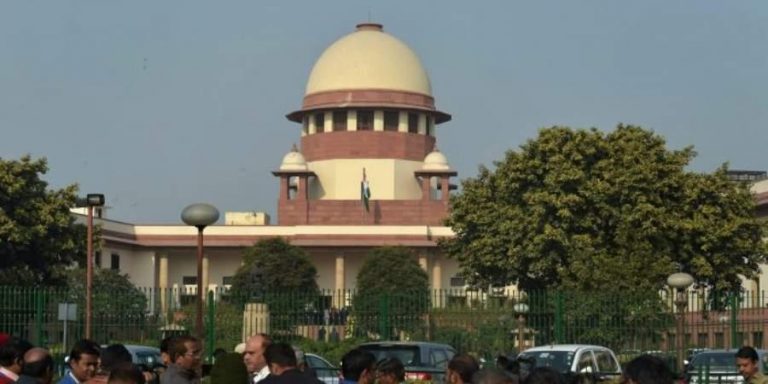
Today the Supreme Court denied interim relief for a petition filed by advocate Prashant Bhushan, challenging the detention of illegal Rohingya immigrants in Jammu and deporting the illegal immigrants back to their home country of Myanmar.

“It is not possible to grant the interim relief. However it is made clear that the Rohingyas in Jammu on whose behalf the application has been moved shall not be deported unless the procedure prescribed for such deportation is followed”, the Supreme Court said.

The Court did not order the release of illegal Rohingya immigrants detained in holding centers in Jammu and instead allowed their deportation back to their parent country of Myanmar, as per the procedure established by law.

A bench of Chief Justice SA Bobde, Justices AS Bopanna, and V Ramasubramaniam passed the order in an application moved by Mohammad Salimullah, who was represented by Prashant Bhushan, in a PIL filed for the sake of protecting illegal Rohingya immigrants from detention.

In a March 23 Supreme Court hearing, Prashant Bhushan placed reliance on the International Court of Justice decision regarding the Rohingya situation in Myanmar, despite the fact that ICJ decisions usually have no bearing on the Indian judicial system. Bhushan also argued about the principle of non-refoulment, which forbids the expulsion of any “refugee” if there is a clear and certain danger of life in the origin country.

Solicitor General Tushar Mehta argued that Rohingya deportation does not violate Article 21

The Solicitor General Tushar Mehta opposed the application on behalf of the Union Government, citing a similar case in Assam concerning illegal Rohingya immigrants which were dismissed in 2018. The Solicitor General (SG) also submitted that deportations are done in accordance with the procedure established by law, and therefore it cannot violate Article 21 of the Constitution.

The SG also disputed the term “refugees” used in the application to describe Rohingya, and instead called them “illegal migrants”

Senior Advocate Harish Salve also made an appearance in this case, on behalf of the Jammu and Kashmir government. He argued that the principle of non-refoulment does not apply and is non-binding as India is not a signatory to any international treaties mentioning this principle.

The CJI recognized that the danger illegal Rohingya immigrants face if deported back to their home country, but points out that it is not under the jurisdiction of the Supreme Court to manage that.

“Possibly that is the fear that if they go back to Myanmar they will be slaughtered. But we cannot control all that”, CJI said. “We are not called upon to condemn or condone genocide. We are certain that there should be no genocide in earth”, the CJI added.