Home Blog Page 4498

Supreme Court issues notice after petition challenges validity of 1991 Act that prevents reclamation of Kashi-Mathura temples

On Friday, the Supreme Court of India issued notice to the Centre, after a petitioner challenged the Places of Worship Act, 1991.

As per reports, the notice was issued by a Bench headed by Chief Justice of India SA Bobde and Justice AS Bopanna in response to a petition filed by BJP leader Ashwini Kumar Upadhyay. The petitioner was represented in Court by Senior advocates Vikas Singh and Gopal Sankaranarayanan.

In his petition, Upadhyay has argued that the Places of Worship Act (Special Provisions Act) prevents the reclamation of places of worship sacred to Hindus, Buddhists, Jain and Sikhs. He also pointed out that the law legitimises the illegal acts of invaders.

The petition said, “Centre has barred the remedies against illegal encroachment on the places of worship and pilgrimages and now Hindus, Jains, Buddhists, Sikhs cannot file Suit or approach High Court under Article 226. Therefore, they won’t be able to restore their places of worship and pilgrimage including temples-endowments in spirit of Articles 25-26 and illegal barbarian act of invaders will continue in perpetuity.”

It must be mentioned that the Places of Worship (Special Provisions) Act, 1991 mandates that the religious character of all places of worship must remain as it was on August 15, 1947. The law further states that no suit or legal proceeding must remain in Court challenging the character of any such place of worship. The only exception to the law was the Ayodhya Ram Mandir.

The construction for the majestic Ram temple has begun in Ayodhya, following the historic Ram Janmabhoomi verdict in 2019. Several Hindu organisations have been demanding the repeal of the Places of Worship (Special Provisions) Act, 1991 that prevents the legal reclamation of two Hindu temples of historic importance, namely, Kashi and Mathura.

In his petition, the BJP leader has emphasised that the Act gave way to an arbitrary irrational cut off date by “declaring that character of places of worship-pilgrimage shall be maintained as it was on August 15, 1947, and no suit or proceeding shall lie in Court in respect of disputes against encroachment done by fundamentalist barbaric invaders and lawbreakers and such proceeding shall stand abated.

Suit seeking restoration of worship at the ancient Hindu temple

Last month, a suit was filed before the court of civil Senior Divisional Judge, Varanasi seeking restoration of the permanence of worship rituals at the principal seat of an ancient temple which is now part of the Gyanvapi mosque complex near the Kashi Vishwanath temple. The suit was filed by Rajana Agnihotri and 9 other devotees who are also worshippers of Lord Shiva practising the Vedic Sanatan Hindu Dharma.

The suit was registered as a miscellaneous case that will come up before the concerned court for the hearing, as informed by petitioners’ counsel HS Jain. Counsel for the Committee of Management Anjuman Intazamia Masajid, who was reportedly present in the court from the respondents’ side, sought time for filing a counter-affidavit. 

Union government to enhance distribution of fortified rice to fight malnutrition, production to be doubled in the country

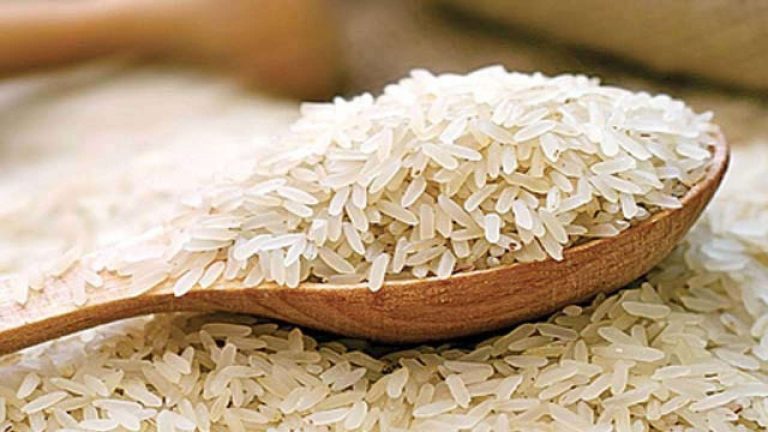
The union government has decided to enhance the distribution of fortified rice to malnutrition. Apart from the PDS system through which it is being distributed, now fortified rice will also be distributed via Integrated Child Development Services and Mid-Day Meal scheme from April this year.

At present, fortified rice is being distributed in one district each in six states, out of total 15 states identified for implementing the scheme, on a pilot project basis. The objective of the scheme is to address the problems of anaemia and micro-nutrient deficiency in the country. Fortification of rice is a cost-effective and complementary strategy to increase vitamin and mineral content in diets and a step towards nutritional security and to fight anaemia and malnutrition in the country. It is also helpful that 65% of India’s population consumes rice as staple food.

“Centrally Sponsored Pilot Scheme on Rice Fortification and its Distribution under PDS” was approved by the government of India in 2019-20 for a period of 3 years, with total outlay of Rs 174.64 crore. 15 states had consented to participate in the scheme and had identified 1 district each for implementation of the pilot scheme.

Among the 15 states, Andhra Pradesh, Gujarat, Maharashtra, Tamil Nadu, Chhattisgarh and Uttar Pradesh have already started distribution of fortified rice under the scheme in their selected districts. Till January 2021, approximately 94,574 MT of fortified rice has been distributed in these 6 States. Kerala, Odisha and Madhya Pradesh are likely to start the distribution fortified rice under the pilot scheme shortly.

Now to further enhance the distribution of fortified rice, it has been decided to distribute fortified rice under Integrated Child Development Services (ICDS) & Mid-Day Meal Scheme covering all the ICDS and MDM Centres across the country from April, 2021. Ministry of Women and Child Development and the Department of School Education and Literacy have agreed to bear the Incremental Cost at the rate of Rs 0.73 per kg for the fortification of rice under ICDS and MDM.

If required for this enhanced distribution, annual production of fortified rice will be increased accordingly. At present 15,000 MT of FRK (Fortified Rice Kernel) is being produced, it can be increased to 30,000 MT, which will be sufficient to meet the demands for ICDS and Mid-Day Meal scheme distributions.

The Department of Food and Public Distribution has also written to the MSME ministry to consider providing assistance to the rice millers for producing fortified rice. The ministry has said that a subsidy or suitable provision for providing financial assistance/package under ‘Aatma Nirbhar Bharat Abhiyaan- Corpus for MSMEs’ can be provided to the millers to encourage existing and new rice millers to equip themselves with necessary equipment to produce fortified rice to meet the demand for the same.

To produce fortified rice, broken rice is ground into powder, to which the necessary nutrients are added. This mixture is then shaped into rice-like kernels. Rice kernels can be fortified with several micronutrients, such as iron, folic acid and other B-complex vitamins, vitamin A and zinc etc.

USA, EU and UK block India and South Africa led proposal to temporarily waive intellectual property rights on vaccines to boost production

Western countries have blocked a proposal at the World Trade Organisation that would have boosted vaccine production and helped developing countries combat the Coronavirus pandemic. The proposal led by India and South Africa urged the WTO to temporarily waive off intellectual property rights for vaccines and Covid-19 related treatment.

The United States of America, the European Union, the United Kingdom, among others, objected to the proposal that would waive off provisions of the TRIPS Agreement, that governs international property rights, but only until widespread vaccination and immunity was achieved across the world.

South Africa expressed its concerns regarding the actual intent behind the decision of the developed world to block the proposal at the most recent meeting of the WTO’s Council for Trade-Related Aspects of Intellectual Property Rights.

“It is disappointing that despite the majority of the world being on the side of the TRIPS Waiver, it has been blocked by a few countries once again,” Katie Gallogly-Swan, policy coordinator at the UN Conference on Trade and Development, told Law360. “It is time to accept that we are not on track to vaccinate the world.”

Yuanqiong Hu, legal and policy adviser to Doctors Without Borders’ Campaign for Access to Essential Medicines, told Law360 “what we need today are concrete actions, not more discussions and consultations. Some countries that oppose the monopoly waiver continue to propose voluntary measures, but these governments know that this will not be sufficient and will not result in the change we need to see.”

US Senator Bernie Sanders had urged the USA to support the waiver, “It is unconscionable that amid a global health crisis, huge multibillion dollar pharmaceutical companies continue to prioritize profits by protecting their monopolies and driving up prices rather than prioritizing the lives of people everywhere, including the Global South.”

Oxfam said in a statement, “This is a massive missed opportunity to speed up and scale up the production of lifesaving vaccines worldwide by waiving the intellectual property barriers that prevent more qualified manufacturers from joining the effort.”

It said, “Rich countries are vaccinating at a rate of one person per second yet are siding with a handful of pharmaceutical corporations in protecting their monopolies against the needs of the majority of developing countries who are struggling to administer a single dose.

“It is unforgivable that while people are literally fighting for breath, rich country governments continue to block what could be a vital breakthrough in ending this pandemic for everyone in rich and poor countries alike,” added Oxfam.

Pakistan’s cash woes: UAE asks Imran Khan to return USD 1 billion by March 12 deadline

0

The United Arab Emirates (UAE) have put the Imran Khan government in a tight spot after it has reportedly asked the cash strapped country to return its one billion dollars, which the former had deposited in the central bank of Pakistan.

Actually, the United Arab Emirates (UAE) had deposited the aforementioned amount with, State Bank of Pakistan (SBP), the central bank of the country. Now, since the amount has reached its maturity, the Gulf nation has asked the Imran Khan government to return the same and has set March 12 as its deadline, as per reports.

Coming as a major jolt to a country that is already stuck neck-deep in international debt, Pakistan has begged UAE to give it some extra time as that returning such a huge amount can impact its economic situation at present.

Pakistan officials have made innumerable attempts to reach out to UAE, especially to Crown Prince Mohammad bin Zayad Al Nahyan but haven’t succeeded so far.

Pakistan took a loan from China to repay Saudi loan

Last year, the islamic country had taken a loan of 1 billion dollars from China to repay a I billion dollars loan from the kingdom of Saudi Arabia. Reports at that time had revealed that Pakistan owes China double the amount it owes to the IMF.

Pakistan aircraft seized over non repayment of leasing fees

Pakistan’s precarious state of the economy is an open secret, and now, the coronavirus pandemic has only further worsened the economic woes of cash-strapped Pakistan. Last month, Malaysian authorities seized a Pakistan International Airlines Boeing 777 plane, with passengers still on board, at Kuala Lumpur airport for not paying leasing fees worth $15 million.

The embarrassing incident had left the Pakistan government red-faced. Awkward as the incident was, the unpaid leasing fees are just the tip of the iceberg. Pakistan’s debt problem has been escalating for some years now. According to a World Bank estimate, amid the Covid pandemic, Pakistan’s real GDP growth is estimated to have declined from 1.9% in the financial year 2019 to -1.5% in FY2020.

Pakistan’s public debt went past 87% of GDP at the end of 2019-20, up from about 72% of GDP at the end of 2017-18. Moreover, the country’s total external debt and liabilities rose to $113.8 billion in the fiscal year 2020 from $106.3 billion in the fiscal year 2019.

‘FCI has optimally used state storage facilities and Adani Silos, no loss to the exchequer as suggested by the CAG,’ clarifies Ministry of Consumer Affairs

A few days after media reports had claimed the Comptroller and Auditor General of India (CAG) had accused the Union government of failing to optimally utilize storage capacity at Adani Silos at Kaithal resulting in massive losses to the public exchequer, the Ministry of Consumer Affairs, Food and Public Distribution has given a detailed clarification refuting the allegations of causing losses to Food Corporation of India.

On Wednesday, the far-left news outlet ‘The Wire’ had published a report claiming that the CAG had reprimanded the Food Corporation of India (FCI) in April 2018 for allegedly causing a loss of Rs 6.49 crore to the taxpayers due to the failure to utilise available storage capacity at Adani Silos located in Kaithal, Haryana.

The report had also claimed that the Narendra Modi government has been asking the CAG to drop these paragraphs from the CAG’s audit report. As per the Wire, the Ministry of Consumer Affairs, Food and Public Distribution, under which FCI operates, has written a letter to the CAG demanding the paragraph be stricken off the report. The Wire report tried to insinuate that the ministry wants CAG to drop the para because it is related to Adani Silos.

However, the Ministry contends that the additional expenditure has not been assessed correctly by the CAG.

CAG says FCI under-utilised Silos, causing Rs 6.49 crore loss

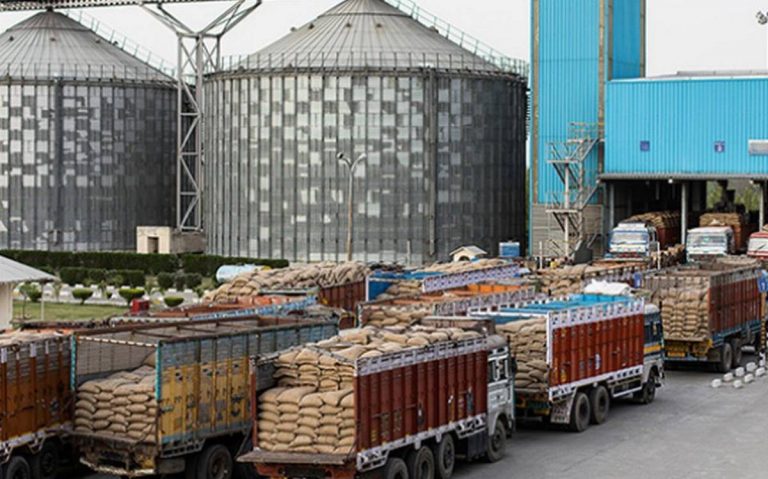
According to The Wire, which quotes a CAG report, between 2013-14 and 2015-16, Rs 24.28 crore was paid to Adani Agri Logistics Ltd (AALL) for storage capacity, which the FCI never utilised. During this period, storage space with a total capacity of 5.18 lakh metric tonnes (LMTs) remained unoccupied in the Adani silos for 11 months. The FCI did not use it to store wheat but kept paying the rent, the report claimed.

Reportedly, the FCI had entered into a contract with AALL in 2007 for setting up silos at Kaithal in Haryana to store two LMTs of wheat.

In February 2013, FCI signed another agreement agreeing to pay the company rent amounting to Rs 1,842 per tonne every year for wheat storage. In September 2014, it was hiked to Rs 2,033.40 per tonne per year.

The report claims that the agreement was reached based on ‘guaranteed tonnage’, which means that the FCI has to pay the rent for the entire two LMTs of wheat, irrespective of the actual amount of wheat stored.

Further, the CAG report, according to the report, pointed out that the FCI failed to transfer wheat from state-run silos to Adani silos, as a result of which not only did it have to pay the rental for vacant storage space at the latter but also had to pay carryover charges (CoCs) for storing wheat in the state godowns, incurring an additional cost of Rs 6.49 crore of the taxpayers’ money. The CAG suggested that the loss could have been avoided.

Presuming the losses, the CAG report stated that the Kaithal silo remained vacant on many occasions between 2013-14 and 2015-16. The storage capacity of 1.33 lakh tonnes, 67% of the hired storage capacity, was not used in April 2014, even though the stock was lying with state-run agencies at Pehowa, Pundri and Pai, during the same period.

According to the CAG, quoted by the Wire, it was supposedly cheaper to store wheat in silos than in state-run godowns. Hence, FCI should have transported the wheat to the silos to avoid wastage of taxpayers’ money.

However, the Ministry had soon responded to the CAG’s claim, saying it was a wrong assessment and asked them to withdraw the report.

Ministry clarifies, says CAG’s assessment is wrong

The Ministry of Consumer Affairs, Food and Public Distribution responded to the assessment stating that the CAG’s audit has based its calculation on storage charges on full payment of the guaranteed capacity of 2 LMT of the Kaithal Silo.

“However, the FCI had reduced the annual guaranteed tonnage for Kaithal silo to 1.90 LMT in 2013-14, 1.41 LMTs in 2014-15, and 1.33 LMTs in 2015-16. Thus, effectively extra payment for vacant space has been avoided,” the ministry had clarified. The ministry has said that contrary to the claim made in the CAG report, rent for the entire 2 LMT space in the silos was not paid, as the guaranteed tonnage was reduced.

Further, “Optimal utilisation of storage space does not mean whole capacity will remain utilised all the time. Some capacity will fall vacant as and when stocks are moved out. Since wheat procurement lasts for only 2 months and dispatch takes place every month, capacity utilisation will keep on decreasing till next procurement season,” the ministry said.

The ministry also apprised the CAG that their audit has not taken into account the 0.25% storage loss admissible in silos during the process of handling and storage. Hence, storing wheat in state agency go-downs indirectly leads to a saving of 0.25%, the ministry said in its first letter on October 28, 2018.

Explaining the rationale behind keeping the stock in the SGA godowns, the ministry had said, “In case of takeover of stocks from SGA before 1st July, FCI will not be entitled to 1.00% gain on the stocks taken over. Thus, there is a further 1.25% loss in a silo. Moreover, FCI would also have incurred cost on transportation and handling for shifting stock to the silo.”

CAG refutes Ministry’s clarifications, presumes losses due to storage in state-owned godowns

However, the CAG disagreed with the explanation provided by the Ministry of Consumer Affairs. It further contended that the audit had calculated the avoidable expenditure based on the actual capacity utilised at Silo, which was 2 LMT. The CAG said that the FCI’s claim that rent was paid on reduced guaranteed tonnage is not relevant as the capacity available at the silo was two LMTs of wheat, which could have been stored there.

As per CAG, the cost incurred for transporting food grains from the state godowns is Rs 11.04 to Rs 16.54 per quintal. Besides, the FCI has to pay Rs 2.11 to Rs 2.85 per quintal as debagging charges, pushing the total of Rs 13.15 to Rs 19.39 per quintal to transfer stock from godowns to silos, the CAG noted.

Since it costs Rs 20.91 to Rs 23.29 per quintal to keep the stock in the state-run godowns, storing the grain in the Adani silo at Kaithal could have saved Rs 2.7 to Rs 9.0 per quintal, the CAG presumed in its report.

Ministry responds to CAG again, says filling Silos would hinder procurement

The ministry issued another letter on February 18, 2019, reiterating its rationale behind the storing of wheat in SGAs for a short amount of time, saying it was a ‘special case’ in which storing wheat in SGA godowns instead of silos was more beneficial.

In its response to the Union government, the CAG yet again said that even though the guaranteed tonnage has been reduced, the storage capacity of the silo was two lakh tonnes. Hence, the ministry’s argument is not relevant, and the paragraph will stand.

On April 21, 2020, the ministry wrote another letter, saying if the CAG report is to be followed, that would mean that the Adani silo should remain full every month. If the FCI uses the entire space in the silos, then in the next procurement season, Adani silos cannot procure directly from the farmers because there will be no vacant storage space, the ministry said.

Read: Magsaysay Awardee NDTV India editor Ravish Kumar lies about Adani’s grain silos in Punjab amid ongoing farmer protests

“By procuring huge quantities from the farmers at the silos, the expenses incurred in the mandi on marking the bags, filling bags with grains, weighing them, sealing them, debagging, and transportation can be saved,” the letter said.

In its letter, the FCI contended that the CAG has calculated the loss based on the capacity of two LMTs in the Adani silo, while the payment was not made for this amount. The amount of guaranteed tonnage was reduced each year, the ministry reiterated.

However, the CAG responded again, saying that instead of stocking grains as per the capacity of the Adani silo, FCI stored it in the SGA godowns, thus causing additional expenditure on storing. “Therefore, the loss assessed by the CAG is based on the payment made to the SGA godowns and not the rental of the vacant storage space in the Adani silo,” the report said.

In its assessment, the CAG had stated that due to the non-transfer of stock in the Adani silo, additional expenditure of Rs 2.7 to Rs 9.0 per quintal had been incurred. The payment to SGAs to store wheat was made at the rate of Rs 20.91 to Rs 23.29 per quintal in these godowns. As per CAG, the FCI failed to act in this direction, due to which the SGA godowns had to be paid an additional amount of Rs 6.49 crore between April 2013 and October 2016, which according to them, was avoidable.

Contrary to the CAG’s assessment, the FCI, in a letter dated August 14, 2018, has said that they have earned a profit of Rs 1.59 crore in 2013-14 and Rs 42.23 lakh in 2014-15 by storing wheat in the SGA godowns.

However, the CAG has rejected the estimate provided by the FCI. In return, the CAG enquired that if storing grains in silos brings about losses, why is the government of India, allowing the construction of silos.

FCI saved Rs 20 crores by optimally using storage facilities, contends the Ministry of Consumer Affairs

Speaking to OpIndia, sources at the Ministry of Consumer Affairs, Food and Public Distribution have once again reiterated that the question of presumptive losses, as claimed by the Wire citing the CAG report, does not arise as both the storage facilities, i.e., the state-owned godowns and Adani Silos have been optimally used and stressed that no losses have been incurred as suggested by the CAG.

In a detailed response to OpIndia, the ministry officials said that the FCI had agreed to acquire an additional storage capacity of two lakh metric tonnes (MT) at Kaithal from a private company on a Built, Own and Operate (BOO) basis in 2005.

The senior officials reiterated that the optimal utilization of storage space does not mean the whole capacity will remain 100% utilized all the time. They said that CAG admitted that the Silos was 100% utilized during the period April-June, i.e. wheat procurement period. Since wheat procurement lasts for only two months and dispatch takes place every month, capacity utilization will keep on decreasing till the next procurement season as some capacity will fall vacant as and when stocks are moved out, the officer clarified over the allegations of decreasing storage in Adani Silos.

Responding to the question of Adani Silos being unutilised and vacant, sources inside the ministry said that out of the total periods of 43 months considered by CAG, the stock was less than the guaranteed capacity in only 8 months in 2013-14 and 3 months in 2014-15. Barring this period, there was optimal utilisation of storage space in the Kaithal silo for most of the period from April 2013 to October 2016.

In fact, the Ministry of Consumer Affairs said that the total four wheat procurement season is covered in the period under review. The stock position has surpassed 2 LMT every time and has even gone up to 2.15 LMT in April 2016, said the ministry.

On the question of presumed losses as suggested by the CAG, the Ministry responded by saying that the contention of financial loss based on available capacity is not tenable as the payments had to be made at reduced AGT (Annual Guarantee Tonnage). However, the CAG has made the calculation based on capacity available, but in fact, the payment of 2 LMT was never due in the first place itself, added sources in the ministry.

According to the ministry, the CAG, while making the calculations, has considered payment made to SGAs towards CoC vis-a-vis the likely cost of shifting stocks to SILO. The difference between the two has been assumed to be an avoidable loss.

However, the CoC comprises of two components, i.e. Interest and Storage charges. FCI releases the payment to SGAs at the time of taking over the stock, and it also pays interest to SGAs that is 1% higher in CoC than the rate at which funds are available to FCI, however, it offsets the major component of CoC.

The ministry sources explained, “For example, for the year 2016-17, Out of total CoC of Rs.231/MT, the amount against interest is Rs. 163.73/MT and RS.67.60/MT towards storage charges. The cost of shifting food grains from SGA godowns to Silo has been taken as Rs.163/MT for 2016-17 by the CAG”.

Considering the above, the cost of shifting the food grains to Silo is RS.163/MT should have been compared with the storage charge of Rs.67.60/MT payable to SGAs, the ministry sources pointed out.

The ministry said that the entire capacity at the Silos could not be filled as it would hinder the process of procurement during the season as the silos would have already been 100% utilized. This would lead to non-acceptance of the bulk wheat brought by farmers directly to Kaithal silo and, consequently, forgo the potential gain during procurement, the ministry said.

As per the ministry, the CAG has also not factored in the purchase of wheat in bulk from the farmers at Silos that saves Mandi Operations’ cost. As per a study conducted by RITES, there is a saving of Rs. 945/MT if wheat is purchased in bulk at Silo as compared to purchase in Mandi. This itself amounted to a saving of Rs 20 crore in the last eight years.

“Had FCI acted as per course suggested by CAG then not only the savings of approx. Rs 20 Crore would not have been there, but also the idea of encouraging farmer to bypass the normal route of procurement involving multiple handling/players and offer their stocks for direct procurement at SILO would not have picked due to capacity constraint at the SILO,” said the Ministry of Consumer Affairs, Food and Public Distribution.


Bhainsa violence: AIMIM councillor charged with attempt to murder and armed riot, 21 others arrested

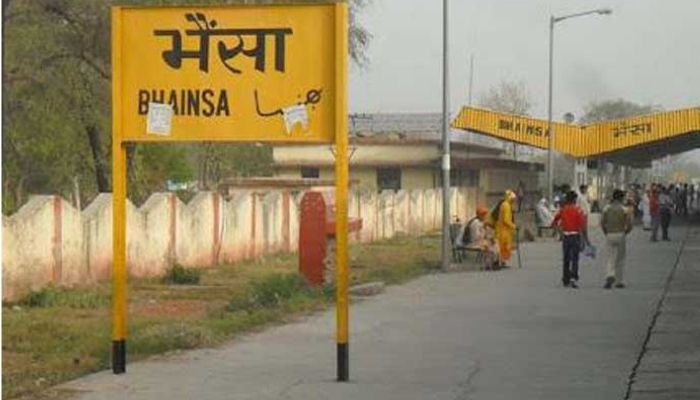
Days after a violent clash took place between the Hindu and Muslim community in Bhainsa in the Nirmal district of Telangana, the police have arrested 22 people, including one sitting AIMIM councillor.

As per reports, the unnamed AIMIM leader has been charged with an attempt to murder and armed riot. The police have also registered 19 cases against the accused. The cops have also arrested 21 others, belonging to both the communities for violence that ensued in Bhainsa on March 7. Moreover, the police have also detained and interrogated 28 people, who are suspected of being involved in arson and stone-pelting.

The local administration has suspended internet services and imposed Section 144 of the Code of Criminal Procedure (CrPC). In order to keep the law and order situation under control, an additional force of 40 officers and 600 police personnel have been deployed in Bhainsa. While speaking about the incident, BJP (Telangana) President Bandi Sanjay had claimed that the government was favouring ‘one community’.

He emphasised, “The TRS government, especially Home Minister of Telangana Mahmood Ali, favours only one community. He speaks for his people and makes sure that they do not get into trouble. Bhainsa has faced communal clash even in the past and if the Telangana Government would have taken steps in the past to control the violence, then the recent incident might not have happened in the first place”

Bhainsa communal clashes

On March 7, an argument between a biker and some locals triggered a communal clash between Hindus and Muslims in Bhainsa, Telangana. 10 people were injured and at least two houses and 9 vehicles were set ablaze during the clash. During the scuffle, the two groups engaged in arson, violence and pelted stones at each other. A total of 6 civilians and 3 police officers were injured during the attack.

In January 2020, a similar clash had broken out between Muslims and Hindus in Bhainsa where 11 people were injured and several houses were torched. The Telangana government had filed a case against a journalist for reporting how a Muslim mob had attacked Hindu houses while chanting ‘Allah Hu Akbar.’

Indian businessman Gautam Adani becomes 2021’s biggest wealth gainer, beats Jeff Bezos, Elon Musk: Report

0

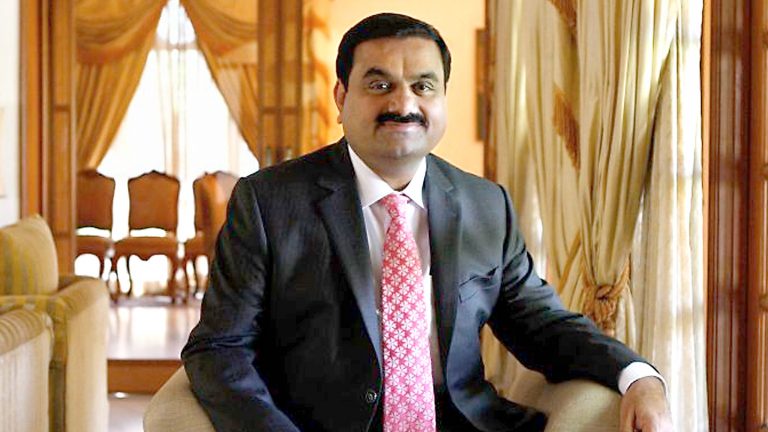
Indian billionaire industrialist Gautam Adani, who is the chairman and founder of the Adani Group, has had the biggest wealth surge in the world, beating the likes of American business tycoons Jeff Bezos and Elon Musk. According to the Bloomberg Billionaires Index, Adani has added more billions to his wealth than anyone else in the world this year on the back of strong investor sentiment around the impressive growth of his business ventures.

The net worth of Adani stands at $50 billion, a staggering rise of $16.2 billion in the past one year. This surge has made him the year’s biggest wealth gainer. The publicly traded shares of all Adani group stocks, except one, have risen at least 50 per cent this year.

The increase in Adani’s wealth outshines the $8.1 billion added by another Indian businessman and the richest person in Asia, Mukesh Ambani. It also illustrates the growing influence of the first-generation billionaire, who has attracted investment from Total SA to Warburg Pincus. The Adani Group is growing at a breakneck pace, adding ports, airports, data centres and coal mines in India, while steadfastly going ahead with his controversial Carmichael coal project in Australia.

According to Sunil Chandiramani, founder and chief executive officer at Nyka Advisory Services, Adani has been constantly augmenting his business in areas that are robust enough to withstand market cycles. “Now with the entry in data centres, the Group has demonstrated its willingness to take the plunge into the technology sector,” he said.

Adani Enterprises Ltd. signed an agreement last month to develop 1 gigawatt of data center capacity in India.

The Adani Group seems to have insulated itself from the economic fallout out of the coronavirus-induced lockdown. At a time when organisations are struggling on their path to recovery, companies within the Adani conglomerate have registered staggering growth. The shares of Adani Total Gas Ltd. has jumped 96 per cent this year while the flagship Adani Enterprises have leapt 90 per cent. Adani Transmission Ltd. is up 79%. Adani Power Ltd. and Adani Ports and Special Economic Zones Ltd. have added more than 52% this year. Adani Green Energy Ltd., which rose over 500% last year, is up 12% so far.

How can poor brown people make good vaccines? FT peddled lies claiming PM Modi may have ‘secretly’ taken a foreign dose

The success of the world’s largest vaccination drive in India and its exemplary efforts to supply vaccine to more than 60 other countries seems to have not gone well with a certain section of western media, who have been busy mocking and discrediting India’s success story. The liberal media outlets in the West and its ‘journalists’ in India are finding it tough to believe a country which they love to label as a ‘third -world’ nation has not only managed the pandemic well but is also generously helping other nations with its large vaccine manufacturing capacity.

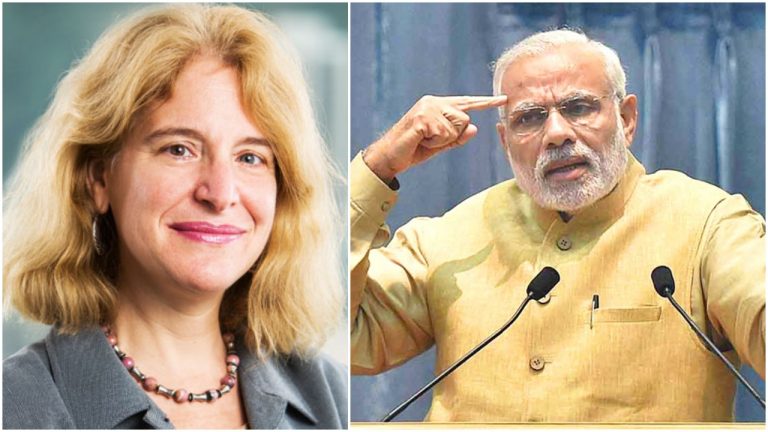
In a similar attempt to discredit India’s vaccination drive, Amy Kazmin – the Chief of Financial Times’ South Asia bureau, had earlier resorted to weaving conspiracy theories around Prime Minister Modi and had concocted a story saying he might have already been inoculated with a ‘foreign vaccine in secret’ as he did not trust the two Indian made vaccines.

A report written by Ami Kazmin was published in FT on January 26, 2021, which raised doubts not only over India’s vaccine program but also claimed that PM Modi had already been vaccinated with a foreign vaccine, but the information has been kept secret.

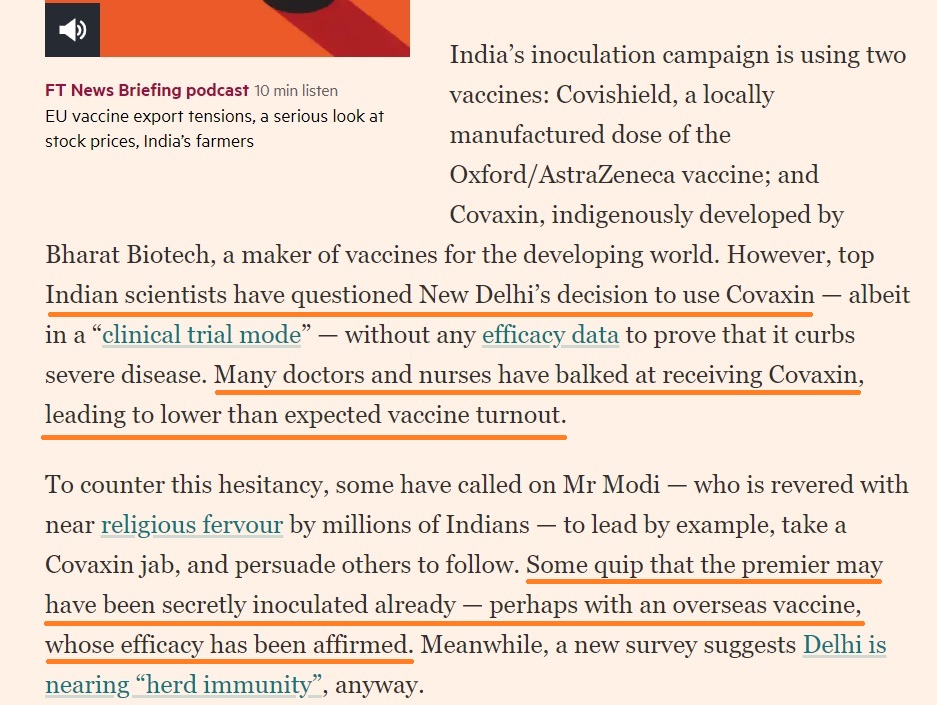
The report said that the Modi government’s inoculation campaign uses two vaccines – Covishield, a locally manufactured dose of the Oxford/AstraZeneca vaccine and Covaxin, an indigenously developed by Bharat Biotech. The report spread false propaganda against the Bharat Biotech- manufactured vaccine saying top ‘Indian scientists’ have questioned the decision to use Covaxin.

The ‘journalist’ said that the vaccine’s efficacy was not proved, and hence many doctors and nurses “have balked” at receiving Covaxin, leading to lower than expected vaccine turnout.

PM Modi hesitant to take Indian vaccine, got secret foreign jab: claimed FT

In her report, Kazmin was seen taking potshots at PM Modi and said even as global leaders — such as Joe Biden, then US president-elect, and Kamala Harris as vice-president-elect, Israel’s Prime Minister Benjamin Netanyahu, Saudi Crown Prince Mohammad have come forward to take the jab, the Indian Prime Minister was hesitating to take the vaccine.

“His apparent reticence has been noticed and has fuelled speculation as to his motives adding to a broader controversy over the drive to inoculate 300m Indians by August,” read the report. India had started a priority vaccination drive for frontline workers on January 16 and PM Modi has emphasised that politicians won’t be allowed to ‘jump the queue’ and will have to wait for their turn.

The report further said that some have called PM Modi to take the Covaxin jab to “counter this hesitancy” and persuade others to follow.

However, Amy Khazmin also came up with a bizarre theory when she quoted “some people” to claim that the Indian PM may have been secretly inoculated already with an overseas vaccine, whose efficacy has been affirmed.

Financial Times report that had claimed PM Modi may have received a foreign jab as the efficacy of Covaxin is ‘doubtful’

The conspiracy theories of Amy Kazmin have now been busted after Prime Minister Modi took his first dose of the Indian-made Covaxin vaccine on March 1 during the second phase of the centre’s vaccination drive, when the drive was started for senior citizens. By taking the shot of Covaxin that has been discredited by Amy Kazmin and other western media outlets, PM Modi silently led a campaign to inspire confidence in people’s minds regarding the efficacy of the vaccine.

It is notable here that many foreign news portals have been trying to advertise the theories that the two western vaccines developed by Pfizer and Moderna may be ‘more effective than other vaccines. However, they conveniently forget to mention that both the vaccines are very expensive and unsuitable for large scale vaccination drives in many countries because they require storage and transportation at extremely low temperatures.

While all the vaccines currently under use all over the world are under trial and have received only ’emergency approval’ from respective governments, it is unclear why most Western media portals and some ‘liberal’ Indians have already decided that Western-made vaccines must be better than India-made vaccines.

Wild speculations and misinformation

The article also makes other wile speculations. It claims “top Indian scientists” have questioned India’s decision to sue Covaxin. Covaxin was developed in collaboration with India’s premier medical research body, ICMR. ICMR is also working with Bharat Biotech to conduct the clinical trials.

The article also insinuates that Modi is ‘being camera shy’ and hesitating to take the India-made vaccine, unlike other world leaders. However, it fails to mention that unlike other world leaders, PM Modi has managed the pandemic exceptionally well, something many Western ‘experts’ are not finding it easy to come to terms with.

In recently published clinical trial data, Covaxin has reported 81% efficacy. Not just PM Modi, but several other political leaders all over the country have actually set an example by not jumping the queue using their privilege and waiting for their turn, taking the vaccine only when it was available for senior citizens.

The article notes that PM Modi had asked politicians to ‘wait for their turn’. But in denouncing the vaccination drive, the PM’s decision, to speculative ‘low vaccine turnouts’, it spreads only misinformation and reflects how the Western world is prejudiced against developing nations.

When India started phase 2 of its vaccination drive on March 1, PM Modi walked into the AIIMS early in the morning and took the Covaxin dose like a regular Indian senior citizen. CMs like Naveen Pattnaik and Nitish Kumar, and many other political leaders also followed suit.

If one believed Amy’s conspiracy theories, PM Modi should not have taken the Covaxin jab as he was already inoculated with a ‘trusted’ foreign vaccine. Instead, PM Modi and his ministerial colleagues inspired the country by taking the Covaxin shot to dispel rumours spread by the left-liberals, both within India and the international media, against the Bharat Biotech-made vaccine.

Nearly two weeks after their lies being nailed, the Financial Times has neither deleted their concocted report on PM Modi and the country’s vaccination drive nor have apologised for the same.

Harry Potter actress Katie Leung says publicists told her to deny racist abuse she suffered when role was announced

Katie Leung, who played the role of Cho Chang in the Harry Potter movies, has said in a recent episode of the Chinese Chippy Girl podcast that her publicists told her to deny that she was being subjected to racist abuse online when she told them about it following the announcement of her role.

“I was, like, googling myself at one point, and I was on this website, which was kind of dedicated to the kind of Harry Potter fandom. I remember reading all the comments. And yeah, it was a lot of racist sh*t,” she said.

“I remember them saying to me, ‘Oh, look, Katie, we haven’t seen these, these websites that people are talking about. And you know? If you get asked that, just say it’s not true, say it’s not happening’,” Katie Leung said.

She added, “And I just nodded my head. I was like, ‘Okay, okay,’ even though I had seen it myself with my own eyes. I was like, ‘Okay, yeah, I’ll just say everything’s great.'”

Katie Leung has featured in other movies and television shows as well following her stint in the Harry Potter movies. In the movies, Cho Chang is a student at the Hogwarts School of Witchcraft and Wizardry who Harry Potter has a crush on.

She says that she is grateful for being a part of the movies but it was difficult in its own way. She first made an appearance during the fourth movie of the franchise, Harry Potter and the Goblet of Fire. She is a Scottish actress of Hong Kong descent.

China summons UK ambassador for her ‘arrogant article’ on media freedom, diplomat pushes back: Here is what transpired

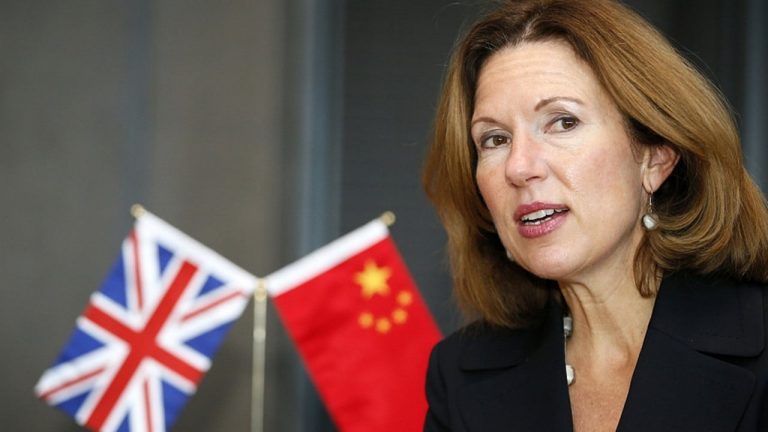
Britain’s ambassador to China was summoned by the Chinese foreign ministry to chastise her for an article she wrote defending the recent international media coverage on the country.

Caroline Wilson, the UK ambassador had penned a scathing article which she posted on the British embassy’s official WeChat account last week. In the article, Wilson contended that foreign media were misrepresented in China and that their criticism of Chinese authorities did not mean that they hated China. She underscored her point by illustrating how British media criticised the British government.

The article came in the wake of already tense relations between Beijing and London over the sweeping new security law passed by China in Hong Kong, including China’s genocidal crimes in Xinjiang and its clampdown against foreign media outlets.

After China summoned Wilson over her post, the British Ambassador took to Twitter to reiterate her stand.

British ambassador pushes back, says she stands by her article

“I stand by my article,” she said. “No doubt the outgoing Chinese ambassador to the UK stands by the 170+ pieces he was free to place in mainstream British media,” added Wilson, referring to Liu Xiaoming, who was based in Britain for around 11 years before leaving the country in January and who had extensively written articles that were published in various British media outlets.

In her article, Wilson sought to explain that the criticism of the Chinese government by the foreign media organisation did not mean that the journalists did not like China, but were, in fact, acting in “good faith” and playing a proactive role in monitoring government action.

She also added that the British journalists have all the freedom to ask piercing questions of their legislators while in China they are muffled by the Communist regime if they ask questions of public importance. While some Chinese news outlets did run some critical reports, but unlike the foreign media, they can only report critically under the supervision of the government, she said.

Though the article was not deleted from WeChat as of Thursday, it can longer be shared or reposted.

China summons Caroline Wilson for her article on media freedom

The article, nonetheless, raised the hackles of the Chinese foreign ministry and it summoned Wilson to issue “stern representations” over the “biased” and “inappropriate” article, saying it was “full of arrogance”. “The whole article is full of… ideological prejudice… and is seriously inconsistent with the status of diplomats,” it referenced the department’s head as saying.

Beijing blasts BBC Radio 4 for its reports a month after it banned BBC World

Wilson’s article came on the heels of a ban imposed by China on BBC World. Last month, Beijing banned BBC World News from television networks in mainland China after finding it had committed “serious violations” and “undermined China’s national unity”.

The retaliatory move came a week after Britain’s media regulator Ofcom revoked the U.K. broadcast license for China’s state-backed CGTN network after deeming it to be insufficiently editorially independent from Beijing.

China had cited a series of reports broadcasted by the BBC alleging human rights abuses against Uyghur Muslims in China’s Xinjiang region, an allegation that Beijing staunchly denies even in the face of incriminating evidence.

Besides, escalating its crackdown against the BBC, China recently slammed the reports aired by BBC Radio 4, refuting them and condemning them as groundless accusations against it on issues related to COVID-19, diplomacy and other matters.

China had taken umbrage to BBC’s report titled “The Disinformation Dragon” in which the British broadcaster criticised Beijing over COVID-19 origin-tracing, Chinese diplomat’s “Wolf-Warrior” diplomacy, Tiktok, and Internet security and censorship in China.