Home Blog Page 5945

Home Ministry bans Meghalaya-based terrorist organisation HNLC, calls it a threat to the sovereignty and integrity of India

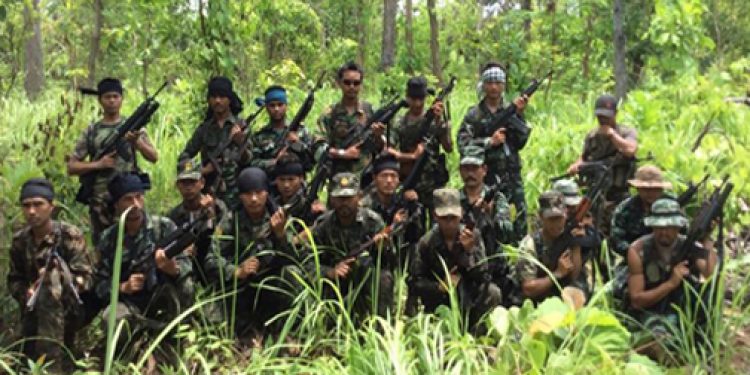
The central government has decided to ban the Meghalaya-based terrorist group Hynniewtrep National Liberation Council (HNLC) under the Unlawful Activities Prevention Act (UAPA).

In a notification, the Ministry of Home Affairs (MHA) today said that the HNLC along with all its factions, wings and frontal organisations have been openly declaring the secession of the state’s areas, which are largely inhabited by Khasi and Jaintia tribals, from the Indian Union as one of its key objectives.


“It continues to intimidate and bully civilians to extort funds, maintains links with other insurgent groups of the Northeast to carry out acts of extortion and intimidation, and maintains camps in Bangladesh to give sanctuary and training to its cadre”, said the ministry also opinioning that HNLC’s activities are detrimental to the sovereignty and integrity of India.

Listing the innumerable incidents of violence carried out by the HNLC in recent past that include several instances of murder, kidnap and illegal weapons, the MHA said: “If these are not immediately curbed and controlled, the HNLC will regroup and rearm itself, expand its cadre base, procure sophisticated weapons, cause loss of lives of civilians and security forces, and accelerate its anti-national activities”.


“Now, therefore, in exercise of the powers conferred by sub-section (1) of section 3 of the Unlawful Activities (Prevention) Act, 1967 (37 of 1967), (hereinafter referred to as the said Act), the central government hereby declares the HNLC, along with all its factions, wings and front organisations as unlawful association,” the notification read.

The Hynniewtrep National Liberation Council (HNLC) is a terrorist organization operating in Meghalaya. It claims to be fighting for a sovereign homeland for the tribal Khasi-Jaintia population of Meghalaya and aims to free the state from the alleged domination of the Garo tribe (an indigenous Tibeto-Burman ethnic group) and the outsiders from the Indian mainland.

HNLC was first banned on November 16, 2000, but the ban was lifted later.

Owaisi is Babur: Rashtriya Muslim Manch spokesperson Yaser Jilani says AIMIM chief is trying to fan communal tension

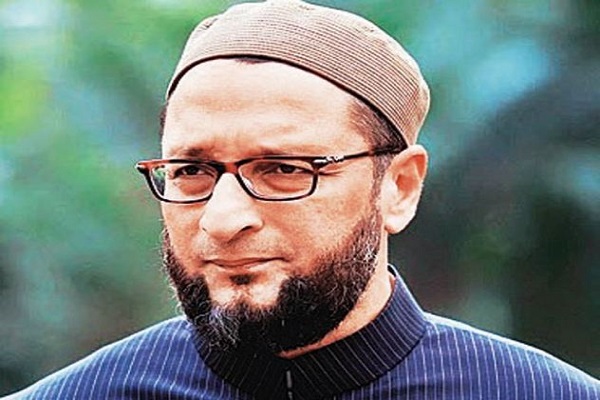
AIMIM chief Asaduddin Owaisi has been continuing his tirade against the Ram Janmabhoomi verdict ever since the SC in a landmark decision on November 9 pronounced that the disputed Ram Janmabhoomi-Babri masjid land is to be provided to the Hindu parties, making way for Hindu devotees to have a grand Ram Mandir at the birthplace of Lord Ram.

The National Muslim Forum has today criticised this antagonism and disdain shown by the AIMIM chief towards the SC verdict and said that the Owaisi is trying to create tension and confusion in the country over the Ayodhya issue.

Taking to Twitter, the National spokesperson of Rashtriya Muslim Manch (RMM), Yaser Jilani called Owaisi the real ‘Babur’ who is trying to create communal discord with his negativism.


Condemning the AIMIM chief’s statements, Jilani furthered that Owiasi should clarify as to who is he asking the mosque for and which Muslim community stands by his statement. He hinted that what Owaisi has actually been saying for all these days was not what the Muslims’ of the country felt rather he was accentuating his personal agenda which is to divide the Nation and fan communal discord within the country.

Read: Owaisi creating terror through statements, no difference between Baghdadi and him: Shia Waqf Board Wasim Rizvi

Jilani also criticised AIMPLB’ decision to file a review petition in the Supreme Court of India against the Ram Janmabhoomi case verdict.

He was also quoted by ANI as saying: “The Muslim Personal Law Board’s people are trying to create confusion and intoxication in the country. They are trying to incite the Muslim brethren, who have displayed their peacefulness and brotherhood after the verdict. The Muslims have rejected them when they are themselves stating that their petition will be rejected then why to file it at all?”

“I want to request the Indian agencies to keep an eye on them. They are trying to create drama through the review petition,” he said.


Yesterday, there were reports that the AIMPLB after holding a crucial meeting on Sunday decided to challenge the Supreme Court order by filing a review petition on the Ram Janmabhoomi judgement that was delivered by the top court on November 9.

Notably, Iqbal Ansari, one of the petitioners in Ram Janmbhoomi-Babri Masjid land dispute, on Sunday distanced himself from the decision of All India Muslim Personal Law Board (AIMPLB) to seek review of the Supreme Court order in the matter.

“We respect the apex court’s ruling. We are Muslims of India and respect the law of the land. We would not go further on this issue,” Ansari told ANI here. “Since there are so many litigants in the case, I cannot take guarantee of everyone.”

Reacting to the SC verdict, Owaisi had ‘rejected’ the 5 acres of land offered by the apex court saying, “We were fighting for our right, we don’t need 5 acres of land as a donation, we should reject this offer”.

Owaisi went on, “Supreme Court is Supreme but not infallible. Those who were responsible for razing down the Babri mosque in 1992 have been given the responsibility of forming a trust and building a temple there. I am dissatisfied with the judgment.”

Shortly, Yoga Guru Baba Ramdev had also slammed Owaisi calling him a traitor in his appearance at Republic TV. “If Owaisi has his way, he would create another ‘fasaad‘ in the country like the Nizam’s time but he doesn’t have the aukaat (capability) to partition Hindustan,” he added referring to the Hyderabad Nizam’s attempt to create a Muslim-ruled sovereign nation inside Indian territory after Independence.

#MosquesofIndia, trended by Islamists, reveals a few more Hindu Temples on which mosques stand today

While most Indian citizens have accepted the Supreme Court judgment on Ram Janmabhoomi title suit, few Muslims, who love to identify themselves as “liberals”, have started a tirade against the judgment on social media. Since they can’t legally challenge the verdict (because of not being the petitioners to the original case) they have started running social media campaigns and writing open letters. These are their usual tricks to brainwash and mislead the common man, and malign any organisation and body that opposes their fundamentalism under the garb of liberalism.

One such Muslim ‘liberal’ Irena Akbar, a former journalist with Indian Express, who is visibly angry just like Arfa Khanum Sherwani, Saba Naqvi, and Assaudin Owaisi on the judgment, started a trend on Twitter #MosquesofIndia, appealing people to share photographs of various mosques in India.


Soon other Islamists like Rana Safvi, joined in and started tweeting photos of various mosques of India. Irena started retweeting them.


In a separate tweet, she also gave her reasons for starting the trend, and evidently it was linked to Babri Masjid.


Soon the trend became number one in India, at outfits like Shekhar Gupta’s The Print, did a story on it. BBC Urdu too joined in, not wanting to left behind. While they were happy, that it occupied numero uno spot for a brief time in Twitter trends, Irena also expressed her dismay at the trend vanishing from top 20 on Twitter soon after.


However, trending this hashtag had one unintended consequence though. It exposed few more mosques, which were essentially temples earlier, evident from their Indic architectural style and design, a far cry from usual dome and minaret structures. See some tweets below.


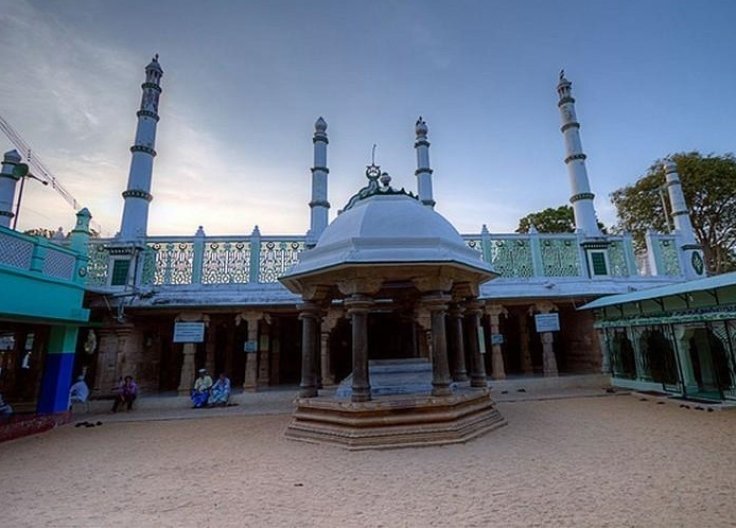
This is a mosque in Ramnathpuram. As evident from photographs, you can see a sanctum sanctorum, shut with a door and a covered courtyard immediately outside it, is an essential temple style. A study of Islamic monuments invariably shows that mosques across the world generally have an open courtyard. While apologists can claim that Islam adopted local architectural style and it was a mosque from beginning, the second photograph shows additions in form of minarets, painted in white and green, again a typical feature of contemporary mosques. It is an established fact that Muslim invaders had plundered over 40,000 temples to build mosques over them. Even Babri Masjid of Ayodhya had material used from an erstwhile destroyed temple. There is a famous book written by Sita Ram Goel and Arun Shourie, in decade of early 1990, by the name Hindu Temples; What Happened to Them?

Coming back to mosque in Ramnathpuram, the name of the town itself has evidence of something related to Ram. Holy site of Rameshwaram is situated in Ramnathpuram district. In the above-mentioned book this mosque is documented. A PDF version of this book is available here. Go on the link, use control F, type Ramanathapuram District and you will find five sites listed as erstwhile Hindu temples by Sitaram Goel. The above mosque is Jami Masjid, Kilakari. I would however like to urge every Hindu to purchase this book.


This is Shah-I-Hamdan mosque in Srinagar. This is also referred to, the book. In the PDF version, on page 79, you will find it as “Dargãh and Masjid of Shãh-i-Hamadãnî in Kalashpura. On the site of the Kãlî Temple.”

These are just couple of examples from the tweets posted under #MosquesofIndia. Sitaram Goel and Arun Shourie have done a fantastic work by compiling over 40,000 temple sites converted into mosques. It’s the duty of every self-respecting Hindu, to read this book.
While Gyanvapi Masjid and Idgah of Mathura are situated on erstwhile Kashi Vishwanath Temple and Krishna Janmabhoomi temple are even visible to naked eyes and there is no need of archeological evidence to prove it as it was needed in Ram Janmabhoomi case.

Read: “I want my masjid back,” Owaisi continues his tirade against the Ayodhya judgement

Few other notable mosques made by vandalizing old temples are Rudra Mahalaya – Jami Masjid, Patan in Gujarat and Bhadrakali Temple – Jama Masjid in Ahmedabad. A ruined temple complex of Rudra Mahalaya is located at Siddhpur in Patan district of Gujarat. The magnificient Rudra Mahalaya temple was built in the 12th century AD by a ruler of Gujarat, Siddhraj Jaisinh. The temple was dismantled by Allauddin Khilji during 1410-1444 and later Ahmed Shah I, who converted some part of it into the conjoing mosque. While Jama Masjid, which was built during 1424 AD in Ahmedabad (originally known as Karnavati) made by Ahmed Shah I on a Hindu temple of Goddess Bhadrakali.

Many Hindu motifs such as lotus flowers and creepers, mandalas, elephants, coiled serpants representing the Kundalini, celestial dancers and bells are found carved on the 100 odd surviving pillars that line the temple complex, showing that it was built over destruction of a Hindu temple.

A day will come, when Hindus, if not in our lifetime, sometime in future, would reclaim all of these holy sites.


Taseer Tragicomedy: TOI wants India to violate its laws to prove that it is committed to democratic values

In a bizarre editorial, Times of India has asserted that the Indian government must violate its own laws in order to prove that India remains true to its democratic ideals. TOI says that revoking Aatish Taseer’s OCI card could lead to India being isolated at the international forum.

The editorial said, “Aatish’s OCI status must be restored to send out a signal to both the diaspora and international community that India remains true to its democratic ideals. If New Delhi cannot achieve the latter, then instead of isolating Pakistan it will itself stand isolated and lose control of the international narrative.”

The editorial notes that “certain actions by his own government undermine the PM’s energetic efforts, such as the move to revoke diasporic writer Aatish Taseer’s OCI status soon after he wrote an article critical of Modi in an international newsmagazine. In a significant move 260 prominent authors, journalists, activists and artistes – including Nobel prize winners – have signed a letter urging the PM to review the drastic decision.”

It appears that TOI is vastly overestimating the importance of these ’eminent intellectuals’. Not even the ordinary American takes them seriously. In fact, Donald Trump was elected in large parts because he was hated by these very individuals and during his presidential campaign. Trump went out of his way to pour scorn on them.

Read: NYTimes columnist Aatish Taseer displays Hinduphobia in full glory, speaks the language of the very Islamists who killed his father

Furthermore, the ’eminent intellectuals’ did not provide any significant reason as to why Aatish Taseer’s OCI card should be revoked. ‘Liberals’ had claimed that the OCI status was revoked because he had written an article critical of Narendra Modi. TOI followed the same path and made the same argument despite the fact that it’s obviously not true.

Aatish Taseer’s OCI card was revoked because he failed to disclose the fact that his father is a Pakistani. Furthermore, that fact alone makes him ineligible to hold the OCI card. The only controversy is how did he manage to acquire it in the first place. Therefore, to claim that India must violate its own laws in order to prove its democratic credentials is utterly ridiculous and the heights of entitlement.

Like the ’eminent intellectuals’, TOI, too, has decided to vouch for Aatish Taseer only because he belongs to the same club. This set of individuals are so accustomed to ‘liberal privilege’ that they live under the delusion that ordinary laws do not apply to them. The manner in which these set of individuals are demanding that the Indian government make an exception for one of their own only reveals the extent of their entitlement.

Congress leader Adhir Ranjan Chowdhury uses derogatory slang for European delegation that visited JK, calls them ‘kiraye ke tattu’

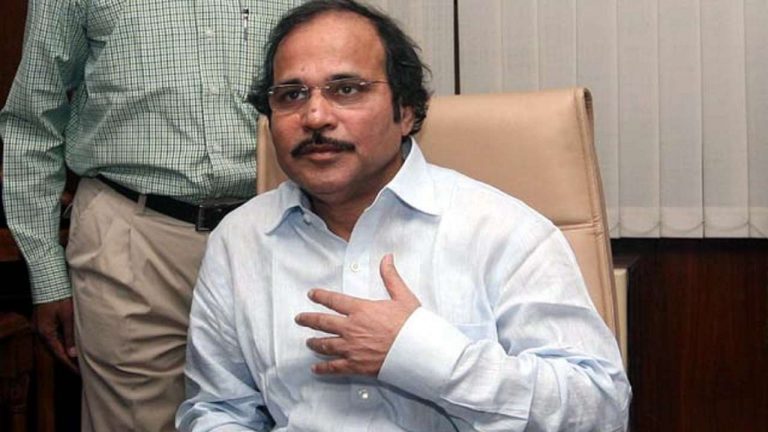
Leader of Opposition in Lok Sabha, senior Congress leader Adhir Ranjan Chowdhury today used derogatory remarks against the European parliament members who had recently visited Jammu and Kashmir to review the situation after the abrogation of Article 370. Chowdhury said that the European delegation that visited Kashmir were all “kiraye ke tattu (hired hacks)”.


The derogatory remarks used by Ranjan was opposed by some members of parliament. Lok Sabha speaker Om Birla said he would examine if the remarks needed to be expunged from the proceedings.

Speaking in the Lower house of the parliament, Chowdhury slammed the government for barring Indian members of parliament from visiting Jammu and Kashmir while facilitating the visit of European delegation. “Our leaders were not allowed to go there. Rahul Gandhi was stopped. Several other MPs were prevented from visiting Kashmir. Labourers are dying there. Army men are dying,” he said.

Chowdhury was speaking in the Zero Hour during which he termed it an “atrocity” to not allow former Jammu and Kashmir chief minister Farooq Abdullah to attend the Lok Sabha proceedings.

A 28-member delegation of European parliamentarians had recently visited Jammu and Kashmir and interacted with the Jammu and Kashmir administration including the governor, and members of the civil society following the abrogation of Article 370 and subsequent bifurcation of the state into union territories of Jammu and Kashmir and Ladakh.

Read: ‘We are very angry at being called Nazi lovers,’ European Union Parliamentarians on Owaisi’s allegation

However, the visit was also criticised by other politicians including firebrand politician Asaduddin Owaisi. The AIMIM chief rattled by their visit had claimed that the European members were ‘Nazi lovers’. This was strongly opposed by the members with one them saying “We are not Nazi lovers. If we were, we would have not been elected. We are very angry at being called Nazi lovers.”

Congress chattels misrepresent Patanjali CEO’s statement on ‘working with multinationals’

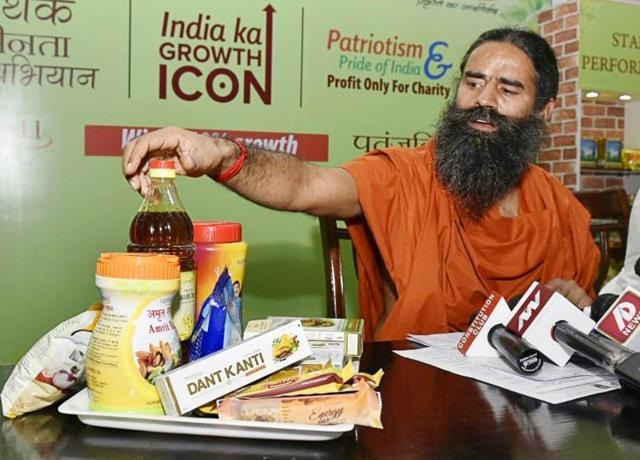
On November 11, in an interaction with The Economic Times, Patanjali chief executive Acharya Balkrishna, said that the company is ‘not averse to working with multinationals as long as it doesn’t clash’ with its values. He said that there are several MNC’s that has approached Patanjali. He furthered that they are not being refused merely because these business deals are being offered by multinationals.

The regular gossipers were quick to pick up this statement made by Acharya Balkrishna and without verifying the facts, misconstrued and represented it, to falsely malign Yoga guru Baba Ramdev, questioning his ideologies. Balkrishna’s statement was interpreted as if he said that Patanjali is in the process to sign agreements with various multinational companies.

The All India Mahila Congress took to Twitter to say that Baba Ramdev-led Patanjali Ayurved, which has always positioned itself as a swadeshi brand, is leaving behind ‘Swadeshi’ and collaborating with MNCs. Calling this stance hypocritical, the Congress chattels said that guru Baba Ramdev who made fortunes riding on ‘Swadeshi’ & nationalism has now displayed his hypocrisy by collaborating with multinationals.


Many media houses also took the wrong way and reported that Baba Ramdev-led Patanjali is opening to collaborate with ‘videshi’ MNCs.

Read: Vyapam ‘whistleblower’ and Congress sympathiser doctor publishes confidential medical report to falsely malign Baba Ramdev’s associate

Advocate Nazma Fatima Khan, describing Baba Ramdev as ‘paltu’ said the companies with whom Ramdev claims to be in a war with, will now enter into an agreement with him. Sharing a report by India Times, which yet again had a misleading headline, Khan tweeted with hashtag ‘shut down Patanjali’.


However, Baba Ramdev took to Twitter to give out an explanation of what Balkrishna’s statement actually meant. Clarifying that Patanjali has never accepted foreign investments till date and will never do so ever in future, Ramdev said that what Balkrishna meant was that these companies would be used only for distribution of Patanjali products abroad.

This meant that in order to increase its outreach within countries where Patanjali does not have any direct distribution facility the company might tie-up with these companies.


In his tweet, Ramdev assured that Patanjali will not collaborate with any foreign company but if the goods manufactured in India could be sold in foreign countries it would only strengthen the ‘swadesi’ campaign.

‘We are doing better than Europe on Climate Change’, MEA Jaishankar reminds German magazine during interview

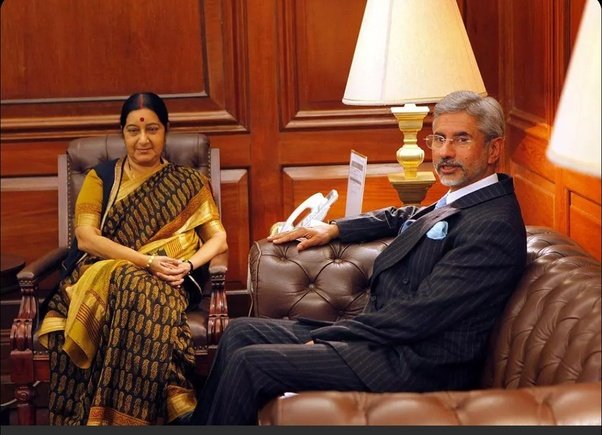
S Jaishankar, the Minister of External Affairs, has been giving a lot of interviews in recent times to convey the message of the Indian regime to the rest of the world. Recently, he gave an interview to Der Spiegel, the prominent German weekly.

During the interview, Jaishankar carried forward the stance that he has adopted in his earlier interviews to Western think tanks and newspapers. On Kashmir, he said that the decision to abrogate Article 370 was taken in the interests of the Kashmiri people.

When asked if India still adheres to Gandhian values, he replied, “I think we have a fundamentally different understanding of what the problem in Kashmir is. Over the past 30 years, 40,000 people have lost their lives due to violence and terrorism. If we hadn’t done something about it, the next 30 years would have been just as bad. Surely, none of us, including Gandhi, would have wished that on Kashmir.”

Der Spiegel also appeared to make an attempt to corner the MEA on the issue of landlines being cut off in the region. However, Jaishankar was undaunted and said it was an act necessitated by terrorism in the valley. The interviewer asked, “But how were people supposed to call an ambulance if they needed one?” I’m asking you: How were terrorists supposed to be stopped?” He replied.

The interviewer then asked if terrorism justified all means, the MEA, ostensibly irked, shot back, “What kind of a question is that? Terrorists have killed apple traders in the past few weeks. Grenades have been thrown at markets. People have died. Why don’t you focus on any of that?”

Jaishankar was also asked how does India see itself when the West sees India as a counterweight to China. He replied, “I find the idea of being someone else’s pawn in some “Great Game” terribly condescending. I certainly don’t plan to play the counterweight to other people. I’m in it because of my own ambitions.”

Jaishankar’s comments in this regard are important as the West considers it to be in its own interests if India positioned itself as a regional power in opposition to China. However, the current Indian regime has resolutely denied serving the West in that role. That is why the Modi-Xi meet at Mamallapuram in Tamil Nadu was as much a message to the West as it was to China. Gone are the days when India would pine for the West’s approval.

Read: Chinese President Xi Jinping to arrive in India for informal summit: Here is the significance of summit being held at Mamallapuram

The message that Jaishankar is essentially conveying is that India will unabashedly pursue its own interests during an era where the world order is undergoing a fundamental shift. It means that India will cooperate with China when it serves our interests and ally with the West when it benefits us. India will not shut the doors on China merely because the West wants it to.

Der Spiegel also attempted to corner Jaishankar on the issue of climate change. The weekly was reminded that India was doing better than Europe on that front. The interviewer asked, “Are you a player in the fight against climate change as well? India has grown to become the world’s third-largest producer of greenhouse gases.”

Jaishankar countered, “We have one of the most ambitious programs for solar energy and we help other developing countries to achieve their goals. In fact, according to the research consortium Climate Action Tracker, there are just five countries whose energy policies can be reconciled with the 2-degree goal outlined in the Paris Agreement: Bhutan, Costa Rica, Ethiopia, the Philippines – and India. We are doing better than Europe.”

He added, “My answer depends on many factors, such as how quickly India can scale up alternatives such as solar, hydro or nuclear power. It is clear that coal is not our preferred choice. It’s just that it’s easy for someone from Germany to ask that question because your country has so many alternatives. We don’t.”

The most interesting remarks, perhaps, was Jaishankar’s response to the question of whether India feared Donald Trump mad permanently damage international institutions. He said, “You are in an alliance with the U.S. We are not. We are used to handling different American administrations who in the past haven’t been altogether friendly towards us. We approach America as we approach many issues in international politics: with a high degree of realism. At the end of the day, President Trump is President Trump. We Indians are pragmatic people.”

Read: German Magazine sacks ‘award winning’ journalist who invented stories, when will Indian media follow suit

As has been evident from Jaishankar’s conduct even before this interview, India will no longer tolerate sermons from the West. Their moral platitudes, which comes from a false sense of moral superiority, will receive a fitting reply in return. Furthermore, India doesn’t share the West’s pessimism about Donald Trump. That’s understandable given the fact that while most US Presidents have actively supported the Islamic terrorist state of Pakistan against India, Donald Trump has been very charitable with the Indian point of view in comparison.

It’s also clear that the Indian regime sees the world in a significantly different manner than earlier regimes. This has been pointed out by Jaishankar himself during an earlier interview. He had said that the West needs to come to a new understanding with India.

Rajya Sabha: Narendra Modi heaps praises on the NCP amidst political turmoil in Maharashtra

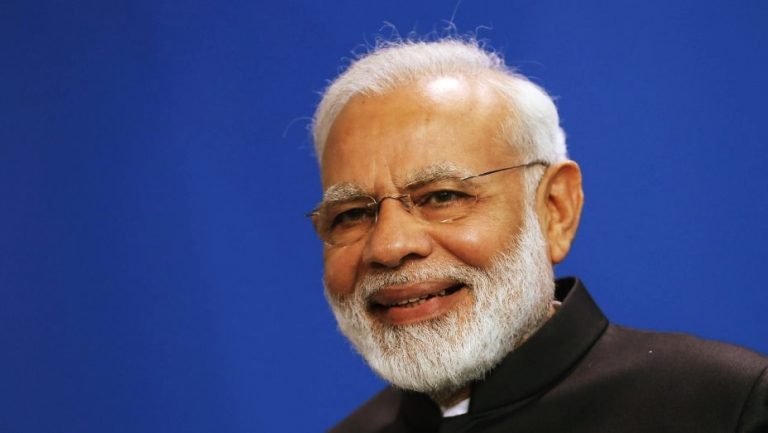
Prime Minister Narendra Modi, during his address to the Rajya Sabha on the beginning of its 250th session, heaped praises on the Nationalist Congress Party (NCP) and Biju Janata Dal (BJD). The Prime Minister’s praise for the NCP comes at a time when Maharashtra is going through political turmoil.


Narendra Modi complimented the two parties for their decision to never venture into the well of the House. He said that the success they have achieved during elections is evidence of the fact that political victories can be scored without violating Parliamentary norms. He said that every party, including the BJP, could learn from the conduct of these two parties.

The Prime Minister also said that the function of the Rajya Sabha is providing checks and balance. However, he emphasized that there is a significant difference between checking and ‘clogging’ and balance and ‘blocking’.


Narendra Modi also praised the Rajya Sabha for its historic role in the abrogation of Article 370, the passage of the Triple Talaq Bill and the GST Bill. His praise for the NCP comes at a time when BJP’s traditional partner Shiv Sena dumped it in an attempt to secure an alliance with the NCP. However, thus far, Uddhar Thackeray and his men haven’t been successful thus far in their pursuit of the Chief Minister’s chair.

While the BJP will insist that the Prime Minister’s remarks had little to do with the political circumstances in Maharashtra, observers will no doubt note the political undertones of his comments, and perhaps with good reason.

‘Sky is clear now’: Delhi CM Arvind Kejriwal says no need to continue odd-even any more

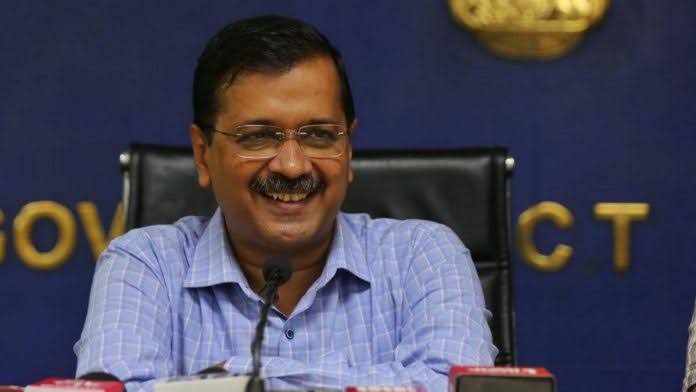
Delhi Chief Minister Arvind Kejriwal today stated that now that the Delhi sky looks clear, there is no need to implement the odd-even scheme again. As per reports, the Delhi CM stated, as the sky has been looking clear, there is no need for the bizarre odd-even rule.


Speaking at the press conference, Kejriwal asserted that the sky in Delhi has cleared up and there is no reason for the implementation of the odd-even scheme once again.

With the stated aim of reducing pollution and traffic congestion in the city, the Kejriwal government had introduced the first phase of the odd-even scheme on November 4. The scheme ended on Friday last week but there were speculations that Delhi CM Arvind Kejriwal might extend the scheme, considering the deteriorating air quality index in Delhi.

As per data by the Central Pollution Control Board, Delhi witnessed 5 days each of very poor and severe air quality. The air quality index (AQI) on November 12 entered the severe zone (425) and has continued to worsen further.

The Supreme Court had earlier pulled up Kejriwal-led AAP government, questioning it on the rationale behind implementing the odd-even scheme and asking it to provide data on the air quality of the national capital during the period when the scheme was in force.

The apex court had rapped Delhi Government up terming the odd-even scheme as ‘half-baked’ solution that was incapable of having a salutary effect on Delhi’s environmental woes. It also questioned it on the rationality of exemption granted to the two-wheelers, three-wheelers and taxis from the odd-even scheme.

Read: SC questions the logic of odd-even rule in Delhi, asks Kejriwal government to furnish data of its actual impact

Casting aspersions on the central government’s intent on declaring Delhi’s tap water as most unsafe, Kejriwal contended that Union Minister Ram Vilas Paswan did not reveal in the report from where the samples of the water were taken. He also added that 11 samples of water are not sufficient to judge a city’s water quality.


A report by the national standardisation body of India, Bureau of Indian Standards (BIS), revealed that water quality in Delhi is the worst. 11 samples collected in Delhi failed in all 19 parameters set by the BIS for water quality. The samples were taken from 11 localities, including Paswan’s official residence at 12 Janpath and Krishi Bhawan in Lutyens’ Delhi, and areas such as Nandnagari, Sonia Vihar, Pitampura, Ashok Nagar and Burari.

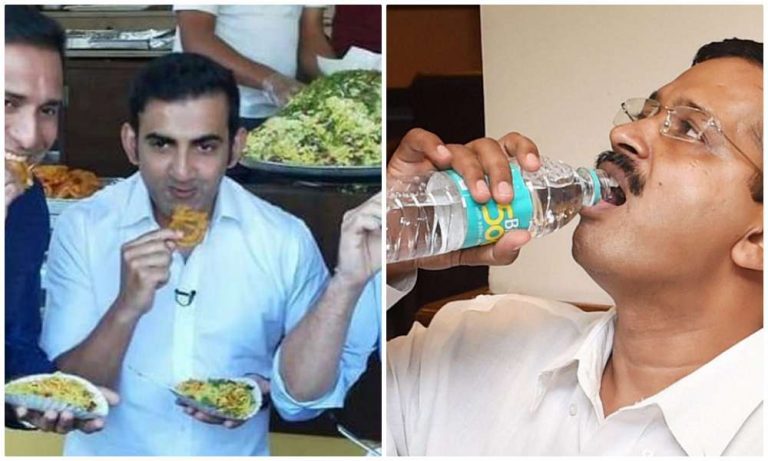
Jal ya Jalebi? BJP MP Gautam Gambhir takes a dig on Delhi CM Arvind Kejriwal over Delhi’s ‘free’ toxic tap water

Cricketer-turned-politician Gautam Gambhir today took a dig on Delhi Chief Minister and Delhi Jal Board Chairman Arvind Kejriwal over toxicity in the tap water of Delhi which the government provides ‘free’ to residents and Aam Aadmi Party supporters’ obsession with his viral picture eating jalebi.


Gambhir tweeted ‘jal ya jalebi? (water or jalebi?)’ questioning Aam Aadmi Party’s priorities while attacking him for skipping the Parliamentary Standing Committee of Urban Development meeting on 15th November. Pictures of Gautam Gambhir eating jalebi in Indore had gone viral on social media following which he was trolled.


Gambhir said if his eating jalebi has increased Delhi’s pollution, then he would give up eating jalebis forever. Everyone is serious about pollution except Aam Aadmi Party. Further attacking Kejriwal over toxic water in Delhi, Gambhir said, CM Kejriwal gave free water to Delhi, that too poisonous. “What has he done? He is the chairman of the board,” Gambhir hit out.

Read: Gautam Gambhir says Dhoni’s advice cost him a century in 2011 Cricket World Cup final

Last week, it was revealed that water quality in Delhi is the worst, failing in all the 19 parameters set by the Bureau of Indian Standards (BIS). Delhi Government refuted the report claiming ‘bias’ in sample testing. BIS is the national standardisation body of India established by the Bureau of Indian Standards Act, 1986. BIS had collected 11 samples in Delhi, all of which failed in all 19 parameters set by the BIS for water quality. Delhi Chief Minister Arvind Kejriwal is the chairman of Delhi Jal Board (DJB) since September 2017.