Home Blog Page 6178

Radcliffe Line: When a lawyer with no knowledge about India decided her fate

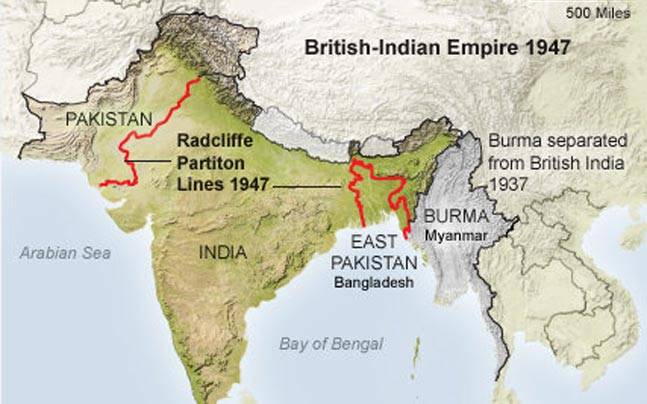
On 15th July 1947, the Indian Independence Act of 1947 was passed in the British Parliament. It was decided that the British rule in India will come to an end on 15th August 1947. India was to be divided into India and Pakistan. Pakistan would comprise of West Pakistan (present-day Pakistan) and East Pakistan (present-day Bangladesh).

Pakistan and two-nation theory

Pakistan wanted to be a Muslim-nation state while India remained secular. The Muslim majority provinces of British-India were to be part of Pakistan. That included Balochistan which had about 91.8% Muslim population before partition and Sindh province, which had about 72.7% Muslim population prior to the partition.

However, Bengal in the east and Punjab in the north-west had a significant Muslim population. The western part of Punjab became part of erstwhile West Pakistan. And the other part remained with India. Similarly, Bengal was divided into West Bengal and East Pakistan (now Bangladesh).

Division of land

However, the division of land was difficult to get consensus on. In Punjab, it was difficult to demarcate Hindus, Muslims and Sikhs. There was also an additional division of infrastructure between the countries that needed to be taken care of. People left their homes and took refuge amongst their own kind. Non-Muslims from Pakistan who wanted to live in India came to this side while Muslims from India who wanted to live in a Muslim country went to Pakistan. A lot of bloodshed and horrors followed.

In February 1947, Lord Mountbatten was made the Viceroy of India. Prior to him, Lord Wavell had drawn up a rough border of India. However, in order to determine which territory will go to Pakistan and which will remain with India, in June 1947, Sir Cyril Radcliffe was appointed to chair Boundary Commissions for Bengal and for Punjab.

Cyril Radcliffe

Born in 1899, Sir Cyril Radcliffe, who had never been India before, was given the Herculean task of dividing India into India and Pakistan. In June 1947 he was informed that he had to draw up the borders. He was to divide the portion of Punjab on the basis of a contiguous portion of Muslim and non-Muslim population. Radcliffe and other members of the commission were all lawyers with absolutely zero experience or specialised knowledge.

Driven by a sense of duty, Radcliffe took up the humongous task.

Drawing up the border

The commission had no advisors to guide them through. There was not enough time to carry out a survey and gather regional information. Congress and Muslim League, both had their representation in the commissions but it did not help. The politicians could hardly see eye to eye on matters.

One of the most difficult tasks was a division of Punjab which also had a huge Sikh population. While many Sikhs did not want to be part of Muslim-dominated Pakistan, a few were also demanding a separate country.

To appear neutral, Radcliffe also maintained distance from Lord Mountbatten. He was looked upon as neutral and unbiased. However, while he may have been neutral or unbiased towards the Hindus, Sikhs, Muslims and others, he was still loyal to the Crown.

Lord Mountbatten and Sir Radcliffe both knew that there was no way the border was drawn will be fully acceptable to either of the parties. Sir Radcliffe had never seen the land he was about to divide. He would decide the fate of undivided India and divide it such that the repercussions would be echoed even after decades. He warned Lord Mountbatten that owing to lack of time, drawing up of borders will have errors and the mistakes may be grave.

Radcliffe even reached out to Jinnah and Nehru whether drawing up the boundaries was absolutely necessary before 15th August. The two, who barely agreed upon any issues, were absolutely sure about this one. India had to be divided by 15th August 1947.

He knew that no matter what he does, people would suffer and there would be a pain.

Lahore

Lahore had about 64.5% Muslim population prior to partition but over 80% of the city’s assets were owned by Hindus and Sikhs. Lahore was originally set to be part of India. But then he gave it to Pakistan sinc, without Lahore, it would not have any big city. Calcutta from Bengal was to be part of India, so that would leave East Pakistan also without the big city. Unfortunately, the partition was based on the religion of population, not assets.

Ferozepur

While the majority of urban population from Lahore settled in Amritsar, the rural population settled in Ferozepur district. Despite being Muslim-dominated regions, these portions were awarded to India. Since Ferozepur and Zika tehsils were on the right side of Sutlej, logically, they should have come to India anyway.
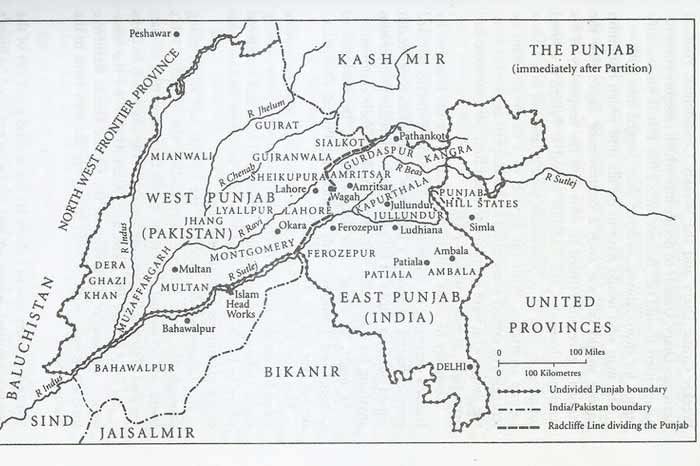
Map of Punjab during partition (image: homegrown.co.in)

Gurdaspur

Gurdaspur had four tehsils, of which Shakargarh was dominated by Muslims. Shakargarh went to Pakistan while the remaining three, Pathankot, Batala and Gurdaspur remained with India. The Muslims left for Pakistan from Gurdaspur district and the Hindus and Sikhs came to India.

Another reason for Gurdaspur being awarded as part of India was the natural resources. Moreover, Bari Doab Canal which provides water to places like Amritsar originated in Madhopur near Pathankot. Amritsar was given to India because of the significance it holds to the Sikh community. Hence, it was natural and logical that rest of the tehsils of Gurdaspur district come to India.

Pakistan, however, wasn’t too happy with it because it believed that Lord Mountbatten handed over Gurdaspur to India so that it can give India an easy access to Kashmir, which also wanted its own sovereign.

Chittagong Hill Tracts

Despite having over 97% non-Muslim population, it was awarded to East Pakistan (now Bangladesh). It borders with Myanmar, Tripura (India), Mizoram (India) and Chittagong (now Bangladesh). Despite that why it was awarded to Pakistan is a mystery only Radcliffe could have answered.

Malda

Malda, the present day hub of fake currency notes, had an overwhelming Muslim majority population and had even hoisted Pakistan flag for first few days after 15th August 1947. Between the 12th to 15th August, 1947, it was unclear and undecided whether it will stay with India or go to East Pakistan. During these few days the district was under a Magistrate of East Pakistan. However, when the details of the Radcliffe award were published, the district came over to West Bengal on the 17th of August. 1947. Malda sits between Bihar and Bangladesh. Had it been given to Bangladesh, Darjeeling, Cooch Behar and Siliguri would have also gone to Bangladesh.

Khulna, Murshidabad and Karimganj

Khulna with marginal Hindu-majority went to East Pakistan (now Bangladesh) while Murshidabad which had predominantly Muslim population stayed with India. Murshidabad, just like Malda connects India to the north-east. Karimganj in Assam shares its border with Tripura in India and Sylhet in Bangladesh. While most of the Sylhet region joined East Pakistan, Ratabari, Patharkadi, Badarpur and portion of Karimganj. This subdivision was then merged into Cachar district of modern day Assam.

The violence

The partition remains one of the bloodiest part of India’s modern history. Over a million people lost their lives and left over 12 million refugees in what was once their home. There are horror tales of murder, rape, neighbour and friends turning on one other. Radcliffe was so horrified at the events that transpired that he refused Rs 40,000 fees he was offered to draw up the border. He burned all his working paper and left India on 15th August 1947 never to return.

The pain has may be a distant memory but is a constant reminder that the line that cut across India in 1947 still bleeds.
Bharat, Dharma and the law: Colonial enslavement of the ‘modern’ Indian minds

As the Republic of Bharat, the successor civilization State of Bharatavarsha, celebrates its 73rd Independence Day, the Hon’ble Supreme Court of India is hearing arguments in the Shri Ramjanmabhoomi case almost on a day-to-day basis. Judgements in the Shri Padmanabhaswamy Temple case and in the Review Petitions in the Shri Sabarimala Ayyappa Temple case are yet to be pronounced.

This is apart from the fact that the Shri Jagannath Temple of Puri also finds itself before the Supreme Court, whereas for some reason arguments are yet to commence in the Writ Petition filed by the Late Shri Swami Dayananda Saraswathi Ji challenging the Temple Control Legislations of Tamil Nadu, Puducherry, Andhra Pradesh and Telangana which give ‘secular’ State Governments overarching and unbridled control over Temples and Temples alone. Add to this the fact that there exists this mind-bogglingly discriminatory and patently absurd legislation ironically titled The Places of Worship (Special provisions) Act, 1991, which prevents the victims of medieval barbaric invasions from reclaiming their places of worship and heritage, one has to wonder, how did things come to such a pass after the Indic civilization survived repeated attempts over a millennium to wipe out its existence and memory? 

The colonial mind of ‘modern’ Indians

Perhaps, there is no one answer to this question. But it would be fair to assume that despite having overthrown the overt foreign yoke in 1947, the yet-to-be-decolonized Indian mind is significantly responsible for the state of affairs, which is the assessment of several scholars of Indic origin as well as Indic-minded scholars of foreign origin. The typical ‘modern’ Indian mind still seeks validation on benchmarks set by the erstwhile colonial master, which it has internalized so deep within its consciousness that it has come to accept them as not just the normal but also the ideal. So much so, that to this incorrigibly colonized mind, every strain of Indic thought is boorish, superstitious, casteist, misogynist, elitist and unscientific, each of which is an irrebuttable presumption.

In other words, neither facts nor logic can overcome these presumptions of the enslaved mind, which is why the ‘modern, secular and scientific’ Indian mind has cut out for itself the noble task of civilizing the native. Of course, the qualifier is that this intervention is reserved exclusively for adherents of Indic faith systems. Everyone else is immune and exempt from this noble venture since (a) either they don’t need it or (b) such intervention cannot be fit in the curious definition of secularism that this enslaved mind has fashioned for itself. 

It is this enslaved mind’s need to identify itself as a ‘constitutional patriot’ because it sees nothing of value before the coming into existence of the Constitution, and therefore, the only way forward, according to it, is to ruthlessly sever all ties with the Indic past, and if possible, re-interpret or even invent the past through its colonized civilizing lens. Nothing would warm the cockles of this mind more than performing the act of severance with the Indic past in halal-compliant fashion, for it crinkles its nose at the very mention of jhatka. How is this long-winded farrago (courtesy Shashi Tharoor pronounced with an accent) relevant to the introduction of the piece? Let us discuss.

The legal system’s approach to ‘civilise the natives’

Well, of all Indian institutions, the Indian legal system’s approach and attitude to Indic thoughts, traditions and institutions, in fact to the Indic way of life itself, is that of a colonized mind with a penchant for ‘reform’, which is the politically correct term for a patronizing intervention to civilize the native, and which is clearly a never-ending exercise. Almost every aspect of the Indic way of life, right from marriage to succession to religious traditions and even festivals, has come under the scanner of this uber-reformist exercise, more often than not without understanding the Indic perspective, but on occasion rightly so without a doubt. After all, even a broken clock is right twice a day. 

One school of thought traces the problem of the colonized Indian legal system right to the Constitution. To be honest, I am not sure if this diagnosis is correct. That does not mean that I am sure the diagnosis is incorrect. I am genuinely undecided. That said, if I was forced to take a position, I would have to say that I am of the tentative and inconclusive view that the problem is largely attributable to the training imparted to those who interpret and enforce the Constitution and in general the laws of the country.

The early foundations of ignorance

In your formative years, when you still have oodles of idealism and a streak of rebellion, if you are taught as part of legal education or otherwise that logic, reason, democratic values, free speech, fundamental rights, equality, the concept of rule of law, gender equality, the value of individual freedom, secularism, truth and justice are all foreign imports, and there is no attempt on the part of the curriculum to even explore or encourage exploration of the contribution of Indic thought to these areas, you naturally assume that this civilization has had nothing of value to contribute on these fronts. 

This coupled with the unadulterated venom that is spewed against the Indic way of life through history and political science curricula in schools, colleges and law schools, which are invariably taught by individuals of Marxist persuasion, with no room for ideological diversity even for appearances sake, one should not be surprised when every Indic institution finds itself in the dock forced to prove its worth on alien anvils to an audience which starts with the presumption that you are unworthy of protection and existence, until proven otherwise, which is almost always never. Clearly, no repealment of any existing legislation alone is going to undo the incalculable but hopefully not irreparable harm that a brazenly colonial approach to legal education and law has caused to the Indic society, its worldview and its way of life.

The solution

What, then, is the solution? A complete and simultaneous overhaul of history, political science and legal curricula, regardless of the tsunami of backlash it is bound to elicit from well-entrenched individuals and institutions of Marxist persuasion, who have come to view these domains as their fiefdoms, and which are out of bounds for anyone with a different ideological proclivity, so much for their professed love of dissent, diversity and free thought. Disappointingly, the draft National Education Policy 2019 is woefully inadequate in its analysis/diagnosis of and a prescription for legal education, which is limited to a single paragraph, despite the fact that law is all-pervasive and impacts every sphere of life, and so does the Supreme Court.

Will the Centre show the boldness and preparation it has on Article 370, in revamping legal education and allied subjects to do justice to the Indic civilization’s profound and universalist contribution to truth and justice, which is the essence of Dharma?

Actor R Madhavan hounded on social media for sharing pictures of himself wearing the Poonal or Yajnopaveetham

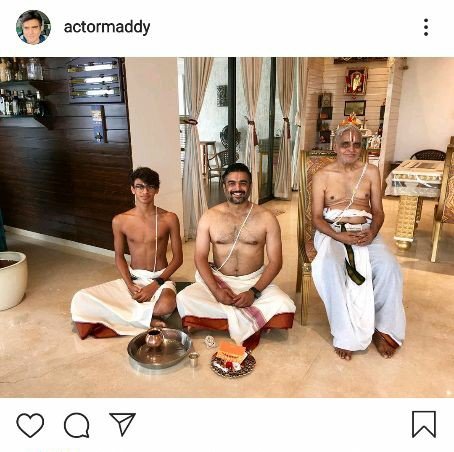
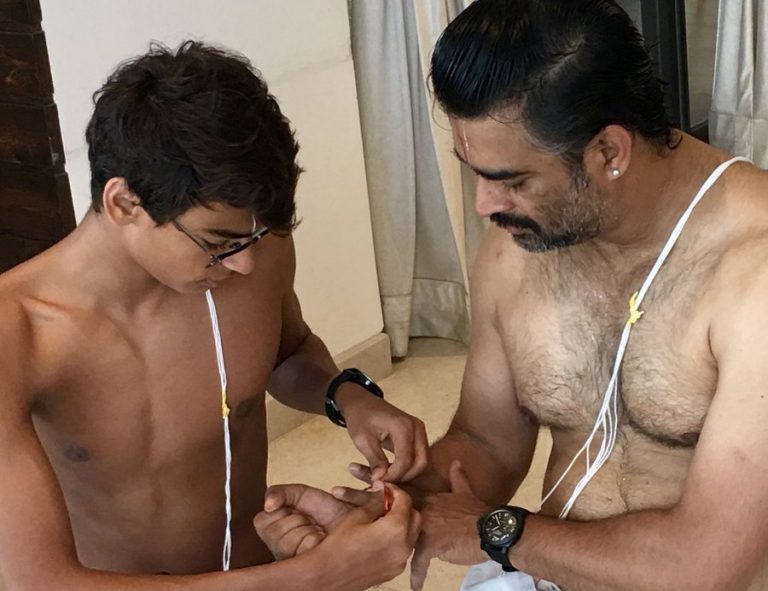
Ranganathan Madhavan, the popular actor who has worked extensively in Bollywood and Tamil movies, wished everyone a happy Raksha Bandhan and shared a picture of himself with his son on social media where the two of them could be seen wearing the sacred thread that Brahmins wear. His son was tying the Rakhi on his hand in his sister’s absence.


However, for his innocent tweet, the popular actor is being trolled by liberals. According to them, the sacred thread, or the Yajnopaveetham or the Poonal as it is called in Tamil, is a symbol of casteism and Madhavan should be ashamed of himself for upholding the traditions of his ancestors.


According to liberals, Madhavan should be embarrassed about his identity.


Madhavan was attacked for celebrating Raksha Bandhan as well.


Today is also the occasion of Avani Avittam, the auspicious day on which Brahmins change their sacred threads. The actor posted a picture of himself on Instagram wishing everyone the same.

In liberal circles, especially in Dravidianist politics, the Poonal is equated with a symbol of genocide and oppression. It is considered a symbol of casteism and not of the traditions of a particular section of Hindus as it actually is. Genocidal propaganda along the lines of the hatred that was peddled against Jews in Nazi Germany is quite prevalent in mainstream Dravidianist politics. Thus, it’s not really a surprise that Madhavan is being trolled for his recent pictures.

Earlier, Madhavan was also trolled by some ‘liberals’ for supporting PM Modi’s campaign urging voters to ensure that they vote in the general elections. He had also invited the wrath of Congress supporting ‘secular liberals’ after he had called out the party’s crass attempt to mock an interaction between PM Modi and Chinese premier Xi Jinping.

‘Jai Hind’, ‘Bharat Mata Ki Jai’: Baloch activists seek India’s support to free Balochistan from Pakistan

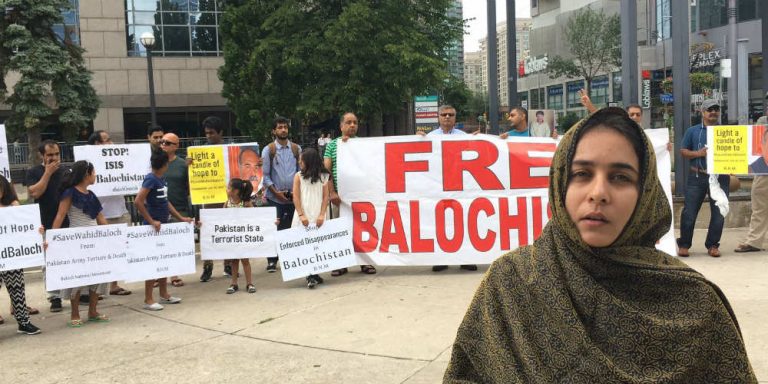
The Baloch activists have reached out to India to help in their struggle for their freedom from Pakistan. Expressing solidarity with India on India’s 73rd Independence Day, Baloch activist Atta Baloch wished Indians a very happy independence day. He added that Balochs are thankful to Indians for the solidarity and support in their freedom struggle. “We want them to raise their voice for a free Balochistan. We need their support. Thank you and Jai Hind,” he said.

Another Baloch activist, Ashraf Sherjan urged India to officially raise Balochistan in all forms including the UN. “The people of Balochistan are suffering genocide at the hands of Pakistan and its military establishment. Balochistan is bleeding,” he said. Appealing to India to be the voice of the voiceless, Sherjan concluded his remark by calling out loudly in Hindi, “Bharat Mata Ki Jai.”

Meanwhile, Pakistan has decided to mark Indian Independence Day as ‘Black Day’ and leaders including Pakistani PM Imran Khan have put up a black profile picture on social media. Pakistan leaders are upset over abrogation of Article 370 in Jammu and Kashmir which was followed by the bifurcation of the state into two union territories. Pakistan still hasn’t been able to come to terms with it.

However, parody nation Pakistan was put in an embarrassing situation when their own independence day on 14th August was observed as #BalochistanSolidarityDay and #14thAugustBlackDay started trending. The human rights violation in Balochistan, Pakistan have drawn concerns and criticism from international community.

After the partition, Muhammad Ali Jinnah had negotiated the independence of Balochistan with the Britishers. Before the partition of India, Balochistan consisted of 4 Princely states, Kalat, Lasbela, Kharan and Makran. The three other princely states were beholden to Kalat in one manner or the other. The Government of Pakistan recognizes Kalat as an independent sovereign state in treaty relations with the British Government with a status different from that of Indian States.

Jinnah then had a ‘change of heart’ and decided to annex Balochistan. The Balochistan Assembly had categorically rejected even the suggestion to join the Pakistan state. However, Jinnah had other plans. It bodes well to remember that essentially, Balochistan was an independent and sovereign state that was forcefully annexed by Pakistan by the barrel of the gun. You can read OpIndia’s exclusive interview with Dr Allah Nazar Baloch of Balochistan Liberation Front here.

PM Modi announces creation of Chief of Defence Staff post: Here is what that means

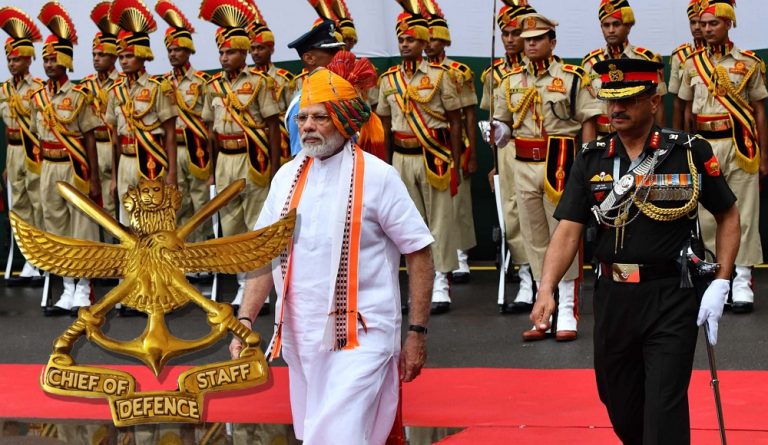
While addressing the nation from the Red Fort on the occasion of Independence Day, Prime Minister Narendra Modi made a historic announcement when he said that India will now have a Chief of Defence Staff. The talk of the creation of this post, who will be above the three Service Chiefs, has been going on for long, but it could not be implemented due to various reasons.


Prime Minister Modi said although at present there is coordination among the different services, with changing times, there is a need of the entire defence force to strategise as a single unit, not in pieces. All three services must go ahead at the same pace. Therefore, considering the changing war and security scenario in the world, the government has decided to form the post of Chief of Defence Staff. The PM said that the CDS will be above the three service chiefs.

The Chief of Defence Staff will act as a single place defence advisor to the central government. The officer will be head of the three services – the Army, Air Force and Navy, and it is reported that CDS will be a five-star military officer. The service chiefs are four-star officers.

The office of the CDS will ensure better coordination between the three services, and will create synergy among them. It will also help in reconcile any differences that may arise among the different services in various matters. The CDS will play a vital role in strategizing for a robust and cost-effective national defence policy. The CDS will ensure cooperation and joint action of the three services in the areas of budget, equipment purchase, training and military operations planning etc. Essentially, the creation of Chief of Defence Staff will mean that India will have an integrated military, not three distinct military arms. While the individual forces will be responsible for operational preparedness, the CDS will be responsible for the overall defence preparedness of the country.

Although exact modalities are yet to be finalised, it is speculated that procurement and budget allocation of three services will be under CDS. It is expected that CDS will lead the modernisation and equipment upgradation programs of all three arms of India military, bringing in synergy among them.

The recommendation for Chief of Defence Staff was first made by the Kargil Review Committee which was formed after the Kargil war. The committee had said in its report that the CDS should be a five-star military officer, which would be the single point military adviser to the Defence Minister.

A group of ministers formed in 2011 to look into reforms in India’s national security had also recommended the creation of the post of CDS.

The Naresh Chandra task force, formed to review the recommendations of the Kargil Review Committee, had suggested the creation of a Chairman of the Chief of Staff Committee, which was formed in 2001. It was created as a compromise of creation of CDS, which was facing opposition from some sections. The CoSC is assisted by the Integrated Defence Staff. The role of CoSC is assumed by the seniormost officer among the three service chiefs, and this post does not have power over other service chiefs. At present Air Chief Marshal Birender Singh Dhanoa is the Chairman of the Chiefs of Staff Committee.

With the creation of CDS, the post of CoSC is likely to be discontinued as it will become redundant. The Integrated Defence Staff headquarters will become the secretariat of the Chief of Defence Staff.

Before the announcement of CDS, several other significant recommendations of the Kargil Review Committee has been implemented, which includes appointment of a full time National Security Advisor, improved air surveillance using satellites and UAVs, creation of Defence Intelligence Agency, setting up of The National Technical Research Organisation,  a centralised communication and electronic intelligence agency.

At present India is the only major country which does not have a chief of defence staff. The modalities of creation of this post will be completed in the next 2-3 months. According to speculations in media, current Chief of Army Staff General Bipin Rawat could be appointed as the first Chief of Defence Staff of India.

BJP’s Devendrastra: As NCP and Congress crumble, Fadnavis has been winning Maharashtra through massive reforms and outreach across communities

Ahead of the assembly polls which are likely to be held in October, Maharashtra’s political arena is seeing an unusual phenomenon with hordes of leaders from Sharad Pawar lead Nationalist Congress Party (NCP) and Indian National Congress (INC) joining the saffron alliance of Bhartiya Janata Party and Shiv Sena (BJP-SS ).  

The first instance of a major switchover was witnessed ahead of the 2019 Lokshabha Elections with stalwart Congressman and its Leader of Opposition (LoP)in Maharashtra Assembly, Radhakrishna Vikhe Patil resigning from his post. He officially joined BJP in June 2019 only after his son Sujay went on to register his maiden Lokshabha victory from Ahmednagar on a BJP ticket. Radhakrishna Vikhe, soon after his induction was awarded a cabinet berth in Maharashtra Government. Another Congress veteran a 7 term MLA, Kalidas Kolambkar, (Wadala, Mumbai) has officially joined BJP on the last day of July 2019.

But it’s the NCP that has been the most affected by the desertion of its senior leaders. Just before the 2014 Lok Sabha elections, NCP lost one of its strongest leaders, former Deputy CM VijaySinh Mohite Patil along with his son RanjitSinh in March 2019.  In a recent major setback, NCP’s poster boy & Mumbai Unit Chief, former minister Sachin Ahir joined hands with BJPs’ ally Shivsena on July 25.

Almost 6 days later, three-star NCP MLAs Sandeep Naik (Airoli, Navi Mumbai), Vaibhav Pichad (Akole, Ahmednagar) and Shivendra Raje Bhosale (Javali, Satara) along with firebrand Women’s Wing Chief Chitra Wagh joined BJP on July 31. This sudden exodus of leaders from NCP is a huge jolt for the party and it is possibly staring at a collapse if the same trend continues in the days to come.

A natural question would arise in the minds of the readers that who are these leaders who are joining the saffron alliance recently? Why is their induction so important to Maharashtra politics?

Radhakrishna Vikhe Patil

The Vikhe Patils, hailing from Ahmednagar district, are considered a powerful name in Maharashtra’s political history. Radhakrishna Vikhe Patil is the son of veteran Congress leader Late Balasaheb Vikhe Patil, a sugar baron, who had been awarded the prestigious Padma Bhushan for his outstanding work in the field of Social Work. Late Balasaheb, a 7 term Member of Parliament served as former Union Minister of State (Finance) and Union Cabinet Minister (Heavy Industries) while he was briefly with Shivsena between 1996-1999. Most importantly in his entire political career, he was one of the bitter rivals of NCP chief Sharad Pawar. The political rivalry continued to the second generation with Balasaheb’s son Radhakrishna Vikhe & Sharad Pawar’s nephew former Dy CM of Maharashtra, Ajit Pawar often crossed swords with each other even though their respective parties (INC-NCP) were in a power-sharing alliance between 1999-2014.

Inducting the Vikhe Patil father-son duo in the BJP fold will provide the much-needed boost to BJP to counter the influence of Sharad Pawar’s Maratha Politics in western Maharashtra. BJP was in a search of a strong Maratha face in the region and who else better than Vikhe- Patils. It would be pertinent to mention here that it was due to the old fault lines between the two powerful families that NCP supremo Sharad Pawar just ahead of 2019 Lok Sabha elections refused to let go NCP’s traditional Ahmednagar Lok Sabha seat to Sujay while he was still in Congress. And the rest is now history. The very same Vikhe Patil family is now playing an important role as a mediator to pull many Congress/ NCP stalwarts in BJP fold. 

Sandeep Naik

Sandeep Naik is the son of heavyweight NCP leader Ganesh Naik who is considered to have a strong grip over the region of Navi Mumbai. Ganesh Naik belongs to the locally powerful Agri (Salt Farmers/ Fisherman) Community, joined NCP in 1999 after leaving Shiv Sena. A close aid of Sharad Pawar, Ganesh Naik in his son’s footsteps is believed to join BJP soon with all 52 NCP corporators from Navi Mumbai. This father-son duo will further strengthen BJP’s foothold and almost wipe out NCP’s presence in the this rapidly urbanizing satellite town of Mumbai. 

Vaibhav Pichad

Vaibhav Pichad, son of another veteran NCP leader Madhukar Pichad was one of the founding members of NCP in 1999. A strong tribal leader from Akole constituency of Ahmednagar district, Pichad has served as the Maharashtra Chief of NCP and was considered a close confidante of Sharad Pawar. The Pichads will now provide BJP inroads to win hearts of tribal community in Maharashtra. 

Shivendra Raje Bhosale

Shivendra Raje Bhosale is a direct descendant of the great Maratha warrior king Chhatrapati Shivaji Maharaj from Satara Dynasty. An extremely popular leader amongst the youth of Western Maharashtra, Shivendra Raje is also an estranged cousin of NCP MP Udayanraje Bhosale. On July 28 in a one-on-one meeting, Shivendra Raje was assured by Sharad Pawar to personally mediate in the feud between the two warring cousins provided he doesn’t desert the party. However, Shivendra Raje’s exit has added insult to the Pawar Senior’s injury. Shivaji Maharaj’s other descendant from Kolhapur Dynasty, Chhatrapati Sambhaji Maharaj is already a BJP MP from the Upper House. 

Devendra Fadnavis – The Mastermind

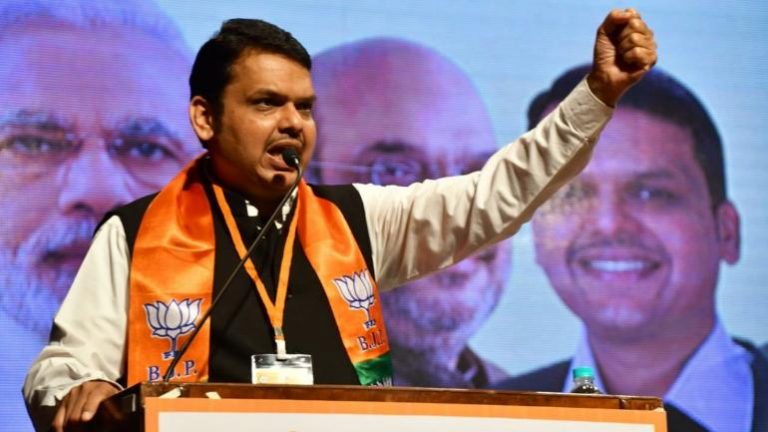
What we see today are the results of a long-term strategy formulated and executed to precision by Maharashtra Chief Minister Devendra Fadnavis. Anyone who understands Maharashtra’s politics well, knows well that it largely revolves around the Cooperative Institutions which includes banks, credit societies, sugar factories, cooperative textile mills, Agriculture Produce Market Committees (APMCs), milk collection & processing units etc. directly or indirectly touching almost half of Maharashtra’s population.

Currently, Maharashtra State has 31 District Cooperative Central (DCC) Banks, 306 APMCs, more than 20,000 Primary Agricultural Credit Societies (PACS), 507 Primary Urban cooperative and around 125 operational Sugar Mills running on Cooperative basis. Cooperative Sector politics has played a pivotal role in encouraging rural political participation and as a launchpad for aspiring politicians. Voting is conducted to choose a management committee from the registered member (mostly farmers) of a Cooperative Unit.

Most of the leaders from Congress & NCP leaders including Sharad Pawar himself have started their political careers from either of the Cooperative Sector units mentioned earlier. Most of these cooperative institutions have been traditionally dominated by Congress and NCP leaders. As these leaders had absolute control over the finances of these cooperatives, they could manipulate the management of these institutes and payments to the members. This led to rampant corruption and bankruptcy of many such institutions. Fadnavis understands this power base of Congress & NCP very well and was determined to shatter the very root of it.

In 2016 Devendra Fadnavis Govt introduced many reforms in the cooperative sector through amendments to APMC Act (1963) aimed at making the operation and management of such units transparent such as the appointment of an independent expert to the directors’ board, barring tainted directors of such institutes for election for 2 terms etc. This move largely affected the existing board of directors who were accused of irregularities from contesting elections for at least 10 years.

This came as a huge blow to NCP & Congress leaders who were on board for most of such co-op institutions. In another progressive move, Fadnavis Govt deregulated trading of fruits & vegetables enabling the farmer to sell his produce anywhere in the open market, which earlier was mandatory to be sold only to a licensed APMC trader, who are to a large extent affiliated to the Congress / NCP in western Maharashtra. Naturally, these were very well thought moves by Devendra Fadnavis directly affecting the political power base of Congress & NCP.

Maharashtra’s agrarian economy

In an agrarian economy like that of Maharashtra, these reforms were well received in the farmer community. His government’s flagship initiative aimed at water conservation in drought-prone regions ‘Jalyukta Shivar Abhiyaan’ was a huge success and the rural masses were now convinced that Fadnavis Govt meant the wellbeing of farmers. This was in stark contrast with the earlier Cong-NCP government’s poor deliverance on this issue and in fact NCP lead Irrigation Ministry under Ajit Pawar was accused of huge financial irregularities to the tune of Rs 70,000 crore famously known as the ‘Irrigation Scam of Maharashtra’.

Riding on credibility

Fadnavis after successfully delivering Jal Yukta Abhiyaan was now a hero with a pan Maharashtra appeal. Riding on the credibility of Devendra Fadnavis in 2017, BJP went on to win almost 50 %, that is, 1457 out of total 3131 Gram-panchayats all over Maharashtra. These numbers were astonishing given the fact that NCP which projects itself as the crusader of the rural masses won only 194 and Congress winning 301 places. To rub salt in the wound, in 2018 Municipal Elections Fadnavis struck hard at Ajit Pawar’s powerful bastion winning the Pune City & its satellite town Pimpri Chinchwad Municipal elections thereby sending a clear signal to Maharashtra that he had finally arrived. It was now amply clear that Devendra Fadnavis is a force to reckon and is here to rule Maharashtra for a long time. 

Devendra Fadnavis has another big-ticket accomplishment to his credit. While the entire country was witnessing the silent march of lakhs of Marathas, the powerful and politically dominant community demanding reservation in education and employment. An extremely sensitive political issue, Fadnavis handled it with the maturity of a statesman, resulting in ensuring 13% reservation for Marathas which stood the scrutiny of Supreme Court. This was huge and Fadnavis won hearts of millions of Marathas which form roughly 32 % of Maharashtra’s population. He could achieve a feat which even the self-declared Maratha leaders like Sharad Pawar could not achieve in his entire political career. Fadnavis was now no more a leader of Brahmins & Baniyas. 

It was not surprising that many stalwarts of NCP and Congress, sensing the end of the road, started sending feelers to BJP with an intention to join the saffron fold just ahead of 2019 General Elections. While a few of them were still apprehensive of Narendra Modi’s victory, they held their cards tight. With Modi winning his second term with an unprecedented majority, the floodgates are now opening with most of the seniors from NCP/ Congress leaders willing to jump the ship and this trend will possibly continue till the Assembly Elections.

The Road Ahead

While the influx of bankable leaders from Congress/ NCP is good to win elections, it has its flip side too. While these imported leaders are mass influencers sure to win votes, the loyal party leaders and cadre are disappointed. Though BJP is a cadre-based party and its members are ideologically committed, there is a murmur amongst its leaders and party workers disliking the party’s move to induct outsiders. Critics are poking holes at the BJP’s claim of being a ‘party with a difference’ as it is now seen inducting leaders from Congress/ NCP whom they were previously accusing of being corrupt. The optics certainly doesn’t seem right to many ordinary party supporters too. 

Conclusion

Nonetheless, one thing that is crystal clear is that Devendra Fadnavis is now an undisputed mass leader having a pan Maharashtra outreach and it is due to his charisma that BJP is performing exceedingly well in recent elections of all formats. It was his long strategy which he executed with surgical precision, that has silently cemented BJP’s position in Maharashtra politics pushing Congress/ NCP almost to the brink of collapse. The 2019 Maharashtra Assembly Elections now looks like a mere formality as the BJP-SS alliance is strongly predicted to come back to power with a thumping majority. What remains to be seen is that amidst all this power tussle and a victory on the horizon, how well the grand old alliance between Bhartiya Janata Party & Shiv Sena will hold.

India Today MOTN Survey: Modi best PM ever, Yogi Adityanath most popular CM, Indians optimistic about economy

India Today’s Mood of the Nation (MOTN) poll has thrown a few surprises while other findings were on more expected lines. As a testament to Narendra Modi’s popularity, he was adjudged the best Prime Minister the country has ever seen by 37% of Indians. Indira Gandhi came a distant second with only 14%.

Interestingly, only 9% of those polled believed that Jawaharlal Nehru was India’s best Prime Minister. Late Atal Bihari Vajpayee came third with 11%. Lal Bahadur Shastri and Rajiv Gandhi received 6 percent votes each, while Manmohan Singh and Guljari Lal Nanda got 5 and 3 percent respectively.

Furthermore, 60% of Indians believe the economy is better now than it was during the 10 years of UPA rule. A whopping  45% of respondents said that their income and savings have improved. 70% said India could become a $5-trillion economy in five years, however, half of them were of the opinion that the government needs to carry out sweeping reforms to achieve the target.

According to the latest MOTN poll, Yogi Adityanath is perceived to be the ‘Best Performing Chief Minister‘ in the country. Mamata Banerjee, who had topped the ratings in four consecutive polls, has now dropped to 5th. He registered 20 per cent of the votes. Bihar’s Nitish Kumar came second with 10 per cent votes.

Three Chief Ministers occupied the third spot with 8 per cent votes. Maharashtra’s Devendra Fadnavis shared the third spot with Delhi’s Arvind Kejriwal and Odisha’s Naveen Patnaik.

Yogi Adityanath has witnessed a huge surge in his popularity after the exceptionally well organized Kumbh in Prayagraj. Consequently, Mamata Banerjee saw a decline in her popularity due to her harsh crackdown on freedom of expression and the rampant political violence in West Bengal.

The poll also discovered that 34% of Indians believed that a Non-Gandhi politician could revive the Congress while 29% believed that only a Gandhi could revive the party. 15% believe that a Non-Dynastic politician had a chance at it while 11% believe a Congress veteran could do the job. Significantly, however, 19% of those polled believe that Mamata Banerjee could replace Rahul Gandhi as the face of the United Opposition.

According to India Today, the MOTN survey was conducted in 97 parliamentary constituencies across 19 states. More than 12,100 people were interviewed for the MOTN poll between July 22 and July 30 this year.

Don’t paint personal opinions as ‘voice of persecuted Kashmiri Pandit community’, it is an insult to our martyrs, sacrifice and struggle

Ever since Home Minister Amit Shah threw a massive surprise by introducing the “J&K Reorganisation Bill,” taking away the ‘special status’ of Jammu and Kashmir (J&K), bifurcating it into two Union Territories and abrogating Article 370, suddenly the curiosity meter of the world seems to be on high alert.

People who, until now, were clueless, unattached and least bothered about this draconian article, suddenly seem to have woken up from their deep slumber to issue sermons about how the government is wrong in snatching away the rights of the Kashmiri people. Mind it, their definition of J&K and Kashmiri people confines to the people of the valley. In a bid to express solidarity with the Kashmiris, all such people conveniently chose to ignore the fact that J&K comprises multiple ethnic groups including Kashmiri Pandits, who have been at the receiving end of the philosophies of ‘Kashmiriyat’ and ‘Jamuriyat.’

Article 370, the hot political topic is a perfect opportunity for such people to score brownie points. Now, India being the world’s democracy allows everyone to voice their thoughts. Alas! The freedom of speech and expression is often taken for granted and used as a tool to thwart the sincere efforts of the Government of India (GoI). Abrogation of Article 370 has been one bold move wherein the GoI unexpectedly checkmated its detractors. This move is a clear interpretation of the government’s intention and priority to infuse a new ray of peace, hope, and development in J&K, which finds a prominent place in the party manifesto.

The Kashmiri Pandit (KP) community is in a celebratory mood ever since the announcement was made. Not just the KPs, every other community including Sikhs, Bakerwals, Dogras, Gujjars et al, who have faced discrimination due to its viciousness, is, in fact, jubilant today. This move has, however not gone down well with the political clout of the state for obvious reasons. There is no denying the fact that for years the politicians in the state devoured on Article 370 and used it as a weapon to misguide the people into believing its removal would wreak havoc on them. On the contrary, the people have given this decision thumps up!

The valley is calm like its glorious past and the general mood is certainly swaying in favour of GoI. The strife-torn state has witnessed turbulent times, especially when the aboriginals Kashmiri Pandits were hounded out from their homes in the 1990s amid the roaring hate slogans such as “Yahan kya Chalega Nizam-e-Mustafa,” (The rule of the Prophet will reign here), and “Ae Zalimo Ae Kafiro, Kashmir Hamara Chod Do” (Oh Cruel people, you the Kafirs, Leave our Kashmir). The situation in the valley took a downward spiral since.

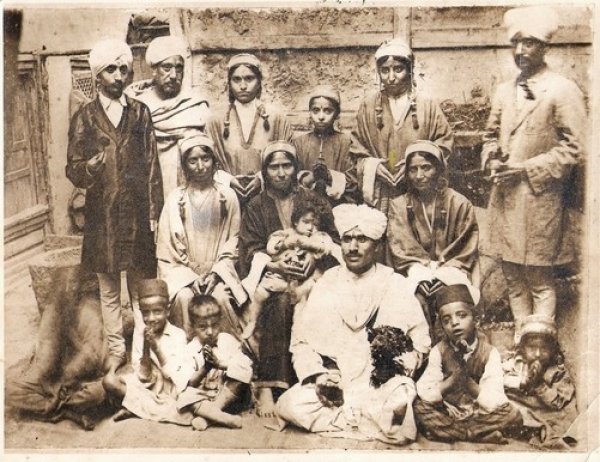
KPs in their traditional attire
Kashmiri Pandits in traditional dress

The appalling rise of Islamic fundamentalism traumatised the peace-loving Kashmiri Pandits of the valley, who were then left with no choice but to flee Kashmir, the paradise, which they called home! The history books don’t mention our genocide and that is why perhaps, some people choose to brush our ethnic cleansing under the carpet. Everyone who has mocked our sacrifices must watch the documentary called “And The World Remained Silent,” which explores the plight of the displaced community and delves deep into the wounds inflicted by the world that watched it perish with stoic silence.

While the government is stepping up its efforts to revive J&K from the mayhem, some people are hell-bent on derailing these efforts. A total of 64-signatories including Kashmiri Pandits, Dogras and Sikhs have signed a petition calling out the government. It worries me because the media is projecting the ‘personal opinions’ of people like Air Vice Marshal (Retd) Kapil Kak, and cardiologist Dr Upendra Kaul as the voice of the community, which is not true. These people may have their own reasoning but the media should play a fair game and not misrepresent the facts to deceive the public.


As soon as this news surfaced, Kashmiri Pandits across the globe expressed their anguish and ire. The community is unhappy with such unwarranted and unforeseen response from its members.

Soon, India 4 Kashmir, a civil society pan-India movement that works to reclaim the lost ground and aims to rehabilitate India in Kashmir with dignity, condemned these 64 signatories.


“Kashmiri Hindus reject and condemn efforts of some self-styled individuals who have wrongly portrayed a picture that we oppose the Abrogation of Art 370/35A, and bifurcation of J&K and Ladakh. All prominent personalities of J&K will soon burst their bubble with a counter-petition assuring full support and assistance in this transition. We welcome this positive change and request the government to work on the rehabilitation of Kashmiri Hindus with full honour and dignity,” asserted Rohit Kachroo, National Coordinator, India 4 Kashmir. He is amongst scores of Kashmiri Pandits awaiting justice that seems elusive to most of them. Placing his faith in the government he hopes to return home to his birthplace, which was snatched away by the cruel hands of destiny.

In response to the petition filed, Global KP Diaspora (GKPD), a body representing Kashmiri Pandits across the globe has issued a press release to welcome the Government of India’s significant decision of abrogating Article 370. GKPD unequivocally rejected the petition by 64 ‘stateless subjects’ who had condemned the historic move.


We can’t brush aside the supreme sacrifices of our community members like Pandit Tika Lal Taploo, lawyer and BJP member who was killed at his Srinagar home by JKLF on 14 September 1989. Next Justice Nilkanth Ganjoo of Srinagar High Court fell prey to the bullets of the extremists for sentencing Maqbool Bhat to death. How can we forget the veteran Kashmiri poet Sarwanand Kaul Premi, who was ghastly killed on 29 April 1990? Satish Tikoo, a young Hindu Pandit social-worker was murdered in Habba Kadal, close to his home on 2 February 1990. Lassa Kaul, Station Director of Srinagar Doordarshan on 13 February 1990, Hriday Nath Wanchoo, trade union leader and human rights activist in December 1992. The list is endless.

The families of these and countless other Kashmiri Pandits await justice! If at all you should think of taking an honest opinion, the family members of these heroes should be the ones to answer! They have been at the epicentre of the terror-turmoil in Kashmir valley. They carry the baggage of the brutal wounds close to their hearts. They live the agony of the physical, emotional, and mental bruises inflicted on them. They seek answers for the tears they’ve shed for no fault! The government, the judiciary, and society owe them an answer!

Justice delayed is justice denied and who other than this persecuted community that was let down by its own judiciary knows better!

At this crucial juncture, the community, which has been fighting a long battle to bring the perpetrators to books, needs to stand united. The ones who made a conscious decision to pick up pens instead of guns feel dejected today. We have to continue this tiring battle as we have miles to go before our killers will all be sent to the gallows. Hear the chilling confession of one of our butcher, Bitta Karate. How can we be at peace when murderers like him roam free?

The history of Kashmiri Pandits is an amalgamation of sufferings, sacrifices and innocent blood. It is due to the fierce resistance of our ancestors’ and their iron will, we continue to wear our identities on our sleeves today. Had they succumbed to the tyrants through the centuries, we would have lost our identities a long time ago.

Kashmir that has been simmering since religious extremism hegemonised the alluring tourist destination of the world! The sacred land of Rishi Kashyap, the mirror of a thriving civilisation, turned into a battleground over the years. The tranquil air, enchanting landscapes, religious harmony, the spectacle all vanished in thin air when violence subdued the serene environment in the valley.

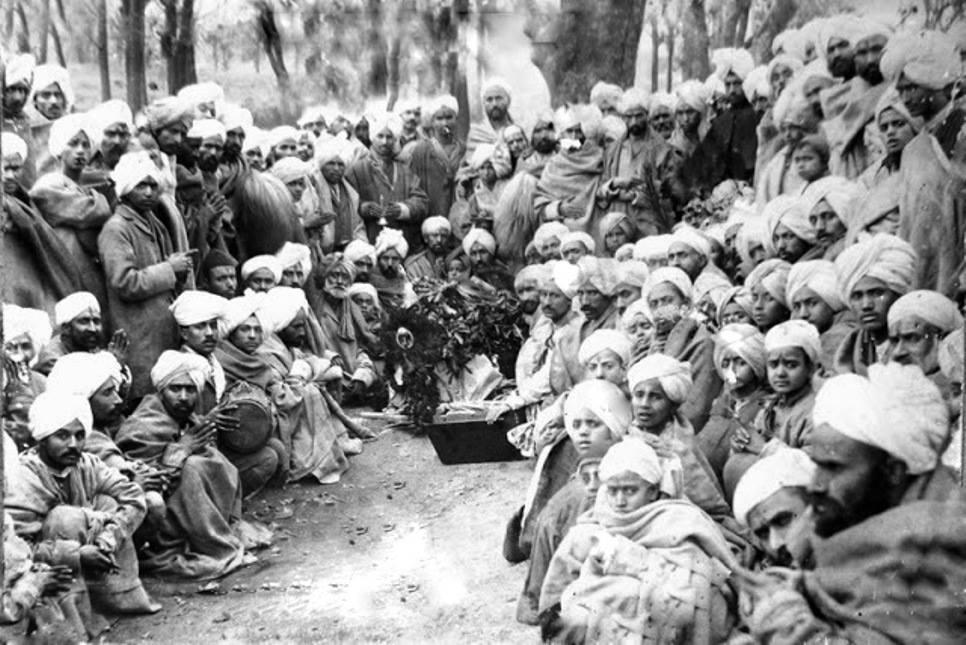
Kashmiri Pandits in a gathering
Kashmiri Pandit gathering

Today, the government is in command of the situation in the valley, treading cautiously to establish peace in the terrorism infested region, let us pledge our support, keep national interests ahead and not derail the process. This is the gateway to the new world awaiting to embrace Kashmir in its arms!

Assam: Girl drugged and raped inside ruins of ancient temple premises, accused Kutubuddin Ahmed arrested

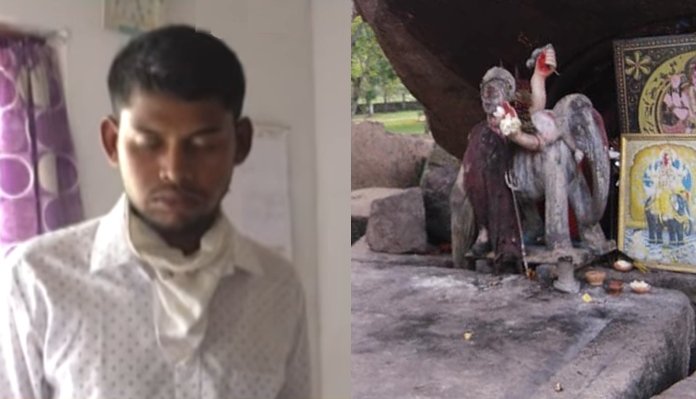
In a shocking incident, a young girl was raped in a temple in Dhekiajuli in Assam. The incident took place in the premises of the Vishwakarma Temple in Dhekuakuli’s Singori area on Wednesday. The accused Kutubuddin Ahmed has been caught by police.

According to reports, Kutubuddin brought the girl from Erabari in nearby Misamari in some pretext to the premises of the ancient temple. There he fed her some drug and then repeatedly raped her. But it was spotted by two men responsible for looking after the temple premises, who apprehended Kutubuddin and handed him over to police. The caretakers said that they also have recorded the crime on phone.

The girl was also handed over to the police, who has filed a complaint with the police regarding the incident. Based on the FIR, Kutubuddin Ahmen has been arrested by the police, and an investigation into the case has started.

The Singori hill is the site of ruins of an ancient Vishwakarma Temple, which dates back to 11th-12th century. It is located inside the Singori Tea Estate in Sonitpur district in Assam.

As India celebrates its seven decades of freedom, it needs a movement for cultural independence

As we celebrate another glorious year of Independence, the one unanswered question is – Are we really independent? While we have rightfully claimed our sovereignty from foreign rule seven decades ago, the country still seems to be captive of alien thoughts.

After a Herculean fight against the British, we may have attained political freedom and perhaps even some sort of economic freedom, thanks to the economic reforms of the 90s but Bharat, the land of the oldest civilization, is yet to achieve its cultural independence.

Sovereignty and Cultural Independence:

Sovereignty is a political concept. It means to gain absolute and ultimate authority over the political state, often expressed within its territory in full self-government and to attain complete freedom from any outside influence. Though we won our political freedom from the colonial powers, we have failed to decolonise our minds. Despite being the oldest civilisation, a strong independent movement to attain cultural superiority never took off. With India becoming a sovereign secular, socialist republic, the dream of a revolution to make the land of Bharat a cultural superpower fell apart.

India is a civilisational country. The common thread connecting all the citizens of the country is its civilisation values, which is often manifested with the ‘Hindu’ value system. The term ‘Hindu’, not only has religious connotations but has a larger civilisational and cultural expression. In a civilisational country like India, these cultures are often represented through various religions. India or Bharat, being a land of the oldest civilisation of the world has a unique set of value systems. From the days of Indus valley civilisation to Vedic era and from the time of Islamic invasion to the British era, there has been an unbroken chain of ideas, knowledge, culture, traditions have been transferred, keeping those unique civilisation values still intact.

However, when India attained its sovereignty, a section of the power structure in the country unleashed all its forces to obstruct the oldest civilisation in this world from exerting its value systems. A long concerted war has been waged through the country’s social and political institutions to subjugate a long cultural history.

As the British handed over the country to ‘responsible’ people a spirit of a new ‘India’ was conceived within an age-old civilisation of Bharat. A new political state was set up, with the then political bigwigs mainly from the Congress party. Having invested their capital during the national movement of independence, they quickly replaced their ‘white sahibs’. A new intellectual structure consisting of western educated elites, Britain-trained bureaucrats, the ‘secular-liberal’ minds got stitched to the Nehruvian political structure.

With Nehruvian socialism and secularism capturing the hearts and minds of Indians, the cultural movement took a back seat in Bharat. Even though there were attempts by certain historians, Indologists and intellectuals to carve out a space to disseminate our glory, the momentum was soon lost.

The diverse traditions and culture of an old civilisation were appropriated into the western framework. India is more than a nation-state. It is also a unique civilization with philosophies and traditions that are markedly distinct from the prevailing colonial culture of our times. In a way, the process of secularising and universalising the Hindu culture began with this western appropriation.

Perhaps, the structural changes in India during the 1970s had the greatest impact on the cultural movement within India. With the change of political setup in the country, a new intellectual setup replaced the Nehruvian era. After the demise of Nehru, his daughter Indira Gandhi took it forward. The Western-educated mediocrity once again got parachuted into the country. A new band of ‘Left-Liberals’ emerged.

The Marxist thought began to creep in as the Communists were now part of intellectual thought controlling the crowd. They were heading political, social and cultural institutions in exchange for their support to the prevailing political order. A new set of intellectuals and ‘Sarkari’ historians began to take control of the narrative. The stage was set for pushing their intellectual hegemony to attack the cultural movement of the country.

The new virtues of western universalism replaced the age-old values of Indian culture which began to impact the thinking of a common India. Western-educated elites, who were alienated from their own culture brought in what they thought was a highly secularized structure. It taught us to be ashamed of our culture, history, traditions and most importantly ourselves. We were probably closer to our roots during British rule than in the post-Independence era.

The hijacking of social institutions and remodelling the Constitution in accordance with their belief system impacted the cultural movement in the country. The Left won the intellectual battle by suppressing the mainstream cultural Indian society, especially the Hindus, who were rather helpless to fight over a dominant political force.

Thankfully, with changing political structure and resurrection of cultural forces in the intelligentsia lately, an opportunity is up for grabs for the cultural forces within the country to begin a movement. A fresh wave of a cultural renaissance seems to be emerging.

Why India needs Cultural Independence?

Hindu cultural ideals have become more universal than most of its opponents perceive it. The Hindu culture has given more to the world than it has received. With ideological movements like liberalism, feminism and even Islam which looks to expand its dominance across the globe, India will no longer be isolated. The future civilisation battles of the future will be fought here. This will have larger implications on our value system and culture. A strong intellectual-culture movement will act as a check to these expansionary ideological movements. Achieving a universal value system with Hindu civilisation at the fore-front of such movements is the need of the hour.

Along with this, a new dawn for India’s cultural movement has begun with the people of the land taking pride in expressing their belief system, faith and cultural values. There is already a concerted campaign initiated against the conservatives, who are fighting two and a half front war with leftists, Islamists and a new cabal of feminists.

But, the cultural movement in India, mainly pushed through the Hindus has finally discovered a method of countering these leftists who describe themselves as ‘liberals’ in the intellectual space. The “Culture War” that is raging today is a matter of existential concern for the left-liberals. They are now confronted by an opposition that is now willing to openly proclaim their culture, faith and believe that their ancestors and their legacy have been morally wronged by the current intellectual elite. With Narendra Modi in power and cultural organisation like RSS supporting him, the movement has got a shot in the arm.

Narendra Modi’s leadership now represents, for many Indians, a civilizational resurgence on a scale not seen since their country’s independence. Modi’s sweeping victory, in 2014 and 2019 reflects not just a desire for better governance but also a larger shift in the Indian worldview. For Modi’s supporters, and for Hindus in particular, Modi’s rise showcased India’s renewed sense of self as an ancient civilization on the threshold of a global rebirth.

The Hindus, who began a cultural movement earlier were filled with pessimism having made to feel ashamed of their own history, culture. However, they have now sensed that a large cultural movement is the need of the hour to attain the cultural glory that this civilisation deserves. They now realise that ‘nationalism’ is a way to be part of a cultural debate, which can give them the necessary to momentum to build on their struggle to free the intellectual space which has been hijacked and infested with the leftist propaganda.

As the cultural forces within the country now recognise that a cultural movement is on the verge of a new dawn, there is a sense of fresh hope among the Bharatiyas. That the time is ripe for a larger cultural independence movement in the country to attain the honour of being a ‘Vishwaguru’.