Home Blog Page 6871

Jammu and Kashmir: Stone pelters attack army vehicles to protest killing of six militants in Shopian encounter

0

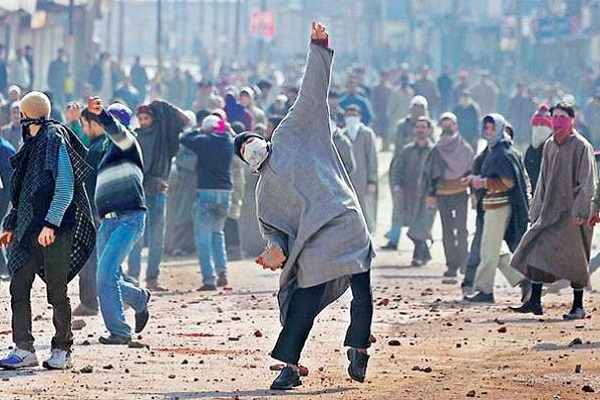
As per reports, stone pelters in the Shopian district of Jammu and Kashmir attacked vehicles of security personnel as the army neutralized six militants in the valley.

A video has surfaced where protestors can be seen pelting stone as the vehicles of security forces passed by.


This news surfaced after it was reported that one soldier and six militants were killed in an encounter in south Kashmir’s Shopian district early on Sunday morning.

Police said a joint team of Army and police launched a cordon and search operation in Kaparan village around 1 am. During the search, the forces were fired upon triggering retaliation which turned into an encounter in which one soldier and six militants were killed.

Security forces have also recovered weapons from the site of the encounter.

Mobile internet services have been suspended in Shopian district as a precautionary measure.

This is the third operation against militants in south Kashmir since Wednesday. So far, 14 local militants have been killed in three encounters.

On Friday, six militants were killed in Anantnag district in a similar operation, including three top commanders of militant groups. The LeT commander Azad Ahmad Malik who has been shot down during the operation was reportedly involved in the assassination of Kashmiri Journalist Syed Shujaat Bukhari in Srinagar.

Similarly, on Wednesday, four militants were reported to be killed in Shopian district.

The scourge of stone pelting has intensified in Kashmir in the last few years. The security forces in Jammu and Kashmir are often attacked with heavy stone pelting from jihadi crowds in Srinagar and other areas of Kashmir.

Recently, a 22-year old soldier Rajendra Singh succumbed to his injuries after being struck by a stone hurled at his vehicle by the stone pelters in Anantnag district of South Kashmir. The young soldier was part of a Quick Reaction Team (QRT) providing security to a Border Roads Organisation convoy.

Often, these stone pelting attacks are orchestrated after the Friday prayers in mosques. Pakistani and ISIS flags are also waved by the jihadis during such violent mob attacks.

In June, a stone pelting Jihadi was run over by a CRPF vehicle while the CRPF convoy came under heavy attack by a violent stone pelting mob. Hundreds of CRPF and J&K police personnel are injured every year in the stone pelting attacks.

To tackle this menace the Indian army has adapted the Israeli method of nabbing stone pelters, wherein some personnel disguise as stone pelters merge with the crowd and nab the leading terrorists.

The CRPF has reportedly also acquired Israeli style mobile bunkers to protect its personnel under stone pelting attacks.

Tripura government to replace Left-era education system with NCERT curriculum

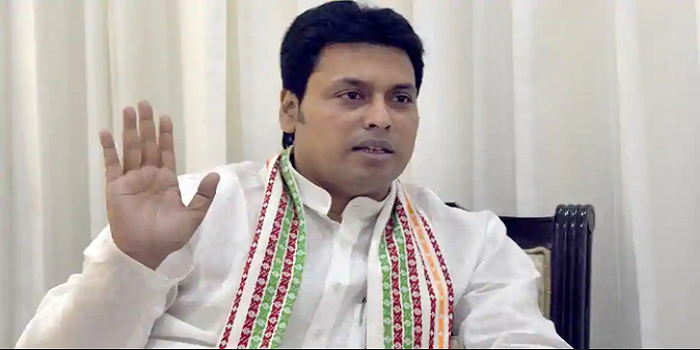
The BJP led government in Tripura has decided to drop the syllabus in schools, introduced by the previous Left Front Regime, and replace it by the CBSE based curriculum. Education Minister Ratan Lal Nath further discussed the introduction of new changes from the next academic session.

“The government would introduce NCERT textbooks and CBSE syllabus from the next academic session… ” Nath said. The CBSE syllabus will replace the current syllabus prescribed by the State Council of Educational Research and Training.

Minster Nath focused on the introduction of the National Council of Educational Research and Training (NCERT) textbooks for all the classes. He also added that a team of NCERT experts would impart a three-month-long training session to the teachers. Thus, it will prepare them to cope with the new changes. The team would arrive in Tripura on December 3.

He criticised the Left Front Regime of distorting the natural course of education, “The previous Left Front regime had indulged in communalisation of the school curriculum by teaching wrong lessons to students,” Nath alleged the previous government in the Assembly.

The coalition of the Bharatiya Janata Party (BJP) and Indigenous People’s Front of Tripura (IPFT) came to power in the state this year. It broke the 25-year rule of CPI (M)-led Left Front regime. The Biplab Kumar Deb led government, soon after that, directed a committee to look after the changes in the school syllabus. Furthermore, the committee recommended the replacement of the traditional curriculum by NCERT. From the next session, all the schools in Tripura would follow the Central Board of Secondary Education (CBSE) syllabus.

CM of Tripura Biplab Kumar Deb has garnered praise for other reforms in the state, as well. One of them is the effort to turn Tripura into a drug-free state, previously which was a smuggling corridor for drugs from Myanmar,  He has directed Tripura Police and BSF to make strong efforts to eradicate drug menace.

‘Kasam Khuda ki khaate hai, mandir wahin banayenge’, Muslim women pledge support for Ram Mandir

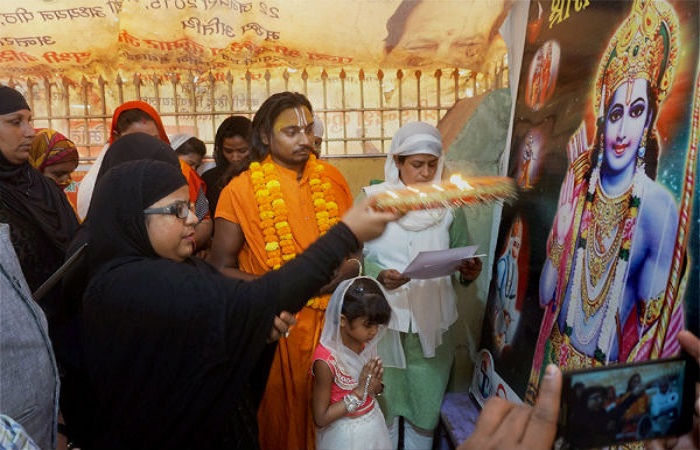
As the clamour for building Ram temple at Ayodhya is reaching pinnacle, it is gradually getting the support from unexpected quarters. Recently Muslim women in Meerut extended their support to the construction of Ram temple in Ayodhya.

According to the report of Amar Ujala, on the occasion of a religious meeting (Istma) organised under the banner of Muslim National Forum hosted by co-convener Shahin  Parvez, the Muslim women took the oath to facilitate the construction of Ram temple at Ayodhya.

While addressing the meeting, Shahin Parvez said that it is our duty to support the construction of Ram temple for the happiness of our Hindu brothers and sisters.

The Executive member of Rashtritya Ekta Mission, Subuhi Khan, said while addressing the meeting that Ram temple is the symbol of our ancient sanatan culture and our loyalty lies with our culture and not with foreign invaders. She said that we want a temple in Ayodhya and not a mosque and that we would face the obstacles that will come in the way of construction of the temple together.

Pledging the support, the Muslim women reportedly echoed that ‘kasam Khuda ki khaate hai, mandir wahin banayenge’. We swear on Khuda that we will ensure temple is constructed there (Ayodhya).


They added that Muslims have nothing to do with Babri Masjid and that Babar even enslaved Indian Muslims.

This is not the first time Muslim women have extended support to construction of Ram Mandir in Ayodhya. Earlier in the month of March, a conference was organized at Ayodhya by the Muslim National Forum to find an amicable to solution to the Ayodhya dispute. A Muslim group called Muslim Karsevak Sangh (MKS) had also extended its support for the construction of Ram Temple at the centuries-old disputed site at Ayodhya. Shia Wakf Board  showed support in the favour of construction of Ram temple. The Board told the Supreme Court that it is willing to relinquish their one-third share in the disputed land the Allahabad High Court had granted to Muslim petitioners so that they can build a Ram temple.

I might be a zebra.. but at least zebras are wild, untamable and free

“Sometimes I wanted to peel away all of my skin and find a different me underneath.”
― Francesca Lia Block, Wasteland

I would imagine that the worst complex a person can possibly live with is when one deals with an external locus of beauty and self-worth. It is excruciating because what you think of yourself might be one thing this minute, and something completely different the other. Uncertainty is perhaps the most difficult aspect of life as it is, and when that uncertainty extends to one’s sense of self, the confusion it might cause at a young age is unbearable. It tears one apart from the inside.

The shame of it all doesn’t even hit consciousness during the early years of one’s life. I was but a child. It is said children, perhaps instinctively, sense negativity and withdraw. While I got unbridled love from my parents and siblings, the looks and taunts of the world did affect me. I didn’t understand why, but it did.

When I first developed vitiligo as a child, my mother truly did try her best to ensure that I got whatever treatment was available at the time. In fact, I recall vaguely that one treatment I underwent in Mumbai involved burning of a tiny skin path. It hurt like a b*itch, but the hope that it might work perhaps made it all worth it. We tried all sorts of ointments, even homoeopathy.

Many times I would fixate on one such spot. I remember while bathing, every single day, I would obsess over whether that particular spot has increased or decreased in diameter. I would even try to compare the colour. I was told by some doctors that the spot might change its colour from bright white to a shade of pink and ultimately, to some shades of brown. That would be the marker of the treatment working.

But one just never knows whether the treatment is working or not. Especially in the advanced stages of the syndrome. For me at least, as soon as I would see one spot shrinking, another would appear. I was told to stop consuming a host of things including lemon, which I loved. I was asked to avoid the sun after the morning rays. I was asked to choose my skin products carefully. I was asked to not stress because stress aggravates the spots. I was asked to basically alter most things about my life and that too, most of the times, on a hunch.

Vitiligo is an autoimmune disease with no real ramifications other than the skin colour. Nobody really knows why it happens or so I am told. There is no guarantee of a cure. It was all just a big guessing game.

All of this happened while I just wanted to feel invisible. In school, while most people appreciated me for whatever I brought to the table including writing, debating etc, that look haunted me. The psychological effect of such skin-deep syndromes is such, that even if people weren’t giving me ‘the look’, it always felt like they were. It was nobody’s fault really. I was simply projecting my perception of self on to others. It was perhaps easier to blame others than face my own demons.

I remember an audition I participated in, once. I was auditioning to sing for some school fest and I was mighty excited. I had practised singing the song “Piya basanti re”, the absolutely mesmerising song by Sultan Khan and K.S.Chitra. As I hummed and tried to hit just the right note to start with, considering the taan was high octane and I didn’t have the stylings of Chitra, a fellow student walked up to me and called me a zebra. My confidence melted away and I suddenly got extremely conscious of my hands and legs. The short sleeves and the legs in that skirt. A strange urgency gripped. I wanted to disappear. When I held the mic, I forgot my taan, my voice shivered. All I could think of was my white spots showing as I held that mic. I wanted to get off that stage. Dash out. Run away. I couldn’t. I rushed through the song and missed some beats. The audition was ruined.

My teacher later came up to me and said.. “Beta.. thoda aur riyaz karo”. “Ji ma’am”. That was the end of it. I felt broken. I left the auditorium, joined my friends, cracked some joke about myself and laughed while every fibre of my being just wanted to go home and shut the door behind me.

When in college, after the initial bouts of shyness, I was by and large confident. I was intrinsically a rebel. And the rebellion just oozed out once I got out of the environment that forced me to look at the spots and not the leopard.

I did get up on that stage and sing again. I held the mic and the auditorium lit up with applause. But somewhere deep down, the scars were too real and the effect it left on my self-worth was not to be recovered so easily.

When one’s very self of being is damaged, one perhaps tries to overcompensate in various ways. When I look back, it seems like I did too. I was perceived as someone who doesn’t talk to many people because I was arrogant. The truth was, I put up walls around myself because that was the only defence mechanism I had. I assumed people would hurt me if I let my guard down, and when I did, my insecurity turned it into a self-fulfilling prophecy.

But I did make certain friends along the way who saw through that facade and loved me for who I really was. We had long singing sessions in the canteen, debated, wrote essays, went on bike rides and long walks. Friends who saw me and not my skin. Friends who understood what I stood for, what I believed in, what I was and not what I looked like. I left my inhibitions behind and lived those years on my own terms. I made my mistakes, fell down and picked myself up every single time. I sang to my heart’s content. I wrote till I couldn’t type anymore. I read till my eyes hurt. I walked and laughed and talked with my friends till I couldn’t even keep my eyes open. I skinned my heart and skinned my knees, quite literally.

While I lived on my own terms, the humiliation never really stopped even though I turned deaf and mute to it. I remember walking into a salon with my girlfriends. We were tired after some assignment and wanted a pedicure. The lady escorted me to my cubicle and readied the tub of warm water to wash my feet before the pedicure. After exchanging pleasantries, she looked at my feet and stopped cold. She hesitated. I wondered what happened because I had almost forgotten about the white spots. I felt humiliated all over again. My eyes welled up with tears and I started pulling my leg away. But she held on to my foot and gave it a slight tug. “Do you want French tips?”, she said smiling.

It was in that moment that I realised that a large part of the humiliation might just be in my head. I remembered what my family has always said, what my father has always said, “the world will see what you want them to see”.

I left that salon with gorgeous French tip feet and lots to think about. I shed my inhibitions and lived as I felt inside. A force waiting to be freed.

The shame didn’t completely wither away, though. There were still bouts of humiliation that I faced for years. Being called a zebra. A leopard. Diseased. Dirty.

Every time my now husband called me beautiful, I sneered. He didn’t understand then why I just couldn’t shut up and take a compliment gracefully. When we decided to get married, while meeting his parents, I ensured I wore full-sleeve blouses. ‘They would think I’m diseased”, I thought. “They wouldn’t like me if they saw me like this”, I thought. “They would tell him to find someone better”, I believed. I even started therapy again. It didn’t help. It made me dark. It made me tired.

My husband insisted that I need to let go of this fear. “I don’t give a f*ck about what anybody thinks. I love you”, he said. “You don’t understand, you never will”, I used to snap. “Hold those flowers up, I need to take a photograph”, he said. “Stop it! You know I hate getting clicked”, I used to say. “I don’t like my photographs”.

I didn’t like meeting my in-laws because it meant spending hours getting the damn makeup right.

A few years into our marriage, I stopped my treatment again. I realised that my husband, who I adore more than anything in the world really didn’t care. He saw me. Not my spots. But more than anything else, it gets tiring because you keep hoping it would work and then slowly, you just lose the will keep hoping.

Many people loved me for many things. My family, for reasons I will never fully understand, stood by me through my triumphs and insecurities. Unquestioning. Unwavering. Believing. In fact, unknowing. Families seldom even realise that their support means so much because it all just comes so naturally. “It is not a damn disease. To hell with the treatment. It’s just a skin thing. It affects the colour of your skin and nothing else”, my mother and father and sister and husband would tell me repeatedly when I decided to quit my treatment.

When I was expecting my child, any sort of treatment was ruled out in any case. Surprisingly, when my obsession with the treatment stopped, my obsession with the skin condition also stopped. I wrote extensively, I read extensively and I waited for my child to give me solid kicks through those 9 months.

Due to several health issues during the pregnancy, I needed platelets after my delivery. I remember holding my child for the first time and my husband clicking a picture. As I write this, I am trying to think extremely hard if even for a moment, I thought about my exposed white spots while he stood there with his camera pointed at me and my baby girl. I can’t. It didn’t matter. My in-laws came to visit me in the hospital. As I write this, I try to recall if I wanted to grab my makeup, lest they see my arms. I can’t. I didn’t. It didn’t matter.

I realise now, that it was never the vitiligo that bothered me, perhaps. What bothered me was dealing with an external locus of identity. What bothered me was looking for validation from people who didn’t matter rather than focusing on the ones who loved me at my worst and kept me humble at my best. What bothered me was a conditioned response: It is more important to look a certain way than be a certain way.

I still grapple with some issues. Like when I am invited to a seminar or a podcast, I get slightly conscious and try my best to avoid being on camera. But by and large, I realise that a majority of the people who like me do so because of what I am, what I write, what I believe in. What I look like is not even a concern. However, what is most heartening is that the people who dislike me also dislike me for the same reasons and not because of the way I look.

I accepted my white spots as an extension of myself. You know how we have ears, they are a part of us, but seldom do we actually feel its presence? Just like that. My spots don’t form a part of my conscious existence. I still get affected when someone calls me a zebra, of course, I am human. But I am free in my thought. I don’t let the world dictate my thoughts or my feelings. I never allowed the world to change me or mould me or co-opt me. I never took the easy road. I made my way in the world. I have the priceless luxury of writing what I want without the pressures that many might feel, compelling them to sell their pen. I hold my head high.

I write this today not because I am a victim. I never was. I never will be. I write this today not because vitiligo is a deadly or infectious disease that needs awareness. It is not. It is a superficial skin colour issue. I write this today because so many people live with shame. So many people shield themselves in cocoons. Protect themselves from the unkind words of the world. I write because I want them to know it is ok to feel what you do. It is ok to hide for a while if that makes you feel better. But ultimately, you must break the shackles. You must not let the world define who you are or what you think about yourself. It is ok to be you. Even with the spots.

I might be a zebra, but I am wild, untamable and free. At the end of the day, that’s all that really matters. As for my soul, it gets healed bit by bit every day every time my daughter smiles at me.

Note: This article is a personal experience to tell the world about the shame people with vitiligo go through for no fault of ours. While I personally decided to opt out of treatment, this is not to encourage anyone else to do the same. The only thing this article should encourage anyone to do is to be sensitive and not mock the ones with vitiligo.

And for the ones with vitiligo… you are beautiful. The world will see what you want them to see.

NDTV misquotes PM Modi, corrects the report only partially after netizens point out the ‘fake news’

Prime Minister Modi while addressing a rally in poll-bound Rajasthan pointed out that Congress has been playing politics over the Ram Mandir issue at Ayodhya. Modi was speaking about power politics Congress indulges in.

From 48:00 minutes onward, PM Modi could be heard saying Congress MP from Rajya Sabha had argued in the Supreme Court and requested to delay the hearing on Ram Mandir as quite a few elections are coming up. PM Modi was taking a dig on Congress MP and lawyer Kapil Sibal who, while representing the Sunni Waqf Board in Supreme Court had asked the court to defer the trial until after 2019 or as many inferred, until the 2019 Lok Sabha elections have concluded.

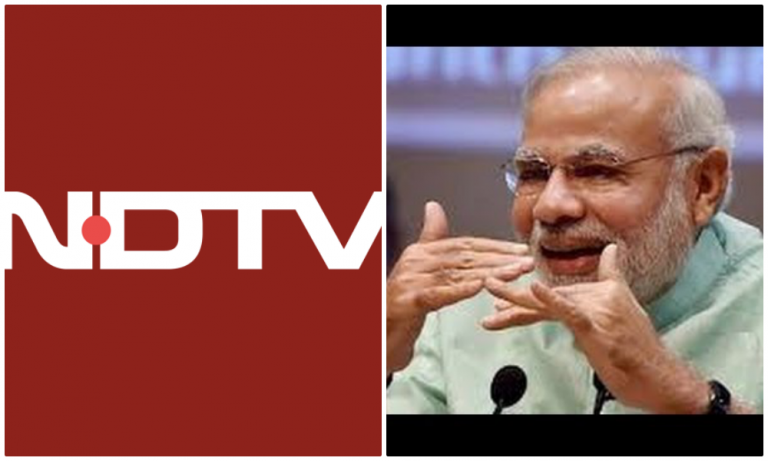
NDTV, however, chose to misquote the Prime Minister and said that Modi had claimed that Congress chose an ‘early resolution’ to the case.

NDTV misquotes PM

NDTV even tweeted the same, citing ANI as the source.


Interestingly, ANI had quoted the exact opposite of the same.


Many Twitter users pointed it out to NDTV that they have misquoted the PM and that what they are claiming is actually ‘fake news’.


Some users even took a dig at NDTV’s Executive Editor Nidhi Razdan, who was pulled up by Minister of External Affairs Sushma Swaraj for spreading disinformation.


After over an hour of publishing the original story, NDTV quietly changed the headline of its report. The subtitle still remained unchanged, though. Subheading still says that Congress leaders sought “early” resolution of the Ram temple.

NDTV edited report

In fact, even for the 4 pm update, NDTV did not change the subtitle which continued spreading the ‘fake news’.

Subtitle continues to misquote the PM.

This is the second time in last one week that NDTV has been caught on the wrong foot. We have documented NDTV’s incompetence extensively here at OpIndia.com.

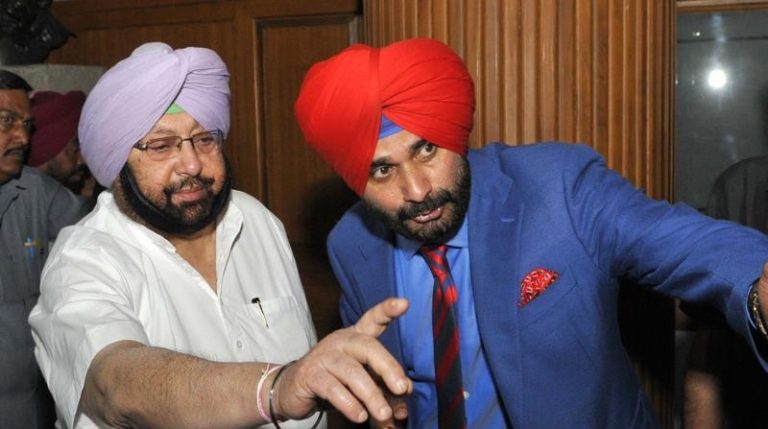
Amarinder Singh declines Pakistan invite for Kartarpur corridor ceremony, Navjot Singh Sidhu eager to go

On the day Punjab minister Navjot Singh Sidhu accepted the invitation of Pakistan to attend the foundation stone laying ceremony for the Pakistan side of the proposed Kartapur Corridor, Punjab chief minister Amarinder Singh has declined the invitation sent to him.


Amarinder Singh said that due to continued terrorist attacks in Punjab, killings of Indian soldiers by armed forces of Pakistan, he will not be attending the event. He said, “not a day passes when Indian soldiers are not killed or wounded on the line of control in Jammu and Kashmir,” adding that “rather than moving towards normalcy these incidents are escalating.”

The Punjab chief minister also accused ISI of starting its “nefarious activities within Punjab.” He wrote to Pakistan Foreign Minister, “I hope the Prime Minister will understand that under these circumstances it will not be possible for me to be present in Pakistan on this historic occasion, despite the fact that paying my respects at Gurdwara Sri Kartarpur Sahib has always been my cherished dream which will hopefully be fulfilled once these hostilities and killings are stopped.”

Punjab minister and Congress leader Navjot Singh Sidhu also has been invited by the Pakistan Foreign minister Shah Mehmood Qureshi, and Sidhu had happily accepted the invitation. In a reply sent to Qureshi, Sidhu wrote that he is accepting the invitation with great honour and unalloyed joy.


On November 22, the government of India had announced its intention to build the Indian side of the Kartarpur Corridor, and had urged Pakistan to reciprocate by building the corridor on Pakistan side. On the same day, Pakistan had responded positively. After that, Pakistan moved swiftly and announced that prime minister Imran Khan will lay the foundation stone for the corridor on 28th November. India will lay the foundation stone for its side of the corridor on 26th November.

Pakistan had invited external affairs minister Sushma Swaraj also, but she politely declined the invitation citing prior commitments. She also informed Pakistan that two union ministers Harsimrat Kaur Badal and Hardeep Singh Puri will be attending the event representing the government of India.

The opposite reactions by Amarinder Singh and Navjot Sidhu yet again highlights the growing the difference between the two. Earlier, the Punjab CM had criticised Sidhu for his acts during Imran Khan’s swearing-in ceremony as PM of Pakistan. Sidhu was seen hugging Pakistan army chief on that occasion, which was widely criticised in India. At that time, Amarinder Singh had said, “everyday our jawans are getting martyred. To hug their Chief General Bajwa…I am against this,” The CM had also clarified the Sidhu went to Pakistan on personal capacity and on an official visit, disassociating the Punjab government from the controversial visit.

Before this, Navjot Sidhu had said that he respects the authority of the CM but that does not mean he has put a lid on his mouth. He was talking about regularisation of illegal colonies in the state when he made these comments.

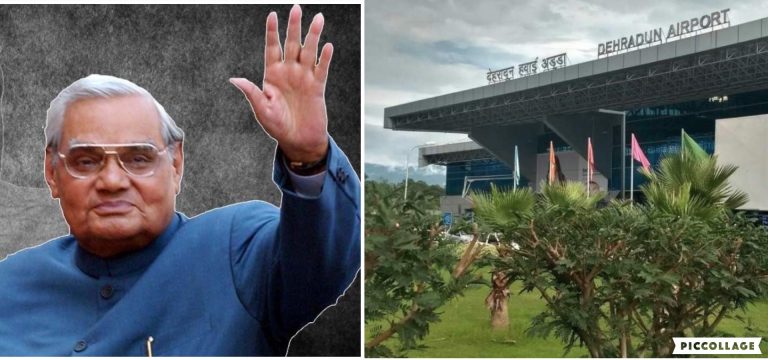
Dehradun’s Jolly Grant airport to be renamed after Atal Bihari Vajpayee

Uttarakhand Cabinet on Saturday approved a proposal to rename the Dehradun’s Jolly Grant airport after former prime minister Atal Bihari Vajpayee.

The proposal will now be tabled in the state assembly in the session starting from December 4. If cleared in the assembly, it will be sent to the Centre for approval.

In a state cabinet meeting chaired by Chief Minister Trivendra Singh Rawat, along with this proposal, the cabinet also gave its nod to the setting up of the Uttarakhand State Agency for Public Services to ensure time-bound delivery of services and redressal of complaints, said government spokesperson Madan Kaushik.

The cabinet has cleared a total of 27 proposals, including convening a three-day Winter Session of the Assembly from December 4, the official added.

The Jolly Grant Airport, which is named after the area where it is situated, belongs to the Airport Authority of India (AAI). It was built in the year 1974. The AAI suspended the flight operations at the airport between March 2007 and March 2008 in order to execute its airport modernisation plans.

After former Prime minister, Vajpayee’s death in August, this year, BJP leader and Uttarakhand assembly speaker, Prem Chand Aggarwal had written a letter to Chief Minister, Trivendra Rawat requesting that the airport is renamed after Vajpayee as a tribute to him for his contributions to the state.

Since the veteran leader breathed his last on August 16, everyone has been finding ways to honour the stalwart in their own way. Several state governments, municipal corporations and leaders, with the Centre’s approval, have decided to rechristen names of several sites in their areas of power to pay a tribute to the late politician.

Jharkhand, which was carved out of Bihar in November 2000 when Atal Bihari Vajpayee was the prime minister, to honour the BJP leader, has decided to rename seven institutes and sites in the state.

According to reports, a few North Delhi Municipal Corporation (NDMC) councillors sent a proposal to the mayor for renaming the historic Ramlila Maidan in the national capital after the late prime minister.

Previously, UP’s Lucknow Municipal Corporation (LMC) members announced the renaming of the iconic Hazratganj crossing after Vajpayee. In Gujarat, Chief Minister Vijay Rupani said that archetype Sabarmati Ghat will be named after Atal Ji and will be hence named as ‘Atal Ghat’.

As a mark of respect, Chhattisgarh Chief Minister Raman Singh too announced that the upcoming capital of Chhattisgarh, Naya Raipur, will be known as Atal Nagar.

Ambala city’s MLA Aseem Goel has also announced that the planetarium, which is to be constructed at Bal Bhawan in the city, will be named after late prime minister Atal Bihari.

Not only India but places across the globe have acknowledged and have decided to pay their tribute to the late politician. At the 11th World Hindi Conference in Mauritius, the country’s Prime Minister Pravind Jugnauth announced that the ‘Cyber Tower’ which was set up with the help of Atal Bihari Vajpayee-led Indian government will now be named after him.

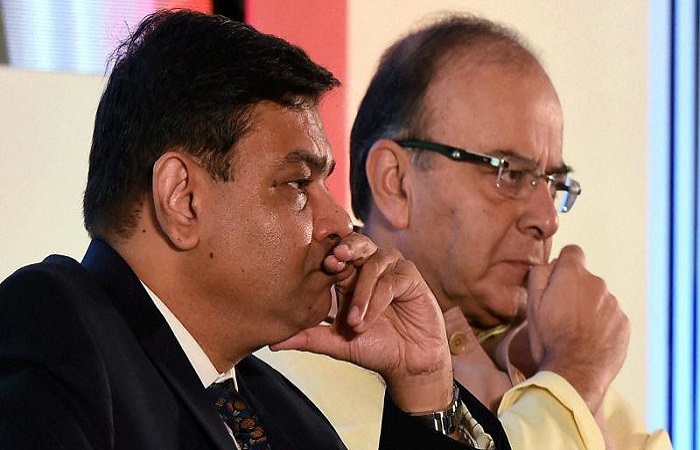
Finance Minister Arun Jaitley puts to rest reports of Government seeking reserves from RBI

After the board meeting of 19 November between RBI and Government to settle differences, Finance Minister Arun Jaitley has put to rest reports of government seeking RBI reserves, which it deemed are in excess.

In an interview with Times Now, Arun Jaitley said that India does not need money from the RBI in the next six months. Recently, the government was accused by the opposition of assaulting RBI’s autonomy, after RBI’s deputy governor Viral Acharya openly attacked the government over the issue. This was followed by many points of contention coming to fore, which created a stint of friction between two.

The reports and allegations made by Viral Acharya were rubbished by Secretary of Economic Affairs, Subhash Garg, adding that demand is only about constituting of Economic Capital Framework (ECF) to ascertain excess and needed reserves.


This demand of ECG was conceded by RBI in the board meeting on 19 November along with various other demands.

“We respect the autonomy (of the RBI) but, at the same time, if some sectors are starved of liquidity or credit, we will flag those issues. We do so with the RBI.”  Arun Jaitley added to his comments on RBI.

The issue of  ‘overcapitalisation’ of RBI has been a point of discussion among economists. In last year’s economic survey, Chief Economic Advisor Arvind Subramaniam cast doubt on the need of RBI to be that much capitalised. He said, RBI is one the most capitalised banks in the world, and it will be no harm to the institution to transfer its excess reserves to the government, to curb fiscal deficit.

The board meeting of 19 November, was seen as a ceasefire between Government and RBI. The government managed to successfully negotiate and made RBI agree to points, earlier on which RBI was reluctant. The issues included, restructuring of stressed assets for MSMEs easing of Prompt Corrective Action and easing of Basel norms.

17 years after its release, Kalinga Sena, a fringe outfit in Odisha, registers protest against Shah Rukh Khan film ‘Asoka’

The Kalinga Sena, a fringe outfit in Odisha, has threatened to throw ink on Shah Rukh Khan’s face for his film Asoka which was released 17 years back. The outfit has threatened to show him black flag if he visits the state during the Men’s Hockey World Cup slated to kickstart next week.

Shah Rukh Khan faces wrath as the organisation claims that the actor insulted Odisha and its people by distorting history in his film Asoka that was released almost 20 yeas ago. The Kalinga Sena is angered as they felt that the movie insulted Odisha culture by depicting the Kalinga war wrongly. They had on November 1, filed a police complaint against SRK. It also held a rally and burnt his effigy on November 11.

The Kalinga (Odisha’s historical name) war refers to the battle between Emperor Asoka and the Kalinga king which was won by the former.

The movie had reportedly faced problems in the state even during the time of its release 17 years ago when it couldn’t screen for more than a week due to the opposition.

Kalinga Sena’s general secretary Nihar Pani said that Shah Rukh Khan will be greeted by his group workers throughout his journey from the airport to the Kalinga Stadium.

“We have all our preparation done to throw black ink on Shah Rukh Khan’s face. On the entire journey from the airport to the stadium, black flags will be shown to him and my workers will be present on that entire road,” Pani was quoted as saying by Aaj Tak.

Hemant Rath, the chief of the outfit, demanded an apology from Shah Rukh for allegedly hurting the sentiments of the Odisha people in the film.

Shah Rukh was invited for the opening ceremony of the Hockey World Cup by Odisha Chief Minister Naveen Patnaik. The ceremony is set to take place in the Kalinga Stadium and the commissionerate police today said that adequate security measures will be taken for the visit of Shah Rukh Khan to Odisha after the Kalinga Sena threatened to throw ink on his face.

The Men’s Hockey World Cup will take place in Bhubaneswar from November 28 to December 16.

Earlier too, we reported how defence analyst Abhijit Iyer-Mitra, has been in judicial custody since October 24 for his tweet in 2017, wherein he had allegedly made a derogatory comment on the Konark Sun temple hurting the religious sentiments’ of the people of Odisha.

He had posted a satirical video on social networking website, Twitter, where he mocked the architecture of the Konark Temple. He had, in the same thread, also clarified that his video was in jest.

Though Abhijit’s remarks stoke protests and controversies, it was opined by many that a person to be jailed for a mere sarcastic tweet was a ‘mockery of law’. Condemning the act few also blamed it on Odisha CM’s vendetta politics.

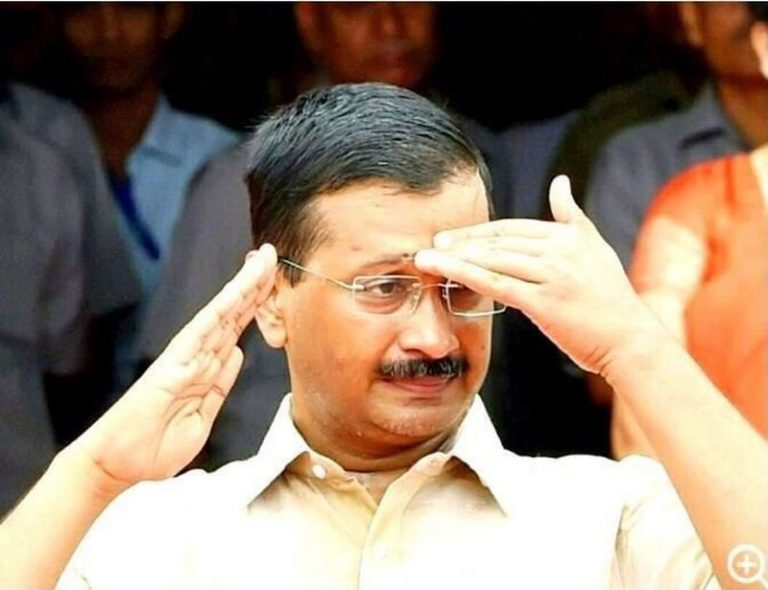
Kabhi thulla, kabhi family; Arvind Kejriwal now ‘respects’ the men in khakhi uniform

Arvind Kejriwal, the controversial Chief Minister of Delhi, who is often known to change his views in a short span of time has once again taken a similar U-turn. Kejriwal has now referred the Delhi police as his ‘family’ and claimed that he respect men in uniform, reported ANI.

The showering of praises from Kejriwal is rather peculiar as the Delhi Chief Minister has often used derogatory remarks against the Delhi Police. Arvind Kejriwal had earlier used an abusive term ‘Thulla’ to refer Delhi Police. The Delhi High Court had stepped in after a Delhi Police constable had filed a criminal defamation against Kejriwal for his abusive remarks.

Arvind Kejriwal took a U-turn regarding his views on Delhi Police on Saturday while presenting cheques of Rs.1 crore to the family members of the police officers as part of Delhi government’s compensation policy. Delhi government’s compensation policy covers armed forces, police and paramilitary officials who die in the line of duty in the national capital.

Addressing the gathering Kejriwal said, “Today we enjoy a sense of security for ourselves, our children and our family because of courageous policemen like Birendra Singh and Deepak Kumar.”

He further said that AAP government wanted to compensate the two martyrs within a month of their martyrdom but could not as LG obstructed the policy. He further said that there may be some officers who are politically motivated, but that doesn’t mean that the Delhi Police is bad. He added that the whole country feels safe because of the policemen and security forces.

It is amusing considering Arvind Kejriwal himself keeps referring to Delhi Police as a force which works for Modi.


He has cast aspersions that Delhi Police has tried to help criminals.


He has also accused Delhi Police of working on instructions of the BJP.


And ‘stooge’ of BJP.


Arvind Kejriwal’s flip-flop on Delhi Police is amusing, to say the least.