Home Blog Page 7116

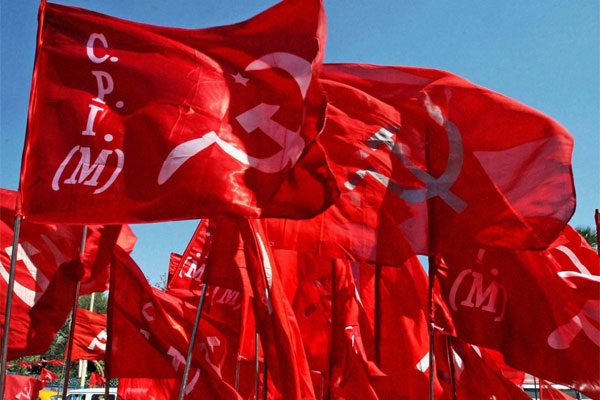
11 CPM workers given life imprisonment for murdering BJP activist in Kerala

11 workers of Communist Party of India (Marxist) were given life imprisonment by Thalassery’s additional district and sessions court on Thursday, for murdering a BJP activist, The Hindu has reported. Besides this, they have been awarded a 10 year rigorous imprisonment under the explosives act. They would also have to pay a Rs 50,000 fine per person.

The 32 year old BJP activist A Mahesh was murdered by the CPM workers in Kerala’s Chittariparamba town in 2008. Now the court has announced that Rs 3 lakh would be paid to Mahesh’s family as compensation.

The convicted CPM workers have been identified as Pongoli Dhanesh, Oniyan Babu, Nellikka Uthaman, Chemmeri Prakashan, Manoli Umesh, Vazhavalappil Ranjith, Nellikka Mukesh, Karat Purushothaman, Chirukandoth Sunesh, Manappatti Sooraj and Vayaleri Shiju.

As detailed by a Times of India report, the matter began when a BJP worker named Sumesh was attacked in Thalassery on 5 March 2008. Mass violence ensured where four BJP workers and three CPM workers were killed.

One of the unfortunate ones was Mahesh who used to drive an auto-rickshaw for a living. On 6 March, 2008, a mob had attacked a bus stop with bombs in Chittariparamba at 6 AM. Following this they caught hold of Mahesh near the bus stop and hacked him to death. The report also claimed that the murder was motivated by the fact that Mahesh left CPM to join the BJP.

Following the attack, prosecution authorities questioned 18 witnesses and produced crime weapons plus 27 documents to bolster their case, which ultimately resulted in the conviction of the CPM workers.

This conviction comes just a couple of months after three workers of the CPM were arrested by the Kerala police for murdering a BJP activist named Shamez. The murder had taken place near Kannur which is the hometown of Kerala chief minister Pinarayi Vijayan.

Kannur has become notorious for violent attacks and killings of RSS and BJP workers, which have increased ever since the Left Front government took charge in Kerala in May 2016.

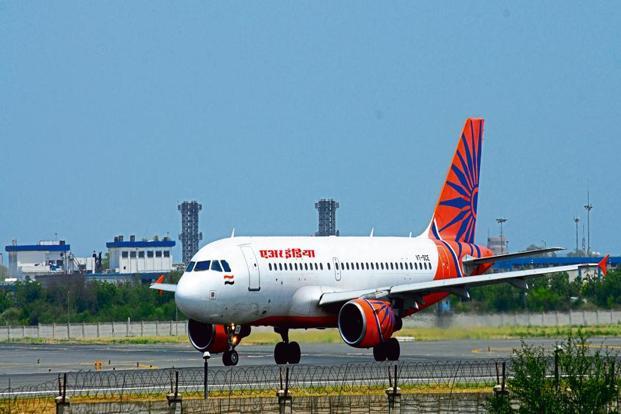
Air India is not the only airlines that has agreed to ‘rename’ Taiwan under Chinese pressure

China and Taiwan have had a troubled history since centuries.

After being a brief Dutch colony, Taiwan, an island off China, was administered by China’s Qing dynasty from 1683 to 1895. Starting at the beginning of the 17th Century, in an attempt to escape the hardships of mainland China, significant numbers of migrants from fled to Taiwan. The Qing government ceded Taiwan to Japan after China lost to Japan in the 1895 Sino-Japan war. However, after the second world war after Japan surrendered and relinquished control, the Republic of China, one of the victors, began ruling Taiwan with the consent of its allies, the US and the UK.

After years of hostile relations between China and Taiwan, in 1980s, China put forward a formula of ‘one country, two systems’ under which Taiwan would get significant autonomy if it accepted Chinese reunification. While the offer was rejected, Taiwan relaxed investments and visit rules. In 1991, Taiwan proclaimed its war with People’s Republic of China over. However, there are undercurrents in Taiwan which want complete independence.

China regards Taiwan as a breakaway province which it has vowed to retake, by force if necessary. But Taiwan’s leaders say it is much more than a province, arguing that it is a sovereign state which has its own constitution, democratically-elected leaders, and about 300,000 active troops in its armed forces.

In this backdrop, recently, Beijing issued orders to world’s major airlines that they must comply with the orders to recognise Taiwan as part of China. Recently, Civil Aviation Administration of China published a notice on its website saying that foreign airlines operating in China should avoid referring to Taiwan, Hong Kong and Macau as countries. This made some carriers change the drop-down menu from ‘country’ to ‘country/region’.

But Beijing wasn’t satisfied. On 25th April, the Civil Aviation Administration of China sent a letter to 36 foreign airlines ordering them to explicitly refer to Taiwan as a part of China. While the White House called it an ‘Orwellian nonsense’, China’s foreign ministry said, ‘Taiwan, Hong Kong and Macau are “inalienable” parts of China’s territory and foreign companies operating in China “should respect China’s sovereignty and territorial integrity, abide by China’s laws and respect the national sentiment of the Chinese people.’

Japan Airlines Co., ANA Holdings Inc. and Australia’s Quantas Airways Limited had already changed how they describe Taiwan on their website even as the deadline looms over the head. The Associated Press found 20 carriers, including Air Canada, British Airways and Lufthansa, that now refer to Taiwan, the self-ruled island that Beijing considers Chinese territory, as a part of China on their global websites. Even Air India, India’s national carrier, was forced to change ‘Taiwan’ to ‘Chinese Taipei’.

While the Chinese authorities are seeing this step as a victory, Republic of China (Taiwan) isn’t quite happy with this ‘bullying’.


Taiwan Ministry has strongly objected to China’s bullying to achieve its ‘political objectives’. They have also urged the private firms to reject China’s ‘unreasonable demands’ to change their designation of “Taiwan” to “Taiwan, China.

While major international airlines have given in to the demand, major US carriers have not yet caved in. Meanwhile, Indian foreign ministry has justified the name change to be consistent with international norms and Indian policy and India’s position on Taiwan since 1949. However, Taiwan’s Economic and Cultural Centre in India (TECC) asked Air India to stand up against the unreasonable demand and even protested to the Ministry of External Affairs against China’s ‘bullying’.

After Rifleman Aurangzeb, terrorists now kidnap and kill policeman Javed Ahmed Dar

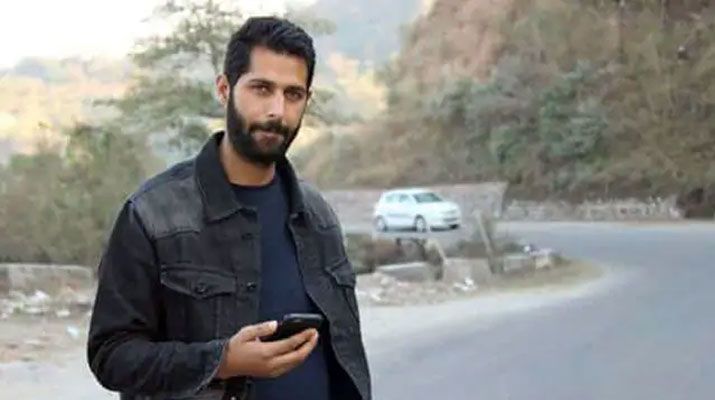
Days after Rifleman Aurangzeb’s abduction and brutal murder by Hizbul terrorists, Jammu & Kashmir policeman Javed Ahmed Dar, who was kidnapped last night from a medical store in Shopian, was found murdered by the villagers.


As per reports, 27-year-old Dar was kidnapped from a medical store last night and his body was found on the wee hours of Friday morning. A picture believed to be of Dar was circulated on social media suspected to be taken by terrorists after abducting him. Dar was personal security officer of former Superintendent of Police Shalinder Mishra.

Earlier, Hizbul Mujahideen terrorists had kidnapped and killed Indian Army Rifleman Aurangzeb, filmed his gruelling torture in the forests of Jammu and Kashmir and released the video of the brutal act which crossed all basic human decency. Aurangzeb was part of several operations led by 44 Rashtriya Rifles, in which Hizbul terrorist Sameer Tiger was killed on April 30, and five more, including ‘commander’ Saddam Paddar, were eliminated.

‘He can sit with Sonia and Rahul, they are also bail-wallahs’: Subramaniam Swamy as Tharoor gets anticipatory bail

In a fresh development in the high voltage drama revolving around Sunanda Pushkar death case, which has kept the nation at the edge of their seats, Patiala House Court on Thursday, granted an anticipatory bail to the main accused Shashi Tharoor, over his wife Sunanda Pushkar’s death case.

Special Judge Arvind Kumar has asked Tharoor to furnish a bail bond of Rs 1 lac. Delhi’s Patiala House Court also said that Shashi Tharoor cannot travel abroad without prior permission of the court and cannot tamper with the evidence and witness.

Days before his trial in Sunanda Pushkar Death case, the Congress MP had on 3rd July filed for anticipatory bail, where he is an accused. In his plea for anticipatory bail, Tharoor had submitted that the charge sheet in the case was filed and the Special Investigation Team (SIT) had categorically stated that the probe was concluded and that his custodial interrogation was not required.

The court had summoned him as an accused in the case on June 5, asking him to appear before it on July 7 observing that there were sufficient grounds to proceed against him.

Sunanda Pushkar, Congress politician Shashi Tharoor’s wife died under mysterious circumstances on January 17th, 2014. The Delhi Police has filed their charge sheet in the Sunanda Pushkar Murder case, and Congress leader and former minister of state Shashi Tharoor had been charged with the section 498A and Section 306 in the case. Section 498A involves charges for the husband or his family members subjecting a wife to cruelty and Section 306 of the IPC covers abetment to suicide.

MP and legal activist Subramanian Swamy who had earlier requested for a court-monitored probe by multidisciplinary special investigations team did not seem very happy with the Delhi Patiala court decision coming in favour of Tharoor :


Shashi Tharoor cannot leave the country without the prior permission of the court. Swamy not leaving this opportunity took a jibe at him by tweeting:


It would be interesting to see how this story unfolds in the future. Though this decision brings in some temporary relief for the Congress leader, dramatics is not over yet.

Stunning U-Turn: After agitating against Modi Govt, Congress-JDS hike Petrol prices in Karnataka

The Congress party in the recent days has launched numerous protests against the fuel price hike, which included launching attacks on the Modi government, accusing it of being complicit in the matter.

It was reported that the protests by the Congress took place in various parts of the country like Mumbai, Punjab and Odisha. It was also noted that Congress president Rahul Gandhi had also participated in such a protest march in Karnataka.

Rahul Gandhi had also gone on record threatening a nationwide agitation if the Modi government did not reduce the fuel prices:


Hence from the reports it was evident that the Congress has portrayed itself to be vehemently opposed to any sort of a fuel price hike and would go any extent to stop it from happening.

But surprisingly the Congress doesn’t seem to be practising what it preaches, as it has been reported that the Karnataka government (where it is a majority partner) proceeded to hike the fuel prices in its state budget today:


As seen in the ANI tweet, the Karnataka government has increased the taxes on petrol and diesel which has rendered the prices getting higher by Rs 1.14 per litre for petrol and Rs 1.12 per litre for diesel respectively.

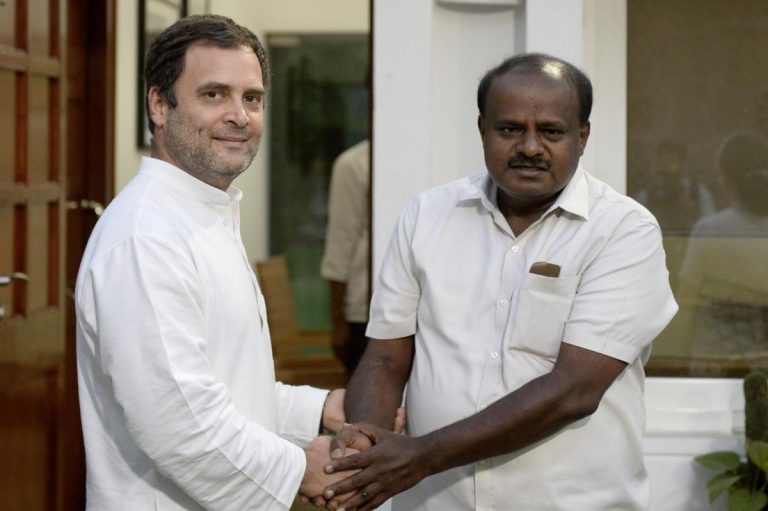
It also might not be possible for the Congress to site, “compulsions of electoral politics” to escape scrutiny as, CM Kumaraswamy has already gone on record stating that, “to do anything, he has to take Congress leaders’ permission without which he can’t do anything”. He also stated that he was at the Congress’ mercy as the party had extended support to him.

Hence if Kumaraswamy is to be believed, the fuel price hike could not have been processed had it not had the blessings of the Congress, which raises the question why did the Congress choose to be so blatant in its hypocrisy.

At a convocation event, some students from Sher-e-Kashmiri disrespect the National Anthem

In a recent incident reported by ANI, some students from the Sher-e-Kashmiri University have been seen disrespecting the National Anthem. It can be seen in the video, that these students of Sher-e-Kashmiri were sitting while the National Anthem was being played at the convocation ceremony.


The video was shot at the convocation ceremony of Srinagar’s Sher-e-Kashmir University, which took place on July 4th. Most of the university students were seen standing up when the national anthem was played but some refused to follow suit.

This has been a trend in Kashmir recently, as similar incidents of disrespecting national symbols have taken place in the state. Two cricket teams were booked by the police after they decided to play and stand for the Pakistani national anthem ahead of a cricket match in Kashmir recently.

The students of Baba Ghulam Shah Badshah University in Rajouri were also charged for disrespecting the national anthem recently.

Business Standard writes editorial attacking PM Modi based on completely fake news

0

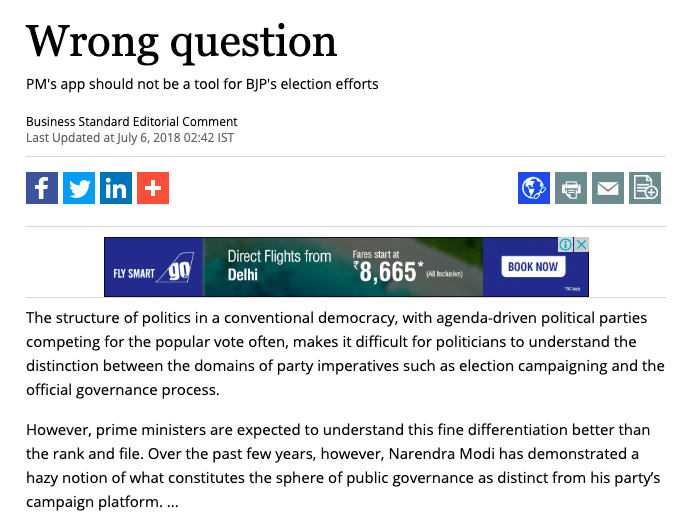
Newspaper Business Standard on Wednesday published an editorial titled, “Wrong question”, where it sought to attack PM Modi for the way his mobile app – Narendra Modi (commonly known as NaMo), is being run.

The article which was written by the editorial team of the newspaper picked an issue with what it claimed was a lopsided manner of running an app. The editorial after pontificating about the supposed blurring of lines between, “election campaigning and the official governance process” asserted that PM Modi should understand the difference between the two.

Following this, the editorial proceeded to prove how PM Modi was failing to do so.

The example they gave was about the app running an online survey which it claimed, catered to the BJP’s key agendas for 2019. It claimed that some of the questioned posed included asking about the views parameters for voting and inquired whether they would be interested to be volunteers for the BJP.

The editorial thus explained that the questions would have been perfectly acceptable had, “the prime minister launched this survey on his party’s app, maintained by the party’s own elaborate IT establishment”.

But it contended that it was improper to carry out such surveys on the IT infrastructure maintained by the government which was in the end, funded by the taxpayer.

In a nutshell, the Business Standard editorial contended that the handlers of the NaMo app should be balanced in their approach as it was being hosted over the government’s IT infrastructure, and not by the BJP’s setup.

Incidentally as pointed out by Twitter user Akhilesh Mishra, the whole logic provided by editorial was flawed as the app is being hosted by the BJP’s IT infrastructure and not by the government:


As detailed by Mishra, if one goes to the home page of the app on Google Play, and scrolls down to the additional information section, they can clearly see that the app’s developer is the BJP and not the Indian government:

Business Standard doesn't bother with basic fact check
Developer details of the NaMo app

Hence clearly, by Business Standard’s own logic, if the app is being run by the BJP, they are entitled to run whatever surveys they want and ask whatever questions they want.

This episode thus raises the question as to why did Business Standard’s editors (who wrote the article), not carry out a basic fact check which would have taken barely five minutes to complete.

It also makes one wonder whether the article was a deliberate effort at defaming the Prime Minister, with the editorial team hoping to get away with it; or were they so consumed with putting the article across that they choose to let editorial standards (assuming there are some) go for a toss.

Two nuns from Mother Teresa’s Missionaries of Charity detained for human trafficking, one staff arrested

Jharkhand police arrested a woman and detained two nuns of ‘Missionaries of Charity’ running ‘Nirmal Hriday’ – a shelter home for destitute women, a trust founded by Nobel laureate Mother Teresa, for allegedly selling the infants born to unwed mothers at the institution.

Kotwali police station officer-in-charge Shyamanand Mandal said that an FIR was lodged under section 370 of IPC, and three people were detained for interrogation. As confirmed by Mandal one women staff, named Anima Indwar amongst the detained, have already been arrested and one nun against whom the police had substantial evidence would be arrested soon, said the officer-in-charge. SN Mandal confirmed that Rs 65000 has been recovered from Anima.

“It was found during the course of the investigation that they were selling of unwed mothers at Rs 50,000 to 1.5 lakh. At least four children have been illegally sold by them,” said Mandal

The FIR was lodged after Child Welfare Committee (CWC) of Ranchi went for a regular inspection and found a child gone missing from the institution.

According to CWC Chairperson Rupa Kumari, a couple Saurabh Kumar Agrawal and Preeti Agrawal from Sonbhadra in Uttar Pradesh had a deal with Anima. The child was born in the institution on 1st May and was sold to them on 14th May for an amount of 1.2 lacs. However, Anima called them again in the last week of June and asked to come to Ranchi for some legal formalities. When the couple came to Ranchi Anima dodged them and took the child.

Kumari said after the couple was unable to trace Anima who had fled with the sold child they went to CWC where the matter was disclosed. When the CWC investigated the matter they came to know about the racket. It was also found that three more kids were sold by Anima and others. Police raided the shelter home at East Jail Road with Child Welfare Committee and rescued 13 pregnant women to be shifted to probation home.

Social activist Baidnath Kumar said Missionaries of Charity had stopped adoption from their organizations way back in 2015. However, the Missionaries of Charity’s Jail Road chapter was still involved in rendering these illegal services involving human trafficking. To carry out these activities this wing gave shelter to unwed pregnant mothers who had no place to give birth to these unwanted newborns and then, in turn, sold the babies.

Mother Teresa, the Nobel laureate, founder of the ‘Missionaries of Charity’, was often referred to as ‘Saint Teresa of Calcutta’, but for her critics, she was anything but a saint.

According to Dr Arup Chatterjee author of “Mother Teresa, the final verdict”, the first common misconception among people is that Teresa “cured” or “helped cure” the sick and diseased. This is denied by the author. Her “Home for the Dying“, “had no doctors saving lives, but it was a place for victims to suffer and die, by the rules of the Catholic church“.

Dr Chatterjee further states that “Mother Teresa’s order was to not provide proper beds, but just little hammocks. There is a communal toilet where people have to defecate in presence of each other and the inmates are not allowed visits from their friends and relatives“. According to facts reproduced by Dr Chatterjee, two things remain quite clear; Religion played a major role in her work, and she did not necessarily work to remove suffering, as is generally portrayed.

India’s success in eliminating poverty has been even greater than many believed

James Crabtree, well-known author and journalist, whose book ‘The Billionaire Raj’ has been released this month has written a column in the Nikkei Asian Review titled ‘India’s post-poverty challenge’. In the article, he discusses India’s remarkable progress in curbing poverty and the road ahead.

Crabtree starts with a chart published recently with actual data from the World Bank, IMF, World Population prospects by the UN and other socio-economic indicator tools developed by research foundations. The chart shows India’s extraordinary progress in bringing down poverty of its people.

courtesy; James Crabtree/ Brookings.edu

The chart shows India’s progress in bringing poverty down over the last few years. From a significantly high 125 million people in 2016 to less than 75 million in 2018. Taking the applied parameters and projected trends into account, the chart forecasts that India’s poverty rate will continue to fall drastically. By the year 2022, it is expected to come under 20 million and eventually disappearing in a few more years.

For poverty, the world bank data use the standard income of less than 1.90 dollars a day as the parameter. It was accepted as the minimum amount in the most of the poor countries for the basic requirement of food, clothing and shelter. Crabtree goes ahead to emphasize that in less than a decade India has brought down the poverty headcount from 270 million to 75 million which is very significant. He suggested that though economists like Jagdish Bhagwati have long extolled India’s poverty reduction record after the economic reforms of 1991, India’s present performance is even better than what Bhagwati had estimated.

Crabtree adds further that according to latest data, Nigeria has now overtaken India as the country with world’s largest number of poor. Going by the data, Congo is soon expected to take the second place, pushing India to the third position. He asserts that as per almost all estimates, extreme poverty is soon going to be confined to Africa.

Crabtree gives partial credit to certain measures taken by previous governments. He adds that the National Rural Employment Guarantee Scheme (NREGA), though often criticised for lack of proper implementation and inefficiency, has helped in providing basic employment for a massive number of poor. Though NREGA is a burden in India’s budget, the last budget allowing a massive 7 billion USD to be spent on the scheme, it provided employment to 51 million households. He adds that basic employment schemes, combined with other state-sponsored programs have played a significant role in bringing poverty down. Though, from the graph it is also evident that poverty reduction since 2016 has been accelerated and is expected to decrease even further by 2022 given the current trend.

He states that the trickle-down effect of India’s rapid economic growth is as effective in poverty reduction as government schemes. World Bank data shows that average income per head in purchasing power parity terms has risen from 1140 USD in 1991 to 6490 USD in 2017, keeping India firmly now in ranks of middle-income countries.

Crabtree adds some words of caution with respect to the population which has just escaped the absolute poverty mark. He states that with ignorance and lack of healthcare, they still face the risk of falling back into poverty. He discusses that in a deeper sense unless a matchable rate of progress is made in other human development parameters, like maternal health, infant mortality and other such factors, the poverty reduction might not be as effective as it looks now.

He expresses concern about the significant inequality that has also progressed in the last 2 decades. 32% of India’s national income was taken by its top 10% earners in 1980, a number that has grown to 55% in recent years. Similarly, the bottom 50% of earners have seen their income share slip from 23% to 15%, the poorest of them having performed worst. He adds that though India’s poorest have benefitted from the country’s economic growth, the rich have benefitted significantly more. He points out that countries who start with a  greater inequality find it much harder to bridge the gap later.

Crabtree goes ahead to assert that even if there are some issues, the kind of growth India has shown is something African nations can only dream of. He further states that with the current progress, the perception of India worldwide needs to change because most of India is now at par with middle-income nations of South-east Asia than countries of Africa.

He states that though there are patches in India’s cities and townships that still show signs of destitution, mostly there are prosperous urban centres. Overall, he states, the old image of poverty-stricken India is fading away. He cites the example of Gorakhpur in Uttar Pradesh, stating that though the city provides employment and people cannot be called poor as per strict earning terms, due to  bad road conditions, poor healthcare, lack of good water and electricity supplies, criminality and lack of good educational facilities, the area still looks grim.

He emphasizes that like many other middle-income countries, India’s focus now should be not on the alleviation of extreme poverty because that has been mostly achieved and the momentum has been set for the total elimination of poverty soon. Instead, he suggests, India should now focus on better living standards, a better deliverance of government services and social security.

Crabtree concludes by stating that is how most nations in South-East Asia achieved their current status, by timing poverty reduction with simultaneous measures of inclusive growth, better healthcare and enabling competent state machineries for better education, living standards and healthcare.

7 pertinent issues that Prime Minister Modi addressed in his interview to Swarajya Magazine

With 2019 General Elections just about a year away, the government seems to be gearing up and focussing on communicating the policies implemented in the last 4 years. Prime Minister Modi has given a fresh interview to Swarajya magazine in which he has highlighted the achievements of the central government.

In an interview to the magazine, Prime Minister Narendra Modi presented a glimpse into what his government has achieved in the past 4 years and what his plan of action for the future is.

There were 7 key issues covered by the interview, and here is a summary of how Prime Minister answered questions on those key issues.

On the corporate sector:

Corporate sector can help India’s development. For example, the presence of corporate sector in agriculture sector is quite small. Prime Minister Modi said that changes can be made in this area. He reinforced Indian enterprise and Foreign Direct Investment’s (FDI) need in the defence sector. He said that corporate sector can play an important role in the development of the country.

On the merger of the banks

The Prime Minister said:

“Before our government, it was just a matter of merger, we have worked in this direction. We have merged five banks.

He said that the government also improved the status of the five banks by the merger.

On retreating from privatization

The Prime Minister said the accusation is absolutely wrong. The government has made important disinvestments.

“As for Air India, the government has done what it had to with utmost sincerity. You have to differentiate between the lack of response to one sale offer and a policy decision. At the cabinet level, we have cleared the sale of not only Air India but several other (loss-making) public sector units – this itself is a historical in many ways; that they are yet to be sold is the result of timing and process. We don’t want to make a sale where we will be accused of selling something for X amount when we could have got more. But the policy decisions for strategic sales have already been taken”.

On Minimum Government, Maximum Governance

The Prime Minister said that the aim of Minimum Government is to make the lives of people hassle-free, often by removing the hindrances a government can create and to let people achieve their full potential.

As an example, PM Modi said :

“The move of making self-attestation for submission of document copies. Earlier, people had to look for notaries or gazetted officers and request them for attestation. Often, they even ended up paying a Rs 50 or 100 for this. Now, we have shown that the government trusts its people, we reduced a layer of government and it was a relief to crores of people.. We also scrapped interviews for Class 3 and Class 4 jobs in the government. One less layer of government, one less avenue for nepotism and corruption, and a boost to honest candidates.”.

On challenges of the economy

Prime Minister Modi said that at the time when his government assumed power, the condition of the economy was very bad. The budget figures given by Finance Minister P Chidambaram during the UPA government were also under suspicion. He said that Chidambaram had never given the correct statement about the economy, but the BJP government has never taken politics on the figures because these people could have many other shocks to the people of the country.

PM Modi dismissed the opposition’s allegation that often the economy of the country is worsening. In an interview to the magazine, the Prime Minister described the note-taking and GST as a positive step of the government, saying that there was no harm to the economy of the country. He said that corporate sector can play an important role in the development of the country.

On job creation

Prime Minister Modi said that the government has given many new employment opportunities in the past 4 years but due to lack of data, the Opposition gets an opportunity to hound the government. The government has evolved in the areas of road transport, railways, airlines and a wide range of infrastructure and due to this, there has been an increase in the employment opportunities in the adequate time.

He said that last year more than 70 lakh jobs were created and poverty was reduced, but what was possible without creating jobs? Modi said that there is a lack of uniformity in political discussion on the subject of employment generation. He said they have the data provided by the states on the subject of employment. For example, the previous Karnataka government claimed to create 53 lakh jobs. The West Bengal government said that during last tenure they created 68 lakh jobs.

Modi asked, “If the state creates a good number of jobs, then is it possible that there is no employment in the country? Is it possible that jobs are being created in the states and the Center will create unemployment situation?” He said that our way of counting jobs according to the jobs created in the new economy is old.

He said, for example, there are around three lakh entrepreneurs across the country who are running the Common Service Center. Start-up jobs are working as an incentive for job creation. He said that there are more than 15,000 start-ups in the country today, which employ thousands of youth whom the government is helping in some way or the other.

On Farmer’s interest

He said that his government has promised to double the income of farmers and for this, the government also has a 4-point strategy. It includes measures such as reduction in cost, increases in production, income after harvest and other ways to find income. He said if one looks closely at the policies of the government, steps have been taken to help the farmers from the seed to the market.

The PM also responded to the magazine on the plight of farmers in the country. He said that due to the schemes of the central government, the situation of the farmers has been better compared to previous governments. Modi said that now farmers are getting full coverage on the crop under Prime Minister’s Crop Insurance Scheme. The Central Government has set a target to double the income of farmers by 2022.

On the issue of doubling the income of farmers, Modi said that earlier the farmers were forced to cultivate such methods which were unscientific. Urea had to face sticks. Now efforts are being made to further enhance farming. There is no shortage of urea and farmers will get one and a half times the minimum support price at their cost. The Prime Minister said that in order to double the income of the farmers by the year 2022, his government has adopted a four-pronged strategy in which cost To ensure proper prices of products, to reduce the losses after harvesting and harvesting and to create more dimension to earn income.

The Prime Minister appealed to increase investment in agriculture from the private sector.