Home Blog Page 7135

Congress defeated in Gujarat Panchayat polls, Congress State President’s hometown goes to BJP

The Gujarat Congress has yet again failed to hold on to the power in Gujarat District and Taluk Panchayats, despite the efforts of their senior leaders. The Congress party, under the presidentship of Rahul Gandhi, has lost 5 district panchayats and about 30 taluka Panchayat in the state that went for elections of office-bearers.

In 2015, the Congress had won 23 of 31 district panchayats and 146 of 239 taluka panchayats. This performance of the Congress party was considered as a massive victory for the Congress party in Gujarat which is widely considered as BJP’s home turf. Based on the performance, the Congress party had also done reasonably well in the 2017 Assembly polls by restricting ruling BJP below 100 in 182-seat State Assembly.

Generally, elections are held every two-and-a-half years among elected representatives of these panchayats to re-elect president and vice-president to Panchayat bodies.

With the BJP wresting Ahmedabad, Patan, Bhavnagar, Mahisagar and Dahod district panchayats, the Congress’ tally now stood at 18. Congress also lost its power in about 30 taluka panchayats, including in Umreth of Anand district, the hometown of State Congress President Amit Chavda. Earlier, Congress had lost control over a Panchayat in Amreli, the hometown of the leader of Opposition Paresh Dhanani.

The Congress, which had won these local bodies in 2015, accused the ruling BJP of using money power to “buy” its elected members. Gujarat unit Congress president Amit Chavda alleged the BJP had paid Rs 25 lakh to Rs 2 crore to each Congress councillor for cross-voting.

Gujarat Congress president Amit Chavda said that the BJP used State Government machinery and money power to lure Congress members with a malign motive to snatch Panchayat bodies from the Congress party.

Gujarat BJP president Jitu Vaghani slammed Congress and said the members of the Congress voted in favour of BJP nominees because they were “fed up with the Congress leadership”. “The Congress lost because of infighting and over-confidence,” Vaghani told reporters in Gandhinagar.

So who really tweets from Rahul Gandhi’s Twitter account?

Congress President Rahul Gandhi’s social media presence has been in the news for various reasons. From links with infamous Cambridge Analytica to using bots for Rahul Gandhi’s Twitter resurgence to multiple goof-ups, the mainstream media has stood by the Congress like a rock.

Earlier, Congress social media head Divya Spandana, who has been credited for the turnaround, had claimed that Congress President Rahul Gandhi himself manages his Twitter handle.

https://youtu.be/t-Cf-XZpkgY?t=19m42s

At 19:42, India Today’s Rahul Kanwal had asked Divya who tweets for Rahul Gandhi. Divya had asserted that “Mr Rahul Gandhi tweets for himself,” which, not surprisingly, made the audience erupt into laughter. To reconfirm what Kanwal heard, he again asked Divya whether each of the tweets that are made from the account are the ones Rahul Gandhi puts out himself. To that, Divya again answered in the affirmative.

Last evening, journalist and self-proclaimed Nehru fangirl Sagarika Ghose complimented ‘whoever was handling Rahul Gandhi’s Twitter account’ (which of course was Divya Spandana, in Sagarika’s own words). She tweeted that Divya was doing a cracking job.


Not surprisingly, Divya hasn’t yet corrected or countered Ghose, who probably knows better owing to her closeness to The Family. Divya’s silence on the subject is surprising considering how vocal she is when it comes to protecting and defending Rahul Gandhi. One wonders then, whether it is really Rahul Gandhi who handles his own Twitter account, or as many suspected, it is indeed Divya and the tales about Rahul’s Twitter resurgence is but a farce.

JK police arrest separatist Yasin Malik following his intention to lead protests in the valley after shutdown call

The Jammu and Kashmir police on Thursday arrested separatist leader separatist leader Yasin Malik from his Srinagar residence, Republic TV has reported. He has since then been lodged into a local police station.

As per the report, this step has been taken to prevent him from leading protests in the valley following a shutdown call by separatist leaders including Malik and Syed Ali Shah Geelani. This shutdown has been called to protest the deaths of supposed civilians and the murder of journalist and Rising Kashmir editor Shujaat Bukhari.

As per a local report by Greater Kashmir, a police force arrived at the residence of Jammu and Kashmir Liberation Front (JKLF) chief in Srinagar’s Maisuma area, to haul him away.

Incidentally, such an arrest isn’t a new development in Malik’s life as he has time and again been detained by the law enforcement authorities in the past.

We had reported in April that he had been arrested after he started marching towards Lal Chowk of Srinagar after a press conference. Following his detention, protests erupted in parts of the J&K capital, with protesters clashing with the police. He was also detained in June of this year.

Prior to this in September 2017, he was arrested after gearing up to protest at the NIA headquarters in Delhi.

Back in 2015 he was arrested and sent to jail on charges of attempted murder after a violent protest he took out resulted in serious injuries to a police official. This illegal protest also saw Malik instigating his associates to disturb normal life.

The illustrious career of K Vijay Kumar, IPS officer appointed as the advisor to Jammu and Kashmir Governor

The Mehbooba Mufti government of Jammu and Kashmir fell two days ago after the Bharatiya Janata Party withdrew from the coalition. As per the law, Governor NN Vohra has now taken charge of the state. The Modi government and BJP often surprise the media by its sudden, unexpected moves. The fall of the government in J&K was another such move.

While the media and former ‘power brokers’ were kept guessing and scratching their heads, the state of Jammu and Kashmir has been brought under President’s rule. A number of high profile appointments have been made in the state, one name that stands apart and has left many power players unnerved is that of IPS officer K Vijay Kumar.

K Vijay Kumar has been appointed as the advisor to the governor.

K vijay Kumar IPS

Here are some interesting facts about one of the most sought-after officers in India.

  1. K Vijay Kumar is a 1975 batch IPS officer. He holds extensive experience in Jungle warfare, security detailing and counter-insurgency. He had served in the SPG security details of Rajiv Gandhi, he was moved from Rajiv Gandhi’s security team a year before his assassination and was appointed as the head of SPG to protect J Jayalalitha.
  2. He is not new to Jammu and Kashmir. In 1998, he was appointed as IG, operations of BSF in the state.
  3. In 2004, he was appointed to head the Special Task Force ‘Operation Cocoon’ to hunt down Veerappan. Veerappan was wanted for the killings of almost 184 people, mostly police officers and for almost a decade, he had terrorized 3 state governments and paramilitary forces. He smuggled sandalwood and ivory and even maintained an army of armed bandits.
  4. The state governments of Karnataka and Tamil Nadu were struggling to nab Veerappan for more than a decade. The operations were one of the costliest in the History of India and are believed to have cost more than 1 billion. Soon after K Vijay Kumar’s appointment, Veerappan was killed on 18 October 2004.
  5. He was the head of the National Police Academy in Hyderabad. In 2010, he was appointed the Director General of CRPF. He has studied the Naxal and Maoist operations extensively and was appointed by the Ministry of Home Affairs as the senior security advisor in 2012. He was tasked with the revision of India’s anti-Naxal policy after 26 CRPF men were martyred in a Maoist attack in Sukma. He had stressed over road constructions and better tactics adaptations by CRPF during extensive operations against Naxals. He is one of the main motivators behind the success of CRPF in recent times against Naxals in Bastar region.
  6. K Vijay Kumar is a sharpshooter and fitness enthusiast. He is also a voracious reader.
  7. During his two years as the Police Commissioner of Chennai in 2001-2003, Chennai saw many encounters where many of the city’s mafia dons were gunned down. When criticised by human rights activists, his reply was, ” Policemen do not carry guns as ornaments”.

K Vijay Kumar is the author of the book ‘Veerappan, Chasing the Brigand’. He completed his tenure in the Ministry of Home Affairs on June 12.


With his extensive experience in dealing with Naxals, bandits and his legendary go-getter attitude, this decorated police officer is expected to bring out some major achievements for the government in the terrorist-infested state of Jammu and Kashmir.

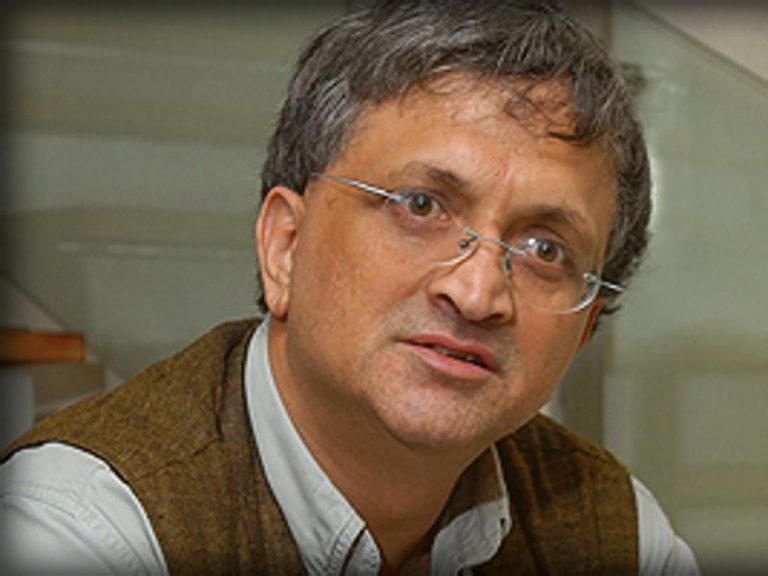
Ram Guha tries to give clean chit to Nehru on Kashmir plebiscite issue, ties himself in knots

On International Yoga Day, when one expects self-proclaimed “liberals” like Ramchandra Guha to write why public display of yoga makes Muslims feel unsafe, the pop-historian-cum-Nehru-worshipper surprised everyone by talking about Kashmir and Nehru. Obsessive compulsive Nehru admiration disorder maybe.

Regardless of what triggered Guha to write about Nehru and Kashmir and not talk about ills of yoga on Yoga Day, what followed was an aasana by Guha that left him all knotted up. Should we call it Guhasana is something left for UN to decide.

So here is what happened. He tried to subtly suggest that Pandit Jawaharlal Nehru was kind of ‘forced to offer’ plebiscite in Kashmir because Sardar Vallabhbhai Patel had already held a plebiscite in Junagarh earlier.

He essentially tried to blame Patel but didn’t use the exact phrase blaming him. This is where people like Guha excel. They say things without being explicit e.g. they indulge in whataboutery without using the phrase “what about”.

Coming back to the point, here is what he tweeted, trying to shield Nehru for going to UN and promising a plebiscite in Kashmir:


Apart from the beauty of subtly blaming Patel while appearing to say that Patel shouldn’t be blamed, there is another beautiful thing Guha did. His tweet read as if Patel unilaterally decided about plebiscite in Junagarh and even went on to hold it. Poor Nehru had to then follow this template set by Patel.

So was Sardar Patel a rogue Home Minister who went on holding plebiscites here and there without consulting his Prime Minister or getting approval from him?

Guha was clearly trying to be too clever by half, and people could spot it. Soon, the reactions followed:


Realising that he shouldn’t come across as a person who is trying to blame Patel, Guha sent a subsequent tweet where he clarified in as many words that Patel was not responsible for the mess Kashmir is in today.

But following his obsessive compulsive Nehru admiration disorder, while giving clean chit to Patel, Guha issued on a free clean chit to Nehru as well:


Now this is where Guha tied himself in knots. Guha argued that both Nehru and Patel can’t be held responsible for the Kashmir mess because Patel died in 1950 and Nehru died in 1964 i.e. they died much before ugly things started happening in Kashmir.

And what were those ugly things? Being a self-declared liberal, Guha can’t just blame Pakistan for the ugly things like terrorism and bigotry. Therefore, he blamed both India and Pakistan for it. He blamed Pakistan government for promoting violence and discord (because terrorism is too strong a word?) in Kashmir right since 1947, while blamed the Indian government for undermining democracy since 1953 (Guha didn’t clarify what exactly happened in 1953).

And there, while trying to give clean chit to Nehru, Guha tied himself in knots. If the Indian government was responsible for creating the mess in Kashmir from 1953 onward by “undermining democracy” (a serious charge), why should Nehru not share that responsibility? After all he was the Prime Minister of India between 1953 to 1964.

Yet again, this chicanery was spotted by the Twitter users:


Ram Guha has not tried to justify his Maths, logic, or history. And that is expected. A self-declared liberal is always right, and he owes no answer to you trolls.

But what Ram Guha has demonstrated is a window into the soul of ‘neutral’ historians and experts. Where Jawaharlal Nehru (and by extension, his dynasty) must not be held responsible for anything remotely negative. They were innocent people who just happened to be on top and in command, while people lower down in the hierarchy – from the Home Minister to a local Congress leader – did awful things that messed up the economy, society, or politics of India.

We bow to you Guha ji, and Nehru ji.

90 Hindus from Pakistan’s Sindh region to be granted Indian citizenship in Ahmedabad

90 Hindus from Pakistan are to be presented Indian citizenship documents by the District Collector in Ahmedabad on Friday. According to reports, the Pakistani Hindus will be granted Indian citizenship under the provisions of the Citizenship Act, 1955.

The Ahmedabad collectorate reportedly stated in an official release that as per the Gazette of the Indian government dated December 23, 2016, the District collectors of Ahmedabad, Kutch and Gandhinagar have been granted the authority to grant Indian citizenship to minority communities from Pakistan, Afganistan and Bangladesh within two years of the gazette notification.

Hindus, Sikhs, Buddhists, Jain, Parsis and Christians are the minority communities in these countries. The statement added that according to the Gazette, the district collector will be presenting Indian citizenship to 90 applicants. All 90 applicants are reportedly Hindus from Pakistan’s Sindh region.

Ahmedabad is the leading district in granting Indian citizenship to minorities from neighbouring countries. So far 320 people, majority of them Pakistani Hindus, have been granted Indian citizenship. Between July and November in 2017 too, any Pakistani Hindus have been granted Indian citizenship.

Ahmedabad collector Vikrant Pandey will be conferring the citizenship certificates on the applicants at an event on Friday.

Many Pakistani Hindus have been waiting for citizenship status in Indian states. In June last year, 117 of them were given citizenship in Jodhpur. Rajasthan has thousands of pending applications for citizenship. In December last year, Rajasthan HC, after taking suo moto cognisance of pending applications, had expressed anger on the state government’s lack of knowledge and action. The HC had directed the state government to submit a report and take action on the pending citizenship applications.

Rvs Mani, who exposed Congress’ ‘Hindu Terror’ plot, claims he is being threatened by goons

Former under-secretary in the Minister of Home Affairs, Rvs Mani, who recently wrote a book busting the lies and propaganda around ‘Hindu terror’, has claimed threat to life for speaking up. Rvs Mani took to Facebook and described incidents where he felt threatened because of his views.

Rvs Mani’s Facebook post where he described threat to his life.

In the incident that took place yesterday, he mentioned how after his evening walk, an SUV of Haryana registration, number 6029, stopped and asked for directions to Gurugram. While he was responding, another person lying or hiding in the rear passenger seat sat up and threatened to kill him for ‘trying to be a big leader of Hindus’. Since his book was critical of the Congress government which first came up with the concept of ‘Hindu terror’, he questioned Congress for resorting to threats to silence him.

He further said that in two months since the Mecca Masjid judgement, where the special NIA court acquitted all accused tearing apart Congress’ ‘Hindu terror’ smokescreen, not a single response has been made on merit from the Congress. He claimed that Tehseen Poonawalla, Congress supporting motormouth who is not related to the respectable Poonawallas, threatened him openly during a TV debate saying that when he (Tehseen) becomes the Home Minister, he will open all cases against Rvs Mani. Another Congress spokesperson, Surender Rajput referred to him as a worthless person. He further asked Congress to clarify their position since their official spokesperson used these words.

Earlier, Rvs Mani had alleged that the changes in the second affidavit regarding Ishrat Jahan case were made at the ‘political level’ by the UPA led government. He had also said he was ‘tortured’ by Satish Verma, the Special Investigation Team (SIT) chief in that case, to sign it. In an interview earlier this year, he had revealed how the UPA government tried to frame Col Purohit because he was breaking the back of the groups involved in Islamic radicalization.

He has filed a complaint to the Police Commissioner and Joint Commissioner, West, Delhi Police in this regard.

Complaint filed by Rvs Mani

Naveen Patnaik writes letter urging PM Modi to notify Hockey as India’s National sport

Odisha Chief Minister Naveen Patnaik today wrote to Prime Minister Modi to declare hockey as India’s national game.


In his letter, Patnaik mentions how winning an Olympic gold medal in a game, hearing the national anthem being played in the background is a matter of such pride. He reminds how in 1948, the new country, India, won the Olympic gold in London, mentioning how prior to 1947 how Great Britain avoided playing hockey with India fearing embarrassment of losing against its colony. He mentions the glorious history of the sport and how it is hugely popular even in rural India.

Patnaik said that since Odisha is hosting the World Cup Hockey, which is scheduled to be held later this year in November, he learnt that hockey is not the national game of India. He expressed shock and surprise that what is popularly known as the national game is not really the national game as it has never been notified.

He urged the Prime Minister to notify the game as the national game as a fitting tribute to the players and the game which have made our country proud.

The letter came as surprise to most as most of us have grown up being taught in school books that hockey is our national game, but sadly, that is not the case. As per reports, an RTI was filed back in 2012 where the Ministry of Youth Affairs had replied that the country does not have a national game as no game has been notified yet.

The Government of India website, too, does not list hockey as the national game.

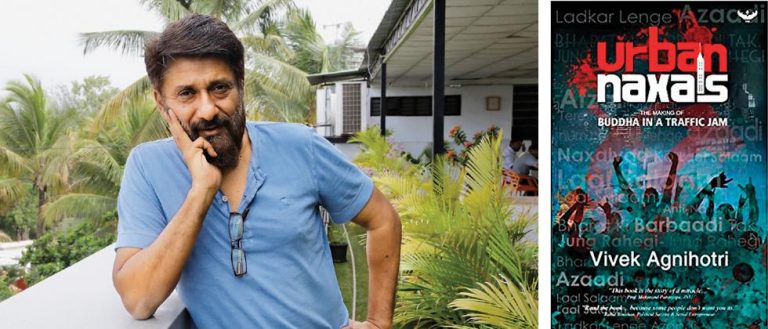
Urban Naxals by Vivek Agnihotri : The story of ‘an India where success does not lie in money but surviving’

Some books tell us a story, some others tell us stories inspired from true events, some tell us about past, some tell us about present times, some tell us abstract ideas, some gives us inspiration, some give us grim picture of our times and some tell us about one phenomenon or the other. Urban Naxals gives us a combination of all the above.

It tells us the story of Vivek Agnihotri (the author) and true incidents from his own life. It tells us about the past accounts of phenomena of Naxals and the abstract idea of “Urban Naxals” which has materialized into reality quite some decades ago. It talks about the value of hard work, perseverance and patience that Vivek put in while making the movie “Buddha in a Traffic Jam”. It gives us the grim reality of our country that we have been celebrating mediocrity and nepotism even after 70 years of independence. It tells us about the phenomena of hypocrisy, double standards, irony and contradictions that the whole ecosystem works with.

As someone who completed this book in one sitting, I can say that while I was reading the book, it seemed to me as if someone was narrating a story, a phenomenon, a reality which I have seen since my childhood growing up in a heavily Naxalite affected tri-border area of Odisha, Jharkhand and Chhattisgarh. It’s just that Vivek has connected all the dots and presented a picture which is very difficult for any urban society person to understand as he/she only depends on the op-eds of some journalists sitting in Lutyens Delhi to get his/her understanding of Naxalism. The reality strikes only when someone tries to know the phenomena from a closer and experiential view which Vivek has lucidly mentioned in the book.

The book runs through different units with reference to Buddha being born, In Search of Buddha, The Making of Buddha and The Struggle of Buddha. This is one of the unique ways Vivek uses to wind the beads of the events to make it an interesting and unputdownable read. This is again one of those ways that Vivek has used in his film “Buddha in a Traffic Jam” where the movie proceeds in a chapter wise manner. It’s the experimentation with new ideas and ways that Vivek is adept in that makes him an Avant-Garde filmmaker and author.

The book lists out the origin of Naxal movement and then a lot of small but real instances to give a reality check to all the readers in general and urban public unaware of these things in particular. Many people who have migrated from rural to urban areas may find a connection with these small instances.

The book slowly and subtlely takes up the journey of Vivek in making of the movie “Buddha in a Traffic Jam”  from scratch. Students of the prestigious B-School, Indian School of Business, Hyderabad wanted just to make a short film but then Vivek asks them to think like a CEO that they are going to become in future. It explains the entire process of the making and how the movie was conceptualised.

Passionately, Vivek describes as to how they wrote the script and points out, that some scenes were simply a stroke a luck.

Film Industry, as it is usually seen as a hub of nepotism, did to Vivek exactly what political parties do their alliance partners if they leave them. They malign, create hurdles and discard the concerned party if they are unwilling to conform to their ideology. This comes out very strongly in the book where Vivek details the difficulty he faced in finding mainstream financiers and distributors for the movie. Many of them agreed initially but backed out at the last moment.

Even with all the hurdles, Vivek tries to get the movie going. In the process, he shows exemplary negotiation abilities and out of the box thinking. It was rare for a film maker to showcase his movie directly to the youth of this country by visiting them in their university campus’. The fact that Agnihotri managed to surmount the hurdles and still reach his audience, comes across as a source of inspiration.

The book also talks about the special people who stood by Agnihotri through his journey. His wife Pallavi Joshi and veteran actor Anupam Kher. I particularly liked the fact that Anupam Kher accepted to be a part of the project without any special demand financially or otherwise just because he believed in the project and its significance to Agnihotri’s life. This may be a good moral lesson for our film artists (only if they care to read the book) from a veteran actor Anupam Kher.

There have been many books as to how a war was won, how a start-up became successful, how someone became a head of the state/country, how someone found the love of his/her life, but this book just tells about how a simple yet powerful movie was made. So, powerful that JNU authorities did not want it to be screened in the campus, Jadavpur University students physically assaulted Agnihotri, injuring his shoulder.

The movie must have certainly made many extremely uncomfortable since the very people who advocate ‘freedom of expression’ were at the forefront of blocking his movie. The book details the ordeal.

Many so called ‘film critics’ ridiculed the movie when it was released. I was in my final year when I read some of the reviews before watching the movie, but after watching the movie, I was not sure as to whether those ‘film-critics’ were ridiculing the movie or were proving that certain film critics should often be disregarded.

As someone who has seen the whole naxal movement first hand, I am glad that Vivek made this movie to expose the nexus and then wrote this book to expose them further. ‘Urban Naxals’, a term coined by Agnihotri, are everywhere. While the term is not defined explicitly, the essence of it is apparent once the book is read in totality.

In fact, it bodes well that the term has not been defined with abstract constraints. Let the youth of India explore this word for themselves.

In the end, the book can be said to explore in its essence the irony and contradictions of living in India even after 70 years of independence.

“An India where success does not lie in money. It lies in surviving. The complex India. The difficult India. The corrupt India. The honest India. The oppressed India. The feudal India. A regressive India. A progressive India. It’s poor. It’s filthy. It’s hard working. It smells of struggle, of co-existence, of sweat. Its diversity, its disparity, the chaos, the conflict. The aspirational India, the ignored India, the defeated India… The real India”

Ordinances: Modi government’s counter to Congress’ legislative blockade

0

Ordinances are like the super-subs in football. Only, in this case, the playing field is the parliament. I have previously pointed out how Congress has blocked the regular parliamentary proceedings and halted important legislative actions which otherwise could have been transformational for India. This parliamentary blockade has frequently halted the urgently required legislative actions needed for the government. There are very few options available to any sitting government to counter such move by a relentless opposition which will willingly sacrifice the need of the masses for their political agenda.

This is where Ordinances come into play. Now, traditionally ordinances are used to pass ‘immediate legislative action’ by the government and can only be promulgated by the President of India on the recommendation of the Union Cabinet. It can only be issued when parliament is not in session. Although it should be mentioned that ordinances are not always the most advisable solution to a legislative problem when the legislative is paralyzed, it is only available option for the government.

Such ordinance and its fruitfulness were recently displayed, when the National Sports University ordinance was passed to create India’s first university dedicated to sports, it was promulgated because the Bill was not taken up and discussed upon in the Parliament and hence, an ordinance was brought in which allows the Indian government to set up this university in Imphal, Manipur.

This is not an isolated instance where the president had to step forward due to the human-induced legislative paralysis in Parliament. Here is a list of ordinances passed by the incumbent government due to parliamentary blockade by the Congress Party. The following is not an exhaustive list, but an indicative one.

The Commercial Courts, Commercial Division and Commercial Appellate Division of High Courts Ordinance, 2015 

The bill was initially introduced in the Rajya Sabha by the Finance Minister, Arun Jaitley. The comments from the standing committee were sought but they did not file the report till December of 2015.

As this was an important legislative action deemed by the Government, the President took action and brought this ordinance which enabled the constitution of commercial courts in all state and union territories. These courts are to be equivalent to District courts in their jurisdiction. They will deal specifically with commercial disputes and commercial divisions are to be set up in high courts. The principal judge in a commercial court will have the same power as the chief principal District Judge of a District Court.

The Mines and Minerals (Development and Regulation) Amendment Ordinance, 2015

The ordinance was promulgated on 12th January 2015. It was deemed by the government that the leasing process in the said industry was a bit problematic and the number of new leases granted every year was dropping significantly. To ensure transparency the ordinance proposed that all grants regarding mineral concessions be done through auctions. The tenure of mineral concessions was also increased from 30 years to 50 years in this specific ordinance. It also removed multiple barriers to fast-track the granting process of mining rights by removing ‘prior approval’ from the central government on ten minerals and the need to approve the mining plan form the government was also done away with.

The Citizenship (Amendment) Ordinance, 2015

This ordinance was promulgated on 6th January 2015. It replaced The Citizenship Act, 1955. This ordinance was brought in to curb out the disparity between the two schemes that the Central government has for Indian origin persons namely, the Overseas citizen of India and persons of Indian Origin scheme.

Traditionally, Overseas Indians enjoy more benefits than Persons of Indian Origins, such as multipurpose life-long visa to visit India. This ordinance bridges the gap between these two by proposing that the central government may consider Persons of Indian Origins as the Overseas Citizen of India from a specified date.

Another aspect of this ordinance was the introduction of citizenship by registration and naturalization. A person is eligible to apply for a citizenship by registration if they or their parents have been Indian citizens in the past. For one to be eligible for naturalization, he or she has to be a resident of India for at least the last 12 months immediately preceding the date of application.

The Indian Medical Council (Amendment) Ordinance, 2016

This is perhaps the most important ordinance of 2016, passed by the Modi government. This ordinance later paved the way for the act of the same name. It was promulgated on May 24, 2016. This ordinance introduced a uniform entrance examination for all medical educational institution, doing away with possible disparities in state boards and their respective question patterns.

This also opened up the medical sector for students who are not comfortable with English as the language of the examination, by declaring that the question is printed in Hindi, English and other regional languages so language does not become a barrier in their pursuit of quality medical education. It also gave the MCI the authority regarding how the exam should be conducted and the code of conduct.

The Enemy Property (Amendment and Validation) Ordinance, 2016

This specific ordinance was promulgated on January 7th, 2016. The ordinance seeks to amend the enemy property act, 1968 along with the Public Premises (Eviction of unauthorized occupants) Act, 1971. The definition of what constitutes as an enemy has been expanded to the heirs of the original owners even if they are citizens of India or other friendly nations and nationals of an enemy country who subsequently changed their nationality of another country.

There was some non-clarity regarding the vesting of such properties which has been dealt with in this ordinance. The divestment policy and the power of sale of such property also been changed in this ordinance. Regarding divestment, the ordinance allows the property to be returned to the owner only if an aggrieved person applies to the government, and the property is not found to be an enemy property.

The Insolvency and Bankruptcy Code (Amendment) Ordinance, 2017

The predecessor of the Act, this amendment is one of the most important legislative actions taken by the President regarding finance. This was brought in to amend the Insolvency and Bankruptcy code, 2016. It prohibited certain people from submitting a resolution plan or a specific and detailed account of restructuring a defaulter’s debt. It defined four sections – willful defaulters, promoters or the management of the defaulting company, disqualified directors or anyone who has defaulted abroad. The ordinance also bars an insolvency professional from selling the property of a defaulter to any such person during liquidation.

The Banking Regulation (Amendment) Ordinance, 2017

The ordinance was promulgated on May 4th, 2017. This ordinance amends the Banking Regulations Act, 1949 and adds provisions for recovery of outstanding loans. Under these new provisions, the Central government has the authority to authorize the Reserve Bank Of India to direct Banks to initiate recovery proceedings against loan defaulters.

Under this ordinance, the RBI has the authority to specific committees to advise Banks in regards to resolving stressed asset. The appointments to such committees will be made by the RBI. The recovery proceedings will be initiated under the Insolvency and Bankruptcy Code, 2016. This code provides a time-bound approach to resolve issues of defaults.

The Commercial Courts, Commercial Division and Commercial Appellate Division of High Courts (Amendment) Ordinance, 2018

This was promulgated on May 3rd, 2018. This ordinance is in line with the current commercial scenario in India and the need to expand the jurisdiction of the previously mention Commercial courts. It primarily amends the definition of “specified value”, with regards to “commercial disputes”. This value has been drastically reduced to Rs. 3 Lakh from the earlier ceiling of Rs. 1 crore. So, in simpler terms, the Commercial courts’ ability to hear matters depends on the valuation of the case, which earlier was set at Rs 1 crore but now has been reduced to Rs 3 lakh. Thus, the Commercial Courts jurisdiction has increased exponentially.

The National Sports University Ordinance, 2018

I started this article by mentioning this specific ordinance. This ordinance was promulgated on May 31, 2018. This ordinance authorizes the central government to establish a National Sports University in Manipur. The ordinance also gives details account of the universities research orientation, functions, and the concerned authorities, as well as funding apparatus and the role of the central government.

This was all in the act which was previously introduced in the parliament but due to legislative blockade could not be codified. Thus, President Kovind understanding the possible positive implications of such a university on India and Indian sports promulgated this ordinance so that National interest can be given priority over the political one.