Home Blog Page 7136

Muslim man accused of trying to kill his wife inside court premises after giving her Triple Talaq

A 26 year old Sohail Khan has been accused of trying to kill his wife by pouring petrol over her inside a family court in Pune’s Shivajinagar on Tuesday. The victim is believed to have filed a case against her husband after he allegedly gave her Triple Talaq, Pune Mirror has reported.

Following the incident, the 20 year old victim has filed a complaint against the husband at the Shivajinagar police station. The husband hailing from Hadapsar in Pune, is believed to be an owner of a car painting shop, while the girl is a student.

An Indian Express report details that the couple got married in May 2015 and about two years later in February 2017, the wife received a legal notice from her husband. In the notice it was written that he was giving her Triple Talaq, thereby ending their relationship.

The wife shot back a letter saying that she was not accepting the instant Talaq and a month later also filed a case against eight people including her husband, accusing them of mental and physical harassment.

As per the Pune Mirror report, all was well between the couple during the first few months of the marriage but then the in laws started harassing the girl over petty issues. The girl claimed that they were demanding more gold and money from her father. She also accused her husband of assaulting her and having unnatural sex with her.

The families later tried to amicably settle the matter but it ended up going to the family court where the girl filed a case against the Triple Talaq.

It has been reported that on Tuesday when she had come to the court premises, her husband approached her to persuade her to withdraw the case. This as per the girl was owing to him being afraid of getting punished for the Talaq, which has been outlawed by the Supreme Court.

The girl then alleged that when she protested, he tried to open her burqa and poured petrol over her to supposedly try and set her on fire. This as per the report was noticed by two policemen who then came to her rescue.

The victim’s father has been quoted as lamenting how his daughter was suffering despite Triple Talaq being made illegal. The accused’s father Latif Khan Pathan has on the other hand accused the victim of pouring petrol on his son and claiming that people beat his kid up. He also alleged that the girl’s family was threatening them to get them to pay a huge compensatory amount.

Following the incident, Assistant police inspector Pramod Khatke was quoted as saying that the husband has been booked under sections 323,324 and 506 of the IPC which pertain to voluntarily causing hurt and criminal intimidation. He assured that the matter would be investigated in detail using CCTV footage of the area.

Record production of foodgrains and a strategic roadmap for doubling farmers income by 2022

0

Prime Minister Narendra Modi today interacted with crores of farmers across the country via the NaMo app. In a live video conferencing session, PM Modi not only praised and hailed India’s farmers for their dedication and hard work, he also laid out the progress so far, reasserting his government’s commitment to its goal for India’s agriculture sector of doubling farmers’ income by 2022.

He highlighted the key points required towards achieving the goals, like, bringing down the costs of raw material, providing an adequate price for the products, minimising wastage of farm produce and providing alternate sources of income.


In the last couple of years, India has seen record level productions of agriculture products. Foodgrains production saw a record level growth in 2017-18. An estimate released for the Ministry of Agriculture stated that India produced a record 297.5 million tonnes of foodgrains in 2017-18.

This includes a great harvest of rice at 115.5 million tonnes as compared to 109.7 million tonnes the previous year. Pulses production saw a 5.9% growth compared to the previous year. Though wheat production was nearly same as 2016-17 and oilseeds productions registered a slight decline from 31.3 million tonnes to 30.6 million tonnes, Sugarcane registered an astounding 16% growth than the previous year.

The Prime Minister also congratulated the farmers for producing record levels of fruits, vegetables and horticulture products. During 2016-17, the production of horticulture crops was at 300.6 million tonnes with a productivity increment of 3.45%. Both fruits and vegetable sectors showed a remarkable increase in productivity per hectare of land. India had produced 93 million tonnes of fruits, 3% more than the previous year, while vegetable production stood at a staggering 178 million tonnes, with 5% growth.

As per the second advanced estimate in 2017-18 released by the Ministry of Agriculture, 307 million tonnes of horticulture products were produced, continuing the steady increase in productivity per hectare as well. What is even more remarkable that the total production of horticulture products outweighed the total foodgrains productions for the fifth year in a row.

Similar trends were seen in milk and fisheries production too. Milk production in the four years of 2014-18 was 23% higher than 2010-14. During 2014-18, the year-on-year average growth has been 6.3% compared to the same at 4% during 2010-14. Even egg productions have increased by 7.4% compared to the previous year.

Fisheries have shown similar progress too. In November 2017, India became the second largest fish producing country in the world. India has registered an average of 14% growth in export in fisheries in the last decade and shown a production increase of 27% in 2014-18 as compared to 2010-14.

The record quantity of production was carried out owing to proper harvesting, storage, logistics and markets creation. The PM had insisted on many previous instances that the government will ensure assistance and availability of resources to farmers at every stage of cultivation. “Beej se le kar Bazaar tak” (from seed to market) has been the agenda for providing help.


The NITI Ayog has drawn up a strategic roadmap towards achieving the goal of doubling farmers’ income by 2022. It has identified 7 main sources of growth and projected estimated growth rates needed in each aspect to achieve the target.

courtesy: NITI Ayog

Overall, it states that the action needed to double income by 2022 can be grouped under 3 main categories.

  1. Development Initiatives
  2. Technology generation and dissemination
  3. Policies and reforms

A sustainable and targeted approach in all the 3 categories listed above has been the government’s attempt to achieve the goal. Be it the availability of better technology, seed quality, irrigation frameworks and making fertilisers and agrochemicals available, the farm sector is being provided with the technological and developmental base it needs.

The PM mentioned the provisions and popularisation of neem coated urea and several irrigation schemes. The availability of better technology will also need the efforts of extensive awareness initiatives and easy accessibility of these resources. Krishi Vigyan Kendras in every rural district and the Farmer Producer Organisations (FPOs), and providing digital access for queries are helping to achieve it.

The PM emphasized the extensive disbursements under Fasal Bima Yojna and the provisions of less premium and more widespread insurance of crops. These schemes help boost the confidence of farmers and ensures their financial strength.

Budget 2018 saw the government set the MSP for Kharif crops to 1.5 times the cost of production and also increased the credit limit for farmers. With all the schemes providing direct transfer of benefits through Aadhaar linked accounts, they not only ensure easy and efficient disbursement but also eliminate corruption at all levels.

Taking the farm produce to the market is another important step and the budget provisions for every step in that process, from private mandis, direct marketing to consumers to recent provisions on eNAM (Online National Agriculture Market) are all fruitful efforts in that direction.

The government is also encouraging economically profitable and novel methods for increasing income. Encouragement of beekeeping and organic farms initiatives of the North East are the examples of that.

The NITI Aayog states that the target is achievable and the PM has asserted his government’s commitment to the target and with holistic, interactive and sustainable India may actually see its farmers earning great profits by 2022.

The Chutzpah of Arvind Kejriwal

0

For a week, nearly 60% of the Delhi cabinet, holding sway over 16 crucial ministries voluntarily parked itself in the waiting room of the LG’s office in New Delhi. 4 senior doctors, including the medical head of the of the LNJP hospital, made daily visits to check the health of the Delhi Cabinet lying on the sofas of air-conditioned waiting rooms. All this, to end what the Delhi Chief Minister Arvind Kejriwal has claimed is a 4 month-long ‘strike‘ by the IAS officers. A claim that has been rejected in a categorical statement by IAS AGMUT, which has highlighted that all official duties are being carried out.

A cursory search will show Arvind Kejriwal has personally inaugurated a rooftop solar plant at a housing society on May 14th, a swimming pool in a school on April 7th, the Magenta line of the Delhi Metro on May 28th and a power substation in South Delhi on June 10th (incidentally, just one day before the Chief Minister started his sit-in at the LG’s office to end the purported strike by the IAS officers). How could the Delhi government complete these projects in the past 4 months and claim credit through elaborate inauguration photo ops, if the key IAS officers manning the departments handling these projects were on strike, as Arvind Kejriwal claims? The Chutzpah of it, do you see it?

The Delhi Chief Minister has also lamented the fact that his brother who came in all the way from Pune was not allowed to meet him – In the waiting room of the LG’s office. Sunita Kejriwal chimed in. On 14th June, The Delhi Chief Minister’s wife accompanied by her mother-in-law and the wives of Manish Sisodia, Gopal Rai and Satyendra Jain marched to meet their spouses – at the LG’s office, and were duly denied permission. She went on to say ‘Even prisoners are allowed to meet their family members‘. Except, the LG’s waiting room isn’t a prison. It is a public office meant to seat people who have official business with the LG.

Arvind Kejriwal and his cabinet can step out to meet their wives (and any other relatives for that matter) or even go back to air-conditioned rooms with sofas in their own government provided homes and have a nice conjugal chat. It is not Sunita Kejriwal’s constitutional right to meet her husband inside the LG’s office. The Chutzpah of it. Do you see it?

The band of opposition leaders has predictably taken a one-sided stand in supporting the Delhi Chief Minister’s untenable position, instead of standing by the ‘working class heroes’ – the IAS officers who make Delhi tick. Brinda Karat of the CPI(M), the party whose constitution says they are the ‘Revolutionary vanguard of the working class of India‘, wrote an elaborate editorial on ‘The Kejriwal Protest And Why We Should Back It‘, perhaps not realizing her editorial backed the political ruler of a state and not its working-class IAS officers.

Arvind Kejriwal has even attempted to weave the story of opposition unity around his cabinet squatting at the LG’s office. On June 16th, Mamata Banerjee, Chandrababu Naidu, Pinari Vijayan and HD Kumaraswamy who were in the capital for a NITI Aayog Meeting, decided to march to the LG’s office to meet Arvind Kejriwal. Promptly denied permission, the entire affair was spun as a case of the central government not allowing 4 state Chief Ministers to meet the Delhi Chief Minister.

Ramachandra Guha even tweeted that the ‘Modi regime thinks New Delhi is still an imperial capital’. It didn’t dawn on Mr Guha that the Delhi Chief Minister has his own office, where he could generously and comfortably host his political allies, without seeking any permissions. It is anybody’s guess as to why, in the 1484 square kilometres of Delhi, Arvind Kejriwal wished to meet his political allies only in the waiting room of the LG’s office, that too on a Saturday night. The Chutzpah of it. Do you see it?

So, while opposition leaders (and historians) are standing up for the political strongman in Arvind Kejriwal, who is standing up for the working class government officers of Delhi?

On February 22nd, the top IAS officer of Delhi, 57-year-old Anshu Prakash, was invited to a meeting close to midnight (well past working hours) with the MLAs of the Aam Aadmi Party at the Delhi Chief Minister’s residence, wherein the Chief Secretary was allegedly manhandled following which an FIR was lodged. Ever since, the IAS officers, in solidarity with the Chief Secretary, observed a 5-minute silence in the afternoon, wore black bands to work and insisted on written instructions instead of verbal orders in ad-hoc midnight meetings, that make them feel unsafe. That is the extent of their ‘non-cooperation’ and so-called ‘strike’. The IAS simply demanded an apology and a ‘conducive work environment where officers do not feel threatened, intimidated or humiliated‘. Arvind Kejriwal hasn’t apologized to the IAS officers for making them feel unsafe at work.

The Delhi Chief Minister, however, has apologized to his political adversaries – Bikram Majithia (Akali Dal), Nitin Gadkari (BJP), Kapil Sibal (Congress) and Arun Jaitley (BJP) because his legal team advised he would lose the defamation cases and therefore lose his right to contest elections. Arvind Kejriwal has apologized in the past to save his own political skin. But, Arvind Kejriwal wouldn’t apologize to his own officers, for the sake of Delhi and it’s people. The Chutzpah of it, Do you see it?

Instead of ending the stalemate back in February with a simple apology and a statement of assurance, such as the one he finally gave on June 17th, Arvind Kejriwal predictably chose the path of most resistance. Delhi Chief Minister unproductively squatted at the LG’s waiting room for days skipped a crucial policy defining Niti Aayog meeting and mobilized scores of AAP party workers to clog the streets of Delhi in a protest march towards the PM’s residence.

AAP has also planned a door to door campaign to get a million signatures in support of Arvind Kejriwal’s stand against the LG. Recently Arvind Kejriwal tweeted– ‘Centre is insulting the people of Delhi who elected Delhi govt. People will decide‘. The people must decide – to call out Kejriwal’s Chutzpah. So, if AAP volunteers ever head out door-to-door to seek signatures of 10 lakh Delhi Citizens, the citizens must duly sign the petition. And, add some words of solemn advice for Arvind Kejriwal, next to their signatures – ‘End the Chutzpah‘.

Ahead of MP elections, close Rahul Gandhi aide and senior Congress leader rakes up ‘Hindu Terror’ bogey

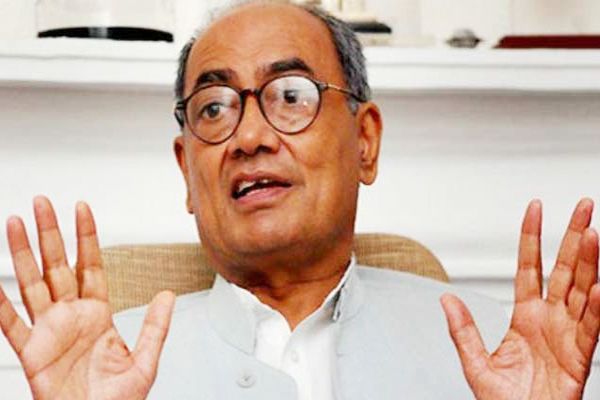
With the 2019 General Elections and Madhya Pradesh Assembly Elections approaching fast, senior Congress leader Digvijay Singh appears to believe it is a good idea to raise the ‘Saffron Terror’ bogey. Claiming that he had never spoken of Hindu terror, he claimed to have only spoken of ‘Sangh Terror’ only to use the term ‘Hindu terrorists’ merely days later.

Attacking the RSS, Singh said, “I have never said ‘Hindu terrorism’, I always used the term Sangh terrorism. No terror activity can be linked to religion because no religion supports terrorism.” before going on to add, “Those accused in the Malegaon, Samjhauta Express and Mecca Masjid bomb blasts were influenced by Sangh ideology. RSS spreads violence, hatred and propagates terrorism.” Contradicting himself only a couple of days later, he said, “Jitne bhi Hindu dharma wale aatankwadi pakde gaye hai sab Sangh ke karyakarta rahe hai (All Hindu terrorists caught so far have been RSS members in the past).”

The controversial Congress leader who appears to have made a habit of putting Congress in hazardous positions has received support from Salman Khurshid, another senior Congress leader. The former minister for External Affairs asserted that the statement was made in a specific context. He stated, “I don’t think he takes an exclusive or an isolated view on this, he believes and I know this for sure that all hostility of the nature of extremism is bad. But there would be a specific instance that he must be reflecting upon.”

Meanwhile, former Ministry of Home Affairs, R.V.S. Mani told ANI, “I’ve said this earlier too that there was no official information on Hindu terror till 2010. Even after that, there was no such thing. I’ve written a book which clearly states how Digvijay Singh laid the foundation of Hindu terror and spread it.” “In name of Hindu terror, he saved real terrorists using government resources. Arif Qasmani, the accused Samjhauta Express blast had escaped. In Mecca Masjid blast case, Bilal escaped. I don’t know his political agenda but there’s no Hindu terror,” he added.

Digvijay Singh is no stranger to making ludicrous statements. He was quoted in 2013 as well saying why did all ‘Hindu terrorists’ have RSS links. On one particular occasion, his statement cost the Congress an MLA in Goa. In another instance, he had posted an offensive tweet which contained a photo with objectionable language to target the Prime Minister. He has also used a morphed image to attack BJP President Amit Shah. But perhaps, the most damning incident of all was when he seemed to endorse a book that appeared to blame RSS for the Mumbai Attacks on the 26th of November, 2008.

What Digvijay Singh said is only a continuation, it all began with the vilification of Savarkar

0

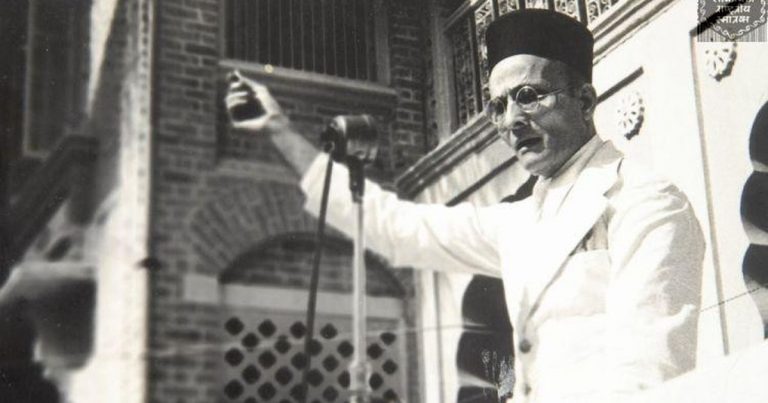
Congress leader Digvijay Singh’s attempt to create the bogey of Hindu terrorism and dragging Rashtriya Swayamsevak Sangh into it is nothing new. In his classic book, The Men Who Killed Gandhi, celebrated writer Manohar Malgonkar, mentions how Veer Savarkar – who in the author’s words was to Hindu Mahasabha what Gandhi was to Congress – was wrongly implicated in the Gandhi murder trial in 1948-49. Malgonkar dropped more than a hint that it was the work of the government of the day, or in other words Congress.

Following are excerpts from the book. The texts in italics are my own and the one in bold are the exact page numbers of the quotes from the book:

Why were the police so anxious to implicate Savarkar? (From page 281-285)

Was it merely that having failed in their proper function to arrest Nathuram before he killed Gandhi, they were making a bid to save face by raising the bogey of some sensational plot which involved a big leader who, providentially happened to be in bad odour with the government of the day?

Or was the government itself, or some powerful group in it, using the police agency to destroy a rival political organization or at least to destroy a fiercely uncompromising opposition stalwart?

Whatever it was, Savarkar himself was so conscious of these currents, so convinced that the authorities were determined to take him to court as an accomplice of Nathuram, that when five days after Gandhi’s murder, a police party entered his house he went forward to meet it and asked: “So you’ve come to arrest me for Gandhi’s murder?”

Savarkar being made an accused in the Gandhi murder trial may well have been an act of political vendetta. Of course Badge (Digambar Badge, a weapon supplier and conspirator who turned into a police approver) was most insistent to me (the author) that he had been forced to tell lies, and that his pardon and future stipend by the police department in Bombay depended upon his backing the official version of the case and in particular that, he never saw Savarkar talking to (Narayan) Apte, and never heard him telling them: “Yeshaswai houn ya (Earn glory).”

Many years later on 16 June 1983, the Poona newspaper Kaledited by S.R. Date, published a report on the subject, which was later reprinted in a volume published by the Savarkar Memorial Committee on February 16, 1989. I quote excerpts from it. It purports to repeat something that Savarkar’s counsel at the trial, L.B (Annasahen) Bhopatkar, a Poona lawyer, had revealed to his friends after he returned to Poona from Delhi in January 1949, after the Red Fort trial was over, and Savarkar found `not guilty.’

While in the Delhi for the trial, Bhopatkar had been put up in the Hindu Mahasabha office, Bhopatkar had found it a little puzzling that while specific charges had been made against all the other accused, there was no specific charges against the client. He was pondering about his defence strategy when one morning he was told that he was wanted on the telephone, so he went up to the room in which the telephone was kept, picked up the receiver and identified himself. His caller was Dr Bhimrao Ambedkar, who merely said: `Please meet me this evening at the sixth milestone on the Mathura road.’ But before Bhopatkar could say anything more, put down the receiver.

That evening, when Bhopatkar had himself driven to the place indicated, he found Ambedkar already waiting. He motioned to Bhopatkar to get into his car which he, Ambedkar himself, was driving. A few minutes later he stopped the car and told Bhopatkar: There is no real charge against your client, quite worthless evidence has been concocted. Several members of the cabinet were strongly against it (against implicating Savarkar) but to no avail. Sardar Patel could not go against these orders. But, take it from me, there just is no case.`You will win.’ Who…Jawaharlal Nehru?…But why?

They had arrested Savarkar even though they did not possess sufficient evidence to do so. To be sure, the mass of papers seized from his house had yielded scores of letters from Nathuram and half a dozen from Apte, but these were disappointingly innocuous. All that they did was to establish the fact that Nathuram and Apte knew Savarkar and held him in great esteem. But this in itself was not enough to satisfy a magistrate that a prima facie case existed so that he could issue a warrant.

This, however, was no more than a technicality (sic), and they got over it by arresting him under the Prevention Detention Act—one of the most malignant practices of legislation with which the British had armed themselves while they ruled India. Even though Indian politicians of all shades of opinion had persistently condemned the British for this Act, the Congress had been in no hurry to repeal it after the British had gone.

Under its provision, Savarkar was initially held as a ‘detenu’. After that they proceeded to build up evidence against him that would enable them to change his detention into arrest, with what could be called `retrospective effect.’

Savarkar was 64 years old and had been ailing for a year or more. He was detained on 5 February 1948 and remained in prison for the whole of the year which the investigations and the trial took. He was adjudged `not guilty’ on 10 February 1949. The man who had undergone 26 years of imprisonment and detention under the British for his part in India’s struggle for freedom was thus slung back into the jail for another year the moment that freedom came.

The strain of the trial and the year spent in prison while it lasted wrecked Savarkar’s health and finished him as a force in India’s politics. (Page 46).


‘Absolutely necessary and justified’ : Probe panel gives clean chit to MP Police and CRPF in Mandsaur firing incident

The Madhya Pradesh police and CRPF personnel have been given a clean chit by Justice JK Jain Commission constituted to probe the Mandsaur firing incident which resulted in the deaths of five farmers on 6 June 2017, New Indian Express has reported.

The agitation had begun with the farmers demanding better crop prices and compensation packages plus debt relief. The epicentre of the agitation was the Pipliamandi town in Mandsaur district of the state.

Incidentally, even though the protest was termed as farmer driven, reports have claimed that it was hijacked by “hooligans with a clear intent to destabilise the law and order situation in the state”.

As per the probe report quoted by New Indian Express, the first attack happened in an area named Bahi Parshavnath Chaupati, situated near Pipliamandi where the protesting mob started pelting stones on the security forces.

It was even reported that the mob then caught hold of two CRPF jawans and tried to snatch their rifles. This was followed by repeated warnings by the security personnel, who then opened fire which killed two protesters and injured three others.

The flare-up didn’t end here and a second incident was recorded at Pipliyamandi police station in the afternoon when 1,500 to 2,000 strong mob surrounded the building and tried to set it ablaze. The report claims that the cops tried to control the situation by firing tear gas shells.

As per an Indian Express report, head constable Dilip Moharir was dragged by the mob from inside the police station to the gate, with the mobsters demanding that he be burnt alive. The police then opened fire at the mob which resulted in the deaths of three protesters namely Chainram, Satyanarayan and Abhishek.

The probe panel, as a result, has been quoted as concluding based on evidence and concluding circumstances that the firing was “absolutely necessary” and justified. The probe also observed that the police had taken care to first fire on the legs of the protesters.

Madhya Pradesh Leader of Opposition, Congress leader Ajay Singh, accused of harassment

Mother of Congress leader and Leader of Opposition in Madhya Pradesh Ajay Singh has accused him of harassment and filed a case against him under section 19 of the Domestic Violence Act. His mother and widow of former Madhya Pradesh Chief Minister, Arjun Singh, has claimed that she has no place to live after she vacated the property in Greater Noida.

Saroj Kumari has moved court accusing her sons Abhimanyu and Ajay Singh of harassing her claiming her son Ajay has set aside the principles of Congress.

‘My husband lived by the principles of Congress all his life, including protection to women and the lesser privileged. But my son has defied the same principles of Congress party. In this age, I am left homeless and fending for myself.’ She has requested the court to intervene and give her justice.

Arjun Singh was the chief minister of Madhya Pradesh during the Bhopal gas tragedy, who had allegedly fled to his Kerwa Dam palace to save himself from the deadly effects of the leaked gas.

It is also believed that the final sanction to fly out Warren Anderson, Union Carbide chief, was given by the office of Arjun Singh.

Five significant but lesser known changes implemented by the Modi government

The current Narendra Modi led NDA government has rolled out many significant initiatives including Make In India, Swachh Bharat, Digital India and others. But there are several initiatives of the Modi Government that have made a significant impact on the country and yet have received far too little attention.

Here are five changes which are comparatively lesser known but are likely to produce strong positive impact in the long run.

Insolvency and Bankruptcy Code (IBC)

For long, Industrialists could borrow as much as they wanted from banks and default without any impact

As explained in this article earlier, IBC (Insolvency and Bankruptcy Code) is a significant reform which is effectively addressing Bank NPAs worth INR 10 lakh crores ($150 billion) and bringing the money back into the system.

Aspirational Districts

For the ‘Aspirational Districts Programme’, 115 districts of the country that are socially and economically backward have been selected. At each district level, data is collected on 49 indicators across five core dimensions.

The 5 dimensions are:

  • Health and nutrition
  • Education
  • Financial inclusion
  • Agriculture & water resources
  • Skill development & basic infrastructure

This ground level data is then used for tailored policy-making and development. Districts are encouraged to first catch-up with the best district within their state and subsequently aspire to become one of the best in the country, by competing with and learning from others.

Aspirational Districts program has resulted in a series of social and infrastructure development activities in some of the most backward pockets of the country that host more than 20% of the country’s population.

Bio-toilets in Trains:

The Indian Railways has gone through a transformative change under the Modi Government. Another initiative which has received less attention in the process is the installation of 1,25,000 bio-toilets in train coaches.

Jointly developed by engineers of Indian Railways and DRDO, these are modern technology mechanisms which convert human waste into water and gases before discharging them onto tracks. This initiative will go a long way in improving the hygiene and cleanliness of railway tracks across the country


Atal Tinkering Labs (ATL)

Atal Tinkering Laboratories (ATLs) have been set up in 2,500 schools across India. By exposing children in classes VI to XII to emerging technologies like the ‘Internet of Things’ (IoT), sensors, robotics and 3D printing etc., the project aims to “cultivate one million children as innovators of tomorrow”

Performance Dashboards

For the first time ever, the government has implemented dashboards which show real-time data and progress of government projects.

For example, the real-time status of rural electrification can be tracked on GARV Dashboard and the status at each household level can be tracked on Saubhagya Dashboard. Even the real-time status of rural sanitation coverage can be tracked on Swachh Bharat Mission Dashboard.

A comprehensive dashboard showing real-time data and progress of all government projects including lengths of roads constructed, the volume of direct benefits transfer, number of village panchayats digitally connected by optical fibre network etc. is available.

This increased transparency has not only enabled people to evaluate the government on real numbers and data, it has also brought a corporate-like high performance driven work culture in government ministries

The Insolvency and Bankruptcy Code (IBC) is likely to bring capital worth billions of dollars back into the system, Aspirational Districts may improve the lives of millions of Indians in some of the most backward areas of the country, Bio-toilets will improve cleanliness across the railways network, ATLs shall motivate millions of Indian children towards scientific innovation and performance dashboard will compel government ministries to perform and deliver actual results.

These changes are truly revolutionary and have the potential to transform the country in years to come.

Journalists come up with statement on Shujaat Bhukhari’s murder, blaming everyone except terrorists

0

Last week, Kashmir based journalist Shujaat Bukhari was gunned down by terrorists and the so-called journalists used his death to score a political point and blamed his vocal critic scientist Anand Ranganathan who did not find Bukhari ‘moderate’, totally missing the point that he was actually killed by terrorists.

Editors Guild of India, too, released a statement which urged the state and the central government to enhance security for all journalists in the valley, without pointing out how it was perhaps Pakistan-sponsored Islamist terrorists who killed Bukhari.

The statement issued by Editors Guild of India

A joint statement issued by the Editors Guild and other journalists’ body also demanded that the government institutes a separate inquiry into those who had ‘launched a malicious campaign against Shujaat’. They demanded the cyber cell of the Union Home Ministry should look into “all those IP addresses” and their sources from where the malicious campaigns were conducted. They said they felt ‘such killings’ are usually preceded by hate messages and malicious campaigns on social media. CLaiming that various civilians and journalists are regularly viciously trolled and targeted, such instances should be monitored by the government.

This is a dangerous proposition because who is to decide what is ‘hate message’ or ‘trolling’ and mere disagreement? As someone who has been on Twitter and social media way too long, these days everyone who disagrees with these ‘journalists’ or ‘civilians’ as social media influencers who masquerade as opinion makers, are labelled as trolls. So, effectively, if you criticize someone, you should start praying nothing untoward happens to him/her for you may be held responsible for anything that happens to them.

If ‘hate speech’ precedes murders, every time an RSS worker gets killed in Kerala, these same journalists, who have dehumanized RSS workers through a long-standing sinister campaign, should be arrested.

Shockingly, there is no reference to taking on the Islamist and cross-border Pakistan sponsored terrorism in the statements of solidarity put up by them. This when it is quite evident that Bukhari was killed by terrorists and not by someone on the Internet who had a different viewpoint or did not agree with him. No one is rallying taking out anti-terrorist, anti-Islamist protests across the country, no press meets held to ask the government to take steps to contain Islamist terrorism.

Last year in September, when journalist Gauri Lankesh, another vocal critic of Prime Minister Modi was gunned outside her residence, social media, civilians as well as so-called journalists were quick to draw the conclusion that Hindu extremists are behind her murder. Protest marches were held and solidarity statements issued since Gauri was ‘killed because she spoke against Hindutva’.

Within hours Twitter Karamchand’s had investigated and reached the conclusion that she was killed by the RSS for which even a legal notice was served to one such Karamchand. Till now, no links with RSS has been established.

But, when it came to Bukhari, not a word on Islamist terrorism. No one condemned Pakistan, which has been sponsoring cross-border terrorism and indulged in ceasefire violations in the valley.

While blaming his critics, almost as if they picked up the guns, the journalists almost gave cover to terrorists. Things got worse when even ‘Indian agencies’ were dragged in as suspects.

So effectively, for the murder of their colleague, the journalists are blaming everyone except the murderers for the crime perpetuated.

Son of Lal Bahadur Shastri likens PM Modi to his father, says no alternative to him in Indian politics

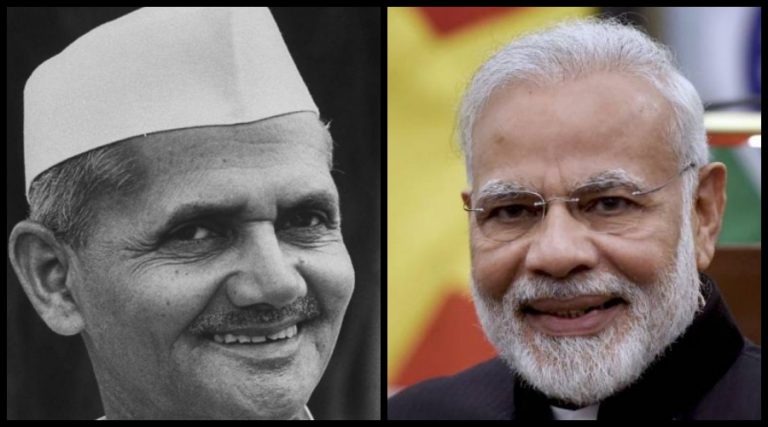
In a recent interview, Sunil Shastri, the son of one of the tallest Prime Ministers of the country Lal Bahadur Shastri, has compared Narendra Modi to his father. Suni Shastri is of the view that the Prime Minister Modi is exactly like his father.

Sunil Shastri said that PM Modi was working exactly like his father, raising the honour of India all over the world and devising comprehensive development schemes within India like ‘Sabka Sath Sabka Vikas’.

He also asserted that there was no alternative to Prime Minister Modi in Indian politics today and that the BJP will return to power in 2019 by winning more number of seats.

Talking to India today, he said that he felt honoured to be the son of that great man who never thought about himself and only did his duty towards the country. It is in this context, he compared Modi to his father, as both are believed to be true statesmen, working for the betterment of the nation.

When his father passed away in Tashkent, he had left them a small place to live and spoke about the simplicity of his father. He said that his father was a simple man who believed in making India proud but did not think about any personal gains. He was of the view that the current Prime Minister’s lifestyle is similar to his father’s way of living.

Lal Bahadur Shastri was one of the few leaders who had earned respect from all over the political spectrum. In 1965, Jansangh founder Pt. Deen Dayal Upadhyay had praised Shastri for his leadership of the country by calling him ‘Jan Nayak’.

Sunil Shastri was formerly with the Congress party. He also represented Gorakhpur Urban constituency in Uttar Pradesh Legislative assembly and was also cabinet minister under different Congress governments from 1980-89 and is currently a member of the Bharatiya Janata Party.