Home Blog Page 7166

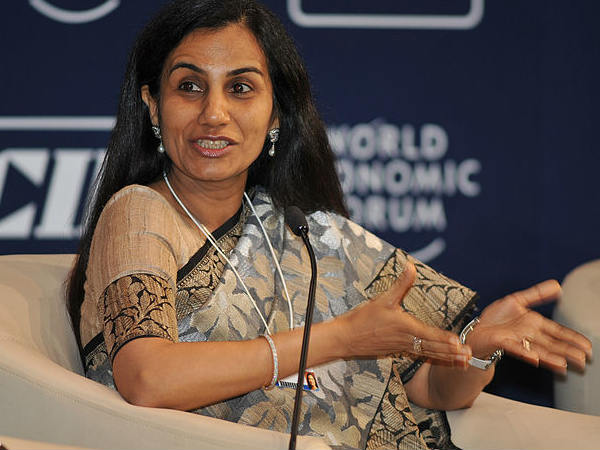
ICICI Bank denies claims of Chanda Kochhar’s ‘indefinite leave’, official says ‘planned leave’

Earlier today media reports claimed that ICICI Bank CEO Chanda Kochhar has been asked to go on a leave till a probe ordered against her by the bank board is completed. However, ICICI Bank officials have reportedly denied it and stated that her leave was planned. They also claimed that they are not looking for her successor as of now.


A probe was ordered on Kochhar after fresh claims of ‘quid pro quo’ dealings with the Videocon Group emerged when a whistleblower claimed she had violated rules on the code of conduct and ‘conflicts of interest’ norms. As per reports, the ICICI Bank has stated that the inquiry on Kochhar will be overseen by the bank’s audit committee and will be led by an independent person, most likely a retired Supreme Court Judge. The bank officials have also reportedly stated that the inquiry will begin next week and will be completed within two months. A law firm and a forensic auditor also are expected to be roped in.

Chanda Kochhar has been under the scanner since news emerged that the CBI has started a preliminary enquiry against her husband Deepak Kochhar has been involved in quid pro quo business dealings with Venugopal Dhoot, the promoter of Videocon Group. Though Chanda was not named as a suspect in the initial investigation, it was alleged that the Videocon Group was given a loan of Rs 3,250 crores from the ICICI Bank under Chanda Kochhar’s approval and six months later, Venugopal Dhoot had set up a joint venture with Deepak Kochhar. The Joint Venture, indirectly funded and financed by Dhoot, was named NuPower Renewables Pvt Ltd. After a series of transactions and questionable transfers of shares came to be owned by Deepak Kochhar, his father and Chanda’s brother’s wife.

It is notable that almost 86% of the 3250 crores loan remains unpaid and was declared NPA in 2017. Both Deepak Kochhar and Venugopal Dhoot have been banned from foreign travel by authorities by issuing a Look out Circular. Deepak Kochhar and the family members involved with financial dealings of NuPower Renewables have been questioned several times by the CBI.

BJP’s by-poll conundrum : Of victory, loss, lessons to be learnt and the road ahead

Bharatiya Janata Party (BJP) was a net loser in the by-polls, which were held on May 28th and the results of which were declared on May 31st. The party has had a bad by-poll record for a while now – OpIndia had covered the details earlier in February.

Four distinct themes emerge from the May 31st results for the party.

The Uttar Pradesh debacle, or was it?

BJP lost the Kairana Lok Sabha seat to the Rashtriya Lok Dal and the Noorpur Vidhan Sabha seat to the Samajwadi Party.

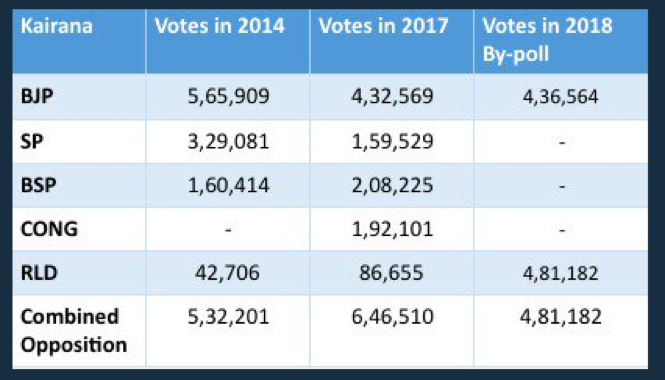
BJP had won Kairana only twice – once in 1998 and then in 2014. In 2014, the BJP MP Hukum Singh won the seat with a 50.5% vote share, when the voter turnout exceeded 73%. It was then a four-cornered fight. In the 2017 assembly election, BJP still retained the constituency across its assembly segments in a five-cornered fight, but the vote share fell to 40%.

In 2018, BJP got 45.7% vote while the combined opposition won. The voter turnout was only 54%. The BJP voters did not turn up or the party did not work hard enough to ensure their voters left their houses to vote. Either way, the party can take solace in the fact that the lower turnout did it in.

The details of votes across elections below, taken from the Twitter feed of @wordofthefree.
The same analysis for Noorpur depicts that BJP was a beneficiary of vote split both in 2014 and in 2017. This was not a core BJP seat. Despite this, the party actually improved its vote tally significantly over last year’s state elections. The turnout for this assembly segment reduced from 67% to 61% between 2017 and now. The loss margin of 5.6K votes is not a big one.
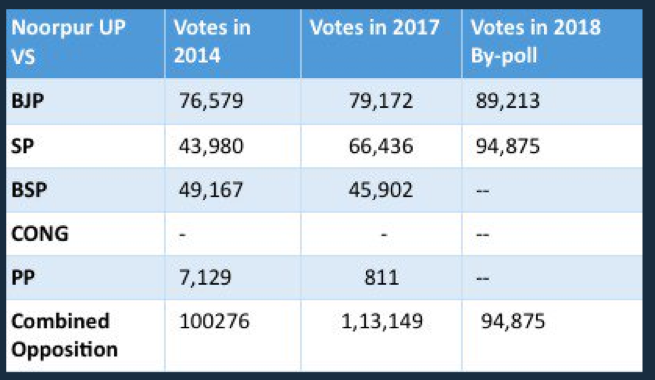
The UP results hence do not imply a BJP meltdown in the state. In fact, the party should be more worried about the Gorakhpur by-poll loss than what happened on May 31st. Sujoy Ghosh has covered great details in this articles already.

The Maharashtra story – Importance of marginal seats

Two Lok Sabha seats – Palghar and Bhandara-Gondia polled in Maharashtra. The BJP was widely expected to lose Palghar, but retain Bhandara-Gondia in a close contest. The results were the other way round.

The BJP won Palghar in a multi-cornered fight overcoming the challenge of Shiv Sena, Bahujan Vikas Aghadi – a local strongman party, Communists, and the Congress. It was a narrow win, but it cemented the credentials of Chief Minister Devendra Fadnavis further, who has had an impeccable electoral track record through his term.

The loss of Bhandara-Gondia however, poses a question mark. This seat, carved out after the 2008-09 delimitation, is a classic example of “cherry on the top” seats for the BJP. It is not the traditional strong party but can punch beyond its weight, as it did in 2014. Amidst very poor turnout – in the mid-40s – the BJP lost the seat by about 40K votes.

The lesson from Maharashtra is perhaps more important than the one from the Uttar Pradesh. Firstly, the BJP has to identify all marginal seats which it won (and lost) in 2014. There has to be a constituency-wise strategy for each seat for 2019, over and above the Modi factor which will be at work in the main Lok Sabha election.

Secondly, between BJP and Shiv Sena, the alliance can completely sweep the Lok Sabha polls in 2019. But will the Shiv Sena play ball? Its chief, Uddhav Thackeray has been belligerent and reiterated his resolve of going alone after the by-poll results. Fadnavis and Union Minister Hansraj Ahir, on the other hand, spoke cautiously and expressed hope that the alliance will not crack. In fact, BJP President Amit Shah himself had said a few days ago that he hopes to keep the alliance intact. It will now be again up to Fadnavis to firm and resurrect the Shiv Sena alliance. The big question is what price Thackeray will extract to change his mind.

The problem of maintaining allies

Through this Narendra Modi term, the BJP has had trouble with managing its allies. The problems with the allies were the other big story of the by-polls.

Shiromani Akali Dal collapsed in Shahkot, where Congress took a big lead of 38K on a seat won by its rival just last year.

With confusion prevailing on a tie-up with All Jharkhand Students Union, the BJP lost the opportunity in both Jharkhand seats. In Gomia, the Jharkhand Mukti Morcha retained the seat with about 39% vote share. The BJP and AJSU combined polled much higher than JMM. In Silli, JMM again won against the AJSU. Though BJP didn’t contest this seat, the alliance indecision prevailed for a while.

In Bihar, the Janata Dal United (JDU) lost its Jokihat seat to the Rashtriya Janata Dal of Lalu Prasad Yadav. The JDU spokesperson Pavan Varma lashed out at the BJP after the results calling for the party to live through its alliance dharma.

The BJP has a problem at its hand managing allies. It had done an excellent job in this department during the 2014 Lok Sabha election and in subsequent state elections, carving out several niche and useful tie-ups. If the party continues to weaken, the potential 2019 allies will play hardball. This will suck a lot of management bandwidth as the polls near.

Knocking on new doors, but they are not opening

West Bengal and Kerala are the two states which the BJP is concentrating in a big way for 2019 Lok Sabha polls. One seat each from these states went to the by-polls.

In Maheshtala in West Bengal, the BJP increased its vote share from 7.7% to 24%, but the Trinamool won easily with a 59% vote share. The BJP has grown remarkably in the state, and 25% now seems to be the base for the party in many areas. But if there is a grand Trinamool – Congress – Communist alliance for 2019, the BJP will have very little chance of winning any seats in the state. Even otherwise, it will need to go from 25% to 45% quickly to make a dent in the Lok Sabha polls. This journey, at least in some seats, has to be taken up rapidly.

In Kerala, BJP polled almost 23% votes in Chengannur, but it was not sufficient to depose the Congress as the runners-up. The Communists won the seat easily with almost 45% votes. Like in West Bengal, the BJP has to focus on a few constituencies where it can ramp up its vote share to mid-forties. The task is of course much difficult in Kerala than in West Bengal.

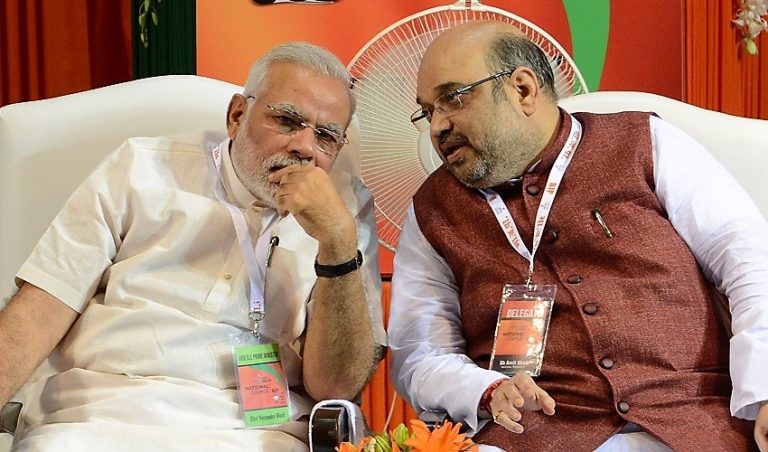
The by-poll results leave a lot for the BJP to mull over. The party has created very strong state networks, but Narendra Modi and Amit Shah have to find ways to enthuse this cadre at the same level of 2014.


Jammu and Kashmir Police arrests a ‘Maulvi’ for physically assaulting an 8 year old boy

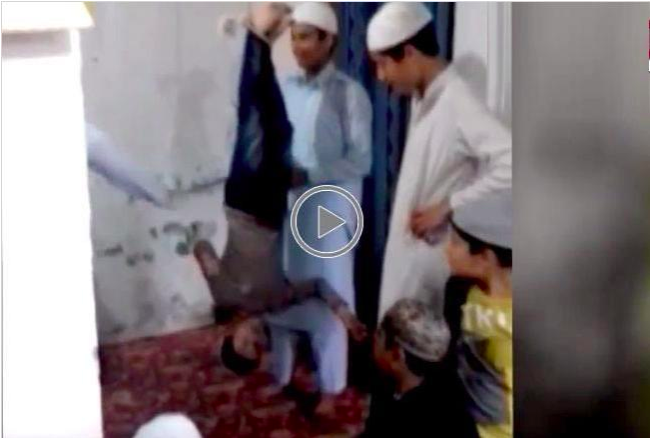
On basis of a video clip that has gone viral on social media, Jammu and Kashmir Police has arrested a ‘Maulvi’ of a local dargah for allegedly hanging an 8-year-old boy upside down and physically assaulting him.


The accused is identified as Mushtaq Ahmed Dhar and further investigation is underway.

The video is reportedly from a dargah in Baramullah, Jammu and Kashmir.

This is not the first time crimes against minors perpetrated by ‘Maulvis’ have been reported from the valley. Earlier, a Maulvi was booked for allegedly raping scores of minor boys under the pretext of summoning djinns and driving away ‘evil eye’. In September last year, Supreme Court had accepted the appeal against the acquittal of Kashmiri ‘Peer’, Gulzar Ahmad Bhat, who was accused of raping four minor girls. Recently, a Madarsa teacher was held in Kashmir for sexually assaulting a minor student.

Akhilesh, Mulayam start vacating their government bungalows as deadline approaches

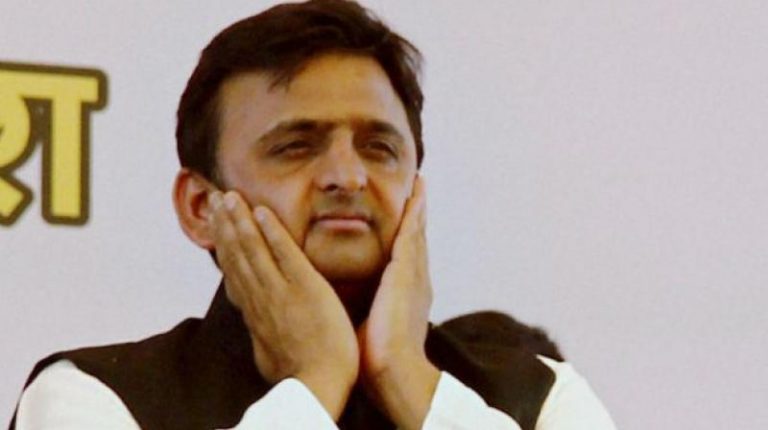
Former UP Chief Ministers Mulayam Singh Yadav and Akhilesh Yadav have started vacating the government bungalows in Lucknow as the June 3 deadline approaches. According to reports, vehicles were seen leaving the residences of both the former CMs.

The estate department of Uttar Pradesh government had on May 18 served a notice to 6 former CMs to vacate the government allocated bungalows they had been occupying. They are namely, Kalyan Singh, Rajnath Singh, ND Tiwari, Mayawati, Akhilesh and Mulayam Singh Yadav. This was after a 7th May Supreme Court order on a PIL filed by an NGO Lokprahari. So far only 2 of the former CMs, namely Rajnath Singh and Kalyan Singh have vacated their bungalows.

As reported earlier, both Akhilesh and Mulayam had moved to the Supreme Court seeking two years time to vacate their bungalows but the SC is reportedly yet to provide them with any relief and the deadline for vacating expires on June 3rd. While Akhilesh had cited that he has no residence to move into and he has not been able to find a property on rent so far, his father Mulayam had given the excuse that none of his houses could accommodate his huge security staff and guests he receives every day.

As the Supreme Court did not allow them any relief, both father and son are now reportedly vacating their respective bungalows. They were, however, not the only ex-CMs giving excuses to retain their bungalows. Former CM ND Tiwari is reportedly yet to vacate his bungalow too and his wife had requested CM Yogi Adityanath to allow her to stay as her husband is undergoing treatment in Delhi. A signboard reading ‘Pandit Narayan Dutt Tiwari Sarvajan Vikas Foundation’ has reportedly appeared on the Mall Avenue bungalow allocated to Tiwari.

Former CM and BSP chief Mayawati has also reportedly tried a similar manoeuvre. As per reports, she has renamed the 13, Mall Avenue house as ‘Kanshiram Memorial Vishram Sthal’. On Wednesday she reportedly sent the keys of her other residence at Lal Bahadur Shastri Marg to the UP government authorities via speed post and insisting that the Mall Avenue house was allocated to Kanshi Ram memorial. Indian Express quoted UP estate department officer Yogesh Kumar Shukla as saying that Mayawati was allocated the Mall Avenue bungalow as former CM and she should vacate it.

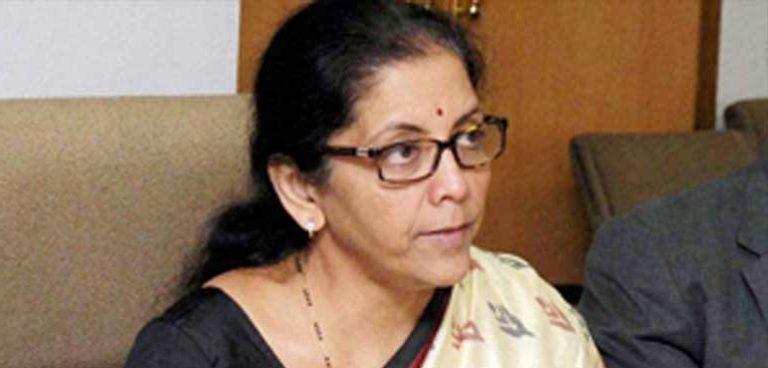
Defence Minister Nirmala Sitharaman denies Indian Express’ report on alleged kickbacks received by officials

Defence Minister Nirmala Sitharaman has denied media reports of ministry officials receiving kickbacks for the purchase of spares for AN-32 aircraft.


A report appeared in Indian Express claiming kickbacks worth Rs. 17.5 crore were given to Indian officials in MoD by a Ukrainian company, as investigated by Ukraine’s anti-corruption bureau. The report claims that Indian Express accessed records which showed National Anti-corruption Bureau of Ukraine (NAB) has sent a request for international legal assistance to Ministry of Home Affairs to identify Defence Ministry officials who participated in negotiations of the contract signed in November 2014 with Ukraine’s state-run Spetstechnoexport and India’s Hindustan Aeronautics Limited (HAL). The report alleges that Stetstechnoexport also signed another contract in August 2015 with a little-known Global Marketing SP Ltd for its implementation and transferred USD 2.6 million to an account opened in the UAE.

The Ministry of Defence has issued a statement denied the reports and calling it ‘misleading’. According to the statement, neither MoD nor IAF (Indian Air Force) has neither interacted nor signed any agreement with Global Marketing SP Ltd., nor were any such agreements witnessed. The IAF further clarified that Global Marketing SP Ltd. has not participated in any of the meetings held towards finalization of the contract with STE Ukraine.

The MoD confirmed that Embassy of Ukraine in India had sent request to MHA (Ministry of Home Affairs) and MEA (Ministry of External Affairs) for legal assistance in criminal case filed against officials of Ukraine Government’s State Owned Enterprise (STE). Such request had no allegations against government of India official.

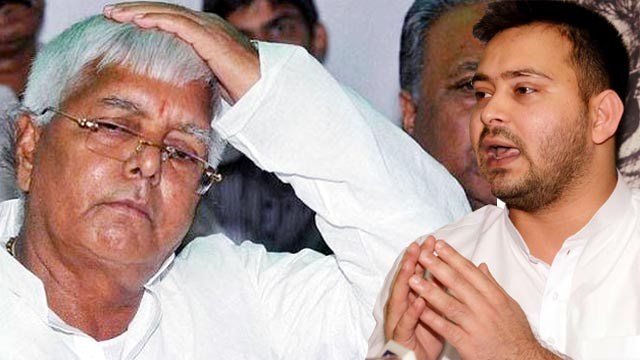
PMLA authority : Lalu’s family owned properties gained by money laundering, attachment to continue

0

PMLA authority has held that 11 plots worth of 44.75 cr earlier attached by the Enforcement Directorate with connections to a firm linked to Lalu Prasad’s family are indeed money laundering assets and ordered the continuation of their attachment.

The land is around 3 acres and located in Danapur near Bihar’s Capital Patna, has been attached by the central agency in December last year in connection with IRCTC hotel allotment case where the agency alleges foul play.

The CBI in last year filed an FIR alleging that Mr Lalu Prasad during his stint as Railway minister handed over the maintenance of two Indian Railway Catering and Tourism corporation hotels to a company in exchange of a bribe in the form of prime land, in 2004.

Tushar V Shah, a member of the adjudicating authority of the PMLA, issued an order stating, “I find that the immovable properties provisionally attached are involved in money laundering.”

Shah furthered by confirming the continuation of attachment of these properties for at least the next ninety days or till the case is sub-judice or there is an order for confiscation by the special court pertaining to these properties.

The Enforcement Directorate will now seize the property worth 44.75 crores when the ED attached the property last year, a shopping mall was supposed to be built on the land. The land pieces are under Lara Projects LLP. The managing partners of this firm are Lalu’s wife Rabri Devi and his two sons and Ms Meridian Construction India Limited, which is promoted by an MLA from Lalu Prasad’s Rashtriya Janata Dal.

Why Kairana result is surprisingly strong for BJP and why the opposition deserved to win today

I was waiting all day for the final numbers to emerge.


A win is a win and a defeat is a defeat. But I always say that in every victory are the seeds of defeat and in every defeat the seeds of victory. When the BJP swept Uttar Pradesh in March 2017, I was quite sombre indeed, seeing as how hard the arithmetic would get as SP+BSP+Cong+RLD would form a Grand Alliance.

Today I am quite the opposite, really upbeat seeing as how the BJP … believe it or not … is beginning to turn around the ‘impossible’ arithmetic of the Grand Alliance.

Let’s quickly run down the vote shares:

2018: BJP 46.5%  United Opposition : 51.1%

2017: BJP 38.2%  United Opposition : 57.2%

The BJP was up against an ‘impossible’ wall to climb: a gap of 19% in vote shares. So how did the BJP do in this task?

The lead of 19% that the United Opposition had over the BJP has shrunk to just 4.6%. This shows that mutual transfer of votes between opposition parties has simply failed to take off on the ground in Uttar Pradesh.

At this point you might be tempted to say: Look, maybe the Opposition didn’t get as massive a lead as they expected. But a 4.6% lead is not small and is more than enough for a fairly big victory. Spread out uniformly across Uttar Pradesh, it could be enough even to sweep the state. Are you looking to claim a ‘moral victory’?

To that, I say: not at all. Because we have not yet adjusted for the biggest factor while understanding bypolls.

The turnout.

Since these bypolls do not really play any role in deciding the Central/State government, a substantial population would stay at home. Only the most motivated voters would come out. So, how many voters stayed back home in Kairana? Let’s find out.

In 2018, Kairana LS saw a voter turnout of just 54%, which is a *huge* drop of 18% from the turnout in 2014.

And here are the turnout figures of 2017 for the five assembly seats that make up the Kairana LS seat:

Constituency 2 – Nakur : 77.56%

Constituency 7 – Gangoh : 72.01%

Constituency 8 – Kairana : 69.57%

Constituency 9 – Thana Bhawan : 68.31%

Constituency 10 – Shamli : 65.48%

This is much more than the mere 54% turnout recorded in Kairana bypoll.

No reasonable projection for the real election in 2019 can be made without thinking about these “missing” 15% of voters. The gap between BJP and the United Opposition was 4.6% in this bypoll.

It is not hard to imagine whose voters did not come out for this bypoll. Could Muslims, who are highly motivated to strike a blow against the BJP, possibly have stayed home, that too when they were given the opportunity to elect Tabassum Begum to be the only Muslim representing UP in this Lok Sabha?

Come on…

Will the United Opposition’s 4.6% margin still hold when the remaining 15% come out of their homes to vote in 2019?

This seems highly doubtful.

Now let us consider the demographics of Kairana Lok Sabha constituency. The Muslims account for around 35%, but accounting for a higher turnout among them, it may be safely assumed that Muslims make up around 40% of the votes counted today.

This means that roughly 60% of the vote came from Hindus, of which 46.5% went to the BJP.

That is a staggering 77%. More than the three-fourths of Hindus who voted chose the BJP.

This is really bad news for overeager anchors who are desperate to write the BJP’s obituary. Forget alienating Dalits, Jats, Jatavs … etc from the BJP, we have just witnessed a massively polarized, United Hindu vote for the BJP in Western Uttar Pradesh.

The BJP’s performance among Hindu voters across ALL sections of society today in Kairana now rivals the performance of SP among Yadav voters and performance of Mayawati among Jatav voters!

If this level of Hindu unity repeats across Uttar Pradesh, the United Opposition is in a world of trouble.

Especially as the opposition and its media cheerleaders go into overdrive celebrating this bypoll win in Kairana. The only thing they are likely to achieve is raising the level of Hindu consolidation in favour of BJP.

Remember that it is already 77%.  Every Hindu family in Kairana today is smarting in anger at the defeat at the hands of Tabassum Begum. Wonder how they will react to the celebrations of the United Opposition.

One final comment. I am not trying to take anything away from the Opposition, nor advocating for a ‘moral victory’. They won fair and square and deserve to enjoy their win. I just want to illustrate with an example.

Back when I was a little child, India would lose almost every cricket match to Pakistan. And towards the end, I would begin to cry.  My father would then intervene maturely and say: “They played better. They had better commitment. They deserved to win.”

I will say the same to BJP supporters today who must be distraught. They had better commitment. They stood in lines in the blistering heat without a morsel of food nor a drop of water. They deserved to win.

‘Kimbho’: swadeshi messaging app launched by Patanjali goes ‘missing’ from Play Store over security concerns

Yoga guru Baba Ramdev’s Patanjali on Wednesday launched a new swadeshi messaging application called ‘Kimbho’ to compete with WhatsApp. The tagline of the app says: ‘Ab Bharat Bolega (Now India will speak)’.

Patanjali has launched new swadeshi messaging application

However, the Kimbho app has disappeared from the Play Store citing security concern. Some security analysts have expressed concern about the application’s security status. Patanjali has not come up with any statement regarding the removal of App from the Play store. The messaging is said to be built on a platform called ‘Bolo’ and the Patanjali team has not even replaced the name ‘Bolo’ on most of the places in the App. Interestingly, the application is not taken down from the Apple App store.


The launch of Patanjali messaging application comes after Ramdev recently announced a tie-up with BSNL to provide employees of Patanjali with a special SIM card, featuring low-cost talk plans

The Swadeshi Samriddhi SIM comes at a cost of Rs 144, for which users can avail unlimited calls throughout the country, 2 GB data and send 100 SMS. Initially, this benefit is offered to only Patanjali employees and office bearers. After the complete rollout of the SIM cards, customers will get a 10 percent discount on Patanjali products.

Hawala terror funding case : Delhi high court rejects Hizbul Mujahideen Chief’s son’s bail plea

0

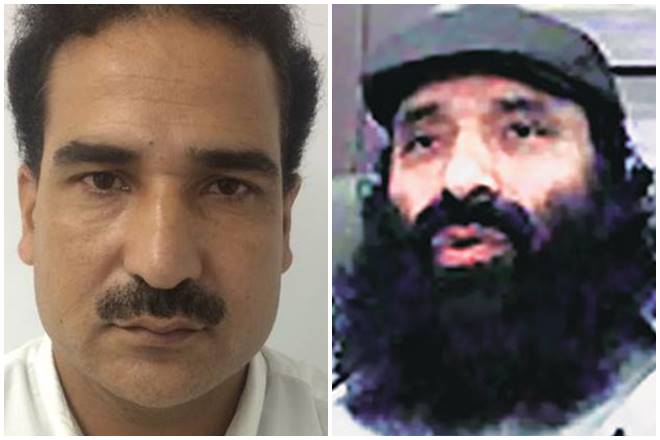
The Delhi High Court dismissed the Bail plea of Hizbul Mujahideen’s chief Salahuddin’s son Syed Shahid Yusuf in a hawala terror funding case on Thursday.

Yusuf, a 42-year-old agricultural assistant in central Kashmir’s Budgam was arrested by the National Investigation Agency (NIA) on October 24th, 2017. The NIA filed a charge sheet against Yusuf in terror funding case on April, 21.

The NIA alleges that Yusuf is linked with banned terror outfits like Hizbul Mujahideen. The case against Yusuf was brought on the information that funds from Pakistan were re-routed to Jammu and Kashmir via Delhi using Hawala channels to aid terror activities.

NIA’s charge-sheet against Yusuf mentions, section 120-B of the IPC and 13, 18, 20, 17, 21, 40 and 38 of the unlawful activities (Prevention) Act, 1967 for willingly collecting ‘terror funds’ to aid the terrorist cause in Jammu and Kashmir.

The NIA in 2011 had arrested a number of persons including one Ghulam Mohd. Bhat with Rs. 21.2 lakhs, NIA believes that Yusuf is one of the contacts of Bhat. Along with Yusuf, six others have been mentioned in the charge-sheet. Yusuf is allegedly involved in collecting funds from a terrorist outfit in Saudi Arabia as well as others NIA believes that Yusuf was carrying out his father Syed Salahuddin’s commands. According to NIA the Hizbul chief’s son has received around 4.5 lakhs so far from eight international wire transfers.

Out of these seven accused, two namely Mohd. Maqbool Pandit and Aijaz Ahmed Bhat are absconding. Three accused people namely Mohammad Sidiq Ganai, Ghulam Jeelani Liloo, and Farooq Ahmad Dagga have already pleaded guilty.

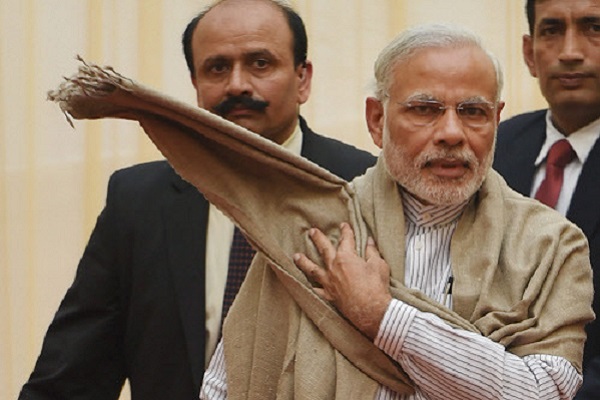
PM Modi refuses to sign MoU with Britain after it didn’t entertain India’s request for improving visa process

Prime Minister Narendra Modi refused to sign a Memorandum of understanding (MoU) with the United Kingdom during his recent visit to the British Isles, owing to the latter not keeping their end of the bargain, Times of India has reported.

As per the report, the MoU comprised of India agreeing to take back illegal immigrants of its origin, in exchange for Britain offering Indians easier access to visas. The legwork with regards to this was laid down by Minister of State for Home Affairs Kiren Rijiju and UK’s immigration minister Caroline Nokes back in January.

The problem arose in the deal when India found that there was no progress on Britain’s end of the bargain which led Modi to refuse to sign the MoU in April, during his visit to London.

This included Britain denying visas to spouses and rejecting visa applications under frivolous pretexts. India wanted that the visa environment improves mainly in case of short-term visas which concern students and corporate employees.

Had things gone on according to plan, Indians would have benefited via an improved Visa experience and Britain too would have rid itself of illegal immigrants having no legal claim to stay in their country.

Britain and India in recent days have also been logged in discussion with regards to issues like extradition of fugitives and economic offenders like Vijay Mallya and Lalit Modi. As reported, India has sought that the UK speed up its extradition process in such matters.

The two countries have also had a bit of a tussle in Vijay Mallya’s extradition case, with UK courts hearing his case observing that the Indian jails were not in proper condition. PM Modi in this regard had retorted to his UK counterpart Theresa May that these jails which the UK courts talked about were the same where the British colonial government had imprisoned leaders like Gandhi and Nehru.