Home Blog Page 7288

Journalist who featured in Radia tapes ‘warns’ bureaucrats after BJP loses UP by-polls

0

MK Venu, currently the Founding Editor of the leftist propaganda website ‘The Wire’, has issued a ‘warning’ to bureaucrats and government agencies, suggesting that BJP will lose the 2019 Lok Sabha polls and a government sympathetic to his ilk will come back to power (that will teach a lesson to bureaucrats he does not like).

Venu made this conclusion and issued the virtual threat at a time BJP appeared set to lose by-polls in Uttar Pradesh, though counting of votes was not over by then. Venu calls himself an independent journalist.

He unilaterally declared some investigating agencies ‘partisan’ and issued a warning to them, asking them to ‘start behaving’ – ominously similar to the threat Karti Chidambaram, son of senior Congress leader P Chidambaram, had reportedly issued to the CBI officers earlier:


Although he didn’t specify what ‘partisan’ investigations he was referring to, it is believed that he could be referring to the investigations into corruption cases involving the Chidambarams, as well as cases against his own fraternity such as money laundering and tax evasion cases against NDTV promoters.

Interestingly, The Wire has been on a mission to downplay roles of the Chidambarams in various corruption cases. Their latest attempt was to justify a decision taken by P Chidambaram that he took as the Union Finance Minister on the day 2014 Lok Sabha election results were announced and it was known that Congress is losing. The decision is believed to be one of the reasons why scams like PNB-Nirav Modi one were enabled.

The ‘warning’ issued by MK Venu was criticised by many on the social media:


This is not for the first time when MK Venu is in news for wrong reasons. Earlier, Venu and his partner at ‘The Wire’, Siddharth Varadarajan, had to face embarrassment when it was alleged that they were paid a hefty amount of taxpayers’ money for doing a handful of shows by the Rajya Sabha TV, a news channel then led by the former Vice President of India and Congress leader Hamid Ansari. The Wire has hired some former Rajya Sabha TV employees, like anchor Arfa Khanum, after Ansari’s term ended and BJP leader Venkaiah Naidu became the new Vice President.

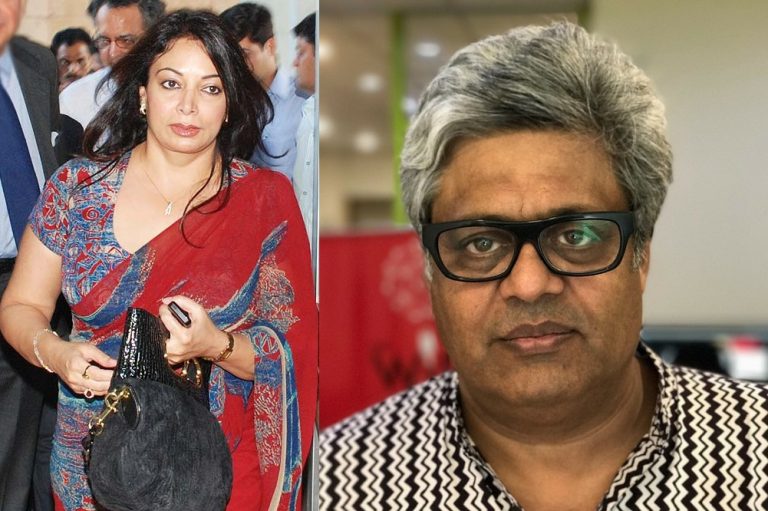
MK Venu had also featured in Radia tapes controversy back in 2010, where he is heard requesting corporate lobbyist Niira Radia to introduce a journalist named ‘Rohini Singh’ to her (lobbyist’s) circle (of politicians, businessmen, lobbyists, etc.). Radia was believed to be using journalists as brokers for securing favourable deals for her corporate clients from the UPA government. A journalist named ‘Rohini Singh’ is currently working with The Wire as well.

Journalists assaulted in Jammu while questioning Rohingyas for having access to illegal SIM cards

0

A total of four journalists and an RTI activist were assaulted in Jammu on Tuesday, while they were reporting from Kerain Talab area of Jammu’s Bathindi, regrading Rohingyas having access to SIM cards.

The reporters which comprised of Republic TV journalist Tejinder Sodhi plus his cameraman and India news journalist Ajay Jandial plus his cameraman were trying to ascertain how the Rohingyas managed to get sim cards in absence of documents required for identity verification purposes.

Accompanying them was also Rohit Choudhary, whose RTI query had revealed that 27 Rohingya families were living in Jammu and all of them had mobile numbers. As per him, one needs valid documents like Aadhaar to get the SIM cards. He also disputed the figure quoted by the government and claimed that there are at least 2000 Rohingyas living in Jammu.

As per Republic TV’s bureau head Tejinder Sodhi, while they were covering the story, two people alighted from a vehicle and started to attack them with rods and sticks. They even tried to forcibly snatch their cameras and mikes.

A snippet of the assault was tweeted by the RTI activist:


Since the attack, the Jammu police has arrested two people namely Mohammad Ashraf and Sher Mohammad in connection with this attack. The police have claimed that the attack was perpetrated by the locals without the involvement of the Rohingyas, but RTI activist Rohit Choudhary has claimed otherwise.

While speaking to Swarajya, Rohit claimed that while the said youths were assaulting the journalists, the Rohingyas proceeded to encourage them by raising slogans and failed to come to the journalists’ aid. Regarding obtaining SIM cards, Rohit questioned whether the administration has provided the Rohingyas with the relevant documents needed to get the cards.

As per the report, a case has now been filed against the arrested youths under Sections 341 (wrongful restraint), 323 (causing hurt), 382 (theft after preparation made for causing death, hurt, or restraint ) and 34 (criminal acts done by several persons) of the Indian Penal Code.

Following this attack, the Jammu Press Club has come out with a condemnation and appealed to the central government to ensure the safety of working journalists.

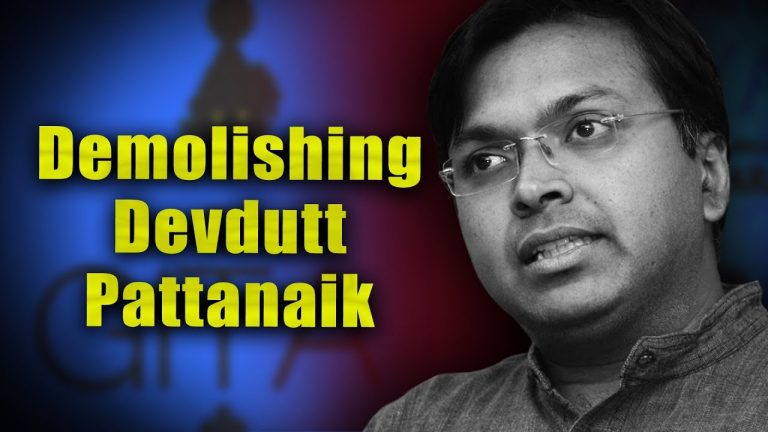
Devdutt Pattanaik’s work is full of errors, manipulations, and lies: Author Nityanand Misra

0

Nityananda Misra is an IIM graduate working in the financial industry. He is passionate about Hindu scriptures and has studied them out of interest. Mr Misra has also authored books titled ‘Mahaviri: Hanuman-Chalisa Demystified‘ and ‘The OM Mala – Meanings Of The Mystic Sound‘.

Nityanand has provided a detailed criticism of Devdutt Pattanaik’s works in a recent conversation with Rajiv Malhotra. The speaker reveals that the self-proclaimed mythologist’s writing is not based on stories in Hindu Puranas. He also reveals that the author might be misinterpreting Sanskrit words.


Nityanand claims that Devdutt has been inventing his own stories and selling them as Hindu mythology. In addition to this, Misra says that the Pattanaik has a special hatred for Brahmins and doesn’t accept genuine criticism of his work.


The full conversation can be watched below :

This is a detailed interview where he gives a point by point analysis of Pattanaik’s work. As summarised in the description of the video, Misra’s conversation with Rajiv Malhotra covers these topics

  • Instances that indicate Devdutt does not know even the basics of Sanskrit.
  • The mythologist’s obsession with looking for sexual meanings and his admiration for Wendy Doniger in the past.
  • Pattanaik’s serious errors in translating very important Sanskrit words and gives them a completely distorted meaning.
  • The self-proclaimed mythologist’s artificially inflated brand name that cannot be justified on merit.

Mr Misra has also written a detailed article criticising one of his most famous works ‘My Gita’. The book is a best seller and is being read widely in order to understand one of the most important Hindu scriptures. However, according to critics of Pattanaik, it contains serious errors.


It appears that Devdutt Pattanaik’s works are not indisputable and accurate interpretations of Hindu mythology and philosophy. By watering down its contents and misinterpreting them, Devdutt seems to be pursuing a certain politically motivated campaign to tilt his reader’s opinions towards a left-leaning ideology.

In run up to the Assembly election, BJP Karnataka Twitter account is winning the Internet

As we inch closer to the Karnataka legislative assembly elections, the social media team of the Bharatiya Janata Party (BJP), Karnataka, is winning the Internet by giving witty and tongue-in-cheek replies to Congress and Chief Minister Siddaramaiah. Here are some of the tweets which caught our attention:

Karnataka Congress recently put out a series of tweets called ‘Yeddyurappa for Dummies’, in an attempt to mock BJP Karnataka President. To that, the BJP Karnataka’s official Twitter handle gave stinging rebuttals.

In the first post in the series, INC Karnataka had accused Yeddyurappa of corruption stating that he was sent to prison for ‘accepting bribes’. In their own words, BJP Karnataka hit the ball out of the park.


BJP Karnataka went on to explain to Congress President Rahul Gandhi the difference between judicial custody and jail upon conviction, with an example.


If that wasn’t enough, they gave another example, something that might help him understand the situation better, considering he was the subject.


The second point raised by Karnataka Congress was accusing Yeddyurappa of being anti-farmer. To that, BJP Karnataka quipped and reminded Congress of the number of farmers who committed suicide during Siddaramaiah regime.


Then they accused Yeddyurappa with financial instability claiming how he mismanaged Karnataka’s finances and Siddaramaiah had to pay off those loans. BJP Karnataka, however, was ready with a comeback. They counter-accused Siddaramaiah of incurring more debt in the five years he has been the chief minister of Karnataka than the all previous chief ministers combined, taking debt per Kannadiga to Rs. 44,769.


Finally, on the topic of governance, BJP Karnataka hit back with comparing Congress talking against corruption to that of Pakistan talking against terrorism.


As the electoral battleground heats up in Karnataka, we look forward to a nail-biting climax.

Has enrollment increased because of RTE as claimed by MoS at MHRD in his parliament answer?

0

The RTE (right to education) Act which was passed under UPA has been under constant criticism because of its anti-Hindu stance. One of the main provisions of the act requires reservation of 25% of seats in a school to economically backward students. The RTE act [pdf] says :

12. (1) For the purposes of this Act, a school,—
(b) specified in sub-clause (ii) of clause (n) of section 2 shall provide free and compulsory elementary education to such proportion of children admitted therein as its annual recurring aid or grants so received bears to its annual recurring expenses, subject to a minimum of twenty-five per cent.;

(c) specified in sub-clauses (iii) and (iv) of clause (n) of section 2 shall admit in class I, to the extent of at least twenty-five per cent. of the strength of that class, children belonging to weaker section and disadvantaged group in the neighbourhood and provide free and compulsory elementary education till its completion: Provided further that where a school specified in clause (n) of section 2 imparts pre-school education, the provisions of clauses (a) to (c) shall apply for admission to such pre-school education

(2) The school specified in sub-clause (iv) of clause (n) of section 2 providing free and compulsory elementary education as specified in clause (c) of sub-section (1) shall be reimbursed expenditure so incurred by it to the extent of per-child-expenditure incurred by the State, or the actual amount charged from the child, whichever is less, in such manner as may be prescribed:

The act also promises that the per-student expenditure will be reimbursed to unaided private schools. However, media reports suggest that the reimbursements are not being received by schools in time. In addition to this, arbitrary amounts are fixed as the reimbursement as per media reports. Thus private schools have now come under bureaucratic control, thereby affecting their finances and operation.

This provision to reserve 25% of seats for economically weaker sections, does not apply to institutions run by minorities as per the act. The act has transferred the significant share of responsibility of providing quality education to children from the government to the private sector schools run by Hindus. This act has also reduced the pressure on officials to improve facilities and quality in existing government schools.

Recently, a question asked by a parliamentarian Sushil Kumar Singh in Lok Sabha has brought to the attention of the public the implications of the act. The answer [PDF] to the question on implementation of RTE given by MoS in HRD ministry Upendra Kushwaha provides an outline of teacher-pupil ratios, assessment surveys and enrollment of children in primary schools. The answer claims that the number of admissions has increased in the wake of implementation of RTE act.  The part of the question regarding enrollments and the answer provided by the minister are reproduced below :

Will the Minister of HUMAN RESOURCE DEVELOPMENT be pleased to state:

(a) whether it is a fact that rate of admission in schools has increased in the wake of implementation of the Right to Education Act, 2009 in the country and if so, the details thereof; 

The answer of the minister to (a) part of the question are reproduced below (emphasis added)

(a): Yes, Madam. The Right of Children to Free and Compulsory Education (RTE) Act, 2009, mandates that every child of the age of six to fourteen years shall have the right to free and compulsory education in a neighbourhood school till the completion of his or her elementary education. The Sarva Shiksha Abhiyan (SSA) Programme has been designated as the vehicle for implementing the provisions of RTE Act, 2009. Since inception of SSA in 2001, there has been significant progress in achieving near universal enrolment. As per UDISE 2015-16, enrolment of children in elementary schools has increased from 18.78 crore in 2009-10 to 19.67 crore in 2015-16.

However, an analysis of the number of enrollments before and after the RTE act by Twitter user Hariprasad (@pranasutra) reveals that the answer is not entirely correct.


After comparing the numbers he came to the conclusion that the growth rate in admissions had actually fallen rather than risen in the said years. The source referred to by him is the same as that of the minister. The links to the same are available here.


He went on to say that the decline in admission rates had been attributed to falling of population growth. Though it may or may not be true, it is clearly wrong to attribute the growth in the number of admissions to RTE Act. The minister may have misled the house on the matter.


The claim that RTE has led to an increase in enrollments seems to be false prima facie. The rise in numbers is more likely to be the result of the annual increase in the number of children entering primary education. Meanwhile, the most significant impact of this act has been its bias towards schools run by minorities and interference in the functioning of schools run by Hindus. Thus the bias in this act against Hindu educational institutions must be rectified as soon as possible.

PM Modi launches campaign to completely eradicate Tuberculosis, 5 years ahead of global deadline

0

Prime Minister Narendra Modi while launching the “Tuberculosis Free India Campaign” on Tuesday said that India is targeting for the complete eradication of the disease by 2025. Successfully meeting the target would mean that India would be able to eliminate the disease, five years ahead of the the global deadline of 2030.

Tuberculosis is one of the most deadly diseases in the country, with about 4 lakh people perishing due to it in 2016. A total of 28 lakh cases were recorded then. The biggest victims of the disease are known to be the poorest of the poor.

As per PM Modi, the government is in process of implementing a national strategic plan (NSP) for meeting the deadline which involves a funding of more than Rs 12,000 crores, which will be used to provide proper diagnostic, treatment and support for every TB patient. The efforts of the government also involve expanding public-private partnership models, using IT tools to monitor the adherence to the program and community engagement.

An India TB Research Consortium has been set up to boost the research regarding the disease. Besides this, via the Revised National Tuberculosis Control Programme (RNTCP), the government has sought to provide a monthly Rs 500 incentive per patient for their nutritional support.

Modi claimed that owing to the state government’s important role in the fight against TB, he has written to the states asking them to join the government’s efforts against the disease. He while being on the subject also attacked the previous governments by claiming that despite having an immunisation program for 30-35 years, a complete coverage target could still not be achieved till 2014.

India though won’t need to wait till 2025 to see marked results as reports have claimed that 90% of immunisation coverage would be achieved within 2019. It has also been claimed the immunisation coverage has grown by about 6% in the last 3.5 years as compared to a partly 1% witnessed in years before that.

Here is why farmers marched in Odisha but failed to inspire liberal tears

0

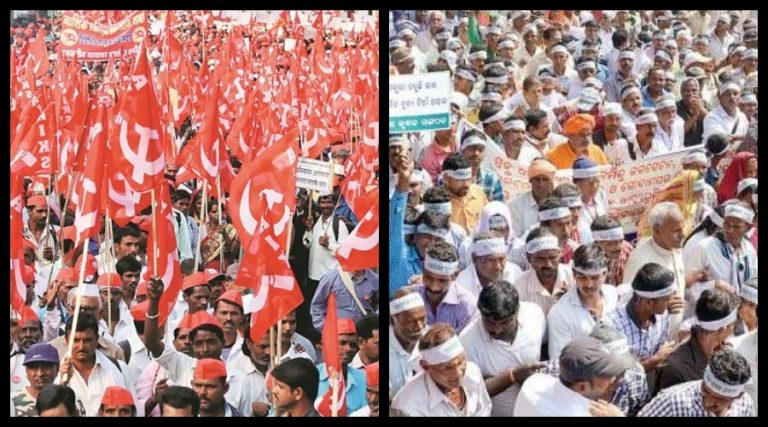
Soon after the Communist march in Maharashtra where thousands of alleged ‘farmers’ marched off to Mumbai to convey their dissatisfaction towards the state government accusing them of neglecting their demands, Jignesh Mevani, infamous for his foul language, tweeted the photo of a woman with the skin of the sole of her feet peeled off to shame the Prime Minister.


Mevani’s tweet quite beautifully describes the tendency of communists to implore others to suffer for serving their selfish political goals. The fact that the communists had the resources to afford flags and caps for the farmers but not a pair of slippers exhibits their willingness to sacrifice disgruntled and disadvantaged people at the altar of their own political goals.

Another interesting trend that emerged is that some farmers are more equal than others. For instance, hundreds and thousands of farmers in Odisha are currently protesting against the state government for loan waivers and pensions for farmers. Some of them have even gone on a hunger strike and yet, it is hardly receiving the kind of media coverage that the protest in Maharashtra received. The reason appears to be obvious. Firstly, Odisha has a non-BJP government while Maharashtra has a saffron government and will be crucial for BJP’s prospects in the 2019 General Elections and secondly, the red flags are missing.

The protests by farmers from Tamil Nadu was quite interesting as well. In Maharashtra and Odisha, the farmer protests are focused against their state government while for some reason, farmers from Tamil Nadu instead of protesting against their own state government presented themselves at Delhi to protest against the central government. The protests involved quite a bit of theatrics, from biting mice to allegedly eating their own excreta, the preferred weapon of choice appears to be blackmail rather than negotiation. If one were to brush their memory a bit, one would remember that the protests occurred during the same time frame when certain quarters were beginning to fan the Dravidian issue.

A certain pattern emerges from the coverage of the protests and their timing. Protests receive the most coverage when they are directed towards the Bharatiya Janata Party and especially when the protests are organized at a state that is critical for the 2019 Lok Sabha elections. Furthermore, the protests have a knack of appearing out of thin air when the opposition needs a change in narrative desperately. The latest Communist march comes in Maharashtra right after the red brigade had suffered a terrible defeat at the hands of the BJP in their erstwhile bastion in the North-eastern state of Tripura.

There is little doubt that discontent did exist among the farmers in Maharashtra. However, only communists are capable of encouraging people already suffering the harshest of misery to go through more pain, so much that the skin falls off their bare feet, to further their own political agenda. The protests also reveal the symbiotic relationship between the Congress Party and the Communists. The latter hardly have anything to gain in Maharashtra. However, by fueling anti-government sentiments among the farmers in Maharashtra, they hope to make the work of their comrades in the Congress party much easier.

Going ahead, the tactics of the Opposition seems fairly obvious. Unlike Narendra Modi’s campaign for the 2014 campaign, when he elaborated on his vision for a new India, to remove the incumbent government, the Opposition’s campaign will focus primarily on fueling discontent across several sections of the country and promote a sense of victimhood among the disadvantaged sections of society. The Maharashtra Communist March clearly reveals that 2019 will thus be a battle between a campaign of positivity with the vision of a New India versus a campaign of negativity based on dissatisfaction, self-victimization and disgruntlement. And of course, the Opposition have their friends in the Media who will manufacture public opinion in favour of the Congress with disproportionate coverage of every protest, manufactured or otherwise, against the central government while ignoring all expression of angst against the Opposition with remarkable efficiency.

JNU: Agitating students abuse and manhandle the Dean

0

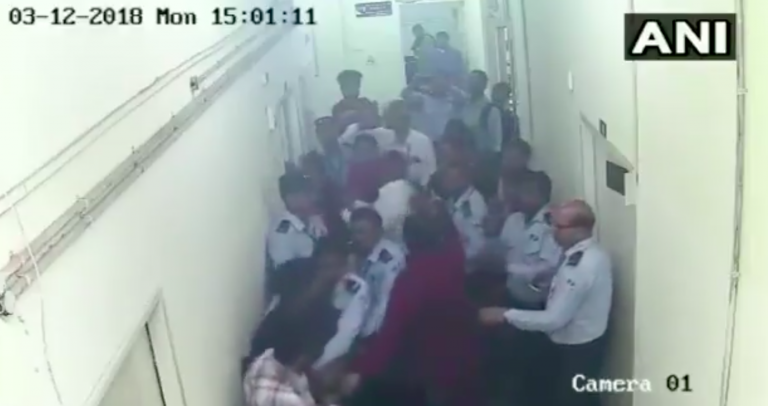
Students at the prestigious Jawaharlal Nehru University barged into the Dean’s office on 12th March during a protest. According to the statement released by the Dean, they abused and manhandled him when the agitating students were called inside the Dean’s chamber for discussion.


In the statement, the dean alleged that the agitating students shouted slogans, pushed him and abused him.

As reported in the Times of India, the Dean, Umesh Kadam, had invited all hostel presidents and four JNUSU members for a meeting to discuss the hike in fee and fines. During the discussion, the students invited more students and didn’t let the Dean leave his office. In the video, it can be seen a tussle between students and security personnel outside the Dean’s office.

Twitter users condemned the unruly behaviour of students towards the Dean, which is a regular at JNU these days.


The security unit of JNU has filed a police complaint and the Chief Proctor’s office will investigate the incident.

Raghuram Rajan’s answers on the PNB scam and controversial 20:80 rule do not pass muster

0

The media’s blue-eyed boy and former RBI Governor Raghuram Rajan today finally broke his silence around the PNB scam and other issues relating to it. Rajan was the RBI Governor for 3 years when the PNB scam was on-going.

In an interview to CNBC TV 18, Rajan was point blank asked who was to blame for the PNB scam. Rajan replied that there was “plenty of blame to go around” and named everybody from the management, the board of the bank to the auditors.

With regards to the RBI’s role, Rajan asked why the instructions of the RBI were not obeyed over time. He also revealed that back then he had expressed concern that although the RBI unearth’s frauds, but it could never bring to book the culprits. He also said that generally when the regulator spots a problem, it sends a message to the banks, and “basically assumes to some extent that the banks have fixed it”. He reiterated that “But surely there is plenty of responsibility to spread around.”

Sadly, Rajan’s answers expose him and the RBI:

1. Does the RBI had no responsibility to check the functioning of the banks to see if such frauds are being committed? Can it simply pass the buck to the others involved? If so do we even need the RBI?

2. Is it enough to “assume” that the banks have fixed a problem once the RBI identifies it? Does the RBI and its chief not have a duty to see if their instructions have been followed?

3. Rajan is now expressing concern that RBI was basically a toothless body. Did he make any moves to change this status?

He was also the RBI chief when the controversial 20:80 rule was notified by it, as one of the last order of the Finance Minister Chidambaram. It is believed that almost 50% of the entire benefit was cornered by 7 companies and Mehul Choksi’s Gitanjali Gems was again one of them, while 13 private companies in total benefited from this scheme. The India Bullion and Jewellers Association (IBJA) had written a letter to the then Reserve Bank of India Governor, Raghuram Rajan, warning him of the perils of the 20:80 scheme and accusing the Congress government of “deliberately yielding to the cronies” by changing the gold policy days before demitting office.

On the 80:20 scheme, Rajan said that the scheme should be separated from the Nirav Modi scam:

As far as I understand, the Punjab National Bank (PNB) scam started in 2011 and was unearthed in 2018. The gold scheme that is under the scanner at this point was something which lasted between May 2014 and November 2014. It seems to me very hard to argue that whatever happened then and I am happy to talk more about that, but whatever happened there was in any way related to the scam other than it happened in the same industry that there was gold involved. It is important to treat these as two separate issues

He, however, appeared to defend the 20:80 scheme:

Happy to talk about the 20:80 because the actions there as far as I understand were justified.

He further tried to shift blame on this scheme as well by claiming that the Government (the then UPA Government) was the “prime mover” in this scheme. He also justified the scheme by citing forex problems and Current Account Deficit. He also said that the beneficiary companies were selected by the Department of Trade in the Commerce Ministry. He also accepted that like any constraints being put on a system, some people could have made money and some would have lost money, and those who lost would have complained.

When asked about the timing of the 20:80 rule i.e. just a few days before a regime change, Rajan tried to avoid the issue and said he did not know the rationale behind the Government’s move. He also said that it was a period of rapid regulatory change due to a forex crisis. In the end, he does accept that as RBI Governor he does bear responsibility for any instruction from his office.

When asked if he could have said “No” to the Government, he spoke on other issues like suggesting that every policy would have good and bad effects. He again referred to the Government’s definition of selected importers and said that the RBI followed it. He then claimed that if the new NDA Government could have acted immediately if they thought this was an issue of importance. He also said that “procedures were followed” which was important. No direct answer to the question whether he could have said “No”.

Is this the same Raghuram Rajan who frequently commented on matters beyond the RBI’s jurisdiction, especially on the Government’s other actions? Is this the same Rajan who gave the famous quip: “I am Raghuram Rajan, I do what I do”? Rajan could not clearly answer whether he could have said NO to Chidambaram and if he did not say so, why he chose to not do so?

Clearly, the former RBI Governor has more to answer.

On a day when Maoists kill 9 CRPF jawans, UPA hosts a gala dinner

0

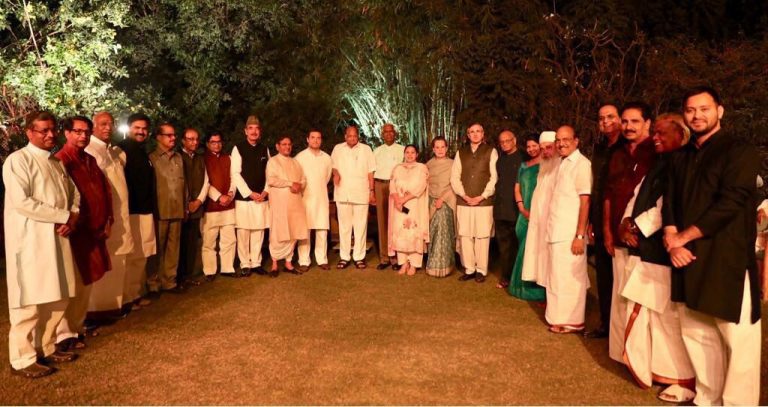
On a day when nine CRPF jawans were martyred in an IED blast by the Naxals in Sukma, Chhattisgarh, the UPA chairperson Sonia Gandhi hosted a gala dinner to show a united opposition in the upcoming General Assembly elections in 2019.


If that wasn’t insensitive enough, in a tweet condemning the attack, Gandhi blamed the ‘flawed policies’ which led to ‘deteriorating internal security situation’. Gandhi drew flak for his insensitivity from social media users.


Congress President was also called out for attempting to demoralise the CRPF jawans.


Film Actor Anupam Kher also called him out for trying to play politics on the martyrdom of CRPF jawans.


Hosting a gala dinner on a day when 9 jawans are killed by terrorists also appeared disrespectful to the martyrs.


This is not the first time Congress President has shown lack of respect and sensitivity towards those killed by terror attacks on Indian soil. Right after the 26/11 Mumbai terror attacks, Gandhi was partying till wee hours in a farmhouse in Delhi outskirts.

Amongst those present at the ‘gala dinner’ were NCP Chief Sharad Pawar, RJD’s Tejashwi Yadav and his sister Misa Bharti, NC’s Omar Abdullah, HAM’s Jitan Ram Manjhi, DMK’s Kanimozhi and former Prime Minister Manmohan Singh.