Home Blog Page 7518

Kashmiri boy who topped the BSF exam now getting threats from terrorists

Nabeel Ahmad Wani, who hails from Kashmir. is currently the Assistant Commandant in the BSF. he has reportedly claimed that he and his sister have been getting threats from terrorists.

What makes Ahmad’s case more prominent is the fact that he had topped the All India Examination for BSF Assistant Commandant (Works), the previous year. After he had topped the exam he had stated in media interviews that his chief aim after joining the force was to fight terrorists. He had also claimed that he in the future wanted to join the National Investigative Agency to further aid his nation. He at that time had also urged the Kashmiri youths to not tread the wrong path and asked them to do something constructive for India.

According to reports, the terrorists have also made threats to his sister who is currently a civil engineering student in Chandigarh. He also claimed the college authorities had wanted her to leave the hostel and move someplace else. This had prompted him to write a letter to Maneka Gandhi on 14th May who replied the very next day. The Women and Child Development ministry convinced the College authorities to allow his sister to stay in the hostel, Maneka Gandhi informed.

What is also noteworthy is the fact that Ahmed had reportedly chosen not to involve the BSF into his personal problems and had written to Maneka Gandhi in his personal capacity. He has been quoted saying that he is now assured of his sister’s safety who wants to become the first Kashmiri woman to serve in the Indian Army.

Further, according to media reports, Ahmed has requested the senior officer at the BSF to allow all the BSF personnel who live in terror prone areas to carry their arms when they go home for a holiday so that they can protect both themselves and their families if some issue arises.

This report comes almost a week after Lt Ummer Fayaz was abducted and subsequently murdered in Kashmir’s Shopian district by terrorist when he was on a break for attending his cousin’s wedding.

Kashmir in recent times has almost become a contrast when it comes to its youths. On one hand a portion of its young population is busy pandering to the separatist line by indulging in Stone Pelting and on the other hand a sizable amount of Kashmiri youths have been participating in the recruitment process of the Indian Army.

It was reported in April that about 19,000 Kashmiri youths had applied for about 800 vacant soldier posts in the Indian Army.
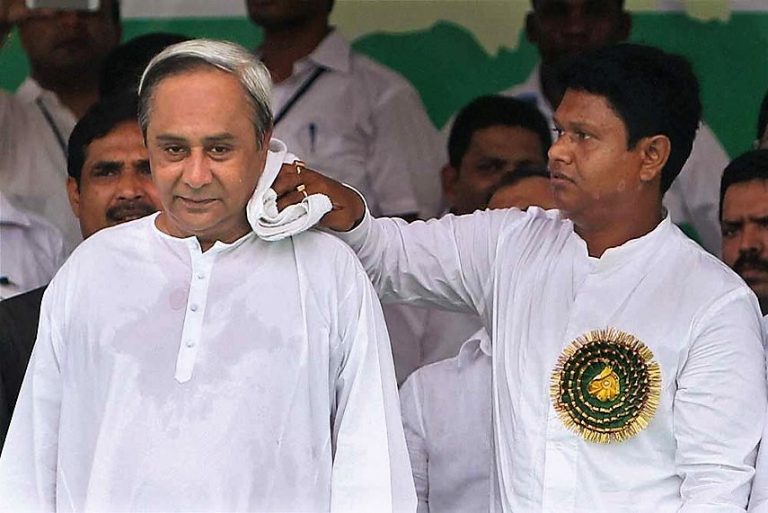
Naveen Patnaik tapping phones of his party men, suspecting them of joining BJP, newspaper claims

Tapping phones of political leaders is not new to India politics. Way back in 1988, Ramakrishna Hegde had to step down as the chief minister of Karnataka over allegations of phone tapping. In 2013, the then Leader of the Opposition in Rajya Sabha and now the Finance Minister Arun Jaitley had alleged that his phone was tapped. In 2015, Andhra Pradesh Chief Minister N Chandrababu Naidu had alleged that his phone was being tapped by the Telangana government led by K Chandrasekhar Rao.

This time, news of massive phone tapping has come from Odisha. Landline phones and mobile phones of as many as 40 MLAs and 10 MPs of the ruling Biju Janata Dal (BJD) are being tapped by the Naveen Patnaik government, leading Odia daily ‘Nirbhay’ has reported.

The report stated that not just the BJD leaders, phones of several Bharatiya Janata Party (BJP) leaders – including Union Minister Dharmendra Pradhan – are under surveillance. Several senior IAS officers, senior journalists and businessmen from Odisha are also in the surveillance list, it said.

What could be more shocking is that Naveen Patnaik government is using the surveillance instruments, provided by the Centre, which are meant to be used for tracking the Maoist activities, the newspaper said. The phone tapings are reportedly done through “clone SIM process”.

The report in Odia

But what could be the reason for the massive phone tapping? It could be noted that post-Panchayat elections, there has been a huge outflow of workers and leaders from the BJD to the BJP. Reports suggest that a number of senior leaders of BJD are waiting to join the BJP in the run up to the 2019 elections. It is pertinent to mention that in the last Pachayat elections, the BJP succeeded in making a giant stride in Odisha politics, leaving Naveen Patnaik-led party in a tailspin.

“Naveen Patnaik is feeling threatened. He is staring at a huge anti-incumbency. An unknown fear is lurking Patnaik that his party MLAs and MPs may defect to the BJP anytime soon. He is using phone tapping as a means to keep track on his own party leaders,” said Navin Das, Editor-in-Chief of ‘Nirbhay’ while speaking to OpIndia.com. “By doing this, Patnaik has imposed an undeclared emergency in Odisha,” Das said.

The fresh report of phone tapping has come at a time when the BJD is locked in a bitter internal feud as the BJP rises in Odisha. Recently, Patnaik has sacked senior party MP Baijayant Panda from the post of BJD Parliamentary Party spokesperson, months he wrote an Op-Ed in Odia daily Samaj asking the party to do a “soul searching”.

Bhartruhari Mahtab, another senior party MP and BJD parliamentary party leader in the Lok Sabha, while writing an Op-Ed in ‘Nirbhay’ had lashed out at his senior party colleagues for their failure to deal with a resurgent BJP.

Recently, Patnaik effected a cabinet reshuffle and brought some changes in the party structure to counter the BJP’s surge. Following this, a crisis of sorts started brewing in the BJD as the reshuffle triggered serious resentment in the rank and file of the party over non-representation of several districts in the ministry.

The resentments and some rebellions (leaders switching over to BJP) were seen as an indication of Naveen Patnaik losing hold over a party he was known to command with authority. Now if these phone-tapping allegations are true, it could hint at a leader being nervous about his slipping hold.

Six ‘awesome arguments’ Kapil Sibal has made in the triple talaq case

Senior Congress leader cum lawyer Kapil Sibal, who is famous for his zero loss theory in the 2G scam, is all set to become famous for more theories. Currently, the senior advocate is a counsel for the All India Muslim Personal Law Board (AIMPLB) in the ongoing triple talaq hearing at the Supreme Court.

The following are some of the arguments the learned Kapil Sibal has made till date while debating the triple talaq issue in the apex court:

  1. “Triple talaq is going on since 1400 years, how can you say it is unconstitutional?” — yes, if something is going on for centuries, it automatically becomes a part of the constitution apparently. Some reports suggest that he said ‘how can you say it is unislamic’. Well, that’s not how it works. Many Islamic experts do consider many prevalent practices (say orchestra/music) as unislamic.
  2. “If Hindus’ faith about Rama’s birth at Ayodhya can’t be questioned, then triple talaq, a matter of faith for Muslims shouldn’t be.”  — well, Hindus’ faith was questioned by the courts during the Ram Janmbhoomi case, and no, triple talaq is not a matter of faith, but a matter of practice. Many practices of Hindus from Dahi Handi to Jallikattu have been questioned by the courts.
  3. “Shariat is personal law and not subject to fundamental rights.” — Lovely! Tomorrow some crazy mullah will say armed jihad is part of shariat and thus it is not subject to the fundamental right of life (of kaafirs/infidels).
  4. “Majority community cannot make laws for the minority unless the reform comes from within the community.” — so now only Muslim MPs will be allowed to vote on bills that concern Muslims? True Congress style secularism. Also read this OpIndia article about why ‘reform must come from within’ is a flawed and dangerous argument.
  5. “Just because a certain section of people was aggrieved by their personal laws, does not warrant a case to seek reform in the area.” — hain? First Sibal says that reform must come from within the community, and when there are some voices from within, he says it doesn’t warrant a case to seek reform!
  6. “Hindu laws of divorce and succession are more discriminatory than triple talaq.” — even if it is true, what is the point? “What about Hindus?” Sibal seems to argue. This is classic whataboutism, which only “trolls” are accused of indulging in.

This might not be all. Perhaps more to come as the apex court will hear more arguments in coming days. We hope to get more gems from Sibal Sir. Amen.

These are the cases for which CBI raids took place at Chidambarams today

In a significant development, the Central Bureau of Investigation (CBI) earlier today conducted raids at the residences of senior Congress leader and former finance minister P Chidambaram and his son Karti Chidambaram. The CBI raids were also conducted at multiple premises – Chennai, Gurgaon, Mumbai and Delhi – linked to Chidambaram and his son Karti.

The raids came on a day the Income Tax Department conducted raids on RJD chif Lalu Prasad Yadav’s associates in connection to the Rs 1000 crore Benami land deals. It could be noted that Lalu Prasad’s daughter and Rajya Sabha member Misa Bharti and son-in-law Shailesh Kumar are involved in a dubious land deals in some of the most luxurious enclaves of the union capital.

The CBI raids on P Chidambaram and his son Karti pertain to the dubious foreign investment clearances given during the tenure of P Chidambaram as the finance minister at the previous UPA dispensation.

Recently, the Enforcement Directorate (ED) has found that a firm linked to Karti had received Rs 1.16 crore from the companies whose Foreign Investment Promotion Board (FIPB) clearances were done illegally when Chidambaram was the finance minister.

The case relates to the dubious Aircel-Maxis deal. In 2006, Aircel was sold to Maxis – a Malaysian company – in a deal that allegedly violated foreign investments protocol.

The Enforcement Directorate is currently investigating various aspects of the FIPB approval given in the Aircel-Maxis deal case under anti-money laundering laws.

The ED has found that Advantage Strategic – a Chennai-based company – owned by Karti, had received Rs 1.16 crore from companies whose FIPB clearances were done in an illegal manner. A December 2015 raids by the ED and Income Tax (I-T) Department had found that Advantage Strategic had received “consultancy fee” to the tune of Rs 90 Lakh from Peter Mukerjea’s INX Media before getting an FIPB clearance.

The CBI has registered a case regarding alleged irregularities in granting the Foreign Investment Promotion Board (FIPB) clearance to INX Media in 2007 when Chidambaram was the Finance Minister. The agency has leveled the charges of criminal conspiracy, cheating, taking gratification by corrupt or illegal means and criminal misconduct.

According reports, INX Media had sought the FIPB clearance on March 13, 2007, for permission to issue upto 14.98 equity shares to three non-resident entities – Dunearn, NSR PE and New Veron Pvt Equity Ltd – by way of preferential allotment. The FIPB unit, however, had clearly mentioned that Foreign Direct Investment of Rs 4.62 crore proposed issue at the face value could be allowed and for investment in INX News a separate FIPB approval would be required. The board had recommended the proposal of INX Media for consideration of the Finance Minister but not that of INX News. It has been alleged that the company in violation of the recommendations made investment to the tune of 26 per cent in the capital of INX News and generated more than Rs 305 crore of FDI in INX Media.

Some reports suggests that INX Media had paid money to Karti’s company Advantage Strategic Consulting through several installments and allotted shares to the company and its linked firms. It is alleged that Karti received kickbacks from INX Media when FIPB approval papers for the company were pending with his father, then finance minister P Chidambaram.

In April, the (ED) had issued a show cause notice to Karti and slapped Foreign Exchange Management Act (FEMA), 1999 notices for violating currency laws to the tune of Rs 2,262 crore for the dubious investments and sale through Mauritius and Singapore.

Reacting to the CBI raids, anti-corruption crusader and Rajya Sabha MP Subramanian Swamy said Chidambaram indeed gave illegal FIPB clearances during his tenure as the finance minister and used his office to help promote his son Karti’s dubious business interests.

“It was expected because, as finance minister, he has given so many clearances in FIPB, which are all illegal and his son has always benefitted from this,” Swamy said.

“Karti has got 21 illegal bank accounts abroad and he has built many houses in several countries. He has got them financial activities undeclared in 18 countries. So therefore, money laundering has to be there,” he added.

Maulvi refuses to solemnize marriage, as orchestra at wedding is against Islam

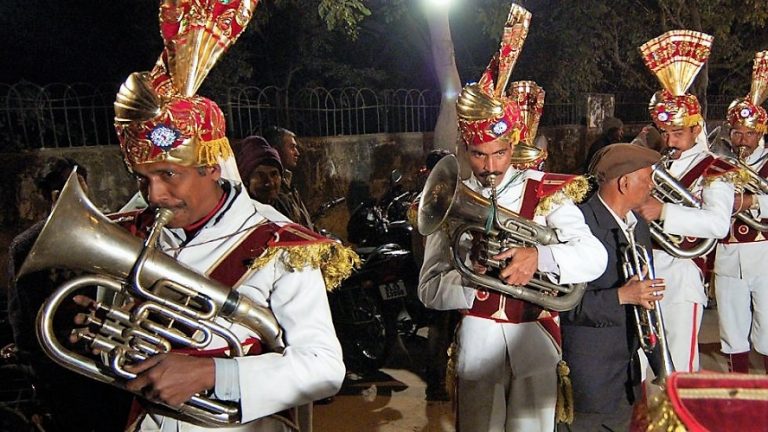
In a peculiar incident that has come to light from Deoria in Uttar Pradesh, a Maulvi reportedly refused to solemnize a marriage after he found that an orchestra was part of the baaraat and wedding event.

According to the report, Ali Hussain’s son who was getting married reached the wedding venue along with the whole “baaraat” all the while playing celebratory music. After the Maulvi saw all the music and the orchestra during the wedding, he was incensed and stated how such practices were against Islam.

When the families of the bride and groom started to persuade the Maulvi, he quietly slunk away from the venue. They then desperately started to search for a replacement but every Maulvi repeated that orchestra was against their religion.

They finally found the original Maulvi who agreed to solemnize the marriage on the condition that they won’t repeat the ‘mistake’ again.

This isn’t the only time various Islamic clerics have spoken against the practice of music and dance at weddings. Muslim clerics in Bihar’s Bettiah district had way back in 2010 openly proclaimed their refusal to solemnize weddings that hosted music, dance and orchestras.

A similar diktat was announced by clerics in Kota, Rajasthan last year, who reportedly had imposed a ban on DJs, loud music and band-baaja at Muslim weddings. This ban though wasn’t endorsed by the Qazis of the state who reportedly stated that even though they agreed with the clerics in principle, a decision to either play or not play music should be a matter of the individual’s personal choice.

Although baaraat and music is considered a part of weddings in the Indian sub-continent for long, puritan Muslims see it as an influence of Hindu culture and preach keeping away from it. The belief that Music is haraam (forbidden) in Islam has also resulted in such diktats.

Many Islamic preachers believe that only a musical instrument called duff  is allowed in Islam and thus something like orchestra having a motley of musical instruments is against Islam. Due to such beliefs, musical events or singing by Muslims is sometimes discouraged, as we had earlier seen in the case of reality show singers.

Controversial Islamic preacher Zakir Naik too is of the view that music was not good for the Muslim society:


Republic TV journalist slams Sagarika Ghose for spreading lies about her

Ever since Arnab Goswami announced that he will be launching his own venture, his detractors have been trying to bring him down. The mainstream media in India, which has long been aligned to the Congress-left establishment, had decided that they will not tolerate anyone with different point of view.

It’s been just over a week since Arnab launched his new venture – news channel Republic TV – and the unease it has spread in the establishment media is too pronounced to miss.

Those who spread propaganda in the name of journalism for decades were suddenly complaining about Arnab killing journalism with his “nationalist” brand of journalism. There were articles written about Arnab when there should have been article written about Sunanda Pushkar’s murder after Republic TV revealed the botched up investigations into the case.

Not just that, there was a hilarious attempt by Rahul Kanwal of India Today when he complained that Republic TV was available on dual frequencies, which might increase chances of better TRPs for the TV, as a person was likely to encounter the channel more than once while surfing. Today he virtually admitted that India Today itself could be available on dual frequencies:

In line with this sustained and concerted attack on Arnab and his venture, a website named Janta Ka Reporter, which is better known as Aam Aadmi Party’s unofficial mouthpiece, spread the following article last night:

lie by Janta Ka Reporter
Anti-Arnab propaganda by pro-AAP website

The ‘news article’ tried to insinuate that a journalist named Chaiti Narula had resigned from Republic within a week of its launch as she found the channel’s dealings against her ethics.

The article further claimed that “many other editorial and technical staff had put in their papers as working with ‘Arnab became unbearable’.”

Who were these other staff other than Chaiti was not disclosed by the website. It should be noted that the website is notorious for publishing fake news and pushing pro-AAP propaganda.

However, that reputation of the website did not stop TV journalist Sagarika Ghose from sharing the ‘news report’ with her own expert comments deriding the employees of the Republic TV:


Not only Ghose shared an unverified gossip, she demeaned and defamed young journalists of Republic TV by insinuating that they would stoop to any depths for money.

Clearly this did not amuse Chaiti Narula, who termed Sagarika a “loose canon”, though she was far more respectful towards the old generation journalist in her response:


She further clarified that she had resigned from the news channel, but due to personal reasons, not due to some ‘ethical’ or professional reasons. She rued that someone as senior as Sagarika Ghoshe did not believe in finding out the truth before shooting from their mouth.

We can only say that these new generation journalists like Chaiti simply don’t know how old generation journalists like Sagarika work. Fact-checking? What’s that?

Two CPM workers arrested in Kerala for the murder of an RSS worker

On 12th May, a RSS worker named Choorakkad Biju was hacked to death by alleged CPM workers in Payyannur Kerala. He was killed on the Palakkot bridge at 4 AM in the morning.

This had prompted widespread protests from the BJP, which had declared its intention to observe a strike on 13th May.

Incidentally after the murder, the CPM establishment had claimed that it’s workers were not involved in the murder and also claimed that they were exercising self-restraint.

This stand of the CPM has since been busted after the police registered a case against 7 CPM workers in relation with the murder.

Now the police has reportedly managed a breakthrough after two CPM activists have been arrested. According to the report the police were still ascertaining the number of accused in the case and also were looking for the rest of them against whom case has already been registered.

The Kannur district in Kerala has become extremely politically sensitive in recent times with deadly clashes between the RSS and CPM working having become almost a regular event. Reports have suggested that Choorakkad Biju was the 8th RSS worker killed in Kannur since May 2016.

The RSS organization has long cried out to the center for its support but such pleas have till date fallen on deaf ears.

The last couple of years have seen numerous instances of violence perpetrated against RSS sympathizers with both workers and their offices getting targeted.

In January a BJP worker was stabbed to death at Andaloor in Dharmadam which is the constituency of the current CM of Kerala.

In February of last year a 27 year old RSS worker was hacked to death in front of his parents in Kannur.

We had reported how an RSS office in Kannur was vandalised by alleged CPM workers, a day after it was inaugurated. It was also alleged that the office had been attacked a whopping 18 times during its construction.

In October 2016, the RSS establishment had claimed that as many as 350 of its workers have been a victim of political murders in the last 7 decades.

It remains to be seen as to whether the killed workers finally start getting justice but with both the state and central governments acting as mere spectators, the situation might not improve in the near future.

Surrendered Maoist breaks narrative created by activists of being ‘oppressed poor tribal’

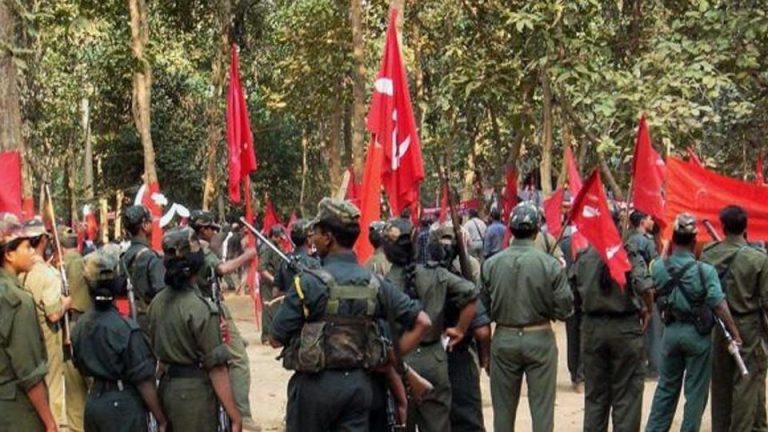
The left wing terrorism in India began sometime in the late 1960s, and since then it has been the single largest threat to the sovereignty and internal security of India. Apart from getting support from the enemies of the state outside India, the left wing terrorists also derive “intellectual” support from myriad of activists, who paint them as some wronged poor people.

One of the biggest narratives that has been built around the Maoists for example is how it is fueled by a poor tribal, who exasperated by the atrocities of the Indian state, decides to pick up arms against it. This narrative has many a times been used by the Maoist apologists or possibly even by their silent sympathizers to gloss over the barbaric atrocities committed by the group.

Now though, the surrender of a top Maoist commander and his subsequent statements have threatened to puncture this narrative.

Kundan Pahan was a dreaded Maoist who was wanted in over 125 cases including the murders of a DSP, inspector and a MLA. He had also reportedly looted Rs 5.5 crores from a bank vehicle. He surrendered before the Jharkhand police in Ranchi on Sunday under the state government’s Nai Disha policy.

According to this policy, the surrendered Maoists receive the total reward money which was declared on their head. In Pahan’s case it was Rs 15 lakh. The Maoists are also housed in open jails and are allowed contact with their families. This though doesn’t mean that the cases against them are withdrawn. They still face trial possibly in an expedited manner.

So coming back to what punctured the narrative; post his surrender, Pahan has been giving interviews to various media-persons and in one such interview spoke about why he became a Maoist.

His answer was as far cry from the “poor exploited tribal” line. According to reports, Pahan became a Maoist in the year 1998 when he was just 17. It was reported that in the Badigara village, his family used to own a whopping 2700 acres of land. Yes, 2700 acres of land!

As it turned out 1350 acres out of the total land was illegally grabbed by his uncle. In order to get it back, Pahan and his brothers decided to take up arms. It was reported that in 1996, a high ranking Naxalite leader visited his village. He and his family were influenced by his ideology and were also given the assurance that if he joined the movement, he would get his land back and that’s exactly what happened.

Clearly going by the report, Kundan was neither poor nor exploited by the state. He just decided to join the movement in order to solve his family feud and for his personal gains.

This even furthers the point that the Maoist movement in India is largely nothing but means for criminals to carry out their activities like extortion, murder and kidnapping.

Kundan Pahan was reportedly the youngest of 5 brothers. His two other brothers named Dimba and Shayam also became Naxalites and are currently lodged in jails. Kundan has now also been sent to a jail in a 2014 matter.

After his surrender, police are now trying to recover his pen drive which reportedly contains information about all his contacts, his assets, his bio-data, and the information about all the crimes he perpetrated.

According to certain reports, Kundan has already started making explosive revelations about his time as a Maoist. He has reportedly claimed that the current Prime Minister of Nepal Pushpa Kamal Dahal, who is also the Chairman of the Communist Party of Nepal (Maoist-center) had taken training in Guerrilla warfare alongside him at Jhumra Hills near Bokaro in the year 2000. He also claimed that the Maoists in Nepal and Jharkhand have a strong connection.

Massive development push in Red corridor – Centre to spend Rs 11,000 crore on roads

In an effort to expedite development push in Red corridor, the Centre has decided to spend a whopping Rs 11,000 crore for providing road connectivity to 44 Maoist-affected districts, including Chhattisgarh’s Sukma, where 25 CRPF personnel were killed in a deadly Maoist ambush last month.

It is pertinent to mention that all these Maoist affected districts are critical from a security and communication point of view. Out of these 44 Maoist affected districts, covered under the scheme, the maximum are located in Chattisgarh. Odisha, Jharkhand, Bihar, Madhya Pradesh, Telangana and Maharashtra are the other states that will be covered under the scheme.

Of the total project cost of Rs 11,000 crore, Rs 550 crore – that is five per cent – will be kept aside for administrative expenses including for deployment of security forces at strategic locations, officials in know of the project was quoted as saying.

The development project will be operationalised in the next few weeks. The project will be implemented under the Pradhan Mantri Gram Sadak Yojana (PMGSY). Under the project, there will be construction or upgradation of 5,411 kms of roads and 126 bridges.

The Union Cabinet, last year, had approved the centrally-sponsored “Road Connectivity Project for Left Wing Extremism (LWE) Affected Areas” scheme. The Union Home Ministry has given a go ahead for the construction of a 5,412 km-long road connecting 44 Maoist-affected districts.

OpIndia, one of the earlier articles, had told you that development is a major way to fight the Maoists as they are scared of the development push by the government.

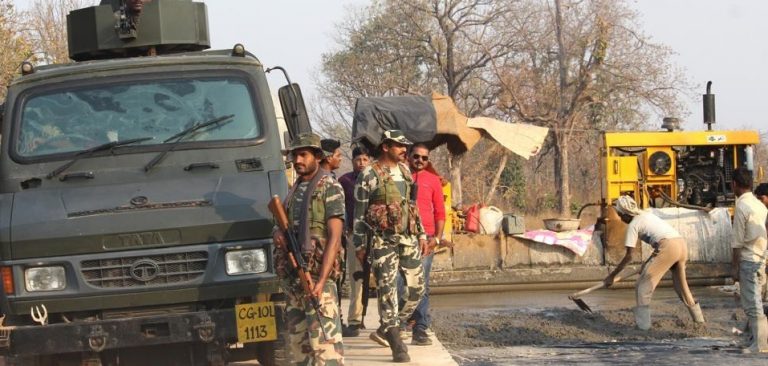
It could be noted that the last two attacks on CRPF personnel – 24 April Maoist attack and 12 March Maoist attack –took place when the  CRPF battalion were engaged in securing under construction roads.

The Maoists, who look for safe sanctuaries to run their activities, are scared of development because they use lack of development as a facade to exploit the innocent tribals and carry out their activities. Once, development reaches deep into the Maoist hinterland, the Left ultra will finally lose their constituency and go out of business.

We had earlier argued that development push and an all out war against Maoists must go in tandem.

As many as 12,000 citizens had lost their lives in Maoist violence over the last two decades and of these, 2,700 are security personnel and 9,300 are civilians.

Bengal Minister who questioned Imam Barkati’s use of Red Beacon is no stranger to controversies

West Bengal’s minister of mass Education Siddiqullah Chowdhury has courted controversy after it was found that he was using a Red Beacon even though he had questioned others for doing the same. Red Beacons were outlawed for VVIPs from 1st May and since then most have complied with the order.

The controversy has arisen mostly in West Bengal where the erstwhile Shahi Imam Barkati of Kolkata’s Tipu Sultan Mosque had refused to remove the Red Beacon from his car by claiming that Bengal had rules which were different from the rest of India. He had further courted controversy after claiming that no one had the guts to arrest him after multiple FIRs were filed against him for not following the law and for allegedly making anti-national statements. After all the backlash he was forced to remove his red beacon and was subsequently removed from his post by the Tipu Sultan Mosque’s board of trustees.

One of those who had reportedly questioned Imam Barkati for his use of the red beacon was Minister Siddiqullah Chowdhury who though wasn’t practicing what he preached:


Siddiqullah Chowdhury who is also the secretary of the Jamiat-Ulama-I-Hind in his defense has claimed Barkati was an Imam but he is a Minister of the State Government and hence had rights to use the red beacon. He further claimed that he would immediately remove it from his car after he receives an order for the same.

This has resulted in Imam Barkati getting an opportunity to take potshots at the minister. Barkati alleged that Siddiqullah Chowdhury had not followed CM Mamata’s order, whereas he had complied and removed his beacon. Barkati also claimed that he would write to Jamiat Ulema-e-Hind aksing for the removal of Siddiqullah Chowdhury from the post of the secretary and also claimed that he (Siddiqullah) had disrupted the communal harmony in the state.

This isn’t the only time Siddiqullah Chowdhury has courted controversy. In 2014 before he became the Minister, he had made a speech stating that he and his organisation had decided to provide legal aid to the two accused in the Khagragarh blast case. Reportedly he had further stated that he wasn’t convinced of their guilt until it was proven in the courts. In the same speech he had warned Mamata Banerjee against allowing NIA, NSG and CID to conduct raids at the madrasas in the state.

Siddiqullah Chowdhury has also been making odd statements recently. On Saturday he had alleged that Imam Barkati was a RSS agent as he was providing ammunition to the Sangh Parivar via his statements.