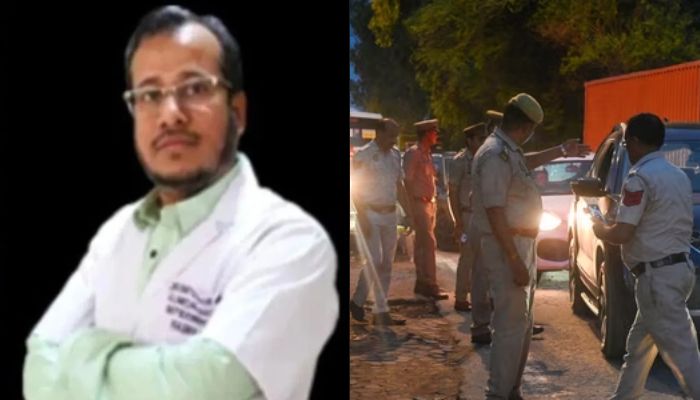
On Thursday (22nd August), a total of 14 people were arrested by Delhi police in connection with the Al-Qaeda-inspired terror module. In a joint operation with police forces from Jharkhand, Rajasthan, and Uttar Pradesh, the Delhi Police Special Cell busted an Al-Qaeda-inspired terror module. The arrested accused have been identified as Ishtiyaq Ahmed, Motiur, Rizwan, Mufti Rahmatullah, and Faizan.
Fourteen suspects detained, related to Al Qaeda Module. Suspects were from different states, whose head Dr. Ishtiyaq was a Jharkhand-based doctor. Interrogations are currently underway at various locations and additional arrests are anticipated. Recoveries of arms, ammunition,…
The module, led by Dr Ishtiyaq from Ranchi, aimed to establish a ‘Khilafat’ and carry out terrorist activities in India. “The members of the module have received indoctrination and weapons training at various locations,” the police said.
This comes after on the 15th of July, the Special Cell of the Delhi police lodged a complaint under Section 61 (criminal conspiracy) of the Bharatiya Nyaya Sanhita. Since then, the anti-terror squad has been collecting information on the accused.
Interrogations are currently underway at various locations and additional arrests are anticipated. Speaking about the progress in the case, Jharkhand DGP Anurag Gupta said: “Action is being taken in this case. We have received good inputs from Delhi Police and other agencies and many people have been arrested in this and incriminating literature and weapons have been recovered. Investigation is going on.”
#WATCH | On the Al Qaeda module case, Jharkhand DGP Anurag Gupta says, "Action is being taken in this case. We have received good inputs from Delhi Police and other agencies and many people have been arrested in this and incriminating literature and weapons have been recovered.… pic.twitter.com/LIzH7i3rPN
As per the police, 15 places in Ranchi, one in Rajasthan, and one in Aligarh have been raided so far. The police seized various items from the spot, including, one AK-47 rifle, a 38-bore revolver, one air rifle, one iron elbow pipe, one hand grenade, and six live cartridges of AK-47, among others. The operation has foiled a potential terrorist threat, and investigations are continuing to uncover more details about the module’s plans and activities.
Reports say that several documents and electronic devices have also been seized from the arrested terrorists. Preliminary analysis of these documents and devices has revealed that the accused Jihadis were working on their designs like expanding the Al Qaeda in the Indian subcontinent, bringing in more youths and radicalising them, establishing Sharia law in India and waging war against Bangladesh. They had planned to carry out terrorist attacks in many cities including New Delhi. A madrasa cleric is also among those arrested in Ranchi.
The ATS arrested Faizan alias Munna from Lohsinghana in Hazaribagh, as well as Mohammad Rizwan and Mufti Rahmatullah from Chanho in Ranchi. Mufti Rahmatullah operates a madrasa in Chanho, Ranchi. Meanwhile, Altaf Ansari of Kudu in Lohardaga and three other individuals from Chanho in Ranchi are also being questioned. The authorities have recovered two carbines and an airgun from Altaf Ansari’s Kauwakhap village.
Notably, accused Dr Ishtiyaq, who led the terror module, possesses MBBS and MD degrees in Radiology and operates a clinic in Ranchi. According to reports, Ishtiyak is linked to Abdul Rehman Katki, a close associate of Abdul Rehman Lakhvi, the mastermind of the 2008 Mumbai terror assault who is currently lodged in Tihar Jail.
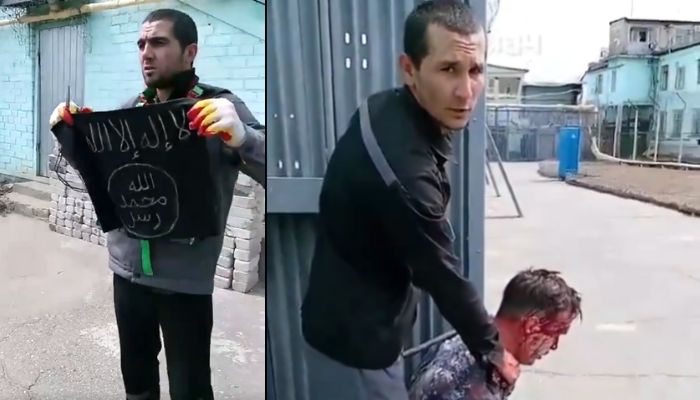
Several terrorists associated with the Islamic State of Iraq and Syria (ISIS), who were serving time at IK-19 prison in the Surovikinsky district in the Volgograd region of Russia, took control of the facility on Friday (23rd August).
As per reports, the terrorists killed 3 prison guards and severely injured 7 others including the head of the prison Andrey Devyatov. At the same time, they took several victims hostage.
The injured prison guards were shifted to an Intensive Care Unit (ICU). The incident occurred when prison authorities were engaged in a meeting of the disciplinary commission.
A group of Islamic State terrorists has seized the IK-19 prison in Surovikino, Volgograd Oblast, Russia. Several Russian Federal Penitentiary Service officers have been killed and several more are being held hostage. pic.twitter.com/u24qCuvzMB
— Special Kherson Cat ??? (@bayraktar_1love) August 23, 2024
In videos that have surfaced on social media, ISIS terrorists were seen chanting ‘Alhmadulliah’ and holding a prison guard hostage at knifepoint.
Dead bodies of other prison officials could be seen lying on the floor of the room. According to reports, the terrorists are now demanding a helicopter and 2 million USD as ransom.
After the news of the incident spread, security forces were rushed to the crime scene. A state of emergency was also declared in the region.
In a statement, the Federal Penitentiary Service of Russia (FSIN) stated, “In connection with the emergency at IK-19 of the Federal Penitentiary Service of Russia in the Volgograd Region, a group of employees from the central office of the Federal Penitentiary Service of Russia (FSIN) immediately left for the region to conduct an inspection.”
A criminal case was initiated by the Investigative Committee of Russia. Negotiations are underway to secure release of prison officials who were taken hostage by the ISIS terrorists.
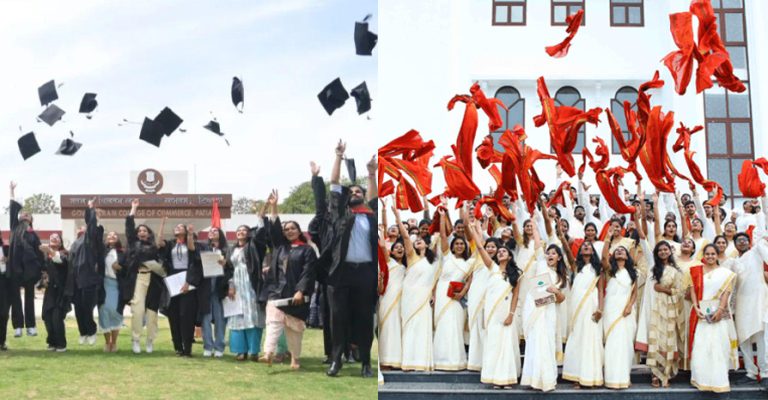
In a move signalling a departure from colonial-era traditions, the Ministry of Health and Family Welfare announced on Friday that the black robe and cap traditionally worn during convocation ceremonies, a practice introduced by the British, should be replaced.
Citing the influence of the ‘Panch Pran’ (five resolutions) outlined by Prime Minister Narendra Modi, the Ministry is advocating for the modernisation of ceremonial attire.
“It has been observed that various institutes under the Ministry currently use the black robe and cap during convocation ceremonies. This attire, which originated in mediaeval Europe, was introduced by the British in all their colonies. This tradition, being a colonial legacy, needs to be changed,” the Ministry stated in an official order.
It is observed that currently as a matter of practice black robe and cap is being used during convocation by various Institutes of the Ministry. This attire originated in the middle Ages in Europe and was introduced by the British in all their colonies. The above tradition is a… pic.twitter.com/S2hBwsPGdh
The new directive requires medical institutions to design and adopt dress codes for their convocation ceremonies that reflect local traditions and cultural heritage. This shift aims to honour and celebrate India’s diverse cultural fabric, moving away from the historical European garb.
Institutions are now required to submit their proposals for new attire to the Ministry, through their respective divisions, for approval by the Secretary (Health).
“Accordingly, it has been decided by the Ministry that various institutes, including AIIMS and INIs engaged in imparting medical education, will design an appropriate Indian dress code for their convocation ceremonies, based on the local traditions of the state in which the institute is located. Proposals to this effect should be submitted to the Ministry through the respective divisions for consideration and approval by the Secretary (Health),” the official order stated.
(This news report is published from a syndicated feed. Except for the headline, the content has not been written or edited by OpIndia staff)
Two kindergarten girls who were sexually abused by a school janitor in Maharashtra’s Badlapur were repeatedly assaulted over the last 15 days, a report published in India Today citing a preliminary report by a state-appointed committee.
The sexual abuse of the 3- and 4-year-old girls has caused widespread outrage in Maharashtra’s Thane district, with both the school administration and police facing intense criticism for their response to the incident.
The findings of the two-member committee report have also highlighted significant concerns regarding the handling of the case and the involvement of the school administration.
The report highlights significant failings in the school administration’s response to the incident. It notes that the school delayed reporting the matter, with the Principal only informing the trustee on August 14, according to sources. Despite the complaint, the administration did not meet with the parents.
Furthermore, the report reveals that the hospital where the girls were treated took 12 hours to provide medical care.
The accused, Akshay Shinde, who started working at the school as a contractual worker on August 1, was hired without any background checks, according to the report. His unrestricted access to all areas of the school, including female toilets, and the absence of an identity card were identified as significant oversights.
The report suggests that Akshay Shinde may be a habitual offender and calls for further investigation into whether his hiring was influenced by an outsourced agency or recommendations.
It also mentions that the school toilet is located in an isolated area, far from the staff room, and lacks proper CCTV surveillance for safety and security.
Additionally, the report criticizes the investigative officer for asking the parents if the girls had been riding bicycles for two hours, indicating a lack of sensitivity and understanding in handling such delicate cases, according to sources.
All India Trinamool Congress (AITC/TMC) Rajya Sabha MP and money laundering accused Saket Gokhale has once again stoked controversy during a pitiful attempt to defend Chief Minister Mamata Banerjee’s government in the brutal rape and murder case of a 31-year-old trainee doctor of Kolkata’s RG Kar Medical College and Hospital. Rather than understanding the genuine concerns of the protesters and empathising with the suffering of the victim’s family, he opted to attack those who dared to challenge the incompetence of the state administration which not only exhibited utter negligence but shamelessly deployed a fleet of lawyers in courts to conceal the truth.
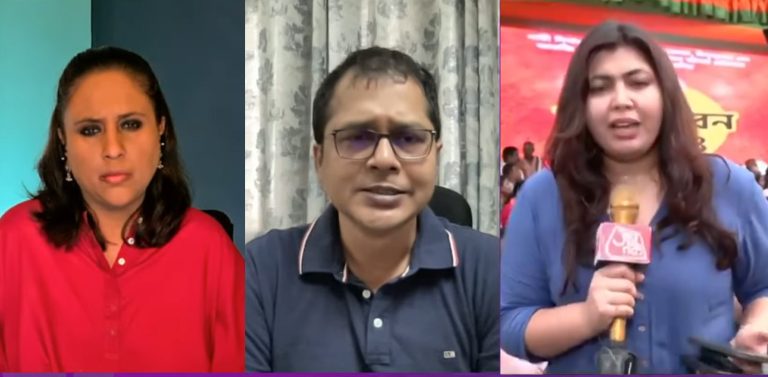
Saket Gokhale recently locked horns with the people who have traditionally been on the same ‘secular’ and ‘liberal’ plank which his party claims to represent. First, he attracted the ire of former NDTV journalist Barkha Dutt who invited him to participate in her program “Bottomline with Barkha” on her YouTube channel “Mojo Story” on 22nd August. It was a discussion on the Supreme Court’s critical comments on the Kolkata Police in relation to the incident. She was also joined by senior advocate Sanjay Hegde, women’s rights activist Ranjana Kumari and Bharatiya Janata Party’s spokesperson Radhika Bhattacharyya.
#KolkataHorror I In 30 yrs I've never told a guest to leave my show. The TMC spokesman today was obnoxious. He revealed how he does not care for the victim at all & how, he seeks to bully women. Show went on just fine after he was removed. In full here https://t.co/MVV2k8x3Vopic.twitter.com/SCElMccVIv
She recounted how the authorities tried to mask the instance including misrepresenting it as suicide, Sandip Kumar Ghosh the controversial principal of the institution was transferred instead of being removed from his position and a mob of 7000 people attacked and vandalised the hospital. When she asked the TMC leader to acknowledge that the government could have been more responsible, he accused the media of misrepresenting facts. He maintained that the emergency room had not been damaged as clarified by the Kolkata Police. However, Barkha Dutt retaliated that she stood by her statement and invited the authorities to take her to court. “I think you completely revealed your absence of priority. You are just being a troll,” she charged.
An incensed Saket Gokhle responded by asking why she wasn’t in Badlapur covering the recent sexual assault. Since he had no answer to her pertinent inquiries, he took out the victim card and claimed that the media was focused on West Bengal only as it was ruled by Mamata Banerjee. “(Rape of) 4-year-old children in Maharashtra don’t matter but Kolkata does because it is ruled by TMC and not BJP.” He persistently defended the administration, criticised the media and continuously cut her off to avoid answering the tough questions.
“You have shown an absolute lack of integrity,” Barkha Dutt lambasted his rude conduct on the show and added, “I have camera recordings of each and everything carried on this platform or written by me. Maybe if your government communicated more transparently, the parts of what we now know to be fake would not have spread like wildfire and doctors would not have sat on this program quoting them.” She reminded that his party had appointed a government lawyer to represent Sandip Ghosh in the Kolkata High Court which prompted the Chief Justice to question how the man became so powerful and what is the administration trying to hide.
Tired of his frequent disruptions, she muted him and challenged, “I can have a one-on-one live for an hour anytime you want. I invite you to a place and time of your choice. We’ll go live and get the audience to do a jury verdict after that on whether you reveal more integrity or I do. It is my open invitation to you.” She called his behaviour “absolutely ridiculous” and highlighted, “You have behaved like a troll and unveiled how much you care about the victim. I’m saying it again I invite the Kolkata police to sue me. Please investigate my work. It is not our failure that your government could not communicate in real-time. Everything we have reported has been told to us by a doctor on camera. I was not born yesterday. You have every right to your opinion of me but you do not have the right to bully me or silence me and I will not be bullied or silenced by you.”
The Rajya Sabha MP voiced his frustration on being muted and alleged that he was there to participate in the discussion and not be a spectator. He argued, “I didn’t get a chance to speak after your monologue,” as Barkha Dutt asked Sanjay Hegde to express his views. She then turned to Saket Gokhale and directed him to leave the show “if he can’t participate in it with civility” as other members of the panel also objected to his actions. His crass conduct resulted in his humiliating dismissal.
Saket Gokhale vs India Today anchors
Saket Gokhale appears to have a tendency to get scolded for his inappropriate actions. On 23rd August, India Today’s journalist Nabila Jamal slammed him for “editing and morphing” her clip, claiming that she had seen the postmortem report personally and it said that the victim doctor had 150 milligrams (mg) of semen in her private part. He alleged that “the Supreme Court busted the fake news yesterday” and she “openly lied to push a sinister BJP agenda,” in a social media post. However, she called him out “for floating the suicide theory and allowing scope for misinformation.”
Notably, the Supreme Court had dismissed the claim that 150 grams of semen was found, while Nabila Jamal mentioned 150 milligrams, a considerably lesser quantity.
Nabila Jamal asked him to visit RG Kar Hospital and placate the doctors who have been protesting there for two weeks, as he had too much time on his hands. Afterwards, she accused him of attacking her because she “highlighted his corruption and money laundering charges.”
Shame on you for floating the Suicide theory and allowing scope for misinformation!
Clearly you've got lots of time at hand, do come to RG Kar hospital & pacify those protesting doctors who've been there 2 whole weeks. Editing & morphing my video shouldn't be your priority.… https://t.co/H8ohLs8KCz
On the same day, the parliamentarian was again chastised by Akshita Nandagopal, deputy editor and anchor at India Today for sharing a fraudulent ‘fact-check’ post in the name of the media company which alleged that “Kolkatta Police had vandalised all evidence” concerning the rape and murder of the trainee doctor. The post then stated that CBI (Central Bureau Of Investigation) has established that “all investigating documents and scenes of crime were videographed by the Kolkata police” and there was no tampering.
She wrote, “I choose to largely ignore your obviously motivated posts, but this is fake. It’s not India Today’s property.” She rebuked him for failing to carry out a fact-check before uploading online. “If only TMC MPs spent as much time ensuring justice for Abhaya (victim doctor) as much as they’re spending on social media,” she further remarked.
Hi @SaketGokhale, I choose to largely ignore your obviously motivated posts, but this is FAKE- it’s not India Today’s property… amazing that you don’t FACT CHECK before tweeting ?
If only TMC MPs spent as much time ensuring justice for Abhaya as much as they’re spending on… https://t.co/mYrc0lCKGZ
TMC’s miserable attempts to conceal, evade, defend or disregard
The TMC government has been in the dock ever since the shocking rape and murder case came to light. The Mamata Banerjee administration has startlingly been seen trivializing the situation, accusing the opposition including the BJP and the Left, justifying the dereliction of duty and even providing counsel to argue for the accused principal in high court. As the only state led by a female chief minister, her government has been working overtime to avert responsibility and brazening out their misconduct instead of serving justice and supporting the victim and the protesters who are concerned about their lives and safety.
She also went to protest against the instance that transpired under her own regime, making a complete joke out of the serious agitation and announcing, “Within Sunday (18th August) CBI has to facilitate the hanging of the guilty and complete the entire probe. Our Kolkata Police has completed 90 per cent of the probe,” while simultaneously sending attorneys to defend RG Kar Medical College and Hospital principal Sandip Ghosh which even forced Calcutta High Court to question the dubious intention of the administration.
The controversial man was recently made the OSD (Officer on Special Duty) instead of being terminated after he was pressured to resign from his post. He was also appointed the principal of Calcutta National Medical College and Hospital but was ousted after severe protests. Former Deputy Superintendent of RG Kar Medical College and Hospital, Akhtar Ali had filed a case against him in the Calcutta High Court.
He asserted, “Sandip Ghosh was engaged in illicit activities, including the trafficking of unclaimed bodies and biomedical waste. This waste was sold to individuals connected to his security team and was later transported to Bangladesh.” He further accused him of soliciting bribes from students in exchange for passing grades and taking a 20 per cent commission on every hospital tender, awarding contracts exclusively to his close associates. Furthermore, Suhrita Paul, who was picked as the principal of the medical college was also removed owing to the demonstration.
It’s a suicide: Kolkata Police to victim’s parents
While Mamata Banerjee wrote off the public’s outrage as a political plot by the Left and the BJP, agitating doctors charged they don’t trust the government because it is working to cover up the matter. The victim’s parents disclosed that they received a call from the department informing them that their daughter had killed herself. The mother indicated that anyone could know it was a murder just by looking at the body. “First we got a call from the hospital that your daughter is sick, then the call was disconnected. After that when I called and asked what happened, they told me to come to the hospital. When we called again, the (caller) identified himself as Assistant Super and said your daughter has committed suicide. She went on duty on Thursday and we got this call on Friday at 10:53 pm,” the distraught woman informed.
“When we reached there, we were not allowed to see her, we were allowed to see her at 3 o’clock. Her pants were open, there was only one piece of cloth on her body. Her hand was broken, and blood was coming out of her eyes and mouth. Just by looking at her, it seemed that someone had murdered her. I told them it is not suicide, it’s a murder, We worked so hard to make our daughter a doctor but she was murdered,” she stated. The police, however, insisted that they never classified it as a suicide.
The parents mentioned that they had to wait hours to see the body of their daughter. The mother complained that the police were attempting to wrap up the inquiry hastily. The father also stated that her daughter’s body was cremated in a hurry. According to him, her body was burnt before the other two that were in the crematorium and the staff also confirmed the same. Renovations were reportedly started close to the crime scene even as the investigation was underway. Other doctors questioned whether this was an attempt to obliterate the proof.
Will shut hospital: Calcutta High Court
The West Bengal government and state police were reprimanded by an angry Calcutta high court for vandalism at RG Kar Medical College at 14th August. The judge called the incident a “complete failure” of state machinery and threatened to “close down” the public facility due to obvious mismanagement. A crowd of 7,000 people stormed the scene with the intention of demolishing the seminar room where the rape and murder occurred while the police hid in the restrooms and called for assistance from the nurses. Additionally, a video emerged showing someone telling the crowd, “Let’s go to the seminar room.”
The episode further highlighted the shortcomings of state machinery when hundreds of protesters broke over police barricades to storm RG Kar Medical College and Hospital around midnight as admitted by Kolkata police commissioner Vineet Goyal. “When so much commotion is going on, you should have cordoned off the entire area. The police usually have intelligence on these matters. If 7,000 people were to gather, it is hard to believe that state police did not know. This is an absolute failure of state machinery. Could this vandalism have been prevented is the question. Who did it come later,” noted the division bench of Chief Justice TS Sivagnanam and Justice Hiranmay Bhattacharya.
The judge questioned why there were no orders issued to stop people from illegally gathering near the hospital. The state administration was also questioned by the court regarding the “urgency” of renovations close to the location where the deceased doctor’s body was found on 9th August. “What was the urgency? You go to any district court complex and see if ladies have any restrooms, I say this with responsibility. What has the PWD (Public Works Department) done? We’ll shift patients to another hospital and close the (RG Kar) hospital,” the court warned.
Supreme Court slams lapses in probe
The case which resulted in widespread outrage and demonstration across various sectors, led the Supreme Court to take suo motu cognisance. A Supreme Court bench led by Chief Justice DY Chandrachud on 22nd August pointedly questioned senior advocate Kapil Sibal, representing the West Bengal government, about the disparities in the police records, outlining how the First Information Report was lodged nearly 14 hours after the victim’s body was discovered.
“Nothing seems to explain why the FIR was registered at 11.45 pm when the incident was reported in the morning. What’s the reason for the FIR almost 14 hours after the discovery of the body? What was the principal of the college doing? What was his connection and after he was made to step down from that hospital, how was he made the principal of another hospital? Let the probe continue. We are going to assess the investigation,” the apex court pronounced further exposing the truth behind the inquiry executed by the Kolkata authorities.
TMC’s action against own MP for demanding custodial interrogation of Kolkata Police Commissioner
Sukhendu Shekhar Roy, a senior leader of the party and Rajya Sabha member of parliament conveyed dissatisfaction regarding the investigation into the case, hinting at an apparent division within the ruling TMC in West Bengal. He urged the CBI to question Vineet Goyal, the commissioner of Kolkata police and Sandip Ghosh while they are in custody. He had taken to social media to call upon the agency to act fairly and interrogate the two. However, he received a notice from the Kolkata police directing him to go to the Lalbazar police headquarters within a few hours, in response to his demand.
Meanwhile, party leaders also denounced him for his remark. Senior Trinamool Congress leader Kunal Ghosh claimed that Kolkata Police Commissioner Vineet Kumar Goyal made every effort to resolve the matter and he was directly in charge of it. He expressed regret that Sukhendu Shekhar Roy shared such a post about the top cop.
The trainee doctor was raped and murdered as she was resting after a 36-hour-long shift at the hospital which sparked demonstrations by the doctors and other medical professionals in the state. Sanjay Roy, the prime accused in the case was later taken into custody by the authorities.
In India, a new wave of scams has appeared in which men are targeted by women who trap them through dating apps, and then exploit them financially, often in connivance with some bar or pub owners. Several such incidents have been reported in cities like Delhi, Hyderabad, and Chennai, raising concerns about the credibility of dating apps. Similar instances have recently appeared in the financial capital of India, one of the most vibrant cities in Maharashtra, the city of Mumbai.
Midday Media House recently conducted a sting operation in the case after several people complained about being duped at the hands of online dates in Mumbai. This is after Midday reported one such scam case in July 2024. Three women had befriended three different men from Mumbai and had asked them to meet at the Red Room pub in Andheri. The women in every case place heavy orders including expensive drinks and hookah leading the bills to cost Rs 8,800, Rs 24,000, and Rs 43,000. In each case, the women escaped to the washroom or went home when the bill arrived forcing the men to pay hefty amounts.
— Deepika Narayan Bhardwaj (@DeepikaBhardwaj) July 18, 2024
The modus operandi of these scams has been uncovered by Midday, which says that women open their accounts on dating apps like Tinder, Bumble, etc, and match with people. Then they ask their matches to meet at clubs or pubs with which they already have tie-ups. The women make heavy orders. They order premium drinks, imported hookahs, and pyro guns which are seen as entertainment in such clubs. They lure the men into conversations and suggestive flirting but abscond after making sure the pub or bar profits heavily from the men.
The bill always costs way more than usually expected by the customers then terrifies the men who request for the bill splits. But by the time, the girl starts making the build-up for escaping. She either claims that she has to go home given her parents’ frequent calls or she goes to the washrooms, obviously to never return. The detailed investigation by Midday claims that these women have tie-ups with the waiters or the club managers who help them escape from the spot safely. The hotel staffers then target the men to pay heavy bills and even assault them sometimes if they seek discounts or say that they don’t have that huge sum to pay. The women who brought the men to the clubs are then awarded 15-20% of the bill amount by the staffers.
Mumbai-based men’s activist Deepka Narayan Bharadwaj confirmed the scam by saying that this kind of scam had now become very common in Mumbai. “Several men have reached out to me, reporting that they’ve been scammed. Many of these men filed complaints with the police, but no action was taken. Now, there’s a growing number of victims who are being scammed at the Godfather Club in Andheri, with new cases emerging almost daily. In many instances, these men have been scammed by the same set of women,” she said.
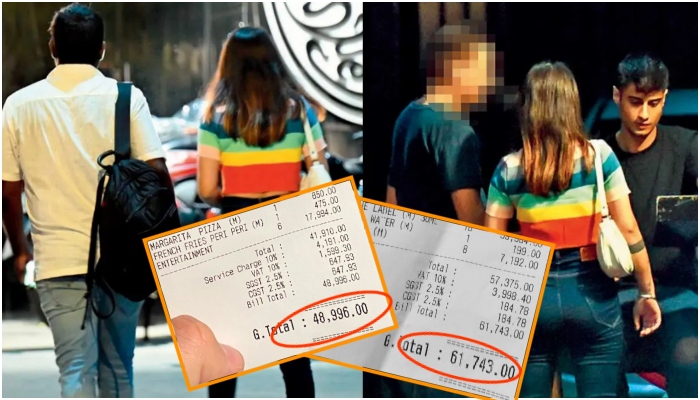
She also shared one such instance on her X account. She said that one of the clubs in Mumbai named the Godfather Club in Andheri had issued men bills amounting to Rs 22,080 (including cocktail Rs 5000, Blue Label whiskey, Rs 10000, Red Bull drink Rs 1798, and mineral water Rs 200), Rs 35,949 (including Blue Lable whiskey Rs 19,992 and cocktail Rs 5,000), Rs 48,996 (including Rs 17,994 of ‘entertainment’) and Rs 61,743 (including Blue Label Whiskey Rs 39,984) respectively.
Bharadwaj stated that she was in touch with 12 such victims who were forced to pay heavy bills by the women they met on Tinder and Bumble.
— Deepika Narayan Bhardwaj (@DeepikaBhardwaj) August 23, 2024
She’s a girl—how could we stop her? Club Manager played women’s card, allowed her to go without paying the bill
Midday planted some of their male reporters on these dating apps who began receiving a flood of matches within 24 hours of account opening. The men were then paired with some of the female matches who requested them to meet at fancy places claiming that they (women) would be going to the club for the first time. One of the reporters matched with one Mehak, whose profile name on Bumble is ‘S, 26’. Her bio mentioned that she had completed a nail art course and liked meeting new friends. She also said that she was interested in nightclubs and wines.
The duo talked for a week on WhatsApp after which the woman asked the undercover reporter to meet her for the first time at Satra Plaza in Vashi on August 7th. Interestingly, the team sent another reporter for the date with Mehak which did not bother her. She eventually told the man that she liked him and pretended to be attending calls from her ‘parents’ throughout the entire date. She took him to the Vente Pa’Ca club in Satra Plaza where she ordered a bottle of Jacob’s Creek Shiraz wine priced at Rs 8,499 and a ‘Dubai special hookah’ costing Rs 2,499 as well as pizza and paneer tandoori. She then began dancing with the reporter and indicated that it was her first time at the club. However, after some time, she said she was getting calls from home and that she needed to leave. She then informed the waiter, who presented a bill of Rs 13,792.
Midday reporter with Mehak ( Image- Midday)
The reporter informed me that he didn’t have that huge amount to pay for the bill. Mehak meanwhile asked him to arrange it from somewhere. She escaped with the manager who held the reporter for money. “I met this girl on a dating app, and she brought me to this club. I can’t pay such a huge bill,” the reporter told the manager and asked how the latter allowed the woman to go without paying the bill. To this, the manager played the women’s card and said, “She told us that she was getting late and was receiving calls from home. She’s a girl—how could we stop her?” The reporter was forced to pay the amount.
The beautician said was out of money as had recently done a bridal beauty course
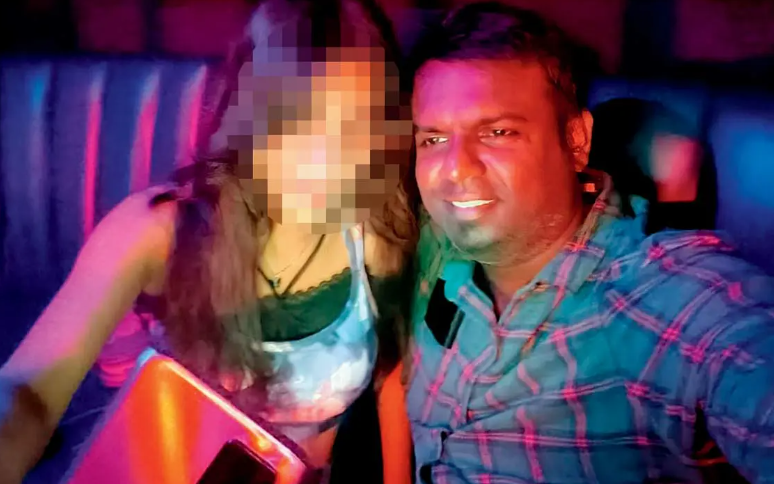
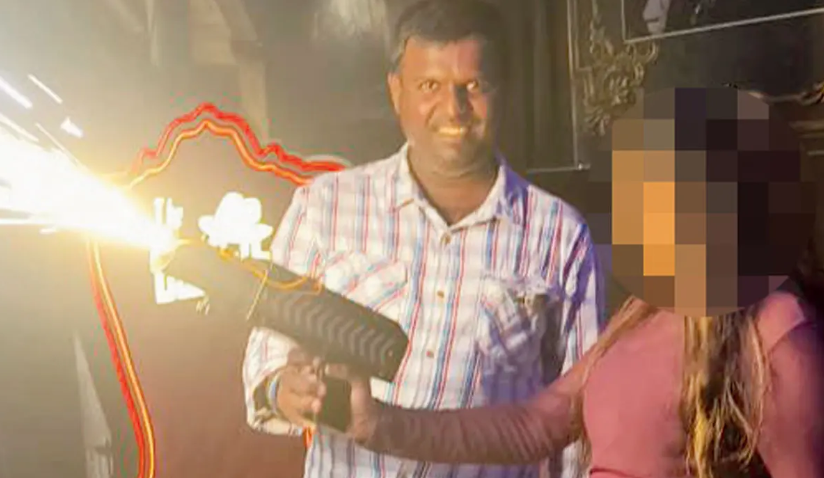
On another such investigative date, another reporter matched one Muskan, a so-called beautician on Tinder who asked him to meet her at Crystal Paradise in Andheri West on August 1. She then took him to the Godfather Club where she asked the waiter to bring two Blue Label whiskies (30 ml) and a hookah. She also made requests for a couple of pyro guns, costing each Rs 3000. The reporter first asked the waiter how much it would cost. On learning that he was being duped to pay Rs 6,000 just for guns, he asked Muskan to order one saying they were too expensive. But, the woman insisted saying that she liked him and that she wanted to blow them with him.
The guns were ordered. The waiter also recorded the video of the duo as they ‘enjoyed’ the pyro guns. But as per Midday, the waiter made sure that the face of the woman wasn’t seen in the video.
Apart from this, the woman kept on making constant orders leading the bill to cost Rs 30,000. This terrified the undercover reporter who asked Muskan to chip in as the bill was too heavy. To this, Muskan simply said that she was short of money as she was jobless and had just completed a bridal beauty course.
Muskan wields the pyro gun, an ‘entertainment’ that costs Rs 3,000
Muskan then refused to take selfies with the reporter, claiming she needed to go home since she was receiving calls from her parents. The reporter offered to take her home, but she declined and took an auto rickshaw to MHADA Colony in Andheri. The woman had no idea that her stated adress was in the opposite direction when she directed the auto driver to the railway station.
The reporters met two other similar women at Godfather Club & Lounge, Andheri West, and Matahaari nightclub, Worli where they were forced to pay Rs 26,570 and Rs 20,000 respectively. In one of the cases, the woman claimed that she was in a hurry and had to rush home and was seen in the same club with some other man she had planned to dupe. And in another similar case, the woman reappeared with a fake name on Tinder planning to trap another date.
Same club, same order, same women: Organized Syndicate?
It’s intriguing that many ladies are taking men to the same club, and the scamming routine is consistent. They order the same pricey items to inflate the costs and then leave as soon as the bill arrives. Even more distressing, some males have been physically beaten by bouncers after objecting to the excessive prices. “Why are the bouncers resorting to violence rather than contacting the police if there is a payment problem? Why do they let the women simply walk out? If two persons enter the club together, why is only the male cornered if the staff isn’t involved in the scheme?” asked Advocate Bharadwaj raising the concerns of men safety.
“This appears to be an organized syndicate, and it’s imperative that the police investigate it thoroughly. Many victims have lodged cyber complaints, and the internet is filled with reviews exposing these scams. It’s disheartening that despite widespread awareness, the police seem indifferent, possibly because women are at the forefront of these scams,” she said.
As per the Midday, the legal remedy is to register an FIR under Sections 318 and 319 of the Bharatiya Nyaya Sanhita, which covers cheating and impersonation. Victims should not hesitate to complain against the proprietor of the restaurant and the woman, as the police will investigate the situation and take the necessary action if required.
Restaurant owners refuse to accept tie-ups
Midday has done an alarming investigation into the case. In spite of this, several restaurant owners who issue heavy bills have refused to the charges of having tie-ups with the women who bring customers to the clubs. The Godfather’s management maintained they had no involvement in the scam and were ignorant of such actions taking place on their premises. However, the reporter witnessed customers and workers squabbling over bills. Furthermore, numerous internet reviewers have accused the pub of being a part of the hoax.
The management also claimed that no complaints had been filed against them with the police station. Further, when asked why hookahs were being offered despite being illegal, they claimed they provide only herbal hookahs, which are legal, but had no explanation for why it was being sold as a cocktail.
“People visit our club as couples and in groups. We do not charge an entry fee. We do not have information about where our guests are coming from or if the girls are from dating sites. We provide genuine bills to our customers,” the manager of Vente Pa’Ca was quoted as saying.
Conclusion: Instances causing general distrust towards society
These kinds of online dating scams being operated by alleged organized syndicates should stop as the victims in such cases often suffer significant emotional distress along with massive financial loss. In many cases, victims experience feelings of betrayal, embarrassment, and despair when they discover they have been duped by someone they liked, respected, and trusted to a certain level. This emotional manipulation can have long-term psychological consequences resulting in anxiety, depression, and a lack of trust towards society.
Further, financial exploitation can affect the victim if he/she already is vulnerable money-wise. Not only men, but several females have also fallen prey to such scams. People these days use online dating platforms to find themselves a potential partner from their vicinity. They trust these platforms considering them to be a viable way to meet new people. However, such scams degrade the very purpose of these platforms developing general distrust towards the purpose.
These instances also create a negative impact on the societal mindset by fostering an environment of fear and suspicion. They have complete potential to undermine the sense of community and safety that is essential to constructive interpersonal connections, both online and offline. Not only women, but every genuine individual in today’s age deserves to be protected, given the unsafe use of the internet resulting in criminal acts like honey trapping, phishing, identity theft, credit card fraud, employment fraud, and this, online dating fraud. Any victim duped for money through the internet, especially in honey-trapping and online dating scam cases shall not feel embarrassed, but report to the police, who shall book the concerned accused under the relevant law. Society should also instead of cornering the victims for falling for such incidents, help them, and assure them safety and privacy. After all, it is every internet user’s responsibility to support a healthier and safer online community for everyone.
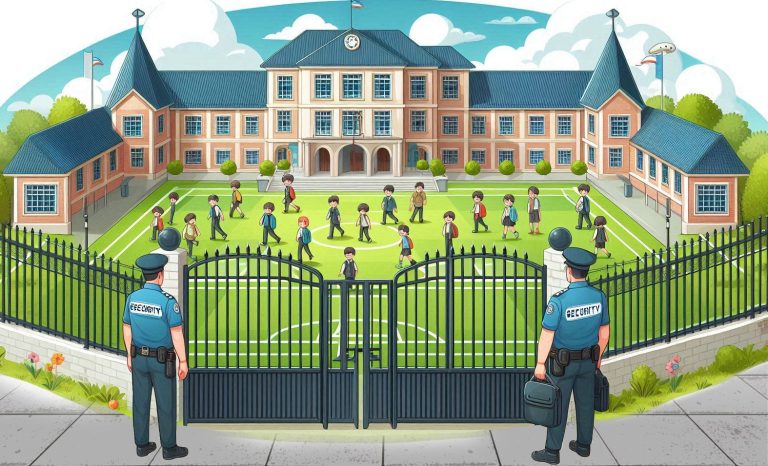
Amid several incidents of violence and sexual assaults in several schools across the country, the union education ministry on Friday asked all states and union territories to implement “Guidelines on School Safety and Security” to ensure safety and security of children in schools. The govts of states and UTs also have been asked to inform the status of notification of Guidelines on School Safety and Security-2021 in their State/UT.
A statement issued by the Ministry of Education, Government of India, said that it is deeply committed to ensuring the safety and security of children in schools and other educational institutions. To strengthen procedures, accountability and safeguard the students, in pursuance of the order of the Supreme Court in the Writ Petition (Criminal) No. 136 of 2017 and Writ Petition (Civil) No. 874 of 2017, Department of School Education and Literacy (DoSEL), Ministry of Education has developed ‘Guidelines on School Safety and Security-2021’, which are in alignment with the POCSO Guidelines.
The statement says that these guidelines inter-alia, contain provisions for fixing the accountability of the school management in the matter of safety and security of children studying in Government, Government-aided and Private Schools. Further, the guidelines provide measures for preventive education, accountability of various stakeholders, reporting procedure, concerned legal provisions, support and counselling and safe environment. These guidelines are crucial to accessibility, inclusiveness and positive learning outcomes, as per the ministry.
The guidelines were circulated to all States/UTs/Autonomous Bodies of Department of School Education and Literacy and Stakeholder Ministries in October 2021. The guidelines, which are advisory in nature, detail the accountability of various stakeholders and different departments in ensuring the safety and security of children in schools.
States/UTs were informed that they may incorporate additions/modifications to these guidelines, if deemed necessary, according to the State/UT specific requirements and notify these guidelines. These guidelines are uploaded on the website of DoSEL.
As per the statement issued by the ministry, the purpose of these guidelines is:
to create an understanding among all stakeholders, including students and parents, on the need for co-creating a safe and secure school environment for the holistic development of children.
to make different stakeholders aware about the acts, policies, procedures and guidelines already available on different aspects of safety and security i.e., physical, socio-emotional, cognitive and specific to natural disasters as well.
to empower different stakeholders and enable clarity on their role in the implementation of this guideline.
to fix accountability for keeping children safe and secure in schools (including while children are transported to and fro, to attend school or go back to their homes in a school transport) on School Management and Principals and Teachers in Private/Unaided Schools, and Head/in-charge Head of School, Teachers and education administration in case of government/government-aided schools.
A key purpose is to emphasize the ‘Zero Tolerance Policy’ against any negligence on the part of any individual or management when it comes to the safety and security of children in schools.
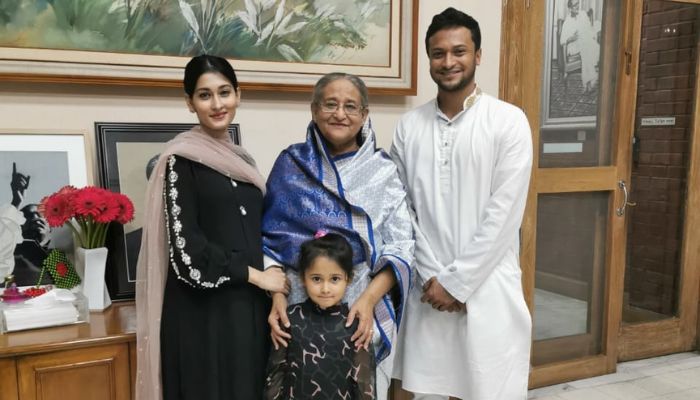
On Thursday (22nd August), the police booked Bangladeshi cricketer and Awami League MP Shakib Al Hasan in connection to a murder case.
As per reports, the police complaint was filed by a man named Rafiqul Islam. He alleged that his son Rubel went to a ‘student protest’ march in Adabor in Dhaka on 5th August, the day of the ouster of Sheikh Hasina. He died 2 days later at the hospital.
Rafiqul claimed that the victim was shot in the chest and abdomen as part of a planned criminal conspiracy. The complainant named Shaqib al Hasan the 28th accused in the case.
Rafiqul has also named ex-Prime Minister Sheikh Hasina and 154 others in connection to the case. It must be mentioned that Shakib al Hasan was not even in Bangladesh on the day of Rubel’s alleged murder.
At that time, he was playing for the Bangla Tigers Mississauga team against Surrey Jaguars in the Global T20 Canada League held in Brampton.
During the mass protests in Bangladesh, he was part of the Major League Cricket in the USA. Following the fall of Dhaka, there have been reports of killings, attacks and increased harassment of politicians allied to the ruling Awami League.
The Indian Express and Times of India (TOI) published apologies in their Ahmedabad editions on Friday, complying with a recent Gujarat High Court order. The court had criticised the newspapers for inaccurately reporting its remarks in an ongoing case.
On Thursday, the Court had warned that it would issue contempt of court notices if the newspapers did not publish the apologies. As a result, both newspapers featured the apologies prominently on their front pages.
On August 13, a bench consisting of Chief Justice Sunita Agarwal and Justice Pranav Trivedi issued notices to the regional editors of the Times of India and Indian Express. The court sought their explanations for providing a “false and distorted narration” of the court proceedings in a particular case.
Justice Agarwal remarked that the way the news was presented suggested that the court had already formed an opinion on the right of a minority institution to appoint teachers of its choice while regulating educational institutions run by minority groups.
Chief Justice stated that the newspapers’ actions appeared to be intentional.
“This was a deliberately coordinated effort and a planned approach… It’s improbable that three newspapers would report the same thing in the same manner, differing only in language. The tone of all three articles was identical. The reports were crafted similarly, with no distinction between the Court’s observations and its findings or orders,” she remarked.
In their statements, the papers acknowledged that their reporting had incorrectly suggested that the High Court had resolved the issues concerning the rights of aided minority institutions.
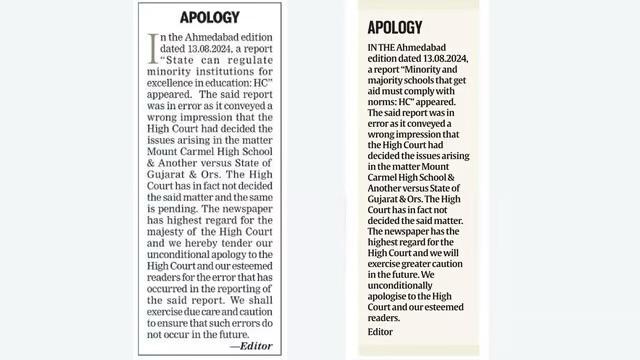
“The newspaper holds the High Court in the highest esteem, and we sincerely apologise to the Court and our valued readers for the error in the reporting,” TOI stated in its apology.
Apologies published by TOI and Indian Express
On Thursday, the Court expressed dissatisfaction with the apologies submitted by the newspapers in their affidavits.
As a result, the Court ordered the two media outlets to publish apologies in their respective newspapers, ensuring that it was clearly stated that both the reporter and the editor were at fault for misreporting the Court’s observations.
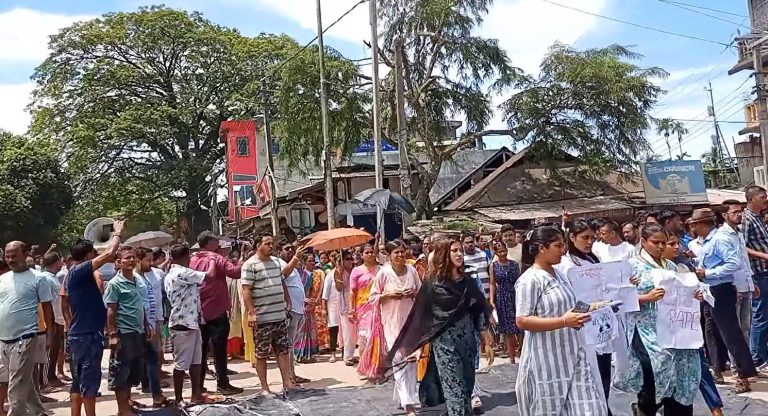
As protests against several rape incidents continue across the country, another such incident has triggered massive protests in Assam. A 14-year-old girl was gang-raped by three men on Thursday evening in Dhing in Nagaon district, after which local organisations called for an indefinite bandh in the town starting today.
The girl studying in class 10 was returning from tuition class on Thursday evening when she was attacked by three men between 7 pm and 8 pm. According to police, after brutally gang raping her, the assailants dumped her by the roadside in the Borbheti area. She was discovered in naked and unconscious condition by locals around an hour later.
The locals immediately informed the police, after which the police rushed to the spot and shifted the victim to the Dhing First Referral Unit (FRU) for urgent medical attention. Due to the severity of her injuries, she was later referred to Nagaon Civil Hospital for further treatment.
As per police, the three attackers were on a motorcycle when they spotted the girl and attacked her. Allegedly they sprayed something on her, tied her mouth, and raped her brutally, which caused her to lose consciousness. They then dumped her near a pond on the roadside, where she was discovered without clothes by people later.
Police said that all three culprits have been identified. One of the culprits have been arrested, while the search is on for the other two. While police refused to reveal the name of the arrested persons, media reports have identified him as Tafazzul Islam. Another person named Sahidul Islam has also been detained for questioning, but his links with the crime are not confirmed. Reportedly, all three accused belong to the Muslim community.
Senior police officials from district headquarters in Nagaon have reached to investigate the case. Assam CM Himanta Biswa Sarma has instructed DGP GP Singh to visit the site and ensure swift action. He tweeted, “The horrific incident at Dhing, involving a minor, is a crime against humanity and has struck our collective conscience.”
The horrific incident at Dhing, involving a minor, is a crime against humanity and has struck our collective conscience.
We will NOT SPARE anyone & BRING the perpetrators to JUSTICE. I've directed @DGPAssamPolice to visit the site and ensure swift action against such monsters.
He further added, “We will NOT SPARE anyone & BRING the perpetrators to JUSTICE. I’ve directed @DGPAssamPolice to visit the site and ensure swift action against such monsters.”
CM Himanta Biswa Sarma said that the menace of spray gang has become a serious matter, and promised strong action.
In the meanwhile, thousands of people came out on streets demanding swift justice. As the local organisations called for an indefinite bandh, shops in the market in Dhing remained closed.