Home Blog Page 1247

Absurd and baseless: India dismisses Chinese claim on Arunachal Pradesh

On Tuesday (19th March), India rejected the “absurd claims” and “baseless arguments” made by China on Arunachal Pradesh, asserting that the northeastern State of India is an “integral and inalienable part of India.” The Ministry of External Affairs said that the people of Arunachal Pradesh will continue to benefit from India’s development plans and infrastructure projects.

“We have noted the comments made by the spokesperson of the Chinese Defence Ministry advancing absurd claims over the territory of the Indian State of Arunachal Pradesh. Repeating baseless arguments in this regard does not lend such claims any validity,” said the official spokesperson of MEA, Randhir Jaiswal.

“Arunachal Pradesh was, is, and will always be an integral and inalienable part of India. Its people will continue to benefit from our development programmes and infrastructure projects,” the statement added.

Notably, on the 15th Match, the Chinese defence ministry again tried to claim the Indian state, referring to it as “Zangnan- an inherent part of China’s territory”.

“Zangnan is China’s inherent territory, and China never recognizes and firmly opposes India’s illegal establishment of the so-called ‘Arunachal Pradesh’,” spokesperson of the Ministry of National Defence, Senior Colonel Zhang Xiaogang said.

The Chinese military’s comments came a few days after India sent out a strong rebuttal to China for the latter’s comments on Prime Minister Narendra Modi’s visit to Arunachal Pradesh.

In an earlier statement, MEA noted that China’s objection to visits by Indian leaders or India’s developmental projects “does not stand to reason”.

“We reject the comments made by the Chinese side regarding the visit of the Prime Minister to Arunachal Pradesh. Indian leaders visit Arunachal Pradesh from time to time, as they visit other states of India. Objecting to such visits or India’s developmental projects does not stand to reason,” MEA official spokesperson Randhir Jaiswal said on 12th March.

“Further, it will not change the reality that the State of Arunachal Pradesh was, is, and will always be an integral and inalienable part of India. The Chinese side has been made aware of this consistent position on several occasions,” the spokesperson added.

PM Modi on 9th March this year virtually inaugurated the strategic Sela Tunnel during an event held in Itanagar, the capital of Arunachal Pradesh. The tunnel has been constructed by the Border Roads Organisation (BRO) at an altitude of 13,000 feet on the road connecting Tezpur, Assam, to Tawang in the West Kameng district near the Line of Actual Control (LAC) with China.

India has time and again denied China’s territorial claims on its Northeastern state, stating that the state is an integral part of the country. New Delhi has also criticised Beijing’s move to give “invented” names to the territory, claiming that it does not change the facts. Notably, despite having no legal claim over Arunachal Pradesh, China has ‘named’ the territory “Zangnan”.

(With inputs from ANI)
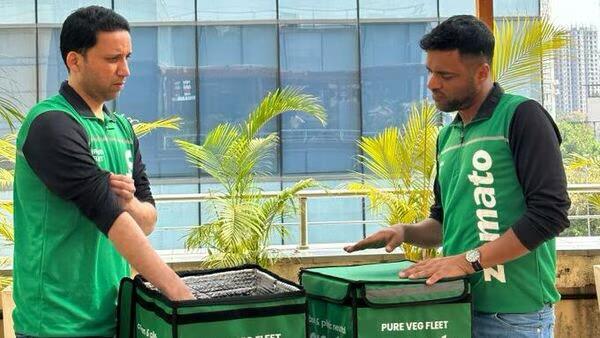
‘Promoting Brahminism and casteism’: Zomato faces attack from ‘wokes’ after it announces ‘Pure Veg’ fleet for vegetarians

Food aggregator Zomato on Tuesday was at the receiving end of an online attack after it launched a new service, ‘Pure Veg Mode’, to serve its pure veg customers. Soon after Zomato made the announcement, a legion of social media users best identified as ‘leftists’ and ‘wokes’, who routinely prowl on the internet all day long in search of the next issue to outrage, attacked the food aggregator company for its business decision to serve a niche market.

As predictable as clockwork, some of the detractors absurdly linked Zomato’s decision to cater to the Pure Veg market—a set of users who religiously follow vegetarianism and are particular about ordering their food from a vegetarian-only restaurant—to a move that empowered and encouraged Brahminism and casteism.

Such claptrap is, of course, not new to ‘wokeism’ and ‘left-leaning liberalism’, which have long thrived on manufacturing issues and continuing their ostracisation of communities that they viscerally hate, in this case, Brahmins and those who follow vegetarianism, a dietary choice that is common among individuals of various religions and castes.

However, these nuances are lost on those who have made it their profession to outrage on everything under the sun, even on business decisions that corporations make after thoroughly analysing market demand and existing solutions.

One social media user quoted Zomato CEO Deepinder Goyal’s tweet about the latest announcement and accused his company of openly promoting casteism. The user also likened the company’s move to launch a ‘Pure Veg’ fleet to the preservation of untouchability in urban India.

Such preposterous extrapolations to create a fear psychosis among the society is a hallmark of the leftwing and woke ideology. 

Many others too furthered the argument that Zomato’s ‘Pure Veg’ fleet would promote untouchability with its distinction between non-veg and pure-veg, ignoring the fact that there have been several incidents in the past when vegetarians were served non-vegetarian food owing to restaurant negligence or food aggregator’s carelessness.

A social media user insinuated that Zomato’s decision to launch a ‘Pure Veg’ service would lead to the next level of neighbourhood policing.

Yet another X user postulated that such a move by Zomato will stop some societies from delivering non-vegetarian food to residents who order it. This, again, is ludicrous reasoning, given that it is illegal to stop food delivery partners from fulfilling their jobs, besides the fact that not opting for a ‘Pure Veg’ fleet does not mean that the existing food delivery partners will dedicatedly serve only non-vegetarian food. 

Zomato brings ‘Pure Veg Mode’, and ‘Pure Veg Fleet’ for vegetarians who do not like mix-ups

Food delivery aggregator Zomato has often faced criticism from ‘pure veg’ users who have sometimes found non-veg items on their food orders. On March 19, CEO Deepinder Goyal announced that Zomato has brought a new service ‘Pure Veg Mode’ to serve its pure veg customers. 

“India has the largest percentage of vegetarians in the world and one of the most important feedback we’ve gotten from them is that they are very particular about how their food is cooked, and how their food is handled. To solve their dietary preferences, we are today, launching a Pure Veg Mode along with a Pure Veg Fleet on Zomato, for customers who have a 100% vegetarian dietary preference”, Deepinder Goyal announced today.

Goyal further explained that Pure Veg Mode will consist of a curation of restaurants that serve only pure vegetarian food and will exclude all restaurants that serve any non-veg food item.

“Our dedicated Pure Veg Fleet will only serve orders from these pure veg restaurants. This means that a non-veg meal, or even a veg meal served by a non-veg restaurant will never go inside the green delivery box meant for our Pure Veg Fleet”, he added.

Goyal added that anyone who prefers pure veg food can avail the service and this Pure Veg Mode, or the Pure Veg Fleet doesn’t serve or alienate any religious, or political preference.

Goyal further added that Zomato is planning more specialised fleets for special customer needs. “For example, there’s a special cake delivery fleet coming up with hydraulic balancers that prevent your cake from getting smudged during delivery”, he explained.

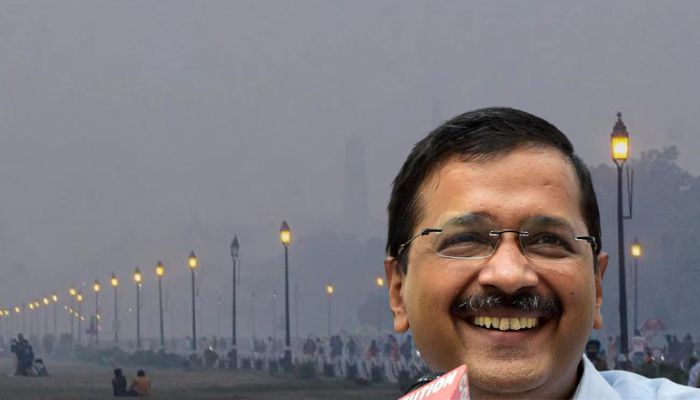
AAP govt left red-faced as New Delhi tops the list of National Capitals with the worst air quality

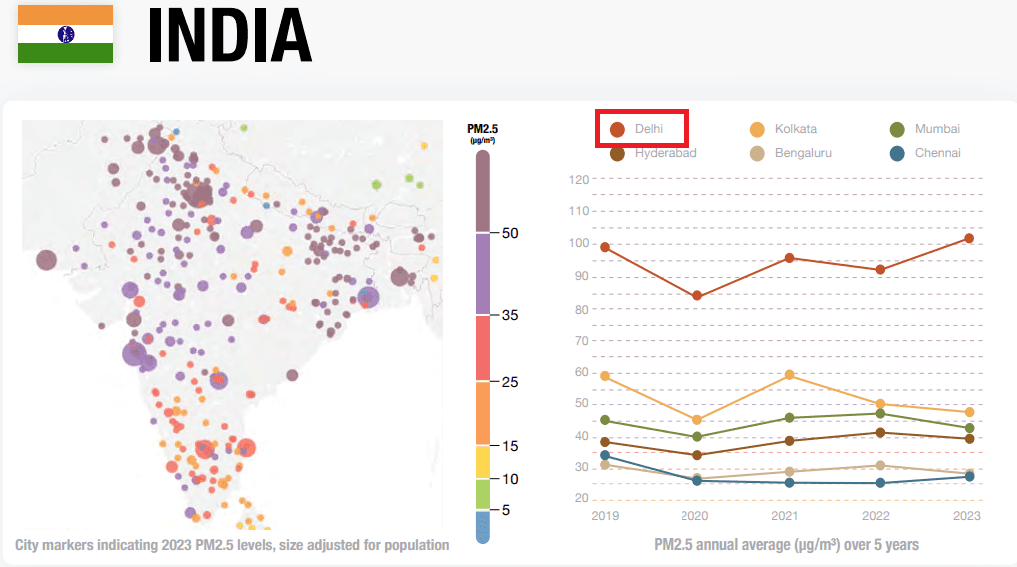
New Delhi has topped the list of the world’s regional capital cities with the poorest air quality. The revelation was made in a 45-page report [pdf] titled ‘2023 World Air Quality Report’ and published by IQAir on Tuesday (19th March).

The Swiss air quality technology company found that New Delhi ranked No.1 in Particulate Matter (PM 2.5) concentration compared to the national capitals of 114 countries.

“The Central and South Asia region reports data from ten nations. All four of 2023’s most polluted countries in the world are hosted in this region, including Bangladesh, India, Tajikistan, and Pakistan,” the report stated.

creengrab of the 2023 World Air Quality Report on India, graphic via IQAir

It further added, Ranking as the third most polluted country in the region and world in 2023, India continues to struggle with drastically poor air quality. Annual average PM2.5 concentrations rose slightly in 2023 to 54.4 µg/m3 compared to 53.3 µg/m3 in 2022.”

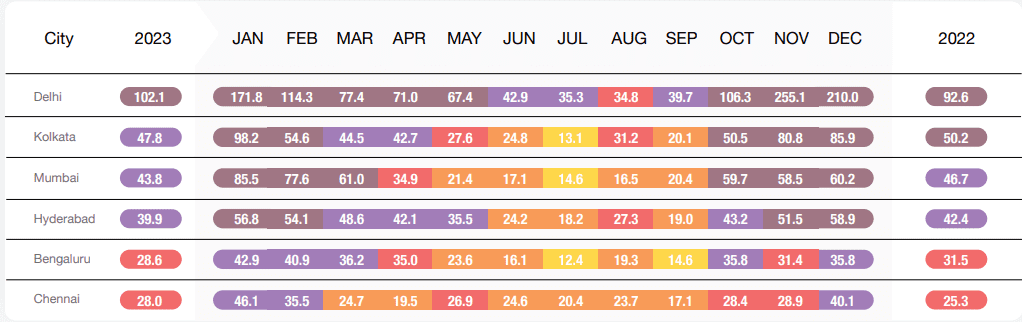
IQAir pointed out that PM 2.5 levels rose by 10% in Delhi last year, with November rated as the month with the poorest air quality. According to the Swiss air quality technology company, India’s National Capital witnessed an average of 255 µg/m3 PM 2.5 concentration in November.

“It is estimated that 1.36 billion people in India experience PM2.5 concentrations exceeding the WHO recommended annual guideline level of 5 µg/m3; furthermore, 1.33 billion, or 96% of the population, experience PM2.5 levels more than seven times the WHO annual PM2.5 guideline,” the report emphasised.

Screengrab of the 2023 World Air Quality Report on India, graphic via IQAir

IQAir noted that while India has an extensive air quality monitoring network, it is home to 13 of the 15 most polluted cities in South Asian region.

It stated, “Northern India and Delhi struggle with smoke from crop burning, vehicle emissions, coal burning, waste burning, and biomass burning for heat and cooking. Annual crop burning in northern India and neighboring Pakistan regularly results in Delhi experiencing emergency-level air quality days.”

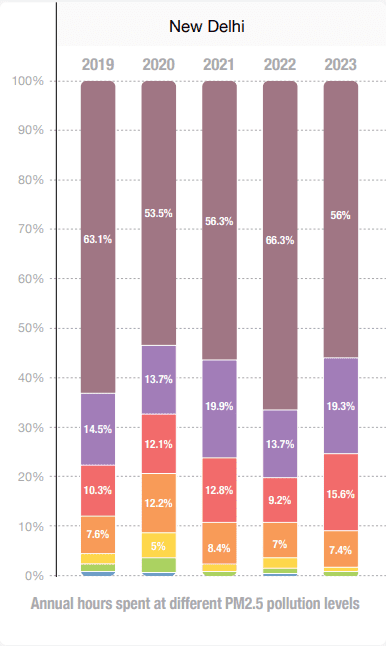
The Swiss air quality technology company pointed out that vehicular emissions contributed to 40% of PM 2.5 emissions in New Delhi.

Screengrab of the 2023 World Air Quality Report on India, graphic via IQAir

Misplaced priorities and Delhi’s deteriorating air quality

Air pollution in Delhi is a non-issue in both public and political discourse until the festival of Diwali in late September-October each year.

Politicians and the left-liberal ecosystem channelise their energy into shaming Hindus for burning firecrackers while remaining indifferent to the major contributors of air pollution. A 2017 IIT-Kanpur report had revealed that construction dust was the biggest culprit for deteriorating air quality in Delhi, followed by vehicular pollution and bad infrastructure.

Experts had observed that the air quality of the NCR deteriorated despite no firecracker being burnt at the time of the study. The air was the cleanest in the week of Diwali suggesting that the rise in pollutant values was observed during the peak of the winter season.

Until February last year, Delhi’s Chief Minister Arvind Kejriwal was seen browbeating about the fact that Delhi was not included in the world’s top 10 cities in air pollution.

Although the 2021 World Air Quality Report by IQAir has left bare the claims of improving air quality in the National Capital, past record suggests that the Delhi government is unlikely to act on it anytime soon.

Krishna Janambhooomi case: SC disposes Muslim side’s plea over consolidation of 15 suits

0

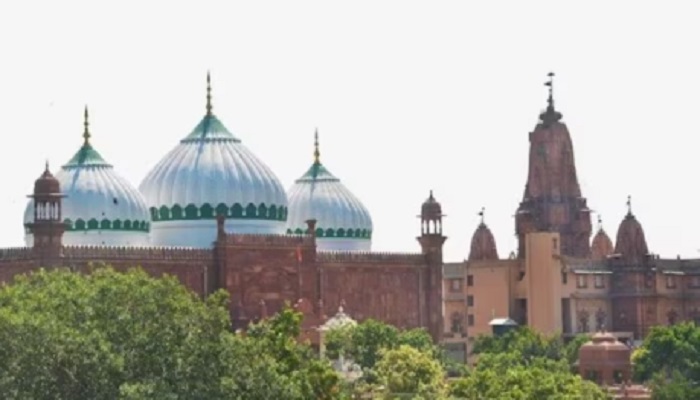
The Supreme Court on Tuesday disposed of the Idgah Committee plea challenging the Allahabad High Court decision to consolidate 15 suits concerning the Krishna Janmabhoomi-Shahi Idgah Masjid dispute.

A bench led by Justice Sanjiv Khanna observed that an application to recall the order under challenge is pending before the High Court.

The Committee of Management Trust Shahi Masjid Idgah has challenged Allahabad High Court decision to consolidate fifteen suits concerning the Krishna Janmabhoomi-Shahi Idgah Masjid dispute.

Allahabad High Court on January 11, 2024, directed to consolidate fifteen suits concerning the Krishna Janmabhoomi-Shahi Idgah Masjid dispute.

After the hearing, Advocate Vishnu Shankar Jain, representing the Hindu side, told ANI that the Supreme Court asked Shahi Idgah Masjid to present its case in Allahabad High Court.

“Supreme Court asked Shahi Idgah Masjid to present its case in Allahabad High Court. Allahabad High Court had consolidated 15 cases suits concerning the Krishna Janmabhoomi-Shahi Idgah Masjid dispute to hear them together and today Shahi Idgah Masjid came to the Supreme Court against that order,” Vishnu Shankar Jain said.

“Supreme Court said that the Idgah Committee has already filed a recall application against the order of consolidation of the Allahabad High Court, so first the recall application should be decided and then you can approach the Supreme Court,” he added.

In the plea, the Idgah Committee said that 15 different suits have been hurriedly consolidated without a proper hearing and the HC’s order deserves to be set aside as the suits have been filed by different parties with competing claims against one another and seeking different reliefs and as such, the consolidation of these suits is bound to lead to severe miscarriage of justice.

The various matters relating to Mathura’s Krishna Janambhoomi land dispute are being dealt in different legal forums.

Earlier, the Committee of Management Trust Shahi Masjid Idgah has filed an appeal in the top court challenging Allahabad High Court order, which transfers to itself all the petitions relating to Mathura’s Krishna Janambhoomi land dispute from District Court Mathura, Uttar Pradesh Masjid Idgah challenged the order dated May 26 passed by the Allahabad High Court, whereby it transferred all such cases relating to the Krishna Janambhoomi dispute from the District Court Mathura, Uttar Pradesh, to itself.

Ranjana Agnihotri, a resident of Lucknow, had filed a suit in Mathura court demanding the ownership of 13.37 acres of land by Shri Krishna Janmabhoomi.

In her legal suit, Agnihotri demanded the removal of the Shahi Idgah mosque built in Krishna Janmabhoomi.

The suit filed in the Mathura court sought the removal of a mosque said to have been built in 1669-70 on the orders of the Mughal Emperor Aurangzeb in the 13.37-acre premises of Katra Keshav Dev temple, near the birthplace of Lord Krishna. (ANI)

(This news report is published from a syndicated feed. Except for the headline, the content has not been written or edited by OpIndia staff)

Former Indian ambassador to US Taranjit Singh Sandhu joins BJP, likely to contest from Amritsar

0

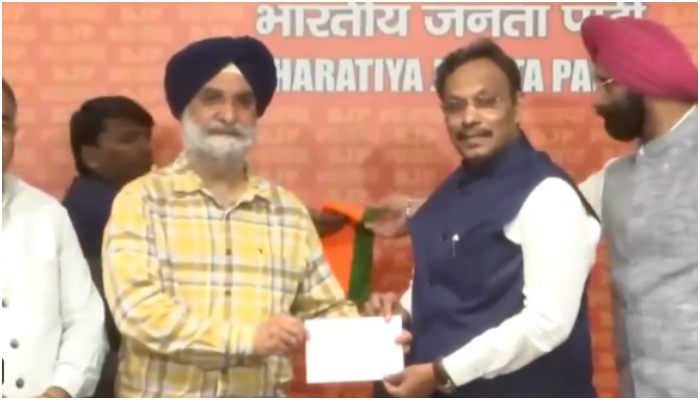
Former Indian Ambassador to the United States Taranjit Singh Sandhu joined the BJP on Tuesday (19th March). He is expected to contest the election from the Amritsar Lok Sabha seat against Kuldeep Singh Dhaliwal of Amritsar, who will be representing the AAP. He joined the party in the presence of its general secretaries Vinod Tawde and Tarun Chugh.

On joining BJP, Former Ambassador of India to the US Taranjit Singh Sandhu said, “There has been a transformation in India-US relations in the past 4 years. It has transformed from a relationship to a partnership. India has received investments in many areas. Opportunities are created for the youth. I am concerned that Amritsar should not miss the opportunities the country is getting… The party will decide if I will contest the elections or not. My hometown Amritsar has a lot of potential and I am very affectionate towards it.”

Sandhu had served as Ambassador to the United States from February 2020 to January 2024. He is one of the most experienced former diplomats in US affairs, having served in the Indian Mission in Washington, DC.

Sandhu served as India’s High Commissioner to Sri Lanka from January 2017 to January 2020, before his current assignment in Washington DC. He formerly served as the Head of the Political Wing at India’s High Commission in Colombo from December 2000 to September 2004.

Sandhu was the Consul General of India in Frankfurt from September 2011 to July 2013. He served in the Ministry of External Affairs in a variety of posts, including Joint Secretary (UN) from March 2009 to August 2011, and then Joint Secretary (Administration) in charge of the Human Resources Division. He also worked as an Officer on Special Duty (Press Relations) for the Ministry of External Affairs from December 1995 to March 1997.

Sandhu was born on January 23, 1963, and attended The Lawrence School in Sanawar before graduating with History Honours from St. Stephens College in Delhi. He earned a master’s degree in international relations from Jawaharlal Nehru University in New Delhi.

Sandhu began his diplomatic career in the former Soviet Union (Russia), where he served as the Third Secretary (Political) / Second Secretary (Commercial) of the Indian Mission from 1990 to 1992.

It is important to note that Sandhu in March last year was hurled abuses and threatened by the Khalistanis in Washington DC. The Khalistanis organised a protest against the Indian Embassy when Sandhu was the ambassador. Some of the protestors were also seen inciting violence and vandalising the Indian embassy. Khalistani demonstrators were then heard making baseless claims about alleged killings of religious minorities in India. 

Also, in November 2023, Sandhu was heckled by a group of pro-Khalistani elements during his visit to the Hicksville Gurdwara in New York’s Long Island.

Sandhu was visiting the Gurdwara on the occasion of Gurpurab to offer prayers. In a viral video, pro-Khalistani elements could be seen confronting the ambassador with irrelevant and baseless questions about the murder of Khalistani terrorists Hardeep Singh Nijjar and Gurpatwant Singh Pannun.

“Priyanka Gandhi told my ex-husband- speak negatively about Aditi Singh’s character and get a ticket”: Raebareli MLA Aditi Singh

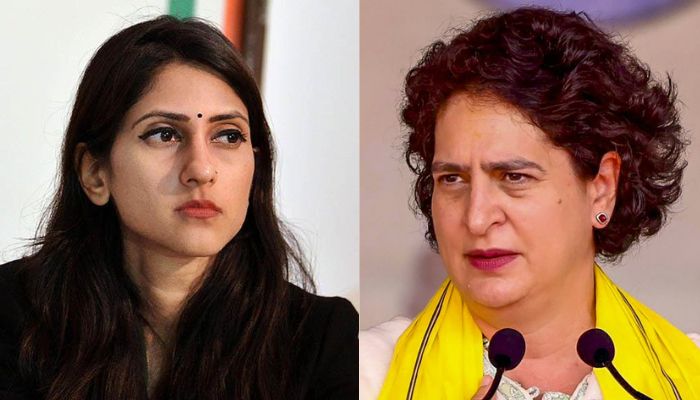
Raebareli MLA Aditi Singh has made serious accusations against Congress General Secretary Priyanka Gandhi Vadra. During an interview on the ANI Podcast with journalist Smita Prakash, Aditi Singh asserted that Priyanka Gandhi Vadra had instructed her ex-husband Angad Saini to speak negatively about Aditi Singh’s character. This podcast episode, featuring BJP leader Shehzad Poonawalla, is scheduled to air on Wednesday (20th March).

In the video snippet of the podcast episode that went viral on social media, Aditi Singh can be seen saying, “Unfortunately we got divorced. What happened towards the end during ticket distribution – Priyanka Gandhi says to my ex-husband – you talk smack about her, on her character.”

Aditi Singh, currently serving as the MLA for the Raebareli Sadar constituency in Uttar Pradesh, was initially elected to the state assembly in 2017 representing the Congress party. However, in November 2021, she switched allegiance from the Congress to the BJP.

The BJP nominated her for the Rae Bareli Sadar seat, which falls within the Raebareli Lok Sabha constituency, currently held by Congress President Sonia Gandhi, the sole Congress MP in Uttar Pradesh. Aditi Singh secured 1.02 lakh votes following a fierce electoral contest with her closest competitor, Ram Pratap Yadav of the Samajwadi Party, who garnered 95,254 votes. The Congress candidate trailed significantly in third place.

Akhilesh Singh, Aditi Singh’s father, served as the representative for the Congress party in the constituency from 1993 to 2007. However, he ran as an independent candidate in 2007 and later contested on a ticket from the Peace Party of India in 2012.

Aditi Singh’s defiance has a history spanning several years. In 2019, the Uttar Pradesh Congress Party lodged a formal complaint with the Speaker at the time, requesting Aditi’s disqualification. This action was prompted by Aditi’s attendance at a special assembly session convened by the Yogi Adityanath-led government. Additionally, she has openly criticised various decisions made by the Congress Party on multiple occasions.

After her rebellion in 2019, the Congress party refused to grant a ticket to Aditi Singh’s then-husband, Angad Saini, who had expressed a desire to contest from Nawanshahr, Punjab. Saini, who had previously been elected as an MLA in 2017, decided to run as an independent candidate against the Congress nominee, Satvir Singh Palli Jhikki, for the Nawanshahr seat in the state Assembly elections, but was unsuccessful.

Saini publicly criticised the Congress high command for overlooking him, alleging that the decision was not based on his performance as a party MLA but rather on issues related to his wife. Saini subsequently rejoined the Congress in May 2022.

Electoral bonds: SC dismisses plea by industry bodies wary of donation disclosures, highlight ‘potential adverse impact of mandating parties to breach confidentiality’

The Supreme Court on Monday, 18th March, dismissed an application filed by Assocham, FICCI and CII opposing the pleas that sought the disclosure of the invisible alphanumeric numbers embossed on electoral bonds. These numbers would reveal the details of who including which company donated money to whom through electoral bonds.

Appearing for the industry bodies was senior advocate Mukul Rohatgi who argued that furnishing the details of which company donated how much money to which political parties would affect the perception of them and make them vulnerable to potential targeting by parties and motivated PIL petitioners.

The industry bodies had approached a five-judge bench of CJI DY Chandrachud and Justices Sanjiv Khanna, BR Gavai, JB Pardiwala and Manoj Misra.

Assocham submitted to the SC, “…it is imperative to recognise the potential adverse impact of mandating parties to breach confidentiality agreements and disclose information based on a new standard. Such a directive, if applied retrospectively, undermines the rule of law and presents grave implications for the industry’s interests.”

Assocham, the Federation of Indian Chambers of Commerce and Industry (FICCI) and the Confederation of Indian Industry (CII) moved the SC “opposing the limited directions passed by this Hon’ble Court pertaining to the disclosure of the alpha-numeric numbers of the electoral bond.”

Rohatgi argued that businesses had purchased bonds under a specific government scheme. Sources in the CII reportedly said that the bond scheme had promised anonymity and the disclosures would retrospectively hurt members of the industry body.

“Ease of doing business is a key element of India’s competitiveness globally. Retrospective actions lead to a reduction of business confidence of Indian and global investors. This was the basis for our application,” an FICCI spokesperson told The Indian Express.

The report quoted a CII member as saying, “If I pay Congress, the BJP is upset and vice versa. There was a promise of confidentiality…it is very difficult when fresh decisions are implemented retrospectively.”

However, the CJI said, “The application was not before us. It is not numbered. Rohatgi, what serves for the goose serves for the gander. No oral mention is permitted before my court. Sorry, for big clients, we will not permit this. You have to follow the rules in my court.”

Supreme Court refuses to stay CAA, asks Centre to file response to over 200 petitions in 3 weeks

On Tuesday (19th March), the Supreme Court refused to put an interim stay on the Citizenship Amendment Act (CAA) and asked the Centre to file its response in 3 weeks.

The apex court gave the ruling while hearing a batch of 237 pleas seeking to stay the law itself and/or the Citizenship Amendment Rules 2024. The court has scheduled the matter for 9th April, seeking the Union’s response.

The three-judge bench comprising Chief Justice DY Chandrachud, and Justices JB Pardiwala and Manoj Misra adjourned the hearing on Solicitor General Tushar Mehta’s request. Notably, the Centre, represented by SG Mehta, had sought time from the court to file a reply to the petitions. 

Noting that the act doesn’t affect any petitioner, the Solicitor General said, “It does not take away citizenship of anyone. There is no prejudice caused to the petitioners. What is done is, those who have migrated…no new person is given, those who entered before 2014.”

He argued, “There are 237 petitions. 20 applications have been filed for stay. I need to file a reply. I was seeking time. I need time to collate etc.”

The court ordered, “We direct that the proceedings be listed after three weeks. File the reply only in one case. Response not needed in all the petitions. Reply can oppose the interim prayer. We will keep this on April 9.”

During the hearing, SG Mehta slammed one of the petitioners’ counsel, Advocate Nizam Pasha for needlessly dragging NRC into CAA issue.

Mehta said, “NRC is not an issue (in this case). This attempt was made outside the court four years back. Misleading people that you will be out of NRC. Same thing Mr.Pasha did. NRC is not an issue here. Grant of citizenship is. Please don’t do this.” 

The petitions have sought a stay on the rules till the top court disposes of the petitions challenging the constitutional validity of the CAA 2019. The Centre had recently notified the rules on 11th March, nearly four years after it was cleared by Parliament. 

The Lok Sabha, on 9th December 2019, passed the Citizenship (Amendment) Bill 2019 while the Rajya Sabha passed it on 11th December 2019.

Addressing the Parliament at the time, Union Home Minister Amit Shah reiterated that the Bill is not against any minority in India and the rights of each Indian Citizen will be equally protected.

Shah had said that the Citizenship (Amendment) Bill 2019, will give a new ray of hope to persecuted minorities who have migrated to India after facing persecution on the grounds of religion in Pakistan, Afghanistan, and Bangladesh.

Zomato brings ‘Pure Veg Mode’, and ‘Pure Veg Fleet’ for vegetarians who do not like mix-ups: CEO Deepinder Goyal announces

Food delivery aggregator Zomato has often faced criticism from ‘pure veg’ users who have sometimes found non-veg items on their food order. On March 19, CEO Deepinder Goyal announced that Zomato has brought a new service ‘Pure Veg Mode’ to serve its pure veg customers.

“India has the largest percentage of vegetarians in the world, and one of the most important feedback we’ve gotten from them is that they are very particular about how their food is cooked, and how their food is handled. To solve for their dietary preferences, we are today, launching a Pure Veg Mode along with a Pure Veg Fleet on Zomato, for customers who have a 100% vegetarian dietary preference”, Deepinder Goyal announced today.

Goyal further explained that Pure Veg Mode will consist of a curation of restaurants that serve only pure vegetarian food, and will exclude all restaurants which serve any non-veg food item.

“Our dedicated Pure Veg Fleet will only serve orders from these pure veg restaurants. This means that a non-veg meal, or even a veg meal served by a non-veg restaurant will never go inside the green delivery box meant for our Pure Veg Fleet”, he added.

Goyal added that anyone who prefers pure veg food can avail the service and this Pure Veg Mode, or the Pure Veg Fleet doesn’t serve or alienate any religious, or political preference.

Goyal further added that Zomato is planning more specialised fleets for special customer needs. “For example, there’s a special cake delivery fleet coming up with hydraulic balancers which prevent your cake from getting smudged during delivery”, he explained.

In India, some pure vegetarian people do not like their vegetarian food mixed up with non-vegetarian food, or served along with non-vegetarian orders. Some families even skip restaurants because of religious concerns around ‘pure veg’.

In the past, Zomato has often faced criticism for sending food orders that mistakenly mix up non-veg items. This is a concern with restaurants that serve both veg and non-veg food. Sometimes, vegetarian customers have even complained of finding bones and meat pieces in their food orders, bringing much condemnation for the delivery service and its standards.

RTI reveals that Modi govt spent ₹15.6 lakh crores on subsidies for food grains since 2018, highest during Covid

The Ministry of Consumer Affairs, Food and Public Distribution has informed that the Narendra Modi-led-Central government has spent ₹15.6 lakh crores on subsidies for food grains since 2018.

The Union Ministry made the revelation in its Right to Information (RTI) reply on 5th March this year. An RTI was filed by activist Piyush Tripathi, seeking information about the cost incurred by the Centre for the distribution of wheat, rice and important food grains in the past 5 years.

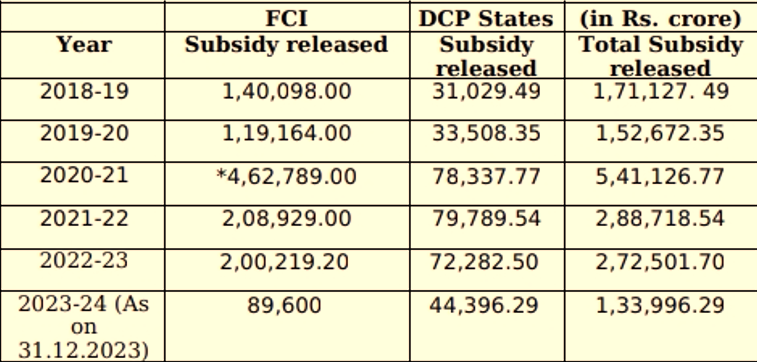
In its reply, the Ministry of Consumer Affairs, Food and Public Distribution stated that the Modi government spent ₹1.71 lakh crores during 2018-2019 while giving subsidies totalling ₹1.52 lakh crores during 2019-2020.

Screengrab of the RTI reply

During the Covid-19 pandemic, the Modi government increased its spending to procure food grains. Between 2020 and 2021, the annual spending increased to 5.41 lakh crores.

The subsidies on food grains remained at ₹2.88 lakh crores in 2021-2022 while it was about ₹2.72 lakh crores in 2022-2023. As of 31st December 2023, the Modi government spent ₹1.33 lakh crores on food grains. In total, the Centre paid ₹15.6 lakh crore in subsidies in the past 5 years.

The food grains were procured through the Food Corporation of India (FCI) as well as the Scheme of Decentralised procurement (DCT) States, namely, West Bengal, Madhya Pradesh, Chhattisgarh, Uttarakhand, Andaman & Nicobar Islands, Odisha, Tamil Nadu, Gujarat, Karnataka, Kerala, Andhra Pradesh, Bihar, Rajasthan, Punjab and Telangana.

In a tweet, RTI activist Piyush Tripathi wrote, “The Government of India, which works in the interest of farmers and public, purchased grains from farmers at MSP even during COVID and gave subsidy of ₹ 5 lakh crore to FCI and states during COVID. Rs 15 lakh crore has been spent in the last 5 years to distribute grains to the poor. I received this information through RTI.”

The response of the Ministry of Consumer Affairs, Food and Public Distribution comes at a time when one group of ‘farmers’ have been protesting in the National Capital for Minimum Support Price (MSP) on all crops, fixed daily wages, pensions and forgiveness of all farmer loans.