Home Blog Page 1344

ISRO successfully launches weather monitoring satellite INSAT-3DS aboard GSLV F14 from Sriharikota spaceport

0

The Indian Space Research Organisation (ISRO) on Saturday conducted a successful launch of its meteorological satellite INSAT-3DS aboard GSLV F14 at 5.35 pm from the Sriharikota spaceport.

The satellite will study weather forecasts and natural disaster warnings.

In its 16th mission, the GSLV deployed the INSAT-3DS meteorological satellite into the Geosynchronous Transfer Orbit (GTO). Subsequent orbit-raising maneuvers will ensure that the satellite is positioned in a Geo-stationary Orbit.

The INSAT-3DS Satellite is a follow-on mission of Third Generation Meteorological Satellite from Geostationary Orbit.

The mission is fully funded by the Ministry of Earth Sciences (MoES).

It is designed for enhanced meteorological observations and monitoring of land and ocean surfaces for weather forecasting and disaster warning. The satellite will augment the Meteorological services along with the presently operational INSAT-3D and INSAT-3DR satellites.Indian Industries have significantly contributed to the making of the Satellite.

Various departments of the Ministry of Earth Sciences (MoES) such as the India Meteorology Department (IMD), National Centre for Medium-Range Weather Forecasting (NCMRWF), Indian Institute of Tropical Meteorology (IITM), National Institute of Ocean Technology (NIOT), Indian National Center for Ocean Information Services (INCOIS) and various other agencies and institutes will be using the INSAT-3DS Satellite data to provide improved weather forecasts and meteorological services.

The primary objectives of the mission are to monitor Earth’s surface, carry out oceanic observations and its environment in various spectral channels of meteorological importance — to provide the vertical profile of various meteorological parameters of the Atmosphere.

Among others, it will provide the Data Collection and Data Dissemination capabilities from the Data Collection Platforms (DCPs), and to provide Satellite Aided Search and Rescue services.


(This news report is published from a syndicated feed. Except for the headline, the content has not been written or edited by OpIndia staff)

Taylor Swift and her “Eras Tour” ignites tensions between ASEAN partners Thailand and Singapore

Tensions have cropped up between ASEAN partners Thailand and Singapore over the issue of Taylor Swift’s upcoming Global Eras Tour in the region. Notably, on Friday (16th February), Thailand Prime Minister Srettha Thavisin revealed that Singapore has signed an exclusivist deal with American singing megastar Taylor Swift. Under this exclusive deal, the American popstar can’t perform anywhere else in the Association of South East Asian Nations (ASEAN) region. Swift will be performing six shows in Singapore but none in India or ASEAN nations. 

Addressing a business event in Bangkok on Friday, the Thai PM, who is also the country’s Finance Minister, shared details about his conversation with global concert promoter Anschutz Entertainment Group (AEG). Thavisin said that AEG informed him about the agreement that bars Taylor Swift from performing the Eras Tour shows in the ASEAN countries.

According to Thailand PM Thavisin, he was told that the Singapore government offered $2m to $3m per show in exchange for exclusivity on the island. He said, “The Singapore government is astute.”

The property tycoon turned PM Thavisin added that he had long been wondering why Taylor Swift had not performed in Thailand but AEG helped him understand more. 

Thavisin said, “If I had known this, I would have brought the shows to Thailand,” adding that “concerts can generate added value for the economy.”

He added, “If she (Taylor Swift) came to Thailand, it would have been cheaper to organise it here, and I believe she would be able to attract more sponsors and tourists to Thailand. Even though we would have to subsidise at least 500m baht, it would be worth it.” He asserted that this has fuelled his determination to transform Thailand into a concert hub in Southeast Asia.

American megastar Taylor Swift has six sold-out shows slated in Singapore in March at the National Stadium which has a capacity of 55,000 seats. The event will continue from 2nd March till 9th March with a two-day in-between break on 5th and 6th March. 

Pertinent to note that earlier in 2014, Taylor Swift had a planned show at Impact Arena Muang Thong Thani in Thailand, but she later cancelled the sold-out concert without giving any reason for the cancellation. 

The Global Eras Tour is Taylor Swift’s ongoing sixth concert tour. It celebrates all her 10 albums. This tour is her largest endeavour to date, spanning 151 performances across five continents. Notably, it also holds the record as the highest-grossing tour in history and is the first to register $1 billion in revenue.

Assam: Security breach at Dibrugarh Jail’s NSA cell where Amritpal Singh and his aides are lodged, phones, spy cam, smartwatch and other gadgets recovered

In a major security breach in Dibrugarh Central Jail in Assam, several communication and other gadgets were smuggled into the NSA cell where Waris Punjab De chief Amritpal Singh and associates are currently lodged. After conducting a search of the cell after learning about illegal activities inside the jail, officials recovered the items on Saturday, 17 February.

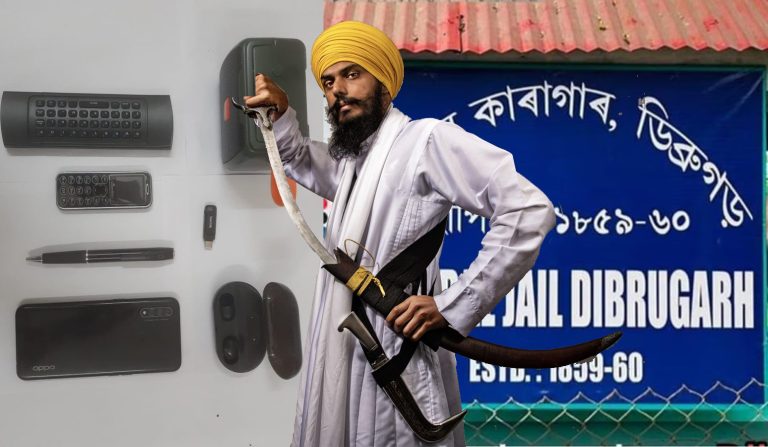
The items recovered from the jail cell include a spy camera pen, a smartphone with SIM, a keypad phone, pen drives, Bluetooth headphones and speakers, a smartwatch, TV remote with keyboard, and several other items.

This was revealed by Assam DGP GP Singh on Twitter. The DGP said that after information about unauthorised activities taking place in NSA cell of the Dibrugarh Central Jail, additional CCTV cameras were installed in public area of NSA Block. Unauthorised activities were confirmed with the CCTV footage, after which jail staff searched the block where Amritpal Singh and his 9 associates are lodged.

GP Singh wrote, “Inputs received confirmed unauthorised activities, based on which Jail staff searched the premise of NSA Cell early this morning, leading to recovery of smartphone with SIM, keypad phone, TV remote with keyboard, spy-cam pen, pen drives, Bluetooth headphone & speakers and smart watch which were lawfully seized by Jail staff.”

The DGP further said that the source of these unauthorised articles and mode of induction into the jail is being ascertained. “Further lawful action is being taken and steps being taken to prevent recurrence,” he added.

Amritpal Singh was brought to the Dibrugarh Central Jail on 23 April 2023 after the Punjab Police arrested him from the state’s Moga district after several weeks of manhunt. His aides were shifted to the jail before and after that during the massive operation against Waris Punjab De. Amritpal Singh and others have been charged under the stringent National Security Act (NSA).

The Central Jail in Dibrugarh has a special cell where prisoners booked under the National Security Act (NSA) have been kept in the past. Reportedly Amritpal Singh is lodged in a solitary cell away from his aides.

The jail has a multi-tier security system, including 24-hour three-tier security, CCTV cameras, and coordination between the state and central forces. Following Amritpal Singh and others were shifted to the jail, its security was further heightened. While the jail has never faced any incident of prison break in its history of 170 years, the discovery of gadgets in the NSA cell is a major security breach.

Jharkhand: Rebellion rocks Congress-JMM alliance government, 12 Congress MLAs, 1 JMM MLA dissent over cabinet expansion

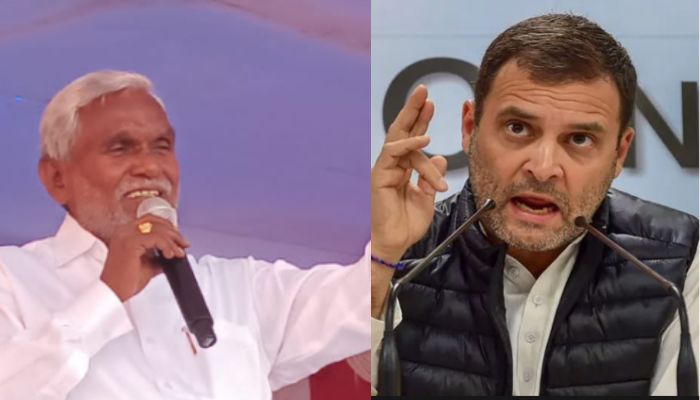
The alliance government in Jharkhand appears to be falling apart. Reports quoting sources claim that 12 Congress MLAs along with an MLA of Jharkhand Mukti Morcha (JMM) have openly expressed their disappointment.

As per reports, the dissenting Congress MLAs are heading to the national capital on Saturday to meet with the Congress leadership. The development comes a day after the Jharkhand government expanded the cabinet.

Four Congress MLAs namely Alamgir Alam, Badal Patralekha, Rameshwar Uranv and Banna Gupta were made ministers in the Champi Soren cabinet, who were ministers in the Hemant Soren cabinet too.

This has upset some Congress MLAs who are demanding that new faces should be made ministers now. The MLAs will reportedly meet Congress President Mallikarjun Kharge and AICC General Secretary KC Venugopal.

The dissenting MLAs reportedly flew to Delhi at 5 pm while it is also being said that they could camp in Jaipur. The development comes ahead of the budget session in Jharkhand assembly on 23rd February.

The MLAs have also complained to the state leadership about their issues. Other reports claim that the Congress MLAs held a meeting at Raso Hotel in Birsa Chowk where Minister Basant Soren had also come to meet them.

It is being said that CM Champai Soren could also go to Delhi who is facing rebellion within his party too. As per reports, JMM MLA Baidyanath Ram has said that he will not tolerate any insult and will contest the next assembly polls as an independent candidate if needed.

Currently, the alliance govt has 29 MLAs from JMM, 17 from Congress, 1 from RJD and 1 from CPI(ML) forming the 48-member assembly.

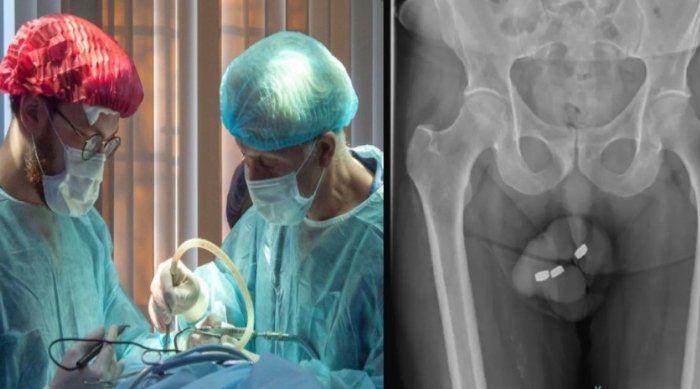
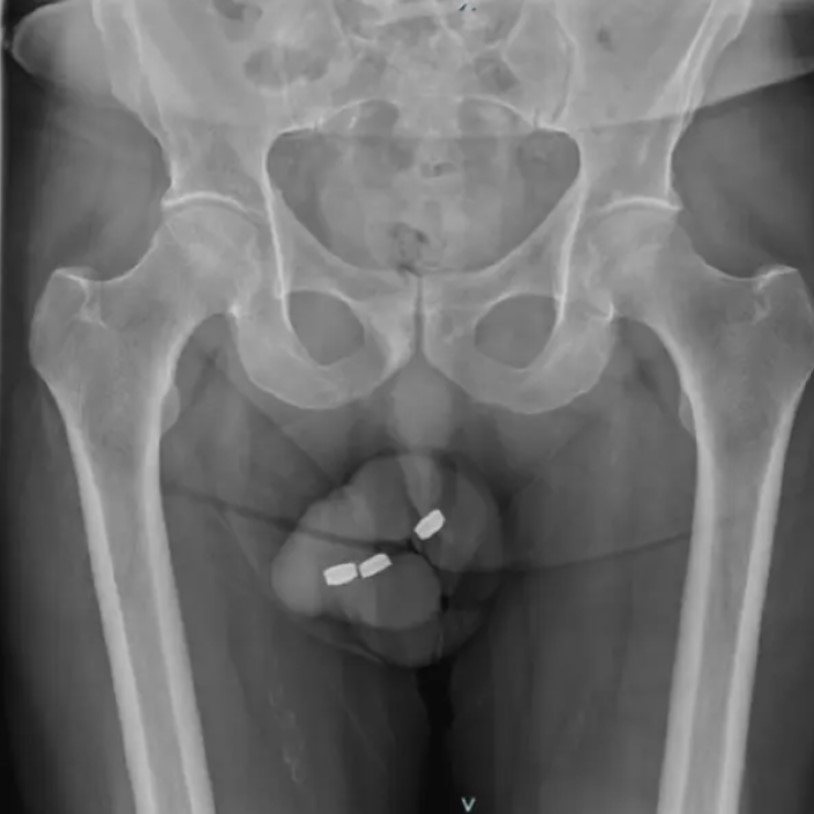
Energiser dummy: 73-year-old Australian man shoves batteries in his penis for ‘sexual gratification,’ doctors forced to use forceps to remove them

A 73-year-old Australian man shoved three button-sized batteries into his penis for ‘sexual gratification.’ This bizarre case featured as a study in the March issue of “Urology Case Reports,” an open-access publication published by the journal Urology.

“To the best of our understanding, this is the first reported case of urethral necrosis with button battery insertion,” the study authors wrote in the report.

The elderly man acknowledged that he frequently inserted foreign objects without them getting stuck. However, because of numerous failed attempts at self-removal, the tiny batteries this time went closer to the penile urethra.

Two days after the man inserted three button batteries into his penile urethra, he went to the doctor. In addition to severe paraphimosis and obstructive urinary symptoms, such as weak urine flow, straining, and the feeling that the bladder is not completely emptied, he arrived at the emergency room with significant penile pain.

Doctors then moved quickly to remove the foreign objects as their corrosiveness can cause necrosis, the death of body tissue, in just two hours.

The doctors also feared Fournier’s gangrene, a rare but potentially fatal flesh-eating disease that affects the penis, perineum, and scrotum.

After multiple failed attempts, the physicians eventually succeeded in removing the batteries with forceps. “All extracted batteries were coated with black tar-like material,” according to the research.

However, this was not the end; ten days later, the man went back to the hospital claiming to have swollen and had an unpleasant discharge. The doctors then quickly operated on him again. “An incision was made to the penile skin,” researchers noted, adding that “a large amount” of fluids leaked out.

The report indicates that the doctors’ concern about the individual having an “extensive degree of necrosis” became apparent. According to the study, a portion of the man’s urethra had to be removed.

“Given the complexity of his injury, it was deemed that formal penile urethral reconstruction would likely require a 3-stage repair,” the researchers said, outlining the intricate, six-month process of mucous membrane grafts. Doctors finally “decided that the best option would be for no further penile reconstruction” after evaluating the severely damaged penis.

‘Women were praised for burning themselves on the pyre of their husbands’: RTI reply shows NCERT has no evidence for its dubious claims about Sati

On Thursday (16th January), the National Council of Educational Research and Training (NCERT) conceded that it has no evidence to back its contentious claims about Sati pratha (system) in school textbooks.

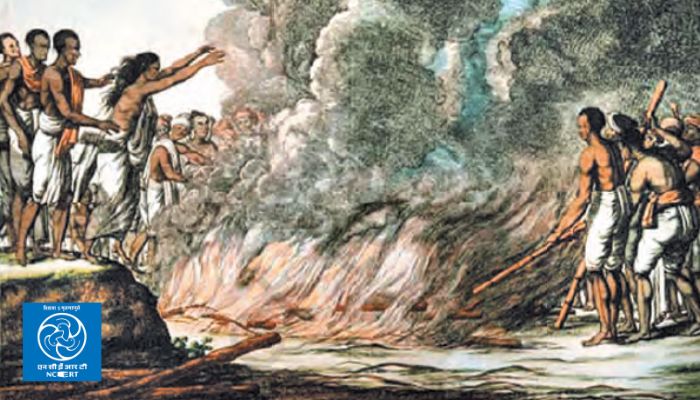
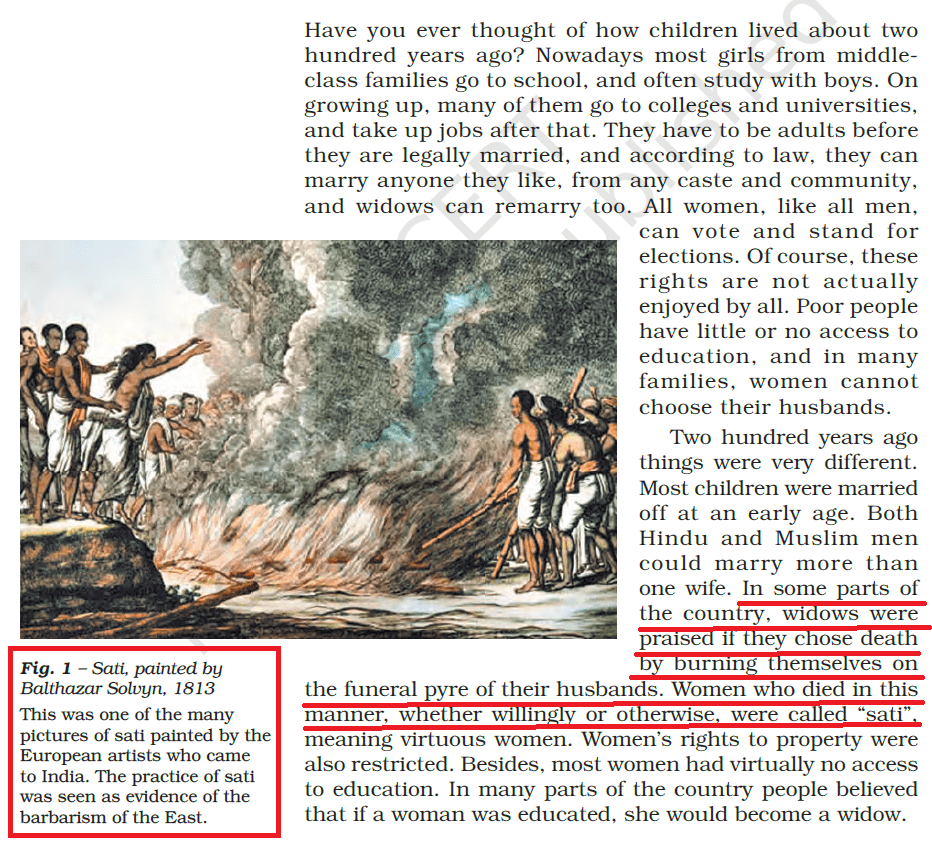
The social science textbook of Std 8, known as ‘Our Padst-III’, has a chapter named ‘Women, Caste and Reform.’ It states that women in some parts of India were praised for burning themselves on the funeral pyre of their husbands.

It also claims that women who immolated themselves came to be known as sati. Moreover, the chapter contains a painting that purportedly depicts the practice of sati.

Screengrab of Chapter 7 of Std 8 NCERT textbook

RTI activist Vivek Pandey had filed a query with NCERT, seeking the references for the claims made in the 8th std textbook. He also sought the source of the purported painting of ‘sati pratha.’ The RTI queries read:

  • In class 8th book of social Science, chapter 7 Women, Caste and Reform. Ncert says: In some parts of the country, widows were praised they chose death by burning themselves on the funeral pyre of their husbands.Women who died in this manner, whether willingly or otherwise, were called sati. Provide the original certified copy of source from where NCERT has taken above-mentioned details about Sati practice in India.
  • Fig. 1- Sati, painted by Balthazar Solvyn, 1813 This was one of the many pictures of sati painted by the European artists who came to India. The practice of sati was seen as evidence of the barbarism of the East. Please provide the certified copy of source from where NCERT has taken picture in above given Fig-1 of sati practice in India.
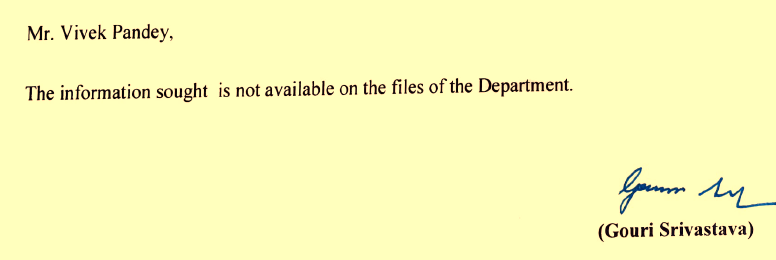
Screengrab of the RTI reply by NCERT

NCERT, which is responsible for preparing textbooks for Indian students, acknowledged that it has no evidence to back its contentious claims about Sati pratha and the disturbing painting purportedly showcasing the practice.

In Its RTI reply on Thursday (16th February), the autonomous body conceded, “The information sought is not available on the files of the Department.”

Earlier in July 2021, NCERT failed to provide a convincing response on being asked about references behind its sweeping claims about the practice of sati in India.

In its reply to the RTI filed by Vivek Pandey, NCERT claimed, “We would like to mention that, a chapter titled ‘Women, Caste and Reform,’ in our class VIII History textbook ‘Our Pasts III’, details out debates around widow remarriage, child marriage including sati. Since this chapter mainly talks about the role of various social reformers in solving various societal issues, which includes issues related to women and does not discuss the origin or extent of the sati practice in India in general, the sources of the records/facts that you are seeking are not available on the files of the Department.“

NCERT removes misleading claims about Brahmins

On 4th February this year, OpIndia reported that NCERT has removed dubious claims about Brahmins from its 6th Standard book.

In its reply to the RTI query filed by Vivek Pandey, NCERT acknowledged that it had no evidence to support the claim that Hindu priests divided people into varnas and that women and shudras were not allowed to study the Vedas.

The contentious material appeared in Chapter 5 titled ‘Kingdoms, Kings and an Early Republic (Pages 44-45)’ of the textbook. It was claimed that the Hindu priests (Brahmins) divided the people into groups called varnas and told them that varnas were determined by birth.

The NCERT textbook also alleged that women were ‘grouped’ with Shudras and that they were not allowed to study the Vedas. It was also declared that the priests classified some people as ‘untouchables.’

In the rationalised version of the textbook (2023-2024 edition), the disinformation peddled against Brahmins was removed. It must be mentioned that the NCERT had acknowledged in 2022 that the assertions involving Hindu priests, women and Shudras had no basis.

‘If the BJP does not lose 2024 Lok Sabha polls, AAP will make India free from BJP in 2029’: Arvind Kejriwal in Delhi assembly

0

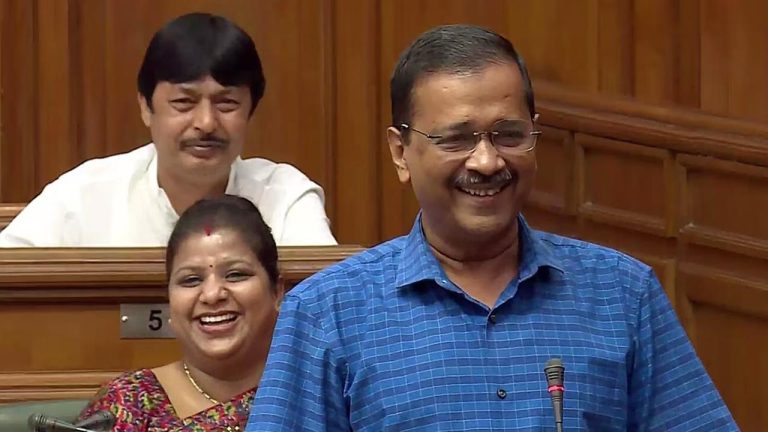
Delhi Chief Minister Arvind Kejriwal on Saturday launched a scathing attack on the BJP, saying that if the ruling party at the Centre does not face defeat in this year’s general elections, then the Aam Aadmi Party “will make India free of BJP” rule in the next Lok Sabha elections.

“The biggest challenger of BJP is Aam Aadmi Party. Today if the BJP is scared of anyone, it is AAP…With utmost responsibility, I want to say that if BJP does not lose Lok Sabha elections in 2024, then AAP will make India free from BJP (rule) in 2029,” Kejriwal said in the Delhi assembly.

He said AAP became a national party in a short span of time and now the party has governments in Delhi and Punjab. AAP won the trust vote in the Assembly.

Kejriwal said AAP has received historic mandates in Delhi, got a sizeable percentage of votes in Gujarat assembly polls and has five MLAs in the state and the party has two MLAs in Goa.

“This is no small feat…so today they are only afraid of the Aam Aadmi Party,” he said.

Kejriwal took a dig at those “who succumb to pressure and switch sides” and said those who resist, regardless of the legal consequences, are honest.

He said those switching sides may be needing “BJP’s protection” for their past deeds.

Referring to Manish Sisodia, who is facing ED and CBI probe in the excise policy case, Kejriwal alleged that a “lot of pressure was exerted” on the former Delhi Deputy Chief Minister but he did not succumb.

He said AAP was being “attacked” and many of its top leaders had been jailed. “They are trying to stop all our work, issuing threats, there are attacks from all sides, every child in the country is seeing what is happening, people are watching, They feel people are foolish, but people are not. It is being discussed in public parks what is happening…if Modiji wants to crush Kejriwal, I am not asking this, people are asking. Number two, number three, number four (in AAP hierarchy) are inside (jail), now they are saying number one also has to be put inside,” he said.

“Such an attack has never been seen, and there is discussion about why this is happening, today AAP has emerged as the biggest challenger to BJP. If they feel any threat, it is from Aam Aadmi Party and hence they want to crush Aam Aadmi Party by all means” he added.

(This news report is published from a syndicated feed. Except for the headline, the content has not been written or edited by OpIndia staff)
Sharjeel Imam’s speeches might be the reason for riots, Delhi Court says as it rejects his bail plea in sedition and UAPA case

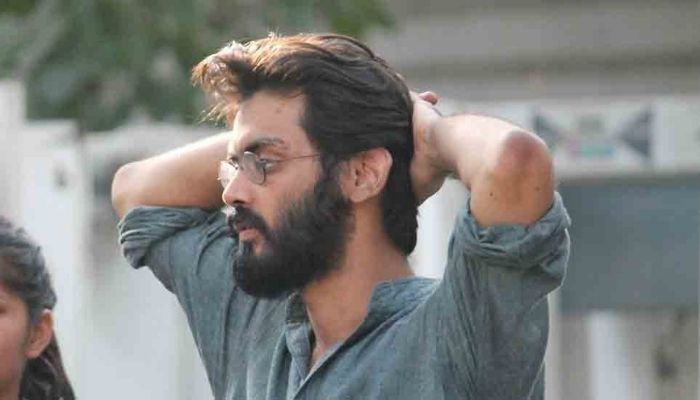
On Friday, February 17, Additional Sessions Judge Sameer Bajpai of Delhi’s Karkardooma court rejected a statutory bail for Sharjeel Imam in a sedition and Unlawful Activities Prevention Act (UAPA) case filed against him for his provocative speeches in Jamia Millia Islamia University and Aligarh Muslim University during anti-CAA protests in Delhi on December 13, 2019, and January 16, 2020, respectively.

Sharjeel Imam completed four years in jail on 28 January 2024.

The Court noted that even though Sharjeel Imam did not ask anyone to pick up weapons, his speeches captured the minds of people of “a particular community” and might be the reason for the outbreak of riots in the city.

Imam petitioned that he was entitled to statutory bail because he had already served four out of the maximum sentence of seven years.

He argued that the Supreme Court of India had declared the crime of sedition to be inactive and that the UAPA provisions that were invoked against him had a maximum sentence of seven years.

In the meantime, the Delhi Police argued that the punishments for the offences invoked against him ought to be assessed cumulatively rather than concurrently.

The court after hearing both parties, pronounced the order today and rejected the bail plea.

The Delhi High Court will now hear Imam’s petition against the order framing sedition and the UAPA charges levelled against him on March 8.

Sharjeel Imam was arrested by Delhi Police on 28th January 2020, from Bihar over inflammatory speeches against the Citizenship Amendment Act, advocating for the secession of Assam from the rest of India.

The accusations against Sharjeel Imam were framed under sections 124A (sedition), 153A, 153B, 505 of the IPC, and 13 of the UAPA as per Additional Sessions Judge Amitabh Rawat.

Imam has been charged with sedition, promoting enmity between different groups on grounds of religion, race, place of birth, imputations prejudicial to national integration, and public mischief under the Indian Penal Code, and indulging in unlawful activities under the Unlawful Activities (Prevention) Act.

The Delhi Police had filed a charge sheet against Sharjeel Imam in the matter, alleging that he offered statements inciting hatred, contempt, and disaffection toward the central government, as well as instigating the people who resulted in the December 2019 riots.

In January 2022, Delhi’s Karkardooma court slapped a fresh sedition charge against Sharjeel Imam over his provocative anti-CAA speeches.

In July 2022, the trial court rejected his first bail application in this case.

Who is Sharjeel Imam

Imam was arrested in 2020 from Jehanabad, Bihar. He is a former Jawaharlal Nehru University, Delhi, and one of the key members of the group that organized Shaheen Bagh protests against CAA. Multiple FIRs were filed against Imam for a speech in which he allegedly asked the protestors to cut off Assam from India. FIRs were filed at Police stations in Assam, Arunachal Pradesh and Manipur. He also got bail in the cases filed at Assam and Arunachal Pradesh.

Imam was accused of making provocative speeches outside Jamia Milia Islamia University in December 2019 that led to violence outside the campus. In April 2020, he was charged with sedition by Delhi Police. According to the FIR, his speech promoted enmity between communities that led to the riots at the area where the University is located.

Another FIR in the Jamia case was registered against Imam in the Aligarh district. Both FIRs were registered in January 2020 under Sections 124 A (sedition) and 153 A (promoting or attempting to promote disharmony or feelings of enmity on the grounds of religion, race, place of birth, residence, language, caste or community or any other ground whatsoever), 153B (making statements provoking breach of peace) and 505(2) (statements made which are alarming, false intention to create disharmony) of the Indian Penal Code (IPC).

Farmer leader Sarwan Singh Pandher wants Center to bypass Parliament, asks government to introduce an ordinance accepting their demand for law on MSP

0

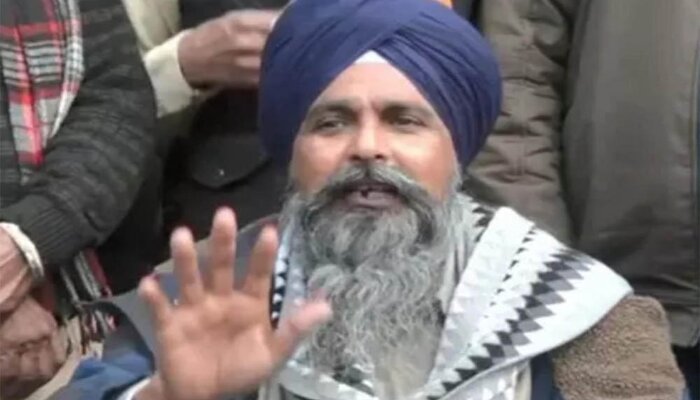
Farmer leader Sarwan Singh Pandher implied on 17th February, Saturday, that the Modi government should circumvent Parliament and bring an ordinance granting a legal guarantee to Minimum Support Price (MSP). which is a fundamental demand of Punjab farmers now camped at the Shambhu and Khanauri points of the Punjab-Haryana border. The demand was made one day before the fourth session of negotiations about the numerous proposals made by farm leaders and union ministries.

He asserted that the Centre possesses the authority to determine “political” decisions and declared, “If it (Centre) brings an ordinance, it can bring it overnight if it wants so. If the government wants resolution of farmers’ protest, then it should bring out an ordinance with an immediate effect that it will enact a law on MSP, then discussion can proceed further,” while talking to journalists at the Shambhu border.

He claimed that every ordinance has a six-month validity when it comes to modalities. Regarding the desire for “C2 plus 50%,” as per the recommendation of the Swaminathan Commission, he pointed out that the government was providing a price based on the “A2 plus FL” formula. “Under the same formula, an ordinance can be brought,” he mentioned. Notably, A2 is paid out cost, and FL is the imputed value of family labour.

He told reporters that the government is stating that the loan amount needs to be evaluated concerning the waiver of farm debt. He alleged that the government may obtain bank data in this way and argued, “It is a question of political will power. They (the Centre) are saying it has to be discussed with the states. You leave aside the states. You talk about the Centre and central banks and then finalise how to waive farmers’ debt.” He stressed that the other demands made by farmers are equally significant.

Another leader of the farmers Jagjit Singh Dallewal who is leading the “Delhi Chalo” agitation along with Sarwan Singh Pandher remarked that an ordinance for “giving something to people of the country” should be brought by the government. Jagjit Singh Dallewal highlighted, “The government should bring the ordinance with such an intention that it is implemented with immediate effect and within six months, it can be converted into a law and there is no problem in that.”

In response to statements implying that providing the minimum support price for each of the 23 crops will cost a significant amount of money, he contended that a study found that Rs 2.50 lakh crore was required. According to another analysis, he commented that only Rs 36,000 crore will be needed. He claimed, “If the government seriously looks at producers and consumers and gives less attention to corporates, then the matter can be sorted out.”

In addition, Jagjit Singh Dallewal outlined the need to support small, agro-based businesses in rural areas. According to him, the agriculture industry employs 50% of the workforce. “The agriculture sector has a 20 per cent share in the GDP and if the agriculture sector has 20 per cent share in the GDP, then why is it difficult for the government to give Rs 2.50 lakh crore,” he questioned. “We are demanding a law on the purchase of crops at an MSP. Anybody buys a crop in any state but does not buy it at less than the MSP, it is our demand,” he voiced.

According to Sarwan Singh Pandher, the government purchases products such as beans from other nations. “If the government guarantees an MSP on crops like pulses, farmers can produce them here.” He accused that the market currently has a lower rate of commodities that the government purchases at an MSP and a higher rate of other products that it does not purchase at the guaranteed price.

The fourth session of negotiations between farmer leaders and Union ministers Arjun Munda, Piyush Goyal and Nityanand Rai is scheduled for 18th February. The two sides had earlier meetings on 8th, 12th and 15th February but the discussions ended without a resolution. The farmers remained at the two border crossings of Punjab and Haryana on the fifth day of their “Delhi Chalo” march which was organised by the Samyukta Kisan Morcha (Non-Political) and the Kisan Mazdoor Morcha. They are pressing the Center to grant their demands, which include a legally mandated MSP for crops.

The farmers are also demanding the implementation of the recommendations made by the Swaminathan Commission, pensions for farmers and farm labourers, waivers of farm debt, no increase in electricity tariffs, the resumption of the Land Acquisition Act of 2013, the withdrawal of police cases and “justice” for the victims of the violence in Lakhimpur Kheri in 2021 and compensation for the families of farmers who lost their lives during the farmers protest in 2020–21.

Actress Suhani Bhatnagar, 19, known for playing Babita Phogat in biopic ‘Dangal’, dies

0

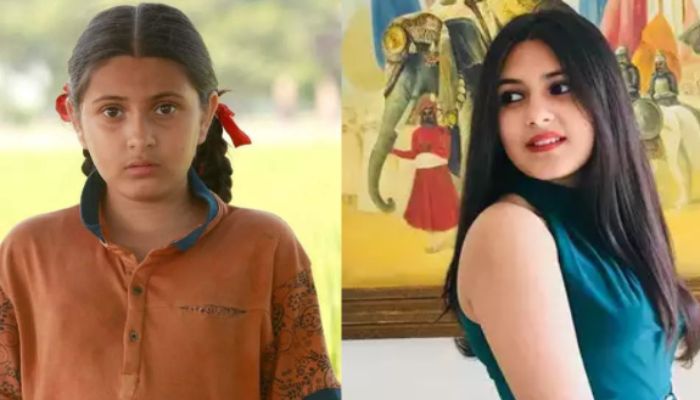
Dangal movie fame Suhani Bhatnagar breathed her last at the tender age of 19 reportedly owing to a side effect from her medication after suffering a fracture in the leg. The news of her death was confirmed by Aamir Khan Productions.

The production house shared a story on Instagram that read, “We are deeply saddened to hear about our Suhani passing away. Our heartfelt condolences to her mother Poojaji, and the entire family. Such a talented young girl, such a team player, Dangal would have been incomplete without Suhani. Suhani, you will always remain a star in our hearts May you rest in peace.”

As per reports, Suhani died in Delhi on Saturday (17th February). It is being reported that the actress was undergoing treatment for a fracture in her leg. Owing to the treatment, her body began retaining fluid which is being reported as the cause of her death.

However, official confirmation on the same is still awaited.

Suhani was admitted to Delhi’s AIIMS hospital for quite some time. Her last rites will be performed on Saturday in Faridabad’s Ajaronda Swarga Ashram.

Suhani Bhatnagar was known for playing the role of Babita Kumari in the biopic Dangal alongside Aamir Khan, Sakshi Tanwar and Zaira Wasim. After Dangal, the Suhani was seen in several commercials and ads.

In 2019, Suhani decided to take a break from acting to focus on her studies. She was active on social media till November 2021. She lived with her family in Faridabad.