Home Blog Page 1839

Bihar: Education Minister Chandra Shekhar Yadav, who earlier called Ramcharitmanas a divisive book, now calls Prophet Muhammad Maryada Purushottam

0

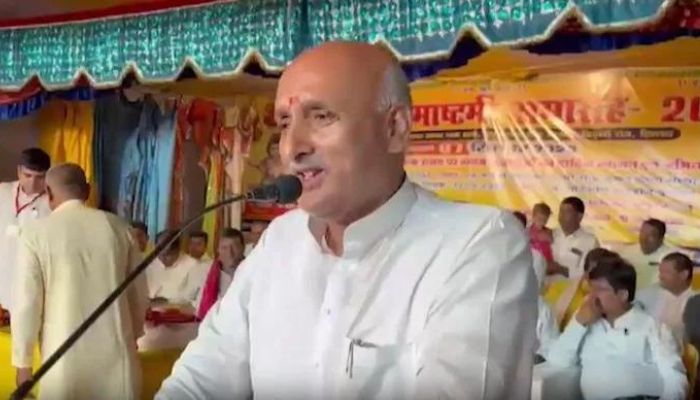
Bihar Education Minister and Rashtriya Janata Dal leader Chandra Shekhar Yadav sparked controversy in the state by referring to ‘Prophet Muhammad’ as Maryada Purushottam. This statement by Chandrashekhar has drawn criticism from the Bharatiya Janata Party with the opposition party calling it appeasement politics. The video of Chandra Shekhar Yadav’s controversial remarks surfaced on Saturday, 9th September 2023. The incident took place on Thursday, 7th September 2023. Generally, the word ‘Maryada Purushottam’ is used to refer to Lord Rama.

Rashtriya Janata Dal (RJD) MLA and Education Minister Chandra Shekhar was speaking at an event organised on Janmashtami at Hilsa in Bihar’s Nalanda district. In his speech, he said, “When satanism increased in the world, faith was lost, dishonesty and satan took over, then in the region of Central Asia, the God created Maryada Purushottam Prophet, Muhammad Sahib. To bring faith, Islam came for the believers. Islam came against dishonesty and satanism. Even if the dishonest call themselves Muslims, then God does not allow it.”

The Bharatiya Janata Party (BJP) has strongly criticised the statement made by the minister. Danish Iqbal, the media in charge of Bihar BJP, said that Chandrashekhar Yadav’s statement represents the epitome of appeasement. He said, “The education minister had earlier made a condemnable statement about a religious book. Now this statement is also going to divide society. This has been the tradition of RJD. This party has done politics of religion by dividing the society in a similar manner.”

Danish Iqbal also said, “The Education Minister has made such a statement to appease the vote bank of a religion. He should not make such statements. All religions give the message of peace. BJP respects all religions. Chief Minister Nitish Kumar should take action against such an education minister.”

BJP spokesperson Arvind Singh said, “RJD does not belong to Hindus or Muslims. This party has become a slave of one family. These people sometimes talk about Hindus, sometimes Muslims, sometimes Ramayana and sometimes Muhammad. All they do is to get votes by making people fight on the basis of religion and caste. It is very condemnable.”

Previously, Chandra Shekhar Yadav made headlines for his statement on Ramcharitmanas. His remarks sparked strong criticism at the time. On 11th January 2023, Chandra Shekhar referred to a couplet of Ramcharitmanas and said that it is a book spreading hatred in society. The couplet was – अधम जाति में विद्या पाए, भयहु यथा अहि दूध पिलाए. He asserted that the term “Adham” in the couplet denoted those of lower status, which he connected to caste. He implied that the couplet suggested that individuals from lower castes, including Dalits, backward classes, and women, were not entitled to education.

He claimed that the verse in the Ramcharitmanas means ‘Lower caste people become poisonous after getting an education like snake becomes after drinking milk’. This is an often deliberately misinterpreted translation of the verse because the word poisonous does not appear in the verse as claimed. It means that just like the snake feels happy after drinking milk, the speaker – who is referring to himself as Adham Jati – also feels happy after getting an education.

In another statement made on 28 February 2023, Chandra Shekhar Yadav said, “I stand by my old statement. Whatever garbage is there in Ramcharitmanas, should be cleaned. Till now, just a few couplets have been questioned. But there are dozens of couplets that need to be changed. I am not going to remain silent on Ramcharitmanas. There are many such couplets in this, which I will continue to question.”

UK Prime Minister Rishi Sunak visits Akshardham temple in Delhi to offer prayers

0

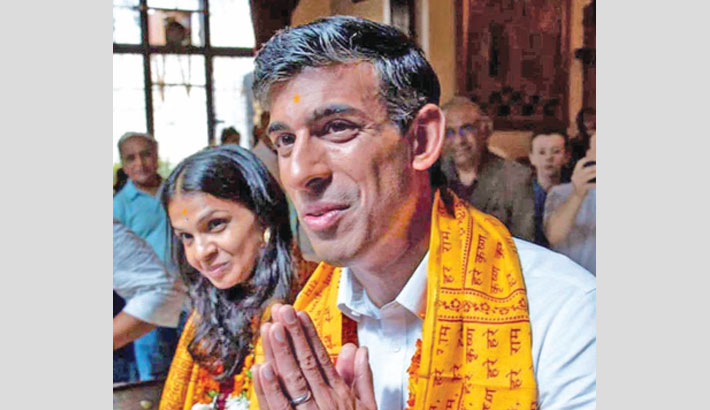
The Prime Minister of the United Kingdom (UK) arrived at Akshardham Temple in New Delhi on Sunday morning to offer prayers.

Ahead of the UK Prime Minister’s visit, elaborate security arrangements were put in place in and around the temple. While speaking to ANI on Saturday, the UK PM had said that he will visit Delhi’s Akshardham temple today. 

Rishi Sunak also expressed his hope that he will find time to visit a temple, here in India, during his stay for the G20 Summit. He had said that he has “enormous respect” for PM Modi and that he is keen to support him in making the G20 an enormous success.

“I am a proud Hindu. That’s how I was raised, that’s how I am. Hopefully, I can visit the Mandir while I am here for the next couple of days. We just had Rakshabandhan, so from my sister and my cousin, I have all my Rakhis,” Rishi Sunak said. 

“I didn’t have time to celebrate Janmashtami. But hopefully, as I said I can make up for that if we visit a Mandir this time,” he added. 

He further said that faith is something very important as it gives strength and resilience during stress. 

Akshardham temple is fully prepared to welcome United Kingdom Prime Minister Rishi Sunak and his wife Akshata Narayana Murty on Sunday, a temple official told ANI.  

“We are prepared for the visit (of UK PM Rishi Sunak). We will welcome him and his wife at the main gate called Mayur Dwar and lead him to the main Akshardham temple. If they want to do aarti we will arrange it. In our temple, there are deities of Radha-Krishna, Sita Ram, Lakshmi Narayana, Parvathi Parameshwara, and Ganapathi. If they want to do Pooja, we will arrange for it,” said Joytindra Dave, an Akshardham official. 

Sunak, accompanied by wife Akshata Murty had arrived in Delhi on Friday. This is Rishi Sunak’s first visit to India as Prime Minister since he assumed the office of Prime Minister of the UK in October last year.

India and the UK are bound by strong ties of history and culture, according to the Ministry of External Affairs. India’s multifaceted bilateral relationship with the UK intensified with its upgradation to a Strategic Partnership in 2004. 

(This news report is published from a syndicated feed. Except for the headline, the content has not been written or edited by OpIndia staff)

‘You disguising as fact-checker is like a terrorist talking about peace’: Venkatesh Prasad clean bowls Alt News cofounder Mohammed Zubair

0

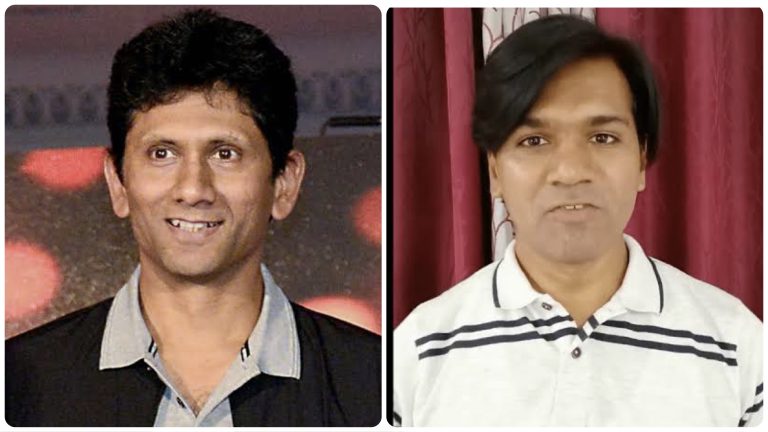
In his prime days, former Indian bowler Venkatesh Prasad would send batters back to the pavilion with remarkable ease. His duel with Pakistani batter Aamir Sohail is the stuff of legend. But even after his retirement, he seems to have retained his mojo, unabashedly calling out the wrong and cleaning bowled folks who deserve to be called out. Recently, Prasad slammed Alt News co-founder Mohammed Zubair for hate-mongering under the pretext of carrying out ‘fact-checks’.

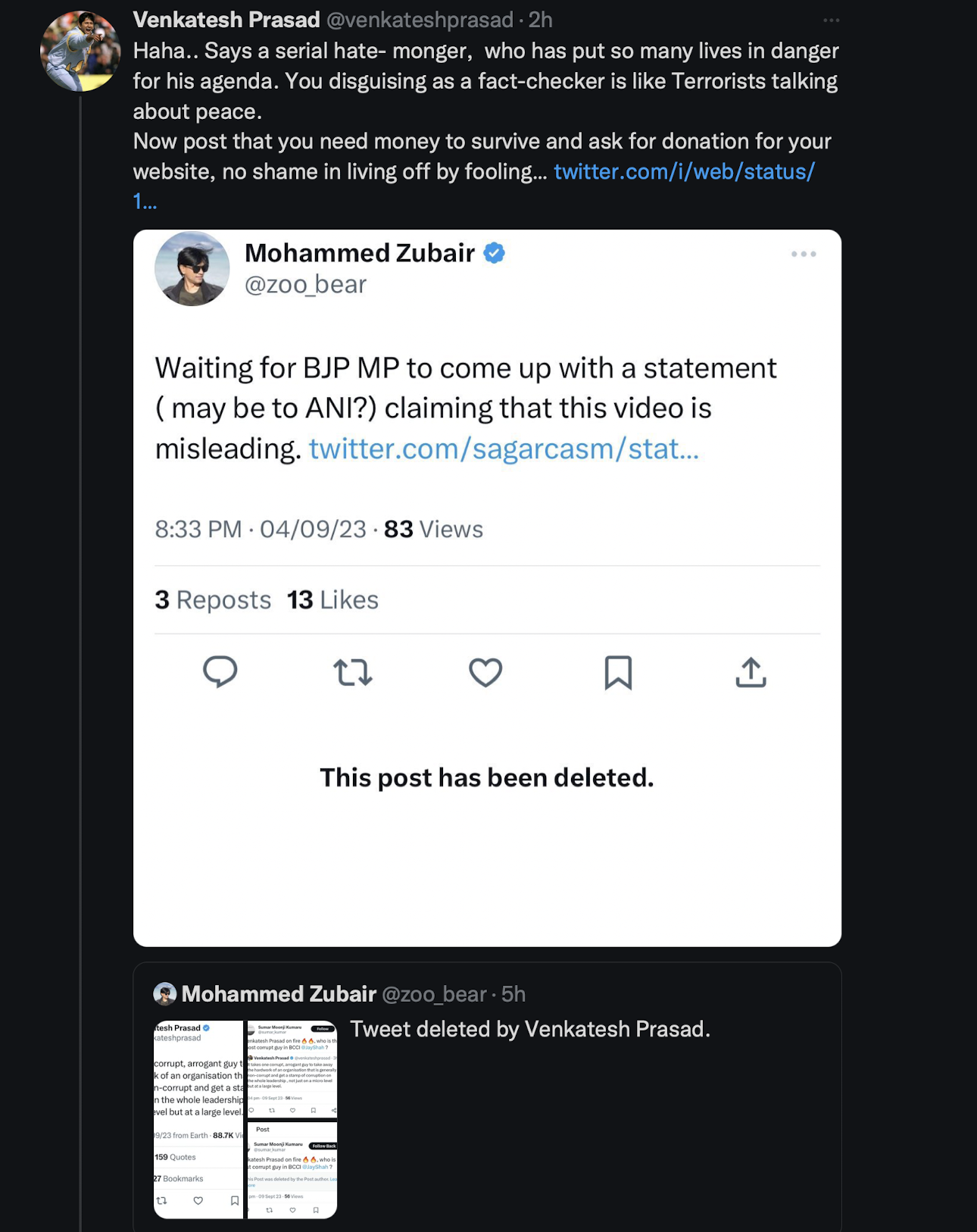
“Haha.. Says a serial hate-monger, who has put so many lives in danger for his agenda. You disguising as a fact-checker is like Terrorists talking about peace,” Prasad tweeted while sharing a screenshot of a tweet deleted by Zubair.

Zubair, who is notorious for dog-whistling Islamists against former BJP leader Nupur Sharma by sharing an incomplete video of her remarks on a Times Now debate, recently posted a screenshot of a tweet posted by Prasad where he made scathing remarks directed against the BCCI and ACC.

In response to Zubair’s tweet, Prasad, who is known for not mincing his words, slammed the Alt News co-founder for masquerading as a fact-checker while being a ‘serial hate-monger’. “Now post that you need money to survive and ask for donations for your website, No shame in living off by fooling people,” Prasad sarcastically added. 

‘I am a Ram Bhakt, I won’t spare anyone, Jai Shri Ram’: Venkatesh Prasad issues clarification on his deleted tweet

Prasad further clarified the reason why he had deleted one of the tweets where he had criticised the BCCI. Prasad said his tweet led to confusion and was twisted out of context which is why he had to pull down the tweet. “Since I was also speaking about the inefficiency of the BCCI around tickets in other tweets, it led to confusion and looked out of context. Hence deleted,varna naam lekar khulkar bolne mein Rambhakt kisiko chhodte nahin , Jai Shree Ram.”

I’m aware of his derogatory stuff on Hindu Gods. Real shame such deceivers disguise as journalists’: Venkatesh Prasad on Mohammed Zubair

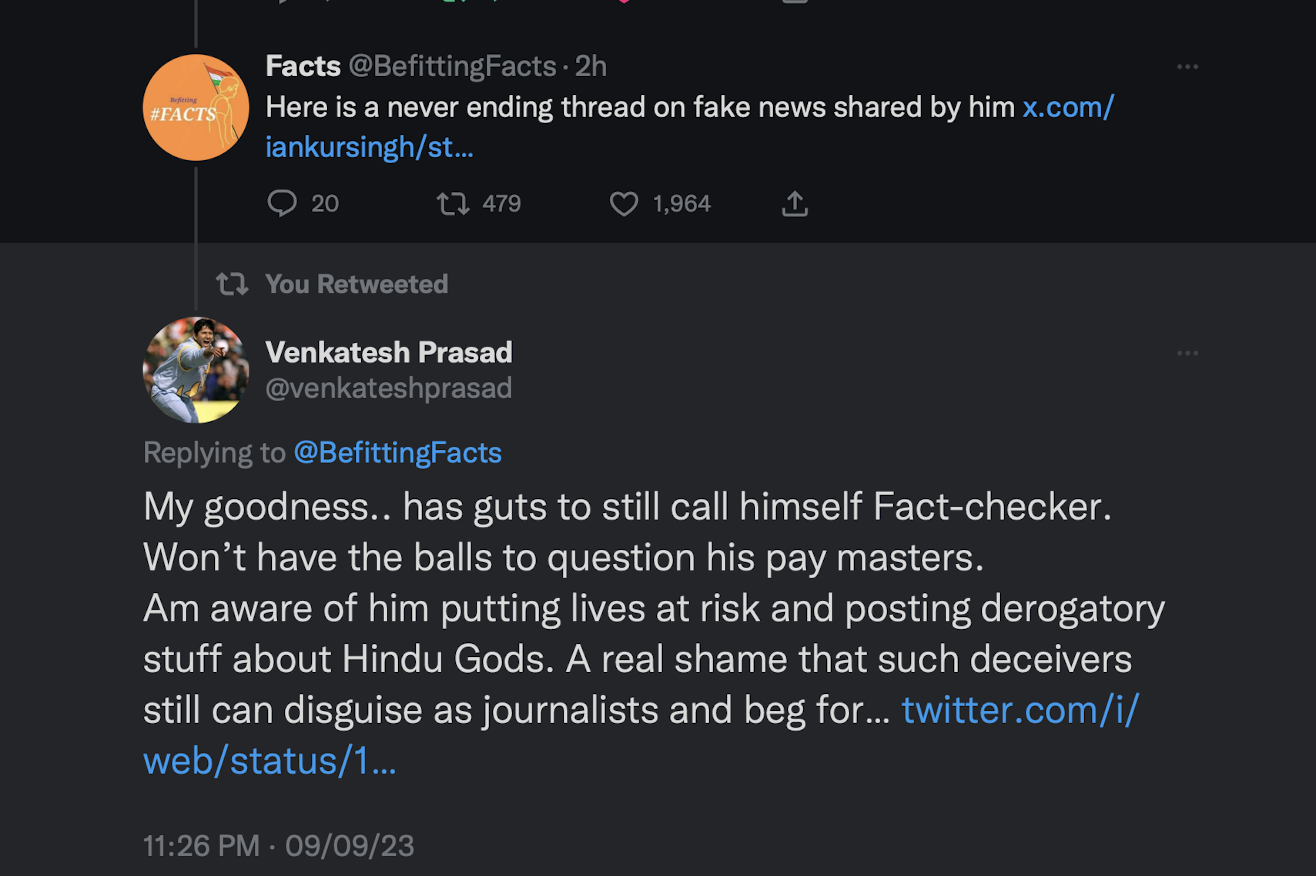
Nevertheless, when one of the X (formerly known as Twitter) users responded to his tweet that there is a never-ending thread on instances when Zubair was caught spreading fake news, Prasad replied, “My goodness.. has guts to still call himself Fact-checker. Won’t have the balls to question his paymasters.”

“Am aware of him putting lives at risk and posting derogatory stuff about Hindu Gods. A real shame that such deceivers still can disguise as journalists and beg for donations,” Prasad added.

The tweet was posted by a user who goes by @BefittingFacts, who had shared the link to a thread composed by Political activist Ankur Singh, who had catalogued instances when Alt News co-founder was either found spreading fake news or caught peddling brazen lies.

You can read the thread here, and 20 instances when Zubair was caught lying and spreading fake news here. This is by no means an exhaustive list of fake news peddled by Zubair. It is just the tip of the iceberg and there are countless instances where he misled his followers with fake news.

Mohammed Zubair dog whistles against Nupur Sharma

Earlier last year, former BJP spokesperson Nupur Sharma found herself at the centre of a raging storm after Islamists, egged on by the likes of AltNews co-founder Mohammed Zubair, issued multiple threats against her and her family for expressing her views on Prophet Muhammad and Islam. 

While Islamists went on a rampage on the streets in many cities across the country, it was essentially Mohammed Zubair who was responsible for kindling a fire that had gone on to assume uncontrollable proportions. It was Zubair’s dog whistle that made a mountain out of a molehill and painted a target behind the back of Nupur Sharma and anyone and everyone who came out in her support. It is worth noting that even though Zubair accused Nupur Sharma of indulging in hate speech, he has so far studiously refrained from carrying out a fact check of comments made by Nupur Sharma.

Hindus, including Kanhaiya Lal and Umesh Kolhe, were killed after Zubair dog-whistled Islamists against Nupur Sharma

The ominous hounding of Nupur Sharma prompted many to extend their support to her. Kanhaiya Lal from Udaipur, Umesh Kolhe in Amravati, and many others extended their solidarity with the beleaguered leader, voicing their support for her amid the death threats from Islamists. 

And so, Lal was a marked man the moment he came out in support of Nupur Sharma. Islamists, provoked by Mohammed Zubair, dished out death threats to him for what they considered an unpardonable sin committed against the Prophet. And days later, the Hindu man was killed for something as trivial as just sharing a social media post in support of Nupur Sharma.

A similar fate befell Umesh Kolhe, a chemist living in Maharashtra’s Amravati, who was murdered by four Muslim assailants while he was returning from his pharmacy on the night of June 22. Kolhe, too, was murdered for his social media post supporting Nupur Sharma.

This makes Mohammed Zubair guilty of ‘stochastic terrorism’, a concept defined as the public demonisation of a person or group resulting in the incitement of a violent act, which is statistically probable but whose specifics cannot be predicted. It was Mohammed Zubair who spearheaded a campaign against Nupur Sharma, accusing her of insulting the Prophet Muhammad and letting loose an army of Islamists against her that ultimately snuffed out the lives of Lal, Kolhe, and many others.

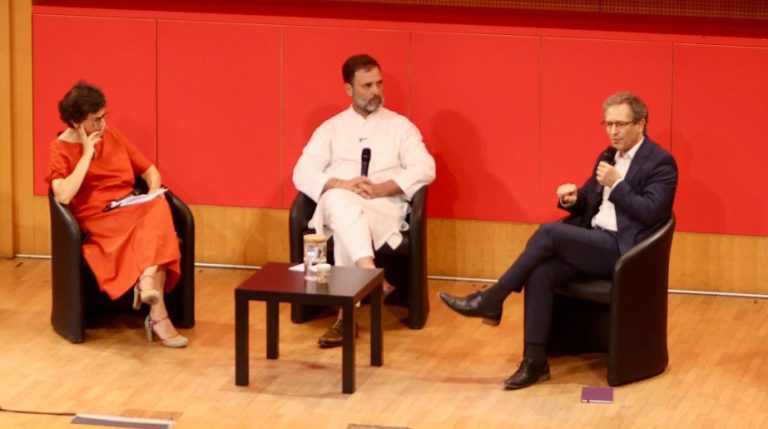
Rahul Gandhi shares stage with Hinduphobic author Christophe Jaffrelot, who has written against India, Indian courts & BJP, was part of ‘Dismantling Hindutva’ event

Congress scion Rahul Gandhi, as part of his almost week-long Europe tour, addressed students at a university in Paris on 8 September, where he shared the stage with author and columnist Christophe Jaffrelot, known for deep-rooted hate for Hindus and India. The official X handle of the Congress party shared pictures of the event where the Congress leader engaged in an interaction session with the students and the Faculty of Sciences PO in Paris.

Rahul Gandhi, who often courts controversy with his anti-India statements was joined by the French political scientist who has a history of writing against India and regularly attacks the incumbent Bharatiya Janata Party government and Prime Minister Narendra Modi. He furiously opposed the Citizenship Amendment Act (CAA) and labelled it against the “spirit of Indian secularism.”

Opposition to Hindu outfits and claims of victimhood

Christophe Jaffrelot dragged the Jewish people and Israel into his argument and equated the legislation with them. “Such an approach reflects a vision of the nation as an ethno-religious body where those who do not belong to the sons of the soil’s majority are bound to be second-class citizens. This suggests a certain parallel with the Israeli pattern where the state belongs primarily to the Jewish people.”

He didn’t address the perilous threats or oppression faced by the marginalised minorities, particularly Hindus solely because of their religion in the three Islamic neighbour countries of India.

He accused Hindus of having lower self-worth. “You talk of a majoritarian inferiority complex rooted in a lack of self-esteem in the 19th century. Has this sense of vulnerability changed considering that BJP leaders still promote the myth of Muslim population explosion,” he asked.

“The Hindu complex of inferiority vis-à-vis others (including the Muslims) crystallised in the 19th century when the British not only emphasised the division of Hindus along caste lines and sectarian lines, in the Census to begin with but also invented communal stereotypes.” He blamed the British imperialists for the division but didn’t mention the nefarious role played by Muslim extremists and fundamentalist outfits like the Muslim League.

He also attributed the same reason to Mohandas Karamchand Gandhi alias Mahatma Gandhi’s infamous quote, “The Musalman, as a rule, is a bully, and the Hindu as a rule is a coward.”

The author doesn’t criticise the terrorists for waging war against India and spilling the blood of innocent citizens, however, chooses to blame the Bharatiya Janata Party for exploiting the ghastly assaults in its favour. “Then came a long series of Islamist terrorist attacks ranging from Bombay 1993 to Mumbai 2008 that enabled the BJP to exploit a politics of fear and derive electoral dividends.”

He charged Hindu groups like Bajrang Dal with inflicting violence, attacking churches and lynching Muslims. “Is not the term Sangh Parivar a misnomer,” he questioned and opined, “A family stands for love and cohesion. And the Sangh’s members, notably those of the Bajrang Dal, have been accused of attacking churches and lynching Muslim men.”

He added, “The RSS (Rashtriya Swayamsewak Sangh) and its affiliates form a family because the mother organisation is the matrix of a dense network of unions (Akhil Bharatiya Vidyarthi Parishad, Bharatiya Mazdoor Sangh, Bharatiya Kisan Sangh) and other offshoots like the Vishwa Hindu Parishad (VHP), Vidya Bharti, and Seva Bharti. The fact that one of these organisations, the Bajrang Dal, resorts to violence is another story. But the interesting common feature lies in the systematic denial of violence.”

Once again, he maintained complete silence over the multiple Hindu victims of Muslim violence as well as the church attacks which were proven to be orchestrated by criminals and not any Hindu organisation.

He alleged that “it becomes more and more difficult for Muslims to live in mixed neighbourhoods, to marry Hindu spouses, to get some jobs. In this regard, the few available panel surveys show that when the same CV is sent to a company with a Brahmin name, a Dalit name and a Muslim name, the latter are not invited for a job interview as often as Dalits and even less than Brahmins.” These occurrences are uncommon and can happen from either side. The situation is not like apartheid, as he attempted to portray.

Attack on Narendra Modi

He expressed his frustration with the victory of the Bharatiya Janata Party-led National Democratic Alliance in two successive general elections in the years 2014 and 2019, respectively in his book titled “Modi’s India: Hindu Nationalism and the Rise of Ethnic Democracy.” He ranted about how “over the past two decades, thanks to Narendra Modi, Hindu nationalism has been coupled with a form of national populism that has ensured its success at the polls, first in Gujarat and then in India at large.”

He accused the Bharatiya Janata Party stalwart of “seducing a substantial number of citizens by promising them development and polarizing the electorate along ethno-religious lines. Both facets of this national populism found expression in a highly personalized political style as Modi related directly to the voters through all kinds of channels of communication in order to saturate the public space.”

However, the author conveniently ignored the fact that the prime minister’s spectacular electoral performance was possible because of his multiple innovative and socially empowering schemes like Digital India, Pradhan Mantri Jan Dhan Yojna, Ayushman Bharat Yojana, Pradhan Mantri Garib Kalyan Anna Yojana, and several others which have made a significant difference in the lives of millions of Indians particularly, those from the lower strata of the society.

He claimed to have interviewed Indians across the country and concluded, “Modi’s government has moved India toward a new form of democracy, an ethnic democracy that equates the majoritarian community with the nation and relegates Muslims and Christians to second-class citizens who are harassed by vigilante groups.” Unsurprisingly, like other detractors of the prime minister, he also failed to back up his assertions with evidence or offer any empirical data to prove his outrageous accusations.

He lamented about Hindu nationalism and charged that it “has resulted in attacks against secularists, intellectuals, universities, and NGOs (Non-Governmental Organisations).” He allegedly explained, “How the political system of India has acquired authoritarian features for other reasons, too.” He called the Bharatiya Janata Party power-hungry and “eager to govern not only in New Delhi but also in the states.”

He claimed that the government had over-centralized authority at the expense of federalism and had eroded institutions that were essential to checks and balances, including India’s Supreme Court. More importantly, he is consistent in not providing any proof to support his tirade.

Casting aspersions on Indian Judiciary

“When you talk of deinstitutionalising India in your book, is it fair to read a common chord in the treatment meted out to Judge Loya, the lawyer Gopal Subramanium and Justice Akil Kureshi,” the writer inquired. He stated, “The procedures followed for appointing judges are pillars of democracy. A democracy is not only based on elections, it has to respect the independence of the institutions in charge of the rule of law. This independence is guaranteed only if the executive power is not in a position to influence the way judges are appointed.”

Additionally, he vented his anger about the repeal of Article 370, “On the one side you talk of the Supreme Court’s relationship with the government moving from truce to surrender, on the other, many see in the delay in the apex court hearing cases relating to Article 370 and the CAA as proof of this perceived loss of independence of the court. Is it a fair assessment?”

He ranted, “I see no contradiction. Surrender may take different forms. The Supreme Court does not necessarily need to approve decisions made by the government; like the election bonds, it can also sit on files and say nothing for years. The result is almost the same.”

He also accused the police of being anti-minority bias because “the percentage of Muslims behind bars is much larger than their proportion in society.” He charged, “The police and vigilante groups such as the Bajrang Dal and the Gau Raksha Dal work together in many different contexts, including the patrolling of the highway in the name of cow protection. Unofficial and official power structures tend to merge.” He also called India a “de facto Hindu Rashtra.”

Dismantling Global Hindutva Event

Dismantling Global Hindutva: Multidisciplinary Perspectives (DGH) was a three-day virtual conference organised in 2021 which aimed to target Hinduism in the name of fighting Hindutva. Christophe Jaffrelot was a speaker there and as expected Hinduism, Bharatiya Janata Party and RSS. There he talked about Hindutva and the evolution of the RSS and the Sangh Parivar and its growth in the United States.

Rahul Gandhi’s anti-India statements

Meanwhile, the Wayanad MP proclaimed, “Certainly, there is an increase in discrimination and violence in India, and there is a full-scale assault on democratic institutions in India, which everybody knows and is internally and globally commented on,” on his recent trip to Europe.

He alleged that minorities and other communities are under attack in India. “Of course, minorities are under attack, but so are other communities, Dalit communities, Tribal communities, and lower-caste communities are also under attack.”

Notably, while Gandhi claimed that minorities are under attack in India, he maintained a deafening silence on the inflammatory remarks by members of I.N.D.I alliance, a bloc of opposition parties of which his party, Congress, is a part. Recently, Udhaynidhi Stalin, Tamil Nadu Minister and a senior leader of Dravida Munnetra Kazhagam (DMK) which is an important alliance partner made hateful remarks against Sanatan Dharma and compared it with mosquitos and coronavirus and urged for its “eradication.”

He garnered support from the Congress party including son of Congress president Mallikarjun Kharge and Karnataka Minister Priyank Kharge, son of veteran Congressman P Chidambaram and Lok Sabha MP Karti P Chidambaram and Tamil Nadu Congress spokesperson and General Secretary Lakshmi Ramachandran for his outrageous statement.

It is noteworthy that Rahul Gandhi has a notorious legacy of hobnobbing with anti-India individuals and attacking the country even on foreign soil.


‘India has assumed a kind of power and ability to bring countries together’: French diplomatic sources on historic G20 Delhi Declaration

0

The G20 declaration is very satisfactory with the Indian presidency keen to see that a language of consensus emerges, French diplomatic sources said on Saturday and noted that India has assumed a kind of power to bring countries together with not many countries being in a position to negotiate as New Delhi has done.

The French diplomatic sources said that to achieve a language of consensus on a subject as divisive as the Ukraine conflict, they had to be able to reaffirm what was said in the Bali G20 summit, which was done by recalling the Bali conversation.

“We had to refer to the United Nations texts, which are indeed mentioned and then we had to affirm a few obvious points for us, but which are not necessarily obvious for everyone, i.e. that a war of territorial conquest is unacceptable, that the sovereignty and territorial integrity of states must be respected, and that a just and lasting peace must respect these principles,” a source said.

The French diplomatic sources said all this is well incorporated in the text and, as was their main objective at this summit, “enables us to look ahead to what should be the solution for a just and lasting peace at the end of the war in Ukraine”.

The statement says that all states must refrain from conquering territories by force. The diplomatic sources said Russia is the only country to have done so and all this helps to build consensus for the future.

The New Delhi declaration was adopted earlier in the day at the G20 Summit being held in the national capital on September 9 and 10.   

The sources said India has assumed “a kind of power and an ability to bring countries together” and “not many countries are in a position to negotiate as India has done, i.e. to take on board comments from everyone and work out a compromise proposal”.

This is something important, they added.

The New Delhi G20 declaration said that in line with the UN Charter, all states must refrain from the threat or use of force to seek territorial acquisition against the territorial integrity and sovereignty or political independence of any state and that the use or threat of use of nuclear weapons is inadmissible.

“Concerning the war in Ukraine, while recalling the discussion in Bali, we reiterated our national positions and resolutions adopted at the UN Security Council and the UN General Assembly (A/RES/ES-11/1 and A/RES/ES-11/6) and underscored that all states must act in a manner consistent with the Purposes and Principles of the UN Charter in its entirety,” it said.

“Reaffirming that the G20 is the premier forum for international economic cooperation, and recognizing that while the G20 is not the platform to resolve geopolitical and security issues, we acknowledge that these issues can have significant consequences for the global economy,” it added.

The G20 members appreciated the efforts of Türkiye and UN-brokered Istanbul Agreements consisting  of the Memorandum of Understanding between the Russian Federation and the

Secretariat of the United Nations on Promoting Russian Food Products and Fertilizers to the World Markets and the Initiative on the Safe Transportation of Grain and Foodstuffs from Ukrainian Ports (Black Sea Initiative), and called for their full, timely and effective implementation to ensure the immediate and unimpeded deliveries of grain, foodstuffs, and fertilizers/inputs from the Russian Federation and Ukraine.

“This is necessary to meet the demand in developing and least developed countries, particularly those in Africa.

The leaders highlighted the human suffering and negative added impacts of the war in Ukraine with regard to global food and energy security, supply chains, macro-financial stability, inflation and growth, which has complicated the policy environment for countries, especially developing and least developed countries which are still recovering from the COVID-19 pandemic and the economic disruption which has derailed progress towards the SDGs.

There were different views and assessments of the situation, the declaration said.

“We call on all states to uphold the principles of international law including territorial integrity and sovereignty, international humanitarian law, and the multilateral system that safeguards peace and stability. The peaceful resolution of conflicts and efforts to address crises as well as diplomacy and dialogue are critical.

“We will unite in our endeavour to address the adverse impact of the war on the global economy and welcome all relevant and constructive initiatives that support a comprehensive, just, and durable peace in Ukraine that will uphold all the Purposes and Principles of the UN Charter for the promotion of peaceful, friendly, and good neighbourly relations among nations in the spirit of ‘One Earth, One Family, One Future,’” it said.

“Today’s era must not be of war,” the declaration added.

(This news report is published from a syndicated feed. Except for the headline, the content has not been written or edited by OpIndia staff)

G20 Summit: Several major initiatives announced on the first day, G20 under India’s presidency becomes one of the most inclusive and delivery-oriented

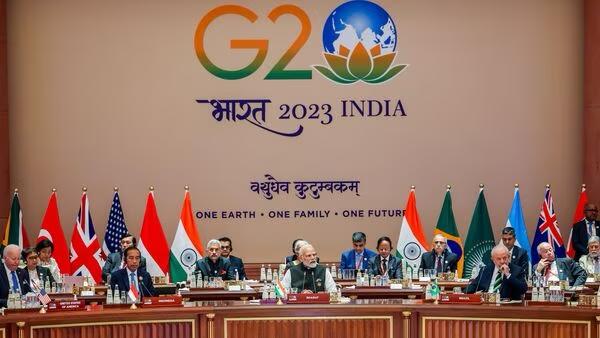
On the first day of the two-day G20 Summit in Delhi hosted by India, several major achievements were recorded, including the adoption of the joint statement Delhi Declaration by G20 leaders. This has been seen as a major achievement of Indian diplomates, as there were major differences among the member countries, particularly on the Russia-Ukraine war and reduction in fossil fuel use. Through the G20 New Delhi Leaders’ Declaration, the G20 members have made commitments to a wide range of issues.

While the adaptation of the Delhi Declaration is a major achievement, there are several other achievements of the G20 under India’s presidency.

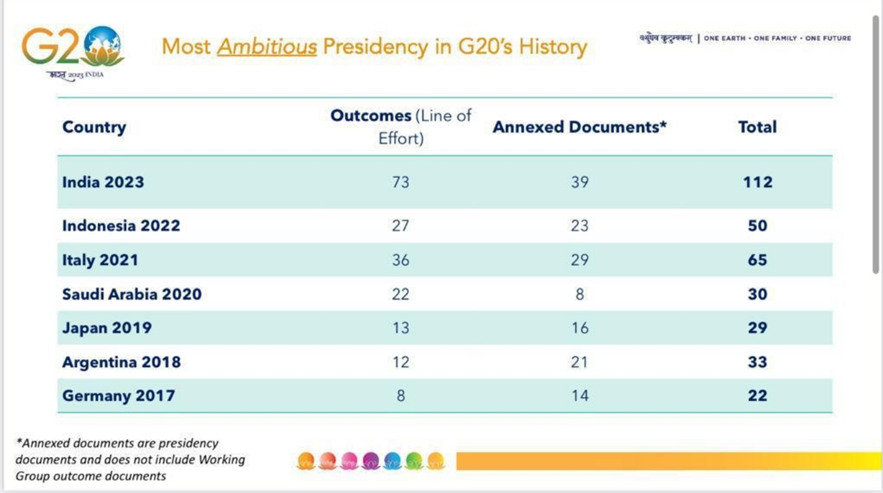
Compared to previous presidencies, the G20 event witnessed one of the most inclusive and delivery-oriented events. The G20 under India’s presidency have achieved 73 outcomes or lines of effort and 39 annexed presidency documents, totalling 112. This is the highest number of outcomes and presidency documents in the G20 history and is substantially more than previous presidencies.

India’s presidency of the G20 bloc, and the summit meeting in Delhi, have helped establish India as a major player at the global stage, showcasing the country’s ability to lead global bodies.

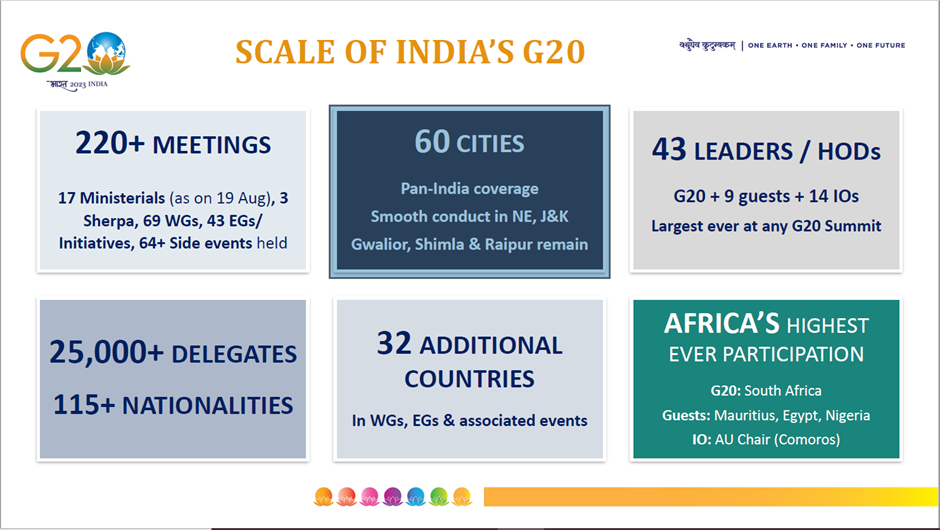
The G20 event in India was a vast exercise, which included over 220 meetings in over 60 cities, where over 25000 delegates from more than 115 countries in the world. While the summit meeting is taking place in Delhi, other meetings were held in all over India, including in North East, Ladakh etc. The over 220 meetings included 17 ministerial meetings and 3 Sherpa meetings.

The event has stayed true to its message of ‘Vasudhaiva Kutumbakam’ as it had the largest participation from the African Union. The inclusion of the African Union as a permanent member of G20 at the New Delhi Summit is another high point.

The G20 Summit also saw the presence of the largest number of world leaders. Apart from the G20 members, leaders or heads of several other countries also joined the meeting as invitees. Heads of 9 guest countries and 14 international organisations are participating in the Summit. Moreover, in the previous various events and meetings, 32 non-G20 countries had participated.

Several important developments took place on the first day of the G20 Summit Meeting on 9 September. Some of the major developments are:

Inclusion of the African Union as a permanent member of the G20, which was pushed by India. This highlights India’s message of inclusive growth and providing a voice for all.

The issue of trust deficit among countries that have emerged in recent years was discussed, as mentioned by PM Modi after the first session. The first session on ‘One Earth’ included discussions on the International Year of Millets, Green Grids Initiative – One Sun, One World, One Grid, Natural Farming and National Green Hydrogen Mission.

A comprehensive rail and shipping connectivity network was announced linking the US, India, Saudi Arabia & Gulf and Arab states, and the European Union. This will be a big rival to China’s Belt and Road project, which has left a host of developing countries in deep debt such as Pakistan, Kenya, Zambia, Laos and Mongolia. China has been accused of “debt trap diplomacy” due to this.

The countries involved in the new rail and shipping corridor will experience an increased flow of energy, trade and digital communications. The corridor will tackle the infrastructure deficit that hampers growth in lower- and middle-income nations, and will help in reducing tensions and instability in the Middle East, thereby improving overall regional security.

Delhi Declaration was adopted with the agreements of China and Russia. The two countries were objecting to use of strong language over the Ukraine issue, as demanded by G7 and EU nations. It called on nations to uphold international law, including territorial integrity and sovereignty, international humanitarian law, and the multilateral system that safeguards peace and stability.

According to India’s G20 Sherpa Amitabh Kant, the focus areas of the New Delhi G20 declaration were:

  • Strong, Sustainable, Balanced, and Inclusive Growth
  • Accelerating Progress on SDGs
  • Green Development Pact for a Sustainable Future
  • Multilateral Institutions for the 21st Century
  • Reinvigorating Multilateralism

PM Modi also announced the launch of the Global Biofuel Alliance to boost the use of cleaner fuels. It was affirmed that this alliance will accelerate global efforts to meet net zero emissions targets by facilitating trade in biofuels derived from various sources, including plant and animal waste.

While these were the achievements on day one of the G20 Summit, several other initiatives by India were adopted by the G20 in previous meetings. This includes Deccan High-Level Principles on Food Security and Nutrition, Chennai High-Level Principles for Blue/Ocean Economy, Goa Roadmap for Tourism, Gandhinagar Implementation Roadmap for land restoration, Jaipur Call for Action to enhance MSMEs access to information.

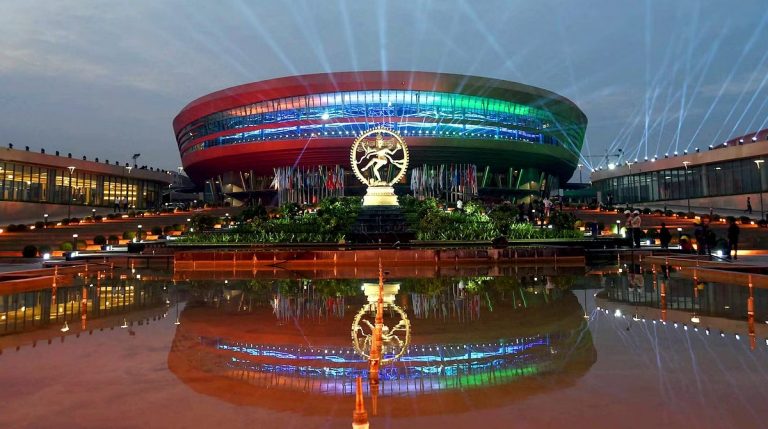
The G20 summit, being held at Bharat Mandapam in Delhi, has been an astute visual treat that embraced Bharat in its totality celebrating the Santana roots with pride, shedding away the pre-existent colonial mindset.

A 28 feet tall Nataraja statue that adorned the entry point of Bharat Mandapam is a testament to India’s purity and brilliance. The mandapam also presented a ‘Culture Corridor’, that brings the best and the most valuable artefacts from all the 29 countries in one space signifying the essence of Vasudhaiva Kutumbakam — the theme of the G20.

‘This is a real big deal’: Biden as India-Middle East-Europe connectivity corridor announced at G20 Summit

0

Terming the announcement of a mega India-Middle East-Europe shipping and railway connectivity corridor as ” a real big deal” US President Joe Biden expressed that in the next decade, the partner countries will address infrastructure gaps across low-middle-income countries to maximize investments in economic corridors.”

India, the United States, Saudi Arabia and the European Union announced a historic agreement to launch a mega India-Middle East-Europe shipping and railway connectivity corridor.

Prime Minister Narendra Modi announced the ambitious project on the sidelines of the G20 Summit in the presence of US President US Biden, Saudi Arabia Prime Minister Mohammed bin Salman and leaders of the EU.

“This is a real big deal. I want to thank PM. One Earth, One Family, One Future that’s the focus of this G20 Summit. And in many ways, it’s also the focus of this partnership that we’re talking about today,” the US President said while addressing the Partnership for Global Infrastructure and Investment (PGII) and India Middle East Europe Economic Corridor event.

The corridor is a historic and first-of-its-kind initiative on cooperation on connectivity and infrastructure involving India, UAE, Saudi Arabia, EU, France, Italy, Germany and the USA.

The US President said: “Building sustainable, resilient infrastructure, making quality infrastructure investments and creating a better future… Last year, we came together as one to commit to this vision. And this afternoon I want to highlight the key ways in which the United States and our partners are working to make this a reality.”

The US President further said you are going to hear the phrase ‘Economic corridor’ more than once and “I expect, over the next decade as we work to address infrastructure gaps across low-middle-income countries, we need to maximize the impact of our investments. That’s why a few months ago announced that the United States will work with our partners to invest in economic corridors.”

Prime Minister Narendra Modi while addressing the event said strong connectivity and infrastructure are the base of development of human civilization.

“India has given the highest priority to this topic…we believe connectivity between different countries increases not only business but trust between them…by promoting connectivity initiative, we need to ensure we stick to philosophies…that is, adhesion to international rules, respect for all nations’ sovereignty and regional integrity…” the PM said.

PM Modi said that it will give a new direction to connectivity and sustainable development.”The corridor will become an effective medium for economic integration of India, the Middle East and Europe,” he said.

India is hosting the G20 Leader’s Summit in the national capital at the newly inaugurated Bharat Mandapam on September 9-10.

The summit is being attended by more than 30 heads of state and top officials from the European Union and invited guest countries and 14 heads of international organisations.

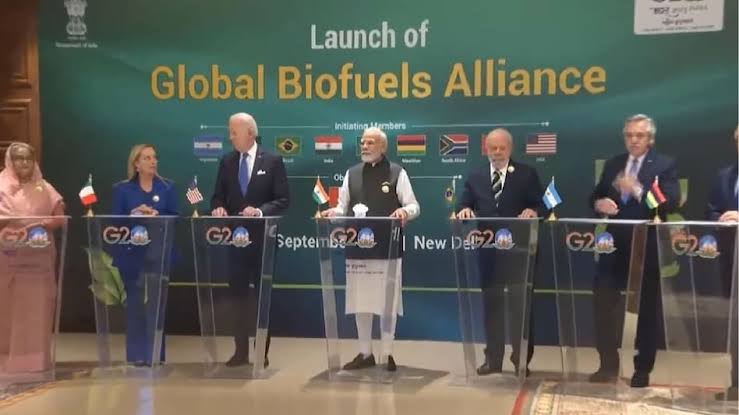
Meanwhile, PM Narendra Modi also launched the Global Biofuels Alliance in the presence of US President Joe Biden, President of Brazil Luiz Inacio, President of Argentina, Alberto Fernández and Prime Minister of Italy Giorgia Meloni.

The Global Biofuel Alliance is one of the priorities under India’s G20 Presidency.

Brazil, India, and the United States, as leading biofuel producers and consumers, will work together during the next few months towards the development of a Global Biofuels Alliance along with other interested countries.

This Alliance will be aimed at facilitating cooperation and intensifying the use of sustainable biofuels, including in the transportation sector. It will place emphasis on strengthening markets, facilitating global biofuels trade, developing concrete policy lesson-sharing and providing technical support for national biofuels programs worldwide.

It will also emphasize the already implemented best practices and success cases.

(This news report is published from a syndicated feed. Except for the headline, the content has not been written or edited by OpIndia staff)

PM Modi launches the Global Biofuels Alliance at the G20 Summit, 19 countries stand with India as initiating members

0

PM Narendra Modi on Saturday launched the Global Biofuels Alliance in the presence of US President Joe Biden, President of Brazil Luiz Inacio, President of Argentina, Alberto Fernández and Prime Minister of Italy Giorgia Meloni.

The Global Biofuel Alliance is one of the priorities under India’s G20 Presidency.

Brazil, India, and the United States, as leading biofuel producers and consumers, will work together during the next few months towards the development of a Global Biofuels Alliance along with other interested countries.

This Alliance will be aimed at facilitating cooperation and intensifying the use of sustainable biofuels, including in the transportation sector. It will place emphasis on strengthening markets, facilitating global biofuels trade, developing concrete policy lesson-sharing and providing technical support for national biofuels programs worldwide.

It will also emphasize the already implemented best practices and success cases.

The Alliance shall work in collaboration with and complement the relevant existing regional and international agencies as well as initiatives in the bioenergy, bioeconomy, and energy transition fields more broadly, including the Clean Energy Ministerial Biofuture Platform, the Mission Innovation Bioenergy initiatives, and the Global Bioenergy Partnership (GBEP).

GBA will be a competent organisation that will set technical standards for Sustainable Aviation Fuel (SAF) business in collaboration with relevant industry bodies.

The alliance will have a three-category membership structure bringing together member countries, partner organisations and industries.

The alliance will work towards enhancing global collaboration and cooperation for the accelerated adoption of biofuels by identifying global best practices for the development and deployment of sustainable biofuels and bioproducts.

Nineteen countries agreed to stand with India as initiating members of the Global Biofuels Alliance.

The International Energy Agency estimates in a July report that global sustainable biofuel production would need to triple by 2030 to put the world’s energy system on track towards net zero emissions by 2050.

India, the world’s third-biggest oil importer and consumer, imports about 85 per cent of its crude needs and is gradually building capacity to increase its output of biofuels.

India is targeting to become carbon neutral by 2070 and is expanding the use of biofuel in its transport sector. It has advanced the deadline by five years to 2025 for doubling nationwide ethanol blending in gasoline to 20 per cent.

The alliance will help by encouraging global biofuels trade, developing concrete policies on lesson-sharing and promoting the provision of technical support for national biofuels programmes worldwide.

Meanwhile, External Affairs Minister S Jaishankar has said that the G20 Leaders’ Summit Declaration adopted on Saturday focuses on promoting strong, sustainable, balanced and inclusive growth.

Addressing a joint press conference, Jaishankar said the Declaration seeks to accelerate progress on Sustainable Development Goals and has come up with an action plan accordingly.

“The declaration the leaders have agreed on today focuses on promoting strong, sustainable, balanced and inclusive growth. It seeks to accelerate progress on SDGs and has come up with an action plan accordingly,” the minister said.  

“It envisages a green development pact for a sustainable future, it endorses high-level principles on lifestyle for sustainable development, voluntary principles of hydrogen, the Chennai principles for a sustainable resilient blue economy and the Deccan principles on food security and nutrition among others,” he added.

(This news report is published from a syndicated feed. Except for the headline, the content has not been written or edited by OpIndia staff)

First session of the G20 Summit in Delhi was ‘One Earth’: Read details of various initiatives discussed under it

0

On 9th September 2023, Prime Minister Narendra Modi spoke at the first session of the G20 Summit on the subject of “One Earth.” In his speech, he highlighted the need for human-centric development and stressed that India has always emphasised this in its culture. He also mentioned the various initiatives and missions that India has undertaken to protect the environment, including the LiFE Mission, the International Year of Millets, the Green Grids Initiative – ‘One Sun, One World, One Grid’, solar power, natural farming, and the National Green Hydrogen Mission.

Let us briefly see what all these initiatives are all about.

LiFE Mission

The LiFE Mission, or Lifestyle for Environment, is a global initiative launched by PM Modi at the 2021 UN Climate Change Conference (COP26). The mission aims to promote an environmentally conscious lifestyle that focuses on “mindful and deliberate utilization” instead of “mindless and destructive consumption.” The four pillars of the LiFE Mission are as follows.

Reduce, reuse, and recycle: This pillar encourages people to reduce their consumption of goods and services, reuse items whenever possible, and recycle materials whenever possible.

Circular economy: This pillar promotes the design of products and services that can be reused, repaired, or recycled at the end of their life.

Sustainable consumption and production: This pillar encourages people to make choices about the goods and services they consume that are more sustainable for the environment.

Sustainable lifestyles: This pillar encourages people to adopt habits and lifestyles that are more sustainable for the environment, such as walking or biking instead of driving, eating less meat, and conserving water.

International Year of Millets

The International Year of Millets (IYM) is a UN-recognised year that is being celebrated in 2023. The year has been dedicated to raising awareness of the importance of millets, which are a group of small, gluten-free grains that are grown in dry and semi-arid regions. Millets are a good source of protein, fibre, and vitamins, and they are also a sustainable crop that requires less water than other grains.

India was the lead country in proposing the IYM to the United Nations. The government of India has taken a number of initiatives to promote millet including organising awareness campaigns and events, providing financial assistance to farmers, developing new varieties of millets, and promoting research on millets.

India is also a major producer and exporter of millet. The IYM has helped to raise awareness of the nutritional and environmental benefits of millets, and it is expected to boost the demand for millets in India and around the world.

Green Grids Initiative – One Sun, One World, One Grid

The idea for the One Sun One World One Grid (OSOWOG) initiative was put forth by Prime Minister Narendra Modi at the First Assembly of the International Solar Alliance in October 2018. The initiative aims at connecting energy supply across borders. The vision behind the OSOWOG initiative is the mantra that “the sun never sets”. The OSOWOG initiative aims to connect different regional grids through a common grid that will be used to transfer renewable energy power and, thus, realize the potential of renewable energy sources, especially solar energy.

The Green Grids Initiative – One Sun, One World, One Grid (GGI-OSOWOG) was jointly launched by Prime Minister Narendra Modi and the then Prime Minister of the United Kingdom Boris Johnson, during the ‘Accelerating Innovation and Clean Technology Deployment’ event at the World Leaders Summit held on 2 November 2021 during COP26. In addition to the launch of the initiative, this event also included the launch of the ‘One Sun Declaration’ as approved by the Fourth Assembly of the International Solar Alliance.

India is a founding member of the GGI-OSOWOG and has been a strong supporter of the initiative. The country has contributed to the initiative by sharing its expertise in solar energy and grid technology, investing in research and development on GGI-OSOWOG technologies, and working with other countries to develop pilot projects.

India is also committed to implementing GGI-OSOWOG at the national level. The country has set a target of generating 450 gigawatts of solar power by 2030, and it is working to develop a national grid that can integrate solar power from different parts of the country. The GGI-OSOWOG is a promising initiative that has the potential to transform the global energy landscape. India’s participation and contribution to the initiative is a major step forward in the fight against climate change.

Natural Farming

India is a leading proponent of natural farming. The country has a long history of traditional farming practices that are based on the principles of natural farming. In recent years, the government of India has been promoting natural farming as a way to improve soil health, reduce the use of chemical fertilizers and pesticides, and increase crop yields.

India’s participation and contribution to natural farming is a major step forward in the fight against climate change. Natural farming is a sustainable way of farming that can help to improve soil health, reduce pollution, and conserve water. The government of India has launched a national program called the Natural Farming Mission. The program provides financial assistance to farmers who adopt natural farming practices. The program also provides training and technical support to farmers.

India has made significant progress in promoting natural farming. The country has trained over 1 million farmers in natural farming practices and has set a target of converting 100 million hectares of farmland to natural farming by 2030.

National Green Hydrogen Mission

The National Green Hydrogen Mission (NGHM) is a government initiative that aims to promote the production and use of green hydrogen. Green hydrogen is produced using renewable energy sources, such as solar and wind power. It is a clean and emissions-free fuel that can be used to power vehicles, heat homes, and generate electricity. India is a major player in the global green hydrogen market. The country has a vast renewable energy potential, and it is committed to making green hydrogen a major part of its energy mix.

NGHM includes setting ambitious targets for the production and use of green hydrogen, investing in research and development on green hydrogen technologies, developing a national hydrogen infrastructure, and promoting international cooperation on green hydrogen. The government of India has set a target of producing 5 million tonnes of green hydrogen by 2030. India is investing $5 billion in research and development on green hydrogen technologies. India’s participation and contribution to the NGHM is a major step forward in the fight against climate change. Green hydrogen is a clean and emissions-free fuel that can help reduce India’s reliance on fossil fuels and achieve its climate goals.

These are just some of the initiatives and missions that India has undertaken to protect the environment. PM Modi’s speech at the G20 Summit highlighted India’s commitment to sustainable development and its leadership in the fight against climate change.

Rajasthan: Govt school teacher hurls casteist slurs and assaults Dalit student for drinking water from staff cooler, angry mob beat up teacher

0

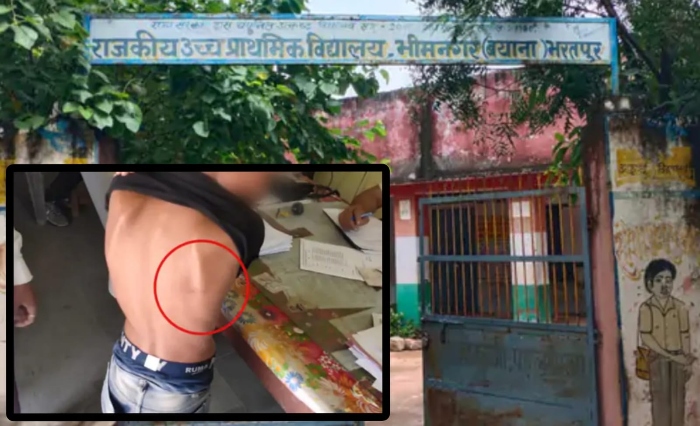
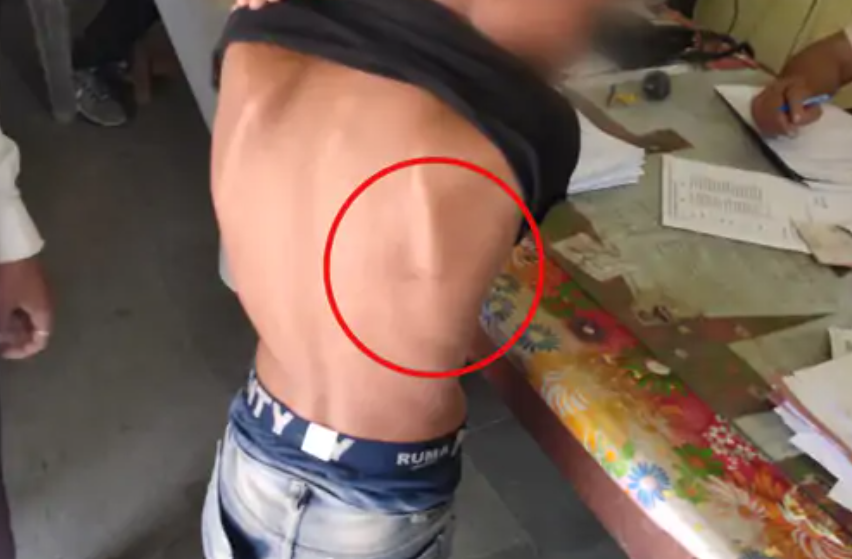
On Friday (September 8), a government school teacher in Rajasthan allegedly abused and assaulted a Dalit class 7 student for drinking water from a water cooler meant for school teachers and staff. Following the incident, enraged family members of the Dalit student and villagers barged into the school on Saturday (September 9) morning and beat up the accused teacher in front of the police.

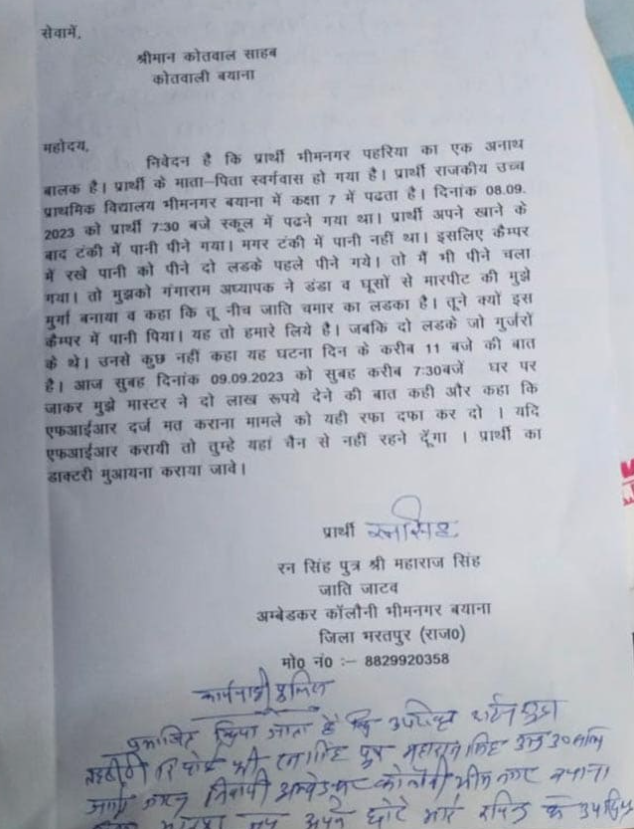
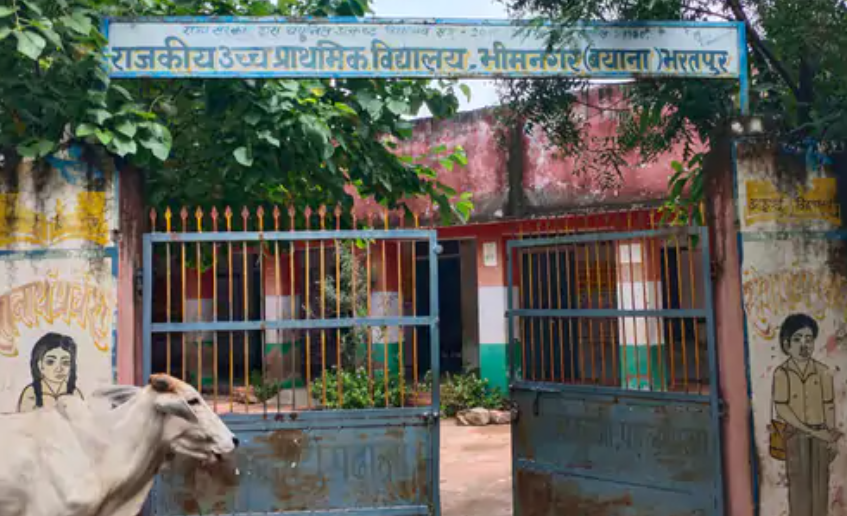
The incident reportedly took place in the Government Higher Primary School located at Bhimnagar in the Bayana police station area in Bharatpur, Rajasthan. Ran Singh, the victim’s brother, has filed a complaint against the teacher at the Bayana police station, accusing him of assault.

Complaint filed by victim’s brother (Source: NDTV Hindi)
Image source: Bhaskar

Brother singled out because of his caste, principal offered Rs 2 lakh to withdraw the complaint: Brother of Dalit student tells police

In his complaint, the victim’s brother alleged that the tutor did not object to the other students drinking from the same cooler and singled out his brother because he belonged to a lower caste.

He further alleged that the school’s principal, Rajkumar Sharma, and another instructor, Naval Kishore, attempted to bribe him into withdrawing his complaint against him. According to the victim, the two teachers arrived at his house at 7.30 a.m. on Saturday, September 9, and offered him Rs 2 lakh if he dropped the charge against Gangaram Gujar. They also warned him of severe repercussions if he did not comply with their demands.

Image source: Bhaskar

The incident

According to the complaint filed by the victim’s brother Ran Singh, on Friday during recess hours, he went to the water cooler to have water after finishing his tiffin, but the water cooler was empty. When he was returning, he saw two students drinking water from the pitcher kept exclusively for the school teachers and staff members. Since he was very thirsty, he too drank water from that pitcher.

When Gangaram Gurjar saw this, he became furious and started hurling casteist abuses at the student and beating him up.

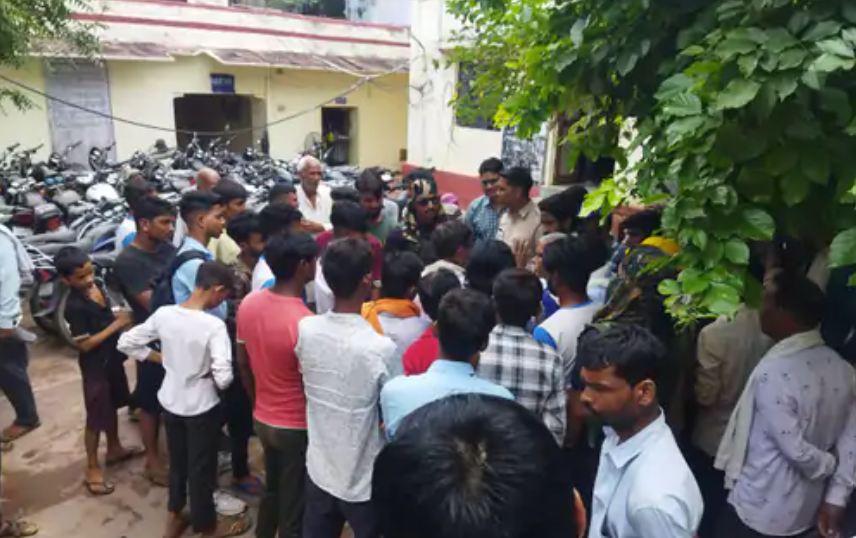
The student went back home and shared his ordeal with his brother and relatives. Infuriated by the discrimination and inhumane treatment meted out by the teacher, the family members along with other villagers barged into the school at around 10 am on Saturday and created a ruckus at the campus, demanding strict action against the accused teacher.

Villagers gathered inside school premises demanding action against the accused teacher (source: Bhaskar)

Seeing the crowd gather at the premises, the school authorities informed the police. The police arrived within no time but before it could intervene, the victim’s family members and villagers caught hold of the accused teacher and thrashed him up in front of the police.

The cops eventually managed to rescue the teacher from the clutches of the angry mob and took him to the police station.

In response, the enraged villagers tried to block the Bayana State Highway. The cops, however, dispersed the crowd. Following this, members of the Bhim Army went to the police station to voice their outrage over the occurrence. The police filed an FIR against the accused and began investigating the case.

Only I was beaten out of the three students who took water: Dalit student tells police

The victim stated, “I arrived at school at 7 a.m. yesterday (Friday). I sat in class after praying. The water van arrived shortly. Some students spilt water while transporting water for the teachers from the van. The school water cooler was completely dry. As a result, two pupils filled water bottles from the cooler reserved for teachers. When I saw them doing that, I also filled my bottle from the staff water cooler. Following this, Sir (Gangaram Gurjar) directed all three of us who drank water from the staff cooler to stand up. The next minute, he instructed the other children to sit and directed a classmate to hit me with a stick. After that, sir also started abusing me and hitting me.

“He only scolded”: Principal of the state-run school in Bharatpur, Rajasthan defends the accused teacher

The school’s principal, Rajkumar Sharma, defended the accused teacher, claiming that the student had deliberately spilt water. As a result, the teacher merely scolded him. The villagers are causing a commotion for no apparent cause, he said, adding that the kins of the student and other villagers came to the school and assaulted the teacher.

He further stated that his school has up to 200 students from kindergarten to the eighth grade.

Meanwhile, the Chief block educational officer (CBEO) Ramlakhan Khatana said that a committee has been formed to investigate the matter. Whatever facts surface in the committee report, action will be taken in accordance with them, he said, adding that the higher officials have been informed about the incident.

Dalit kid in Rajasthan succumbs to injuries after being beaten by teacher for touching drinking water pot

Last year, a nine-year-old Dalit child Indra Meghwal succumbed to his injuries after reportedly being beaten up by a teacher in a private school in the Jalore district of Rajasthan for touching a drinking water pot.

According to a complaint letter handed to the Saila police station by the victim’s father, Devaram Meghwal, Singh beat up Indra on July 20 while taunting him with casteist insults for drinking water from an earthen pot intended for upper caste people. Indra’s father also stated that he suffered damage to his right ear and eye as a result of Singh’s thrashing and eventually became unconscious. The kid was taken to the district hospital, from where he was referred to a hospital in Udaipur.

According to the father, Indra was hospitalised in the hospital in Udaipur for almost a week but his health did not improve. He was subsequently transferred to Ahmedabad, where he died.