Home Blog Page 1838

As pictures of UK PM Rishi Sunak’s visit to Akshardham with his wife go viral, know why Akshata Murthy was not present in one of the photos

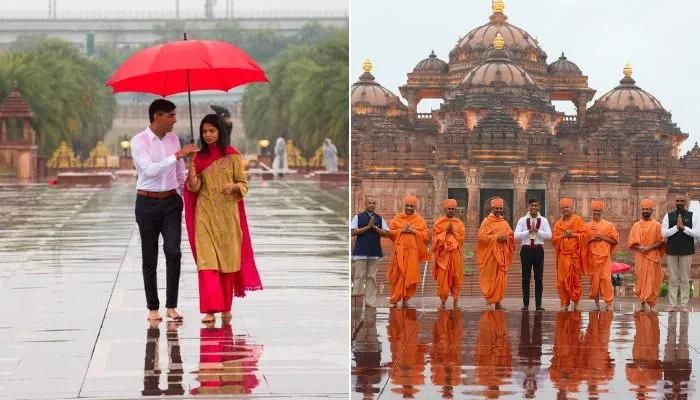
UK Prime Minister Rishi Sunak, who is in India to attend the G-20 Summit, arrived at the Akshardham temple in Delhi on Sunday, September 10, before his other commitments for the day. Sunak was in the temple for about 45 minutes with his wife Akshata Murthy, offered prayers, participated in the aarti and also met saints and seers.

Pictures of Rishi Sunak and Akshata Murthy’s visit to Akshardham have gone viral on social media. In these pictures, the UK PM and his wife can be seen walking around the Akshardham temple complex having darshan and performing aarti.

In most images, Akshata Murthy is seen alongside her husband Rishi Sunak. However, a couple of photographs feature Rishi Sunak without his wife. In one of these pictures, Rishi Sunak is seen standing with folded hands in the company of saints and seers from the BAPS Swaminarayan Sanstha within the premises of the Akshardham temple. In another photo, the saints are seen applying tilak on him. It is worth noting that the management of the Akshardham temple in Delhi is under the purview of the BAPS Swaminarayan Sanstha.

In the images featuring sadhus and saints, only Rishi Sunak appears and Akshata Murthy is not seen. This is due to the adherence to a fundamental rule within the Swaminarayan sect, where initiated saints are required to observe Brahmacharya (celibacy), refraining from any contact with women. This longstanding rule, rooted in the teachings of Sahajanand Swami, the sect’s founder, has been upheld since the sect’s inception and remains in practice even today.

Swaminarayan Sect and Brahmacharya of Sadhus

Swaminarayan Sampradaya was founded by Sahajanand Swami (1781-1830). He asked the saints to observe Nishkam, Nisneh, Niswad, Nirman, and Nirlobh. The first of these five principles is Nishkam, that is, giving up desires. For this, he asked them to follow Ashtanga Brahmacharya. In that, it has been said to give up eight ways of contact with women.

In 1826, Sahajanand Swami authored the ‘Shikshapatri‘, a comprehensive guide that provides teachings on ideal conduct for individuals ranging from common people to kings and monks. It also contains specific rules and guidelines for sadhus within its teachings.

For the Naishtika Brahmacharis, Swami Sahajanand says that such sadhus should not touch or communicate with women and should not knowingly meet or face women. (Shikshapatri – 175) He also asked the sadhus not to talk to women and avoid reciting stories and kirtans of God aimed at addressing women. (Shikshapatri – 176, 179) Apart from this, other things have also been mentioned, such as not touching the clothes worn by a woman and not touching the image or idol of a woman who is not a deity. Nevertheless, it was instructed that in situations of grave danger or emergencies, where the safety and well-being of a woman or one’s own life were at risk, it was permissible to make physical contact or communicate with women to ensure their protection. (Shikshapatri – 182)

Sahajanand Swami also said that these rules should be followed at all times. Sahajanand Swami also said that if there is an order of a Guru asking the sages to break this rule, then it should not be followed. (Shikshapatri – 180)

There are many other rules for the saints of the Swaminarayan sect, such as they cannot go to the house of any householder except for alms, and that too on only two occasions. Further, on these two occasions, they should ask for raw food, cook with their own hands offer ‘Naivedya’ to God and take food.

The saints of the sect stick to this rule of celibacy and that is the reason why they do not come in contact with women. However, no restriction has been imposed on the entry of women anywhere in the temples of the sect. They can go to the temple, and take part in worship or aarti.

Sahajanand Swami is said to have done many things for the upliftment of women during his life. He actively worked against the Sati tradition prevailing at that time and the practice of killing the girl child and made efforts to eradicate these societal evils. Apart from this, he also made active efforts for the education of women and their empowerment in society.
Canada refuses visas to armed forces who served in J&K: Ambassador Vivek Katju reveals one of the issues causing India-Canada relations to nosedive

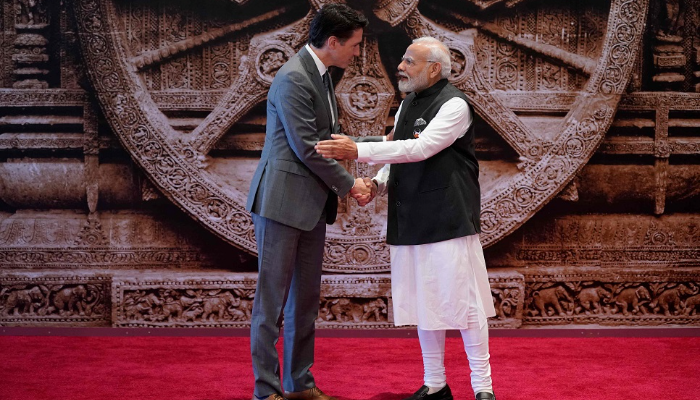
The mega G20 summit in India has been in the news for a lot of right reasons, including Prime Minister Narendra Modi’s camaraderie with world leaders such as US President Joe Biden, UK Prime Minister Rishi Sunak and French President Emmanuel Macron, among others. However, amid the grand success of the multilateral event, the friction between India and Canada has also come to the fore.

Vivek Katju, a retired Indian diplomat who served as ambassador in Afghanistan and Myanmar, revealed a startling detail while discussing the underlying causes of the simmering tensions. He unveiled that Canada not only rejects the visas of Indian security personnel who were posted in Jammu and Kashmir but also asks for the location of their service in their visa applications.

He stated, “Canada regularly denies visas to members of our security forces who have served in Jammu and Kashmir. Canada has also denied visas to members of our services, about which we do not talk about and I don’t wish to talk about, including very senior people who have served in these services. Canada while asking for visa applications demands that these security personnel should inform the Canadians of the places where they have served. That is very often confidential.”

Vivek Katju made the revelations on India Today TV during a debate hosted by Shiv Aroor.

He further conveyed, “Now, I do not know if the government of India has ever objected to it or if it has taken it up. It goes back to the time when I was secretary in the ministry (Ministry of External Affairs) and in charge of the management of relations with Canada. I remember then, and I think it is important for your viewers to know, that they had done so with a member of the Border Security Force (BSF) and I had called the Canadian high commissioner in and said this is unacceptable.”

He mentioned that it has been thirteen years since the incident. “I personally feel that the time has come when the government of India should send out an advisory to all security personnel including retired personnel that they will not respond to such information being sought by the Canadians with regard to visa applications and that we should have a candid chat with them because this is completely unacceptable.”

Journalist Gaurav C Sawant elaborated on the issue and disclosed, “They actually ask for every detail. There’s a separate column in the visa for retired officers whether you are with CRPF (Central Reserve Police Force), BSF, Indian Army, Navy or Air Force.”

He added, “If you have served in Jammu and Kashmir you are supposed to mention the year that you served in Jammu and Kashmir, the area you have served in Jammu and Kashmir and the duty, whether you were a brigade commander or a division commander in Kulgam, in Wussan, in Kangan. All of that you are supposed to mention and India has objected to it.” However, he wasn’t aware if things continued to remain the same or not.

The frigid India-Canada ties

Notably, India and Canada’s relations have taken a hit since the latter has provided a safe haven to pro-Khalistan terrorists and separatist elements. Hindu temples are regularly desecrated and vandalised. Canadian Prime Minister Justin Trudeau has not taken any substantial action against Khalistan supporters in spite of their perilous anti-India activities due to his vote-bank politics.

Recently, Khalistanis vandalised the Shree Mata Bhameshwari Durga Devi Society in Surrey British Columbia. An anti-India graffiti with the slogan “Punjab is not India” was sprayed on the walls of the Hindu temple. Notably, this is the second instance wherein the Khalistanis targeted a Hindu temple in Canada’s Surrey, British Columbia.

They had placed posters which advocated for a referendum pertaining to “the assassination of Hardeep Nijjar” and investigating India’s role in his death at the entrance of the temple in a bid to terrorise the Hindu community. Hindu temples have been regularly under attack by the Sikh separatists in the country.

They have referred to Prime Minister Narendra Modi as a terrorist, stomped on the Indian tricolour with shoes and even brutally thrashed a member of the Indian who was trying to save the national flag during protest rallies against India which alleged that the Indian agencies were behind the killing of Khalistani terrorists and ‘Sikhs For Justice’ leader Hardeep Singh Nijjar.

Khalistanis even threatened the Indian High Commissioner in Canada and incited violence against the consul general of India and the consul general of India in Vancouver. They went as far as to take out a “Kill India” to avenge the death of the Sikh extremist who was eliminated on 18 June.

The Sikh fundamentalists celebrated the assassination of India’s former Prime Minister late Mrs. India Gandhi and displayed a tableau in a Brampton parade in June that showed her wearing a blood-stained white saree with her hands up as turban-clad men pointed guns at her. A poster behind the scene read, “Revenge.”

Justin Trudeau has defended himself and claimed that Canada has always taken ‘serious action’ against terrorism and refuted criticism that his government has been lax on pro-Khalistan activists within the country. However, India has repeatedly slammed Canada for its inaction on the aforementioned occurrences and voiced that room must not be provided to extremist and terrorist elements in the name of freedom of expression.

The Canadian Prime Minister announced that the protestors in Canada did not have the right to block the economy when truckers demonstrated against the ‘undemocratic’ COVID-19 policies of his administration last year including mandatory vaccination for truckers entering Canada through the US-Canada border.

Notably, he tried to intervene in the internal decision-making process of the Indian government in what appeared like an attempt to appease the Khalistani elements in Canada. He and his Ministers expressed ‘concern’ over the protests over farm laws in 2020 which were later rolled back by the centre.

He endorsed the demonstrations and claimed, “Canada will always be ready to defend the right to peaceful protest. We believe in the importance of dialogue and that’s why we reached out to multiple means directly to Indian authorities to highlight our concerns.”

The dubious conduct of the Canadian government has led to the cold ties between the two countries and a breakthrough can only happen if Canada takes the valid grievances of the Indian government seriously and takes appropriate action.

‘Political Holi with human blood’, West Bengal governor describes horrors of post-poll violence in an interview with Indian Express

0

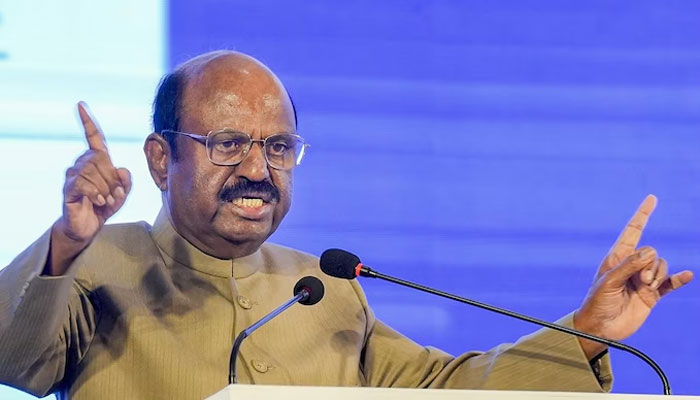
On Sunday, September 10, Indian Express published excerpts from an exclusive interview with the West Bengal Governor CV Ananda Bose. During the interview, Governor Bose described the post-poll violence in Bengal as “political Holi with human blood”.

Governor Bose was asked about his observations on law and order after he visited different parts of the state following poll-related violence and other deaths. Quoting William Shakespeare’s Hamlet, he said, “Murder most foul” in the field. Citing another play by Shakespeare, Julius Caeser, he added, “Then, reason was ‘fled to brutish beasts and men have lost their reason’. That is what I saw. And when I saw those who justify that, I could only think, ‘they are honourable men, all honourable men’.”

Describing the bloodshed as a “political Holi”, he said he has seen political hypocrisy and a “political Holi with human blood” in the field. He pointed out that there are “goon kings” in West Bengal who would take any kind of job including murder, stabbing, hacking, rape and more. “All are there on the menu. You just pick and choose. That is the type of situation that I saw in places where I went,” he added.

Urging people to come together against the atrocities faced during post-poll violence, he said, “There is violence, there is crime, there is intimidation, and there is corruption. People should come together, and civil society and new generations should come together. The silent majority should break their silence.”

As a civil servant, Governor Bose said that he felt shocked to see the soft state against those who indulged in violence. He said, “Law is there, rule is there, machinery is there, but we are tardy in implementation.”

Governor said that he saw IAS and IPS officers defying the tenets of bureaucracy. “Some of the IPS and IAS, not all of them, have failed in their duties. He added that they are partisan and cannot instil confidence in the common man,” he added.

Governor Ananda’s visit to post-poll violence-hit areas after Panchayat polls

In July 2023, Governor Ananda assured strict action against the lawbreakers after the Panchayat polls in the state. He said, “There will be a relentless fight against growing violence in Bengal. Those who commit violence in the field will be made to curse the day they are born. All authorities will come down with a heavy hand on the goons and lawbreakers.”

“We will certainly take stern action against the control room lords who sit in political control rooms and guide or remote control the goons on the field. It will be an all-out action. There will certainly be very stern action because this violence is affecting the future of the new generation…we will make Bengal a safer place for the new generation to live in,” he added.

Bengal has a long history of political violence during elections. In 2021, the state saw the same against the BJP workers and leaders after the assembly elections.

Russia heaps praise on Bharat’s G20 Presidency, calls it a “milestone” for not letting the West to ‘Ukrainise’ the agenda

Bharat’s G20 Presidency has proved to be a stellar success with all G-20 summit participants unanimously accepting the ‘New Delhi Declaration’. Contrary to the reports, India successfully navigated the differences between the Western bloc and Russia over the Ukraine crisis.   

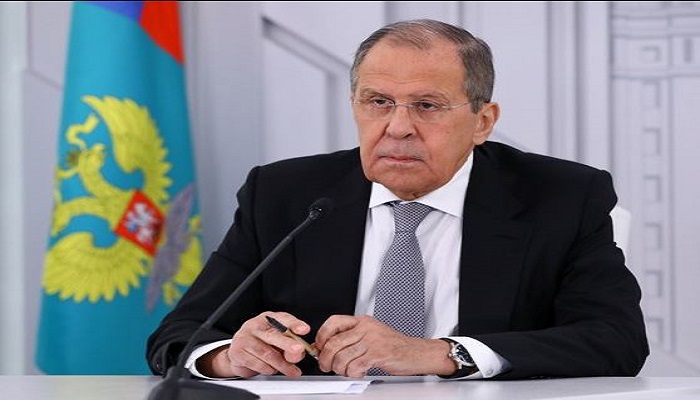
After the culmination of the ongoing proceedings under Bharat’s G20 Presidency, the Russian Foreign Minister expressed his gratitude to Bharat for preventing attempts to politicise the G20 and not letting Ukraine issue high-jack the agenda. 

Russian Foreign Minister Sergey Lavrov elatedly hailed Bharat’s G20 Presidency as a milestone and claimed that it is a star that would guide everyone in times to come. He also lauded India’s presidency for actively involving countries of the Global South. 

He also claimed that it was for the first time in the history of the G20 Summit, that a President of the Summit genuinely consolidated all the members of this important grouping.  

Hailing Bharat’s Presidency, he said, “This Summit has been a milestone from the point of view of giving a clear guiding star for us to follow. Another thing that I would like to mention is the active role of the Indian presidency that has genuinely consolidated the G 20 Members probably for the first time in its history. I mean the G 20 countries from the Global South, our BRICS partners – Brazil, India, China, and South Africa have been particularly active.”

He added that by consolidating the positions of countries from the Global South, Bharat upheld and protected their legitimate interest and didn’t let the Western bloc “Ukrainise” the Summit.  

He further stated, “Thanks to these consolidated positions taken by the global south countries to uphold and protect their legitimate interests have caused the West to be unable to Ukrainise the agenda to the detriment of the discussion of the tasks facing developing countries.”

Going ahead, the Russian Minister also praised the New Delhi Declaration. He highlighted that though the declaration has mentioned the Ukraine-Russia war,  Bharat has found a healthy solution and struck an equitable balance of interest.  

Regarding the Summit declaration, Lavrov said, “I think that a healthy solution has been found in the declaration regarding the need to strive for a clear and equitable balance of interest. It is one of the decent purposes and we are already on track.”

He extended support to upcoming Presidents of the G20 Summit – Brazil 2024 and South Africa 2025. Russian Minister noted that during the closing session, PM Modi announced that he would convene another G20 Summit via video conferencing in late November. 

He claimed that the virtual summit would be an opportunity for them to review the implementation of the agreements that were arrived at during the Summit proceedings. 

On the issue of climate change, Russian Foreign Minister Sergey Lavrov lambasted the West for not acting true to their words and not clearing financial assistance to fight climate change. 

He said, “The West also had long ago promised even 100 billion US dollars per year to prepare economists to counter the negative consequences of climate change, but nothing on that has been done.” 

India to gain significantly from the India – Middle East – Europe Economic Corridor announced at the G20 Summit: Read details

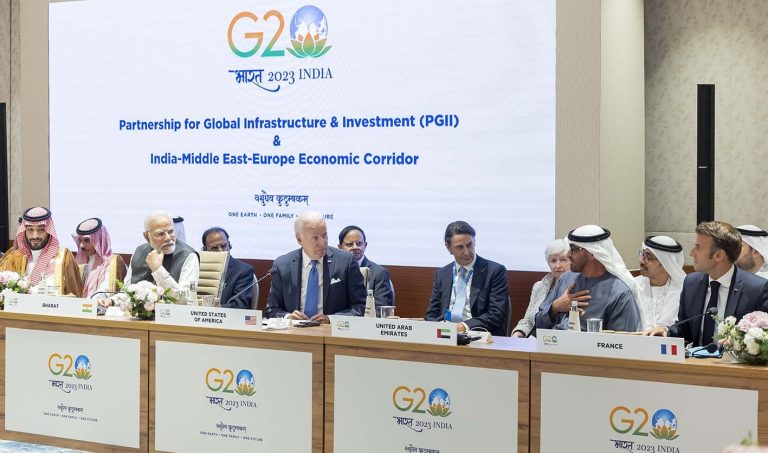
On Saturday, 9th September 2023, a groundbreaking agreement was unveiled during the ongoing G20 Summit in Delhi, announcing a rail and shipping corridor from India to Europe via the middle east. Named the ‘India-Middle East-Europe Shipping and Railway Connectivity Corridor,’ the announcement was made by Prime Minister Narendra Modi alongside top global leaders. US President Joe Biden lauded this significant project as ‘a real big deal’.

This ambitious project of a rail-shipping corridor aims to establish India as a significant global hub for international business and commerce by linking India, the Middle East, and the EU. The memorandum of understanding was signed by various countries considering the importance, utility, and grandeur of the project.

Multiple countries signed the MoU

India, the United States, the United Arab Emirates, Saudi Arabia, France, Germany, Italy, and the European Union Commission have jointly signed a Memorandum of Understanding (MoU) to establish the India-Middle East-Europe Economic Corridor (IMEE EC). This initiative aims to foster economic development by bolstering connectivity and economic integration across Asia, the Middle East, and Europe.

The IMEE EC will comprise two distinct shipping corridors: the East Corridor linking India to West Asia/Middle East and the Northern Corridor connecting West Asia/Middle East to Europe. The two shipping corridors will be linked by a railway track in the Middle East, covering UAE, Saudi Arabia, Jordan and Israel.

This comprehensive project, upon full implementation, will establish a dependable and cost-efficient cross-border ship-to-rail transit system. It will complement existing multi-modal transportation routes, facilitating the seamless transhipment of goods and services from Southeast Asia through India to West Asia/Middle East and Europe.

While no official announcement has been made on the detailed route, it is understood that India will be connected with the UAE through a shipping route. From UAE, the rail connectivity will start, going through Saudi Arabia, Jordan and Israel, terminating at the Haifa port. From that Haifa port, it will be again a shipping route towards Italy, from which it will enter Europe. The project will use existing routes and build new networks where needed, like linking Saudi with Israel through Jordan.

It is notable that the Haifa port in Israel was acquired by the Adani group of India along with the Israeli company Gadot in July 2022. Haifa is one of the largest seaports in Israel. Moreover, during his recent Italy visit, PM Narendra Modi held discussions with the Italian govt over the use of the Piraeus port for international trade with EU countries.

Other salient features of the MoU

The Memorandum of Understanding (MoU) paves the way for promoting trade and economic collaboration among the signatory nations. It encompasses various domains, including connectivity, logistics and freight infrastructure, clean energy and hydrogen production, and energy transmission infrastructure. The MoU is expected to catalyze the growth of infrastructure within the logistics and transportation sector, bolstering India’s self-reliance and aligning with key initiatives such as Make in India, Sagarmala, and Atmanirbhar Bharat.

It says, “Along the railway route, Participants intend to enable the laying of cable for electricity and digital connectivity, as well as a pipeline for clean hydrogen export. This corridor will secure regional supply chains, increase trade accessibility, improve trade facilitation, and support an increased emphasis on environmental social, and government impacts. Participants intend that the corridor will increase efficiencies, reduce costs, enhance economic unity, generate jobs, and lower greenhouse gas emissions – – resulting in a transformative integration of Asia, Europe and the Middle East.”

Peaceful cooperation

In the past few decades, international collaboration in infrastructure ventures, particularly those related to logistics, transportation, energy transmission, freight, and connectivity, has emerged as a significant means of projecting national power and influence globally and regionally. At times, these vectors serve as instruments to establish a strategic foothold in the region, shape the geopolitical discourse, and potentially disrupt peace and stability with a negative impact on the countries involved.

An illustrative example is China’s Belt and Road Initiative, which ensnared countries like Pakistan and Sri Lanka, resulting in financial distress and dependency on China. India took the initiative to assist Sri Lanka in its recovery efforts, while Pakistan is still grappling with internal instability. In this context, India’s collaboration with the Middle East, EU, and USA to develop this corridor signifies its commitment to peaceful cooperation that benefits all stakeholders involved.

Connectivity and financial stability

Fostering connectivity with nations, whether in close proximity or afar, has long been a fundamental focus for India, rooted in its rich civilisational heritage. India has consistently emphasised investment, cooperation, and the establishment of connectivity as integral elements of its vision of “One Earth, One Family, One Future.”

As India extends connectivity, it also guarantees that such initiatives adhere to principles of consultation, transparency, and inclusivity while respecting the sovereignty and territorial integrity of all nations participating in the combined projects. India’s initiatives also essentially uphold principles of financial responsibility and economic sustainability to prevent the accumulation of unsustainable debt by collaborating countries, all while complying with ecological and environmental standards.

Takeaways to India from the participation in the multinational project

India has actively collaborated with numerous countries across the mentioned regions in development cooperation, particularly in infrastructure development projects. The aim is to participate in projects related to regional infrastructure connectivity, serving as emblematic examples of an alternative approach. This strategy solidifies India’s partnerships with significant regional and global stakeholders while opening up fresh prospects for our industries and businesses to integrate into international trade and logistics networks.

Keeping the aforementioned considerations in focus, the parties to the Memorandum of Understanding (MoU) have initiated discussions aimed at cooperating in the establishment of a multi-modal transport corridor. This corridor is designed to connect the economies of Southeast Asia to Europe, with India, the Gulf, and the Middle East serving as pivotal transit points.

The importance of India’s participation in IMEE EC lies in India’s expertise in operating complex networks in challenging situations. Laying down railway tracks across the desert in the gulf and the other difficult terrains is where India will be at the forefront.

India is situated in a position of crucial geographical advantage

The ‘India-Middle East-Europe Shipping and Railway Connectivity Corridor’ (IMEE EC) holds immense promise for India, firmly positioning it along the trade route spanning South East Asia to the Gulf, West Asia, and Europe. This strategic placement offers India substantial advantages, both strategically and economically, and opens up substantial opportunities within the logistics and transportation sector. Furthermore, it offers a more efficient and cost-effective transit option, bolstering India’s trade and export activities.

This corridor can be developed with a focus on sustainability, aligning with India’s green transition goals, elevating the nation’s regional prominence, and enabling Indian enterprises to participate equitably in infrastructure development. Additionally, the corridor promises to secure supply chains, generate employment opportunities, and enhance trade facilitation and accessibility.

What next?

According to the MoU, the participant countries are expected to meet again on this issue within the next two months and deliberate over the next steps of developing this ‘India-Middle East-Europe Economic Corridor’ (IMEE EC). The MoU said, “It sets forth political commitments of the Participants and does not create rights or obligations under international law. The Participants intend to meet within the next sixty days to develop and commit to an action plan with relevant timetables.”

G20 summit: PM Modi launches Global Biofuels Alliance along with US, Brazil and 6 other nations. Here is what you need to know

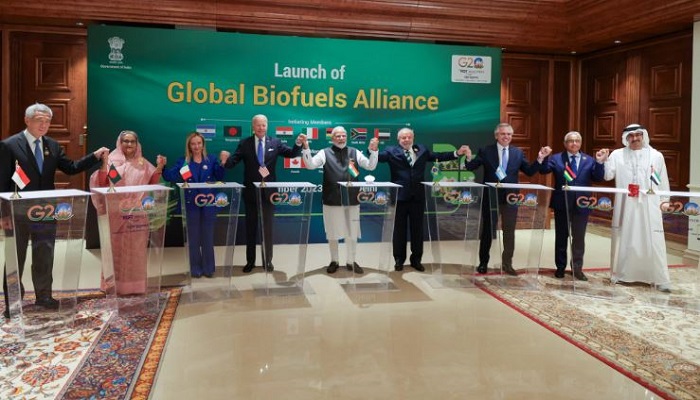
In a major advancement towards clean energy, Prime Minister of Bharat Narendra Modi along with 8 heads of state launched the Global Biofuels Alliance (GBA) on Saturday (September 9).

Notably, the GBA is an initiative by Bharat as the G20 Chair. Along with Bharat, Brazil and the United States are the other founding members of the alliance. Remarkably, the three founding members of GBA – Bharat, the US, and Brazil have a combined contribution of about 85% in global production and 81% in consumption of ethanol (a widely used biofuel).

Apart from founding members – Bharat, Brazil, and the US, other G20 members supporting the initiative are Argentina, Canada, Italy, and South Africa. Whereas, Bangladesh, Singapore, Mauritius, and the UAE are the G20 invitee countries who have extended their support to the newly formed alliance.

After the launch event, taking to X, PM Modi hailed the launch of the Global Biofuels Alliance as a watershed moment one which takes the world towards sustainability and clean energy. 

US President Joe Biden, Brazilian President Lula da Silva, and other leaders also hailed the partnership.

The aim of the ‘Global Biofuels Alliance’ is to accelerate the global use of biofuels by facilitating technology advancements, technology transfer, and intensifying the utilisation of sustainable biofuels.

GBA’s goal is to be a driving force that encourages collaboration worldwide to advance and make biofuels more widely adopted including in the transport sector.

The support for the alliance is growing rapidly

Significantly, the alliance has garnered great strength right from its launch as around 19 countries and 12 international organisations have already agreed to join the alliance. These include both G20 members and non-member countries. 

The non-G20 countries reportedly interested in joining the alliance are Iceland, Kenya, Guyana, Paraguay, Seychelles, Sri Lanka, Uganda, and Finland.

Additionally, the interested international and multilateral organisations include the World Bank, Asian Development Bank, World Economic Forum, World LPG Organisation, UN-Energy for All, UNIDO, Biofutures Platform, International Civil Aviation Organization (ICAO), International Energy Agency (IEA), International Energy Forum, International Renewable Energy Agency, and World Biogas Association.

However, China and oil producers Saudi Arabia and Russia are not a part of this alliance. Apart from the environmental aspect, the alliance would help member countries in economic terms as well. Evidently, according to the Indian Biogas Association (IBA), the Biofuels Alliance can generate opportunities worth USD 500 billion in the next three years for G20 countries. 

As per official data, the global ethanol market (widely used biofuel) was valued at $99.06 billion in 2022. Now, it is predicted to grow at a Compound Annual Growth Rate (CAGR) of 5.1% by 2032 and surpass $162.12 billion by 2032. In the context of Bharat, the CAGR has been approximately 22 percent over the last six years.

Biofuels as a Cleaner Renewable Energy Source

Biofuels are liquid fuels that are produced from renewable biological sources, including plants and algae. Simply put, any fuel that is produced from agricultural produce or organic waste is a biofuel. 

Unlike other sources of renewable energy (Solar or wind), Biofuels can be helpful in replacing liquid fuels such as jet fuel, gasoline, and diesel fuel which are critical to our transportation needs. That is why, in comparison to fossil fuels, biofuels have the added advantage that they contribute little to no emissions. 

Currently, governments are encouraging companies to blend more biofuels (mostly ethanol) in fossil fuels to bring down emissions, without impacting efficiency. 

In the context of Bharat, the government is working on an E20 blending programme – that is 20% Ethanol is blended in petrol to bring down emissions and the oil import bill.   

Remarkably, it is expected that not just the composition of biofuels can be increased in blended fuels, it could potentially replace fossil fuels as it has the potential to deliver cleaner energy than some other sources.

With improvement in Biofuels, the energy is getting cleaner

Now, Biofuels are classified by their source, and grouped into different ‘generations.’ First-generation biofuels come from food crops such as corn and sugar cane, second-generation biofuels originate from inedible vegetation and agricultural waste, and third-generation biofuels are derived from algae. 

The most common biofuels include ethanol, biodiesel, and biogas. They can be produced from any of these sources and are hence categorised according to their origin. For instance, ethanol made from corn grown on farms is considered first-generation ethanol.

At present, researchers in the field of bioenergy are working on the development of next-generation advanced biofuels and bioproducts. 

They are developing sources of biofuel raw material (called feedstocks) that are sustainable and environmentally friendly. For example, switchgrass and poplar are fast-growing, non-food species that may be ideal feedstocks. 

Additionally, they are working to improve genes in plants to make their breakdown process into biofuels and other bioproducts easier. 

For this, they have been working on to design enzymes and microbes (such as yeast) tailored to break down plant material into sugars and the substances that give plants their structure. 

The strength of the Global Biofuels Alliance (GBA) stems from the fact that biofuels are considered a clean source of renewable energy as compared to other sources and are only making advancements in this direction. 

Apart from helping the environment by reducing harmful emissions, biofuels can boost the economy as they greatly help the local farming community. 

Apparently, ethanol plays a big role in sustainable energy creation which is a byproduct of sugar cane. With this new Global Biofuels Alliance, farmers will be encouraged to produce more sugar cane and it will inevitably boost agriculture in the participating countries including India. 

300 meetings, 200 hours of negotiations, 4 diplomats and 15 drafts – What happened behind the scenes of Consensus on Ukraine at G20

0

On September 9, the leaders at the G20 Summit adopted the New Delhi Declaration in which India avoided blaming anyone for the Russia-Ukraine war. In the Declaration, only a general call to all states to follow the principle of respecting territorial integrity and sovereignty was mentioned in terms of Ukraine.

The consensus on the paragraphs related to Ukraine was the result of a series of hectic negotiations, with Brazil, South Africa and Indonesia playing the leading roles and standing by India’s stand on the matter.

200 hours of negotiations

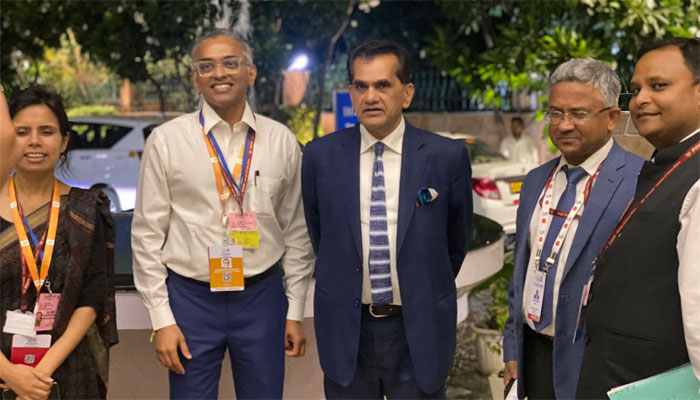
Speaking to the media, India’s G20 Sherpa Amitabh Kant said that it took over 200 hours of non-stop negotiations to bring all participating countries to a consensus on the G20 declaration. Kant’s team of diplomats, including Eanam Gambhir and K Nagraj Naidu, held 300 bilateral meetings. Around 15 drafts were circulated by the team with their counterparts on the Ukraine matter.

In a post on X (formerly Twitter), Kant said, “The most complex part of the entire G20 was to bring consensus on the geopolitical paras (Russia-Ukraine). This was done over 200 hours of non-stop negotiations, 300 bilateral meetings, 15 drafts.”

Notably, the G20 is divided over the Russia-Ukraine war. The Western countries pushed for strong condemnation of Russia in the Leaders’ Declaration. However, other participants were more focused on broader economic matters.

The Declaration read, “We call on all states to uphold the principles of international law, including territorial integrity and sovereignty, international humanitarian law, and the multilateral system that safeguards peace and stability.” It added, “We… welcome all relevant and constructive initiatives supporting a comprehensive, just, and durable peace in Ukraine… The use or threat of use of nuclear weapons is inadmissible.”

The diplomats who played a key role in developing the text of the Declaration

Four Indian Foreign Services diplomats who were part of India’s G20 Sherpa Amitabh Kant’s team played a vital role in developing the Declaration’s text that reached the final stage after months of work.

Abhay Thakur

Abhay Thakur is the additional secretary in the Ministry of External Affairs. He is the G20 deputy or Sous Sherpa to Amitabh Kant. He has served as India’s envoy to Nigeria and Mauritius and reportedly handled matters related to Bhutan and Nepal.

K Nagraj Naidu

K Nagraj Naidu is the joint secretary and one of the lead negotiators on the Ukraine matter in the Declaration. He has served as Chef de Cabinet to the President of the 76th Session of the United Nations General Assembly, Abdulla Shahid.

Eenam Gambhir

Eenam Gambhir is the joint secretary of G20 and the lone woman on Kant’s team. She has served as the First Secretary of the Indian Mission to the UN. Gambhir made headlines in September 2016 after she delivered India’s Right of Reply to Pakistan Prime Minister Nawaz Sharif’s UN General Assembly address.

At the time, she said, “The world has not yet forgotten that the trail of that cowardly attack led all the way to Abbottabad in Pakistan. The land of Taxila, one of the greatest learning centres of ancient times, is now host to the Ivy League of terrorism. It attracts aspirants and apprentices from all over the world. The effect of its toxic curriculum is felt across the globe.”

She consistently placed India’s remarks in the US throughout her tenure under then-MEA late Sushma Swaraj.

Ashish Sinha

Ashish has served in Madrid, Kathmandu, New York and Nairobi. He has reportedly been a key diplomat for over seven years in multilateral settings.

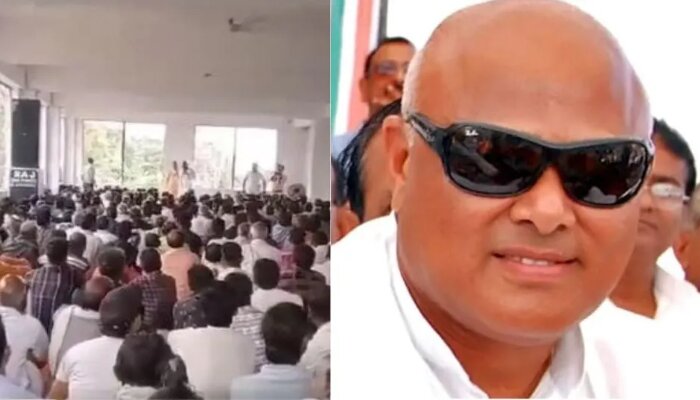
Young wives who have old husbands sleep with other men: Madhya Pradesh Congress MLA KP Singh’s shameful remarks on women

A video of six-time Congress MLA KP Singh ‘Kakkaju’ from the Pichhore seat of Shivpuri district in Madhya Pradesh is making the rounds on social media in which he passed an extremely controversial statement about women. He made offensive comments regarding the young wives of old spouses in this widely shared footage.

He claimed that such females have illicit relationships and other men warm their beds at night. Their husbands can’t satisfy them sexually and things get beyond their control, he claimed. The clip is reportedly of a public meeting in Pichhore assembly constituency.

The lawmaker alleged, “I have observed many individuals who marry in their old age. At first, they feel pleased that a wife has come into the house, but then she feels that her husband is good for nothing.” He further added that other men start coming to their homes and the elderly husband thinks, “Because I am old and have no control over myself, I am neither able to stop my wife nor say anything.”

Bharatiya Janata Party’s Madhya Pradesh spokesperson took to X (formerly known as Twitter) and wrote, “Pichhore Congress MLA KP Singh is abusing women and using such language in public. It shows the poor mentality of Congress. This thinking of Congress leaders is reflected in incidents like Bhanwari Devi, Sarla Mishra, the Bobby murder case and the Tandoor incident.”

Notably, the video is believed to be two to three days old. According to some accounts, KP Singh frequently makes similar statements which become viral on social media.

Now, the Congress leader has released a clip and provided his explanation on the matter after it gained traction on social media. He argued that his statement is being distorted on online platforms and that his opposition’s supporters are misusing it. He voiced, “My request to everyone is that I have neither made nor have any intention of uttering any such statement. I respect all women and if anyone has been hurt by my comment, I apologise.”

PM Modi hands over G20 presidency gavel to Brazil President Lula da Silva

0

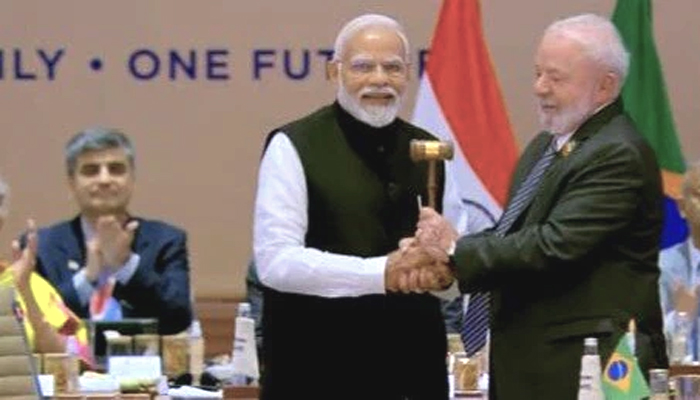
On Sunday, September 10, India formally handed over the G20 presidency to Brazil. The transfer of presidency took place at the closing ceremony of the annual summit of the G20 leaders in New Delhi. Prime Minister Narendra Modi completed the transition by handing the gavel to the President of Brazil, Luiz Inacio Lula da Silva.

In his statement, PM Modi said, “I give my best wishes to Brazil’s President and my friend Luiz Inácio Lula da Silva and hand over the presidency gavel to him.”

President Lula said, “I congratulate PM Modi for efficiently leading the G20 bloc and for excellent work in this summit.”

Earlier Indonesian President Joko Widodo and Luiz Inacio Lula da Silva handed over saplings to Prime Minister Narendra Modi ahead of Session 3 of the G20 Summit.

While Indonesia held the G20 presidency last year, Brazil will hold the presidency after India. India took over the G20 presidency on December 1 last year at the G20 Summit at Bali in Indonesia and will continue to hold it till the end of November.

The New Delhi Declaration was adopted by G20 leaders on Saturday, the first day of the Summit. The G20 leaders visited Rajghat on Sunday morning to pay tributes to Mahatma Gandhi.

(with inputs from ANI)

Rajasthan: Woman found naked on the road in Bhilwara says she was gang-raped, police claim she was with the men willingly but ran away over disputes

0

On Saturday night, September 9, 2023, a woman was found naked on a road in Bhilwara, Rajasthan, who had claimed that she was gang-raped by three men. She had said that the three individuals had fled taking away her clothes after gang-raping her. The woman, when later seen on the street, crying for help, received no assistance as bystanders assumed she was mentally disturbed. A passerby eventually took notice of her distress and contacted the police. Upon receiving this alert, law enforcement officers arrived at the scene and rescued the woman.

However, now the police are saying that the entire incident was false, and she was not gang-raped but had consensual sex with two other men. She allegedly ran away after they wanted to keep her for the entire night, but she didn’t want to stay any longer.

The incident occurred within the jurisdiction of the Gangapur police station in the Bhilwara district. After being rescued by the police, the woman said that on the night of 9th September 2023, after having her meal, she had set out for a walk. However, during her stroll, she was forcibly abducted by three young men who forced her into a jeep. Subsequently, the culprits subjected her to a harrowing gang rape. After committing this heinous act, the three accused left the woman unclothed.

Gangapur CO Labhuram Bishnoi had said, “On Saturday night, a villager informed that a woman was found naked, 6-7 km from Gangapur. She has been gang-raped. On receiving this information, the police reached the spot, took the woman to Gangapur Hospital and got her medically examined. A team has been formed against the unidentified accused. The matter is serious, strict action will be taken.”

According to reports, the location of the incident is a mere 100 steps from the CO office. The men took the woman to the desolate area known as Jampura Square, situated on the hilly terrain of Amli Road, approximately 8 kilometres away from Gangapur. It was at this remote spot that the woman allegedly fell victim to a horrifying gang rape. After this, the assailants allegedly stripped her of all her clothing and left her stranded at the scene, entirely unclothed.

The woman somehow reached the street, catching the attention of a passing motorcyclist. She told him that she had been gang-raped and asked for help, after which the passerby contacted the Gangapur police and provided them with the necessary information. The police arrived at the scene at approximately 10 p.m. Reports say that the police covered the victim’s body first with the seat cover of their patrol vehicle and then with a plastic banner.

Subsequently, the police transported her to the police station. At the station, arrangements were made to provide the woman with clothing. Following this, she was taken to the DSP office for further inquiry. The victim woman was later taken to Gangapur Hospital for a medical examination.

After this incident, Gangapur CO Labhuram Bishnoi and police station in-charge Narendra Jain along with the police team reached the spot. The police also recovered the victim’s broken bangles and a youth’s undergarment from the spot. The police searched for the suspected youths in the town and nearby areas till late at night. The police have also detained three suspected youths. Additional Superintendent of Police Vimal Singh Nehra from Bhilwara, who is currently in charge of Bhilwara SP, also reached Gangapur.

The incident caused tension in the area. On getting the information, a crowd of people gathered. A large number of people gathered outside the deputy superintendent of police’s office late Saturday night to protest against the incident in Gangapur town and demanded justice.

gang rape
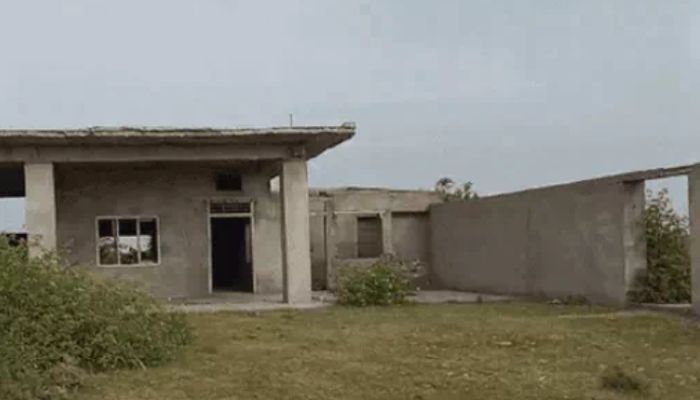
The incident took place at this ruined house in Gangapur. Image Source: Dainik Bhaskar

Police probe finds the woman was with the men

However, later the police claimed that the entire matter was false and the woman was with the men who gang-raped her. According to police, they found a voice recording on the phone of the victim found at the spot, which allegedly exposed the case.

The police have said that the 25-year-old woman is from Odisha and she was married to a 50-year-old disabled man through a broker 6 years ago. As per phone records, she talked to one Chhotu Sargara, a resident of Amli Gangapur, from 7 to 7.51 PM. Chhotu Sargara told her that he was Girdhari’s friend, and Girdhari wanted to meet her. Girdhari is a former acquaintance of the woman. Discussions on money were held during this call.

The woman agreed to meet them accordingly, and she came out of the house after having dinner on the pretext of a walk. Chhotu and Girdhari were waiting at a distance, and they brought her towards on the Amli road on a two-wheeler. The two men were allegedly drunk.

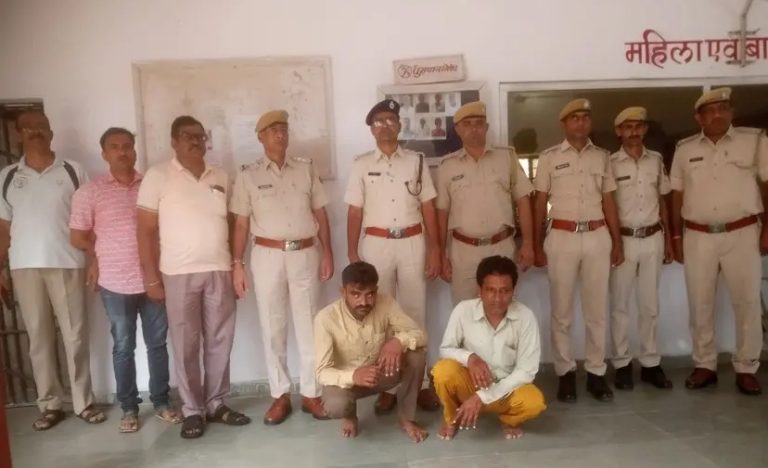
According to the police, all three went to the ruins of a building near the Amli road and had sex with her one by one. However, when the two men insisted on keeping her for the whole night, she disagreed and wanted to go home. There were also disputes regarding money. This led to an argument between them, and the accused took her clothes and refused to give them to her. As a result, she got scared and ran naked towards the road. A passerby spotted her, covered her with a shawl, and called the police.

Police said that the woman gave wrong facts in the beginning due to the fear of her husband, as she feared that he would leave her if he knew the fact. Both the men, Chhotu Sargara and Girdhari, who had fled from the spot have been detained by the police. Even if rape charges are dropped after the revelations, they could be booked under other charges for trying to forcefully keep her against her will and taking away her clothes.

While this case may turn out to be a false case, women’s safety has been a matter of concern in recent times in Rajasthan. Many cases of heinous crimes against women were reported in the state. On 21st July 2023, Rajasthan’s Rural Development Minister, Rajendra Singh Gudha also raised the question of women’s safety in the state, however, he was sacked by the Congress government after he raised this issue in the state assembly.