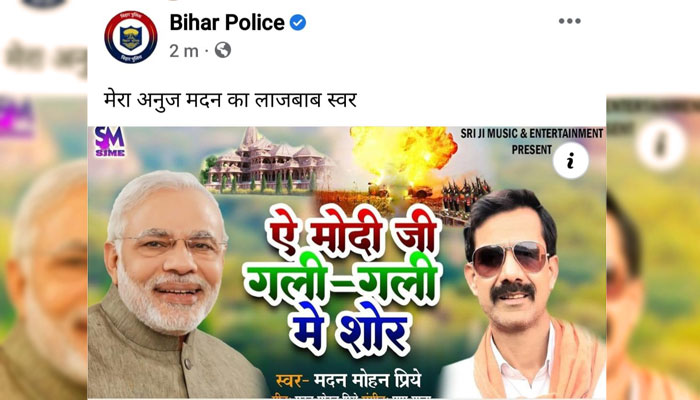
On April 23, Bihar Police inadvertently shared a song praising Prime Minister Narendra Modi on its official Facebook Page. The shared song was titled ‘Ae Modi Ji Gali Gali Mein Shor”, sung by Madan Mohan Priye. Sriji Music and Entertainment produced it. The post was written, “Beautiful voice of my younger brother Madan”.
Soon after Bihar Police realised that the song got shared accidentally from the official page, the post was deleted. However, the damage was already done. Bharatiya Janata Party Bihar did not leave the chance to have a little fun on social media. They added a screenshot of the post on Twitter and said, “Bihar Police is ‘Jabra fan’ of Modi Ji. Bihar Police is also waiting for the BJP government in Bihar.”
RJD was not pleased with the development. Alok Chikku, social media in-charge of RJD, wrote, “A song praising a leader of one party is being shared from the official page of Bihar Police. The Bihar government should investigate the matter. This Sanghi person will cause a lot of damage in the future. Stop Bihar Police from becoming Sangh Police.”
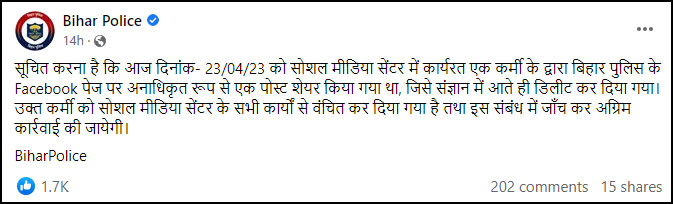
However, soon after Bihar Police acknowledged the ‘error’ and said how it was deleted immediately. Bihar Police has also said they have initiated investigation.
Bihar Police acknowledged the error. Source: Facebook
They said, “It is being informed that on April 23, 2023, an employee at the Social Media Centre of Bihar Police shared a post without permission. The post was deleted once it was brought to the notice. The employee has been removed from his post, and the matter is being investigated.”
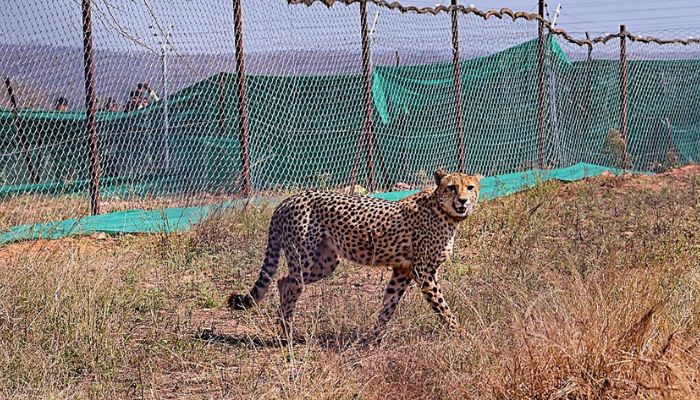
On 23rd April 2023, another cheetah that was brought from South Africa died in the Kuno national park in Madhya Pradesh. The deceased cheetah was named ‘Uday’. The cheetah was ill and died during treatment. The reason for death is not yet ascertained.
Madhya Pradesh Chief Conservator of Forest, JS Chauhan said, “Another cheetah, Uday, who was brought from South Africa, has died during treatment after he was found sick at Kuno National Park. Reason for death is yet to be ascertained.”
A press note published by the forest authorities said, “On 23rd April 2023, the team monitoring cheetah on a daily basis, found the male cheetah Uday sitting in a lethargic state with his head bowed down at around 9.00 am. On getting close to the cheetah, the cheetah was found to be walking with its neck bent. During the last morning and evening surveillance done every day according to the protocol, the cheetah was found to be healthy the day before. The condition of the cheetah Uday was immediately reported by wireless to wildlife doctors monitoring the cheetah. On receiving the information, the wildlife doctor team immediately went to the spot and inspected the cheetah Uday and found it prima facie sick. All the wildlife doctors present on the spot and cheetah experts of Cheetah Conservation Fund felt the need to tranquilise it for immediate treatment considering the condition of the cheetah, which was immediately informed by the wildlife doctor to the Chief Conservator at around 9.45 am through telephone.”
Madhya Pradesh | Another Cheetah, Uday, who was brought from South Africa, has died during treatment after falling ill at Kuno National Park. Reason for death is yet to be ascertained: MP Chief Conservator of Forest JS Chauhan pic.twitter.com/2IHPMCji2L
The press note further said, “The Chief Conservator of Forests immediately informed the Principal Chief Conservator of Forest Wildlife about the situation. Permission was obtained to conduct tranquillisation. At around 11 am, Cheetah Uday was given anaesthesia and given treatment on the spot. Considering the health of the cheetah, it was kept in the isolation ward for further treatment and continuous monitoring. During treatment, Cheetah Uday died at around 4 pm. The cause of death will be clear only after the autopsy report by a team of wildlife doctors.”
On February 18, 2023, Uday and 11 other cheetahs were transferred from South Africa to Kuno. On February 18, this year, Uday and 11 other cheetahs were transferred from South Africa to Kuno. The Kuno National Park has lost a second cheetah this year. Twenty cheetahs from Namibia and South Africa were brought in. Sasha, one of the eight Namibian cheetahs introduced to Kuno National Park last year, died in March. Sasha was already suffering from a kidney ailment at the time it was brought to Kuno national park. Besides these cheetahs brought from African countries, on 29th March 2023, Siyaya – a female cheetah translocated from Namibia to India last year gave birth to four cubs in Kuno National Park in Madhya Pradesh.
On Friday, April 21, 2023, the Bhavnagar police arrested Aam Aadmi Party leader Yuvrajsinh Jadeja in connection with the Rs 1 crore extortion case. A case was registered against Yuvrajsinh Jadeja and his accomplices under sections 386 (extortion), 388 (extortion by threatening to accuse someone of a punishable offence) and 120B (criminal conspiracy) of the IPC.
Yuvrajsinh Jadeja is known as a ‘whistle-blower’, as he has been exposing irregularities in competitive entrance and recruitment exams. But now it has been revealed that he was using his knowledge about such irregularities to extort money. He is accused of extorting money from those involved in a dummy exam candidate scam by not revealing their names when he exposed the scam. According to police, the AAP leader and his associates collected over ₹1 crore from two persons named Pradip Baraiya and Prakash Karshanbhai (PK) Dave, who are accused of supplying dummy candidates for entrance and recruitment examinations.
When police arrested four persons including Pradip Baraiya and Prakash Dave for the dummy candidate scam, they alleged that Yuvrajsinh Jadeja blackmailed them with Rs 1 crore in exchange for not revealing their names when he exposed the scam in a press conference. Later Yuvrajsinh Jadeja’s aide Bipin Trivedi confirmed the allegations. It is alleged that Jadeja had made videos of dummy candidates and gathered other evidence, contacted the perpetrators of the scam to demand money in exchange for not revealing their names, and accordingly collected money and protected them. Jadeja had collected Rs 45 lakh from Prakash Dave and Rs 55 lakh from Pradeep Baraiya.
Police said that when Yuvrajsinh Jadeja was questioned about the allegations against him, he did not give a satisfactory answer and gave evasive answers. But looking at the evidence put up by the police, it can be said that this arrest was made not only on the basis of the allegations made by Bipin Trivedi and others but on the basis of solid evidence.
On April 21, Yuvrajsinh Jadeja was arrested by the Bhavnagar police as he was unable to give satisfactory answers in the eight-hour interrogation. On Saturday, Bhavnagar police produced him before the additional chief court in Bhavnagar. In this case, the police had sought 14 days remand, against which the court has granted 7 days remand. Thus, Yuvrajsinh Jadeja will now be on remand till the 29th. On Saturday, Yuvrajsinh Jadeja was questioned again in the Rs 1 crore extortion case, after which the Inspector General of the Bhavnagar Range Gautam Parmar again held a press conference and made some more revelations.
‘I don’t have evidence against those whom I have levelled allegations’: Yuvrajsinh Jadeja
The Inspector General of the Bhavnagar Range Gautam Parmar said, “When we asked Yuvrajsinh Jadeja if there was any evidence in the case where he has accused some political leaders yesterday, he clearly said, in my presence, that he does not have any such evidence.”
According to the IG, on further questioning, Yuvrajsinh Jadeja said, “I gave these names at the behest of some people. Because I suspected my arrest.” When asked about the other recruitment process in which the scam has taken place, Jadeja reportedly said, “I’ll let you know in due course of time.”
The IG further informed, “Two other accused have also been detained today. Ghanshyam Landhwa and Bipin Trivedi had a 10 per cent stake in the extorted amount, so the process of recovering Rs 10 lakh from both of them has been initiated.”
Yuvrajsinh Jadeja admits to holding a meeting near Nari Chowki
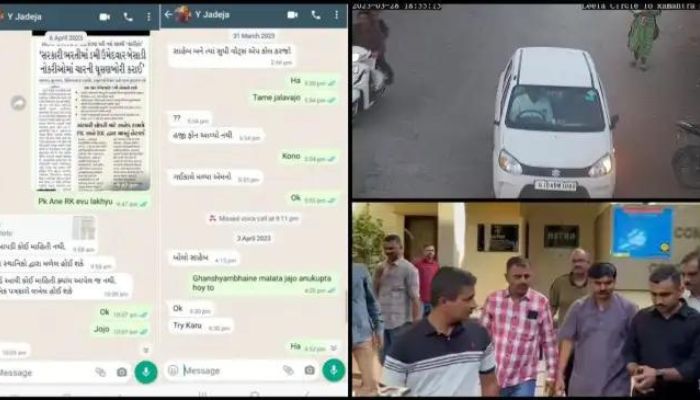
The Inspector General of the Bhavnagar Range Gautam Parmar said, “Yuvrajsinh Jadeja has also admitted to the Nari Chowki meeting and said that they had only met. Many CCTV footages were also deleted which will be recovered with the help of the Forensic Science Laboratory. Also, the police have evidence, including CDR and CCTV, and the locations of all the accused are being matched. CCTV footage shows a man climbing into the complex with the last instalment. The financial dealings have become clear in the police investigation. A chat between Bipin Trivedi and Yuvrajsinh Jadeja has also surfaced, and all the evidence will be given to the media. At present, the search for Shivubha is going on and the man named Raju has been identified and action is being taken. Also, RK’s full name is Rameshbhai Karamshi, he is also being searched.”
After this, all the evidence was put before the media, which is as described below.
Evidence put before the media by Bhavnagar police
Evidence 1 (Photo)
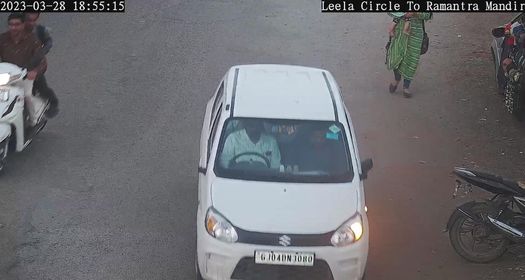
On March 28, at 6:55 pm, Prakash Karshanbhai Dave went to talk to Yuvrajsinh Jadeja.
In this photo, Jadeja’s aide Ghanshyam, Prakash Karshanbhai Dave (PK), PK’s uncle’s son Rambhai and PK’s maternal uncle’s son Ghanshyam are seen in a white-coloured Alto car.
Evidence 2 (CCTV)
CCTV footage of people going to talk to Yuvrajsinh Jadeja for Prakash Karshanbhai (PK) at 6:55 pm on March 28.
યુવરાજસિંહ તોડકાંડમાં ભાવનગર પોલીસે આપેલુ સબૂત નં: 2: તા.૨૮/૦૩/૨૦૨૩ ક.૧૮/૫૫ વાગ્યે પ્રકાશ કરશનભાઇ ( પી.કે.) માટે યુવરાજસિંહ સાથે વાતચીત કરવા જતા અલ્ટો કારમાં ધનશ્યામભાઇના વિડીયો ફુટેજમાં સફેદ કલરની પ્ર્રકાશ (પી.કે.), પી.કે.ના કાકાનો દિકરો રામભાઇ તથા પી.કે.ના મામાનો દિકરો ધનશ્યામ pic.twitter.com/oTRPZQQ08q
— VTV Gujarati News and Beyond (@VtvGujarati) April 22, 2023
In this footage, Ghanshyam, Prakash Karshanbhai (PK), PK’s uncle’s son Rambhai and PK’s maternal uncle’s son Ghanshyam are seen in a white colour Alto car.
Evidence 3 (CCTV and Photos)
On March 29, Ghanshyambhai went to pay for Prakash Karshanbhai Dave in a Tata Nexon car.
— VTV Gujarati News and Beyond (@VtvGujarati) April 22, 2023
Evidence 4 (CCTV and Photos)
On March 29, Ghanshyambhai, who was returning from the Bhangli Gate in a Tata Nexon car, gave Prakash Karshanbhai’s fixed payment to Yuvrajsinh Jadeja’s man in the lane of Pujara Mobile.
— VTV Gujarati News and Beyond (@VtvGujarati) April 22, 2023
Evidence 5 (CCTV)
On March 29, Ghanshyambhai, who was returning from the Bhangli Gate in a Tata Nexon car, gave Prakash Karshanbhai’s fixed payment to Yuvrajsinh Jadeja’s man in the lane of Pujara Mobile. (CCTV Footage)
— VTV Gujarati News and Beyond (@VtvGujarati) April 22, 2023
Evidence 10 (CCTV)
At 10:26 pm on April 4, Kanbha can be seen in the CCTV footage carrying a white bag and heading towards Shivubha’s office Mitanshi in the Victoria Prime building.
— VTV Gujarati News and Beyond (@VtvGujarati) April 22, 2023
Evidence 11 (CCTV)
At 10:27 pm on the night of April 4, Ghanshyam Dhandhal brings the Alto car number GJ04BE9869, which is returned by Pradeep and Jigo with a bag of money that goes to Ghanshyam Dhandhal who came to get the bag.
— VTV Gujarati News and Beyond (@VtvGujarati) April 22, 2023
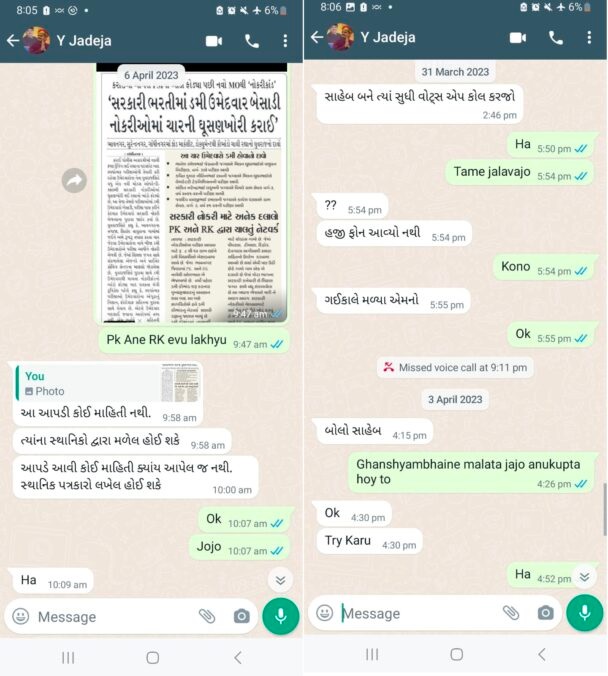
Evidence 12 (WhatsApp Chat)
A chat between Bipin Trivedi and Yuvrajsinh Jadeja has also come to light in the police investigation.
Thus, the evidence put before the media by the Bhavnagar police on Saturday is a testimony to the fact that there is an extortion angle involved somewhere in this dummy candidate scandal. At present, the police have obtained a 7-day remand of AAP leader Yuvrajsinh Jadeja from the court in the Rs 1 crore extortion case. There is a possibility that many other disclosures can be made during this remand period.
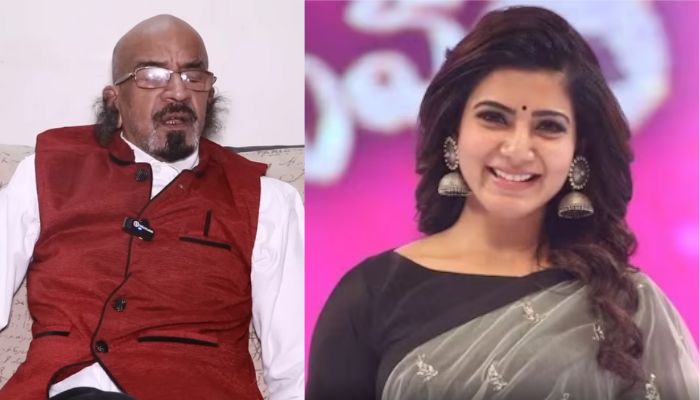
On 13th April 2023, film producer Chittibabu said in an interview that Samatha’s career as an actress is finished. Ten days later, the actress gave a savage cryptic reply in her Instagram story that pointed towards the too-long ear hair of the producer.
In her Instagram story, Samantha posted a screenshot of a Google search about ‘How do people have hair growing from ears’. The search engine revealed that it was because of ‘increased testosterone’, which stood highlighted in her story. Without naming anyone, the actress wrote ‘IYKUK’ which means ‘if you know, you know’. This reply was apparently aimed at Chittibabu who has very long hair in both his ears.
In his interview with ‘Filmy Looks’, Chittibabu said, “Samantha did Oo Antava item song in Pushpa The Rise after her divorce. She did it for her livelihood. After losing the status of a star heroine, she is doing whatever offers she is getting. Her career as a heroine is finished and she cannot get back to stardom again. She should continue her journey doing the offers she gets.”
He added, “Now ahead of Shaakuntalam (Samantha’s recent movie), she did the same trying to get sympathy saying she planned to do the role before she dies and went on record that she was unable to speak as she couldn’t get her voice out of her throat. Every time sentiment will not work.” Actress Samantha has now given him a savage reply.
Samantha Ruth Prabhu is an Indian actress who predominantly works in Telugu and Tamil films. She was born on April 28, 1987, in Chennai, Tamil Nadu, India. Samantha started her career as a model, and later, she made her acting debut with the Telugu film “Ye Maaya Chesave” in 2010, which was directed by Gautham Menon. Her performance in the film was highly appreciated, and she received the Filmfare Award for Best Female Debut – South.
After her debut, Samantha appeared in several Telugu and Tamil films, including “Dookudu,” “Eega,” “Neethaane En Ponvasantham,” “Manam,” and “Theri,” among others. She has won numerous awards, including four Filmfare Awards and a National Film Award.
Apart from acting, Samantha is also known for her philanthropic work. She started the Pratyusha Support Foundation to provide medical support for women and children with chronic illnesses. She is also an ambassador for Telangana Handlooms and works towards promoting handloom products.
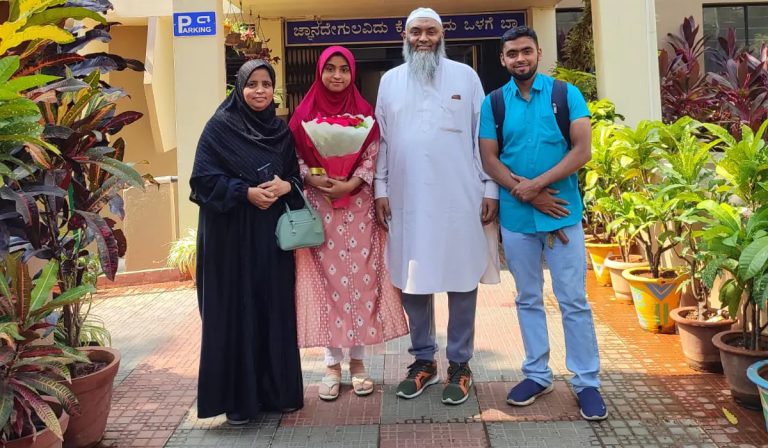
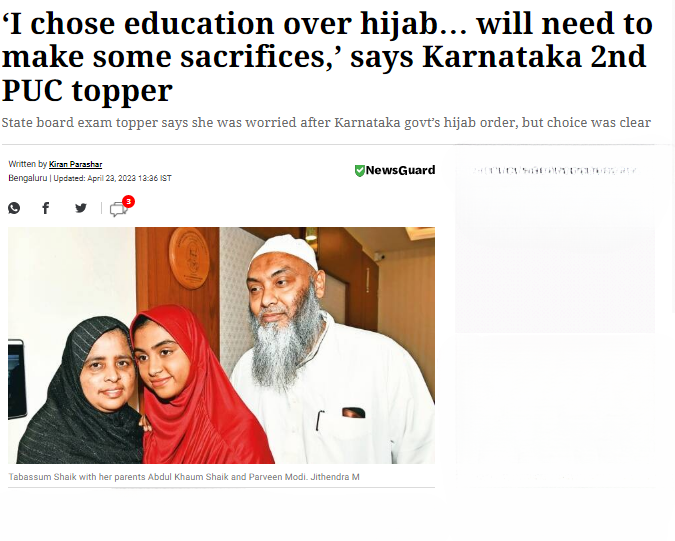
On April 21, 2023, Karnataka’s 2nd PUC Result 2023 was released. Among the highest scorers was Tabassum Shaik, who received 593 points out of 600 and placed first in the Arts Stream. After the results were out, Tabassum Shaik said that she preferred to choose “education over hijab,” referring to the recent hijab controversy in the state. However, Islamists chose to distort her comments to claim that she topped exams wearing hijab.
The Islamo-apologists on social media quickly picked her photographs in hijab to spread fake news pondering to Islamist narrative that relentlessly backed wearing the burqa and hijab on educational campuses. These Twitter users essentially implied that the Muslim girl topped the exam despite getting troubled for wearing the hijab, ignoring the fact that the girl herself said she adhered to the school uniform norms by saying that she chose education over hijab.
She had specifically said that she gave up the hijab in college after it was banned in educational institutions with uniform norms in the state, while earlier she use to wear hijab in school and college. But the Islamists tried to present an opposite picture.
It started with Prashant Bhushan who tweeted a picture of Tabassum Shaik with her parents. The photo was edited by a social media handle named Inquilab India. The message in the image formed the basis of the misinformation shared by Prashant Bhushan and others on Twitter. The message read, “Hijab covers the head, not the brain. Congratulations Tabassum. Tabassum Shaik, the victim of the Hijab ban in Karnataka, tops the state board exam. Despite harassment and protests, she continued her education and secured 1st rank with 98.3% in the 12th class PUC exam.”
The same image was shared by Dr SY Quraishi who was the former chief election commissioner of India. Notably, Quraishi is the author of a book titled ‘The Population Myth: Islam, Family Planning and Politics in India’. He wrote in his tweet, “Well done Tabassum!”
Another Twitter handle named @@Gabbar0099 tweeted this image with a caption that said, “‘Tabassum Sheikh’ secured State 1st Rank in 12th Class in Karnataka. Karnataka’s BJP govt banned hijabs in schools and colleges last year, BJP leader called Hijab wearing Muslim girls terrorists and used the media to cook up fake stories to hound, heckle & humiliate them. and now the 12th result which was just announced, a Hijab-wearing Muslim female student Tabassum Sheikh from Bengaluru tops the state!”
and now the 12th results which were just announced, a Hijab wearing Muslim female student Tabassum Sheikh from Bengaluru tops the state! 2/2
NDTV journalist Swati Chaturvedi also joined the bandwagon as she shared the image and wrote in the caption, “Very well done Tabassum, sorry for the harassment you faced & you came through it like a star.”
V well done Tabassum, sorry for the harassment you faced & you came through it like a star https://t.co/TnPwgsF4WO
Advocate Somnath Bharti who writes ‘nothing is greater than humanity’ in his Twitter profile’s display name also shared this image and wrote in the caption, “Heartiest Congratulations Tabassum! There was no better way to shut the mouths of those who want to remain politically relevant only by invoking religious sentiments! Well done!”
Heartiest Congratulations Tabassum! There was no better way to shut mouth of those who want to remain politically relevant only by invoking religious sentiments! Well done! https://t.co/2j3Ty7V9Ib
— Adv. Somnath Bharti: इंसानियत से बड़ा कुछ नहीं! (@attorneybharti) April 23, 2023
It is notable that Tabassum Shaik is a student of Nagarathnamma Meda Kasturiranga Setty Rashtriya Vidyalaya, NMKRV in Bengaluru, Karnataka. “I decided to give up the hijab (in college) and pursue my education. We will need to make some sacrifices for education,” Shaikh was quoted as telling The Indian Express.
Tabassum reportedly told the media that she attended all of her classes in a hijab every day up until the court order was issued. Her desire to further her studies and the lessons about respecting the law she learned from her parents led her to decide to stop wearing the hijab.
According to reports, Tabassum’s parents wholeheartedly supported her decision and her pursuit towards her education. Her father Abdul Khaum Shaik told his daughter it is important to “follow the law of the land. Education is more important for the children”.
Tabassum shared that she would follow the orders issued by the government. She would wear her hijab to her college campus and remove it before attending classes. She added that on the day she emerged as a topper, she donned her hijab and met her Principal and no one objected to her decision.
Despite this statement by the girl, so-called liberals on social media insinuated that she was harassed for wearing hijab yet she became a topper.
Last year the Karnataka high court upheld a government order banning religious attire such as hijab or burqa in educational institutions and asked students to follow the dress code of educational institutions. Many Muslim students had taken to the streets to protest against the decision, with many wearing hijab and skull caps to classes while many even boycotting appearing for exams after being urged to adhere to the court ruling. Tabassum Shaik, however, decided to prioritise education over the politicisation of the issue and the ensuing state-wide protests and unrest.
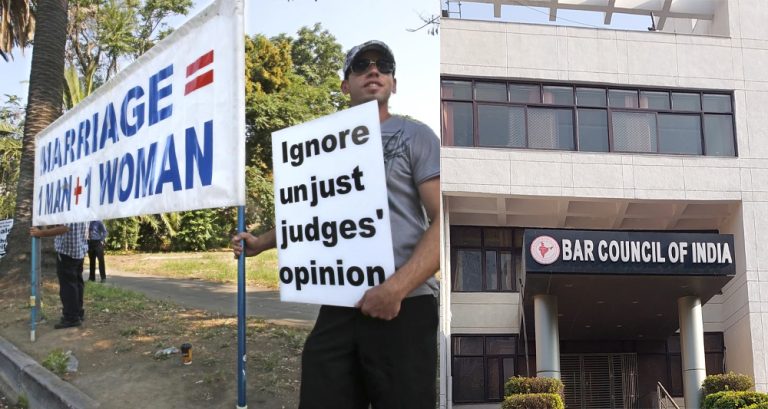
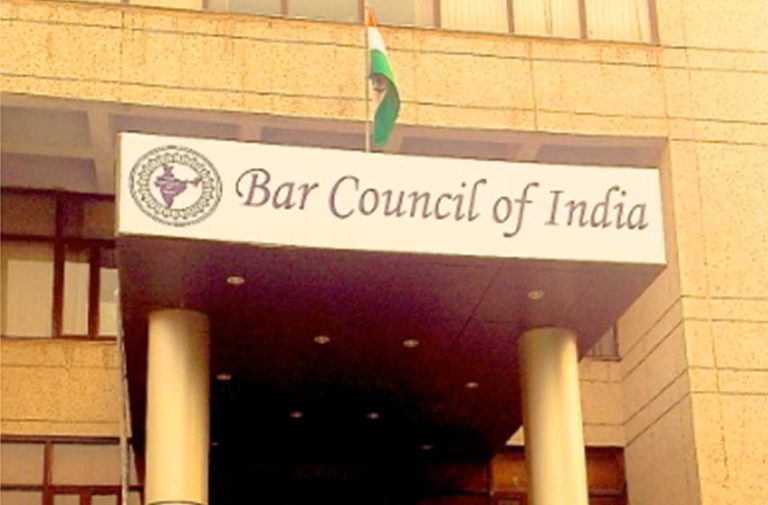
The Bar Council of India (BCI) on Sunday in its joint meetings with State Bar Councils showed great anxiety and serious concern over a batch of petitions presently examined by the Constitution Bench of Supreme Court pertaining to ‘marriage equality rights for LGBTQAI+ community’.
Bar Council of India Resolution said the Joint meeting is of the unanimous opinion that in view of the sensitivity of the issue of same-sex marriage, having a spectrum of stakeholders from the diverse socio-religious background, it is advisable that this is dealt with after an elaborative consultation process involving different social, religious groups by the competent legislature.
“Considering the socio-religious structure of the country, we thought it (same-sex marriage) is against our culture. Such decisions would not be taken by courts. Such moves must come from the process of legislation,” Bar Council of India chairman Advocate Manan Kumar Mishra told ANI.
The Resolution said as per documented history, ever since the inception of human civilization and culture, marriage has been typically accepted and categorized as a union of biological man and woman for the twin purpose of procreation and recreation. In such background, it would be catastrophic to overhaul something as fundamental as the conception of marriage by any Law Court, howsoever well-intentioned it may be.
According to BCI, more than 99.9 per cent of people in the country are opposed to “the idea of same-sex marriage”. The vast majority believes that any decision of the Apex Court in the petitioners’ favour on this issue will be treated to be against the culture and socio-religious structure of our country, the Resolution stated.
It further said Bar is the mouthpiece of the common men and, therefore, this meeting is expressing their anxiety over this highly sensitive issue. “The Joint Meeting is of the clear opinion that if the Supreme Court shows any indulgence in this matter, it will result in destabilizing the social structure of our country in the coming days. The Apex Court is requested and expected to appreciate and respect the sentiments and mandate of the mass of the country,” Bar Council Resolution said.
There is no gainsaying that the issue at hand is highly-sensitive, commented upon and criticized by various sections of society, including socio-religious groups, for being a social experiment, engineered by a selected few. This, in addition to it, being socially and morally compunctive.
The responsibility of lawmaking has been entrusted to the legislature under our Constitution. Certainly, the laws made by the legislature are truly democratic as they are made after undergoing thorough consultative processes and reflect the views of all sections of society. The legislature is accountable to the public, said BCI Resolution.
The Joint Meeting of the State Bar Councils and the Bar Council of India while appreciating the step of the Supreme Court for starting this sensitive conversation having long-term societal ramifications, resolved to request the Apex Court that the issue at hand be left for the legislative consideration, who after the wide-ranging consultative process, may arrive at an appropriate decision, as per the societal conscience and mandate of the people of our country.
The Constitution Bench comprising the Chief Justice, Justice Sanjay Kishan Kaul, Justice Ravindra Bhat, Justice Hima Kohli and Justice PS Narasimha is dealing with a batch of petitions pertaining to ‘marriage equality rights for the LGBTQI+ community’.
The Constitution Bench started hearing the petitions on April 18.
Various petitions are being dealt with by Supreme Court seeking legal recognition of same-sex marriage. The Centre has opposed the petitions. One of the petitions earlier raised the absence of a legal framework which allowed members of the LGBTQ+ community to marry any person of their choice.
According to the petition, the couple sought to enforce the fundamental rights of LGBTQ+ individuals to marry any person of their choice and said that “The exercise of which ought to be insulated from the disdain of legislative and popular majorities”.
The petitioners, further, asserted their fundamental right to marry each other and prayed for appropriate directions from this Court allowing and enabling them to do so.
(This news report is published from a syndicated feed. Except for the headline, the content has not been written or edited by OpIndia staff)
Two Indian Air Force C-130J have been stationed in Saudi Arabia’s Jeddah and an Indian navy vessel has reached Port Sudan, to evacuate Indians from Sudan, informed the Ministry of External Affairs (MEA) said in an official statement on Sunday. Giving details of preparations to evacuate Indians from Sudan which is facing fights between the army and paramilitary, the MEA said that contingency plans are in place, but movement on the ground depends on the security situation.
“As part of our preparations, and in order to move swiftly, the Government of India is pursuing multiple options. Two Indian Air Force C-130J are currently positioned on standby in Jeddah. And, INS Sumedha has reached Port Sudan,” the MEA statement said.
C-130J Super Hercules of Indian Air Force is a four-engine turboprop military transport aircraft made by Lockheed Martin of USA, while INS Sumedha is an indigenously built Saryu class Naval Offshore Patrol Vessel. INS Sumedha, built at Goa Shipyard Limited, visited Abu Dhabi in February this year to participate in NAVDEX 23 (Naval Defence Exhibition) and IDEX 23 (International Defence Exhibition).
The MEA statement further said, “Contingency plans are in place but any movement on the ground would depend on the security situation, which continues to be volatile with reports of fierce fighting at various locations in Khartoum. Sudanese airspace currently remains closed for all foreign aircraft. Overland movement also has risks and logistical challenges.”
The ministry said that the government of India is making all-out efforts to ensure the safety and security of Indians stranded in Sudan, and closely monitoring the complex and evolving security situation in Sudan. According to the MEA, India is coordinating closely with various partners for the safe movement of those Indians who are stranded in Sudan and would like to be evacuated.
Apart from the Sudanese authorities, the Ministry of External Affairs and the Indian Embassy in Sudan are also in regular touch with the UN, Saudi Arabia, UAE, Egypt, and US among others in this regard.
MEA added that Indian Embassy in Khartoum is in regular touch with the stranded Indians in Sudan and is advising them on the viability of safe movement and the need to avoid unnecessary risk. The embassy is also coordinating all possible assistance including possible exit from Khartoum city as and when the security situation permits safe movement.
It is notable that yesterday Saudi Arabia successfully evacuated 157 people, including some Indians, via sea route. Saudi foreign ministry announced the safe arrival of 91 Saudi citizens and 66 nationals of from “friendly and brotherly countries” at the Jeddah port. The ministry informed that 66 citizens of Kuwait, Qatar, the United Arab Emirates, Egypt, Tunisia, Pakistan, India, Bulgaria, Bangladesh, the Philippines, Canada, and Burkina Faso were evacuated along with 91 Saudi nationals from Sudan.
The evacuation came days after External Affairs Minister S Jaishankar spoke to his Saudi Arabia counterpart on cooperation in evacuation. There are 3000 Indians in Sudan. Prime Minister Narendra Modi on Friday chaired a high-level meeting to review the security situation in Sudan. He told officials to prepare “contingency evacuation plans, accounting for the rapidly shifting security landscape and the viability of various options”.
Due to the closure of airports in Sudan and intense fighting on the ground, evacuation of foreigners has proven to be very difficult. In fact, the US embassy in Sudan yesterday said that it is not able to evacuate people from the country. In a statement, the embassy said, “Due to the uncertain security situation in Khartoum and the closure of the airport, it is not currently safe to undertake a U.S. government-coordinated evacuation of private U.S. citizens.”
Sudan is facing violence due to fighting between the army and the paramilitary forces. Even though the two rival military factions – the Sudanese Armed Forces and Rapid Support Forces (RSF) – had declared a 72-hour truce for Eid, fighting has not stopped. On Saturday, Loud explosions and clashes were reported, mainly near the military headquarters and presidential palace in Khartoum.
The armed conflict between two groups in Sudan for control over the third-largest country in Africa started on April 15. The ensuing clashes have resulted in at least 3,500 injuries and 400 fatalities. They include 256 civilians killed and 1454 civilians injured.
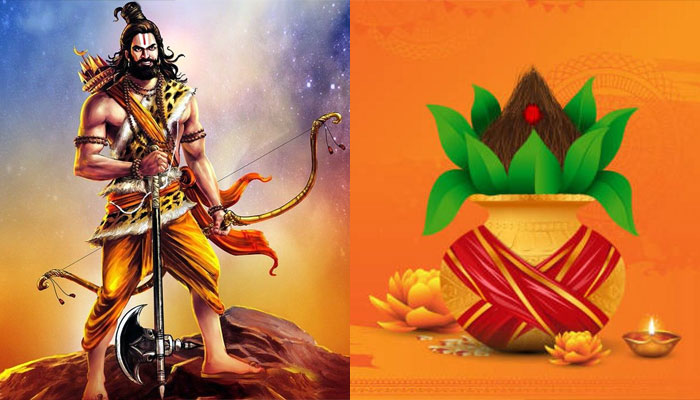
On April 22, Hindus and Jains in India and across the world celebrated the auspicious occasion of Akshaya Tritya, also known as Akti or Akha Teej. It is an annual festival celebrating the third ‘Tithi’ or lunar day of the bright half of Vaishakha month. Sun and moon are believed to be in their most auspicious positions in the sky on this day. Akshaya is a Sanskrit word that means imperishable.
Hindus celebrate it as the birthday or Janmotsav of Bhagwan Parshuram, the sixth incarnation of Bhagwan Vishnu. Furthermore, it is believed that Bhagwan Ganesha started writing the epic of Mahabharata that Rishi Vyasa narrated on this day. Buying gold on this day is considered to be auspicious.
There are many stories associated with this day. For example, it is believed on this day, Shri Krishna used ‘Akshaya Patra’, a food container that never gets empty, to satisfy the hunger of Pandavas during exile. Another story suggests Sudama met Krishna in Dwarka on Akshaya Tritya.
Treta Yuga also started on this day. Holy River Ganga is believed to have descended on Earth on Akshaya Tritya, thus, the day is also celebrated as Gangavatran.
Jains believe that on this day, the first Tirthankara of the Jain Religion, Rishabhadeva was born. Good deeds on this day are believed to bring eternal success and happiness. Jains observe fast on this day.
Despite being so many stories and auspicious festivals linked to this day, liberals believe that Hindus came up with Akshaya Tritya and Parshuram Janmotsav only to mock Muslims.
Twitter user Sarayu Pani said, “I swear there are Hindus who now open that annual religious lunar calendar thing only on Muslim and Christian festivals to find obscure Hindu festivals that share the date.”
I swear there are Hindus who now open that annual religious lunar calendar thing only on Muslim and Christian festivals to find obscure Hindu festivals that share the date.
Twitter user phunnyRabia said, “A school friend wished me Akshay Tritiya yesterday, I wished him back alongwith wishing him Eid Mubarak. Still waiting for the response. The hate has even ruined the friendships post 2014.”
A school friend wished me Akshay Tritiya yesterday, I wished him back alongwith wishing him Eid Mubarak. Still waiting for the response.
The hate has even ruined the friendships post 2014.
Author Mini Nair said, “Is not Akshaya Trithiya the festival where the good , rich upper country folks buy glitter. Back home, nobody wished us and we did not wish either. Now, Bhaktgan want to counter Eid with Akshaya trithiya!”
Is not Akshaya Trithiya the festival where the good , rich upper country folks buy glitter .
Back home, nobody wished us and we did not wish either.
Now, Bhaktgan want to counter Eid with Akshaya trithiya!
Twitter user SavageLeeCooper said, “How tf is he even comparing Eid with Akshaya Tritiya? A day for Hindus to chase gold? It should have been about rice but we don’t care about rice. And I’ve literally never heard of Parshuram Janmotsav.”
How tf is he even comparing Eid with Akshaya Tritiya? ? A day for Hindus to chase gold? It should have been about rice but we don't care about rice. And I've literally never heard of Parshuram Janmotsav. ? https://t.co/l7ha4MGpL1
Twitter user plumpernickel said, “I swear to God this Akshaya tritiya is a made up festival, meant to coincide with Eid to make Hindus also buy more gold. I had never heard of it even a decade ago.”
I swear to God this Akshaya tritiya is a made up festival, meant to coincide with Eid to make Hindus also buy more gold. I had never heard of it even a decade ago
This year, these liberals got the excuse to blame Hindus for coming up with a festival of their own to mock Muslims. However, one may wonder what would they do next year when Akshaya Tritiya and Parshuram Janmotsav will be celebrated on May 10 but Eid would fall somewhere around April 10.
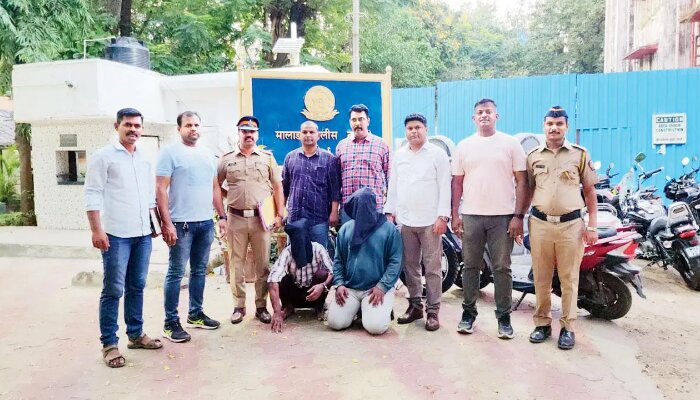
Three people were arrested by the Malad police on Saturday for killing a 69-year-old woman, Marie D’Costa, during a robbery at a Malad residential community. The domestic help of the victim and two other people have been arrested in connection with the case, according to Deputy Commissioner of Police (Zone 11), Ajay Bansal.
Shabnam Parvin Shaikh (between 42-45) and Shahzad Umar Shaikh (26) were taken into custody from the same area while Umar Shaikh (71) was apprehended from Vasai.
Shabnam is a domestic helper who had long been employed by the victim Marie D’Costa. Umar is a driver with three wives, and Shahzad is his son from his third wife. Umar was currently living with Shabnam. Shabnam is divorced, and Umar is living with her at her residence in the vicinity of Malwani Gate No. 7 with Shahzad and her daughter Afreen.
The deceased, who had retired ten years prior, lived with her 26-year-old grandson Neel Raibole at the New Life Cooperative Housing Society in Malad (West).
The police reported that Shabnam was taken in by D’costa after she found the former on the streets. She had been a housekeeper at D’Costa’s place for more than 20 years. She frequently left work in between, only to come back. She used to work full-time at their house performing all the chores, including cooking, cleaning, and washing clothing, among other things. She was a reliable servant, and hence Raibole would pick and drop her every day because she had a deformity in one leg.
The police complaint disclosed that on Thursday night, Raibole got a call from a Regional Transport Office (RTO) agent who was assisting him with his learner’s licence. He was requested to share a One Time Password (OTP) for licencing authentication.
He asked the representative to contact his grandmother after he informed the latter that her mobile number was connected to his Aadhaar card, indicating that the OTP must have been sent to her number. The RTO employee informed him that he called the number but nobody picked up.
“Raibole works with a private firm in the Bandra Kurla Complex and was at work when the murder was committed on Thursday evening. He had applied for a driver’s learning license and the agent he had hired called him to ask for an OTP, which was part of the process,” stated an officer with the Malad police station.
“However, his Aadhar card is linked to D’Costa’s mobile number and he called her to ask her for the OTP. When several calls went unanswered, he called his neighbour and asked her to check on his grandmother,” he unveiled.
The neighbour was the only person with a key except for D’costa and Raibole. She went inside and was horrified to discover the elderly woman dead in the bathroom with her head inside a water bucket. She dialled Raibole who reached home in an hour and around the same time, Shabnam and Shahzad also arrived at the scene. They took D’Costa to the Shatabdi Hospital in Kandivali, where she was pronounced dead prior to admittance.
The police were also informed and they initially registered an accidental death report. When Raibole looked at the society’s CCTV footage, he noticed that a man wearing a mask and toting a rucksack entered the building at 5:31 and left at 5:48. The unidentified suspect entered the room about the same time Shabnam and Shahzad left the house with the door ajar, as per him, who subsequently brought the incident to the police’s notice.
He suggested that based on the CCTV evidence, it appeared like Shabnam and Shahzad assisted the anonymous person in breaking into his home to commit the crime. Later, after learning about their sister’s murder, D’Costa’s sisters, who had travelled from Kuwait, searched the entire home along with Raibole.
They discovered that D’Costa’s two mobile phones, a watch, a gold chain, and other valuables worth a total of Rs 50,000 were missing.
“CCTV footage showed Shabnam and two men entering and leaving the building, and one of them was wearing a mask. We worked further on this lead and identified the two men as Umar and Shehzad. We found that Umar, who has three wives, was currently living with Shabnam in her Malwani residence, and that Shehzad is his son from his third wife,” revealed the officer.
Shabnam and Shehzad were found after Umar was questioned and taken from the Nallasopara home of his second wife on Saturday. They admitted to carrying out the murder with the intent to rob the house, but they were unable to make off with anything because only Raibole has the keys to the cupboards.
They were subsequently arrested and appeared in a local court on Sunday with charges stemming from sections 302 (murder), 397 (robbery or dacoity with intent to cause death or great bodily harm), and 120(b) (criminal conspiracy) of the Indian Penal Code.
Police added that during questioning, the culprits admitted to suffocating D’Costa with a pillow and then forcing her head into a pail of water to drown her. “The three have been arrested on Saturday and a local court remanded them in police custody till April 26,” Ravi Adane, senior police inspector of Malad police station mentioned.
The Bar Council of India (BCI) on Sunday passed a resolution opposing the grant of legal recognition to same-sex marriage in the country.
BCI Chairman Manan Kumar Mishra said the resolution has been passed by the Bar after holding a meeting with representatives of all State Bar Councils. As per documented history, BCI said ever since the inception of human civilization and culture, marriage has been typically accepted and categorized as a union of biological man and woman for the twin purpose of procreation and recreation. In such background, it would be catastrophic to overhaul something as fundamental as the conception of marriage by any Law Court, howsoever well-intentioned it may be.
Issues pertaining to social and religious connotations should typically be dealt by Courts through the doctrine of deference, the Bar Council said.
“The legislature being truly reflective of the will of the people is best suited to deal with such sensitive issues. Every responsible and prudent citizen of the country is worried about the future of his/her children after coming to know about the pendency of this matter before the Supreme Court. More than 99.9 per cent of people of the country are opposed to the idea of same-sex marriage in our country,” BCI said.
The Council said the vast majority believes that any decision of the Apex Court in the petitioners’ favour on this issue will be treated to be against the culture and socio-religious structure of the country.
“The Bar is the mouthpiece of the common men and, therefore, this meeting is expressing their anxiety over this highly sensitive issue. The Joint Meeting is of the clear opinion that if the Supreme Court shows any indulgence in this matter, it will result in destabilizing the social structure of our country in the coming days. The Apex Court is requested and expected to appreciate and respect the sentiments and mandate of the mass of the country,” BCI said its a statement.
The Constitution Bench comprising the Chief Justice, Justice Sanjay Kishan Kaul, Justice Ravindra Bhat, Justice Hima Kohli and Justice PS Narasimha is dealing with a batch of petitions pertaining to ‘marriage equality rights for the LGBTQI+ community’.
The Constitution Bench started hearing the petitions on April 18.
Various petitions are being dealt with by Supreme Court seeking legal recognition of same-sex marriage. The Centre has opposed the petitions. One of the petitions earlier raised the absence of a legal framework which allowed members of the LGBTQ+ community to marry any person of their choice.
According to the petition, the couple sought to enforce the fundamental rights of LGBTQ+ individuals to marry any person of their choice and said that “The exercise of which ought to be insulated from the disdain of legislative and popular majorities”.
The petitioners, further, asserted their fundamental right to marry each other and prayed for appropriate directions from this Court allowing and enabling them to do so.
(This news report is published from a syndicated feed. Except for the headline, the content has not been written or edited by OpIndia staff)