Home Blog Page 523

Bangladesh govt attempts to hide links between Muhammad Yunus and Clintons, daughter Monica’s involvement in Joe Biden administration

Following the publication of an investigation report in Indian media exposing the involvement of Monica Yunus, daughter of Muhammad Yunus in the President’s Committee on the Arts and the Humanities (PCAH) under Joe Bidenโ€™s presidency, the website of this entity has been mysteriously shutdown.

Clicking on the website PCAH.gov from Bangladesh and several countries shows that the site is down. PCAH is an advisory committee to the President of the United States on cultural issues.

Earlier, several individuals on social media posts stated, โ€œMonica Yunus, touted as a new spokesperson for President Bidenโ€™s Committee on the Arts and the Humanities, now stands at the center of a rapidly intensifying scandalโ€.

Drawing attention of President Donald J. Trump, those posts said, โ€œUntil Yunus steps out of the shadows with a full-throated and evidence-backed rebuttal, the stench of impropriety only gets worse. If the White House wonโ€™t hold her to account, then itโ€™s complicit in perpetuating a culture of political favoritismโ€”and thatโ€™s a slap in the face to anyone who believes our government should serve the nationโ€™s best interests, not private agendas lurking behind closed doorsโ€.

Meanwhile, Indian media outlet in a report stated, โ€œMohammad Yunus, who played a key role in helping remove former Bangladeshi Prime Minister Sheikh Hasina from power, is now facing potential trouble with U.S. President Donald Trump. Yunus has a long history of connections with Hillary Clinton, who was known for opposing Trump. In 2016, Yunus made a donation of USD 300,000 (around Rs. 2.5 crore) to the Hillary Clinton Foundation. His daughter, Monica Yunus, lives in the U.S., which has upset Trump. As a result, Yunus may now find himself under investigation by Trumpโ€™s new administrationโ€.

It further said, โ€œYunus, who has been critical of Trump, may soon face several investigations because of his ties to Clinton. He is accused of having a close relationship with Clinton, which is said to have helped his daughter, Monica, secure a prominent role in former President Joe Bidenโ€™s administration. Reports also suggest that Yunusโ€™s connections with the Clinton family were so strong that, during Hillary Clintonโ€™s time as U.S. Secretary of State, he received millions of dollars in loansโ€.

Trashing this report, the Press Section of Yunus is a statement said, โ€œProf Yunus did not donate any money to the Hillary Clinton Foundation as claimed in the post. His friendship with the Clintons has not benefitted his daughter, Monica Yunus, and, contrary to the claim, she never held any position in Joe Biden’s administration, according to the statement. The report of Professor Yunus receiving millions of dollars in loans while Hillary Clinton served as US Secretary of States is also falseโ€.

Scandal linked to Bill and Hillary Clinton

Hillary Clinton has been criticized for using her office during the tenure of being the Secretary of State in granting special privilege to large donors of her familyโ€™s Clinton Foundation.

Back in 2016, the Associated Press published an investigative report based on logs of meetings Hillary Clinton took as Secretary of State. In the story, the AP stated that at least 85 of 154 people from private interests that Clinton met or had phone conversations with while Secretary of State donated to the Clinton Foundation. In total, the 85 donors contributed as much as US$156 million to the Foundation. Link to this AP report has been deleted.

Commenting on the Clinton Foundation scandal, Gersh Kuntzman in an article in the New York Daily news termed it โ€“ โ€œimpossible to defendโ€.

In February 2015, The Wall Street Journal reported that Australia, Germany, Saudi Arabia, the United Arab Emirates and a Canadian government agency that was trying to get the Keystone XL pipeline built all donated to the Clinton Foundation.

In addition to receiving donation in exchange for favor, then Secretary of State Hillary Clinton had also followed few more unethical tactics. For example, when she was Secretary of State, her husband Bill Clintonโ€™s speaking fees magically doubled and tripled โ€“ from about US$150,000 a speech to US$500,000 for a speech in Russia and US$750,000 for a speech in China. The State Department had easily approved these speeches. Bill Clinton raked in at least US$26 million from speaking to organizations that also donated to the Clinton Foundation.

According to a report published in the Wall Street Journal, when IRS was suing Swiss bank UBS AG in order to obtain the identities of Americans who were using the bank to set up offshore accounts, Hillary Clinton immediately intervened into the matter. As a result, UBS increased donations to the Clinton Foundation โ€“ from US$60,000 to US$600,000 by 2014. It lent the foundation US$32 million for an inner-city loan program and paid Bill Clinton US$1.50 million for some speaking gigs with its Wealth Management Chief Executive, Bob McCann.

According to a 2018 report published in The Hill, a private firm named MDA Analytics LLC, which was run by accomplished ex-federal criminal investigators alleged the Clinton Foundation engaged in illegal activities and may be liable for millions of dollars in delinquent taxes and penalties.

The 48-page submission, dated August 11, 2017, supports its claims with 95 exhibits, including internal legal reviews that the foundation conducted on itself in 2008 and 2011.

Those reviews flagged serious concerns about legal compliance, improper commingling of personal and charity business and โ€œquid pro quoโ€ promises made to donors while Hillary Clinton was secretary of State.

Some evidence that MDA investigators cited is public source, such as internal foundation reviews hacked in 2016 and given to WikiLeaks. Other materials were provided to the investigators by foreign governments that have done business with the charity, or by foundation insiders.

One of the nonpublic documents is an interview memo the MDA Analytics investigators penned after meeting with Kessel in late November 2016 at the Princeton Club in New York City.

Kessel told those investigators that โ€œone of the biggest problems was Bill Clintonโ€™s commingling and use of business and donated funds and his personal expensesโ€, according to the whistleblower submission.

โ€œThere is no controlling Bill Clinton. He does whatever he wants and runs up incredible expenses with foundation fundsโ€, states a separate interview memo attached to the submission.

โ€œBill Clinton mixes and matches his personal business with that of the foundation. Many people within the foundation have tried to caution him about this but he does not listen, and there really is no talking to himโ€, the memo added.

Another review written by a private lawyer named Kumiki Gibson in 2008, who was hired by the foundation to study its governance, directly flagged concerns about improper commingling of charitable and private business.

โ€œThe work of the Foundation and the President are intertwined in a way that creates confusion at, and undermines the work of, the Foundation at virtually every levelโ€. Gibson wrote, warning that such commingling poses โ€œreputational and legal challenges, and with confusion, inefficiencies and wasteโ€.

Specifically, the memo warned the foundation had not created policies and procedures โ€œrequired by lawโ€ and that some of its leaders โ€œappear to have interests that do not always align with those of the Foundationโ€.

It also raised the possibility of illegal activities, saying the foundation and its managers held an โ€œanti-compliance attitudeโ€ and that there were lower-level employees who โ€œbeggedโ€ for whistleblower protections after witnessing โ€œless than fully compliant behavior or even worse are asked to participate in or condone itโ€.

The 2011 review conducted by the law firm Simpson Thacher raised similar concerns about legal compliance and noted that auditors in 2009 and 2010 had found โ€œmaterial weaknessesโ€, such as a lack of governing board meetings and unsigned board minutes.

That report alleged some foundation workers โ€œabuse expense privilegesโ€ and others suffered conflicts of interest, especially as the foundation solicited large donations from countries with business interests before Hillary Clinton at the State Department. โ€œIt appears conflicts are not timely disclosedโ€ and โ€œwhen staff becomes aware of conflicts, they are unsure how to raise and clear these conflictsโ€, the report warned.

The report even raised the possibility that donors were expecting favors at State or from the former presidentโ€™s government connections in return for money.

โ€œSome interviewees reported conflicts of those raising funds or donors, some of whom may have an expectation of quid pro quo benefits in return for giftsโ€, the lawyers warned.

According to a 2016 report published in The New York Post:

The inner workings of a mysterious off-the-books arm of the Clinton Foundation were partially revealed in the hacked emails of Hillary Clinton campaign chairman John Podesta.

The little-known Haiti Development Fund, an LLC incorporated in Delaware in August 2010, was created by the Clinton Foundation with an initial endowment of $20 million from shady Canadian mining mogul Frank Giustra and Mexican billionaire Carlos Slim.

The Fund was supposed to supply desperately needed seed money to Haitian entrepreneurs after an earthquake devastated the country in January 2010.

A 2016 report published in The Globe and Mail, Bill Clinton and Hillary Clinton earned millions from Canadian corporate elites while the couple was exerting influence on various foreign governments in favor of those elites and for such cooperation, Clintons were getting huge amounts through numerous ways including donation to Clinton Foundation.

For example, in June 2005, Bill Clinton clambered aboard the private jet of Frank Giustra, the Vancouver mining financier. Bill Clinton needed to get to Mexico City to begin a speaking tour of Latin America and oversee the work of his sprawling charitable enterprise. The two men didnโ€™t know each other well. But Giustra happened to have a luxury MD-87 aircraft to get him there. And he was curious about the former US president and his philanthropic work.

The trip and the conversation marked the beginning of a long and mutually beneficial relationship. Soon after, Frank Giustra became one of the largest single donors to the Clinton Foundation and rallied an entire industry to raise millions of dollars for its fight against global poverty. He, in turn, gaines entrรฉe to Bill Clintonโ€™s inner circle โ€“ and became Corporate Canadaโ€™s most famous โ€œFriend of Billโ€.

For more than a decade, both men have burnished their reputations by travelling the globe and collaborating on big ideas in far-flung places.

Giustraโ€™s Twitter profile is a veritable photo gallery of the two men. Here they are in Peru in November 2004, distributing household goods to women. There they are in El Salvador earlier that same year, assisting small-scale farmers. The Canadian arm of the Clinton Foundation โ€“ the brainchild of Giustra and known as the Clinton Giustra Enterprise Partnership โ€“ has poured more than US$35-million into eradicating poverty in parts of the developing world where many of the mining companies he helped finance do business.

In 2005, Frank Giustra visited Kazakhstan with Bill Clinton and, soon after, acquired uranium interests in the former Soviet republic. In 2007, he secured the rights to operate one of Colombiaโ€™s largest oil fields.

In both instances, Bill Clinton introduced Frank Giustra to the president of the country before the asset sales were completed.

And here is another shocking information on Hillary Clintonโ€™s notorious bids in unseating a government in Bangladesh and planting Muhammad Yunus – her โ€œold friendโ€ and large donor of Clinton Foundation as the head of the government.

People may express surprise seeing blind support of Hillary Clinton towards controversial Nobel laureate Muhammad Yunus while it is documented fact that the former US Secretary of State Hillary Clinton had illegally used her position in the State Department to award more than US$13 million in grants to Yunus, contracts and loans despite his ouster from Grameen Bank in 2011.

Funds were given to Yunus through 18 separate US Agency for International Development (USAID) award transactions listed by the federal contracting site USAspending.gov.

Other federal agencies also opened their coffers to Yunus after Clinton entered the administration. The Department of Treasury awarded a US$600,000 grant directly to Grameen America under a fund designed to boost financial institutions in community development. A Treasury Department spokesman declined to provide any details beyond the fact the funds were for activities in New York.

A series of Small Business Administration grants to Grameen America also began in July 2011, totaling US$934,000. Those grants were for โ€œsalaries and expensesโ€ for the foundation to operate its New York offices where Hillary Clinton once was a US senator.

According to the US Congress, Hillary Clinton used hard-ball tactics against the Awami League government in Bangladesh in order to help her ruthlessly corrupt millionaire friend. The document shows Hillary Clinton deployed an array of high-powered officials at the Department of State, US Embassy in Bangladesh and World Bank to rescue Muhammad Yunus from corruption and financial crime charges.

Although the Clinton Foundation website earlier declared that Muhammad Yunus had donated US$300,000 from his millions of dollars deposited in various foreign banks, the link to this declaration on the Clinton Foundation website has been mysteriously removed by Clintons. Similarly, the Clinton Foundation also has been deleting information related to a few more controversial donors of the Clinton Foundation.

report from the Daily Mail said some of the claims involved allegedly illegal donations with the intent of buying influence with Hillary Clinton, who at the time was trying to become president. While Yunusโ€™ net worth is estimated at US$10 million, his actual wealth size is much higher.

On June 1, 2017, Iowa Republican Senator Chuck Grassley asked Secretary of State Rex Tillerson to respond to reports that Hillary Clinton tried to pressure Bangladesh Prime Minister Sheikh Hasina by threatening her son Sajeeb Wazed Joy with an IRS tax audit while he was living in the United States. Link to this matter has also been mysteriously deleted from the website of Senator Chuck Grassley.

When back in January 11, 2007, an-army backed interim government came to power, Hillary Clinton made frantic bids in influencing the key figures of that government to consider Muhammad Yunus as the โ€œnew leader of Bangladeshโ€, by executing โ€œminus-two formulaโ€ of forcing Sheikh Hasina and Khaleda Zia into retirement and forced exile. The BBC reported April 7, 2007, that โ€œthe army would sponsor Nobel Peace prize winner Dr. Muhammad Yunus as a new leaderโ€.

And this is not the end of the story about mysterious relations between Muhammad Yunus, Bill and Hillary Clinton. There are much of untold secrets, where Bill and Hillary Clinton would be found connected to numerous business ventures of Yunus in the United States โ€“ including Grameen America.

Republic Day Highlights: Indonesian contingent, Tableaux, Aircraft formations, cultural performances and more

0

As India celebrates its 76th Republic Day today, the Kartavyapath in the national capital was adorned by a grand Republic Day parade comprising myriad performances by artists, tableaux and a show of strength by the armed forces. The ceremony began with President Draupadi Murmu unfurling the national flag and Prime Minister Narendra Modi paying tribute at the War Memorial.

The theme for this yearโ€™s tableaux was โ€œSwarnim Bharat: Virasat aur Vikasโ€. Sixteen tableaux from across states and Union Territories and 15 from central ministries, departments, and organisations were parts of the parade. Here are a few highlights from the Republic Day parade ceremony:

Republic Day parade guest this year

Indonesian President Prabowo Subianto was the guest of honour for this year’s Republic Day parade. The parade also featured a 352-member marching and band contingent from Indonesia.

Tableau in the Republic Day parade

Showcasing India’s cultural diversity, the following are the themes of themes of this year’s tableaux of various states:

Gujarat – Swarnim Bharat – Virasat aur Vikas

Uttarakhand – Cultural Heritage and Adventure sports

Goa – Cultural Heritage of Goa

Haryana – Bhagwad Gita

Jharkhand -Swarnim Jharkhand – A Legacy of Heritage and Progress

Andhra Pradesh – Etikoppaka Bommalu – Eco-Friendly Wooden Toys

Punjab – Punjab as the land of knowledge and wisdom

Uttar Pradesh – Mahakumbh 2025 – Swarnim Bharat Virasat aur Vikas

Bihar – Swarnim Bharat – Virasat aur Vikas (Nalanda Vishwavidyalaya)

Tripura – Eternal reverence: The worship of 14 deities in Tripura – Kharchi Puja

Madhya Pradesh – Kuno National Park – The Land of Cheetas

Karnataka – Lakkundi – Cradle of Stonecraft

West Bengal – The ‘Lakshmir Bhandar’ and ‘Lok Prasar Prakalpa’ – Empowering lives and fostering self-reliance in Bengal

Chandigarh – A Harmonious blend of Heritage, Innovation and Sustainability

Delhi – Quality Education

Dadra and Nagar Haveli and Daman and Diu – Daman Aviary Bird Park along with Kukri Memorial – a tribute to the valiant sailors of the Indian Navy.

Air Force Band, MiG-29 and the marchpast by the Indian Air Force

The display by the Indian Air Force at the Kartavyapath included marching contingents and air various air formulations using Rafale, Su-30, Jaguar, C-130, C-295, C-17, AWACS, Dornier-228, and An-32 aircraft. The air formulations performed included Dhwaj, Ajay, Satluj, Rakshak, Arjan, Netra, Bheem, Amrit, Vajrang, Trishul and Vijay. The concluding Vertical Charlie manoeuvre was performed by a Rafale fighter aircraft.

The Dare Devils displayed motorcycle acts

Astonishing stunts were performed by the Corps of Signals Motorcycle Rider Display Team, also known as the Dare Devils. The formulations created by the Dare Devils included Bullet Salute, Tank Top, Double Jimmy, Devils Down, Ladder Salute, Shatrujeet, Shraddhanjali, Mercury Peak, Info Warriors, Lotus and Human Pyramid.

Cultural performances by 5000 artists

For the first time, the cultural performances during the Republic Day parade covered the entire stretch of the Kartavyapath from Vijay Chowk to C Hexagon to offer the same viewing experience to all the viewers.

5000 artists performed 45 dance forms from different parts of the country entitled ‘Jayati Jaya Mama Bharatam’ in an 11-minute long cultural performance.

The 76th Republic Day parade concluded with a fly-past by the armed forces and the national anthem.

Republic Day parade showcases Indiaโ€™s self-reliance in defence manufacturing, T-90 Bhishma tanks & Nag Missile Systems steal the show

0

The Indian Army’s impressive display of military might and technological advancements at the 76th Republic Day parade stole the show at the Kartavya Path on Sunday.

The T-90 Bhishma tank, commanded by Captain Navjot Singh Atwal of the 74 Armoured Regiment, led the Mechanised Columns, and demonstrated India’s cutting-edge military technology.

The T-90 Bhishma is a symbol of India’s cutting-edge military prowess, designed on the Hunter-Killer concept. It boasts a powerful 125 mm smooth bore gun, a 7.62 mm co-axial machine gun, and a 12.7 mm anti-aircraft gun. Equipped to fire laser-guided missiles, this tank can engage targets at a range of up to five kilometres, even during the night.

Its versatility is unmatched, as it is capable of operating underwater, adding to its strategic advantage. The 74 Armoured Regiment, to which this tank belongs, has a rich and glorious history

Raised on June 1, 1972 at the Armoured Corps Centre and School in Ahmednagar, the regiment has etched its name in golden letters in the annals of India’s military history. On November 27, 2011, the regiment was honoured with the presentation of former President Pratibha Singh Pati.

Over the years, it has earned numerous accolades, including one Param Vishisht Seva Medal, one Shaurya Chakra, four Sena Medals for Gallantry, and one Vishisht Seva Medal.

The regiment’s motto, ‘Vijay Ya Veergati’ embodies its indomitable spirit. The regimental colours, Blood Red and Steel Grey, signify the battlefield and the steel-clad fleet of tanks that stands as the regiment’s formidable arsenal.

As the T-90 Bhishma rolled past the saluting dais, it reminded us of the unwavering dedication and courage of the Indian Army, standing resolute in the service of our great nation.

The Nag Missile System (NAMIS), commanded by Lt Ritik Choudhary, was another highlight of the parade. This indigenously designed tank destroyer features a crewless turret armed with six Nag missiles, a Remote-Controlled Machine Gun, and a Smoke Grenade Launcher System.

At its core is the Nag missile, a Fire-and Forget, top-attack Anti-Tank Guided Missile capable of destroying enemy tanks up to five kilometres away. Operational in all weather and lighting conditions, it represents the pinnacle of India’s defence technology.

NAMIS has been developed by the Defence Research and Development Laboratory, Hyderabad, in collaboration with leading Indian defence firms.

Following NAMIS were two BMP-2 Infantry Combat Vehicles, also known as ‘SARATH’. Commanded by Lt Saurav Pratap Singh these amphibious vehicles are armed with a 30mm Automatic Cannon, a 7.62mm PKT Machine Gun, and Konkurs Anti-Tank Missiles with a range of up to four kilometres.

Enhanced with Thermal Imaging sights, they dominate the battlefield, proven during Operation Snow Leopard in the harsh terrains of Ladakh and Sikkim.

The detachments of the Infantry Column showcased India’s advanced military capabilities, beginning with the All-Terrain Vehicle (ATV) CHETAK led by Captain Lakshesh Sihag and Specialist Mobility Vehicle. KAPIDHWAJ led by Nb Sub Charan Singh designed for maneuvering in tough terrains, especially in high-altitude regions.

Following these were the Light Specialist Vehicle, Bajrang, and the Vehicle Mounted Infantry Mortar System, Airawat being led by Lt Abhijit Ahlawat and Sub Satvir Singh respectively, offering enhanced protection and firepower for high-intensity combat.

The parade also features the NANDIGHOSH, Quick Reaction force vehicle (Heavy) led by Maj Radhika Sen and TRIPURANTAK, Quick Reaction Force Vehicle (medium) led by Maj Srishti Sharma developed under the AatmaNirbhar Bharat initiative.

These indigenously produced armoured vehicles excel in mobility and protection and are already serving in UN peacekeeping operations. These displays highlight India’s self-reliance in defence manufacturing and its technological advancements in global peacekeeping. (ANI)

The presentation of these advanced systems highlighted the Indian Army’s ongoing efforts to enhance its defence capabilities and showcase the success of the ‘Make in India’ initiative.

This display of India’s weapon systems was followed by six other defence technologies: the BrahMos missile system, the Pinaka Multi Launcher Rocket System, the BM-21 Agnibaan Multiple-Barrel Rocket Launcher, Akash Weapon System; Integrated Battlefield Surveillance System; the Short-Span Bridging System also displayed at the Kartavya Path.

These displays showcased India’s self-reliance in defense manufacturing and its technological advancements in global peacekeeping.

Earlier, President Droupadi Murmu unfurled the national flag at Kartavya Path on the occasion of the 76th Republic Day, followed by the national anthem with a thunderous 21-gun salute using 105-mm Light Field Guns, an indigenous weapon system.

Notably, this year, India invited Indonesian President Prabowo Subianto as the chief guest for the Republic Day celebrations.

This year, Republic Day highlights the 75 years since the enactment of the Constitution and emphasizes “Jan Bhagidari” (people’s participation).

Earlier, Prime Minister Narendra Modi laid a wreath at the National War Memorial, situated at India Gate, and paid tribute to the brave hearts who laid down their lives for the country, following which President Murmu unfurled the national flag, assisted by Indian Navy officers Lieutenant Shubham Kumar and Lieutenant Yogita Saini.


(This news report is published from a syndicated feed. Except for the headline, the content has not been written or edited by OpIndia staff)

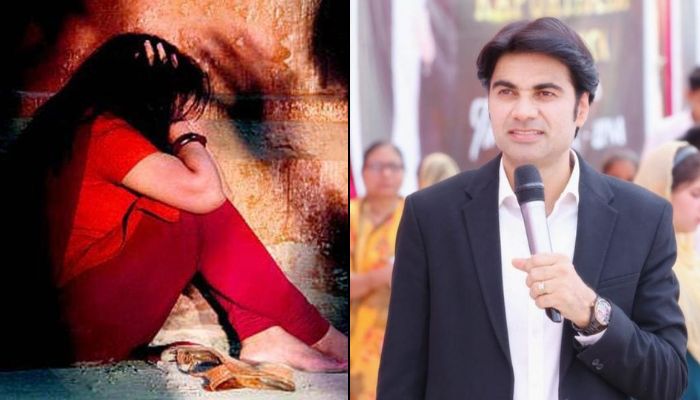
Uttar Pradesh: Ghaziabad Police arrest Imran for repeatedly raping Hindu married woman and forcing her to convert to Islam

On 25th January, Ghaziabad Police arrested a man named Imran for allegedly repeatedly raping a Hindu married woman and attempting to convert her to Islam. The accused reportedly lured the woman on 9th January to go with him. Following her husband’s complaint, the police took swift action and arrested Imran. The woman has been rescued.

Content of the FIR

The FIR against Imran was lodged based on a complaint from the victim’s husband. In his complaint, the husband accused Imran of manipulating and luring his wife into leaving the house. The FIR stated that Imran introduced the woman to a cleric and encouraged her to perform namaz. She was also pressured to consider changing her name and converting to Islam. Furthermore, the husband alleged that the victim left the house with jewellery and cash.

The complaint was filed on 24th January under Section 87 of the Bharatiya Nayay Sanhita (BNS) and Sections 3 and 4 of the Uttar Pradesh Prohibition of Unlawful Religious Conversion Act.

The husband stated in his complaint that Imran, who is a resident of Khoda, knew his wife since before marriage. He had been in contact with the woman for several months. On the night of 9th January, the woman went missing. The husband tried to find her on his own but failed, after which he filed an official complaint at the Vijay Nagar Police Station.

Media reports suggest that the woman began showing an inclination towards Islam, which raised suspicions. The husband provided information such as Imran’s phone number, which led to his arrest. The woman, in her statement, said that Imran took her to several mosques in Delhi and Ghaziabad. He kept her in various hotels during the period she was missing.

Police statement

Deputy Commissioner of Police (City), Rajesh Kumar, confirmed that Imran has been arrested and the woman recovered. He said, “The accused took the woman to several locations, including mosques in Delhi, and kept her in hotels.” However, the accused denies the charges of conversion. The accused was presented in the court and sent to jail.

Further investigation into the matter is underway.

Delhi: Police nab 7 illegal immigrants staying in India, deport them back to Bangladesh

Delhi police have ramped up their operations against illegal immigrants staying in the country. Last week, the cops apprehended seven Bangladeshi nationals in a hotel in Delhi for overstaying their visa.

The Bangladeshi nationals reportedly entered India on a tourist visa in December last year. The Bangladeshi nationals have been identified as Mohammad Bellal (47), Mohammad Yeasin (23), Emon Hossen 21), Mohammad Ghiyas Uddin (28), Mohammad Rubel Hossain (28), Nasruddin (27), and Tanvir Hasan (30).

All of them have been detained for deportation. The Delhi Police have been preparing and verifying a database to identify foreign nationals overstaying in India. Earlier this month, the Delhi Police deported five Bangladeshi nationals illegally staying in India.

Delhi Police prepared a database to identify foreign nationals illegally staying in India

According to the Deputy Commissioner of Police (central) M Harsh Vardhan, the Delhi Police have adopted a two-pronged strategy to identify and deport Bangladeshi nations illegally staying here. “This week alone, seven Bangladeshi nationals were sent for deportation, bringing the total number of illegal foreign nationals deported by the district this year to 17,” he said. He further informed that the database prepared by the police has helped in tracking such foreign nationals. “Data analysis is helping in targeting the efforts of the teams to track and take action against illegal foreigners. This data-based approach is supplementing the efforts by various teams conducting verification drives on the ground and has led to many successful operations”, he added.

A case of forged documents filed

The seven Bangladeshi nationals were staying in a hotel in the Paharganj area of Delhi and were planning to flee to some other country. “They were overstaying their visa. Their visa expired in December 2024 and in early January,” the police said. They were first produced before the Foreigners Regional Registration Office (FRRO) and then sent to a detention centre from where they will be deported to their country. The police have registered a case at Kamla Market police station regarding a fake Indian birth certificate recovered from one of the seven apprehended Bangladeshi nationals. An MCD official and a Tehsildar were interrogated by the police in this regard.

Arvind Kejriwal tries to do ‘Gujarat Vs Punjab’ before Delhi elections, cast aspersions on ECI and police, BJP debunks his lies

On Saturday (25th January), the Home Minister of Gujarat, Harsh Sanghavi, fact-checked the former Chief Minister of Delhi, Arvind Kejriwal, after he questioned the deployment of Gujarat police personnel for the upcoming Delhi Assembly elections.

Kejriwal’s rant on X against the deployment came days after the Election Commission of India (ECI) ordered the removal of police personnel from Punjab deployed for Kejriwal’s security.

In his post, Sanghavi pointed out that it is a routine practice for the ECI to use forces from other states in poll-bound states to maintain law and order during voting.

Kejriwal questioned the deployment of Gujarat police personnel

In a post on X in Hindi, Kejriwal shared an order from the Additional Director General of Gujarat Police, which mentioned the deployment of eight units of police personnel at polling booths in Delhi. In his post, Kejriwal wrote, “Read this order of Gujarat Police. The Election Commission has removed Punjab Police from Delhi and deployed Gujarat Police. What is going on?”

BJP leaders debunk lies of Kejriwal

The Home Minister of Gujarat, Harsh Sanghavi, quoted Kejriwal’s post and stated that the request to deploy police units came from the ECI and that similar requests were sent to other states for poll deployment in Delhi.

In his post, Sanghavi, while suggesting that he now understands why Kejriwal is called a liar, said, “Kejriwal ji, as a former Chief Minister, I’m surprised you’re not aware of the Election Commission’s norms. They’ve requested forces from various states, not just Gujarat. In fact, the Election Commission of India has ordered SRP deployment from various states, a routine procedure. As per their request, 8 companies of SRP from Gujarat were sent to Delhi for the scheduled election on 11/1/25.”

With the post, Sanghavi shared relevant documents that stated there would be the advance deployment of 70 companies of Central Armed Police Forces by 8th January 2025 for area domination, confidence-building measures, conduct of flag marches, surveillance, etc., during the elections.

The fax message came from the Ministry of Home Affairs to the Principal Secretary (Home) of the Delhi government and added that it had been decided to deploy an additional 75 companies of CAPFs/State Armed Police/India Reserve Battalions for the conduct of safe, free, and fair assembly elections in Delhi.

Furthermore, 65 companies of various State Armed Police (SAR) or India Reserve (IR) Battalions were requested: 10 each from Bihar, Madhya Pradesh, and Jharkhand; 8 each from Chhattisgarh and Gujarat; 7 each from Maharashtra and Karnataka; and five from Rajasthan. In total, around 14,500 personnel will be on poll duty in the national capital, as suggested by the document shared by Sanghavi.

Other BJP leaders, including IT Cell Chief Amit Malviya and Shehzad Poonawalla, also countered Kejriwal.

In his post, Malviya wrote, “Is this your first election or are you nervous about losing the election? It is standard practice to deploy state police forces alongside CAPF for election duties. Even for Delhi elections, police forces from 12 states and union territories, including Karnataka, Himachal Pradesh, Jharkhand, Bihar, Haryana, Chandigarh, Rajasthan, Gujarat, Madhya Pradesh, Chhattisgarh, Uttarakhand and Maharashtra have been mobilised. Additionally, Punjab Police was withdrawn from your personal security. It is worth noting that you and Delhi are not synonymous.”

In a post quoting Kejriwal, Poonawalla said, “stop lying” and shared document proving police personnel have been called from different states and not just Gujarat.

Punjab police deployment for Kejriwal’s security removed

On Thursday (23rd January), the Punjab Police alleged that they had beenย forcedย to withdraw the additional security provided to AAP supremo Arvind Kejriwal. They claimed that the Delhi Police and the Election Commission of India had issued them the orders to do so ahead of theย ย Delhi stateย assembly elections scheduled to take place on 5th February this year.

The Punjab Police claimed that they constantly get reports of threats to Punjab Chief Minister Bhagwant Mann and AAP supremo Arvind Kejriwal and that they share such reports with concerned agencies, however, now they have withdrawn a component of security from Kejriwalโ€™s security detail.

Responding to these claims, the Delhi Police clarified that no security component for Kejriwal was withdrawn. โ€œWeโ€™ve just taken over the charge. He already has been provided with Z+ security with 63 personnel by Delhi officials,โ€ the officer from Delhi Police said.

โ€œOccasionally, we get reports of threats to Chief Minister Bhagwant Mann and Arvind Kejriwal and share them with the concerned agencies. Today, after the Delhi Policeโ€™s intervention following the directions of the Election Commission, we have withdrawn Punjab security from Arvind Kejriwalโ€™s security cover. We will continue to share inputs with Delhi Police,โ€ Director General of Police Gaurav Yadav from Punjab Police was quoted as saying.

Voting will take place for Delhi Assembly elections on 5th February 2025 in a single phase and results will be announced on 8th February.

Union govt announces recipients of Padma Awards for 2025: Read the full list of 139 awardees here

The Union government on Saturday released the list of Padma Award winners on the eve of the 76th Republic Day celebrations. The names of 139 Padma awardees were published by the Ministry of Home Affairs on Saturday evening.

Padma Awards – one of the highest civilian Awards of the country, are conferred in three categories – Padma Vibhushan, Padma Bhushan and Padma Shri. The Awards are given in various disciplines/ fields of activities, viz.- art, social work, public affairs, science and engineering, trade and industry, medicine, literature and education, sports, civil service, etc.

โ€˜Padma Vibhushanโ€™ is awarded for exceptional and distinguished service; โ€˜Padma Bhushanโ€™ for distinguished service of high order and โ€˜Padma Shriโ€™ for distinguished service in any field. The awards are announced on the occasion of Republic Day every year.

These Awards are conferred by the President of India at ceremonial functions which are held at Rashtrapati Bhawan usually around March or April every year. For the year 2025, the President has approved conferment of 139 Padma Awards including 1 duo case, which means the award given to two persons is counted as one.

The list comprises 7 Padma Vibhushan, 19 Padma Bhushan and 113 Padma Shri Awards. 23 of the awardees are women and the list also includes 10 persons from the category of Foreigners/ NRI /PIO /OCI and 13 Posthumous awardees.

The full list is given below:

Padma Vibhushan

Sl No.NameFieldState/Country
1.Shri Duvvur Nageshwar ReddyMedicineTelangana
2.Justice (Retd.) Shri Jagdish Singh KheharPublic AffairsChandigarh
3.Smt. Kumudini Rajnikant LakhiaArtGujarat
4.Shri LakshminarayanaSubramaniamArtKarnataka
5.Shri M. T. Vasudevan Nair (Posthumous)Literature and EducationKerala
6.Shri Osamu Suzuki (Posthumous)Trade and IndustryJapan
7.Smt. Sharda Sinha (Posthumous)ArtBihar

Padma Bhushan

Sl No.NameFieldState/Country
8.  Shri A Surya PrakashLiterature and Education-JournalismKarnataka
9.  Shri Anant NagArtKarnataka
10.  Shri Bibek Debroy(Posthumous)Literature and EducationNCT Delhi
11.  Shri Jatin GoswamiArtAssam
12.  Shri Jose Chacko PeriappuramMedicineKerala
13.  Shri Kailash Nath DikshitOthers-ArchaeologyNCT Delhi
14.  Shri Manohar Joshi(Posthumous)Public AffairsMaharashtra
15.  Shri Nalli Kuppuswami ChettiTrade and IndustryTamil Nadu
16.  Shri Nandamuri BalakrishnaArtAndhra Pradesh
17.  Shri P R SreejeshSportsKerala
18.  Shri Pankaj PatelTrade and IndustryGujarat
19.  Shri Pankaj Udhas(Posthumous)ArtMaharashtra
20.  Shri Rambahadur RaiLiterature and Education-JournalismUttar Pradesh
21.  Sadhvi RitambharaSocial WorkUttar Pradesh
22.  Shri S Ajith KumarArtTamil Nadu
23.  Shri Shekhar KapurArtMaharashtra
24.  Ms. Shobana ChandrakumarArtTamil Nadu
25.  Shri Sushil Kumar Modi(Posthumous)Public AffairsBihar
26.  Shri Vinod DhamScience and EngineeringUnited States of America

Padma Shri

Sl No.NameFieldState/Country
79.  Shri Lalit Kumar MangotraLiterature and EducationJammu And Kashmir
80.  Shri Lama Lobzang(Posthumous)Others-SpiritualismLadakh
81.  Smt. Libia Lobo SardesaiSocial WorkGoa
82.  Shri M D SrinivasScience and EngineeringTamil Nadu
83.  Shri Madugula Nagaphani SarmaArtAndhra Pradesh
84.  Shri Mahabir NayakArtJharkhand
85.  Smt. Mamata ShankarArtWest Bengal
86.  Shri Manda Krishna MadigaPublic AffairsTelangana
87.  Shri Maruti Bhujangrao ChitampalliLiterature and EducationMaharashtra
88.  Shri Miriyala Apparao(Posthumous)ArtAndhra Pradesh
89.  Shri Nagendra Nath RoyLiterature and EducationWest Bengal
90.  Shri Narayan (Bhulai Bhai)(Posthumous)Public AffairsUttar Pradesh
91.  Shri Naren GurungArtSikkim
92.  Smt. Neerja BhatlaMedicineNCT Delhi
93.  Smt. Nirmala DeviArtBihar
94.  Shri Nitin NohriaLiterature and EducationUnited States of America
95.  Shri Onkar Singh PahwaTrade and IndustryPunjab
96.  Shri P DatchanamoorthyArtPuducherry
97.  Shri Pandi Ram MandaviArtChhattisgarh
98.  Shri Parmar Lavjibhai NagjibhaiArtGujarat
99.  Shri Pawan GoenkaTrade and IndustryWest Bengal
100.  Shri Prashanth PrakashTrade and IndustryKarnataka
101.  Smt. Pratibha SatpathyLiterature and EducationOdisha
102.  Shri Purisai Kannappa SambandanArtTamil Nadu
103.  Shri R AshwinSportsTamil Nadu
104.  Shri R G ChandramoganTrade and IndustryTamil Nadu
105.  Smt. Radha Bahin BhattSocial WorkUttarakhand
106.  Shri Radhakrishnan DevasenapathyArtTamil Nadu
107.  Shri Ramdarash MishraLiterature and EducationNCT Delhi
108.  Shri Ranendra Bhanu MajumdarArtMaharashtra
109.  Shri Ratan Kumar ParimooArtGujarat
110.  Shri Reba Kanta MahantaArtAssam
111.  Shri Renthlei LalrawnaLiterature and EducationMizoram
112.  Shri Ricky Gyan KejArtKarnataka
113.  Shri Sajjan BhajankaTrade and IndustryWest Bengal
114.  Smt. Sally HolkarTrade and IndustryMadhya Pradesh
115.  Shri Sant Ram DeswalLiterature and EducationHaryana
116.  Shri Satyapal SinghSportsUttar Pradesh
117.  Shri Seeni ViswanathanLiterature and EducationTamil Nadu
118.  Shri Sethuraman PanchanathanScience and EngineeringUnited States of America
119.  Smt. Sheikha Shaikha Ali Al-Jaber Al-SabahMedicineKuwait
120.  Shri Sheen Kaaf Nizam (Shiv Kishan Bissa)Literature and EducationRajasthan
121.  Shri Shyam Bihari AgrawalArtUttar Pradesh
122.  Smt. Soniya NityanandMedicineUttar Pradesh
123.  Shri Stephen KnappLiterature and EducationUnited States of America
124.  Shri Subhash Khetulal SharmaOthers-AgricultureMaharashtra
125.  Shri Suresh Harilal SoniSocial WorkGujarat
126.  Shri Surinder Kumar VasalScience and EngineeringDelhi
127.  Shri Swami Pradiptananda (Kartik Maharaj)Others-SpiritualismWest Bengal
128.  Shri Syed Ainul HasanLiterature and EducationUttar Pradesh
129.  Shri Tejendra Narayan MajumdarArtWest Bengal
130.  Smt. Thiyam Suryamukhi DeviArtManipur
131.  Shri Tushar Durgeshbhai ShuklaLiterature and EducationGujarat
132.  Shri Vadiraj Raghawendracharya PanchamukhiLiterature and EducationAndhra Pradesh
133.  Shri Vasudeo KamathArtMaharashtra
134.  Shri Velu AasaanArtTamil Nadu
135.  Shri Venkappa Ambaji SugatekarArtKarnataka
136.  Shri Vijay Nityanand Surishwar Ji MaharajOthers-SpiritualismBihar
137.  Smt. Vijayalakshmi DeshamaneMedicineKarnataka
138.  Shri Vilas DangreMedicineMaharashtra
139.  Shri Vinayak LohaniSocial WorkWest Bengal

YSRCP leader V Vijaysai Reddy resigns from Rajya Sabha and quits politics to โ€˜focus on agricultureโ€™

0

Rajya Sabha Chairman Jagdeep Dhankhar on Saturday accepted the resignation of YSR Congress Party leader V Vijaysai Reddy, who stepped down from his position as a Member of Parliament, citing personal reasons and announcing his retirement from politics.

Reddy, who served as the party’s floor leader in the Rajya Sabha, expressed his intention to focus on agriculture moving forward. He personally submitted his resignation to the Chairman, who accepted it with immediate effect.

Taking to social media website X, Reddy wrote, “Today, I submitted my resignation to the Hon’ble Vice President Shri Jagdeep Dhankhar Ji. Hon’ble Chairman of Rajya Sabha is pleased to accept the resignation with immediate effect duly recording the proceedings.”

The now former MP announced his retirement from politics on January 24, stating that he would resign from his Rajya Sabha membership on January 25.

He resigned as a member of Rajya Sabha voluntarily, citing personal reasons. He said that he would focus on pursuing agriculture.

Announcing his retirement from politics, Reddy said that he worked tirelessly as the floor leader in Rajya Sabha, without any compromises, for the benefit of YSRCP.

“As the leader of the parliamentary party, floor leader in Rajya Sabha, and national general secretary of the YSRCP, I have worked tirelessly, with sincerity and without any compromise, for the benefit of the party and the state. I have served as a bridge between the Centre and the state to maintain the cordial relationship and get maximum benefits for the state,” Reddy said.

Reddy has played a major role in the Indian Parliament, serving as the Parliamentary Party Leader of YSRCP in the Rajya Sabha from 2016 to 2024. He has held various key positions, including Chairman of the Parliamentary Standing Committee on Transport, Tourism, and Culture, and introduced 30 Private Member Bills. He has also served on multiple parliamentary committees, such as Petroleum & Natural Gas, Subordinate Legislation, and Public Accounts.

Despite his prominent political career, Reddy’s bid for the 2024 Lok Sabha elections ended in a loss to TDP’s Vemireddy Prabhakara Reddy. He has received several accolades for his parliamentary work, including the Sansad Ratna Award in 2023 and the Sansad Maharatna Award in 2024.

(This news report is published from a syndicated feed. Except for the headline, the content has not been written or edited by OpIndia staff)

Fabrication of Fatima Sheikh: A case study of how fictional narratives can be weaponised with circular referencing for political or ideological gains

In an era where information is disseminated at lightning speed, the integrity of historical narratives can easily be compromised by the creation and proliferation of fake literature. Fabrication of Fatima Sheikh, is one such case where a fictional character was created and inserted silently into the historical discourse.

Let us explore how our history can be manipulated by such fabrications and analyse the broader implications of such fabrications on Indian cultural and historical understanding.

Fabrication of โ€œFatima Sheikh- The First Muslim Female Teacher in Indiaโ€

Dilip Mandal, the new media advisor of the government, made a sensational claim on Thursday, 9th January, saying he created a fictional character named โ€œFatima Sheikhโ€ in 2006. He admitted that this fabrication was part of a larger strategy to craft a political narrative. His confession is pivotal, as it not only highlighted the deliberate construction of a fake historical figure for ideological purposes, it also pointed towards a larger syndicate of historical manipulation in play for decades.

Dilip Mandal’s tweets

Understanding the Creation of Fake History- Academic Validation via Circular Referencing

It is a known fact that some historians have already been running a citation syndicate to provide a scholarly look at their propaganda creations. The same technique was also followed in Fatima’s case, wherein, a circular referencing method was used to validate her existence.

Let us first understand what circular referencing is and how it works.

Circular referencing in academic circles occurs when two or more scholarly works cite each other in a way that creates a loop, either directly or indirectly, without introducing new or external information. This can undermine the credibility and robustness of the argument being made, as it may just rely on a closed cycle of evidence, rather than an independent validation or broader perspectives.

Circular referencing creates a web of references to a myth which due to multiple repetitions becomes difficult to trace to its primary source.

Circular referencing

Citation sources are of 3 types: Primary, Secondary, Tertiary

Suppose there was an incident – a car crash. A news reporter, who watched this crash live, wrote about it in a newspaper. This version of the news article is the primary source.

A person who reads this newspaper now writes a book citing this article as sa ource. This book becomes a secondary source. Another person now writes an article in some magazine citing this book as a source. This magazine article is now a tertiary source.

Leftist historians have produced a lot of such tertiary sources, which then becomes difficult to trace back to the primary sources.

This is exactly what happened in Fatima’s case.

When Dilip Mandal highlighted the folklore of โ€œFatima Sheikh-the first Muslim teacher in Indiaโ€, as true history, many leftist authors lapped this story up. A paper was published in January 2021 (Terrains of Consciousness Multilogical Perspectives on Globalization, by Isabel Karremann, Zeno Ackermann, Simi Malhotra – National Islamic University, Nishat Zaidi – National Islamic University), citing Dilip Mandalโ€™s article as a source.

Dilip Mandal Claimed-โ€œI created Fatimaโ€-But Did He?

While Dilip Mandal emphatically claimed that he is the creator of this character โ€œFatima Sheikhโ€, there is ample evidence that points otherwise.

Mandal claimed that prior to 2022, there were no references to Fatima Sheikh in Google searchesโ€”no articles, no books, and no mentions. He said -โ€œShe came into the social media narrative and just vanished.โ€

However, there is definitely a historical reference to the existence of a โ€˜Fatimaโ€™. โ€˜Savitribai Phule-Samagra Vangmayโ€™, published in 1988 by the Maharashtra Rajya Sahitya Ani Sanskruti Mandal, included a letter written by Savitribai Phule to her husband, Jyotirao Phule which mentioned Fatima.

In this letter dated October 20, 1856, Savitribai wrote: โ€œI will return to Pune immediately once I recover fully. Donโ€™t worry. Fatima must have been burdened, but she will not complain.โ€

Although the letter did not mention Fatimaโ€™s surname, it indicates her presence in the Phulesโ€™ life. Her exact role in their life however, remains unknown.

Savitribai Phule’s letter mentioning ‘Fatima’

So this letter itself debunks Dilip Mandalโ€™s claim that no one named โ€œFatimaโ€ existed. She definitely existed but her role and importance are questionable.

Note that Jyotirao Phuleโ€™s article, published in the periodical โ€˜Dnyanodayโ€™ in September 1853, discusses his school activities but makes no mention of Fatima. Therefore, we can safely assume that apart from this letter, there is no mention of Fatima in any of Phuleโ€™s work or any other contemporary historical literature.

Now, letโ€™s see how this person, mentioned in a single line, in a single letter, was converted into a full-fledged larger-than-life historical character by various so-called historians and scholars.

In 1986, a book named โ€œKrantijyoti Savitribai Phuleโ€ was published by Dr. M.G Mali. This book mentions a character named โ€œFatima Sheikhโ€. However, there was no real evidence to corroborate this claim of Fatimaโ€™s existence as a teacher.

Notably, this bookโ€™s reprint version of 2011 is being circulated. However, no original copy of the 1986 version exists in the public domain to ascertain whether this insertion was original or a later reprint interpolation.

Cover of the book โ€œKrantijyoti Savitribai Phule” and artwork depicting Fatima Sheikh in the book

5 years later, another book was published named โ€œWomen Writing in India: 600 B.C. to the Presentโ€ by Susie Tharu and K. Lalita. This book also mentioned a character named โ€œFatima Sheikhโ€ as a colleague of Savitribai. But the source of this information was the same letter by Savitribai to Jyotirao Phule. That means Fatima being a teacher was an assumption made by the authors, with zero substantial evidence.

Mention of Fatima Sheikh in the book Women Writing in India: 600 B.C. to the Present

Thereafter, some Urdu textbooks prepared by the Maharashtra textbook bureau Balbharati also included a small section on Fatima. There was also a chapter on her life in Class 8 textbooks in Andhra Pradesh. But when these textbooks were printed remained unknown. Also, the source of the information on Fatima in these books remains questionable.

Apart from a few fleeting mentions of Fatima in some books, there was not much buzz around this character for the next 3 decades. She just remained as a forgotten character, in old books.

However, in 2019 Dilip Mandal, somehow found this character and decided to give her a new life. He wrote an article in The Print-“Why has Indian history forgotten Fatima Sheikh but remembers Savitribai Phule?”

After this article, Fatima suddenly became the โ€œforgotten historical figureโ€ whom everyone wanted to claim. Leftist scholars, Ambedkarite organizations, and Muslim organizations picked her up and eulogized her. Information regarding her started appearing in multiple books, all published post-2019. Dilip Mandal also did a podcast on Fatima Sheikh on the Printโ€™s YouTube channel.

Some of the books and research articles written using this narrative are as follows:

Her Name Was Freedom 35 Fearless Women Who Fought for Indiaโ€™s Independence

Unequal Why India Lags Behind Its Neighbours

Youth Politics in Urban Asia

India and Identity – Some Reflections

Moral and Political Discourses in Philosophy of Education

    Her birthday was celebrated every year with a lot of fanfare. All Ambedkarite and Muslim organizations started putting her on the same pedestal as Savitribai Phule.

    Her popularity increased and even the major media outlets started remembering her every year. Even a Google Doodle was based on her.

    Google Doodle on Fatima

    Popular Media handles remember her on January 9 every year

    The spread of this fabricated story has not been confined to mere online discussions. Prominent media outlets like ย Feminism India, Times Now, Indian Express, and Zee News have all contributed to the remembrance of this fictional character. Furthermore, educational platforms and IAS preparation websites have included this narrative in their study materials, thereby teaching a version of history that is potentially misleading to students and aspirants.

    BBC Hindi published a documentary on her in 2020. The Print hosted a discussion on her. Similarly, Vikas Divyakirti owned Drishti IAS, StudyIQIAS, BBC Marathi, BBC Gujarati etc have created documentaries on her.

    History of Fatima Sheikh is part of UPSC syllabus and is being taught to students. Atrocity literature appeals to the emotion at IAS preparation websites and Teacher Plus, a site for teachers.

    These include:

    1. Drishti IAS
    2. Sriram IAS
    3. IAS baba
    4. Next IAS
    5. Vajirao IAS
    6. Optimize IAS
    7. Civils Daily
    8. UPSC Exam Notes
    9. GK Today
    10. Teacher Plus

    Now, even books were being written about her and documentaries were being made by various media outlets.

    Two books on Fatima by Samyak Prakashan

    Details like Fatima Sheikh’s birthday, profession, and her relationship with the Phule family were all invented to give depth to this character, despite there being no historical records to validate such specifics. Articles and books were subsequently written about Fatima, expanding on her invented background, family life, and even a love interest. This fabrication even extended to the creation of a Wikipedia page, showcasing how easily historical fraud can be embedded in the digital information ecosystems.

    A lot of fake eulogies, fictional stories, fraud accolades, false praises, hoax tributes, forged references, phoney compliments, and synthetic acclamation about a simulated character were created out of thin air.

    Book on Fatima Sheikh

    Thus, a fictional character, with no historical evidence, became a eulogized and well-established historical figure, a pioneer in the field of education.

    However, this complete fabrication of a historical figure was not unnoticed. Some of the Dalit-Muslim research scholars expressed doubts about it.

    Hari Narke, a renowned academician who is known for his work on Jyotirao Phule and B R Ambedkar raised questions regarding the identity and existence of Fatima Sheikh. He had asked people who were celebrating Fatima Sheikhโ€™s birth anniversary to provide credible evidence justifying the same.

    Other Dalit scholars like Arvind Kumar and Suraj Yenge (amongst others) raise questions about Fatimaโ€™s existence as well.

    Even an attempt to correct the Wikipedia page by a contributor named Starlordnikhil, was thwarted. Four years ago, Starlordnikhil attempted to correct the Wikipedia article on Fatima Sheikh, but his edits were deleted and he was blocked from Wikipedia platform without any explanation.

    That shows that concerns were being raised on Fatimaโ€™s existence but all these concerns were disregarded and Fatimaโ€™s eulogization continued.

    Effect Of Dilip Mandalโ€™s Disclosure

    After Dilip Mandalโ€™s confession went viral, an online debate started on how easily history can be manipulated for political ambitions. The news was covered by all major media outlets and raised a huge outcry amongst the public.

    The article written by Mandal was taken down by The Print after this disclosure.

    The Wikipedia article on Fatima again was in the limelight and after major public concerns, finally editors removed the picture, date of birth and date of death from Fatima Sheikhโ€™s introduction. However, Wikipedia rejected a proposal to delete the article, as some editors claimed that there are evidence of Fatima being a real person.

    Conclusion

    Though Dilip Mandalโ€™s assertion of him being the creator of Fatima Sheikh can be contested, it is evident that works of Phuleโ€™s do not have any mention of Fatima Sheikh associated with him and Savitribai. The creation of this character is now considered as an attempt at Muslim appeasement or to foster a narrative of historical Dalit-Muslim unity.

    Also, the entire timeline and sequence of building up a fictional character, all from a single line in a single letter, and then inserting her in history with complete validation shows how easily history can be manipulated.

    Implications

    This entire saga sheds light on a troubling aspect of historical narrative manipulation. The creation of Fatima Sheikh as a historical figure serves as a case study of how fictional narratives can be weaponized for political or ideological gains, leading to a distorted perception of history. This not only affects the credibility of historical studies but also manipulates public sentiments, potentially fostering division or unity based on fabricated grounds.

    Also, an important point to note is that although Mandal accepted Fatima being a fake character, he is still mum on other questionable stories and characters from atrocity literature (e.g. Nangeli or Jhadu-Matki story).

    The broader implications of such fake atrocity literature, as termed, are significant. It challenges us to question the sources of our historical knowledge and the motivations behind the narratives we accept as truth. It forces us to ask – how much of our history has been twisted or outright fabricated by ideological opportunists to serve their selfish goals.

    As we move forward, it becomes crucial for educators, media, and individuals to engage in critical analysis of historical figures and events, ensuring that the history we learn and teach is rooted in factual evidence rather than constructed myths.

    โ€ƒ

    Uniform Civil Code to be implemented in Uttarakhand on January 27, UCC portal also to be launched

    Uttarakhand Chief Minister’s secretary Shailesh Bagoli said that the Uniform Civil Code (UCC) will be implemented in Uttarakhand on January 27, a day before Prime Minister Narendra Modi’s arrival in Dehradun.

    CM Pushkar Singh Dhami will also launch the UCC portal on the same day. The UCC portal will be launched at 12:30 pm on January 27 at the Secretariat. Uttarakhand will be the first state in independent India to implement UCC.

    The Uttarakhand government has implemented the Uttarakhand Uniform Civil Code Act, 2024, establishing a streamlined framework for the creation and cancellation of wills and supplementary documents, known as codicils, under testamentary succession.

    Uttarakhand government on Wednesday notified the Uniform Civil Code (UCC) which contains clarity of legal provisions for marital conditions and protection of individual rights and social harmony, an official statement read.

    According to the state government, this act applies to the entire area of the state of Uttarakhand and is also effective on the residents of the state living outside Uttarakhand.

    Uttarakhand has become the first state in India to implement a Uniform Civil Code (UCC), aiming to simplify and standardize personal laws related to marriage, divorce, succession, and inheritance.

    The UCC applies to all residents of Uttarakhand, except Scheduled Tribes and protected authority-empowered persons and communities.

    This Act does not apply to the Scheduled Tribes (ST) notified under Article 342 and Article 366 (25) of the Constitution and protected authority-empowered persons and communities under Part XXI have also been excluded from its purview.

    To streamline and simplify the legal processes related to marriage, a public welfare system promoting the protection of individual rights and social harmony has been provided in the Uniform Civil Code Act, 2024 of Uttarakhand, the statement added.

    Under this, marriage can be solemnised only between those parties, none of whom has a living spouse, both are mentally capable of giving legal permission, the man should have completed at least 21 years of age and the woman 18 years of age and they should not be in the ambit of prohibited relationships.

    Marriage rituals can be performed in any form under religious customs or legal provisions, but it is mandatory to register marriages taking place after the implementation of the Act within 60 days.

    Whereas marriages taking place from March 26, 2010, to the implementation of the Act will have to be registered within 6 months. Those who have already registered as per the prescribed standards, although they are not required to register again, will still have to acknowledge the registration done earlier.

    Marriages solemnised before March 26, 2010, or outside the state of Uttarakhand, where both the parties have been living together since then and fulfil all the legal eligibility criteria, can (although it is not mandatory) get registered within six months of the coming into force of the Act, said an official statement.

    Similarly, the work of acceptance and acknowledgement of marriage registration is also required to be completed promptly. After receiving the application, the sub-registrar has to make an appropriate decision within 15 days.

    According to the statement, if no decision is taken on the application related to marriage registration within the prescribed period of 15 days, then that application is automatically forwarded to the registrar; whereas, in case of acknowledgement, the application will be considered automatically accepted after the same period.

    Along with this, a transparent appeal process is also available if the registration application is rejected. There is a provision of penalty for giving false information for registration under the Act and it has also been clarified that the marriage will not be considered invalid merely due to non-registration. Registration can be done both online and offline.

    To implement these provisions, the state government will appoint a registrar general, Registration and sub-registrar, who will ensure the maintenance and monitoring of the relevant records.

    This Act also lays down who can marry and how marriages are to be solemnised and also provides clear provisions on how both new and old marriages can be legally recognised, the statement added.

    Earlier the Uttarakhand Government’s Information Technology Development Agency (ITDA) conducted a mock drill for the Uttarakhand Uniform Civil Code Portal, marking a significant step in the portal’s operational readiness ahead of its official rollout.


    (This news report is published from a syndicated feed. Except for the headline, the content has not been written or edited by OpIndia staff)