Home Blog Page 547

The US issues over one million non-immigrant visas to Indians for the second consecutive year, visitors from India increases by 5 times in 4 years

0

The US has issued over one million non-immigrant visas to Indians for the second year in a row, including a record number of visitor visas, showcasing the huge demand for travelling to the US for tourism, business and education.

In the past four years, visitor numbers from India have increased by five times and over two million Indians travelled to the US in the first eleven months of 2024, a 26 per cent rise over the same period in 2023, the US Embassy and Consulates in India said in a statement.

The US Embassy in India said, “Over five million Indians already have a nonimmigrant visa to visit the United States and each day the Mission issues thousands more.”

The US Department of State completed a successful pilot program to renew of H-1B visas in the United States this year. This allowed many speciality occupation workers from India to renew their visas without leaving the US, according to the US Embassy in India statement. This pilot program streamlined the renewal process for thousands of applicants, and the Department of State is working to formally create a US-based renewal program in 2025.

“The US Mission to India issued tens of thousands of immigrant visas, facilitating legal family reunification and the migration of skilled professionals. These immigrant visa holders became permanent residents upon their arrival, adding to the already rich and sizable Indian diaspora community in the United States,” the statement said.

According to the statement, the US Mission to India provided over 24,000 passports and other consular services to American citizens living and travelling in India. A new version of the Smart Traveler Enrollment Program (STEP) debuted in 2024, making it easier for the embassy and consulates to contact US citizens during emergencies and send them safety and security alerts.

Increased processing of thousands of interview waiver-eligible nonimmigrant visa applications each week made it quicker and easier than ever for Indians to renew their nonimmigrant visas, according to the statement. By streamlining operations and utilizing global consular resources, the US Mission has been able to redirect its own resources to focus on in-person interviews, reducing wait times for all applicants.

More Indian students than ever before now have US student visas, according to the statement. The US Embassy in India noted, “Many exchange visitors will now be able to remain in the United States and not need to return home for two years after completing their programs in the United States, offering them more opportunities to further their careers and education. The removal of India from the Exchange Visitors Skills List has provided greater flexibility for these Indian J-1 nonimmigrant visa holders.”

The US Mission to India expressed dedication to fostering strong bilateral relations and providing exceptional consular services. The statement said, “These achievements over the past year are a testament to the hard work and dedication of the Mission’s staff and the enduring partnership between the United States and India.”


(This news report is published from a syndicated feed. Except for the headline, the content has not been written or edited by OpIndia staff)

Andhra Pradesh: Police warn against communal clash after attack on Ayappa devotee, attacker Ziaul Huq nabbed and forced to apologize by touching victim’s feet

0

A day after tensions erupted in Madanapalle in Andhra Pradesh’s Annamayya district after an Ayyappa devotee was attacked by a Muslim youth, police have issued a stern warning against creating any communal tension over the incident. Notably, the accused identified as Ziaul Huq was detained by the police on the same day and was forced to apologize to the victim. Videos appeared on social media in which the police could be seen dragging the accused to the victim and asking him to touch his feet while apologizing for the act he did.

A case has been registered against Ziaul Haq under all applicable sections as he deliberately attacked the Hindu man and started a fight.

Madanapalle SP Vidyasagar Naidu said that the police department is not taking this case lightly and said, “If anyone takes the law into their own hands, strict action will be taken.” He said that some people tried to create a communal clash using the ‘minor dispute’, adding that the matter was resolved after Jiyavul Huq apologised to Venkatesh. “Strict action will be taken if religious hatred is created in Madanapalle.” he added.

Reportedly, even after the victim said that he had got justice in the case, some people later went to the police station to register a case. They also allegedly started a fight and vandalised a hotel. Police said that they have taken the matter seriously, and the vandals are being identified using CCTV footage.

The attack was executed by Ziaul who was later detained by the police. The incident took place near the RTC bus stand on 25th December evening, when Ayyappa devotee, victim Venkatesh asked Huq to move his two-wheeler as it was blocking the road. Angered by this, the Muslim youth attacked the Hindu youth. He tore the Ayyappa mala Venkatesh was wearing. As he continued the assault, locals assembled at the sport and intervened.

Soon the activists of Hindu groups gathered after receiving information about the incident. The people assembled at the place started chanting slogans condemning the attack on the symbol of Lord Venkatesh. The Hindu groups are demanding strict action against the Muslim youth from Bidar for disrespecting Lord Ayyappa.

Later police reached the spot and tried to calm the situation. The police nabbed the accused and made him apologize by touching the feet of the Ayyappa devotee, helping to calm the anger among the Ayappa devotees. Several other Ayappa devotees were there with victim Venkatesh when the police brought Huq to apologize.

The incident comes weeks after a bus carrying Ayappa devotees was attacked in Rayachoti town in Andhra Pradesh on 7th December. The bus was attacked by a Muslim mob because of Hindu devotional songs played in the vehicle, alleging that the volume of the song was too high and it was audible from outside the bus.

ISRO to launch SpaDeX Mission: Read details about the indigenous in-space docking technology developed for India’s future space programs

The Indian Space Research Organisation (ISRO) is set to launch its Space Docking Experiment (SpaDeX) mission on December 30, 2024, at 21:58 IST from the Satish Dhawan Space Centre in Sriharikota. This pioneering mission aims to demonstrate in-space docking technology by deploying two small satellites, designated SDX01 (Chaser) and SDX02 (Target), each weighing approximately 220 kg, into a 470 km circular orbit.

The primary objective of SpaDeX is to develop and validate technologies essential for the autonomous rendezvous, docking, and undocking of spacecraft. These capabilities are crucial for India’s future space endeavours, including lunar missions like Chandrayaan-4, and the construction of the space station Bharatiya Antariksh Station (BAS). The mission also seeks to demonstrate the transfer of electrical power between docked spacecraft, composite spacecraft control, and payload operations post-undocking.

The mission will commence with the PSLV-C60 rocket deploying the Chaser and Target satellites into slightly different orbits. Utilising precise manoeuvres, the Chaser satellite will approach the Target, reducing the inter-satellite distance through stages of 5 km, 1.5 km, 500 m, 225 m, 15 m, and finally 3 m, culminating in docking of the two spacecraft.

After successful docking and rigidization, the mission will demonstrate electrical power transfer between the two satellites. After that, the two satellites perform undocking and separation, and then will initiate their intended operations, with an expected mission life of up to two years.

ISRO has developed indigenous technologies for this mission, including a docking mechanism, a suite of rendezvous and docking sensors, power transfer technology, an autonomous rendezvous and docking strategy, an inter-satellite communication link, and a GNSS-based Relative Orbit Determination and Propagation processor. The space agency also built simulation test beds for both hardware and software design validation and testing.

ISRO said that the SpaDeX mission is challenging due to its small size and mass, as it needed finer precision for the rendezvous and docking manoeuvres compared to docking two large spacecraft.

The docking mechanism is a low-impact docking system with an approach velocity of 10 mm/s, is androgynous which means the docking systems are identical for both spacecraft, and is a peripheral docking system, i.e., a concept similar to the International Docking System Standard used by other agencies for human missions.

ISRO has released an animation illustrating the docking process, providing a visual representation of the mission’s objectives.

The docking mechanism is smaller (450 mm) with one degree of freedom for extension and uses two motors compared to the IDSS (800 mm) on a hexapod with 24 motors. Multiple test beds were established to test the hardware and software simulation of the docking kinematics to verify and finalise the docking approach parameters, ISRO said.

The sensor suite of the mechanism includes Laser Range Finder (LRF) and Corner Cube Retro Reflectors to work for a range of 6000 to 200 m for determining range (R). The set of Rendezvous Sensors (RS) is used in the range of 2000 to 250 m and from 250-10 m. RS provides the relative position (x, y, z) while LRF determines both relative position and velocity independently.

Proximity and Docking Sensor (PDS) provides relative position and velocity over a range of 30 m to 0.4 m. Laser Diodes (LDs) are used as targets for RS & PDS. A video monitor is used in the 20 to 0.5 m range and it will capture the video of the docking event. A Mechanism Entry Sensor (MES) is used from 8 cm to 4 cm to detect chaser entry into the target spacecraft during docking.

Both the SpaDeX spacecraft carry a differential GNSS-based Satellite Positioning System (SPS), which provides PNT (Position, Navigation, and Timing) solutions for the satellites. 

After the docking and undocking demonstration, the two satellites be separated and will begin their pre-planned activities. The spacecrafts are equipped with High-Resolution Camera, Radiation Monitor, Miniature Multi-Spectral Payload for natural resource monitoring and vegetation studies.

The SpaDeX satellites were designed and realized by the UR Rao Satellite Centre (URSC) with the support of other ISRO centres (VSSC, LPSC, SAC, IISU, and LEOS). The spacecraft, in its orbital phase, will be controlled from ISTRAC using ISRO ground stations and other externally hired ground stations.

These advancements position India to become the fourth country globally to possess space docking technology. Till now, only Russia, the US, and China have mastered the complex technology.

The success of SpaDeX is anticipated to enhance India’s capabilities in space exploration, enabling complex missions that require multiple launches and in-orbit assembly. This includes future lunar missions, human spaceflight endeavours, and the development of India’s own space station. By mastering in-space docking technology, ISRO aims to facilitate longer-duration missions and more intricate space operations, marking a substantial leap in the nation’s space program

The satellites are scheduled to be launched at 9:58 PM on 30 December from the Satish Dhawan Space Centre in Sriharikota. For those interested in witnessing this milestone, ISRO has opened registrations for the public to view the launch from the Launch View Gallery at SDSC SHAR, starting December 23, 2024.

K Annamalai whips himself, pledges to observe 48-day fast in protest against DMK govt: Here’s all you need to know about Anna University sexual assault case

On Friday, 27th December, Tamil Nadu BJP President K Annamalai protested against the state government outside his residence in Coimbatore by whipping himself several times. This comes as the BJP accused the DMK government of failing to handle the case of sexual assault on a 19-year-old girl in Anna University, Chennai.

Annamalai stated that the state released the personal details of the victim and committed a shameful act by compromising her dignity. He said that the incident overall reflected the incompetence of the state in handling such sensitive matters.

The video of K Annamalai whipping himself is making rounds on social media.

On Thursday, Annamalai also announced that he would forego wearing footwear until the DMK is ousted from power. Amid the protest, the leader slammed the DMK party for lack of CCTV surveillance at the university and also questioned the state’s use of the Nirbhaya fund allotted for women’s safety. “The FIR itself has exposed the victim’s identity and portrayed her in a poor light. This is a disgrace, and the DMK government must take responsibility,” he said as he slammed law minister S Regupathy for defending the state’s actions.

He also said that the police had failed to conduct a proper investigation in the case and demanded the removal of the Chennai police commissioner or the deputy commissioner involved. He further declared that he would observe a 48-day fast and visit Lord Muruga’s six abodes to complain about the state’s deteriorating governance as a protest.

“This kind of dirty politics leaves no room for respect or healthy debate. Women’s safety should not be compromised under any circumstance,” he affirmed.

This comes after the sexual assault incident that was reported from the Anna University campus in Chennai this week. A 19-year-old girl was sexually assaulted on the university campus after which the police arrested one man identified as Gnansekaran in the case. The incident has notably sparked massive political outrage in the state with the state failing to handle the situation and opposition demanding change of governance.

accused Gnansekaran

As per the reports, the 37-year-old accused jumped onto the university campus on Monday, 23rd December evening and sexually assaulted the second-year student at around 8 pm. The accused executed the assault behind one of the university buildings after brutally bashing a fourth-year male student who had accompanied the girl at that time.

The police investigating the case revealed that the accused initially threatened the male student to leave the spot. However, later he thrashed him and then sexually assaulted the girl. As per the police officials, the accused operated a biryani stall near the university and was well aware of the campus areas. After being arrested, the accused Gagansekaran gave a confessional statement agreeing to the accusations.

The police meanwhile also stated that the accused had threatened the victim before he assaulted her. “Gnanasekaran approached the students and threatened them by saying he had taken their video. He then threatened the male friend of the victim to leave. The victim was assaulted thereafter. We have recovered his cellphone with evidence of the crime that he had recorded. We are now examining the device to find if there were more such crimes he committed and deleted evidence,” the police said.

“He also threatened the survivor by taking her phone number, saying she must meet him whenever he called her,” the official added.

The woman victim was also filmed without her consent, as per her complaint.

The students at the university, supported by the members of the Students’ Federation of India (SFI) and the All India Democratic Women’s Association (AIDWA) staged protests at the campus and demanded enhanced measures to ensure the safety of the students.

The police notably filed an FIR in the matter based on the complaint filed by the girl and charged the accused under sections 63, 64, and 75 of the Bharatiya Nyay Sanhita (BNS), 2023. This, however, sparked major outrage as the copy reached the public domain exposing the personal details of the victim including her name, address, phone number, and graphic details of the ordeal suffered by her.

The AIADMK and BJP criticized the DMK government for incompetence in handling the matter and began protests on the streets. The opposition also alleged that the accused had links to Chief Minister MK Stalin’s party. However, Law Minister S Regupathi rejected the allegations and claimed the claims of FIR exposing details of the girl reaching the public domain was untrue.

The event even sparked more outrage after Greater Chennai Police Commissioner A Arun commented on the issue and said that the FIR might have been downloaded from the Tamil Nadu police’s Crime and Criminal Tracking Network and Systems (CCTNS) portal. “A possible software glitch may have allowed the FIR to be downloaded. A separate FIR has been registered to probe the leak,” he said.

Following this, the National Commission of Women took cognizance of the event and said that the leak of the FIR was a violation under Section 72 of the BNS, 2023. “The leak also violates guidelines issued by the Supreme Court in the Nipun Saxena vs Union of India case. Strict action must be taken against the police officers responsible for this as it has compromised the identity of the victim,” the commission said.

Notably, AIADMK cadres who protested against the incident outside the university campus in Chennai were detained.

AIADMK general secretary Edappadi K Palaniswami said, “Chief Minister M K Stalin has pushed law and order in the state backward. Whenever I pointed out the lapses in the law and order situation in Tamil Nadu, the state government was only keen on opposing my statements. Had it acted promptly, we could have avoided such incidents.”

The campus where the incident happened has 400 CCTV cameras installed within the premises and is located near the Raj Bhavan area of Chennai. The university has advanced face-recognition attendance systems for staff, however, has no stringent measures to restrict outsiders’ entry. The position of vice-chancellor has also vacant since August. University Registrar J Prakash said, “Surveillance cameras are also installed. Despite all that, this unfortunate incident has taken place. Additional security measures will be taken at the university level to ensure that such incidents do not repeat.”

As reported earlier, Gnanasekaran is a repeat offender and has been involved in at least 13 petty crimes, including minor theft and robbery. The police are probing into these cases as well and also probing his involvement in any other assault cases if any.

After a racist tirade against Indians, Laura Loomer pins her hope on a payment platform created by two Indian tech bros

Days after her racist and xenophobic rants against Indians, American far-right ‘activist’ Laura Loomer shared a link to a donation platform asking her followers to support her after being banned on Cash, Venmo, and PayPal apps.

Responding to an X user who asked Ms Loomer how could he donate to her, the conspiracy theorist responded, “Big tech hates me. I’m Banned on Cash app, Venmo and PayPal because these people want to strangle me and have been subjecting me to their caste system for YEARS.”

However, having realised the potential of receiving donations by cashing in on the anti-India sentiment prevailing among a minuscule section of American society, Ms Loomer shared the link of Buy Me a Coffee for her followers to monetarily support her and “help” her in her fight against the Big Tech.

But to her chagrin, Buy Me A Coffee is a payment platform built by two Indian tech brothers—the very same people she had been ranting against following the announcement that Sriram Krishnan will serve as Senior Policy Advisor for Artificial Intelligence at the White House Office of Science and Technology Policy.

‘Buy Me a Coffee’ was founded by Indian tech brothers Jijo Sunny and Joseph Sunny to provide creators with a simple way to get paid and connect with their fans. According to the website, “Buy Me a Coffee gives fans a meaningful way to express gratitude to creators. Creators can also offer exclusive content and community access for their biggest fans.”

While Ms Loomer appeared blissfully unaware of Buy Me a Coffee being a payment platform built by Indians, its founder, Jijo Sunny, took a swipe at the American racist conspiracy theorist.

Laura Loomer goes on a ranting spree against Indians after Trump appoints Sriram Krishnan as Senior Police Advisor for AI

Following U.S. President-elect Donald Trump’s announcement that Sriram Krishnan would serve as Senior Policy Advisor for Artificial Intelligence at the White House Office of Science and Technology Policy, American journalist and conspiracy theorist Laura Loomer launched a series of online attacks against him.

Krishnan’s views on removing the country cap for H1-B visas were misrepresented, falsely portraying him as prioritizing foreign skilled workers over Americans. This distortion fueled an online campaign against him, led by Loomer.

Loomer criticized Krishnan’s appointment as “disappointing” and questioned how it aligned with the “America First” policy. She disparaged Indians as “third-world invaders” and claimed the United States was founded by “white Europeans.” Additionally, she made offensive remarks about Indian hygiene practices, stating, “If India was so highly skilled, people would stay there instead of flocking to the US.”

Her comments received widespread condemnation. This incident highlighted the contradiction within a segment of the American right wing that values the skills of talented Indians but resents their presence.

In response to an Indian immigrant’s post emphasizing the contributions of skilled immigrants to building America and criticizing figures like Loomer for undermining the nation’s competitive edge, Loomer replied with racist and unfounded remarks disconnected from reality.

Adani Ports places ₹450 Crore order for 8 harbour tugs to be constructed by Cochin Shipyard, share price of the shipbuilder hits upper circuit

Shares of Cochin Shipyard hit 5% upper circuit on December 27 after it received an order for building eight state-of-the-art harbour tugs from Adani Ports and Special Economic Zone Ltd (APSEZ). The estimated value of the contract is ₹450 Crore, and the tugs are expected to begin delivery in December 2026 and continue until May 2028.

APSEZ said in a media release that the new tugs will significantly improve the efficiency and safety of vessel operations in Indian ports. Notably, a tug, also known as a tugboat, is a powerful and highly maneuverable vessel designed primarily for towing or pushing larger ships, barges, and other maritime structures. Their crucial role in port operations lies in their ability to help large ships navigate through narrow channels, dock at berths, or leave harbors under challenging conditions such as strong currents, high winds, or restricted visibility.

“This initiative aligns with the government’s Make in India and Aatmanirbhar Bharat initiatives by boosting local manufacturing and enhancing self-reliance in the maritime sector,” said APSEZ in a stock exchange filing.

“This initiative underscores the importance of sustainable practices in shipbuilding and reinforces the strategic significance of the maritime industry in India’s economic growth,” added the company.

APSEZ Director and CEO Ashwani Gupta said, “By leveraging local manufacturing capabilities, which are world-class, we aim to contribute to the ‘Make in India’ initiative while ensuring that our operations meet international standards of safety and efficiency.”

Earlier, APSEZ had ordered the construction of two 62-tonne bollard pull ASD (Azimuthing Stern Drive) tugs at Cochin Shipyard Ltd for Ocean Sparkle Ltd, both of which were delivered ahead of schedule and deployed at Paradeep Port and New Mangalore Port. The construction of three additional ASD tugs is currently underway, bringing the total order to 13 tugs. The induction of new vessels will provide a younger fleet for efficient and reliable services in the port sector.

The order for 8 new tugs boosted the share price of Cochin Shipyard, which rose by 5% to reach ₹1,539.05, and stayed there as it is the upper circuit. The stock’s market capitalisation has reached ₹40,489 crore. However, the share price is still lower than its 52-week high of ₹2,979.45.

Varanasi: 13 BHU ‘students’ arrested for stirring unrest, trying to burn Manusmriti

0

On the night of 25th December, a huge ruckus broke out between some students and the Proctorial Board at Banaras Hindu University (BHU). According to the reports, some students associated with Bhagat Singh Chhatra Morcha were charged with attempting to burn a copy of the scripture.

The following day, the Lankan police filed a case for assaulting security guards, provoking religious sentiments and trying to burn Manusmriti on the BHU campus. 10 students were apprehended earlier while 3 were taken into custody later. All 13 pupils including three females arrested were produced in court and sent to jail under judicial custody. A team of Anti-Terrorism Squad (ATS) also reached the Lanka police station to interrogate the accused to investigate their connection to the urban Naxalites.

The offenders have been identified as BA (Hons) student Mukesh Kumar, Sandeep Jaiswal, Amar Sharma, Laxman Kumar, Arvind, Shubham Kumar, Avinash, Adarsh, MA (Hindi) Arvind Pal, Research student (Philosophy) Anupam Kumar, MSc (Psychology) Ipshita Agarwal, MA (Sociology) Siddi Tiwari, BA (Hons) Katyayani B. Reddy. Ipshita Bhagat Singh is the Joint Secretary of Chhatra Morcha. According to Lanka Police, all the culprits are associated with Bhagat Singh Chhatra Morch.

BHU Chief Proctor Prof. SP Singh submitted a complaint to the Lanka police station on 25th December. He informed the police that the students were causing a disturbance as part of their prearranged conspiracy to stir up religious feelings and try to set fire to the Manusmriti at the campus’s Arts Faculty intersection. The Proctorial Board members attempted to disperse the crowd and calm everyone down. The perpetrators attacked the security guards and vandalized the premises, disrupting government work. The scuffle caused serious injuries to two female security guards.

Lanka police station Inspector Sivakant Mishra informed that a complaint letter was received from the Chief Proctor Office of BHU on the night of 25th December. It was reported that the students were causing unrest intending to burn the Manusmriti and incite religious sentiments at the BHU campus. The university’s security administration tried to dissuade and remove them. However, the students attacked security guards, damaged property and interfered with government activities which resulted in inflicting wounds. The two injured female personnel are being treated at the BHU trauma center. Police arrived there after receiving the information and arrested the students.

ATS officials unveiled that the activities of some of the accused students are under suspicion. A girl had already been interrogated by a National Investigation Agency (NIA) team. The students were asked to explain the motive behind their actions. Meanwhile, the issue of burning Manusmriti has also surfaced in Sitamarhi, Bihar. The police have been called upon to take action in this regard. Information about the same has been provided by Sitamarhi Police on X (previously Twitter).

“A person named Jai Sarraf, who is allegedly a resident of Sitamarhi district, is posting a video of burning Hindu scripture Manusmriti on social media. It could vitiate the atmosphere. The Superintendent of Police (Sitamarhi) has taken note of the information and instructed the district’s multiple police stations to confirm it,” the police stated.

Bangladesh to buy 200,000 tonnes of rice from India with plan of additional 100,000 tonnes, first consignment of 27,000 tonnes reaches Chittagong port

0

Bangladesh interim government has started importing rice from India. The first consignment of 27,000 tonnes of rice has arrived in Bangladesh through Chittagong port.

The consignment is part of an agreement to buy 200,000 tonnes of rice from India, a food official of Bangladesh said on Friday.

In a telephonic conversation, the official told ANI, “There is no shortage of rice in Bangladesh at this moment. However, due to recent severe floods, the government has decided to import rice in order to avoid the crisis in the future.”

“Bangladesh interim government will import another 100,000 tonnes of rice from India through tender, in addition to 200,000 tonnes of parboiled rice”, he added.

“On top of the tenders, we have plan to import more rice from India through Government to Government (GtoG) level”, the official said.

Bangladesh has withdrawn all tariffs on rice imports to keep prices stable. A large amount of rice is being imported from India at the private level with zero duty import facility.

“Private importers have so far taken permissions from the government (of Bangladesh) to import 1.6 million tonnes of rice from India”, the official said.

“We have also signed a GtoG deal with Myanmar to import 100,000 tonnes of rice”, he said.

“We are discussing with Vietnam and Pakistan to import rice”, he added without details.

India already has expressed its desire to work with the interim government of Bangladesh. Pranay Kumar Verma, High Commissioner of India to Bangladesh recently said, “Even after the turbulent changes of August 5, I think we have engaged with the interim government of Bangladesh in full earnest”.

“If you look at the numbers, we have more trade in the last six months of this financial year than we had last year”, Verma added.

On August 5, a student-led movement ousted Sheikh Hasina as Bangladesh Prime Minister, after weeks of protests and clashes that killed over 600 people.

Hasina, 76, fled to India and an interim government led by Nobel Laureate Muhammad Yunus was formed.


(This news report is published from a syndicated feed. Except for the headline, the content has not been written or edited by OpIndia staff)
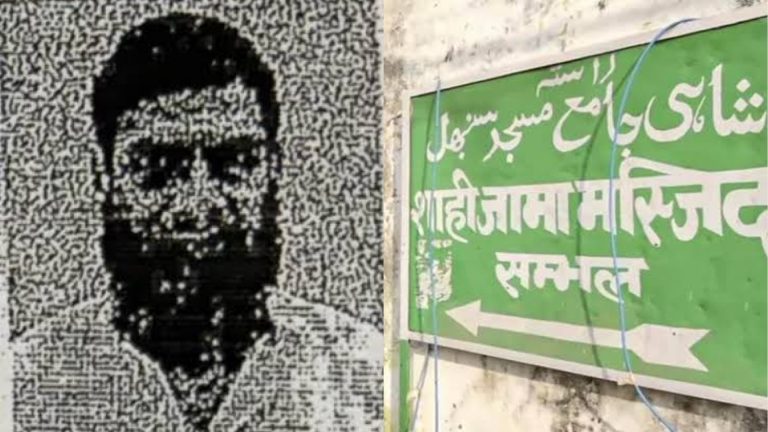
UP: Samajwadi party leader Kaish Khan encroached 200-year-old Shiva temple in Kannauj? BJP-VHP demand action, SP leader denies allegations

In Uttar Pradesh’s Kannauj district, a case of alleged illegal encroachment of a 200-year-old Shri Jageshwar Nath Shiva temple located in the Bala Peer area by Samajwadi Party leader Kaish Khan has triggered an outrage.

On Thursday (26th December), former BJP MP Subrat Pathak, along with Tirwa MLA Kailash Rajput and local Hindus inspected the said temple and claimed that if the well is excavated the the idols of Hindu deities will be found. He also accused the Samajwadi Party leader of uprooting a Shivling, throwing it into the well and erecting a three-storey construction on the occupied land.

Reportedly, when the local people protested against this encroachment by Kaish Khan, the SP leader threatened to implicate them in false cases. After this, councillor Bhura Khan and other local residents complained to BJP leaders in this matter.

Pathak alleged that alleged encroachment and removal of the shivling and other idols by Kaish Khan is a direct attack on the Hindu faith. The former MP met District Magistrate (DM) Shubhrant Kumar Shukla and submitted a memorandum. He demanded strict action against the SP leader who occupied the temple land. The DM assured of appropriate action by investigating the matter.

Meanwhile, Pathak said that if the administration does not take action to free the temple and reinstall the Shivalinga, he along with his supporters will stage a sit-in protest in the Balapir locality. The Vishwa Hindu Parishad (VHP) has also raised demand to clear the temple from encroachment alleging that such incidents hurt the sentiments of the Hindu community.

Meanwhile, SP leader Kaish Khan called these allegations baseless. He said that he had bought this land and the temple was safe. Moreover, he accused the BJP of spoiling the atmosphere.

On the other hand, BJP leaders have accused SDM Sadar Ramkesh of colluding with the Samajwadi Party leader. Former MP Subrat Pathak told the DM that SP leader Kaish Khan has also encroached upon the land of the municipality but the SDM did not take any action even after the complaint. Following this, Kaish Khan took a stay from the court. Pathak accused the SDM Sadar Ramkesh of being involved in the encroachment of the temple land. The SDM, however, said that a false complaint had been made against him.

In this case, District Magistrate Shubhrant Kumar Shukla assured that soon a team of officers will be sent to the spot and an investigation will be conducted. Considering the seriousness of the matter, he has handed over the investigation to ADM Ashish Kumar and said that a report has been sought in two days and strict action will be taken against the culprits.

China approves construction of world’s largest dam on Yarlung Tsangpo River in Tibet, the main tributary of Brahmaputra River

0

In what could be a significant cause of concern for India, China has reportedly approved what would be the world’s largest hydroelectric project on Tibet’s longest river Yarlung Tsangpo. The world’s largest hydropower dam with an estimated cost of 1 trillion yuan (US$137 billion) would be built in the lower reaches of the Yarlung Tsangpo River, which becomes Siang in India’s Arunachal Pradesh. The river becomes the Brahmaputra River after it merges with two other rivers in Assam.

It has been reported that this proposed hydropower dam would generate three times more energy than the Three Gorges Dam, one of the largest dams in the world. In response, India is also contemplating constructing a 10-gigawatt dam to attenuate the effect on Brahmaputra’s water flows due to the Chinese dam.

Notably, the Yarlung Tsangpo flows across the Tibetan Plateau, forming the world’s deepest canyon and plunging 7,667 metres (25,154 feet) before it reaches India. The Yarlung Tsangpo Grand Canyon is longer and deeper than the Grand Canyon on the Colorado River in the United States. The Yarlung Tsangpo is called the Everest of rivers, because it is considered the most difficult river to navigate.

China’s mega dam project is touted as a strategic move to assert control over significant water resources, it would definitely stoke geopolitical tensions with India, in addition to the environmental challenges.

Reports say that the project is likely to have the capacity to generate over 300 billion kilowatt-hours (kWh) of electricity annually. Interestingly, the Three Gorges Dam worth 254.2 billion yuan ($34.83 billion) which now has the world’s largest installed capacity, was designed to generate 88.2 billion kWh. While reports say that the project will be built in the rainiest parts of Tibet, details about its precise location and the commencement of the project are yet to be revealed.

Chinese govt has been planing to build a dam on the Yarlung Tsangpo river, but the project has not progressed much so far, mostly because the location where the dam is to be built is very remote and the terrain is not easy to navigate. Moreover, China will need to build a long transmission line to take the power to the mainland, as power demand is not that high in Tibet.

In November 2020, it was reported that China was planning to construct a magnificent “super hydropower dam” in Tibet on a section of the Brahmaputra River near India. Later in March 2021, the National People’s Congress (NPC) approved the 14th Five-Year Plan (2021-2025). And now the media reports say that the Power Construction Corporation of China (PowerChina), a Chinese state-owned business (SOE), and the Tibet Autonomous Region (TAR) government to construct this 50-meter-high hydroelectric dam in Tibet at Metog and/or Daduqia at the Great Bend of the Brahmaputra.

Significance of the Brahmaputra River for India and China

Since the Brahmaputra river crosses over the Sino-Indian border it is crucial for both of the world’s most densely populated countries, India and China. The importance of Brahmaputra for India can be understood from the fact that it provides 30% freshwater supply and 40% of India’s total hydroelectric power. Even though the Brahmaputra River has a very meagre impact on China’s total freshwater supply, it is reported to be significant to Tibet’s agricultural and energy sector. With increasing population and demand and limited water resources, both India and China would want to harness the power of the Brahmaputra River. Notably, China only accounts for 22-30% of the overall basin discharge, despite covering more than 50% of the basin’s geographical area, due to Tibet’s cold desert climate and scant annual rainfall.

China’s endeavour to use hydropower dams as strategic weapon, Challenges for India and its countermeasures

China’s proposed “Mother of all Dams” might hinder the downstream flow of the Brahmaputra, reducing water supply for agricultural, drinking, and industrial use in northeastern India. Given that the Brahmaputra provides a significant share of India’s freshwater supplies, a disruption in its flow might exacerbate India’s water stress, particularly in regions such as Assam and Arunachal Pradesh.

In addition, the Chinese dam may trap sediment, which is essential for the fertile delta regions of India and Bangladesh. Reports say this may lead to changes in riverbed levels, increased erosion, and damage to agricultural areas downstream.

Another major concern is that China could release large amounts of water unannounced causing flash floods in India. This control over water release might be especially detrimental during the monsoon season, or in the event of an emergency or planned action by China.

While the dam with such massive capacity would generate significant hydropower for China, it would become paramount for India to accelerate its own dam projects in Arunachal Pradesh to counterbalance. This, however, would trigger geopolitical tensions given China’s baseless claim over Arunachal Pradesh.

China’s dominance over the headwaters of key Asian rivers offers it a substantial edge in transboundary water politics. By building dams, China not only secures energy but also achieves a strategic position in “water wars” or “hydro-hegemony”. Having the capacity to influence water flow could be a tool in China’s strategic arsenal and this control can be used to exert influence or pressure on downstream countries, particularly during events of geopolitical conflict or negotiations over border disputes etc.

Besides, China’s lack of transparency on hydrological data and dam projects has been a cause of concern for India. This secrecy fuels suspicion and speculation about China’s intentions, especially given previous instances in which China withheld crucial flood data from India even as an MoU was signed between India and China in 2013 to share hydrological data.

It must be recalled that in 2017, when Indo-China border tensions were at a peak following the Doklam standoff, China did not provide hydrological data to India citing “upgradation and renovation of the Data Collection Centre in Tibet”, however, it provided the hydrological data to Bangladesh.

Notably, the Indian government has fast-tracked the development of an 11,000 MW hydropower project in the Upper Subansiri region, which would assist in improving water management and electricity production. It is also a response to China’s upstream activities, thereby letting India gain better control of its water resources while alleviating the adverse impacts that may result from China’s dam.