Home Blog Page 5893

Accusing Twitter of being an agent of ‘Brahmanvad’ shows the hollowness of leftist Dalit activism

A year or so after Twitter CEO Jack Dorsey triggered a huge controversy for holding a placard that said ‘Smash Brahminical Patriarchy’, the platform is now being accused of being ‘Brahmanvadi’ by prominent people on social media.

Columnist associated with Shekhar Gupta’s ThePrint initiated the matter when he accused Twitter of being Brahmanvadi for not awarding him with a Blue Tick yet. Dilip Mandal has gone on to urge people to trend ‘Brahmanvadi Twitter’ on the social media platform.


Now, other prominent people, including Lalu Prasad Yadav’s political party RJD, has jumped on the bandwagon.


Media troll Prashant Kanojia, too, joined in the trend. Amusingly, he is the same journalist who had tweeted likening Dalits to animals.


Read: Journalist who likened Dalits to animals now compares Indian Army chief General Bipin Rawat to General Dyer, deletes tweet


The trend perfectly captures everything that is wrong with the current brand of Dalit Activism. Like Feminism, it has now been reduced by a section of privileged Dalits to foment hatred between castes. Trends such as these serve no purpose other than creating tension in society without any good reason. The people indulging in such antics are only proving themselves to be rebels without a cause.

If you are working for The Print, it can be safely said that the person is leading a much better life than most people in India. Raking up the issue of Brahmanvad over Twitter’s verified badge only reveals the phoney attitude behind the activism and those who are indulging in it. There are real caste divisions within society that need to be addressed here. Accusing Twitter of being an agent of ‘Brahmanvad’ over the issue of blue ticks is not one of them. Such reckless activism serves no purpose other than driving communities apart.

While it is true that Dalits even today face real issues that need a social remedy, blue ticks are not one of them. Social media itself is a privilege that a significant section of India still cannot access. Even among social media platforms, Twitter stands out particularly as one that is not representative of the Indian population.

Dilip Mandal, who started all of this, has forty-six thousand followers on Twitter, Kanojia has well over forty-two thousand followers and RJD, which is a political party, has over one lakh sixty thousand followers on the platform. An overwhelming majority of people on Twitter cannot boast of such high numbers. They receive a huge number of interactions as well on Twitter from all sections of society. The latter two are verified handles. For them to claim Twitter is an agent of ‘Brahmanvad’ for ‘not verifying certain handles’ is nauseating, to put it mildly.

It is safe to say that Dalits, at this moment in time, have a great amount of political power. We have a Dalit president after all. But more than that, they wield real political power. Mayawati, the former Chief Minister of Uttar Pradesh, rose to prominence in politics based on her Dalit identity. No party can win elections without catering to the Dalit vote-bank. The BJP overturned the Court verdict on the SC/ST Act to favour the Dalits, much to the disgruntlement of other castes. It is a testament to the political power of Dalits that the ruling party risked alienating Upper Castes in order to gain their favour. Therefore, it does not make much sense to claim that Dalits have no power over matters.

Read: 25 crimes that prove that the Dalit-Muslim unity is nothing but a farce

Moreover, the Indian Constitution guarantees Dalits reservations in jobs and educational institutions. Untouchability, too, is criminalized in the strictest of terms. Thus, it would be wrong to suggest that no efforts have been made to uplift them or to offer them reparations for historical injustice. Not just the Indian state, even the academia has opened its arms to accommodate Dalits in the fold. They enjoy great support in academia and unfortunately, academia, too, often engages in weaponizing victimhood instead of fomenting a culture of goodwill and harmony between all sections of Indian society.

With time, however, privileged members of the community, who have benefited from the goodwill of the Indian state, instead of bridging the gaps between castes are trying to fan divisions in order to keep the community distanced from their co-religionists. Unfailingly, such people always are always adherents of a very particular political ideology. Needless to say, it is the Left. And this particular brand of politics seeks to reduce Dalits to being vote banks for certain political parties.

All Hindu organizations, including the RSS, are making continuous efforts to bridge the gaps between different castes. Hindu organizations conduct numerous outreach programs to generate a genuine sense of goodwill between all sections of society. And the efforts have started bearing fruits as well, at least in the political arena. Dalits have voted for the BJP in huge numbers since 2014. Hindu consolidation in politics is a reality.

The people who are trying to create divisions within Hindu society with trends such as ‘Brahmanvad Twitter’ always make an attempt to claim a monopoly over communal harmony and secularism. In the name of secularism, such people claim Dalit-Muslim unity and preach communal harmony while, at the same time, fomenting tensions within Hindu society. Liberals, it appears, want Hindus to live in peace with Muslims, which is a good thing, but they do not want Dalits to live in peace with Brahmins. And that is dangerous for any society.

It is an unfortunate reality that Dalits have been greatly betrayed by such people who have used their misfortune for their personal benefit. It is also a sad fact that Dalits have been greatly betrayed by the prominent political leaders from their own community who claim to represent their interests but in reality, are only furthering their own. It is indeed a tragedy that a person like Jignesh Mevani, who has been branded as the messiah and new age Dalit leader, who could have used the power he has earned over a period of time to bridge the gaps between castes uses it instead to fuel caste tensions while furthering his personal political ambitions.

Read: Arvind Kejriwal and Jignesh Mevani further dangerous lies about Modi govt planning to end reservation for SC, ST, OBC

The objective here appears to be pretty clear. Such people who enjoy a better life than most people in India, regardless of their caste or religion, want to become the face and only representative of the Dalit communities at large. It is based on a desire to utilize their position to enjoy all the benefits that come along with such a privileged position. If they have to drive entire communities apart to achieve their objective, they appear to have no hesitation to do so. Unfortunately for them, Dalits are rejecting their message entirely.

In the larger scheme of things, it has always been the desire of entities inimical to Hindu interests to drive Dalits away from other Hindu castes in order to weaken Hinduism and ultimately, relegate our civilization to the museums. The more Hindus try to come together, the more intense do their efforts get to drive us apart. When the sole objective is to drive Hindu castes apart, even something as innocuous as blue ticks on Twitter will be made to serve the purpose.

It is a testament to the strength of Hindu society that despite numerous efforts to the contrary, Dalits always have and will continue to identify themselves as Hindu forevermore. Despite best efforts by adversaries to pan-Hindu solidarity, Dalits have been incorporated under the umbrella of Hindutva and they have enthusiastically contributed to the political consolidation of Hindus in huge numbers. Going forward, one believes that they will continue to do so.

Despite best efforts by adversaries, the divide between Hindu castes continues to be bridged more and more with every passing day. And this will definitely continue going forward as Hindu organizations have devoted a great amount of time and continue to do so to foment a feeling of goodwill between different castes. It is a testament to the growing sense of solidarity between different castes that even blue ticks on Twitter are being used to generate ill-will between castes. It’s only in times of desperation that people resort to such antics on social media.

Watch: Delhi lawyers spat with journalists, push and shove a woman journalist when questioned about yesterday’s scuffle with Delhi Police

0

Delhi lawyers got into a verbal spat with ANI news agency journalist Aiman at St Stephen’s hospital. The lawyers who were injured in the scuffle yesterday after some lawyers beat up Delhi Police personnel at Tis Hazari Court were getting treatment there.


Some lawyers even pushed and shoved a woman journalist when she tried to ask questions to Delhi Chief Minister Arvind Kejriwal who had gone to meet the injured lawyers there. Delhi Chief Minister Arvind Kejriwal met the lawyers at the hospital who were injured and said that the Delhi Government will bear the expenses of their treatment.

Read: Watch: Lawyers at Delhi’s Tis Hazari court take law into their own hands, beat up Delhi Policemen

Earlier today, the Delhi High Court directed Delhi Police Commissioner to transfer Special Commissioner Sanjay Singh and Additional DCP Harinder Singh, in connection with yesterday’s clash between. The Court also directed Delhi Police Commissioner to record statements of the injured advocates, and instructed to lodge an FIR immediately. A judicial inquiry has also been ordered which should be completed within six weeks under retired judge of Delhi High Court SP Garg. He will be assisted by Director CBI, Director Intelligence Bureau and Director Vigilance or any superior rank officer appointed by them. The Police officials involved are also directed to be suspended and a lump sump ex-gratia amount of Rs 50,000 to be to Advocate Vijay Verma, and Rs 15,000 and Rs 10,000 to other two injured advocates.

According to the reports, the incident began around 3 pm on Saturday when a policeman of the Delhi Police got into a fight with a lawyer over parking his car outside the jail lockup, a space reserved for jail vans. However, the argument turned violent when a group of lawyers who were campaigning for the bar council elections got into a heated exchange with the police.

The cops allegedly dragged a few of them and took them to the lockup. While this was happening, some lawyers reportedly set a few bikes parked outside the lockup on fire.  Lawyers even attacked journalists, covering the incident.

Later, the police lathi-charged the lawyers and reportedly damaged their cars and chambers on the court premises. The Delhi Police claimed 20 police officers and 12 lawyers were injured in the clash.

Why stubble burning suddenly became such a huge problem in recent years around Delhi, a few reasons

0

Delhi is facing a very high-level pollution, with visibility so low that several flights had to be cancelled or diverted. The Air Quality Index was recorded above 900 in some places, when an AQI above 150 is considered unhealthy. And for a change, Diwali crackers are not being responsible for this dangerous pollution. Almost everyone has agreed that stubble burning by farmers in the nearby states, mainly in Punjab and Haryana, is the primary reason.

But this has raised a question in the mind of many people, why suddenly this problem of stubble burning aggravated so much to cause such huge pollution. Farmers must have been burning crop residue for decades, why this problem didn’t occur earlier. Moreover, crop farming takes place in the entire country, but why only Delhi region faces this problem.

There are several factors which have contributed to the increase in air pollution due to stubble burning, contributed by several government policies relating to farming. The green revolution, started to end the food insecurity in the country, encouraged food grain farming, which means large areas of the country are used for farming of rice and wheat. Now India produces so much these grains that a lot of them lie rotting in FCI warehouses.

Apart from water from irrigation, farmers also use groundwater for the cultivation of water-intensive crops like paddy. Earlier, farmers in Punjab in Haryana used to plant paddy in April-May. But monsoon rains don’t start at this time, so farmers used to use groundwater. As power for farming has been made free, farmers used run the pumpsets drawing water from below the ground continuously.

This had led to the depletion of water table. To mitigate this problem, the states of Punjab and Haryana passed identical laws in 2009 delaying the sowing of rice crop. The Haryana Preservation of Subsoil Water Act, 2009 and The Punjab Preservation of Sub-soil Water Act-2009 determines the date when farmers can plant paddy. According to the acts, farmers are not allowed to sow nursery of paddy before 15th May, and they can’t transplant the paddy before 15th June. This ensures that the crop receives adequate rain and does not need groundwater.

Read: Don’t criticise stubble burning, hold ‘Yagna’ to please Lord Indra instead: UP Minister Sunil Bharala

Before the acts came into effect, the paddy planted in April-May was harvested in September-October, a time when wind keeps moving in and around Delhi. So even if the stubble was burnt earlier, it was flown away by the wind and didn’t create a smog. After the government delayed planting, its harvesting was pushed to October-November, when the wind becomes stationary. This means when farmers burn the husk, the smoke and ash remain suspended on air, creating smog.

The postponing the paddy season started another problem, it leaves little room for farmers to sow the rabi crop, which is mainly wheat in Punjab and Haryana. And as wheat can’t be planted on the ground with standing paddy stubbles, burning them is only the cheap option to remove them quickly. Earlier farmers had 1-2 months of gap between the top crops, so many of them had removed them instead of burning them. Removing the stubble and keeping them in the field improves the fertility of the soil, while burning them degrades the soil. But farmers still burn as they have no other option to start planting wheat on time.

Another reason is the increased mechanisation of farming in Punjab and Haryana compared with other regions. The combines, machines used to harvest the crop and separate the grains on the spot, only reap the grains, leaving the stalks of stubble standing in the field. When crop is harvested manually, the crop is cut much below, and it is taken out of the field for processing, therefore the not much stubble remains on the field.

stubble burning
A Combine

Moreover, husk is fodder for cattle, so farmers harvest and stock it in other states, particularly in North-Eastern and Eastern states. Farmers harvest crop manually in these states, and as these states are hit by flood during monsoon, the harvested husk provides acts as feed for their livestock when the grazing fields are flooded.

These are the main reasons why the stubble burning has turned into such a grave problem in recent years, and why it is mostly localised to Northern India.

Read: Write letters to Khattar uncle, Captain uncle: Kejriwal teaches Delhi school kids to blame Punjab, Haryana CMs for air pollution

Punjab has made the use of Super Straw Management System (SMS) with the harvesters mandatory to prevent stubble burning. These machines, which can be attached with existing combines, cuts the stubble and spread it uniformly in the field, eliminating the need for burning them. But the implementation of this order has not been strict, and all farmers can’t afford them as they are costly. Moreover, there are not enough such machines in use at present to cover the entire area before the planting of wheat. Therefore, farmers burn the stubble despite it been made illegal as per law and imposition of fines for violating the law.

Other than the SMS machine, there are several other options available to deal with stubble without burning them. Some of them are, Happy seeder (which allows planting wheat on a field with standing stubble), Rotavator (used for land preparation and incorporation of crop stubble in the soil), Zero till seed drill (used for land preparations directly sowing of seeds in the previous crop stubble), Baler (used for collection of straw and making bales of the paddy stubble), Paddy Straw Chopper (cutting of paddy stubble for easily mixing with the soil), Reaper Binder (used for harvesting paddy stubble and making into bundles) etc. But these machines are costly, and farmers are not willing to spend money on them when they can easily get rid of the stubble by burning them. Government is providing subsidy for such crop residue management machinery, but more need to be done to encourage farmers to use them.

Quizmaster turned politician Derek O’Brien posts two graphs in 24 hours to show Bengal doing better than national average, gets both of them wrong

Trinamool Congress leader and MP Derek O’Brien posted two graphs on Twitter on two days to prove that West Bengal was spending more on healthcare compared to the central government, and both graphs turned out to be wrong and misleading. In an effort to show that Mamata Banerjee led TMC government in West Bengal was ahead of the union government in terms of spending on healthcare, he posted a graph on 2nd November with the caption ‘India story versus Bengal story”, with the #healthcare hashtag.

The graph showed that while India had spent 1.28% on healthcare in 2017-18, Bengal had spent 4.01% in 2018-19. But surprisingly, not only the former quizmaster compared figures from different financial years, the numbers he was comparing were different too. For national spend on healthcare, he took the percentage in GDP, while for Bengal, he used the percentage of spend in total budget of the state.


Budget and GDP are different numbers, and if one has to compare the percentage spend on healthcare between two governments, the percentage of the same data has to be used. To use GDP for one and budget for the other is a completely wrong comparison, and it does not provide any meaningful insight.

After several people pointed out to O’Brien that he was comparing two different figures, today he posted another graph, this time by comparing the percentage of spend in healthcare in the budget for the year 2019-20. It shows that in the union budget for healthcare in 2018-19 was 2.31% of the today budget, while for Bengal the figure was 4.01%.


Although the second graph has no statistical anomaly like comparing two different data, it is still misleading and not correct to say that Bengal is spending more on healthcare than the central government.

Also Read: CBI summons TMC leader Derek O’ Brien over party income issues and Saradha Chit Fund scam

This is because the union budget has several heads of expenditure which the states do not have. For example, defence is one of the biggest items of the union budget, which the states don’t have. Union budget also has expenditure under the heads of transfer to states, and construction of last scale infrastructures like national highways and important bridges. All these items occupy a significant portion of the union budget, which means that the shares of other items which are common with states become lower. But this does not mean that the actual spend on those areas are lower.

Another important thing to note is that healthcare is included in the state list in the seventh schedule of the Constitution of India. Although the union government spends money on healthcare, it is not included in the concurrent list. Which means the healthcare is the primary responsibility of the states. Therefore, to compare the percentage spend on healthcare by the centre with any state is meaningless.

Sibling rivalry: Congress aide insinuates Rahul Gandhi is stopping Priyanka Gandhi from becoming party president

In an interview with ABP News, Pankaj Shankar, a close aide of the Nehru-Gandhi dynasty has blamed the first family of the Congress party for ruining the party. He said that Sonia Gandhi has ruined Congress because of her ‘putra moh’ (love for her son) and Rahul Gandhi even after so many years in politics is still in his ‘internship’ phase.
[youtube https://www.youtube.com/watch?v=UxGpvrXNLmU]

Pankaj Shankar said that over the years, numerous experiments have been conducted since Rahul Gandhi entered politics and after Youth Congress, NSUI and Amethi, the only thing that is left experimenting with is the Congress party. He said that if these experiments continue, even Congress will be destroyed.

The filmmaker and cartoonist is currently working with Priyanka Gandhi Vadra. In a tweet on the 31st of October, Indira Gandhi’s death anniversary, he slammed Rahul Gandhi for failing to produce any movie on Indira Gandhi while he claimed that Narendra Modi has already succeeded in making several about him. He said that Rahul Gandhi had failed to remind the people of this country about Indira Gandhi’s legacy. He reiterated the same points during the interview.


Pankaj Shankar also slammed Rahul Gandhi for the whole resignation drama that ensued when he refused to continue as the President of the Congress party. He said that the uncertainty that now looms over the future of the Congress party’s post of president affects the ordinary party worker.

Read: ‘Congress should introspect’: UP leader who once worked closely with Rahul Gandhi refuses to be Priyanka Gandhi Vadra’s adviser

“There was a time when there used to be one Murthi of Bajrang Bali in every village and one Congress worker. Now we have a situation where it’s difficult to find even a Congress flag. Whose fault is it? It’s not the worker’s fault. It is the leadership that has slowly but surely ruined the party. And who headed the leadership? It was in his (Rahul Gandhi’s) hands,” said Pankaj Shankar on the decline of Congress party. “He has made himself a coterie, it has its own thinking and he wants to do whatever they say. He doesn’t listen to anyone else,” he added. He also said that soon judgment in the Ram Janambhoomi case will be delivered and they have ‘no line to speak on the matter’.

Most intriguingly, Pankaj Shankar also vouched for Priyanka Gandhi to become the next president of the party. He claimed that she had introduced Rahul Gandhi to the world of politics leading him by his fingers. He also claimed that there was significant fear among the opposition regarding Priyanka Gandhi. Pankaj Shankar said that the Opposition parties were scared of her entry into politics. “What are the reasons that she is being stopped?” he asked. He continued, “Will Rahul Gandhi decide the fate of the party? The workers who toil for the party, do they not have any stake in the matter?”

Read: Rahul Gandhi to become ‘ideologue’ and Priyanka Gandhi Vadra for PM: Congress ‘masterplan’ for 2024?

Considering the fact that Priyanka Gandhi’s political strength begins and ends with her facial similarities to Indira Gandhi, her grandmother, and that her leadership in Uttar Pradesh during the General Election 2019 could not help the party in any manner whatsoever, Pankaj Sharma’s comments do reek of political partisanship.

Most damningly, Pankaj Shankar insinuated that Rahul Gandhi was preventing Priyanka Gandhi from becoming the president of the party. In response to a question of whether Rahul Gandhi was responsible for Priyanka Gandhi not becoming the president of the party, he asked, “Who else do you think is stopping her?” Upon further questioning, he said, “Who is stopping whom, that is an internal matter but the fact is she is where she is. And she is here at this point where the Congress party’s situation is deteriorating day by day. This is the truth. So who is stopping her? The worker isn’t that powerful, so who is stopping her?”

“How long will Rahul Gandhi continue with his experiments? You have given him every opportunity. All these years, opportunities are all that he has received,” Pankaj Shankar continued with his attack on the scion of the Nehru-Gandhi dynasty. He also revealed that a web series is on the works on how the current leadership of the Congress party under Rahul Gandhi has misused the goodwill that the Nehru-Gandhi dynasty has enjoyed over the years. The script has ‘almost’ been finalized and shooting is expected to begin within the next ten days.

Read: Watch: Congress makes kids abuse Narendra Modi in presence of Priyanka Gandhi Vadra

Pankaj Shankar claimed that the blame for all of this lies at the feet of Sonia Gandhi. He said that she was the one who made the final call. And the final call was always ‘give Rahul more opportunities’. He also said that the leadership of the Congress party has failed to communicate effectively with the country at large.

The close aide of the Nehru-Gandhi dynasty also said his statements were not motivated by any personal factors. He reiterated that he still believes that the ‘rightwing’ is a great threat to the country. Pankaj Shankar also asserted that people in Rahul Gandhi’s ‘coterie’ are not ‘grounded’ and have no connection with ground realities. “Hawa-Hawai baatein kartey hain. This country runs through the villages. It is necessary to understand the sentiments of the villages and they have not yet understood any of it,” he said.

Watch: Lawyers at Delhi’s Tis Hazari court take law into their own hands, beat up Delhi Policemen

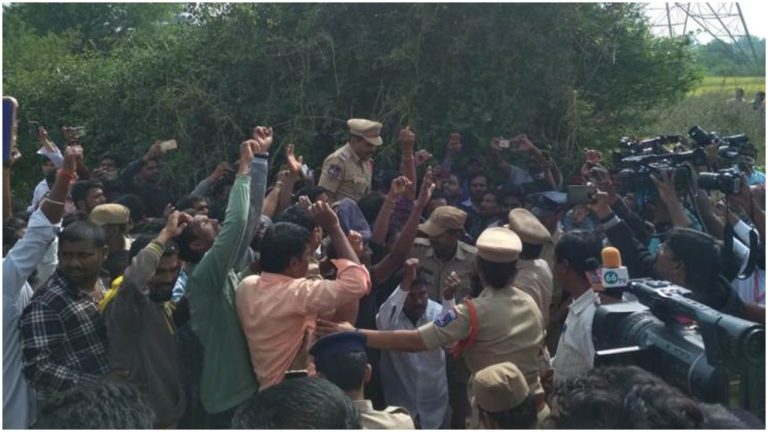
A fight started over the issue of parking at Tis Hazari court flared into a battle between lawyers and policemen on Saturday afternoon, with lawyers reportedly taking law into their own hands and beating up policemen. In response, the policemen also unleashed violence against the lawyers injuring two of them.

According to the reports, the lawyers went on the rampage at the court premises and attacked the policeman by entering the police station after a fight broke out between lawyers and policemen near the premises of Tis Hazari court.


Reportedly, the attack on policemen by the lawyers is being said to be the spark for the clashes that took between two groups on Saturday. In reaction to the vandalism by lawyers, a group of policemen dragged and hit a lone lawyer triggering further violence. 


According to the reports, the incident began around 3 pm on Saturday when a policeman of the Delhi Police got into a fight with a lawyer over parking his car outside the jail lockup, a space reserved for jail vans. However, the argument turned violent when a group of lawyers who were campaigning for the bar council elections got into a heated exchange with the police.

The cops allegedly dragged a few of them and took them to the lockup. While this was happening, some lawyers reportedly set a few bikes parked outside the lockup on fire.  Lawyers even attacked journalists, covering the incident.

Later, the police lathi-charged the lawyers and reportedly damaged their cars and chambers on the court premises. The Delhi Police claimed 20 police officers and 12 lawyers were injured in the clash.

During the clash, an advocate named Vijay Verma was allegedly shot, leading to lawyers setting up fire on police vans. The lawyer was admitted to St. Stephen’s hospital and is under observation.

Additional DCP (north) Harender Singh said that a team of police reached the spot to control the situation but they got into a scuffle. The police allege that a group of about 150-200 lawyers tried to break down the gates of the lockup, at which point a cop fired at Vijay Verma, one of the protesting lawyers. The bullet hit him on his right chest and he collapsed on the spot. Another lawyer identified as Ravi also sustained bullet injuries on his right hand.

Delhi reels under horrific levels of pollution, AQI levels cross 900 in some places, flights affected

The Delhi-NCR region is suffering from an extremely high level of pollution for the past few days. While politicians have been busy playing politics over the issue, the situation has not gotten any better. This morning, major pollutants PM 2.5 and PM 10 levels were at 486 and 459 respectively, both in the ‘severe’ category, in Sector-62 of Noida, according to the National Air Quality Index (NAQI) data. Pollutant levels in Sector-125, Sector-1 and Sector-116 were also in the ‘severe’ category.


In Noida, authorities have decreed that schools remain shut till the 5th of November. The order is applicable to all public and private schools till class 12. Public health emergency has been declared in Delhi as well and schools are shut too.


The high levels of pollution have also affected flights at the Delhi Airport. The authorities announced the matter on social media and requested passengers to contact the airline concerned for information about their flights.


In Delhi, as of this morning, the Air Quality Index (AQI) reading at Bawana was at 492, ITO crossing was at 487 and Ashok Vihar was at 482, all in ‘severe’ category. In Ghaziabad, Vasundhara, it was 486 and at Indirapuram, it was at 482.

Read: Don’t criticise stubble burning, hold ‘Yagna’ to please Lord Indra instead: UP Minister Sunil Bharala

The stats provided by SkymetWeather, which provides updates on weather, represent the horrific levels of pollution that people in Delhi are being subjected to. At some places, the AQi is over 900. If 482 is considered severe, one can understand what 900 must feel like.


People in Delhi are sharing their ordeal over the past few days on social media. The air is thick with smog and the city is suffering from extremely poor visibility. The visuals coming in are extremely distressing, to put it mildly.


There is also considerable anger among people regarding how governments are tackling the matter.


Meanwhile, there’s a cricket match slated to occur later today between India and Bangladesh at the national capital. While many concerns have been raised on the matter and demands were made to shift the venue, the authorities have decided to continue with the match as scheduled.

Don’t criticise stubble burning, hold ‘Yagna’ to please Lord Indra instead: UP Minister Sunil Bharala

Uttar Pradesh Minister Sunil Bharala today urged people not to criticise those who are burning stubble. He said that stubble burning is a tradition and instead of criticising, the government should hold ‘Yagna’ and please Lord Indra.


“Parali (stubble) is an attack on farmers. Those born from farmer families do not understand that when a farmer harvests the crop, waste crop is created. Whether it is urad dal or moong daal, it will have wastage. It has always been burnt. If it is burnt, it will create some smoke. That does not increase pollution. That is a natural system of farmers. This attack on farmers is unfortunate. The government should hold a ‘Yagna’ and pray to Lord Indra so it rains and things will be taken care of,” he said.

Fact check: Viral WhatsApp message claiming terrorists are injecting people with AIDS virus is fake

0

A message has gone viral on WhatsApp saying that terrorists are spreading AIDS by injecting people, which is fake according to UP police. The Twitter handle of UP Police fact check said that they completely deny this report, and requested people not to share this misleading information.


UP Police was responding to a query by a local news outlet from Pratapgarh asking to verify the authenticity of the message which has gone viral on WhatsApp. The message in Hindi said, “if some boys and girls come to your house and say that they are medical students and they offer to do sugar and BP and any other blood test free, then please call the police immediately because they are members of terrorist organisation and their injections have AIDS virus which they will inject into your body in the name of collecting blood. Do not let any unknown person enter your house. Issued in public interest.” The message also asks the recipients to share it as much as possible.


UP Police has confirmed that this is fake news which is being spread by certain WhatsApp groups. They said that they completely dent this allegation, and have asked people not to share this misleading post.

This is not the first time this message is circulating on social media. In 2017 to this message had appeared saying that it was issued by UP Police. But the UP police had denied issued any such advisory.

Piyush Goyal slams Sonia Gandhi over her remarks on RCEP and FTAs, reminds her of UPA’s record on the issue

In a series of tweets, Union Minister for Railways and Commerce & Industry Piyush Goyal came down heavily upon Congress President Sonia Gandhi for her remarks against the proposed Regional Comprehensive Economic Partnership (RCEP) and Free Trade Agreement (FTA) between India and China.

Sonia Gandhi had said such an agreement between the two countries would deal a body blow to the Indian economy. “We can ill-afford to become a dumping ground. India being made a dumping ground of Chinese goods is catastrophic. In the past 72 years, no country has signed FTA with China,” she had said.

Piyush Goyal questioned the UPA government for joining RCEP talks with China in 2011-12. He said that the Congress supremo has only now awakened to RCEP and FTAs. He highlighted the fact that India already has FTAs with ASEAN countries, Malayasia, South Korea and Japan.


Piyush Goyal also reminded Sonia Gandhi that the UPA government itself had explored the possibility of an FTA with China in 2007. He also slammed the erstwhile government for opening up 74% of the Indian market to a richer country like Indonesia while they had opened up only 50% of their own market to India.


Piyush Goyal also emphasized the fact that the government will make a decision based on what is best for India. He reiterated that it must be a “win-win” situation for both countries and the government will make any decision based on the interests of the Indian people.

Opposition leaders are criticising the government’s move to sign Free Trade Agreement under RCEP. The RCEP is a proposed free trade agreement (FTA) between the ten member states of the Association of Southeast Asian Nations (ASEAN) ( Brunei, Cambodia, Indonesia, Laos, Malaysia, Myanmar, the Philippines, Singapore, Thailand, Vietnam) and its six FTA partners (China, Japan, India, South Korea, Australia and New Zealand).

According to the government, this agreement will be beneficial for India. Data provided by the government show that India’s trade deficit was on a rise due to FTAs signed by previous governments. Officials have pointed out that India’s trade balance is turning more unfavourable for most FTAs. It has doubled since 2011 to Rs 12.86 trillion in 2018-19.

The proposed deal seeks to reverse this trend. For example, during a meeting earlier in October, India had negotiated a 10% advantage over China for tariff removal. This advantage for India will mean that its exporters can access 10% more Chinese product lines without facing tariff barriers. Union government has been assuring that the interests of the domestic industry will be given priority while negotiating the RCEP.