Home Blog Page 5982

Here is why any comparison between the UK SC holding UK parliament suspension illegal and the abrogation of Article 370 is mere propaganda

0

Siddharth Varadarajan, the founding Editor of notorious ultra-left propaganda website – The Wire, put his jury hat today to co-relate the judgement of the Supreme Court of the United Kingdom over the issue of suspension of Parliament to criticise Supreme Court of India for not ‘beginning’ hearings on the petition relating to the abrogation of Article 370.

Varadarajan, an American citizen, who often tries to meddle in the internal affairs of India through his anti-India narrative, went on to invent strange equivalence between the recent British Supreme Court decision to rule suspension of the British parliament illegal and the alleged ‘inaction’ of the Supreme Court of India in hearing the petitions pertaining to the abrogation of Article 370.


Through his tweets, Varadarajan went on to give a moral lecture to the Supreme Court of India by stating that the UK parliament moved swiftly to declare the decision of Boris Johnson to prorogue the parliament ‘illegal’ while claiming that Indian courts are yet to begin hearing. However, the ‘theory of relativity’ of Varadarajan to assert that Indian courts are delaying the hearing of petitions concerning the issue of Kashmir is untrue.

Boris Johnson’s ‘advice’ to suspend parliament and the ruling of Supreme Court of UK:

The judgement of the Supreme Court of the United Kingdom pertains to a recent decision made by British Prime Minister Boris Johnson, where he had advised the Queen, who is the head of the state, to prorogue parliament for five weeks till October 14.

The controversial decision by Boris Johnson was immediately denounced by several politicians across the political spectrum. However, the British Prime Minister had refused to withdraw his recommendation to the Queen.

Soon, several petitions were filed challenging the advice of British Prime Minister Boris Johnson to prorogue the parliament. Interestingly, the England High Court refused to take up the matter, arguing that it was beyond the purview of the judiciary. However, Scotland appeal court ruled that Boris Johnson’s move was unconstitutional and malafide.

Finally, the Supreme Court of the UK formed an 11-judge bench which ruled that the Prime Minister’s decision was unlawful.

With the prorogation of the British parliament by Boris Johnson is now considered to be null and void, the Supreme Court of the UK has now restored the earlier status of the parliament while ruling that it was for the Speakers of the Commons and the Lords to decide the next course of the action. The Supreme Court of the UK has actually put the ball back to the British parliament to decide on the issue of prorogation.

Why the comparison between the two Supreme Court rulings is illogical?

The Indian liberals fascination with the western cultural and legal system is quite astonishing. However, the attempts made by them to appropriate western system, be it legal, political, cultural to bring relevance to the Indian system is rather absurd and illogical. The attempts made by the liberals to relate the British Supreme Court action on the executive order and an alleged ‘inaction’ by Indian Supreme Court is mere propaganda to put pressure on the country’s executive and the judiciary, which is already hearing a series of petitions on the abrogation of Article 370.

The claims of the ‘inaction’ of Supreme Court in hearing the pleas made by the section of Indian ‘liberal-secular’ media is an outright lie as the apex court has been continuously hearing petitions related to the Article 370 and also has given various directions to the executive pertaining to the easing of restrictions in the Kashmir. The Supreme Court of India has given rulings on Article 370 whenever they considered it to be necessary.

To blame the Supreme Court for not complying to the wishes of the Indian liberals is nothing short of contempt against the Supreme Court’s decisions and the law of the land. The liberals who often jump to praise the judiciary when it delivers favourable judgements have now begun to blame the courts as it has taken its time to decide on one of the most critical cases in the history of this country. The courts in doing so, have snubbed the legal activists and PIL warriors, causing worry to the ‘liberal’ ecosystem.

Secondly, the reason that debunks these comparative theories pushed by certain ‘intellectuals’ is that the decision pertaining to the abrogation of Article 370 and bifurcation of the state in two Union territories has been done by an elected parliament within the scope and framework of the constitution. The Indian government, which has been elected with a majority of seats in the parliament has democratically passed the acts in the legislature to revoke special status, including the support of various of other opposition parties.

However, the prorogation of the British parliament was an executive decision taken by Boris Johnson government contrary to a majority decision taken by the Indian government to scrap the contentious provision. So, British courts nullifying an executive decision cannot be compared with the Supreme Court of India’s decision to carefully consider a legitimate law passed by a democratically elected parliament.

In addition to that, the United Kingdom has no documented constitution and the rules, regulations, laws pertaining to its polity is interpreted through various acts of Parliament, court judgments and conventions.

However, in India, there exists a constitution, which has a detailed framework with specific procedures directing organs of the state to act upon. So, the courts in India mostly decide the legality of a law on the question of procedures establish by the law rather than due process of the law.

With this, there is a limited scope to institutions to interpret constitutional provisions. Hence, British Supreme Courts have wide powers to step in and amend its uncodified constitution contrary to the Indian courts. The Indian judiciary has always acted within the scope and framework of the constitution and has often stayed away from making laws, which is the responsibility of the legislature.

Further, the judgement by the British Supreme Court has recognised the power of the British parliament to make rules for its conduct pertaining to the prorogation of the house and stayed away from dictating procedural aspects.

Watch: BJD MP caught slapping party worker on stage, worker says it was a ‘gentle touch’

A shocking video from Odisha in which Biju Janata Dal (BJD) MP from Berhampur, Chandrasekhar Sahu is seen slapping a party worker on stage has gone viral on social media.

Chandrasekhar Sahu, the BJD MP from Berhampur landed himself in a controversy after he was caught on camera slapping a young party worker on stage in full public view during a party meeting held in Paralakhemundi of Gajapati district on Tuesday. Sahu slapped Sangram Sahu, former Gajapati District Youth Congress president, who had reportedly attended the meeting to join the ruling BJD.


The young party worker, Sangram Sahu who was ‘slapped’ by MP Chandrasekhar Sahu has, however, given a statement in which he has said that it was not a slap but a ‘gentle touch’.

“The MP did not slap me but only chided by just touching my cheek just like an elder brother. I have known him since my student days and also joined BJD due to his blessings,” clarified Sangram Sahu.


Though the MP received serious backlash for his behaviour, it is still not clear as to why the MP lost his cool on stage which led to the incident. Earlier today, Chandrasekhar Sahu was seen avoiding the media when questioned about his behaviour.

In an earlier incident, BJD MLA Saroj Kumar Meher from Patnagarh had drawn flak when a video of him forcing a junior PWD engineer to do sit-ups in public had gone viral on social media. In a purported video, Meher was seen reprimanding the engineer over alleged shoddy road construction work in his constituency in Belpada block in Bolangir district and asking him to do 100 sit-ups in the middle of the road.

The engineer had later revealed that the MLA had also asked an executive engineer to slap him. The Odisha police had lodged a case against the lawmaker after the engineer’s wife lodged a police complaint against Meher accusing him of publicly humiliating her husband.

Kerala: Feud between Orthodox and Jacobite factions over ownership of church heightens as police tries to implement SC verdict

0

Tension prevailed at St Mary’s Church in Ernakulam district’s Piravom in Kerala on Wednesday as the feud between the Orthodox and Jacobite factions of the Malankara Syrian Church heightened following police intervention in trying to implement a controversial Supreme Court 2017 verdict regarding the Church’s management.

In a landmark judgement delivered on July 3, 2017, the Supreme Court had ruled on a centuries-old dispute between Jacobite and Orthodox factions of Kerala’s Malankara Church. The SC had ruled that 1100 parishes and their churches under the Malankara Church, which were until then controlled by the Jacobite faction should be controlled by the Orthodox faction, as per the 1934 Malankara Church guidelines.

On Wednesday morning, when the members of the Orthodox faction reached the Piravom church to offer prayers and formally take over the administration, the Jacobite faction members, under the leadership of a few Metropolitan priests, locked the gates and assembled inside, chanting prayers and slogans.

They refused to hand over the church and stated that the issue of the ownership of the church could only be settled through reconciliation talks. A Jacobite priest said the followers of the Jacobite church would not allow the rival faction to take control of the Church. “We will not leave the Church,” he said.

The Orthodox faction reached the Church to take its possession after the Kerala High Court directed the police to provide protection to their priests to conduct religious services in the church. The court gave the order on a petition by the Orthodox faction of the church, seeking police protection to conduct mass and prayers in the church.

There was a huge deployment of police and fire force personnel in front of the church. The Orthodox group and its members sat under a tent in front of the main gate leading to the church compound, vowing to launch an agitation if the church was not formally handed to them.

Even though the Supreme Court had in 2017 allowed the Orthodox faction to offer prayers at the church, members belonging to the rival faction allegedly prevented them from entering it.

The Orthodox faction had moved the High Court after the state government failed to implement the apex court’s order.

The police, meanwhile, tried to negotiate between the two factions but remained unsuccessful. It said that it was next to impossible to implement the SC verdict in the present scenario, as the forced implementation of the verdict might lead to a gunfight, informed the police.

The dispute between the two Christian factions are not new, in fact, it is about a century old. Last year, the situation at the Piravom Valiyapalli remained tensed after one member of the Jacobite faction threatened to jump off the Church building, while others poured kerosene over their heads and threatened to set themselves alight, as police then too tried to implement the SC verdict.

The Piravom Valiyapalli is one of the many churches, which has been a part of the heightened dispute over the church administration ever since the SC ruling. As per a government-submitted report, there are 2600 families under the Piravom Church.

The animosity between the two factions is so severe that last month a Jacobite family in Kerala in Kochi handed over the mortal remains of 86-year-old Sara Varkey, a member of St John’s Church, to Ayurveda medical college after the Jacobite and Orthodox factions in the Malankara Church kept fighting over the burial ritual.

As per reports, the family took the decision after the Orthodox faction refused to allow the Jacobite priest from conducting the funeral prayers as per the family wishes.

The Orthodox faction controls the Church and when the family was conducting the last rites, some members of the Orthodox faction began arguing with the family. The family, which didn’t want to part of the fight decided to donate the body to Ayurveda medical college instead.

In another incident this year, a Jacobite woman was emotionally blackmailed to convert to Orthodox faction, so that her Jacobite mother can be burried at the family crypt in the cemetery of the St. Thomas Orthodox Church in Nechoor, Ernakulam. This church also originally belonged to the Jacobite faction, but was handed over to Orthodox following the Supreme Court verdict.

Sexual abuse by Clergy: Savio Rodrigues and Joseph Kennedy petition PM Modi to take action against sexual crimes in Catholic Church

0

Founder and Editor-in-Chief of Goa Chronicles, Savio Rodrigues, and Director of Bluebugs Communications Pvt. Ltd R. Joseph Kennedy, have petitioned PM Narendra Modi to take urgent action against the rampant paedophilia in the Church. They are both the founders of Team Hail Mary, a team that seeks to highlight the crimes of the clergy through a

Petition by Savio Rodrigues and

movie of the same name.

Petition by Savio Rodrigues and

In their petition, Rodrigues and Kennedy have also provided relevant statistics on Clergy crimes in India. The crimes were detailed on the basis of states, sex, age, and nature. The petition also makes it clear that it is merely a tip of the iceberg as many crimes go unreported and victims continue to suffer in silence due to the extensive power and resources of the Catholic Church.

Statistics according to the petition

The petitioners state, “Internationally, countries like USA, France, Australia, Switzerland, Germany, Chile, Peru, Ecuador and Jamaica have taken cognisance of the growing crimes of sexual abuse within the Catholic Church and other Christian denominations, and have acted on initiating prevention and persecution mechanisms so victims can have confidence in reporting crimes by the Christian clergy.”

The petition further says, “The cover-up of the crimes of sexual abuse by clergy has been similar in all cases globally even in India. The Catholic Church has reportedly spent millions of dollars in silencing victims of sexual abuse. In most cases, the victims were children and nuns. The power the Catholic Church unveils to cover-up such crimes is well-known and it has been reported over numerous cases by different media publications around the world.”

The petitioners say that we must commit to assisting the healing of those who have been sexually abused by the clergy. They say, “We can do that with prompt response and assistance to complaints, with a mechanism to provide protection for the victims who come forward with their cases and also to encourage the Christian community to work towards eradicating this menace.”

The Prime Minister has been urged to “set up a system that requires a direct report to government-run child protective agencies and law enforcement in all abuse cases; and not internal inquiries of the Catholic Church.” The petitioners also requested that the government “create a transparent and centralised system to encourage abuse reporting, screening of personnel, document investigative findings, and inform the community about the abuse-related decision.”

The petitioners, who are Christians themselves, say that the efforts to eradicate the menace of clerical sexual abuse “will be met with a lot of resistance from some in the Christian community that has time and again treated such severe crimes as an internal matter without referring cases to the Indian law authorities.”

“We earnestly implore that you join us in this fight to save our children and vulnerable adults from sexual predators in religious garb with the Christian faith. We sincerely hope and believe that you will act in favour of those children and vulnerable adults who are victims of such heinous crimes,” the petitioners concluded.

Assam: Over 30,000 Bodo people march in Udalguri demanding separate state of Bodoland

0

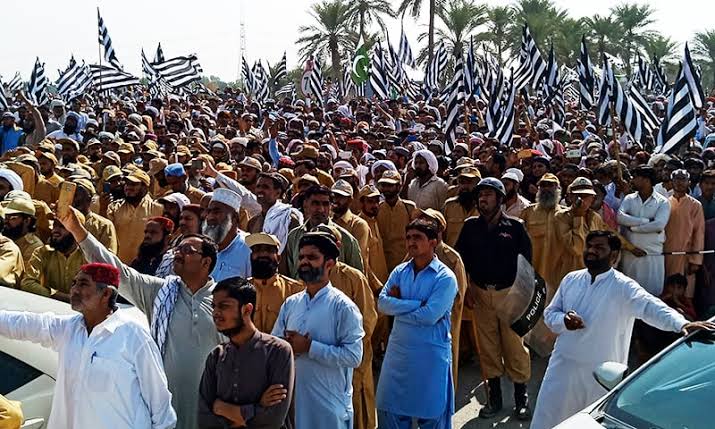
Several Bodo organizations took out a mass rally in Udalguri, Assam demanding the creation of a separate state for Bodoland. They threatened to organize a grassroots protest over the matter and take it to the national capital in days to come if the issue is not resolved in a time-bound manner along the lines of Jammu & Kashmir and Telangana.

The protest rally, organised jointly by the All Bodo Student Union (ABSU), the National Democratic Front of Bodoland (Progressive), the People Joint Action Committee For Bodoland Movement (PJACBM), was supported by several other Bodo organisations as well. It began at Bodofa Park and culminated at the Udalguri-Nalbari playground. Over 30,000 people are reported to have attended the rally.

“It is obvious that the Bharatiya Janata Party has sufficient majority in both the Houses to create new states/ union territories. However, the present exercise gives an impression to the common man that only if there is terrorism and violence, there is a compulsion to create new states/union territories, and if they are so created, it sends a wrong signal and could encourage violence in parts where small states are being demanded,” said a press release issued jointly by Pramod Boro, president of ABSU, Rakesh Boro, chief coordinator of PJACBM and Gobinda Basumatary, president of NDFB (P) on the 23rd of September at Udalguri.


“The Bodoland movement organizations believe that the manner in which the Ministry of Law and Justice has issued the notification invoking powers under Article 370 (1) of the Constitution, indicates that the Union Government has a political will that surmounts all obstacles to its aim and vision. We call upon the government to exercise the same political will and urgency in dealing with the other long-pending statehood demands like Bodoland,” the leaders said further.

“Bodoland demand is one of the oldest demands in the country. The Bodo movement has experienced a bloody chapter by losing more than 5,000 innocent lives and not less than 20,000 Bodo people have been jailed in the 50 years of Bodoland movement. But the irony of the fact is that despite having all justification and criteria, the demand has not been conceded by the successive governments so far, which is not only injustice but also strong disregard to the spirit of Articles 2 and 3 of the Constitution of India,” they added.

Bodo dominant areas in eastern Assam had seen massive protests demanding a separate state for the Bodo community in the 90s. The movement led by ABSU had later turned violence turn with the rise of two militant organisations, NDFB (National Democratic Front of Boroland) and BLTF (Bodo Liberation Tigers Force).

The agitations had come down after formation of Bodoland Territorial Area Districts (BTAD) in 2003, comprising four Bodo dominated districts on north bank of Brahmaputra in the eastern Assam. The BTAD is governed by Bodoland Territorial Council (BTC), an autonomous district council for the Bodoland region. The Bodo insurgency had also came down, with BLTF surrendering and joining the mainstream. NDFB was split and while one of its factions is still engaged in insurgency, the other faction has surrendered and its cadres are currently living in designated camps.

India has a civilisational responsibility to provide citizenship only to persecuted followers of Indic religions: Here is why

“India, that is Bharat…” When framers of our Constitution used those words in that sequence in its very first article, they were conscious of certain facts: One, India is just a new name of our country Bharat that is homeland of our millennia-old civilisation that gave birth to four major religions – Hinduism, Jainism, Buddhism, and Sikhism – which primarily informed our ancient civilisational ethos and culture; Two, the Indian State is the inheritor and trustee of our ancient civilisation; Three, the Preambular exhortation of ‘unity and integrity of the Nation” has civilisational connotation as deep civilisational ties bound us spatially and inter-generationally spanning across yugas.

Thus they were cognizant of India as a Civilisational Nation whose unity and integrity was primarily informed by Sanatana Dharma aeons before they assembled to frame the Constitution. Therefore, the moral obligation of the Constitution was largely to nurture our ancient civilisation and its values with a view to reintegrating our Nation and its people, for, bereft of those there will be no India in India as mere geographical lumps alone do not make a nation.

Even though Hindus are about a billion population there is no Hindu State in the world. India being the only country with Hindu majority (except smaller Nepal) and the only homeland for adherents of Indic religions (except Buddhists) it goes without saying that it has civilizational responsibility towards adherents of Indic religions. It’s an unfortunate reality that Hindus (which includes Buddhists, Jains, and Sikhs as per Explanation-II of article 25) suffer religious persecution in some countries. They naturally look up to India for succour and refuge as they (except Buddhists) have nowhere else to go. But those who escaped to India have long been suffering for want of Indian citizenship – an essential for a dignified living.

As per TRIPS agreement, Parliament enacted Geographical Indications of Goods (Registration and Protection) Act, 1999 to protect material goods. If there could be so much anxiety for ephemeral material objects, should we not show an equal if not greater concern to protect the persecuted people who are carriers of religious traditions that originated in India and informed our ancient civilisation for millennia? As the morality enshrined in the Constitution is hinged upon our civilisational mores, ensuring the wellbeing of people of Indic religions wherever they may become India’s civilisational responsibility, nay constitutional morality.

BJP in its 2014 Election Manifesto promised, “India shall remain a natural home for persecuted Hindus and they shall be welcome to seek refuge here.” Accordingly, Citizenship Amendment Bill, 2016 (CAB-2016) was introduced in Parliament which since lapsed. Given that final NRC in Assam has left the citizenship status of many in limbo, the passing of the new CAB assumes greater significance. In this context, it is necessary to understand the shortcomings of CAB-2016 to overcome them so that the new law would not get mired in litigation, and the long-suffering persecuted people of Indic faiths would get citizenship expeditiously.

First, CAB-2016 dealt with religious persecution in only three countries i.e. Afghanistan, Bangladesh, and Pakistan. It cannot be said that persecution of adherents of Indic religions is or will be limited to these countries only. For instance, Hindu American Foundation reports, “Hindu American students continue to be bullied and feel socially ostracized for their religious beliefs….” Hence, the law should factor in current as well as future eventualities by including all countries.

Second, CAB-2016 included all minorities in those three countries. This doesn’t make any sense. For, India has no civilisational obligation towards persecuted people of non-Indic faiths. We have been magnanimous to others like Jews and Zoroastrian-Parsis who were persecuted for their religion and had no place to go. But that’s not the case with persecuted Christians and Muslims who can seek refuge and citizenship in any Christian or Christian-majority and Islamic countries respectively.

So is the case with regard to Jews who now have their own homeland – Israel. Further, we cannot afford to unnecessarily burden an already overpopulated India. Hon’ble Prime Minister in his 2019 Independence Day rightly flagged the issue of population explosion. It is therefore prudent to limit citizenship only to persecuted adherents of Indic religions and Zoroastrian Parsis only.

Thirdly, the inclusion of all minorities in those three countries in the CAB-2016 is illogical and fraught with following dangers:

One, it puts on India an avoidable self-inflicted irrational and ‘unaffordable’ responsibility towards all minorities in neighbourhood countries whether or not they are of Indic faiths.

Two, since there is already a demand for Indian citizenship to Rohingya Muslims, a future Govt may find it easy to add other neighbourhood countries Myanmar, China etc to the list of three countries in the Citizenship Act, making minorities in Myanmar and China namely, Rohingya Muslims and Uighur Muslims eligible for Indian citizenship. As there is no logic or rationale to include “minorities” now, such an action by a future Govt will simply go unquestioned.

Three, the measure which is meant to protect the persecuted Indics who have nowhere else to go, will become a legal route for demographic aggression on India by other religions.

Fourthly, experts have raised questions regarding the constitutional validity of CAB2016. So even if a fresh Bill becomes law, it may be challenged in courts, which will hardly help the long-suffering persecuted Hindus, etc. Therefore, it is necessary to amend the Constitution before amending Citizenship Act.

Fifthly, since religious persecution is the basis for a grant of citizenship, his subsequent conversion if any to a non-Indic religion repudiates that very basis. He might as well have converted and stayed in his homeland instead of moving to India. Moreover, it is not difficult to fake one’s religion to gain Indian citizenship fraudulently and then proclaim the real identity. Therefore, without stringent safeguards, it will end up as a legal route for demographic invasion, which CAB-2016 did not factor in.

In view of these, it is imperative to amend the Constitution by inserting a new Article 11A to enable Parliament to amend the Citizenship Act limiting citizenship to the persecuted Hindus, Buddhists, Jains, Sikhs and Zoroastrians only from any country with stringent safeguards against misuse by providing for termination of citizenship with consequent disabilities including deportation to his former homeland, applying provisions of Enemy Property Act to confiscate his properties etc.

(A slightly different version of this article was originally published on TOI blogs and has been republished here with author’s permission)

If NRC is implemented, Manoj Tiwari will have to leave Delhi: Delhi CM confuses Citizenship and Domicile

0

Delhi chief minister Arvind Kejriwal today displayed shocking ignorance regarding his understanding of NRC while answering a question on his views on BJP leader Manoj Tiwari’s demand of implementing NRC in Delhi. Kejriwal said that if NRC is implemented in Delhi, BJP leader Manoj Tiwari would be the first one to leave Delhi.


The NRC which stands for National Register of Citizens is a register containing names of all genuine Indian citizens. It was first prepared in 1951. It is currently being implemented in the north-eastern state of Assam, which had a long-standing issue of illegal Bangladeshi immigrants infiltrating and settling in the state. In a recently published list of NRC, over 3.1 crore people were included while 19 lakh people were excluded from the list.

The NRC is strictly to identify the illegal immigrants living in the country and is not aimed at Indians living in states different from their birthplaces. Former AAP leader Kapil Mishra took a swipe at Kejriwal saying that NRC is National Register of Citizens and not Delhi Register of Citizens that Indians will have to go outside. Mishra also alleged that Kejriwal is talking like an illiterate to save Rohingya and Bangladeshi infiltrators living in the national capital.


Delhi BJP leader Manoj Tiwari had said recently that the situation in Delhi is worsening due to the presence of illegal immigrants who pose a threat to the safety of people in Delhi. Tiwari assured that the BJP government will implement the NRC in Delhi as well just like they have done it in Assam.

Home Minister Amit Shah recently asserted that NRC will be implemented across the country and illegal immigrants will be deported back to their countries through legal means. Citing BJP’s manifesto, Amit Shah said that they had mentioned in their manifesto that NRC will be carried out across the country and for this, they have been given the 2019 mandate.

Madhya Pradesh: Two Dalit children beaten to death for defecating outside Panchayat building in Shivpuri

Two Dalit children were allegedly beaten to death for defecating in front of the Panchayat Bhavan in Madhya Pradesh’s Shivpuri district on Wednesday.

The Shivpuri police have arrested brothers, Hakim Singh Yadav and Rameshwar Yadav who allegedly hit the children mercilessly on their head with lathis and killed them, confirmed Shivpuri Superintendent of Police, Rajesh Singh Chandel.

Shivpuri police have registered a case under Section 302 (punishment for murder) of the Indian Penal Code (IPC) and relevant sections of the Scheduled Caste and Scheduled Tribe (Prevention of Atrocities) Act, 1989.

The incident took place in Bhavkedhi village in the morning. The two children, Roshni (12) and Avinash (10) were on the way to their grandparents’ house when they stopped near the Panchayat Building to defecate. The duo, Hakim Singh Yadav and Rameshwar Yadav, then attacked the children with lathis. The children who suffered serious injuries in the incident were rushed to the district hospital where doctors declared them dead.

Locals of the village informed the police that Hakim, one of the accused, would get “unnecessarily hyper” over petty issues and had undergone treatment for mental illness in the past.

The bodies of the deceased were taken to a hospital for post-mortem.

Six ways India can make its large, diverse and educated diaspora abroad into force multipliers for India

Recently, PM Modi took the stage in Houston with President Trump, addressing the largest ever gathering by a foreign leader on US soil, ‘Howdy Modi’. A powerful statement of global influence for India.

The Indian diaspora is large, diverse, highly educated, well-off and well respected for their expertise in their fields. Together, they can be one of the biggest force multipliers for India.

We are increasingly in an era where soft power is replacing the traditional ‘hard’ power. What makes America a superpower is not just that they have the most number of aircraft carriers or the biggest economy. It is also that America is able to export its culture, its way of thinking, all across the world. This is where China chokes in comparison to the United States: for instance, most people outside China would be hard-pressed to name a single Mandarin language movie. The economy of the UK is a quarter of the size of China, but Britain is a cultural powerhouse. Who hasn’t heard of James Bond? Or The Beatles?

The large contingent of Indians abroad gives us a tremendous level of access to the minds of people all across the world. It is an opportunity for us to export our way of thinking. It is time this was recognized and harnessed as a core instrument of state power, at par with any other diplomatic initiative.

First, the problem that we face: The global reaction to the abrogation of Article 370 should be an eye-opener for us. Sure, no government in the world has taken a stand against India, mindful of our economic might. But the foreign press: the New York Times, the Washington Post, the LA Times, the BBC, European media, Al Jazeera, etc virtually came together as one and produced some of the most hateful, bitter anti-India rhetoric in history. Even as governments keep quiet, the narrative is seeping into the minds of people. It is only a matter of time before new politicians get elected in those countries who are steeped in anti-India rhetoric. Take Bernie Sanders, who is now openly hostile to India. People like him are popping up everywhere.

Essentially, India is in the crosshairs of three big global forces: the Islamists, with their hatred towards non-believers. The Christian right, which is facing a recession in “core markets” and looks towards India as a place to harvest souls. And the radical left, now increasingly under the thumb of radical Islam.

So here are my seven humble suggestions about what India can do to make effective use of the opportunity created by the global Indian community. You may well find some of these a little cynical. But, propaganda is a warlike any other. To win, we must learn from both friends and enemies. Do whatever works.

1. Significantly boost the Division of Overseas Indian affairs

You can easily think of the global Indian community like a major Western European nation. So at a basic level, we need to treat the Division of Overseas Indian affairs like an Embassy in say Germany, or France or Britain. This means a significant boost to this division in terms of personnel, funding, morale and profile. This division can be our base to launch some of our most important “diplomatic” initiatives.

2. Fund NRI lobbies that can influence foreign media

Why is it that the New York Times is more sympathetic to radical Islamists than to democratic India? Part of it is ideological affinity, yes. But part of it is also that Islamists excel at creating an environment of outrage, while we do not. Just see how Pakistan’s ISI is able to organize “protests” in London or New York and how well they coordinate with Khalistani elements. And see how Khalistanis are able to significantly influence politics in Canada and the UK.

We need an institutional support mechanism from the Indian government to counter this. We need to fund NRI lobbies that will organize protests outside the headquarters of big media offices or NGOs that carry out anti-India campaigns. We have to keep annoying them till they end up listening to us. Yes, we may have truth on our side. Yes, we have lakhs of patriotic, self-driven Indians everywhere who are willing to volunteer their time and energy, to tell the truth about India. But when the enemy uses professional propagandists, we cannot win with volunteers, no matter how noble it may sound.

Somewhat cynically, let me say kalyug hai bhai. We have to hire people to tell the truth.

3. Codify the meaning of Hinduphobia and lobby relentlessly to stigmatize Hinduphobes

Hinduphobia is real. It consists of dehumanizing language directed against Hindus and their religious/cultural practices. If you have ever read foreign media talking about India (or for that matter Indian liberal media talking about India), you know what I am talking about.

The Jewish people have often faced similar hatred. Their answer was to create a multitude of organizations, such as the Anti-Defamation League, which had some very concrete goals. One to develop a comprehensive definition for anti-Semitism and then teach people to recognize anti-Semitic tropes in everything from print media to TV to everyday speech.

We need to do something similar regarding Hinduphobia. We need an organization to issue guidelines for media to talk about Hindus and Hinduism. No, gaumutra jokes are not okay. Those who make such utterances should be stigmatized. Just like damaging and dehumanizing caricatures of Jewish people have been “socially outlawed” all over the world.

(Note: One may well ask why I am conflating ‘Hindus’ with ‘Indians.’ Indeed, not every Indian is a Hindu. Just like not every Israeli is Jewish. In fact, almost 20% of Israelis are Arab Muslims. But the fact is that anti-Semitism and hatred towards Israel often come from the same groups of people. Just like anti-India rhetoric and Hinduphobia come from pretty much the same sources).

4. Dual Citizenship for Indians abroad and their descendants

Every Indian settled abroad and all their descendants are potential friends of India. To tap into their strength, the most basic thing is to give them a stake, a reason to connect with India. As with their parents, the children of Indian diaspora are generally high achievers. Tomorrow they will be running the biggest corporations, dominating the most prestigious universities, perhaps even ruling entire countries. Some already are. How much would it help to make sure these new generations preserve their link to India? With every succeeding generation, as the descendants of Indian immigrants integrate ever more deeply into the fabric of other nations, the dividends would grow.

If you have moral qualms about this, consider this: India is a civilization, not just a country defined purely in terms of borders and passports. The concept of ‘Indianness’ is thousands of years older than the concept of nation-states! What was the “citizenship” of Adi Shankara or Ved Vyasa? Does anyone know?

5. Influence Hollywood the way China does

The Chinese understand that literally everything can be used for power politics: even the pandas that they loan to zoos in countries around the world, which they can recall any time if the host country should displease them. Seriously.

We have to learn from this attitude and adopt it. One way to influence global culture is through Hollywood.

Here is what China does: the Chinese government has a quota for the number of foreign films that they will allow each year into their country. However, which movies they will allow depends on the whims and fancies of a Chinese government panel. So what is a Hollywood studio supposed to do if it wants to get their movie into the Chinese market? The trick is to subtly embed in their movie positive cues about China and the Chinese.

You are probably watching and absorbing these positive cues about China in Hollywood movies right now, without knowing it. Movies showing regular people in America using products with Chinese labels. Or a throwaway reference to something good that the Chinese may be doing inside the fictional plot. Blink and you miss them. But they are there. And we are all absorbing them.

We in India could easily adopt this strategy. Due to huge English language penetration, India is a big target market for Hollywood. If India makes Hollywood bend to our will, half the battle is already won.

(6) Tourism!

And finally…

The only way a common person anywhere in the world can hate India is if they have never visited our country! Just think: would anyone who has ever come to India fall for the nonsense of the ‘lynchistan’ narrative? Or the absurd claims of Khalistanis?

Tourism is the ultimate instrument of diplomacy. It brings in money and it breaks all mental barriers. And with the kind of history and culture that India has, we could be the biggest tourist destination in the world.

At least 30 killed and over 450 injured in the earthquake in Pakistan Occupied Kashmir

0

The death toll of the earthquake that hit Pakistan-Occupied Kashmir on Tuesday has risen to 30, as per reports. More than 450 people have been reportedly injured as relief efforts are ongoing in the region.

“Pakistan Army aviation helicopters have completed an aerial survey for damage assessment in Mirpur, Jarikas and Jatlan areas. Army teams have reached earthquake-hit areas of Mirpur, Jatlan and Jarikas. Rescue efforts initiated,” state-run PTV tweeted.

An earthquake measuring 6.3 on the Richter scale hit Pakistan Occupied Kashmir at around 4:31 pm IST. Tremors were felt in Delhi-NCR, Kashmir, Chandigarh, parts of Himachal in India as well as Islamabad, Lahore and Khyber-Pakhtunkhwa in Pakistan.

Several roads and bridges have been completely destroyed in Pakistan Occupied Kashmir due to the earthquake.

Photos show wide and deep cracks appearing on the ground in and around Mirpur, many of which trapped vehicles inside.

The epicentre of the earthquake was 140 kilometres from Srinagar at the depth of 10 kilometres, the United States Geological Survey reported. The epicentre was located near the New Mirpur city in Pakistan-occupied Kashmir.

Chairman of the National Disaster Management Authority (NDMA) in Pakistan, Lt Gen Mohammad Afzal, said at a briefing in the Pakistani capital that truckloads of relief items that include 200 tents, 800 blankets, 200 kitchen sets, and 100 medical kits would be received by the victims of the earthquake soon. “The NDMA is already providing medicines, food items and tents, which were in its stock in the affected areas, to the victims,” he added.

The authorities have warned people of aftershocks and some of them have already been felt in the surrounding areas. Mirpur has suffered significant damage and news channels showed visuals of great devastation in the city.