Home Blog Page 5993

Andhra Pradesh: Jagan’s govt set to demolish Chandrababu Naidu’s Amravati residence, notice served

0

A demolition notice has been served to one Lingamaneni Ramesh, the owner of the house in which former Andhra Pradesh CM Chandrababu Naidu is currently living, by the Andhra Pradesh Capital Region Development Authority (APCRDA), asking him to remove the unauthorised construction within 7 days, failing which APCRDA will remove the same.

The APCRDA authorised order was glued on the entrance of the house located in Undavalli village as Naidu, President of opposition Telugu Desam Party (TDP), or his family members were not present at the location to receive the same.

The house owner was issued a show-cause notice on June 27. The latest order mentions that the reply submitted to the notice was not to the satisfaction of the authority. As per the order, the APCRDA staff discovered unauthorised constructions and developments in contravention of many rules and regulations during the inspection of the house.

Unapproved RCC residential buildings on the ground and first floor, along with a swimming pool and ground floor dressing room etc measuring 1.318 acres were highlighted in the issued order by the Andhra Pradesh Development Authority. In addition to this, the order reads that the unauthorised construction is within the Maximum Flood Level (MFL) of the Krishna river.

The demolition notice was issued immediately after another government building named ‘Praja Vedika’ was razed down by the APCRDA. The former CM Naidu has been living in the house since 2016 after shifting from Hyderabad. He had also got Praja Vedika, a meeting hall, constructed near his residence.

After coming to power in May 2019, the newly elected Chief Minister Y.S. Jagan Mohan Reddy, in a spree to stamp out illegal constructions on the banks of Krishna at Undavalli, had ordered the demolition of Praja Vedika in June 2019. He had also alleged that Naidu himself is living in an illegal house.

The TDP, on the other hand, asserted that the party in power in the state is using its might against the opposition parties and accused it of political vendetta. Criticising YSRCP, TDP questioned the motive behind issuing a notice despite the matter being in the court.

The house is reportedly taken on lease by the Naidu family.

With Assembly Elections in Haryana and Maharashtra being announced, here is how political parties fared in 2014

0

The Election Commission has on Saturday announced the dates for the Assembly elections in Maharashtra and Haryana. Both the states will go to poll on October 21 and the results will be declared on October 24 in a single phase.

As per norms, the Model Code of Conduct (MCC) immediately came into force from today itself in both the states.

“In Maharashtra and Haryana, the notification will be issued on September 27. The last date of filing nominations is October 4. Polling will be held on October 21 while counting will take place on October 24,” Chief Election Commissioner (CEC) Sunil Arora said while addressing a press conference here.

Maharashtra and Haryana are both the first states to go to polls after the 2019 Lok Sabha elections which marked a historic win for the BJP. The term of the assembly for Maharashtra and Haryana ends on November 9 and November 2, respectively.

In the Lok Sabha elections held earlier this year, both these states had witnessed a saffron surge as BJP had made a clean sweep by winning all 10 seats in Haryana while bagging a total of 41 out of the 48 seats in Maharashtra along with its alliance partner Shiv Sena.

Meanwhile, during 2014 Assembly elections both these states witnessed a shift in preferences and BJP had emerged victorious outstripping the incumbent Congress in both states.

Source: Indian Express

Here’s a look back at how parties fared in 2014 assembly elections in both the states of Maharashtra and Haryana.

Maharashtra:

The Assembly or the Vidhan Sabha in Maharashtra has a total strength of 288 seats. The ruling BJP and its alliance partner Shiv Sena will be fighting it out with Congress-NCP combine.

In the 2014 assembly polls, the BJP-Sena alliance had ousted the Congress-NCP combine by capturing a total of 185 seats out of the total 288 seats securing a clean majority. While BJP emerged as the single largest party by winning 122 seats, Uddhav Thackeray’s Shiv Sena secured 63 seats.

Following the Congress-NCP alliance’s performance in the 2014 general election, the NCP had demanded 144 seats to contest and rotation of the Chief Minister’s post between parties. Both parties had held negotiations but failed to reach a conclusion. Congress then declared its list of candidates for 118 seats on September 25, 2014, without consulting NCP which resulted in peeving NCP party founder Sharad Pawar. Thus, the NCP unilaterally severed its 15-year-old alliance with the Congress party.

While BJP and Shiv Sena joined hands after the poll results, Congress and NCP had contested the state elections separately. Coming as a major embarrassment for the grand old party it only secured 42 out of the 287 seats it contested, while NCP won 41 seats out of the 278 seats it contested.

Seats won in 2014 Assembly elections

Senior Congress leader Narayan Rane and Harshwardhan Patil who were big hopes for the party, could not make a mark and Congress had to face major humiliation in Maharashtra as it lost its ruling state to BJP.

BJP’s key leaders had an easy win. The party’s state president then, Devendra Fadnavis, who took over as the Chief Minister in the state, won from Nagpur South West constituency by edging past his closest rival, Congress’ Prafulla Vinod Gudadhe by 58942 votes.

Haryana:

In another jolt, BJP had swept Haryana from Congress’ command after its whooping victory in the 2014 Haryana Legislative Assembly election. The 2014 Haryana assembly polls saw BJP winning the elections with 47 seats in the 90-member House here too, emerging as the single largest party. Whereas, Indian National Lok Dal (INLD) and the then incumbent Congress fell short at 19 and 15 seats, respectively. BJP’s ally Shiromani Akali Dal (SAD) and BSP won one seat each, while independents had bagged five seats.

The voter turnout in the state was recorded at 76.54 per cent which became a new state record. Voting was held on October 15, 2014, and the result was announced four days later.

Seats won in 2014 Assembly elections

The BJP won a majority with 47 seats. With BJP’s alliance partner Shiromani Akali Dal (SAD), which won 1 seat, the NDA alliance of BJP and SAD won 48 seats in the 2014 Haryana Assembly elections and BJPs Manohar Lal Khattar was chosen to head the government in 2014.

Meanwhile, the poll commission has also announced the date of bye-elections in 64 constituencies across the country. “Bye-elections to the 64 constituencies across Arunachal Pradesh, Bihar, Chhattisgarh, Assam, Gujarat, Himachal Pradesh, Karnataka, Kerala, MP, Meghalaya, Odisha, Puducherry, Punjab, Rajasthan, Sikkim, Tamil Nadu, Telangana and Uttar Pradesh will also be held on October 21; counting of votes will take place on October 24,” CEC Arora said.

Won’t file FIR against your son, aunty: Babul Supriyo promises his assaulter’s mother

BJP MP Babul Supriyo, in a kind gesture, assured the mother of his assaulter that he won’t initiate any action against her son for his violent behaviour towards him.

Unio minister Babul Supriyo was recently attacked, heckled and abused by left-wing activists at the Jadavpur university when went there to attend an event organised by the students of ABVP.

Instead of fleeing the place, Supriyo patiently tried to pacify the agitating students. Amidst the ensuing commotion, one of the students, Debanjan Vallabh tried to yank Supriyo towards him by pulling his hair. This was not the end, Supriyo’s shirt was torn open by the mob heckling him. The drama at the campus had lasted for hours where Supriyo stood his ground, unwilling to give in to the violent mob and kept trying to get them to have a civilised discussion. Finally, Supriyo was rescued after West Bengal governor Jagdeep Dhankhar intervened personally.

Despite going through such an ordeal, Babul Supriyo didn’t lose his cool at the behaviour of the mob. With a calm demeanour, he said, “These are kids. These people are hot-headed but if there is no opposition, who are you going to fight against, Bhai? The opposition is necessary.” He extended a hand of reconciliation and yet, was firm enough to tell them in strong words that their behaviour was totally out of order.

On Saturday, the assaulter Debanjan Ballabh’s mother, who is suffering from cancer, had pleaded with the Union Minister before media to forgive her son’s action and requested him to not initiate any action against him and finish his career.


Supriyo responded to the mother Rupali Ballabh by posting a tweet in Bengali assuring her that he would neither file an FIR, nor press charges against her son and asserted that he wants her son to learn from his mistakes. Supriyo also wished speedy recovery of Rupali from cancer

“Don’t worry Mashima. I won’t harm your son. I only want him to learn from his mistakes. Neither will I file an FIR or allow anyone to press charges. Don’t worry, you focus on your recovery. My prayers are with you,” Supriyo tweeted. As per reports, the lady has been suffering from cancer for three years and her husband is a school teacher in Burdwan.

Debanjan Ballabh has been absconding and could not be contacted by the media.

Modi in America: An opportunity to emphasise ties between the two countries and a testament to PM Modi’s leadership

In 2005, the current Indian Prime Minister Narendra Modi, when he was the Chief Minister of the Indian State of Gujarat, was denied US diplomatic A-2 visa. In addition, the B-1 / B-2 visa previously granted to him was revoked under a section of the “Immigration and Nationality Act”. This section disqualifies anybody, a US visa by holding any foreign government official responsible for “serious violations of religious freedom”.

Surprisingly, Modi is the only person barred from travelling to the United States under the “International Religious Freedom Act (IRFA)” provision of the US “Immigration and Nationality Act (INA)”. In 2012, a Special Investigation Team (SIT) appointed by the Supreme Court of India found no “prosecution evidence” against Modi and cleared him of all charges. When Narendra Modi became the Prime Minister of India in 2014, the US visa issue came to the fore as a diplomatic hurdle in bilateral India-United States relations.

Times have changed and today America stands outstretched to host one of the world’s most influential Prime Ministers representing a large part of the world’s population. The India Forum of Texas (TIF) in Houston, Texas has organized a community summit for Prime Minister Narendra Modi on Sunday, September 22. More than 50,000 people have registered in three weeks to join “Howdy Modi”, making it the largest gathering of a live audience for any foreign leader invited in the United States, other than the Pope. “Howdy Modi” is being organized in collaboration with more than 1,200 volunteers and 650 Welcome Partner organizations based in Texas.

The interesting part is, the name of this program “Howdy Modi”, but US President Donald Trump is not far behind in capitalizing on its grandeur, form and popularity of Prime Minister Modi in America. This week, the White House officially announced that President Trump would also attend the event and address more than 50,000 attendees. Trump has attended inaugurations and other ceremonies with leaders of other countries, but his address to the program with a foreign leader is a rare coincidence.

This program can be seen as a good sign for promoting Indo-US relations and for increasing personal intensification between the leaders of the two countries. It is also a matter of coincidence that Prime Minister of Pakistan Imran Khan will also be in the United States at the United Nations General Assembly during this time. Trump’s presence will give a strong signal at a time when Pakistan is planning to raise the Kashmir issue in the UN General Assembly and many US lawmakers have expressed concerns about security and human rights violations in Jammu and Kashmir.

President Trump is convinced of Modi’s popularity in America and during his last election, he also gave the slogan of “Abki Baar, Trump Sarkaar”(This time, Trump Government) on the lines of Modi. This was the first time when any American presidential candidate had appealed to this big vote bank to lure Indian-Americans through a slogan in Hindi. Trump does not want to miss a chance, especially when its elections next year.  His eyes are on the American Indian community and he is well aware that there is a strong possibility of political gains by sharing the stage with Modi. It is also worth mentioning that in this program, along with him, governors, members of Congress, mayors and other officials will also join this bipartisan delegation.

A lively example of Modi and Trump’s friendship was seen during the recent G-7 summit in France where Prime Minister Modi shook hands with President Trump, blossoming like a very close friend. This will be the third meeting between the two leaders this year. Earlier in Japan, the two met during the G20 summit.

The “Howdy Modi” program will surely be a great opportunity to emphasize strategic partnerships and strong ties between the people of the two countries and between the world’s oldest and largest democracies. In the midst of the ongoing tariff war between the US and China and probable signs of the global recession, this meeting has various meanings and undoubtedly paves the path to discuss ways to further deepen trade relations between India and America.

Prime Minister Modi’s huge hoardings have been installed all over Texas, and now Trump will probably be included as well. After the announcement of the White House, the grandeur of this program has grown further and the American media is also taking a special interest in this program. The American Indian community is eagerly waiting to welcome the two leaders.

Modi is visiting the US from 21-27 September to address the United Nations General Assembly in New York. This trip is very important in the present circumstances. The American media has presented the Kashmir Issue from a different perspective. Modi has always impressed with his bold decisions and impressive speeches and many are keenly observing his address to the UN General Assembly on 27th September.

Modi was issued a visa to visit the US on September 2014 after becoming the Prime Minister of India after he was denied a visa in 2005 as the Chief Minister of Gujarat. Then, he was invited by the US administration to address a joint session of both houses of the US Congress, which he did in June 2016. In 2017, he paid a state visit to the US at the invitation of President Trump.

After Modi became Prime Minister, there have been severe criticisms on his frequent foreign visits, but today when at the G-7 summit held in France, of which, India is not a member, is invited as a special guest, seemingly is the implication of those trips abroad and what the Prime Minister has achieved for India.

“Howdy” is an informal term used when meeting friends. This program, which is going to give a new dimension to the concept of “Allied Nations” between India and America, will definitely give rise to new possibilities. In today’s modern era, when the formal distance between the national leaders and the public seems to be decreasing, similarly the term defining the friendship between the leaders of two nations is “Howdy”. The changing developments are a testimony to India’s growing international stature and the growing strength of India.

Modi’s strong foreign policy should be given the biggest credit for these achievements. This balance in foreign policy can be seen as an example of the efficient leadership of Prime Minister Modi.

To promote growth, just cut tax rates: Here is the likely impact of tax rates for corporates being slashed by the Modi govt

Concerns on taxation front have persisted for a major part of the last two decades. Despite a series of reforms since then, we didn’t witness a big-bang direct tax reform and kept kicking the Direct Tax Code can into the future. The story wasn’t any different on the Goods and Service Tax. However, GST became a reality in the first tenure of Mr Modi and indeed, corporate tax rates were also reduced but the reduction was small, spread over years and it covered firms only till a turnover of Rs 250 crores.

The first budget of Modi 2.0 increased this limit to Rs 400 crores and this ensured that a bulk of Indian firms faced a corporate tax of 25 per cent with the relevant surcharges as applicable. Since then, the DTC report has been submitted and there have been talks of further lowering our corporate tax rates to a level comparable to some of our competitors. In a joint article with Dr Surjit Bhalla for the Indian Express, we arrived at a figure of 22 per cent as the optimal level of the corporate tax rate. The article can be read by clicking here.

Recently, the Hon’ble minister lowered the tax rate to 22 per cent without the exemptions thereby taking India towards the optimal level that would maximize our corporate tax revenue. This figure of 22 per cent is important as the Finance Ministry – and the CBDT would have definitely carried out an extensive exercise to arrive at the figure. But, more importantly, it shows how we’ve moved away from our skewed understanding of a linear relationship between tax revenue and tax rate. This is by far a more important take-away as it implies that in future our taxation policies will be more guided by rationality than by concerns of morality.

The fact that there’s a concessional rate of 15 per cent for new manufacturing companies is another move that is clearly looking at making India one of the most tax competitive countries in the region. It is enough to make many firms that are exiting China look at India as a viable if not a better alternative to shift their supply chains.

A likely outcome of these changes is that in the medium term we may see a swift expansion of non-farm employment opportunities for India which will reduce the burden on agriculture and have a positive impact on wages of both farm and non-farm labour. Further, lowering of tax rates will also help Indian firms have better-retained earnings- before the tax rates our firms had one of the lowest retained earnings.

There are many reasons to believe that in our context trickle-down economics is likely to work; for starters, the tax cuts will help improve retained earnings and help our firms deleverage. Given the extent of positive investment opportunities in India, we will see a lot of these retained earnings get reinvested – the fact that we discourage dividends will implicitly result in them being productively utilized. Consequently, we may be able to absorb a lot of surplus labour from agriculture to Industry helping wages grow in both the farm and non-farm sector while improving productivity.

A key point worth remembering is that so far India has witnessed only a couple of years of reforms at a stretch. This has changed since the time PM Narendra Modi came to power. The reduction in corporate tax rates without exemption is not less than a reform or at least a part of the larger direct tax reforms that will happen sometime over the next couple of years. One is optimistic that with this continued series of reforms, we may finally transform the Indian economy by unleashing the animal spirits of the private sector.

Bihar: RJD MLA’s niece and her male friend Asif found dead, police suspects suicide

0

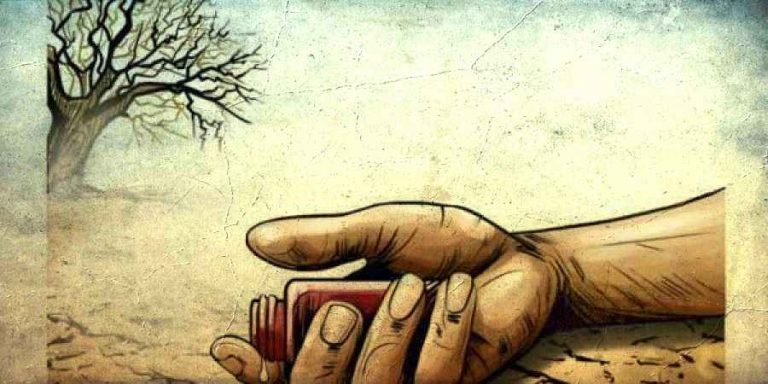
In a shocking incident, a high-profile case has surfaced from the Munger district of Bihar. Late on Friday night, the body of a young man alongside the body of a woman was recovered from the Sadar Block office premises. They had bullet wounds. The police were informed of the bodies by the locals, after which the police took the two bodies in their possession and sent them for postmortem.

The deceased woman has been identified as Riya alias Twinkle, the niece of RJD MLA Vijay Kumar Vijay, from Munger. The young man has been identified as Mohammad Asif. It is alleged that due to the high profile nature of the case, the families of the victims are reluctant to sharing information with the media.

Twinkle’s mother stated that her daughter used to stay in Delhi and was preparing for medical examinations. According to her mother, Twinkle came back to Munger only a few months ago and described her daughter’s relationship with Asif as friendship.

Twinkle’s mother said that her had daughter left the house on Friday around 7 PM saying that she was going to her friend Mohammad Asif’s house in Sujavalpur to borrow a book from him. When it was too late and Twinkle didn’t return, the mother called on her mobile several times but Twinkle was not responding to the calls. Her mother then tried to search for Twinkle but she could not find her. Her mother said that she had no enmity with anyone.

A representative of MLA Vijay Kumar said that the deceased woman is the niece of Kumar and the daughter of his younger brother late Manoj Prasad Yadav.

On the other hand, Mohammad Asif’s uncle told that when he received the information that his nephew had been shot and killed, he reached at the spot to find the dead body of a young lady with his nephew. He told that Asif’s father Mohammad Irshad works in Dubai and the deceased lived with his mother and younger brother in Sujawalpur.

As per reports, Munger police have stated that prima facie, it looks like a case of suicide. Munger Superintendent of Police (SP) Gaurav Mangla said that a young couple committed suicide on Friday in Mufassil police station area behind Sadar block. He has stated that 25-year-old Asif shot Twinkle Yadav in the head first and then killed himself with a local pistol.

The police have taken Asif’s friend Danish under custody. He was reportedly the one who had provided Asif with the pistol. Two rounds of bullet and mobile phones of the deceased (Twinkle and Asif) have been recovered from Danish. Mangla stated that the possible cause of suicide might be a failed love affair. The investigation in the case is currently underway. Riya and Asif reportedly studied together in Kota before Riya moved to Delhi.

Delhi Court rules that showing middle finger to woman amounts to outraging her modesty: Report

0

According to a recent court judgment, showing the middle finger to a woman tantamount to outraging her modesty and can land a person in jail, reported Times of India.

While hearing a case concerning an assault which dates back to 2014, a judge in Delhi recently sentenced a man to jail for gesturing at a woman with his middle finger apart from making obscene facial expressions at her.

Hearing the case, metropolitan magistrate Vasundhara Azad, stated that the actions of the accused amounted to making utterances or gestures intended to outrage the modesty of a woman. The accused might be looking at a maximum punishment of three years in jail along with a cash fine. However, the actual quantum of the punishment will only be announced on September 24 (Tuesday).

The complainant, in this particular case, had also alleged that the accused passed lewd remarks at her and even slapped her.

On May 24, 2014, a woman had complained against her brother-in-law, alleging that he showed his middle finger to her besides passing lewd remarks and also physically hurting her. Following the complaint, the police booked the accused under IPC sections 509 (word, gesture or act intended to insult the modesty of a woman) and 323 (punishment for voluntarily causing hurt).

On October 8, 2015, the court framed charges against the man who pleaded not guilty and requested a trial in the case.

Though the woman in he testimony reiterated her claims, the man continued to oppose all the allegations claiming that case was the result of a property dispute between them and asked the court to examine his sister in his defence. The sister witnessed that her brother was at home the whole day and the woman had lodged a false complaint.

The court found no evidence about the property dispute claim, however, it took cognisance that the complainant had “specifically stated in her testimony” that the accused showed her his middle finger, made obscene facial expressions towards her and also passed lewd remarks. Hearing the case, metropolitan magistrate Vasundhara Azad, highlighted that the complainant’s medico-legal case (MLC) report showed a “linear bruise” on the woman’s body and held that, “The consistent testimony of the woman regarding hurt caused to her has been duly corroborated by her MLC”. Rejecting the defence witness’ testimony, judge Azad held the accused guilty.

Delhi taxi drivers start carrying condoms to avoid challans after bizarre fake news gained steam

0

The Delhi-NCR taxi drivers have fallen for bizarre fake news that they need to carry condoms in the taxi’s first aid kit to avoid traffic fine. They have been mandatorily carrying condoms in their cabs to avoid challans. They are convinced that if they do not carry condoms in their taxis they are likely to be fined, but clearly, they have no idea about which government rule stipulates this.

This ludicrous hearsay gained traction after a cab driver named Dharmendra claimed to have been fined for not keeping a condom in his cab.

Though Dharmendra had been fined for over-speeding he claimed that he was fined by the traffic police because he did not have a condom in his first-aid kit. His challan receipt, however, cited over-speeding as the reason for the fine.

This misinformation which gradually circulated amongst the taxi drivers made them believe that keeping condoms are mandatory to avoid challans.

Delhi Sarvodaya Driver Association president Kamaljeet Gill, said, “All public vehicles are required to carry at least three condoms at all times.” Gill gave an odd explanation for assuming that keeping condoms in the first aid kit is mandatory. He said that those condoms could be used to stop bleeding or to treat a wound. “If any person has a fracture, a condom can be tied at the spot till the person reaches the hospital,” Kamaljeet said.

Meanwhile, a taxi driver named Ramesh said, “I have heard that it is necessary to keep condoms, so I always keep at least one.” He said, “Till date, traffic policemen have not asked me regarding this. However, many times during fitness tests, the cab drivers have been asked whether they have condoms in the car or not.”

Traffic police confirmed that there is no such rule in the Motor Vehicle Act which directs drivers to keep condoms in their cars and added that no such bizarre investigations are done either during fitness tests as claimed by Ramesh. “However, NGO workers reach out to drivers outside the centre to educate them about safe sex. It is possible that drivers have developed the habit of keeping condoms from there,” said the traffic police, furthering that cab drivers should contact the authorities if they are fined for not keeping the condom.

‘Will tear your stomach apart’: One Asif Yusuf Shaikh bites off finger of victim, keeps abusing him even after spitting out severed finger

0

A squabble over a standing spot near the door in Asangaon fast train took a violent turn as one of the individuals involved in the quarrel named Asif Yusuf Shaikh suddenly chewed off a part of the index finger of the other co-passenger. The incident took place on Thursday evening in Mumbai on a peak-time Asangaon fast local and the accused was arrested at Thane station by GRP after fellow commuters cautioned the police.

The victim, Mahesh Pandurang Dhumbre, who works for an insurance firm and lives in Ghansoli, went through a corrective surgery on Friday evening. On Thursday, after finishing off his work, he went on board the first-class compartment of the 5:40 PM local train at Dadar. The accused, Asif Yusuf Shaikh, hopped on the train from Kurla station and jostled Dhumbre and other passengers standing near the door. “He was trying to push others in order to make space for himself but the local was jam-packed and there was scarcely any space. In his struggle to carve a space for himself, he precluded others from boarding the train. So I pulled him in. However, this infuriated him and he pushed me away, Dhumbre said to Mumbai Mirror.

As per other co-passengers in the train, the jostling quickly devolved into a heated argument following which Shaikh hurled expletives at Dhumbre and held his collar so violently that his buttons came off. Dhumbre, on the other hand, fought back and pulled Shaikh by his neck which is when Shaikh bit his finger and held it tight between his teeth.

Speaking to Swati Goel Sharma of Swarajya Magazine, Dhumbre said, “It took me some moments to realise what had happened. I saw a part of my nail and flesh between his teeth before he coolly spat it out of the train. He looked like a shaitaan.”

While recounting the incident Dhumbre said that the pain was so excruciating that he bawled and closed his eyes tightly. After some time when he opened his eyes, he saw blood splattered on Shaikh’s shirt and mouth. He felt that he has injured Shaikh. However, it was Dhumbre who was profusely bleeding while a part of his index finger dangled from Shaikh’s mouth. In the scuffle, Dhumbre lost one cm distal phalanx of the index finger of his right hand.

Dhumbre was taken aback as Shaikh continued abusing him after spitting out the part of the finger. In fact, Asif Yusuf Sheikh told Dhumbre that when they both alight at Thane, he would tear Dhumbre’s stomach apart.

“I showed him my finger, so he could see what he had done. Instead of expressing shock, he attempted to hit me,” says Dhumbre to Swati Goel Sharma. He said he could hear murmurs in the train that only an animal could do such a thing.

The FIR filed with GRP Kurla mentions that Shaikh threatened to throw Dhumbre out of the running train but was held back by other co-passengers. One of the passengers called the railway helpline. When the train pulled in at Thane station, Shaikh was arrested by two GRP personnel and has been booked under sections 325 (voluntarily causing grievous hurt) and 504 (intentionally insulting and provoking to break the public peace) of the Indian Penal Code. In the FIR, it is mentioned that Asif lives in a chawl.

“Asif was dressed well, in jeans, a neat black shirt and sports shoes. He looked like he belongs to a well-to-do family. I was surprised that he lives in a chawl,” says Dhumbre.

The police, who is not allowed to speak to the media told Swarajya that though the man is in custody now, he shows no signs of remorse and says that he bit Dhumbre’s finger off in self-defence.

The cop said Asif has no previous criminal record, is a college dropout (he enrolled in a BSc course but did not complete it, as per the cop) and is currently employed in a private firm on a temporary basis, according to the Swarajya report.

According to Dhumbre’s elder brother Yogesh, Doctors are unsure if they will be able to restore the finger completely. However, they have stated that they will try to reinstate the portion of the finger for the nail to grow back.

Modi’s big bang tax cuts : Why a second term for Modi was absolutely critical

The most basic rule in any war is that only the one who survives will fight the battle the next day.

With the tax cuts announced yesterday, India’s corporate tax rate on manufacturers is now among the lowest in the world, comparable or even lower than business paradise destinations like Hong Kong or Singapore. This is easily one of the most decisive right-wing, pro-market reforms undertaken since independence. A change in outlook, away from soaking the rich and towards economic freedom.

And the government is probably just getting started. Big-ticket labour reforms could be around the corner. The Land Acquisition Bill, shelved in 2015, could make a comeback.

What will the opposition do now?

The opposition narrative, peddled by their pet leftists, is once again in disarray. Till yesterday, we had lifelong Communists opportunistically beating their chests at the woes of investors and corporates. Just to heap scorn on PM Modi. Where do they go from now?

That’s not hard to guess. The government announced that it would forgo Rs 1.45 lakh crore of revenue as a consequence of these tax cuts. The opposition will now seize upon this figure and talk about how rich investors were given a bonanza at the cost of money that could have been spent on the poor. Standard left-wing delusion about wealth being like a fixed pie and obsessing over how to divide it. Because leftists never produce anything, they think it is impossible to grow the pie. Despite all the evidence in the world. But leftists have trained themselves to ignore the evidence. Suit boot ki sarkar, anyone? Expect that jibe to make a comeback.

Why Modi 2.0 was needed

Except, who cares? Five years ago, the government might have been nervous in the face of such a jibe, but who cares now? The opposition is so discredited that they are almost irrelevant. In fact, the government itself gave them the figure of Rs 1.45 lakh crore, saving them the trouble of figuring it out independently. It shows how confident Modi sarkar is and how little the opposition matters now.

This is why a second successive term in office was so critical. Congress is now over. The right-wing is now finally free to remake Bharat the way they have always wanted. Be it Article 370, Ram Mandir or growing the Indian economy by unleashing the potential of the free market.

Lots of BJP supporters have long fretted through PM Modi’s first term, flagging the socialist approach of the government and itching to see their cultural agenda implemented without delay. After all, the BJP had its own majority in the Lok Sabha, a historic opportunity that might never come again.

PM Modi’s vision

This is where PM Modi was able to think ahead. Instead of seeing the 2014 election as a one time opportunity, he was able to see it as the first of many General Elections that would lead to decades of Hindu right-wing rule in India. In 2013, even as the UPA was ruling the Center and most states, he spoke of a ‘Congress Mukt Bharat.’ He could identify the Congress’ structural weaknesses beyond its powerful exterior, that the party had become feeble in states, lost the energy to make political comebacks in places where it had been out of power for extended periods. That it’s regional leaders were prone to deserting, etc. That Rahul had zero political instincts. That one big push and five years out of office would lead to a Congress collapse.

It’s a hard reality that the political well in India has been poisoned with socialism. Unless Modi 1.0 made peace with this reality, we would likely have seen Rahul Gandhi as Prime Minister today. Any small gains made in five years would have quickly been wiped away by Rahul’s Congress. Remember how Sonia Gandhi’s NAC wiped out all changes made in the 1999-2004 era, besides harvesting the fruits of Atalji’s hard work on economic reforms to win the 2009 election.

The only thing that could remake India is a sustained right-wing rule at the Center. Instead of a powerful Cabinet berth at the Center, Amit Shah was deployed as party president. He led an aggressive campaign to revive the BJP in Uttar Pradesh. Installing BJP governments in places like Haryana and Maharashtra, sweeping the North East. And a daring offensive in greenfield areas such as West Bengal and Odisha.

And most importantly, building a united Hindu vote. One that goes beyond caste.

The timing

Of course, in the success of every strategy lies a combination of hard work and timing. The nature of social media was such that the Gandhi myth could no longer be sold to the public by the media managers of the Dynasty. Rahul Gandhi had no chance. He wasn’t lucky like Rajiv or Sonia. A rapidly urbanizing India was also taking Hindu society out of traditional caste silos. Further, as Hindus were no longer living in abject poverty, they were looking to define their place in the world.

The time was just right.

The future is ours

The overwhelming success of this strategy now gives the BJP a free hand. Perhaps for many many elections to come. The sheer electoral arithmetic dictates that BJP will be the dominant party for many many election cycles. And Amit Shah is now at the Center, where he has started off with repealing Article 370. The Government is now free to cut taxes to levels only seen in HongKong and Singapore. What more can we achieve? The possibilities are endless. And we have time on our side. The future is all ours.