Home Blog Page 6089

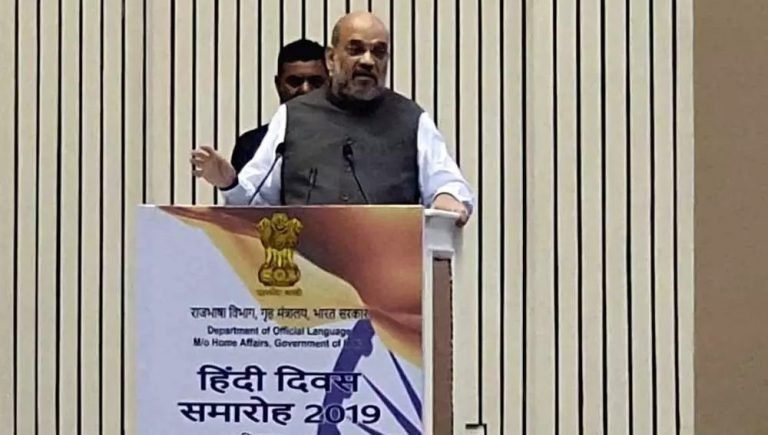
Home Minister Amit Shah slams those indulging in language politics, says ‘never asked for imposing Hindi over other regional languages’

0

Union Home Minister Amit Shah on Wednesday (September 18) cleared the controversy fomented by the opposition over his remarks on the Hindi language. Slamming those indulging in language politics Shah said he has never asked for imposition of Hindi anywhere in the country but advocated its use as the second language after one’s mother tongue.

“I too come from a non-Hindi speaking state. I come from Gujarat where Gujarati is the language, not Hindi. One has to listen to my speech carefully. If someone wants to do politics, it is their choice,” Shah issued a clarification, as reported by ANI.


Amit Shah on the occasion of Hindi Diwas on Saturday appealed to the citizens to increase the use of Hindi. Speaking at a function to commemorate Hindi Diwas, Shah hailed the diversity of languages and dialects in the country that he stressed was the “strength of our nation”.

“But there is a need for our nation to have one language so that foreign languages don’t find a place. This is why our freedom fighters envisioned Hindi as ‘Raj bhasha’ (official language)” Amit Shah said at the event to mark the day the Constituent Assembly adopted Hindi written in Devanagari script as the central government’s official language.

His statement was, however, distorted and used to stir controversy. Immediately media was abuzz with reports that Amit Shah was seeking a common language for the country and had proposed Hindi’s name. This got the ball rolling and raised the hackles of political leaders in some non-Hindi speaking States, especially in South India.

This supposed proposal was criticised by South India’s actor turned politicians like Kamal Hassan and Rajinikanth who claimed that a common language cannot be implemented in India.

However, Amit Shah in its efforts to end the confusion said at an event organised by a Hindi daily: “A child can perform, a child’s proper mental growth is possible only when the child studies in the mother tongue. Mother tongue does not mean Hindi. It is the language of a particular state, like Gujarati in my state. But there should be one language in the country, if someone wants to learn another language, it should be Hindi. I have just made a request. I have failed to understand what is wrong in that,” he said.

Tamil Nadu police detains a Muslim man loitering around a dargah disguised as a Hindu saint

0

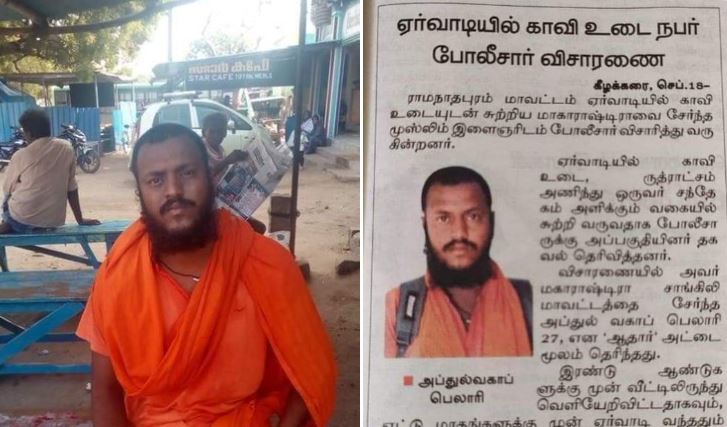
The Tamil Nadu police have nabbed a Muslim man from Maharashtra, who was in the guise of a Hindu ‘saint’ draped in saffron clothing, at Erwadi in Ramanathapuram district in the state.

The 27-year-old man was identified as M Abdul Wahab from Sangli district in Maharashtra. Wahab was found loitering around the Erwadi Dargah, which is famous for treating mentally ill people, disguised as a Hindu sadhu.

When he visited some rural areas on Tuesday, the local people caught him on suspicion that he might have come with some ulterior motive and handed him over to the police. The police detained him for interrogation.

Superintendent of Police, Omprakash Meena, confirmed that the man was in possession of his Aadhaar card, which had the details of his name and residential address. The Tamil Nadu police have got on touch with their counterparts in Maharashtra to verify Wahab’s details. SP Meena confirmed that the future course of action will only be decided once they obtain the verification report from the Maharashtra police.

Recently, the Coimbatore city police had arrested five Muslim youths for allegedly planning to kill Hindu Makkal Katchi (HMK) leader Arjun Sampath and Sakthi Sena leader Anbu Mari.

The city police had received a tip-off from Central intelligence agencies regarding the murder plan. The Coimbatore police have arrested five Muslim youth, out of which four Muslim youths have been already on the radar of the Central intelligence agencies.

Reportedly, four out of the five arrested are from Chennai and another person is resident of Coimbatore.

Moreover, last month Tamil Nadu was put on high alert following intel that members of the Lashkar-e-Taiba had infiltrated into the state. Reports had suggested six members of the terror outfit infiltrated into the state by sea from Sri Lanka and moved to different cities, including Coimbatore, according to the police.

Security had been stepped up at many places, including airports, railway stations, bus stands and places of worship across the state. An alert had been sounded, especially in coastal districts, to prevent any further possible intrusion.

Verdict in 2G and coal allocation reasons: Senior advocate Harish Salve holds SC responsible for current slowdown

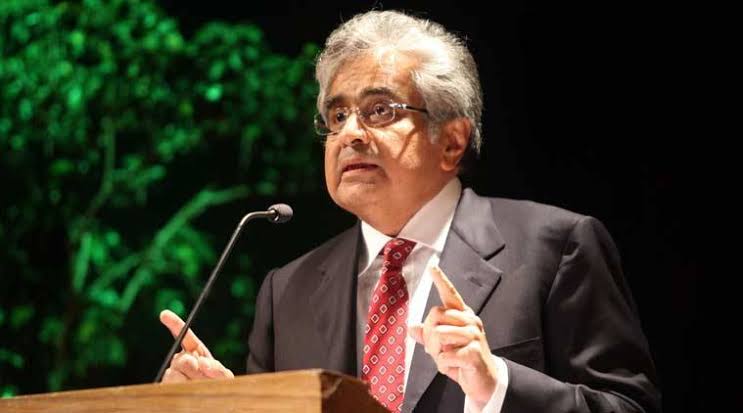
Distinguished lawyer Harish Salve has held the Supreme Court of India the primary reason for the economic slowdown the country is currently experiencing. In an interview to a news website, Salve blamed the apex court for the slump in the economy stating that the slowdown was triggered by the court’s verdict in the 2G spectrum case in 2012.

Salve asserted that the top court’s order on 2G and coal allocation triggered foreign investors to exit from the Indian markets. The Supreme Court had in 2012 had invalidated the 122 spectrum licences granted to eight companies. Two years later, in 2014, the court also annulled all but four of the 218 coal block allocations from 1993 to 2011.

Salve contended that a blanket cancellation of allocation that happened in accordance with the rules set by the then government had a negative impact on the foreign investors who had to bear the brunt of the malfeasance of government authorities. “I can understand to hold people accountable for the wrong allocation but sweeping cancellation of licenses where foreigners are investing can have a catastrophic effect. When a foreigner invested, it was your rule mandating him/her to have an Indian partner,” Salve said.

Salve continued, “The foreigner investor had no inkling of how its Indian partner had secured the license. They had invested billions in the Indian market but the apex court, with one stroke of a pen, knocked all of them out. That’s when the slowdown in the economy started.”

Enunciating the disastrous effect of the court’s intervention had in the coal sector, Salve said that the blanket cancellation of coal allocations, without getting into the nitty-gritty of individual cases and assessing them on their merit has resulted in indefinite closing down of the coalfields. “Cancellation of coalfield meant that India had to import coal. The prices of Indonesian coal and other world coal reduced as the demand of import increased.  The investment in the coal industry considerably declined. Lakhs of people lost their jobs. The economy was put under severe stress,” he said. Salve believes that the cancellation of coal block allocation had costed the country 1 per cent plus of GDP.

Farm loan waiver not possible, Rahul Gandhi should not have promised it: Digvijay Singh’s brother Lakshman Singh

0

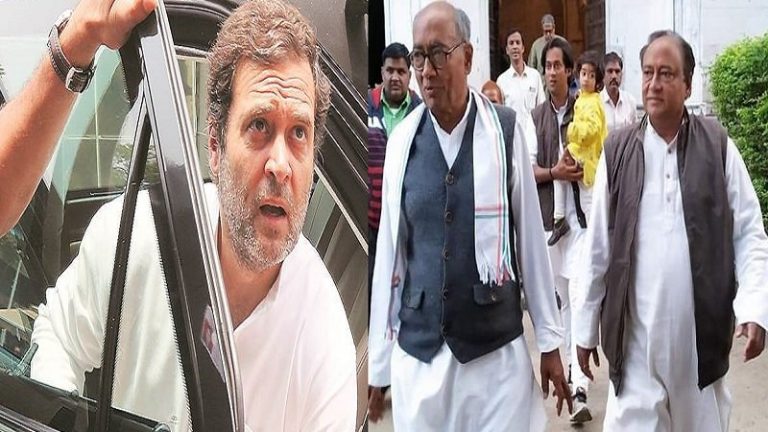
By confirming that waiving off farmers loans in Madhya Pradesh completely would not be possible, Digvijay Singh’s younger brother Lakshman Singh has perhaps conceded that Rahul Gandhi’s fraud promises of farm-loan waivers were nothing but a mere gimmick to con poor farmers to vote for Congress in Madhya Pradesh.

Coming as a major embarrassment for the party, Lakshman Singh, who has been a five-time MP and two-time MLA, while interacting with the media in Bhopal said that complete loan waiver for farmers is not possible. He furthered that the Congress government in Madhya Pradesh has failed to assess the same because of which waiving off farmers loan this year seems impossible.

Notably ahead of assembly elections, the Congress party, and its former President Rahul Gandhi specifically, had repeatedly promised that farmer loan waivers will be granted to all farmers within 10 days of Congress coming to power. In fact, Rahul Gandhi has touted this as one of his achievements through the campaigning for 2019 Lok Sabha elections.

Lakshman Singh, the Congress loyalist has now capitulated that it was a mistake on Rahul Gandhi’s part to promise a complete loan waiver within 10 days if voted to power.

Going by basic calculations, the Congress MLA said that waiving off loans amounting to Rs 45 thousand crores is quite a mammoth task and therefore accomplishing the same seems impossible.

This statement coming from a Congress MLA is not surprising since there are other loyalists who have in the past reiterated the same uncertainty. In the month of May this year, Chief Minister Kamal Nath had also conceded that Congress ex-president’s promise was nothing but a sham, considering he too accepted then that a complete loan waiver for farmers is not possible in 10 days because nobody has a magic wand.

In fact, there have been several incidents in the past that prove the failure of the Congress government to deliver on its much-touted promise. In February distressed farmers in Madhya Pradesh had threatened ‘mass suicide’ over fake loans in Madhya Pradesh.

The Congress party with their misadventures and the politics of farm loan waivers seems to be in the middle of a severe crisis, as recently, yet another farmer in the state of Madhya Pradesh was reportedly deceived by the Kamal Nath led Congress government after just Rs.13 was set to be waived-off against a loan of Rs. 24,000.

Kamal Nath government’s inadequacy to keep up the big promises of loan-waivers made at the time of wooing people to garner votes before the state election has already taken three lives of farmers in Madhya Pradesh. Along with these deaths, many farmers across the state who had taken the loan from banks before 31 st March 2018 and that of more than Rs 1 lakh, have reportedly got loan waiver benefit of mere Rs 25-30.

The Congress government in the Madhya Pradesh seems to have already lost their control as the state has been rocked with severe protests by the farmers along with severe law and order issues in the state. Within weeks of Congress coming to power in the state, there has been a series of murders of BJP and RSS workers in the state raising concerns about the issue of law and order in the state.

In fact, recently former Madhya Pradesh Chief Minister Shivraj Singh Chouhan had accused the Congress of blatantly lying and deceiving the poor farmers of Madhya Pradesh calling the schemes promised by Congress is a major sham.

Go back to Southall slum: Hijabi woman goes on a racist rant at an Indian co-passenger in a over-crowded London bound bus

0

A shocking video has surfaced in which a Hijabi woman is seen launching a racist attack on an Indian co-passenger travelling in a crowded 195 bus from Romney Highway in Brentford, West London on Saturday.

The Muslim woman can be heard screaming: “You smell of curry you dumb b***h”- causing everyone on the bus to gasp. While the mother refrains the daughter from further persecuting the co-passenger, the daughter is heard screaming further: “No let me hit.”

Moreover, when the Indian passenger defended himself saying that the bus passengers agreed with him: “Oh everyone’s on my side”, the furious girl retorted back by yet another racist remark: “Ok bye b***h. Go back to your f*****g Southall slum.”

Notably, Southall in West London is famous among Indians and other tourists from South Asia, and is sometimes dubbed “Little India”, but it rarely, if ever, appears on lists of major tourist attractions in London. It houses more than 4000 Indians especially Sikhs.

The Muslim lady was heard shouting at the male passenger as he tried to calm the mother-daughter duo who got into an altercation with the bus driver. A fight erupted after the young girl’s mother had an argument with the bus driver in which she told the driver that the bus was overcrowded and that he was letting too many people on the vehicle.

This altercation annoyed the Indian male passenger as he felt that the duo was disrupting the bus journey by engaging in a fight with the driver. As the male co-passenger tried to discourage the young woman’s mother from arguing with the driver and let the bus move, the enraged girl in the hijab proceeded to launch the shocking rant at the man.

Social media users were disgusted by the scenes in the appalling video footage and condemned this unfortunate incident of racial discrimination.

Aligarh: Muslim family beaten up by unidentified men at railway station, AMU gives the incident communal colour

0

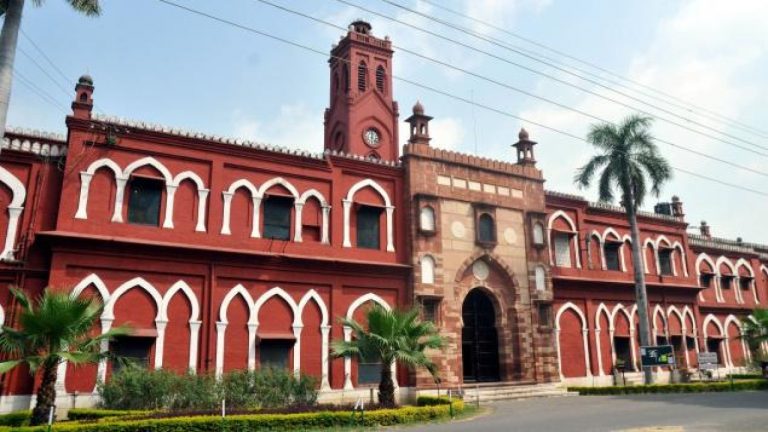
Members of a Muslim family were allegedly injured in a mob attack at a railway station in Aligarh in Uttar Pradesh, triggering protests by the students of the Aligarh Muslim University (AMU) who dubbed the incident a “failed attempt at mob lynching” and “a deliberate attempt to foment communal violence”.

In what transpired, Afsana Begum’s family was travelling from Kannauj to Aligarh for her son Shafiq’s medical treatment when they were allegedly attacked by a mob of around 25 men while getting off the train. As the news spread, several students of Aligarh Muslim University gathered at the station, demanding the arrest of the unidentified attackers.

Giving the entire episode a communal colour, the AMU students, led by student union president Salman Imtiaz, organised a protest march on Monday demanding the arrest of those involved in the attack within 48 hours.

The former Students’ Union president has linked the incident to the Dharma Samaj Mahavidhyalya in Aligarh. He said that they are against this type of mindset and urged the Administrative Officer and SSP to take strict action against the culprits.

“Today this happened in Aligarh, but tomorrow such incidents will burn entire India. Some people in this country are walking in the footsteps of Hitler and they want to recreate the same atmosphere in India as it was in Germany under Hitler,” the former AMU Students’ Union president said.

“Panic is being spread through mob lynching, people are being killed over cows. No religion promotes these practices. I appeal to everyone, be it a Muslim or a non-Muslim, do not support such people,” he added.

Meanwhile, according to the victim family, about 20-25 people approached them and started beating them up as soon as they got off the train at the Aligarh railway station.

The victim family has alleged that the policemen stationed at the railway station stood there like mute spectators video graphing the entire incident on their mobile phones. They didn’t bother to save them even though they were being thrashed ruthlessly on the ground, claimed the members of the family who were assaulted.

After the mob left, police took the injured family to the JN Medical College in Aligarh, where they are undergoing treatment. Members of the family have reportedly received serious head injuries.

The GRP inspector at the Aligarh Railway Station said: “Some passengers were coming to Aligarh in Mau-Anand Vihar train. A dispute broke over getting off the train which led to violence. Two people have been injured and both are undergoing treatment in the hospital. A case will be registered after the statement of the family is recorded”.

Though AMU has termed the incident a case of communal violence, the Aligarh police have not confirmed any such angle yet. The Deputy SP has said that this is not a case of mob lynching.

‘Methodology perfunctory, at the best, only an opinion,’ SC junks report by ‘Eminent Historians’ on Ram Janmabhoomi

0

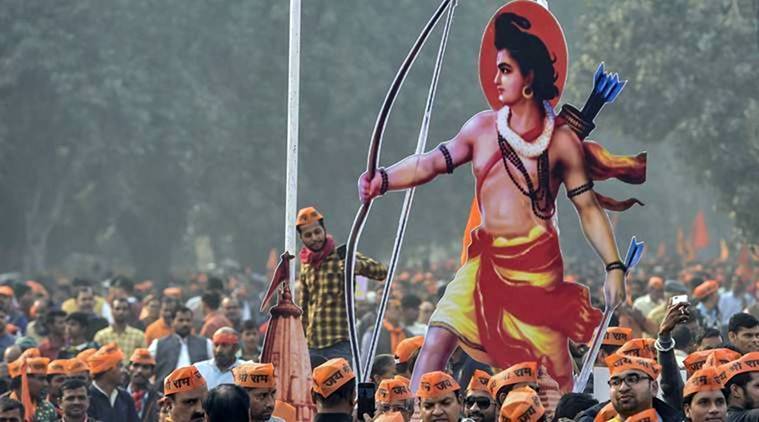
The Supreme Court has asserted that the views aired by historians on the Babri Masjid in a note shared in 1991 titled, ironically enough, “Historians’ Report To The Indian Nation”, is a mere opinion and cannot be considered as fact. The said report claimed that Ram Janambhoomi was not the birthplace of Shri Rama and neither was the existing demolished to build the Babri Masjid.

The report was written in May 1991 by four Far-Left historians: R S Sharma, M Athar Ali, D N Jha, and Suraj Bhan. Rajeev Dhavan, arguing for the Sunni Waqf Board, presented the report in the Court as material in favour of Babri Masjid in the ongoing day-to-day hearings in the Ayodhya Dispute. However, the Bench was not impressed.

The Bench said, “At the best, this report can be taken as an opinion.” It added, “The report appears to be a counterblast to VHP campaigns and claims in 1991. Neither the views of VHP nor that of these four historians can be treated as evidence. We have to decide this case on the basis of evidence on record. The Allahabad HC had refused to rely on this report as evidence.”

The Bench went on to puncture holes in the report compiled by the ‘Eminent Historians’. It said, “These historians did not have the benefit of the archaeological evidence. Had this report really been prepared after studying the data collected through an archaeological excavation by ASI (about the possible existence of a temple below the mosque), it could have had some meaning to it. But these historians have not examined the ASI data. The methodology they have adopted appears to be perfunctory, as was termed by the High Court.”

Even as early as 1978, thirteen years before the said report was written, the ASI had found evidence of a Hindu Temple buried under the Babri. Dr K.K. Mohammed, former Regional Director (North) of the ASI who was part of the said team, blames Left historians for the dispute not being amicably resolved.

“The Babri issue would have been settled long ago if the Muslim intelligentsia had not fallen prey to the brainwashing by the Leftist historians. A set of historians including Romila Thapar, Bipin Chandra and S Gopal argued that there was no mention of the dismantling of the temple before the 19th century and Ayodhya is Bhudhist-Jain centre. They were supported by historians Irfan Habib, RS Sharma, DN Jha, Suraj Ben and Akthar Ali,” he told Firstpost.

The Archaeological Survey of India (ASI) confirmed in 2003 after an excavation that structures under the Babri had “distinctive features associated with temples of north India”. This was the excavation that the Bench referred to in response to Dhavan’s arguments today. Dr Meenakshi Jain, PhD from Delhi University who specializes in cultural studies, explained the mounting body of archaeological and historical evidence of a Temple that was destroyed at the site in this talk for the Srijan Foundation.

Cigarette stocks rally about 5.5 per cent after cabinet’s decision to ban e-cigarettes

The Cabinet on Wednesday approved an ordinance making the production, import, distribution and sale of electronic cigarettes a cognizable offence. According to finance minister Nirmala Sitharaman, the decision was taken in the wake of dramatic rise of vaping among youth in the country.


The government’s decision to ban electronic cigarettes was welcomed by the traditional cigarette manufacturers who were witnessing a decline in their sales after the advent of electronic cigarettes. After government’s decision on Wednesday banning the use of electronic cigarettes, the cigarettes stocks saw an upward movement at the stock market.

Following the announcement, stocks of cigarette manufacturers in India spiked. Godfrey Phillips soared up 5.5 per cent to Rs 991, ITC was up 1 per cent at Rs 239.60, Golden Tobacco rose 4.7 per cent to Rs 31.25, VST Industries ended the day with 3.43 per cent hike to Rs 3,622.

The culture of vaping which is essentially the practice of inhaling and exhaling the vapour produced by an electronic cigarette or similar device had gained prominence of late, resulting in the decline of the cigarette sales. The growing health-related hazards surrounding vaping possibly triggered the government into enforcing the proactive measure of banning the electronic cigarettes. According to the draft ordinance, the storage of e-cigarettes shall now also be punishable with imprisonment up to six months or fine up to ₹50,000 or both.

On the third anniversary of the Uri attack, it is important that we place it in its proper civilizational context

Three years ago, on this very day, a chain of events was set in motion that would go on to have vast implications for the future of the Indian subcontinent. On the 18th of September, 2016, terrorists sponsored by Pakistan would attack an Indian Army Brigade Headquarters in Uri which would lead India and Pakistan down a path that leads us to where we are today.

While people are aware of the events that transpired in its aftermath, not many remember the names of the soldiers who lost their lives in the attack that day. Subedar Karnail Singh, Havildar Ravi Paul, Sepoy Rakesh Singh, Sepoy Javra Munda, Sepoy Naiman Kujur, Sepoy Uike Janrao, Havildar NS Rawat, Sepoy Ganesh Shankar, Naik SK Vidarthi, Sepoy Biswajit Ghorai, Lance Naik G Shankar, Sep G Dalai, Lance Naik RK Yadav, Sepoy Harinder Yadav, Sepoy TS Somnath, Havildar Ashok Kumar Singh, Sepoy Rajesh K Singh and Sepoy KV Janardhan. These are the names of the soldiers who were butchered in the most gruesome fashion by terrorists on that fateful day.

The attack revealed that Pakistan was under the impression that India’s response to it would be similar to what it had been for the past decade. It demonstrated a terrible miscalculation on their part and a severe lack of judgment. The attack was the natural consequence of Pakistan’s warped psyche. As a nation, Pakistan and its people have perpetually lived in a mythical past that only ever existed in their own imagination. The attack at Uri was a consequence of that.

The Pakistani establishment has consistently demonstrated its remarkable inability to come to terms with the current political order. Denial of reality has been the characteristic feature of the country. Certain people would expect the establishment to be more sensible than their chronically psychologically challenged population, however, the establishment is made of people who come from the very same population. Therefore, it’s no surprise that the establishment suffers from the same flaws as the population it rules over.

‘Bleed India with a thousand cuts’ has been the military doctrine of Pakistan against India for decades. In his speech to the UN Security Council in 1965, Zulfikar Ali Bhutto, the then Minister for Foreign Affairs, declared that Pakistan would wage a war against India for a thousand years. Pakistan hasn’t changed very much since then. It has not given up on its preferred strategy yet, nor there is any indication that they would anytime soon.

Therein lies the source for the enmity between the two countries. Pakistan caught up in its false sense of history, considers itself the modern manifestation of the Islamic invaders of yore who conquered India and ruled over parts of Bharata for centuries. It’s quite evident from the strategies it uses against India, their general conduct and the manner in which they define their national character.

In its eyes, India is the modern manifestation of the Hindu kingdoms who waged war against the Islamic empires ever since the invaders arrived in the Indian subcontinent. It doesn’t really matter whether we believe it’s accurate or not. The only thing that matters in this context is that they perceive themselves to be as such and consequently, it determines their strategy and national policies against India. It is for this very reason that they believe Indian Muslims will rise against the Indian state in the future. To be fair to them, many Muslims on our side of the border, too, harbour such delusions.

It’s important to understand that Pakistan’s national identity revolves around its hatred for India. A bestial hatred against India is embedded into the very core of its national character. Without India, Pakistan has no reason to even exist. Their existence is defined by their relationship with our country. In its eyes, Pakistan is the rightful ruler to the territories that India currently has under its dominion. ‘Ghazwa-e-Hind’, a concept that the entire population of our neighbour believes in resolutely, stems from that very fact. “We ruled over them for centuries and Inshallah, we will rule over them again,” says the Pakistani mindset. They live and toil under the false hope that they could conquer India again.

Their efforts to create fissures within Indian society stems from their twisted worldview. The Mughals could rule over Bharata for so long because of the absence of a ‘Bharatiya Asabiyyah’. Pakistan believes they could be just as successful if they exploit the faultlines within India society. What they missed in their obsession with the past is that over the years, a ‘Bharatiya Asabiyyah’ has developed within Indian society. The Hindu Samaj of today differs markedly from that of medieval times.

Hindutva ideologues have successfully engineered, over time, social solidarity between Hindus that transcends barriers of castes, class, region, language and denomination. The victory of Narendra Modi in the 2014 General Elections marked the victory of ‘Bharatiya Asabiyyah’, or as we would call it, Hindutva. The victory of Hindutva made it much more difficult for Pakistan’s strategy of exploiting faultlines within Hindu society to succeed. Due to its obsession with the past, the Pakistani establishment could not recognize the massive change that Hindu society had undergone. And as a consequence, they are now paying the price for it.

The attack at the Brigade Headquarters at Uri marked the beginning of the latest chapter in the thousand-year-old war. Unfortunately for them, it’s a chapter that they look set to lose. For reasons of convenience, we shall call it the MAD (Modi-Amit Shah-Doval) era. We ought to remember that the thousand-year-old war did not begin in 1965 or even 1947. It began the moment when the first Islamic invader set their foot upon the sacred soil of Bharata. The war has gone on for a thousand years and in all probability, it will go on for a thousand more.

There are some who believe that peace with Pakistan is possible. This particular delusion is at polar opposite with the delusion that Pakistanis suffer from. It is born out of ignorance of history as well but when approached from the other end of the political spectrum. There’s one particular aspect of Pakistan’s worldview that’s absolutely correct. India and Pakistan were not born in 1947. They are the modern manifestations of a civilizational war that has been waged by generation after generation after generation for centuries. And thus, it falls upon our shoulders to sustain the flame of Agni that inspired our ancestors to wage war against the very forces who seek to destroy our civilization.

History matters. And that is precisely why it’s of paramount importance to place the nefarious attack at Uri in its proper context. Pakistan is not a rational state. Therefore, it is lunacy to expect them to behave rationally. Peace with Pakistan in its current state is not possible. Peace could only ever be imposed on Pakistan, not negotiated.

The first chapter of the MAD era ended with the abrogation of Article 370. The impotent rage that has gripped Pakistan ever since Kashmir was fully integrated with the Indian Union is precisely what happens when people who have suffered from delusions of grandeur for far too long are forced to come to terms with observable reality. The Pakistani establishment realizes there’s absolutely nothing that it could do to challenge India on the matter.

The terrorism they have used as state-policy against India as part of their ‘Bleed India with a thousand cuts’ strategy has finally come to bite their own back. There’s nothing they could do apart from screeching into the dark. They realize there isn’t any other option on the table.

The second chapter of the MAD era has already begun. The battlefield for it, this time, will be Pakistan-Occupied Kashmir. The discerning would have observed there has been a marked shift in the tone and tenor of the higher-ups in the Indian government with respect to PoK. Most recently, MEA Jaishankar asserted that India hoped one day we will have physical jurisdiction over PoK. It was after Home Minister Amit Shah, Narendra Modi’s trusted lieutenant, said in the Parliament following the abrogation of Article 370 that they were ready to sacrifice their own lives for PoK.

Pakistan massively overplayed its hand at Uri in 2016. They have sown the wind and now, they shall reap the whirlwind. The chain of events that were set in motion in Uri will be taken to its logical inclusion in the near future. The subsequent attack on the CRPF that martyred over 40 of our Jawans at Pulwama was the last-ditch effort by Pakistan to avert a catastrophe. But in doing so, they only aggravated an already precarious situation. They have committed a series of errors in their hubris which have cost them a lot. It appears almost certain now that Chandi will soon grow fat chewing upon the skulls of Bharata’s enemies.

Current circumstances could be very well compared with the epochal war between the Marathas and the Mughals that culminated with the mighty Mughals becoming a puppet of the Maratha Confederacy. These are epochal times we are living in and the ramifications of the events that transpire within the next decade will have consequences for generations to come. However, there is an added component to the Civilizational War between India and Pakistan this time around China.

By the end of the MAD era, Pakistan could very well end up becoming a Chinese vassal state. While the Pakistani establishment still enjoys a fair amount of autonomy by dilly-dallying between the US and China, it might cease to do so in the near future. In their hatred for India, Pakistan has made a pact with India’s other unfriendly neighbour. As it so happens, the enemy of an enemy is not always a friend. And China is certainly not Pakistan’s friend.

It is too difficult to predict what will transpire within the next few years. There are far too many unforeseeable variables at work that could shape the destiny of the Indian subcontinent. Even supposedly minor incidents could go on to have great ramifications which no one could have foreseen.

Chaos is a ladder. Pakistan has arduously pursued a policy that seeks to foment chaos within our borders. However, they forget that chaos is a beast no human could ever control. People often live assume that they are the only ones who could possibly gain from the chaos they seek to unleash. However, as Pakistan found out to its detriment, the outcome is often not that pleases the ones who unleash the chaos in the first place. It was from the ashes of the chaos that Pakistan unleashed that day in Uri that India has risen to gain the definitive upper hand in the Civilizational War.


Pakistani parliament rocked by one Hindu lawmaker exposing the brutalities heaped against Hindus in the Islamic state

Following the brutal persecution of minorities in Pakistan, especially the Hindus, Kheeal Das Kohistani, a member of Pakistan Muslim League-Nawaz (PML-N) has raised concerns in National Assembly about the abduction of Hindu girls in Pakistan.

According to Times Now, Pakistan’s minority lawmaker Kheeal Das Kohistani questioned the Imran Khan-led Pakistan government regarding the rising atrocities against the Hindus in the country. There has been a spate of incidents where minorities are being forcefully abducted and converted by the Islamists in the country.


Speaking at the National Assembly, Kohistani said that in last four months alone, nearly 25-30 Hindus girls were abducted who never returned to their families. Questioning the Imran Khan government over recent abductions, Kohistani asked how long will the atrocities continue against the Hindus.

Referring to the shocking incident of Hindu medical student Namrita Chandani, whose body was found in her hostel under suspicious circumstances, Kohistani asked, “How long will Hindus here have to pick up corpses? How long will our temples keep burning ?”

He further asked why are these incidents taking place only in Ghotki and Umerkot of Sindh. “This is a huge issue in the country. The attacks are not limited to Hindus, even mosques are being attacked. The fire will spread to entire Sindh, it should be stopped,” warned Sindhi lawmaker.

He further added that there were few people in Sindh who should be arrested immediately and said it was Imran Khan government’s responsibility to curb the power of those people who are involved in such activities.

On Tuesday, Kohistani had also tweeted after the body of Hindu girl Namrita Chandani, a BDS student whose dead body was found in Chandika Medical College Hostel, Larkana.


Namrita Chandani from who belonged to Ghotki in Sindh was found dead in her hostel room on Tuesday. While the police had said she killed herself, questions have been raised by the family members over the nature of her death.

The brutalities against minorities continue unabated in the terrorist state of Pakistan as multiple instances of atrocities against minorities especially Hindus and Sikhs have been reported. The mysterious death of Hindu student Namrita came just a day after violence against minority Hindus was unleashed by Muslims from Ghotki, Pakistan, the region where the deceased hailed from. Ghotki, a city in Pakistan’s Sindh province has been known for the persecution of Hindus, who are in minority in Pakistan.

On Sunday, following an allegation of blasphemy against a Hindu school principal, Hindu temples, shops and homes of minority Hindus were ransacked by Muslim rioters. However, later it was revealed that the attack on Hindus was a pre-planned event to cover-up a child abduction incident. The school principal had thwarted efforts by giving refuge to one of the Hindu girls, who was abducted by associates of child kidnapper radical Islamist Mian Mithoo.

Pakistan is notoriously known for its persecution of not only religious minorities but also ethnic minorities within their own country. The forceful conversion programmes have often been unleashed against the minorities especially Christians, Sikhs and Hindus living in Pakistan with utmost brutality.

This violence against Hindus in Pakistan’s Ghotki comes months after a series of abductions and forceful conversions of minority Hindu and Sikh girls. In March, two underage Hindu girls Raveena (13) and Reena (15) were abducted from the Ghotki in Pakistan’s Sindh on the eve of Holi. The girls were later forcefully converted and married off to older Muslim men.

Earlier, Jagjit Kaur, a Sikh girl was abducted and forcibly converted to Islam in Nankana Sahib which had caused a huge uproar. In another horrific incident, a 13-year-old Pooja Sotahar Kumari, daughter of Fatan Rathore, resident of village Bakhsho Laghari in Hyderabad district’s Hosri Taluka, was kidnapped, forcefully converted and subsequently married off to a man identified as Syed Irshad Shah.