Home Blog Page 6142

Himalayan Blunder : When India gave up on Tibet and what it needs to do now

10th July 1962. Chinese troops surround an Indian Army post at Chushul, manned by the Gurkhas and have a heated argument. 10th October 1962, an Indian Army patrol is ambushed by the Chinese Army & heavy mortar fire is exchanged between the two armies. There are heavy casualties on either side. Back in New Delhi, Nehru’s ‘Hindi-Chini bhai-bhai’, is slowly unravelling. But Krishna Menon & his ‘boys’ are still convinced that China will never wage a war against India. All this is about to change shortly.

20th October 1962. China’s People’s Liberation Army crosses the McMahon Line and invades India. Namka Chu, Aksai Chin, Nathula Pass become the theatre of intense fighting between the Indian & Chinese troops. An ill-prepared, ill-equipped Indian Army suffers huge losses. The Indian 7th Brigade at Rongla is in disarray. 22nd October 1962. Brigadier John Dalvi, the Commanding Officer of the 7th Brigade is taken prisoner of war. The myth of the invincible Himalayas is over. The Indian humiliation is complete and the national psyche is scarred.

Himalayas: The Natural Border

The majestic Himalayan ranges have served as a natural border between the Indian subcontinent and the Tibetan plateau. The imposing mountain range which hosts some of the highest peaks in the world created a natural geographical buffer between India, Tibet and China and prevented any large scale movement of people across it.

Four different corridors through the Himalayas linked the two regions and constituted the Trans Himalayan Silk Road; one of the oldest trade route in the world. As Buddhism spread to Tibet from India, it influenced Tibetan society and Ladakh became the centre of these trade routes. However, the adverse terrain and hostile weather conditions prevented any military adventure for centuries and an everlasting peace ensued on either side of the Himalayas.

Sino Sikh War: Military battle across the Himalayas

During the early 18th Century, Qing dynasty held control over much of Tibet and had a largely uninterrupted rule till the 19th Century. In India, the Sikh Empire under Maharaja Ranjit Singh controlled a large area of North-West India including Srinagar, Attock, Peshawar, Bannu, Rawalpindi, Jammu, Gujrat, Sialkot, Kangra, Amritsar, Lahore and Multan.

Sikh Empire

Maharaja Gulab Singh (1792-1857) was the first Dogra ruler of Jammu and Kashmir and acted as a vassal to Maharaja Ranjit Singh. Zorawar Singh (1786-1841) a General of Gulab Singh’s Army planned an invasion of Ladakh. In 1841, he strung together a force of 6000 soldiers and marched into Tibet. The invading force swept across all the resistance and crossed Mansarovar Lake and defeated a Tibetan force at Gartok. From here, Zorawar Singh marched onwards and captured Taklakot. Alarmed by this, Tibetans and the Maharaja of Nepal sent their envoys to Zorawar Singh to negotiate. Zorawar stayed in Tibet and tried to maintain control. However, in December 1841, the Tibetans joined a Han Chinese force and attacked the Sikh Army in the battle of Toyo. In the ensuing battle, Zorawar Singh was killed and the Sikh Army retreated back to Ladakh with the Sino Tibetan force in pursuit. The two armies again faced off each other at Chushul where the Sikhs defeated the Sino Tibetan army. The two sides then signed a peace treaty which forbade any future military transgression from either side.

A quiet peace ensued on both sides of the Himalayas. Until 1962.

Himalayan Blunder: India gives up on Simla Agreement of 1914

During 1913-14, an accord known as the Simla Accord was signed between the representatives of British India, Tibet and China. The Accord divided Tibet into Inner and Outer Tibet. The terms gave China sovereignty over Inner Tibet but suzerainty over Outer Tibet which would continue to be governed by the Tibetan government at Lhasa. China was forbidden into interfering with the affairs of Outer Tibet. British India retained trading and extraterritorial rights in Outer Tibet. As India and China gained independence, the rights under the accord passed onto the Republic of India.

Simla Conference

Declassified documents now reveal that as early as 1950, China was wary of the privileges which India had inherited from the Britishers and noted “India pretends not to have any ambition on Tibetan Policies or land but desires to maintain the privileges that were signed in the treaties signed since 1906”

Post-independence a politically naive Pandit Nehru followed a friendly approach with the newly independent China and in 1954 signed the Five Principles of Peaceful Coexistence known as Panchsheel Treaty: “Non-interference in others internal affairs and respect for each other’s territorial unity integrity and sovereignty”. Despite reservations and objections from his own minister’s, Nehru also recognized the Tibetan Autonomous Region as being a part of China and gave up the rights over Tibet which India had inherited as part of the historical treaties without any quid-pro-quo from the Chinese. Nehru didn’t even press China to recognize McMahon Line as the de facto border between India and China.

However, this treaty was redundant from day one as China had already violated the terms of the Simla Accord in 1950!

Dalai Lama Escapes to India

In 1950, the Chinese Army invaded the Tibetan area of Chamdo and quickly defeated the Tibetan Army. After this, the Chinese sent their representatives to Lhasa to negotiate with the Tibetan Government and the Dalai Lama. In 1951, the Tibetan government signed a Seventeen Point Agreement with China which established China’s sovereignty over Tibet. In 1959, Dalai Lama repudiated the Seventeen Point Agreement as having been “thrust upon Tibetan Government and people by the threat of arms”.

PLA Soldiers marching towards Tibet in 1951
PLA Soldiers in Lhasa in 1951

As armed clashes broke out in Tibet, the 14thDalai Lama and his retinue assisted by CIA’s Special Activities Division crossed over into India on 30thMarch 1959. Figure 5,6.

1962 : The Myth of the Himalayas is broken

The escape of the Dalai Lama infuriated the Chinese. Mao Zedong and Zhou Enlai publicly criticized Nehru and accused him of assisting “Tibetan rebels”and to “prevent China from exercising full sovereignty over its territory of Tibet”

During a meeting with the Soviet Premier Nikita Khrushchev in October 1959, the Chinese Premier Zhou Enlai blamed Nehru and India for the unrest in Tibet.

Things were coming to a boil.

Indian military commanders had convinced the political leaders that the Chinese posed no threat and “experience in Ladakh had shown that a few rounds fired at the Chinese would cause them to run away” Consequently, the border was thinly manned with small arms and munitions. The troops didn’t have proper clothing for an extended stay in the harsh & cold weather.

On 20th October 1962, Chinese troops crossed McMahon Line and launched simultaneous offensives at Ladakh in West and at Tawang in East. The Chinese offensive caught Indian Army unawares and they were overwhelmed and retreated from Namka Chu and even Daulet Beg Oldi. As fierce fighting continued, Indian formations continued to retreat and massed at Se La and Bomdi La. In November, China attacked these positions and isolated 10,000 Indian troops. Some Indian troops even retreated into neighbouring Bhutan. Tezpur in Assam was also under severe Chinese threat.

Newspaper in 1962
Evacuation of Tezpur

However, by now the supply lines of the Chinese were overstretched and the Indian Army had started putting up robust defence and counter-attacks. On 19th November, Zhou Enlai claimed that China had met its objective and announced that they would “withdraw from their present positions to the north of the illegal McMahon Line”. Indian casualties in the war numbered over 3000 killed. Hundreds of troops had died due to the harsh exposure at over 14000 feet than by actual combat.

1962 War

The war effectively busted the Nehruvian myth that China would not be able to traverse high altitude terrain over 5000 km away from Chinese heartland and attack India. For thousands of years, Tibet had acted as a natural buffer between India and China. It would no longer continue to be so.

Tibet: The Water Tank of Asia

Climate Change, Rapid Industrialization, Population surge across the world has led to more stress on natural resources. Water is one of them.

Fresh Water is also known as Blue Gold is scarce across mainland China. With around 20% of the global population, China has access to only 7% of the freshwater supply. Clearly, a fresh source of freshwater was required to support the state. Tibet offered the solution.

Known as the Water Tank of Asia, Tibet is the source of 10 major rivers of Asia including the Indus, Sutlej, Brahmaputra, Salween, Irrawaddy, Mekong, Yangtze, Yellow rivers which feed more than 2 billion people across India, Pakistan, Bangladesh, Burma, Thailand, Laos, Vietnam and Cambodia. Outside of the North & South Poles, Himalayan glaciers in Tibet hold the biggest reservoir of freshwater. River basins formed by Himalayan rivers including the Ganges-Brahmaputra-Meghna, Indus, and Mekong basins serve a huge population chunk.

Major Rivers originating in Tibet

As noted by a report in 2013 by Asian Development Institute “Improving agricultural water productivity, achieving energy objectives, satisfying growing industrial water requirements, and protecting water quality and vitally important natural ecosystems are challenges we still face. The social, economic, and political consequences of water shortages are real, as are the effects of water-related disasters exacerbated by climate change.”

In 2014 Michael Buckley in his deeply researched book ‘Meltdown in Tibet’ noted “Tibetans have experienced waves of genocide since the 1950s. Now they are facing ecocide. The mighty rivers of Tibet are being dammed by Chinese engineering consortiums to feed the mainland’s thirst for power, and the land is being relentlessly mined in search of minerals to feed China’s industrial complex. On the drawing board are plans for a massive engineering project to divert water from Eastern Tibet to water-starved Northern China. Ruthless Chinese repression leaves Tibetans powerless to stop the reckless destruction of their sacred land, but they are not the only victims of this campaign: the nations downstream from Tibet rely heavily on rivers sourced in Tibet for water supply, and for rich silt used in agriculture. This destruction of the region’s environment has been happening with little scrutiny until now”.

In 2018, the Dalai Lama stated “This involves more than the well-being of six million Tibetans because, as a Chinese ecologist has observed, Tibet’s influence on global climate is equivalent to that of the North and South Poles. That’s why he referred to the Tibetan Plateau as the Third Pole. Almost a billion people across Asia depend on water from rivers such as the Indus, Ganges, Brahmaputra, Salween and Mekong, all of which rise in Tibet. If the snow on the mountains of Tibet disappears, millions of Indians will suffer the consequences.”

According to China Water Risk, “The Himalayas are also said to be warming more rapidly than anywhere else on the planet. Between 1970 and 2006, permafrost, the permanently frozen layer of earth, shrank by more than 18 percent, and glaciers in China have shrunk more than 10 percent since 2000”

Clearly, who controls Tibet, controls the majority of Asia’s water resources. Chinese strategists realized this and have strengthened their hold over Tibet.

China, which has scant regard for any international law or treaty, has started off on a dam building spree in Tibet. The Three Gorges Dam which opened in 2013 is the largest power generating station in the world. The Zangmu hydropower facility that opened in 2015 is the highest altitude power station in the world. There are reports of China building other major barrages across major rivers in Tibet.

China also remains a non-signatory of “Convention on Law on the Non-Navigational Uses of International Watercourses” passed by the UN General Assembly in 1997.

India as a lower riparian state has major reasons to worry. The Himalayas are ecologically fragile and the blasting of mountains can have a severe impact on their stability. Reduced water supply will impact the flow of the river silt and the lives of billions of people.

China fuels the insurgency in North East

A narrow strip of land; 23 kms wide, joins the Seven Sister States (Assam, Arunachal Pradesh, Manipur, Meghalaya, Mizoram, Nagaland, Tripura) with the rest of India. The strip known as the Siliguri Corridor has enormous strategic importance to India. In an attempt to gain an upper hand in the border dispute with India, China has been trying to move closer to the corridor. The Dokalam standoff in 2018 can be traced back to this. China also calls Arunachal Pradesh as South Tibet and claims it as part of its territory.

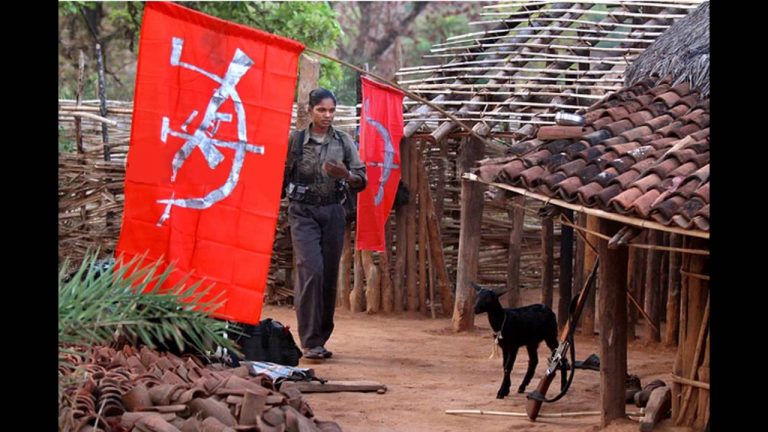
China has actively aided and abetted insurgency in these areas to bog down the Indian State and keep it in a state of perpetual conflict. Beginning from the 1960’s, when Naga insurgents would freely move between India and China to the formation of ‘United National Liberation Front of Western Southeast Asia’ (UNLFW) comprising of groups such as United Liberation Front of Assam (ULFA), the National Socialist Council of Nagaland (NSCN-K), the Kamtapur Liberation Organization and the National Democratic Front of Bodoland (Assam), the Chinese hand can be seen everywhere in fomenting unrest in the region.

North East Insurgency

With a larger aim to gain access to Bay of Bengal and the Indian Ocean, China has also supported unrest in Bangladesh and Myanmar. This fits in with China’s grand ‘two ocean’ plan whereby it plans to control the South China Sea and the Indian Ocean. During bilateral talks between the security agencies of India & China, India has provided proofs of insurgent leaders being present in Yunnan in China. Indian agencies also provided proof to their Chinese counterparts that they were inciting insurgent groups during the visit of Dalai Lama to Assam in 2017. China, however, has dismissed such claims. Recent reports indicate that Chinese agencies have tied up with the Inter-Services Intelligence (ISI) of Pakistan to keep the North East on the boil.

Faced with such a threat, India is forced to deploy lakhs of troops, equipment and pump in billions of rupees, to control the situation. This would never be the case, had Tibet, not China had been India’s neighbour in North East.

A settled and peaceful North East would have freed up billions of dollars and resources, which could have been used otherwise for the progress & development of the Indian State.

Giving up on Tibet and Tibetans, in general, has turned out to be a costly mistake beyond the imagination of India’s strategic experts and planners.

Talk Softly and Carry a Big Stick

The historical blunder of giving up on Tibet in 1954 will continue to haunt Indian policy makers. As an increasingly assertive and belligerent China seeks to advance its boundaries and claim the rights of its neighbours, tensions will continue to spike in Asia.

With a GDP that has left India behind by leaps and bounds, China will continue to flex its muscles and do everything in its power to harm India’s interests. From assisting Pakistan to running the One Belt One Road through PoK to not sharing hydrological information during monsoons to propping up Communist Party elected Dalai Lama, China will leave no stone unturned to keep India boxed with regional disputes, conflicts and insurgency. China wants to be the Numero Uno power in Asia and will use all its resources and clout to achieve that goal.

China also brazenly defies international treaties, decisions and agreements. It has refused to honour the Simla Treaty with India and recognize the McMahon Line. In 2016, it also refused to comply with the South China Sea Arbitration under the United Nations Convention on the Law of the Sea (UNCLOS) which had ruled that China has “no historical rights” based on the “nine-dash line” map.

Countries affected by South china dispute

India needs to keep the dialogue open with China to peacefully resolve all conflicts. At the same time, it needs to improve infrastructure and augment capacity along its North Eastern borders. It also needs to build bilateral and multilateral groups with a clear aim to deter Chinese bullying and protect its rights. India also needs to effectively use its strongest lever against China i.e. Tibet by supporting the Tibetan cause and community.

During Rajiv Gandhi’s 1989 visit to China, Deng Xiaoping had suggested: “Let both sides forget the unpleasant period in our past relations and let us treat everything with an eye on the future.”30 years have since passed, however, the future is yet to arrive in India, Tibet and China relations.

(This article has been co-authored by Ishita Sen)

Sexual exploitation case: Kerala CPM chief’s son moves to Bombay High Court to quash the FIR against him

Binoy Kodiyeri, the son of CPM Kerala chief Kodiyeri Balakrishnan, has now moved to the Bombay High Court seeking to quash the sexual exploitation case against him. His plea would be heard on July 24.

As per reports, Binoy had approached the Bombay High Court last Wednesday seeking to quash the FIR against him. Citing the contradictions in the woman’s statements, he has stated in his petition that the case was forged.

Binoy, who is currently on bail, was required to visit the investigating officer today. As per his bail condition he needs to visit Oshiwara police station every Monday for one month. He was also required to give a blood sample for the DNA test which would be the first and final evidence that would decide the fate of the case.

Last Monday Binoy had appeared before his investigating officer. However, he refused to give his blood sample claiming he was sick. He was scheduled to give his blood sample today. Some reports also claim that the petition in the high court has been filed to avoid the DNA test.

Binoy Kodiyeri was booked in a rape case over a complaint filed by a 33-year-old woman. Mumbai Police had registered a case against Binoy after the woman alleged that he had raped her repeatedly over a decade under the pretext of marrying her.

The woman had also alleged that she was kept in dark regarding Binoy’s marital status. The woman also has an eight-year-old son who she claims was fathered by Binoy.

After the complaints, Binoy had absconded from the Mumbai Police. The police had even issued a look-out notice for him.

Hearing about the trouble Binoy was going through, a journalist from Kerala O Abdulla had invited Binoy Kodiyeri, son of Kerala CPM chief Kodiyeri Balakrishnan, to join Islam as a solution to the current rape charges that he is facing.

Is there a concerted attempt to sow doubts against PM Modi among his most loyal base?

By now, everyone of us who is out there on social media is aware of this strange new phenomenon. The toughest, most loyal BJP supporters are suddenly reeling as if struck by a Category 5 Hurricane. The feel good atmosphere of May 23 has all but evaporated and a sense of gloom and doom prevails among the online support base of PM Modi.

A new theory in town. That PM Modi has suddenly decided to go ‘secular.’ Or in other words, he has embraced the pseudo-secular trappings and hypocrisies of the old Indian political establishment.

I have to take this theory head on. Not necessarily to oppose. But because I want to discuss.

First of all, is there merit in the claim that the BJP has not done enough to break down the pseudo-secular old establishment? Absolutely there is. For example:

Why can’t we bring in a law to build a Ram Temple at Ayodhya? The courts began looking at the Ayodhya dispute since 1855-56! After what is possibly the longest legal case in history, it appears that the Supreme Court has thrown up its hands and asked for mediation! At least now it is time for the Govt to address the matter directly and build the Ram Temple, honoring the will of the people.

Why do we even have a ministry for minorities? Isn’t that where all the recent discontent about “minority scholarships” began? As Rahul Roushan wrote in an OpIndia article, why not just go for “deminoritization” and shut down this ministry? For those who care, the “Ministry of Minorities” isn’t even a time honored tradition. It was dreamed up by the UPA specifically as a vehicle for appeasement and vote bank politics. Why not abolish it?

Now that said, I have to ask if there is genuine cause for the sudden surge of negativity that has come to dominate social media in the last few months. Did something change suddenly? And more importantly, are there elements who are now actively playing on this negativity, trying to actually break Modi’s strongest support base by playing up half truths?

Let us start with the matter of minority scholarships. It’s the spot where this theory of ‘minority appeaser BJP’ originated and the anger has been simmering since. In a pronouncement that I suppose nobody on social media has forgotten, Minority Affairs Minister Mukhtar Abbas Naqvi declared that minorities would receive “5 crore scholarships” over 5 years of Modi 2.0.

That sounds like a big number, which made the outrage take off. Social media was flooded with all sorts of numbers. But was it really? I mean, the BJP government claims to have 22 crore beneficiaries in its first term. Since minorities make up more than 20% of the population, one can confidently claim that at least 4.4 crore minority beneficiaries in Modi’s first term. From 4.4 crore to 5 crore does not seem like that much.

What about scholarships specifically? Here is the expenditure by year:

Untitled.png
Post matric Scholarship expenditure
Untitled.png
Pre matric scholarship expenditure

As you can see from the data, there has been hardly any increase in either number or total amount spent on minority scholarships. The number of scholarships appears to have gone down significantly in fact compared to the last year of UPA and the first year of Modi’s term (during which smaller expenditures like these would mostly have been carried forward on auto pilot from previous government). And never forget that budget staying “constant” is really a cut in terms of inflation.

But people argue that the numbers are beside the point because it is a question of principle. And I agree. But then it must also be acknowledged that there has been no sudden change in BJP policy which would warrant the sudden outrage.

But what I really wonder is whether other players are trying to capitalize on the bout of outrage and trying to sow fear and dissension in BJP’s core base.

News articles appeared with headlines like “80% of government scholarships go to Muslims.” They appeared to draw from the Government’s National Scholarship Portal. As it happened, it seems the graphic on that portal did not include data for SC/ST scholarships, the vast majority of which go to Hindus. This is the kind of routine communication gap between govt agencies that any citizen would be familiar with. But the articles and the headlines started an outpouring on social media that raged for weeks.

Eventually, there was the moment of truth when the Budget arrived. Not surprisingly, the Budget for both Pre-Matric and Post-Matric scholarships for minorities was actually *cut*. Which means the budgets were basically cut by 3-4% when you consider inflation.

Mysteriously however, headlines appeared after the budget focusing on the fact that the budget for subsidized coaching for minority candidates had been increased. By how much? It used to be Rs 8 crore. It’s now Rs 20 crore. I don’t know how much can get done in India of 2019 with an extra Rs 12 crores. But it seemed like the headlines wanted to tell a story.

Only today, a prominent news anchor shared on Twitter a video of a top BJP minister making an Islamic affirmation, without really mentioning that it is from Jan 2016. You can see the date in the video if you look carefully, but we know how social media works. Most people wont see the date.

Naturally, this video was promptly incorporated into the confirmation bias and seen as further evidence of a new minority appeasing face of Modi 2.0.

Yes, you can ask why the date matters so much. Because nobody really cares what one individual BJP minister does at home during his puja. People want to know what the top BJP leadership thinks. If they knew this video was from 2016, they would treat it as a random fact about one politician. If people think it’s recent, they will lump it together with other misinformation and fall for a narrative. No surprise that I saw recently a photo of PM Modi holding a chaddar to be sent as a gift at a certain famous dargah. The caption did not mention that the photo was from 2015. In any case, lots of Hindus offer chaddars at that famous dargah.

The dates matter. That’s precisely why some people appear to be leaving the dates out. Because if people think that all these things happened in the last couple of weeks, it will look like a coordinated PR campaign by BJP for appeasement of minorities.

Now who would want that? And are Hindu right wingers walking into a trap?

I will finish with a request to Hindu right wing online. It is absolutely right to accuse the BJP of not doing enough to roll back decades of minority appeasement. But do you think that Modi 2.0 would deliberately opt for minority appeasement? Can you think of any possible motive for this? Do you think that anybody, that too a politician, would do something without a motive? What gain do you think the BJP would hope to make from minority appeasement?

You and I know that BJP will not gain a single vote from minority appeasement.  So please. Please don’t tell me that the two sharpest political minds in India cannot see that much.

Meanwhile, I would suggest looking around and seeing how much the dominant narrative has changed in the last five years. Remember that many of us took to social media precisely because we thought the English language media was not listening to us. How does that look now?

I don’t know how many remember the Vajpayee government passing the POTA Act. The opposition was so resolute in blocking it that a joint session of parliament had to be called to pass the bill. There were MPs on both sides who came from their hospital beds to shore up the numbers for their side.

Last week, the NIA Amendment Bill passed the Lok Sabha with 278 voting in favor and just 6 against. Surely, something has changed.

We’ll get there, eventually. By the way did you know what is happening in states?

Untitled.png
Gujarat government does not allocate budget for minorities
Untitled.png
Yogi Adityanath government slashes minority welfare department outlay in UP

We Hindus have been treated so badly in history that we have a hard time keeping the faith. This time will be different. Let’s not be misled so easily.

Congress credits Jawaharlal Nehru for the successful launch of Chandrayaan2, gets ridiculed on social media

Even before Chandrayaan-2 entered its orbit around the Earth, the Congress party hailed Jawaharlal Nehru for the glorious achievement of the Indian scientists. While its customary salute to Nehru was only to be expected, the party also threw its salutations to Manmohan Singh for sanctioning the space mission in 2008.


In reality, however, the Chandrayaan-2 mission was delayed by the Congress party, according to the former chief of ISRO himself. G Madhavan Nair had asserted that the Chandrayaan-2 mission could have been carried out long ago but the “political decision” of the then UPA government to push the “Mangalyaan” venture with an eye on the 2014 Lok Sabha election caused the delay. The credit for INCOSPAR, too, largely goes to Vikram Sarabhai, the father of the Indian Space Program.

As expected, the Congress party is being subject to abject mockery due to obsessive desire to credit Nehru for literally every Indian achievement.


People also pointed out the fact that Vikram Sarabhai deserves much more credit than any politician for the success of the Indian Space Program.


It is customary for the Congress party to claim credit for every achievement that the citizens of this country strive hard to achieve. Even when India had announced its anti-satellite missile, the Congress party had claimed credit for it despite the fact that it was their own government which hadn’t given clearance for the project. A former DRDO chief, in fact, credited the Modi government for giving them the go-ahead to build the missile.

[Pictures] Chandrayaan2 launched successfully from Sriharikota

After the initial setback at the launch of Chandrayaan-2 on July 15, 2019, which led to its postponement, the Indian Space Research Organisation (ISRO) has today successfully launched the GSLV-MkIII-M1 carrying Chandrayaan-2 from Satish Dhawan Space Center in Sriharikota.


Chandrayaan2’s launch on July 15, 2019 was halted after just an hour before its launch a critical technical snag was detected by ISRO.

Chandrayaan2 about to be launched(Source: Doordarshan)

The Chandrayaan-2 comprises of three integrated parts namely: the Orbiter, the Lander (Vikram) and the Rover (Pragyan). The Rover would be used to conduct experiments on the Moon’s surface. The mission is to land at the south pole of the moon. This would be the world’s first expedition to the south pole region of the Moon.

Chandrayaan2 successfully launched( Source: Twitter)

As per latest news, GSLVMkIII-M1 has successfully injected Chandrayaan 2 into Earth’s orbit.

GSLVMKIII-M1 successfully injected Chandrayaan2 into Earth’s orbit(Source: ISRO)

The average distance between Earth and Moon is 3,84,000 KM. The Vikram lander will land on the Moon on the 48th day of the mission, which begins today. If all goes well, it will land on the moon on 6th or 7th of September.

You can watch the entire launch here.

Pune Engineer wants to be Congress president, claims to have ‘blueprint to revive’ the party

Gajanand Hosale, a Pune based engineer, has put forward his candidacy for the top-post of the Congress party after Rahul Gandhi resigned as its president recently. The electronics engineer claims to have the “blueprint to revive” the Congress party. He is likely to submit his application to the city unit president of Congress, Ramesh Bagwe, on the 23rd of July.

“As Rahul Gandhi is firm on his decision to step down as the president of the Congress, the party is in a great confusion over whom to appoint the new chief and in such a scenario, I wish to file my nomination for the post,” Hosale told PTI. “As (Rahul) Gandhi said that the party needs young leadership, I feel that the party needs a president who is not only young by age, but also at heart and in terms of thinking as well,” he said.

Hosale said that the revival of the Congress party is the need of the hour and a young leadership is necessary for it. Interestingly, he is not even a Congress member yet. Therefore, he will apply for primary membership of the party first.

“Before applying for the president’s position on Tuesday, I will complete the procedure of primary membership of the party,” he said. He stated further, “As a party president, my thrust will be on transparency and given a chance, I am sure I will revive the party from the current crisis as I have a blueprint for it.”

Hosale is from a rural background and is currently working as a manager in a manufacturing facility. He has stated that he has no experience in politics.

Chandrayaan-2 launched: India to become the 4th country in the world to land on the moon

India has successfully launched its second mission to the moon, the Chandrayaan-2. The GSLV-MkIII, carrying the Chandrayaan-2, was launched at 2:43 PM from the second launch pad of Satish Dhawan Space Centre (SDSC) in Sriharikota. This will make India the fourth country in the world to land on the moon.

On 18th July 2019, an hour before the historic Chandrayaan 2 launch, a technical snag was observed in the launch vehicle system. Following that, as a measure of ‘abundant precaution,’ the launch was called off. The launch date was then set to be 22nd July 2019. Earlier, the ISRO chief had confidently said that today’s launch would be successful.

The Chandrayaan-2 comprises of three parts namely: the Orbiter, the Lander (Vikram) and the Rover (Pragyan). The Rover is housed within the Lander. The Orbiter and the Lander are an integrated module weighing about 3.8 tonnes. This module was launched using a Geosynchronous Satellite Launch Vehicle Mark III (GSLV MK III) designed to launch satellites into geostationary orbit.

Once launched the integrated module would propel towards the moon after which the Lander will detach and land on the South Pole on 6th September as per schedule. The Rover would then conduct experiments on the lunar surface.

Indian Chandrayaan-2 is cheaper than several Hollywood movies like Avengers Infinity War and even the Bandra Worli Sea Link. The mission is touted to be accomplished within a budget of Rs 960 crores, which is approximately $143 million, significantly cheaper than the budget of several Hollywood movies.

The United States has so far invested about $100 billion (in current prices) in 15 Apollo missions to the Moon. China’s first expedition to Moon in 2007 cost about $180 million. In fact, the Chandrayaan-2 mission is cheaper than even the construction of Bandra Worli Sea link which took about $340 million.

The launch of Chandrayaan-2, however, was not untouched by controversies. Former ISRO chairman had startlingly revealed that the then UPA government had delayed Chandrayaan 2. Several people also made a brouhaha over the current ISRO chief ‘praying’ before the launch of the mission and called it ‘unscientific’.

Abusive actor Ajaz Khan who was arrested for inciting communal tension was ‘framed’, claims his wife, says he did nothing wrong

After abusive actor Ajaz Khan’s police custody was extended by 14 days, his wife Andrea has come out in his support. She has claimed that her husband did nothing wrong and was being deliberately framed in the matter. She also demanded justice for her husband.


Ajaz’s wife Andrea said, “I want justice for my husband because people are going against him when my husband is the only one raising his voice not only for Muslims, for Hindus, for Christians, for all the criminal activities happening in India. My husband is lone in his fight. I just want justice for my husband, what you guys are doing is injustice. You guys are not considering that he has a family also. I have told him so many times to avoid raising his concerns publicly, but he always goes against my advice for the people of India. So my brothers and sisters in India, please I want justice for my husband. He is being framed.”

Khan was arrested by the Cyber Crime Unit of the Mumbai Police on Wednesday for posting incendiary videos on the social media app TikTok. In the first one, he urged members of a religious community to take ‘revenge’ over Tabrez Ansari’s death in Jharkhand. In the second video, he featured alongside a group of  TikTok ‘stars’, whose account was suspended after Mumbai Police lodged a case against them. They mocked Mumbai Police in the video.

Before this, the hardcore Islamist Ajaz Khan, known for making hatemongering controversial statements menacingly threatened actor Payal Rohatgi in a video asserting that one day, the entire world will become Muslim. In a misogynist attack against Payal, Ajaz Khan had referred Payal Rohatgi as a C grade actor. Payal Rohatgi, who was recently in news for getting blocked by the Mumbai Police on Twitter lodged a complaint against Ajaz Khan for blatantly inciting communal passions and his misogynist attack on Payal.

Jammu and Kashmir governor Satya Pal Malik says Omar Abdullah is being juvenile, his statements were made in a ‘fit of anger’

Today, J&K Governor Satya Pal Malik issued a clarification over the statements he had made during a speech. On Sunday he had said the terrorists should kill the ‘corrupt politicians’ instead of killing the security forces. However, Malik has now clarified that he made those statements in a fit of anger. He said that he was frustrated with the rampant corruption in Jammu and Kashmir.


He also said, “As Governor, I should have not made such a comment, but my personal feeling is the same as I said. Many political leaders & big bureaucrats are steeped in corruption in Jammu and Kashmir”.


The Governer had sparked a row yesterday after he had stated that terrorists should kill corrupt politicians and bureaucrats who have robbed their state instead of killing Policemen and SPOs. The Governor had said this while addressing the locals at Kargil.

He had said, “These youth with guns, they are killing PSOs and SPOs, why are you killing them? You should kill those who have looted Kashmir, have you killed anyone from them? They lose their lives for nothing. In India, nobody can bend the government with guns.”

Responding to his statements, National Conference leader Omar Abdullah said that if any politician or bureaucrat is killed in the state, then it must be considered as the execution of Governor’s order.


Satya Palik Malik while responding to Abdullah called him a “political juvenile”.


Just a few days ago, a Personal Security Officer (PSO) of Peoples Democratic Party (PDP) leader Sajad Mufti was shot dead in Bijbehara area of South Kashmir in Anantnag district. About a week ago 3 CRPF jawans were martyred and several others were injured when a patrol team of the Central Reserve Police Force (CRPF) came under terrorist attack in Anantnag in Jammu and Kashmir.

Watch: Videos from moments before the horrific Sonbhadra massacre

Four days after the horrific Sonbhadra massacre which claimed lives of 10 people, videos from the incident have emerged.

The videos seem to have been taken by a local villager who perhaps had no inkling that he/she was about to record brutal killings of ten people.

In the above video, tractors can be seen making a move towards the site of violence.

The second video, which appears to have been taken by someone on the move shows some men beating up other people with lathis. One can hear terrified voices of people as the scenes unfolded before them. One can also hear two gunshots.

On July 17, 10 people were shot dead and many more were injured when henchmen of a village head opened fire on local tribal people who were protesting against the occupation of what they claim is their land.

According to reports, around 200 people in 32 tractor-trailers were brought to occupy a piece of land in Ubhha village that was bought by Gram Pradhan Yagya Dutt two years ago. After arriving at the site to take over the land on Wednesday, they had surrounded the plot and started ploughing it. As the locals claim that the land was sold illegally, they arrived at the site and protested against this. This led to an altercation, which quickly turned violent when the goons of the Dutt, who had come prepared with guns, rifles, spears and lathis, started attacking them with lathis. But unable to chase them with that, they took out their firearms and opened fire on the villagers. According to survivors, the firing went for half an hour. 10 people were killed in the attack, and 29 were injured. 7 persons died on the spot, 2 died while taking to hospital, while 1 died in hospital. The injured are being treated at the BHU hospital in Varanasi.

The piece of land that led to this violence has been the centre of dispute for a long time. The local people belonging to Gonda tribe has been farming on the land, but its ownership has remained disputed for more than 60 years.

Yagya Dutt and several members of his family had purchased 145 bighas of from the wife and daughter of a retired IAS officer from Bihar cadre in 2017. Since then, they were trying to take possession of the property from Gond farmers, who were resisting the move. The Gond people had complained against the sale with revenue authorities and later filed a case in civil court earlier this year.

On the other hand, Dutt and his family have lodged three FIRs against members of the Gond community at the Ghorawal police station. People who are pursuing the case against the Gram Pradhan and his family as named in the FIRs. The FIRs alleged that several people from the Gond community had come with seven tractors and ploughed the land that they had purchased. FIRs were filed under sections 506 (criminal intimidation), 504 (intentional insult with intent to provoke breach of peace), 447 (criminal trespass), 149 (every member of unlawful assembly guilty of offence committed in prosecution of common object), 144 (joining unlawful assembly armed with deadly weapon), 352 (assault or criminal force otherwise than on grave provocation ), and 427 (mischief causing damage to the amount of fifty rupees) against the Gond community.

The dispute over the land dates back more than five decades, which started in 1950s. Local tribal people were cultivating the land for decades before the independence of India. After the implementation of UP Zamindari Abolition and Land Reforms Act, 1950, around 600 bighas of land owned by a local estate was recorded as infertile in the revenue records, and it was registered in the name of Gram Sabha. The local residents, mostly belonging to Gond tribe, continued tilling the land for cultivating after that.

But in 1955, 463 bighas of land was transferred in the name of Adarsh Cooperative Society. UP Chief Minister Yogi Adityanath says that it was done illegally by the Tehsildar, which planted the seed of the dispute. In 1989 when the president of the society passed away, 145 bighas from the plot were transferred in the names of a Patna based IAS officer’s wife and daughter, the daughter is also married to an IAS officer. The UP CM has pointed out that Congress was in power in the state when both this transfer of land had happened.

The Mishra family from Patna who had purchased that land had started collecting Lagaan (rent) from the farmers who were cultivating on the land. It is reported that every year one person used to come from Patna to collect Lagaan. The Tribals continued to do farming on the land by making the payment.

But in 2017 when it became to be known that the land has been sold to Dutt, the farmers stopped paying the Lagaan. Advocate Nityanand Dwivedi, who is representing the Gond farmers, said that the land was bought for Rs 2 crores. Since then Dutt’s family has been trying to take control of the land, which the villagers are opposing. The dispute intensified when Dutt filed cases against the community members, and it resulted in the tragedy on 17th July.

More details about the murky dealings that led to this incident will be known after the investigation ordered by the UP government is completed.