Home Blog Page 6242

Disgraced former IPS officer Sanjeev Bhatt sentenced to life imprisonment in custodial death case

Disgraced former IPS officer Sanjeev Bhatt has been sentenced to life imprisonment in a custodial death case. As per reports, the Jamnagar court has pronounced its verdict sentencing Bhatt to life imprisonment in the 1989 custodial death case.


Last week, the Supreme Court had dismissed Bhat’s plea seeking a fresh examination of witnesses in the case. Bhatt had moved to the SC challenging a Gujarat HC order that had declined his request to summon certain additional witnesses for examination in the 1989 custodial death case against him.

The Gujarat HC had stated that the trial court has finished hearing the matter and has already reserved judgement for June 20.

Bhatt was the prime accused in the 1989 custodial death case where he was posted as the ASP in Jamnagar. Bhatt had allegedly detained over a hundred people during a communal riot and one of them had died.

The case concerns with the death of one Prabhudas Vaishnani who had died to to the injuries inflicted upon him under police custody. Six other policemen along with  Bhatt were also the accused in the case.

Bhatt is facing charges under another case where he is accused of planting drugs to frame a person in Banaskantha.

The Partition of Bengal: Supported by all sections of Bengali Hindus to protect their own lives and identity

My history textbooks in school did not say much on the partition of Bengal in 1947. Who exactly created the entity called West Bengal as a state in India, who consented to that plan, who was the leader of this movement – all remained unanswered in the West Bengal’s history textbooks. However, from very many propaganda booklets of the leftists, I learnt that Dr Shyama Prasad Mukherjee and his Hindu Mahasabha was the culprit.

It was made to sound like a Gospel truth that the Hindu Mahasabha, for being a communal party, must be wrong always. Therefore, the bad thing, namely the partition of India happened being dictated by them. The Hindu Mahasabha-cum-Shyama Prasad Mukherjee must be crucified for all the problems emanating out of the partition of Bengal such as the great refugee problem of West Bengal. This fictitious history has become part of the Bengali consciousness for the last two-three generations.

Change happens. Truth unravels in its own mysterious way. Today a large majority of the Bengalis possibly know that the Communist think tank that created this fictitious history was completely in favour of Pakistan and partition of India. By Gangadhar Adhikari’s thesis of 1942, they declared that India could be independent only after the creation of Pakistan. That was the progressive party line. Catering to that party line, lyricist Hemanga Biswas of Indian People’s Theatre Association wrote a song (translation mine):

…শোনকংগ্রেসনেতাগণ

মুসলমানেরআত্মশাসন

নামানিলেহয়নামিলন

দেখচিন্তাকরি।

[Listen, Congress Leader! No Hindu Muslim Unity, when you cannot concur to Muslim self-rule.]

(Source: Ananda Bazar Patrika, 22 November 2005, Editorial page article by Kalikaprasad Bhattacharya)

The proposal of Pakistan stated it as a homeland for Muslims while the rest of India as a homeland for others. No doubt everyone understood that actualisation of this proposal means massive Hindu exodus from Pakistan to India. Endorsing the demand for Pakistan, poet Hemanga supplied language (translation mine) in a definitely communal tone:

দীনইসলামেরনিদ্মহলেহাঁকেভোরেরআজান

জাগ্জাগ্রেমুসলমান।

[The Faith of Islam calls you, Musalman! Arise and awake with the morning azan.]

If the progressive left needs to blame anyone for the partition and refugee crisis, it has to be themselves first.

Yes, indeed the greatest ideological opponents of Shyama Prasad, the communists, too agree to the principal role of Shyama Prasad towards the partition of Bengal to carve out a Hindu Bengali homeland. He and the Hindu Mahasabha were self-declared champions of the Hindu interest. And, it is none other than Dr B.R. Ambedkar who warned the Bengali Hindus about their existence in 1945 (‘Pakistan or The Partition of India’, Dr B. R. Ambedkar, Vol.8, Education Dept, Govt of Maharashtra, Bombay, 1990, page 294):

According to Muslim Canon Law, the world is divided into two camps, Dar-ul-Islam (abode of Islam) and Dar-ul-Harb (abode of war). A country is Dar-ul-Islam when it is ruled by Muslims. A country is Dar-ul-Harb when Muslims only reside in it but are not rulers of it. That being the Canon Law of the Muslims, India cannot be the common motherland of the Hindus and the Musalmans. It can be the land of the Musalmans – but it cannot be the land of the ‘Hindus and the Musalmans living as equals’. Further, it can be the land of the Musalmans only when it is governed by the Muslims. The moment the land becomes subject to the authority of a non-Muslim power, it ceases to be the land of the Muslims.

The warning of Dr Ambedkar was perhaps a bit abstract for the understanding of the Bengali Hindus. They received the opportunity for a first-hand application of the idea narrated by Ambedkar on 16 August 1946 when the ruling party of Undivided Bengal, the Muslim League, began its Direct Action against the Hindus. A detailed description of this ruthless massacre of this Hindus was tendered by Amitabha Ghosh, IAAS, and son of the pre-eminent scholar Acharya Debaprasad Ghosh. Kolkata turned red from the bloodshed of thousands of hapless Hindus. Many famous persons were killed or attacked during this Hindu genocide, such as musician Harendra Ghosh, actor Chhabi Biswas, mathematician Yadav Chakraborty, Raja Debendra Mallick or police officer S. N. Mukherjee.

And, next happened even greater genocide in Noakhali of East Bengal. It was the night of the Lakshmi Puja in October. Journalist Animitra Chakraborty writes:

All of a sudden, the stillness of the night was shattered by the army of Qasim Ali, the leader of the Noakhali region of the Muslim League. They were duly assisted by the forces of Ghulam Sarwar. Their goal was the destruction of the Hindus. Two months ago, the ruthless attacks of the Muslim League for the destruction of the Hindus had happened in Kolkata. In the end-game, it had invited ferocious revenge from the Hindus. The Muslim Leadership sought brutal retaliation. Within hours, regions like Ramgunj, Begumgunj, Raipur, Lakshmipur, Chhagalanaiya and Sandwip were devastated by brutal murders and rapes. Even the regions like Hajigunj, Faridgonj, Chandpur, Laksham and Chauddagram of the neighbouring Tipera district suffered. The Hindu extermination was executed with perfect planning. None knows the number of casualties of this genocide — how many lost lives, how many Hindu women were raped, how many were force-fed beef, how many were forcibly circumcised, how many Hindu women were gang-raped and made into a prostitute from a housewife, how many were turned into widows. Last 80 years were not sufficient to account for all of them.

The genocides of Kolkata and Noakhali amply illustrated the warning of Ambedkar and the important message of Shyama Prasad to the Bengali Hindus. It may be kept in perspective that at that time only Undivided Bengal was ruled by the Muslim League and the ruling party itself called for and organised the massacre of the Hindus. Therefore, understanding the fate of Hindus in Muslim League ruled prospective Pakistan required no guesswork.  The only question was whether the refugee Bengalis should take shelter in a non-Bengali province of India or in the partitioned Bengal (West Bengal) created as the Hindu homeland? The answer is obvious, isn’t it?

Shyama Prasad formed the Bengal Partition League for facilitating the partition of Bengal in the interest of a homeland for Bengali Hindus along with Upendra Nath Banerjee, a prominent revolutionary and Hemanta Kumar Sarkar,  a peasant leader. Then, shall we deduce that it is Shyama Prasad who caused the partition of Bengal?

No, it was not a one-man show. Shyama Prasad was the charioteer in the chariot of Hindu Bengali sentiments. He was the priest of the Durga Puja collectively organised by the Hindu Bengalis of all strata irrespective of party, caste, occupation or income.  Shyama Prasad only manifested this idea of the Hindu Bengalis through his skills, no more no less.

Nirmal Chandra Chatterjee, the father of prominent communist leader Somnath Chatterjee, described partition of Bengal as the question of life and death for Hindu Bengalis. The majority of the leaders of the Bengal Congress such as Dr Bidhan Chandra Roy, Kshitishchandra Niyogi, Dr Pramathnatha Banerjee argued in favour of the partition of Bengal in the provincial Congress meeting on April 4, 1947. Atulya Ghosh, another Congressman of distinction, was in charge of finalising the boundaries of the West Bengal. It is Ghosh’s effort that paid off to keep the districts of Malda and Murshidabad including Farakka in West Bengal in the interest of navigability of the Kolkata port. Nowadays many fictitious history writers attempt to project Sarat Bose who argued for a united Bengal, as the voice of the Bengali Hindus. Hindu Bengalis saw no leader of theirs in Bose.

76 public meetings were held to gather the momentum of public opinion towards the partition of Bengal. Only 12 out of these 76 were organised by Shyama Prasad’s Hindu Mahasabha with another 5 being jointly organised by Congress and the Hindu Mahasabha. Most of the meetings were organised by Bengal Congress. The largest assembly happened in Kolkata, presided over by Sir Jadunath Sarkar, the doyen of historians. Eminent scientist Meghnad Saha who was socialist and later elected to Loksabha with the Revolutionary Socialist Party (RSP) affiliation, advocated for the partition of Bengal. Other noted non-political personalities like historian Ramesh Chandra Majumdar, linguist Suniti Kumar Chatterji all were in favour of the partition of Bengal. Among the Dalit leaders an ex-schedule caste minister of Bengal Premahari Barman and P. R. Thakur, the leader of the Matua community, all advocated for the partition of Bengal. Jogendra Nath Mondal who self-admittedly committed a blunder in joining Pakistan was not the most prominent face of the dalits.

The Communist leadership had advocated for Pakistan and handing over the entire Bengal to Pakistan, however, the grassroots workers were realising the folly of this stand. Kalyan Dutta, a communist ideologue and professor, noted in his autobiography that in the Khidirpur dockyard the Hindu communist workers were attacked by their Muslim party comrades on the fateful day of August 16, 1947. The Hindu workers were utterly perplexed. They did show their party membership card to their Muslim comrades and begged for their own lives. Their lives, however, were not spared. Was it a reason that the communist Tram employees union of Kolkata observed a strike called by Shyama Prasad on 23 April 1947 to gather momentum for the movement in defiance with their communist party line?

The elite Hindu Bengalis and landlords were members of the British Indian Association. Among them were the kings of Bardhman and Kasimbazar. They expressed their support for the partition of Bengal in their annual convention held in March 1947.

All these point out to the fact that Hindu Bengalis of all economic class—labourer, peasant, urban middle class or landlord— and of all political opinions—Congressi, Hindu Mahasabha-ite and Socialist—were solidly in favour of the partition of Bengal. It was not a one-man show.

This is the age of statistics. 23 April 1947, the Amritabazar Patrika published a Gallup poll held on the previous day in which more than five and a half lakh people participated. Among them, more than 98 percent were in favour of the partition and only about half a percent against it. This data squarely shows the isolation of the likes of Hemen Biswas, Yogen Mandal or Sarat Bose among Bengali Hindus. As a matter of fact, the non-Muslim assembly of Bengal endorsed the proposal of the partition of Bengal by a majority of 58 to 21. Among these 58 votes, only one came from the Hindu Mahasabha.

The depth of the Hindu Bengali emotion was summarily expressed by noted litterateur Bibhutibhushan Bandopadhyay, the author of Pather Panchali on 25 June 1947. It was only five days after the creation of West Bengal. In a letter, he wrote (translation mine),

নতুন বঙ্গ ভাগ হয়ে গেল ভালই হল। বাঙালী হিন্দুরা হাঁপ ছেড়ে বাঁচবে।

Good that Bengal was partitioned. Bengali Hindus will heave a sigh of relief.

The Hindu Bengalis went for the partition of Bengal on a united force for a single reason. It was for the preservation of their existence. Our ancestors were not stupid. Never did they think that being a slave to Arab imperialism abandoning own rich heritage is a hallmark of humanity. Nor were they without scruples. They saw above their narrow self-interest and cared for their heritage and cultural identity. It is this love for own culture that made Prafulla Sarkar, the founder of the ABP group, write the book Kshayishnu Hindu (the waning Hindus). If someone calls them communal for their love for own rich culture, that adjective is as vain as calling revolutionary Kshdiram Basu or Bhagat Singh a terrorist.

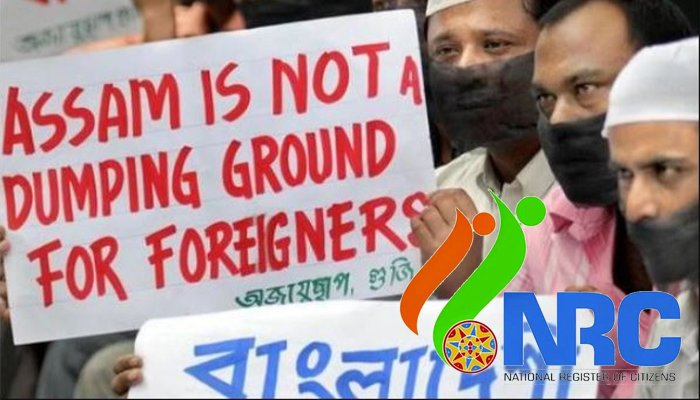
The study of history is for learning the right course of action to unveil a bright future. West Bengal was founded as a homeland for Hindu Bengalis. No Bangladeshi Muslim has any right over this Hindu homeland. However, each and every Hindu refugee from Bangladesh is entitled to a place in this homeland. A violation of this understanding of our forefathers is most unwelcome. Calling out our ancestors as communal fools and drumming upon own liberal nature is egoistic and idiotic too. Our ancestors did not conceive of a West Bengal for providing shelter to Rohingyas and Bangladesh Muslims. They never saw a future West Bengal with citizenship of Hindu refugees being questioned.

In this context, Citizenship Amendment Bill is pending in the parliament. This bill may have one or two lacunas but this bill is definitely one step forward towards acknowledging the historical truth. This bill joins history and the present perspective. Citizenship Amendment Bill in the present form or an even more advanced version of this bill must immediately be passed for preserving the existence of the Bengali Hindus. In this hour of transition, let us take an oath to continue with the culture of Gaudapada.

(This article was originally published in Bangodesh.com in Bengali)

Between 2010-2015, child care centres in Maharashtra wasted govt money by registering 75,000 bogus children: Report

The Public Accounts Committee (PAC) of the Maharashtra state Legislature has made an observation suggesting that nearly 75,000 bogus or ineligible children were registered in child care institutions, leading to siphoning of state government’s funds, reports DNA.

According to the report, the Public Accounts Committee (PAC) also pointed out the existing loopholes in the functioning of these institutions. The PAC found out that these child care institutions did not segregate children in need of care and protection from juveniles lodged there on criminal charges. The PAC feels that these juvenile offenders can influence other inmates and render them vulnerable to crimes like theft, drug use and sex abuse.

In its report on the General and Social Sector for the year ended March 2015, the Comptroller and Auditor General (CAG) had also pointed to operational inefficiencies in these centres, which are meant to provide institutional care to children in need.

“Between 2010 and 2015, a total of 95,000 children were taking benefit of these schemes in 1,153 child care institutions. During an inspection, it was found that a large number of children, who had homes of their own, had been admitted to these child care institutions. When the department examined every case during the inspection, it was found that only 17,000 of these children were found to be eligible for admissions. The other children were handed over to their parents. The department told the committee that at present, these child care institutions have around 21,000 children. This means, more than 75,000 bogus or ineligible children were registered here and crores of public money were siphoned off from the government on unnecessary expenses,” the report said.

The report accused the child welfare committees and those responsible for overseeing their functioning at the district and state level of neglecting their duty of providing institutional care and social rehabilitation to children in need.

“If a detailed examination of each case was conducted while admitting every child to in these homes and only those eligible were admitted, it would have helped restrict the number of inmates,” the PAC said, adding that budgeted funds could have been used more effectively.

The PAC opined that crores of government money have been spent unnecessarily and dismissed the excuses that it was inadvertent or due to negligence. This is a serious issue and the possibility of connivance to siphon off funds cannot be denied, and hence, it needs detailed and urgent investigation, said the Public Accounts Committee.

Bats are the reason behind power cuts in Madhya Pradesh, say officials in Kamal Nath government

According to the latest revelations by the Kamal Nath government in Madhya Pradesh, bats are responsible for the rampant power cuts in the state. As per reports, officers in the Kamal Nath government have claimed that the tiny flying mammals are the reason the state is reeling under a power supply crisis.

Madhya Pradesh has been suffering from frequent and rampant power cuts since months. As the harsh summer keeps the mercury high, frequent power cuts in the state have made life unbearable for people in the state.

The Congress government in Madhya Pradesh has only been indulging in blame game over the issue of power cuts. Initially, the Kamal Nath government had claimed that the previous BJP government had installed faulty generators. Then they had stated through official communications that human intervention by BJP’s people in power department is causing the power cuts.

Finally, they had now blamed the fruit-eating mammals for the power failures in the state. Recently, when power minister Priyavrat Singh visited the senior officials at the power department, they reportedly argued that bats hang upside down from electric wires, due to which the wires stick together and cause power failures.

The argument was even reportedly published in an official statement. However, Priyavrat Singh has reportedly clarified that he does not believe it.

Singh has reportedly asked for the formation of technical teams to examine transformers. He has also asked senior-level officials to frequently tour their respective areas and for the formation of WhatsApp groups for junior engineer level employees for better communication and problem-solving.

Priyavrat Singh was quoted by Aaj Tak saying that he has learned from officers in the department that there are a large number of bats living in old Bhopal area, causing frequent power failures.

Singh then stated that he has asked the officials to keep bats away from the wires and at the same time take care of the environment.

He also stated that he has asked the officers to install ultrasonic devices and work on insulating the wires and keeping the transformers from overloading.

Former CM Shivraj Singh Chouhan has stated that the Kamal Nath government has lost its mental balance.

It is notable here that in 2003, power cuts were one of the main issues that had caused Congress’ catastrophic loss in the state elections. In the last 15 years of BJP rule, the power cuts were reportedly never a serious issue and the state saw mostly uninterrupted supply.

Madhya Pradesh’s power cuts have recently gained much attention on social media after Urdu poet Rahat Indori had taken to Twitter to complain about frequent power cuts.

Newspaper report suggests Rahul Gandhi may step down as Congress President, Ashok Gehlot to take over

After the poll debacle in 2019 Lok Sabha Elections, Rahul Gandhi was reportedly set on resigning as the Congress President despite persuasion from senior leaders to continue. He had even tendered his resignation which was rejected by Congress Working Committee. Now a newspaper report suggests that Rahul Gandhi may step down as the President of Congress and Rajasthan Chief Minister Ashok Gehlot may take over.

According to a report in Navbharat Times, Congress seems to have made up its mind to let Rahul Gandhi step down and hand over the reins of the working of the party to Rajasthan Chief Minister Ashok Gehlot.

The report, however, says that it is not yet evident whether Ashok Gehlot will be the only President or there would be other Presidents of the Congress party who would share the workload.

According to the report in Navbharat Times, Congress has already asked Ashok Gehlot to stay prepared for the added responsibility in the coming days.

On Rahul Gandhi birthday, when Ashok Gehlot had gone to wish, according to this report he tried to persuade Rahul Gandhi to continue as the Congress President, however, Rahul Gandhi was adamant and said that unless a new leadership is chosen, the Congress party cannot revive itself and make a fresh start.

Rahul Gandhi has apparently also made clear that when he steps down, Priyanka Gandhi Vadra’s name also cannot be considered as the Party President. The report touted this as a result of PM Modi making ‘dynasty politics’ a poll plank.

Ashok Gehlot is reportedly being chosen because he has experience in running the party affairs considering Congress performed well under his guidance in the 2017 Gujarat Assembly Elections.

One of the other reasons that Gehlot is being considered, according to Navbharat Times, is because he is from a backward class, and if Congress hopes to revive itself, it needs the votes of the backward classes which are currently in support of PM Modi. Gehlot also has a better relationship with Sonia and Rahul Gandhi as compared to several other senior leaders of the party.

The report also says that if Ashok Gehlot is made the Congress President, Sachin Pilot may become the Chief Minister of Rajasthan.

After Lok Sabha, ‘Jai Shri Ram’, ‘Jai Ma Kali’ and ‘Allah Hu Akbar’ slogans echo in West Bengal Assembly

A day after chants of ‘Jai Shri Ram’ reverberated through the halls of Parliament, it has now reached West Bengal assembly as newly elected BJP MLAs chanted ‘Jai Shri Ram’ in the assembly after taking their oath.

Reportedly, on Wednesday, four BJP MLAs, three TMC MLAs and one Congress MLA took the oath after they were elected in the recently concluded by-polls. Joyel Murmu, the newly-elected BJP MLA from Habibpur Legislative Assembly chanted ‘Jai Shri Ram’ after taking the oath.

West Bengal Legislative Assembly Speaker Biman Bandopadhaya had earlier issued a warning to the newly elected members against any sort of chanting or sloganeering during, before or after the oath. The speaker had asked the leaders to stick to the written text. However, the newly elected legislators went beyond the speaker’s request to raise various slogans.

Manoj Tigga, another BJP MLA from Madarihat, said, “We can say ‘Jai Shri Ram’ because as Christians have Jesus, Muslims have Allah, we have ‘Jai Shri Ram’. The entire assembly was so excited [during chanting], which means that there will more chantings of ‘Jai Shri Ram’ in the upcoming days.”

Reacting to ‘Jai Shri Ram’ slogans, TMC MLA from Uluberia East Idris Ali shouted “Jai Hind” after taking the oath. However, the speaker objected to both Jai Shri Ram and Jai Hind and asked legislators to stick to the written oath.

Apart from ‘Jai Sri Ram’, slogans like Jai Ma Kali, Allahu Akbar, Radhe Radhe were are also heard during the swearing-in ceremony in the West Bengal assembly.

Speaker Biman Bandopadhaya said that using any religious slogans in the proceedings of parliament or assembly is against the Constitution of India. The secretary would call upon the newly elected members of Bengal Assembly and would advise them not to chant anything other than Parliamentary issues during any proceedings.

Assembly Speaker Biman Banerjee also directed that the chant be removed from the record of assembly proceedings.

Kolkata Muslims write to Mamata Banerjee: Don’t let culprits who attacked doctors and Ushoshie get away just because they are Muslims

West Bengal seems to be going through a massive upheaval and Chief Minister Mamata Banerjee seems to be smack in the middle of it. After BJP winning 18 seats in Lok Sabha, the Chief Minister seems to be fast losing control. After the protests by doctors and citizens chanting ‘Jai Shree Ram’ on several occasions as a mark of protest, now some notable Muslims of Kolkata have written a letter to Banerjee expressing anguish over the latest events in the state.

Letter written by notable Muslims from Kolkata to CM Mamata Banerjee

In the letter, the notable Muslims have written that they are Muslims who are living in Kolkata for decades and have been deeply concerned by two events that have recently occurred – the attack on doctors and the attack on former Miss India Ushoshie Sengupta.

They say that the attackers in both these cases were Muslims, a part of their community and that they are deeply anguished and embarrassed by it.

They then proceed to list two ways in which this problem can be solved. First, the letter says, that the culprits must be brought to book. They say that not just in this case, but in all cases where the culprits are Muslims, they should be brought to book since the growing perception is that just because some criminals belong to the Muslim community, they are allowed to get away, are shielded and the Muslims community appeased.

The second suggestion made in the letter is to initiate an outreach programme where Muslim youth and families across Kolkata can be sensitised in the area of gender sensitivity, civic consciousness, law compliance etc. This, they say, would need long term patience but needs to be implemented right away.

In a horrific incident in Kolkata recently, former Miss India Universe Ushoshi Sengupta was dragged out of her car and attacked by seven Muslim men raising further concerns about the increasingly deteriorating state of law and order in the West Bengal. The attackers, in this case, were Sheik Rahit, Fardin Khan, Sk. Sabir Ali, Sk. Gani, Sk. Imran Ali, Sk. Wasim and Atif Khan.

Before this, West Bengal medical services were on suspension after an 85-year-old Muslim man had died of natural causes and doctors were attacked by a Muslim mob. Support for NRS doctors poured in from across the country with lakhs of doctors going on strike. Eventually, Mamata Banerjee, after blaming outsiders for the strike, conceded to the demands of doctors. 


Humorous but ugly in their behaviour: The story of Pakistani fans

Anyone who remembers what happened to Pakistani players after they lost to India in World Cup 1996 Quarterfinals knows how ugly Pakistani fans could be.

As soon as Pakistan lost to India on March 9, 1996, fans in Pakistan smashed TV sets (a common sight every time India beat Pakistan in a cricket match), a college student fired a hail of bullets from a Kalashnikov into his TV set and then on himself, another fan died of a heart attack, captain Wasim Akram (who couldn’t play a match due to injury) received death threats, and a cleric said Pakistan would never win at cricket so long as a woman – Benazir Bhutto was the prime minister – ruled the country. Even the plane carrying the players had to be diverted to Karachi as irate fans waited in Lahore carrying expletive-laced banners and rotten eggs.

On Sunday in yet another World Cup clash, India comfortably won the game against Pakistan at The Old Trafford. This time Pakistani Twitter erupted into hilarious, self-deprecating jokes. Many found it amusing, and some even called it a victory for Pakistan off the field and how Pakistani fans won the heart while India won the match. People believed the fans have changed for good.

However, they have missed the real side of Pakistani fans. They have been very offensive to their team’s performance in this tournament. Booing and calling names inside the stadium has become a common thing for Pakistani fans.

In the below video shared by a Pakistani fan, Sarfaraz Ahmed been trolled by their fans saying ‘Sarfaraz Mota, toss jeet kar batting kyu nahi li, inhone ne Imran Khan ki bhi nahi suni, apni PM ki bhi nahi sunte to kya kare hum’ which translates into ‘Fat guy Sarfaraz, why didn’t you bat after winning the toss, they didn’t listen to Imran Khan, they don’t even listen to their PM, what can we say’?

According to thenews.com.pk, Sarfaraz Ahmed warned his teammates that all of them would be returning home after the World Cup, and he wouldn’t be alone in facing the wrath of the public if Pakistan continued to disappoint.

The trolling didn’t end up on the ground, some of them blamed Sania Mirza on social media for the poor performance of the Pakistan team. Sania celebrated India’s victory against South African and Australia in the World Cup. This has irked many Pakistani supporters and even celebrities.

Sania Mirza’s reply to Pakistani actress Veena Malik has won the hearts of many from both sides of the border.

The normal fans were also too harsh on players, especially on Shoaib and Sania. Some called Sania an Indian spy and even demanded public hanging. It must be so hard for players to cope with such kind of comments.

Because of all this, Shoaib Malik had to release a statement where he requests the local media and fans to maintain respect for their privacy.

The Pakistani pacer Mohammad Amir has been in great form in this World Cup, yet he is too facing the wrath of the fans. In his tweet, he asked the fans not to abuse the players and keep supporting them.

Former players who themselves never won a World Cup match against India coming out with solutions on how to win a match against India. Shoaib Akhtar, in particular, has been very critical to the team’s performance. Even though he played against India in 2 World Cups (1999 and 2003).

There are many more such incidents on and off the field especially after India’s match will easily make you believe that the Pakistani fans are not just humorous but ugly too in their behaviour.

FIR lodged against rapper Hard Kaur for calling Yogi Adityanath ‘OrangeRapeMan’ and accusing RSS chief of terror attacks

Taran Kaur Dhillon, more popularly known by her stage name Hard Kaur, has been booked for her abusive remarks on social media against Rashtriya Swayamsevak Sangh chief Mohan Bhagwat and Uttar Pradesh chief minister Yogi Adityanath.

According to reports, a complaint has been registered by Varanasi based lawyer Shashank Shekhar at the Cantonment police station on Wednesday.

The FIR against Hard Kaur was lodged under sections IPC 124A – attempt to excite disaffection or hatred, IPC 153A – promoting enmity between different groups on ground of religion, IPC 500 – defamation, IPC 505 – intent to incite, Section 66 of IT Act – sending offensive messages.

In his complaint, Shashank Shekhar has alleged that since he is an RSS volunteer, he was extremely hurt by such social media posts against RSS Chief Mohan Bhagwat and Uttar Pradesh Chief Minister Yogi Adityanath. Inspector Cantt Vijay Pratap Singh has said that an FIR has been lodged following the complaint.

Hard Kaur had referred Uttar Pradesh Chief Minister Yogi Adityanath as an ‘OrangeRapeMan’.

In one of her posts, she had even become part of Pakistani propaganda, where she had accused RSS Chief Mohan Bhagwat of being the main man behind the Mumbai and Pulwama Terror Attacks, thereby, absolving Pakistan of all its guilt.

Apart from Mohan Bhagwat and Yogi Adityanath, Kaur has also spread malicious lies about the origin of the word Hindu.

Ajaz who had set ablaze woman Police officer in Kerala dies while undergoing treatment in hospital

Ajaz, the police officer who had set ablaze fellow police officer Soumya Pushpakaran after hacking her with a sword in Alappuzha district of Kerala, died today while undergoing treatment at Alappuzha Medical College.


Ajaz who was a Civil Police Officer (CPO) who had brutally murdered his colleague Soumya Pushpakaran who was also a CPO after she allegedly refused to stay with him. He had suffered 40% burns during the tussle that took place between them after he set her ablaze and was admitted to ICU at Alappuzha Medical College.

35-year old Pushpakaran worked at the Vallikunnam police station and was the mother of three children and her husband works in the Middle East. On that fateful day, Pushapakaran was returning home at around 4 pm on her scooter after completing her duty with student police cadet members in a nearby school. The accused was waiting for her in a rented car for the right opportunity. When the victim reached near her house, he rammed his car into her scooter, knocking down the victim.

He chased her to a neighbouring house carrying petrol and machete with him. He first brutally stabbed the victim and then poured petrol on her and set her on fire.