Home Blog Page 6266

West Bengal violence: Two dead and three injured in BJP-TMC clashes in Bhatpara

There seems to be no end to political violence in the state of West Bengal as two people have been killed and three others injured as clashes broke out between Trinamool Congress and BJP supporters in West Bengal’s Bhatpara on Thursday.

According to the reports, one of the deceased has been identified as 17-year-old Rambabu Shaw, a BJP supporter who sold Pani Puri for a living. Another person is identified as Dharmendra Shaw.

“The deceased has been identified as Rambabu Shaw and Dharmendra Shaw, while the details of those injured in the incident were yet to be ascertained,” the police officials said.

Reportedly, bombs were hurled and several bullets were fired in the air during the clash between the two groups near a newly constructed police station, which was scheduled for inauguration on Thursday.

A team of police officers along with Rapid Action Force (RAF) personnel has been deployed in the area, with shops, market places and business establishments seen downing shutters following the unrest. Bhatpara has witnessed a series of clashes since May 19, when by-poll was held in the assembly constituency.

On Tuesday, in a similar incident of political violence, a 28-year-old, Bharatiya Janata Party youth wing (BJYM) activist Anandapal was found dead in West Bengal with his throat slit and several injuries on the body as post-poll violence continues unabated in the state.

Anandpal’s body was found near a water body at Kanthaltala under Duaguri gram panchayat. There were several wounds in his body apart from the slit throat.

The law and order situation in the state has been deteriorating immensely under Mamata Banerjee with a massive spike in political murders and violent mob attacking medical institutions across the state. With Mamata Banerjee fighting for political relevance in the state, it appears that the end of political violence in the state will be unlikely in the near future.

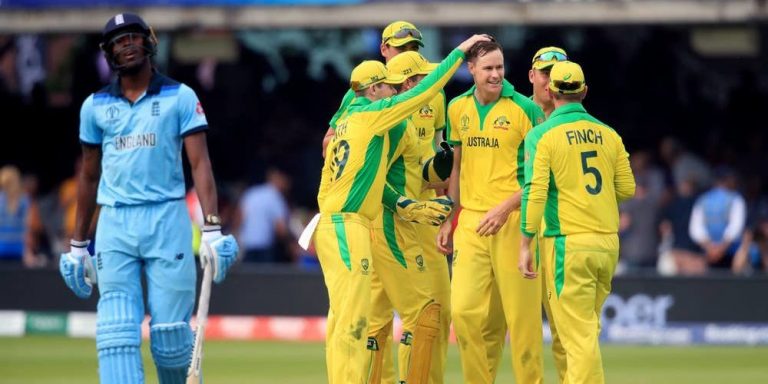
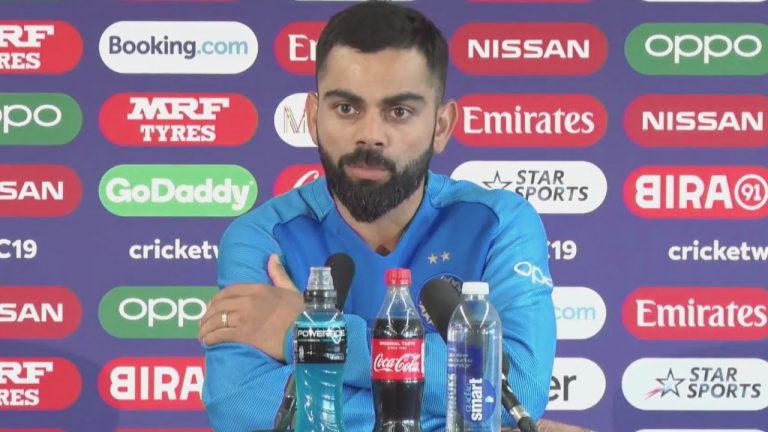
Virat’s men in orange: Team India to sport new orange jerseys for match against England

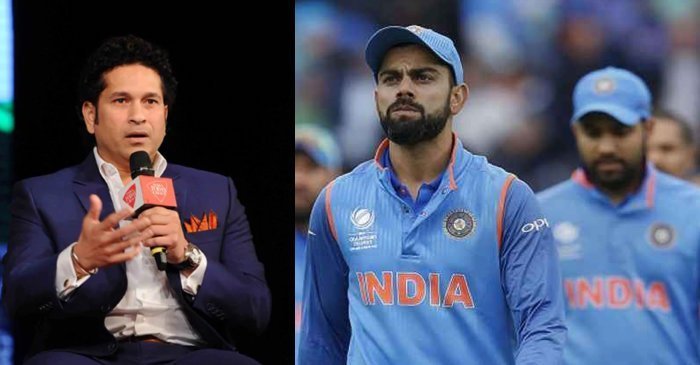
As ICC has changed its rules regarding team jerseys, team India may have to wear jerseys of a different colour than the usual blue for their upcoming match against England. As per media reports, the Indian team will wear orange jerseys for the June 30 match against the hosts of the ICC World Cup 2019. India Today has confirmed the news.


Inspired by the concept of ‘home’ and ‘away’ jerseys in soccer, ICC had tweaked its regulations preventing two teams from wearing the same coloured jerseys in a match. Earlier reports claimed that India might get a darker blue shade with lots of orange on the sleeves and back.

The rules mandate that while the host team can keep its usual colours, the visiting team will have to choose jerseys of a different colour. As England also wears blue, team India will have to wear a different colour.

Media reports state that the famous India jersey that earned the name ‘Men in Blue’ for the Indian team in recent years, might be changed into the orange shade. There are some reports that the styling blue jerseys with orange collar and spattering will be reversed to orange jerseys with blue collars and spatterings.

Reports also say that the Indian team had not seen their ‘away’ jerseys until last week. Nike, which sponsors the team jerseys for India, has also been tight-lipped about the details.

Many teams have already revealed their ‘away’ jerseys. While the South African squad was wearing yellow, Bangladesh’s team was seen wearing blue with a lot of red. Australia, New Zealand and West Indies have not changed their jerseys because they are in unique colours.

For the June 22 match against India, team Afghanistan will change their colours and the Indian team will wear the usual blue. Afghanistan has announced their ‘away’ kit which displayed blue jerseys with predominant red splatterings.


According to the ICC schedule, the match against Afghanistan on June 22 at Southampton will be treated as ‘home’ game for India. India will also face West Indies on June 27.

Madurai: Villagers protest against proposed government takeover of three ancient temples

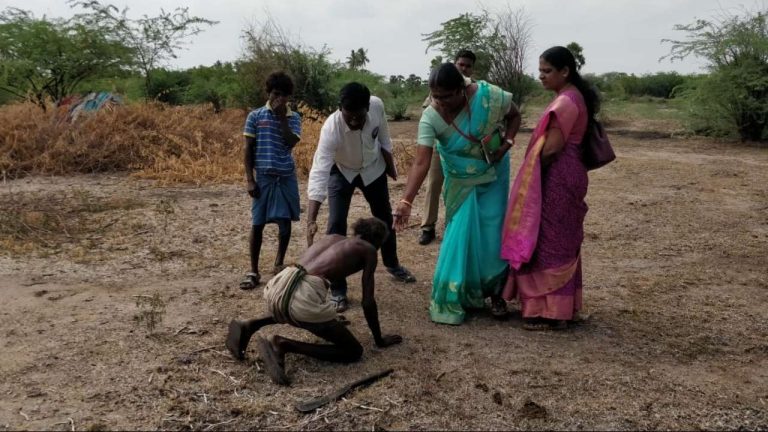
Yesterday villagers of Vellalur Nadu held a protest against the Tamil Nadu Hindu Religious and Charitable Endowments (HR and CE) Department’s decision to take over three ancient temples. The temples are, the Mandai Karuppanasamy temple, Ezhaikatha Amman temple and Valladikarar temple. Vellalur Nadu is a collective of about 62 villages in and around Melur, in the district of Madurai. The temples had been under the control of these villagers for nearly 500 years.

[youtube https://www.youtube.com/watch?v=VCBbehasZTA]

As per reports, the HR&CE department was informed of large-scale misappropriation of funds belonging to the temple. A petition had been filed to take over the temples. After finding out this the villagers had set out on a protest march towards the department in Madurai.

Over 20,000 villagers mostly constituting of women had gathered for the protest. Shops in Vellalur Nadu remained closed on Wednesday morning. The villagers proclaimed that the temples belonged to them and they would not give it up to the department.

However, officials had held talks with the villagers and heard them out. The villagers were assured that no action would be taken against their wishes.

The three temples are administered and managed by ‘Ambalathukarars’ who are nominated by the villagers themselves. S Kurinji Kumaran, the Ambalathukarar of Samattikarai had said that someone told the HR&CE department that they were handling a lot of funds. However, the temples receive donations solely from the villagers who are devoted to the temple. No outside funds were accepted.

In an earlier allegation of receiving large donations through hundi collection, the villagers decided to do away with hundi collection in these temples over a decade ago.

In April, the Supreme Court had questioned the rationale behind government officials managing religious places and temples in the country. Amidst rampant idol thefts from the temples in Tamil Nadu, the state government had decided to transfer all such cases to the CBI.

Recently, the Telangana government had decided to take action against illegal occupants of about 20,000 acres of Temple land.

Civil War in India: Are we condemned to such a fate?

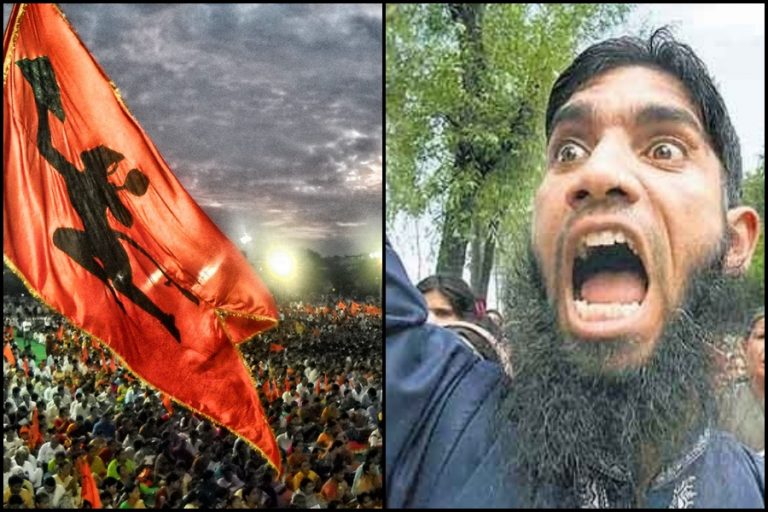
A tweet video is trending in which a Muslim is caught having just broken an idol of Hanuman and uttering that he did it in the name of the Allah.

We do not know where and when it happened. We don’t know the name of the offender. We don’t know what happened to him thereafter.

Five years ago, when Modi had just ensconced himself in Centre, there was a recorded event of a Hanuman idol being attacked in Andheri (W) in Mumbai. As the news spread and devotees began to mass around the temple agitated, the possibility of an ugly turn to events was real. However, police were able to persuade the seething crowd to cool off.

Last year a temple in Howrah in West Bengal was ransacked with portraits of Hindu gods and goddesses thrown in the mud. If you click on this link, you would find various attacks on Hindu idols in temples in Pakistan, Bangladesh and the even United States.

I am not writing this to contrast the outrage which Lutyens Media had shown three weeks ago when a skullcap of a Muslim was thrown on the ground and police had later contested that the victim might have actually kept the skullcap in his pocket. I am also not trying to whip up outrage among the Hindu majority. And I am certainly not trying to paint millions of Indian Muslims in a corner who I believe are largely peaceful.

My point is larger and the instance I quote is of Lebanon to show how stray incidents, if not checked, snowball into something monstrous.

On April 13, 1975, a few gunmen of a PLO (Palestine Liberation Organization) factions barged into the Church of Notre Dame de la Deliverance in East Beirut and opened fire on the VIPs present, killing four people.

It was a religious transgression and it began the civil war in Lebanon which lasted for 15 years (1975-1990).  Around 120,000 people were killed. By 2012, approximately 76,000 people had been displaced within the country. There was also an exodus of over one million people.

It was a flashpoint and sure the genesis of it was building up over the years. At the turn of the century, Lebanon was a Christian-majority country. It was a model nation of liberal values. By 1950s, Lebanon had entered into its golden age. Politically stable, economy booking, excellent tourism, exemplary banks, envied even in the Western world and termed as the Swiss of the Middle East.  After Israel, it was the most prosperous country in the Middle East and this too without oil as its backbone.

It began to change when Lebanon opened its border to accept hundreds and thousands of Palestinians during the 1948-1967 period, a stretch when Israel became a nation and fought wars with Arab nations. The Muslims’ demography in Lebanon was already booming: Having 10 children in the family was a norm. With the influx from across the border, the demographic equation changed, religious battles for turfs became common and Civil War loomed. A flashpoint was all it needed to wreak havoc.

I am not getting into the debate about the role of demography, about Islam’s ideology of propagation of faith or its resort to violence to achieve its goal. My point is still larger and it’s something which liberal world could either choose to dismiss it as Islamophobia or gird up its lions to deal with it.

We all know that the adherents of Islam are 1.20 billion in the world. That majority of them are peaceful. That only 10-15%, or a few million it is, who cause horror. But this number is enough to bring the liberal world to a staggering halt.

Weren’t Germans by and large peaceful before Adolf Hitler and his ethnic cleansing program dragged them into World War II and caused millions to die? Wasn’t Joseph Stalin a role model of a “reformed” Communism who caused tens of millions to die of starvation and hunger in the Soviet Union? Do we need to tell what Mao Zedong did to millions of his men? Do we need a reminder of what 19 wood-cutters did to our world by bringing down the towers of the World Trade Center?

Would the peaceful majority of Muslims deny that there are hundreds of Sharia courts in England which were unthinkable a few decades ago and which run parallel to the laws of the land? Would they disagree that there are dozens of areas in France which have been declared “no-go zones” even by the police?

Closer home, weren’t Indian Muslims largely peaceful yet the Partition occurred in 1947? In view of historical and present facts, would they revisit their empathy for Rohingya Muslims? Or, to rethink if the so-called state aggression on “innocent” Muslims in Jammu & Kashmir could have a contrary viewpoint? How now do they view the “tukde-tukde” gang? How do they view the growing presence of Islamic State (IS) in Tamil Nadu, Kerala and Bengal? Do they have an opinion on Babri Masjid-Ram Janmabhoomi dispute?

The crux is peaceful Indian Muslims need to stand up and be counted. At least those who are well-off and not struggling to meet their ends meet. They need to be angry on lynchings and be equally outraged on loses in the Hindu quarters.  They need to find leadership within which speaks for say, Kashmiri Pandits and condemn terrorism.  The narrative of violent Islam needs a course correction and it must come from within the community. Or they would hand over the future of their own coming generations in the hands of a dreaded few.

As for Hindus, they need to be aware of the danger of demography, the limits of secularism and the pitfalls of bookish “liberal” values.  Not for nothing, it’s said: Those who refuse to learn from history, are condemned to repeat it.

Setback for ‘United Opposition’: 4 out of 6 Rajya Sabha MPs of TDP likely to join BJP

In a major blow to the Telugu Desam Party, 4 Rajya Sabha MPs of the party was likely to join BJP. According to reports, YS Chowdary, CM Ramesh, TG Venkatesh and Garikapati Mohan Rao are likely to shift to BJP. Rao is Rajya Sabha MP from Telangana, while the other three are from Andhra Pradesh.


The four members of the upper house are expected to send their resignation letters to Rajya Sabha Chairman Venkaiah Naidu soon. According to speculations, another Rajya Sabha MP of TDP Thota Sitarama Lakshmi may also leave the party and join BJP. If that happens, Chandrababu Naidu will be left with just one MP in the upper house, Ravindra Kumar, who remains loyal to the party.

The party won just 3 seats in the recently concluded Lok Sabha elections, and it will be a severe blow to the party within a month if 5 of its 6 Rajya Sabha MPs shift to BJP.

According to sources, senior BJP leaders, including general secretary Ram Madhav, and MoS Home G Kisan Reddy held several rounds of talks with the TDP leaders and invited to join BJP. BJP does not have a majority in the upper house, therefore it is keen in inducting Rajya Sabha MPs in the party.

No rain, no water in reservoirs and depleted ground water levels: Chennai is facing its worst water crisis in years

For several weeks now, the city of Chennai has been reeling under an acute water shortage after four major reservoirs have completely dried up. The reservoirs have only about 31 million cubic feet of water as against a total capacity of 11,257 million cubic feet.

The Chennai Metropolitan Water Supply and Sewerage Board (CMWSSB) is now looking for alternative sources of water, including desalination plants. Citizens have been completely dependant on the tankers to supply water.


The lakes have a dried up as a result of poor monsoon last year, a 62% shortfall compared to 2017. As per a report, Chennai had a continuous streak of 191 days without rain, breaking a 10-year record. Tamil Nadu receives its highest rainfall during the north-east monsoon which occurs in October-November. Below are the satellite images comparing the current state of reservoirs in the city with images taken a year ago.


As per reports, IT companies on OMR have asked employees to work for from due to the water shortage. Sources say that 5,000 techies of 12 companies have been directed to work from home. Companies such as Fiat Chrysler, TCS, Wipro and Cognizant have asked employees to cut back on water usage in canteens and restrooms. Around 100 hotels in the city have shut down their operations owing to the water shortage.

The government has been facing difficulty to supply water to schools, following which several drastic steps were taken by the school management. A school had reportedly sent text messages to parents instructing them to send their children with bottles of water. Several schools have also had taken steps to limit the number of children attending school, including announcing holidays for junior grades and holding a half-day session.

At one point, Chennai had an abundance of water resources. A report of The Hindu talks about the numerous lakes of the city that have been vanishing over a period of time. The state government only recently has taken up the issue of rainwater harvesting in a serious manner.

The Madras High Court has slammed the AIADMK led Tamil Nadu government for not taking adequate measures to prevent the water crisis. The HC observed that despite having the knowledge of poor monsoons, the government hasn’t taken any steps to address water shortage concerns. The government has been directed to submit a state-wide comprehensive report on the number of reservoirs in the state, steps taken for desilting, amount sanctioned, and status of those works.

The Tamil Nadu Chief Minister Edappadi K Palaniswami attempts to downplay the water crisis in the state by claiming that the news is being exaggerated by the media. He said, “If there is a water shortage in one place, the media friends blow it up as a big thing. I request you all to not blow it up and show as if the entire Tamil Nadu is reeling under water crisis”.

The CM assured that steps are being taken to ensure that drinking water is supplied through lorries wherever there is a shortage. He said that the situation is likely to remain the same till the northeast monsoons hits October-November. This is the only time that the city receives adequate rainfall after which the city has to rely on groundwater. However, this time even groundwater resources are severely depleted.

Meanwhile, the DMK has called for a protest on June 22 across Tamil Nadu demanding the AIADMK government to take urgent steps to address the acute water crisis. They attributed the crisis to the government’s negligence and administrative failure.

The AIADMK has asked not to politicize the issue saying that they were trying their best to address all concerns.


The Tamil Nadu government is contemplating to deploy tanker trains to bring water from other districts of the state to address Chennai’s water crisis. Currently, the CMWSSB is able to provide only 500 MLD per day, whereas the city requires 800 MLD of water per day.

Chennai is one among the 21 cities in India, which according to a NITI Aayog report, would run out of groundwater by 2020. Other cities including Delhi, Bangalore and Hyderabad would be running out of groundwater impacting the lives of 100 million people.

In what may come as a relief for the residents of the city, the Met department has said that parts of the city may experience rainfall in 2-3 days. The rains, however, would not be sufficient enough to recharge the groundwater levels.

Mortal remains of all 13 passengers aboard IAF’s AN-32 recovered in Arunachal Pradesh

After 15-days of extensive search operations, six bodies and the remains of seven crew members aboard the Indian Air Force’s AN-32 transport aircraft that crashed in Arunachal Pradesh on June 3, have been recovered from the crash site.

The AN-32 took off from Jorhat in Assam on June 3 and was on its way to the Advanced Landing Ground at Mechuka in Arunachal Pradesh’s Shi Yomi district when it lost contact with ground control.

C-130J and the ground patrols of the Indian Army had launched rescue operations almost immediately after the aircraft went missing. IAF used its fighter planes and helicopters to locate the plane in the mountainous area.

Though the wreckage of the missing aircraft was found on June 11, 16 Km North of Lipo and North East of Tato, in a remote area in Arunachal Pradesh, the IAF until June 13 had not found any trace of any survivors and the families of the 13 personnel have been informed the same.

As per earlier reports, the black box containing the cockpit voice recorder and flight data recorder had been damaged in the accident which might cause a delay in knowing the exact cause of the crash.

The crash site is a thickly forested mountain slope at an approximate altitude of 12,000 feet. A mountaineering team trekked to the crash spot after being air dropped at a nearby location after two failed attempts. However, as clouds and rain disrupted chopper flight another team of 20 men including 11 porters were dispatched to the crash site on Sunday and arrived at the crash site on Wednesday.

From ‘fear of arrest’ to wedding celebrations: Read why some newly elected Lok Sabha members are yet to take oath

As the newly elected members of the 17th Lok Sabha took their oath of office during the first session of the parliament, rape accused BSP MP Atul Kumar Singh is yet to take his oath fearing his imminent arrest.

Atul Kumar Singh aka Atul Rai, a newly elected Bahujan Samaj Party MP from Ghosi constituency in Uttar Pradesh had been absconding for over a month since he was made an accused in a rape case. Atul Kumar Singh is accused of raping a Varanasi college girl.

The FIR was filed against Rai on May 2 by the victim who accused him of repeatedly raping her, filming the act and threatening her of making the video public. The victim also said that she was forced to sleep with other BSP leaders as well. The victim had alleged that Rai took her to his home for a meeting with his wife and sexually assaulted her.

The BSP MP has been absconding since his plea seeking anticipatory bail was rejected by the Allahabad High Court. Atul Singh was not present during his election campaign either and still, he managed to win the seat.

Supreme Court had also dismissed the plea of newly elected Lok Sabha MP of Bahujan Samaj Party (BSP) Atul Kumar Singh after he had sought protection from arrest.

Other than Atul Kumar Singh, four other newly elected members of Parliament did not participate in the oath-taking ceremony. Santosh Kumar (Janata Dal-U, Poornia, Bihar), Prajwal Revanna (Janata Dal-S, Hassan, Karnataka), Nusrat Jahan Ruhi and Mimi Chakraborty (both belonging to TMC from Basirhat and Jadavpur respectively in West Bengal have not taken their oath of office yet.

Actor turned politician and Basirhat MP Nusrat Jahan Ruhi missed taking oath as a Member of Parliament because of her wedding. Nusrat’s colleague and fellow first time MP Mimi Chakraborty was also in Turkey to attend the wedding, for which she missed taking oath in the Lok Sabha. Mimi Chakraborty won the Jadavpur Lok Sabha seat as a Trinamool Congress candidate.

However, Prajwal Revanna, the Hassan MP and grandson of former PM HD Devegowda is said to be waiting for an ‘auspicious time’ for taking oath as a member of the Lower House.

Reportedly, Prajwal Revanna has sought a special time from the Lok Sabha secretariat to take oath as a member of the Lok Sabha after 2.30 pm. On Friday, the first time MP from Hassan will take the oath with the presence of his father HD Revanna and other relatives.

It is notable here that though the first two days of Lok Sabha is reserved for new members taking the oath, there is no restriction on any new MP taking oath later.

Read the full text of President Ram Nath Kovind’s address to the join sitting of Parliament

President Ram Nath Kovind addressed the joint sitting of Parliament today. The government outlines its programmes and policies through the President’s address. It also highlights the steps taken by the government from the previous year and spells out priorities for the upcoming year. Following is the full text of the President’s address today.

  1. I am pleased to address the first joint sitting of Parliament after the election of the 17th Lok Sabha, in the year commemorating the 150th birth anniversary of Mahatma Gandhi. I extend my heartiest congratulations to all newly elected Members of this Lok Sabha.
  2. More than 61 crore voters of the country set a new record by casting their votes and enhanced the credibility of India’s democracy in the world. People have stood in long queues braving extreme heat to cast their votes. This time, as compared to previous elections, more women have cast their votes and their participation has been almost equal to men. Crores of youth have voted for the first time and played an important role in shaping India’s future. All voters deserve to be congratulated for the success of this election.
  3. I also convey my best wishes to the new Speaker of the Lok Sabha for this new responsibility.
  4. I congratulate the entire team of the Election Commission for successful completion of the world’s largest election. The contribution of employees of several administrative departments and various institutions, as well as the security forces in successful conduct of the electoral process is extremely praiseworthy.
  5. Nearly half of the MPs in this Lok Sabha have been elected for the first time. The election of 78 women MPs which is the highest number in the history of Lok Sabha, presents the picture of a New India.
  6. It is a matter of joy that the reflection of India’s diversity is visible in this joint sitting. People of every age, hailing from villages and cities, belonging to every profession, are members of both the Houses. Many members are associated with social service, many are from the field of agriculture, from business and economic sphere while other members are from the field of education, medical profession which saves the lives of people and legal profession which provides justice to the people. MPs who have made their mark in the world of cinema, art, literature and culture are also present here. I am confident that your unique experiences will contribute to enriching the discussions in Parliament.

Honourable Members,

  1. The people of the country have given a very clear mandate in this election. After assessing the performance of the Government during the first tenure, the people have given even stronger support for the second term. By doing so, the people of the country have given a mandate for continuing uninterrupted and at an accelerated pace the journey of development which started in 2014.
  2. All fellow countrymen are familiar with the atmosphere prevailing in the country before 2014. In order to take the country out of a sense of gloom and instability, the people elected a Government with absolute majority after three decades. Giving the highest regard to that mandate, my Government started to march forward without any discrimination with the mantra of ‘Sabka Saath- Sabka Vikas’, to create a New India.
  3. On January 31st this year, in this very Central Hall, I had said that my Government from the very first day was dedicated to the goal of improving the lives of all citizens, addressing their problems arising out of mis-governance and providing all basic amenities to the last person standing at the margins of society.
  4. During the last five years, the countrymen have come to believe that the Government is always with them, working to improve their lives and to enhance their Ease of Living. Based on this wealth of people’s trust, a fresh mandate was sought.
  5. People of the country have long waited for the basic amenities of life. But now the conditions are changing. My Government wants to make the people conscious, capable, well-provided and unfettered to such an extent that that they do not feel the “Burden, Force, or Absence” of the Government in their daily life. Empowering every person in the country is the main goal of my Government.

Honourable Members,

  1. My Government is committed to that very idea of nation-building, the foundation for which was laid in 2014. While fulfilling the basic needs of the countrymen, now the Government is moving forward towards realising their aspirations of buildinga Strong, Safe, Prosperous and All-inclusive India. This journey is inspired by the basic spirit of ‘Sabka Saath, Sabka Vikas aur Sabka Vishwas’.

This New India’s vision is motivated by the noble thoughts of
Shri Narayana GuruKerala’s great spiritual figure, social reformer and poet:

        “Jaati-Bhedam Mat-Dwesham AdumIlladey Sarvrum

        Sodar-tvain Vaadunn Matrukasthan Maanit”

That is, an ideal place is one where people live like brothers free from the discrimination of caste and religion.

  1. Three weeks ago, on 30thMay, immediately after swearing-in the Government has started working towards building a New India. A New India:

– Where equal opportunities to progress are available to every person;

–  Where life of every person becomes better and their self-esteem is enhanced;

– Where brotherhood and harmony bind the people with each other;

– Where the foundation built on our ideals and values becomes stronger; and

– Where the benefits of development reach every region and the last person standing in the queue.

This New India, will move forward towards that ideal state envisioned by Gurudev Rabindra Nath Tagore,  where the mind of the people is without fear  and the head is held high with self-esteem. In Gurudev’s words:

        “Chitto Jetha Bhay-Shunno, Uchcho Jetha Shir.”

Honourable Members,

  1. It is a matter of pride for every Indian that when our country completes 75 years of independence in 2022, we would have achieved many national goals for building a New India. To pave the way for the golden future of New India, my Government has resolved:
  • On this path of a New India, the rural India will be strong and urban India will also be empowered;
  • On this path of a New India, the entrepreneurial India will attain new heights and the dreams of young India will also be fulfilled;
  • On this path of a New India, all systems will be transparent and the prestige of honest countrymen will increase further;
  • On this path of a New India, infrastructure for the 21stcentury will be built and all resources for creation of a powerful India will be mobilised.

In the light of these resolutions, in a short period of 21 days, my Government has taken many decisions aimed at the welfare of farmers, soldiers, students, entrepreneurs, women and other sections of society and have also started implementing them. Initiatives have also been taken to enact several new laws.

  1. A decision has been taken to increase the income support to farmers who are our Annadaata, by extending the coverage under ‘Pradhan Mantri Kisan Samman Nidhi’,to every farmer in the country. To enable the farmer brothers and sisters who work day and night in their fields to lead a respectable life after attaining the age of 60 years, a ‘Pension Scheme’for them has also been approved.
  2. Livestock is invaluable for farmers. They have to spend a lot of money for treatment of cattle-related diseases. To reduce this expenditure, my Government has also decided to start a special scheme with an allocation of Rs 13,000 crore.
  3. For the first time, a Government has taken note of the economic security of small shopkeepers. In the very first meeting of the Cabinet, a separate ‘Pension Scheme’has been approved for small shopkeepers and retail traders. About 3 crore small shopkeepers in the country will benefit from this scheme.
  4. We are all indebted to the soldiers who dedicate themselves to protect the countrymen by sacrificing every joy, every pleasure and every festive occasion. It is our duty to secure the future of children of those who guard the border, and ensure peace and security for everyone. Inspired by this sentiment, the amount of scholarship under the ‘National Defence Fund’has been increased for the children of our brave soldiers. For the first time, sons and daughters of the State police personnel have also been included in this scholarship.

Honourable Members,

  1. One of the biggest challenges of the 21stcentury is – the growing water crisis. Over time, the traditional and effective practices of water conservation in our country are disappearing. Houses have come up over ponds and lakes, and the vanishing water sources have accentuated the water crisis for the poor. In view of the growing impact of Climate Change and Global Warming, water crisis is likely to aggravate further. Today, the need of the hour is that the way the country has shown seriousness about ‘Swachh Bharat Abhiyaan’, the same seriousness be shown in ‘Water Conservation and Management’.
  2. We must conserve water for our children and future generations. The creation of the new ‘Ministry of Jalshakti’is a decisive step in this direction, which will have far-reaching benefits. Through this new Ministry, the systems related to water conservation and management will be made more effective.
  3. My Government is fully conscious of the crisis in the drought-hit areas and stands by every affected citizen. With the support of State Governments and Sarpanches at the village level, it is being ensured that farmers are assisted and the scarcity of drinking water is tackled.
  4. Strengthening the system and spirit of Co-operative Federalism, my Government is taking the States along to achieve the national goals. Last week, important developmental issues were discussed with the Chief Ministers and a decision was taken to constitute a Committee of Chief Ministers to look into Structural Reforms in the field of agriculture.

Honourable Members,

  1. Only on the foundation of a strong rural economy, it is possible to build a strong national economy. Our farmers are the pillars of rural economy. All possible efforts are being made by the Central Government to provide adequate assistance to the States for agricultural development.
  2. Large scale investments have been made to strengthen rural India. In order to enhance agriculture productivity, an investment of Rs. 25 lakh crore will be made in the coming years.
  3. To double the income of farmers by 2022, several steps have been taken in the last 5 years. Be it the decision to increase the MSP, or approval for 100 percent FDI in food processing; be it completion of the irrigation projects pending for decades or extension of ‘Crop Insurance Scheme’; be it the ‘Soil Health Card’or 100% Neem coating of urea; my Government has taken many decisions, appreciating such numerous small and big needs of the farmers. The Government has made the agriculture policy both production-centric as well as income-centric.
  4. An important link in these efforts is ‘Pradhan Mantri Kisan Samman Nidhi’. Through this, an amount of more than Rs. 12,000 crore has been disbursed to the farmers in just three months. An estimated expenditure of Rs. 90,000 crore is likely to be incurred annually on this scheme since every farmer has now been brought in its ambit.
  5. With the provision of storage for farm produce, the economic security of the farmers is strengthened. Now the storage facility will be provided to the farmers near their village through the ‘Grameen Bhandaran Yojana’.
  6. The benefit of cooperatives in the agriculture sector is being availed by the farmers in the dairy business. In other areas of agriculture also, the target is to create 10,000 new ‘Farmer Producer Organisations’ to benefit the farmers.
  7. Today, India is second in the world in fish production. Our country has the potential to attain the first place. There is immense potential for increasing the income of farmers through marine fish industry and inland fisheries. That is why the Government is committed to ‘Neeli Kranti’which means ‘Blue Revolution’. A separate Department has been constituted for integrated development of fisheries. Similarly, a special fund has been created to develop infrastructure related to fishing industry.

Honourable Members,

  1. We can achieve our constitutional objectives only by liberating the poor families of the country from poverty. During the last five years, the schemes implemented in the country for the welfare of farmers, labourers, divyangjan, tribals and women have achieved wide spread success. Only by empowering the poor can they be rescued from the vicious cycle of poverty. That is why the Government has adopted an approach to empower the poor, deprived and weaker sections through provision of housing, healthcare, essential amenities of life, financial inclusion, education, skill and self-employment. This is in harmony with Deen Dayal Upadhyaya’s concept of Antyodaya.
  2. Comprehensive work is underway for the development of
    112 ‘Aspirational Districts’in the country. 1 lakh 15 thousand most backward villages of the country are in these districts. With the development of education and healthcare facilities and infrastructure in these villages, there will be a positive impact on the lives of crores of poor families.
  3. After the success of the world’s largest financial inclusion campaign, in the form of ‘Jan-Dhan Yojana’, my Government is also working to bring the banking services to the doorsteps of the people. In order to ensure that banking services are readily available in every village of the country and in the inaccessible areas of North East, work is being done at a fast pace. About 1.5 lakh post offices in the country are being prepared to provide banking services through ‘India Post Payment Bank’. Our goal is to utilise the postman as a mobile bank to bring banking services to every doorstep.

Honourable Members,

  1. Cost of medical treatment pushes the poor families into financial crisis. In order to protect them from this crisis, world’s biggest healthcare scheme ‘Ayushman Bharat Yojana’ has been implemented, providing ‘Health-Protection-Cover’ to 50 crore poor people. Under this, so far about 26 lakh poor patients have availed treatment in hospitals. In order to provide medicines at affordable rates, 5,300 ‘Jan Aushadhi Kendras’ have also been opened. It is our endeavour to provide medicines at affordable rates to people residing in far-flung areas through these Jan Aushadhi Kendras.
  2. The objective is to set up about 1.5 lakh ‘Health and Wellness Centres’in all rural areas by 2022. So far, about 18,000 such Centres have already been operationalised.
  3. Our countrymen can learn a lot from tribal communities. Our tribal brothers and sisters live in harmony with the environment and nature and maintain a beautiful balance between development and tradition. In New India, every effort will be made to create an inclusive and sensitive system in the interest of tribal communities. Many schemes have been implemented for all-round development of tribal areas. Work is in progress to provide ‘Learning to Earning’facilities to the youth residing in the forest areas. In tribal dominated areas, ‘Eklavya Model Residential Schools’are being set up for children. The thrust is on value addition and marketing of forest produce through Van Dhan Kendras.

Honourable Members,

  1. Women Empowerment is one of the top priorities of my Government. Empowerment of women and their effective involvement in society and economy is the touchstone of a developed society. The Government’s thinking promotes not only women’s development but also women-led development. According the highest priority to women’s security, several effective steps have been initiated with the cooperation of the States. Penalties for crimes against women have been made harsher and the new penal provisions are being strictly enforced. The ‘Beti Bachao Beti Padhao’campaign has brought down female foeticide and improved the sex ratio in many districts of the country.
  2. Rural women are the biggest beneficiaries of freedom from smoke through ‘Ujjwala Yojana’, vaccination through ‘Mission Indradhanush’ and free electricity connections under ‘Saubhagya’ Yojana. Women are also being given priority in the registration of houses built under ‘Pradhan Mantri Awas Yojana’in the rural areas. Under this scheme, nearly 2 crore new houses will be built in the villages during the next three years.
  3. Facilities for the women workers in the unorganized sector are also being augmented. Self-employment opportunities are being made available to rural women through ‘Deen Dayal Upadhyaya Rashtriya Aajivika Mission. Under the ‘Rashtriya Aajivika Mission’, loans amounting to more than Rs 2 lakh crore have been disbursed so far to 3 crore women in rural areas.
  4. My Government is committed to make women equal stakeholders in the country’s development and prosperity. Efforts will be made in collaboration with industry and corporate sector to provide better employment opportunities to women. In addition, in Government procurement, priority will be given to those enterprises where women’s participation in the workforce is more than the prescribed limit.
  5. To secure equal rights for every sister and daughter in the country, eradication of social evils like ‘Triple Talaq’and ‘Nikah-Halala’is imperative. I would urge all the members to cooperate in these efforts to make the lives of our sisters and daughters better and dignified.

Honourable Members,

  1. Our young generation must have a meaningful participation in the building of New India. In the last five years, attempts have been made for developing the skills of the youth, providing them financial support for start-ups and self-employment, and making available adequate number of seats for higher education. The amount of scholarship has also been increased by 25 per cent.
  2. The Government has made provision of 10 per cent reservation for youth from economically weaker section of the general category. This will enable them to get more opportunities in employment and education.
  3. To enable the youth of all strata of society to fulfil their dreams, timely provision of financial resources is being emphasised. The impact of ‘Pradhan Mantri Mudra Yojna’has been felt on a big scale. Under this scheme, about 19 crore loans have been disbursed for self-employment. An effort will now be made to cover 30 crore people by expanding this scheme. A facility for entrepreneurs to avail loan up to Rs. 50 lakh without any guarantee will also be introduced. Apart from this, new employment opportunities will be generated through appropriate policies in sectors which have the potential to accelerate the economy.
  4. Today India has joined the league of countries with most number of start-ups in the world. To improve the start-up ecosystem, the Government is simplifying the rules. This campaign will be further expedited. Our goal is to establish 50,000 start-ups in the country by 2024.
  5. Research is being encouraged in higher educational institutions. To further strengthen this effort, it is proposed to establish a ‘National Research Foundation’. This proposed foundation will work as a bridge between different Departments of the Central Government, science laboratories, higher educational institutions and industrial institutions.
  6. To enable various higher educational institutions of India to find a place in the top 500 educational institutions of the world, they are being encouraged through grant of autonomy and financial assistance.
  7. My Government is striving to increase the number of seats in the country’s Higher Education System by one-and-a-half times by 2024. With this initiative, 2 crore additional seats would be available for the youth in higher educational institutions.

Honourable Members,

  1. It is our responsibility to provide appropriate opportunities, environment and quality education to enhance the talent of children. In this regard, the ‘Pradhan Mantri Innovative Learning Programme’ will be started.
  2. In order to attract children early enough, at the school level, towards technology, suitable infrastructure is being created. Through the ‘Atal Innovation Mission’, the work of establishing ‘Atal Tinkering Labs’in about 9,000 schools across the country, is progressing rapidly. Similarly, ‘Atal Incubation Centres’ are being set up in 102 universities and other institutions.
  3. Impressive performance in sports competitions at the world level, enhances the pride of the country as well as increases the interest of children and youth in sports. It also strengthens the culture of according primacy to health in life. To make India a global sports powerhouse, it is important that talented players living in far-flung areas of the country are identified and their selection process is made transparent. To identify the players at the state and district level, it has been decided to widen the ‘Khelo-India Programme’. Under this, 2,500 talented players have been selected, and are being trained. Now this facility will be provided to 2,500 new players every year.
  4. The sports infrastructure in the country will be modernised as well as expanded. A new system is being evolved to make available modern infrastructure and facilities to the players. It is our endeavour that our players win high accolades in the sports world and enhance the prestige of our country.

Honourable Members,

  1. Economic development plays the most vital role in improving the lives of our countrymen. Today India is among the fastest growing economies in the world.Inflation is low, fiscal deficit is under control, foreign exchange reserves are growing and the impact of Make In India  is clearly visible.
  2. India is now on the way to become the world’s 5thlargest economy in terms of GDP. To maintain the high growth rate, reform process will continue. It is our objective to make India a 5-trillion dollar economy by 2024.
  3. Work is underway in full earnest to transform India into a Global Manufacturing Hub. Keeping in view Industry 4.0, a New Industrial Policy will be announced shortly. In ‘Ease of Doing Business’, India has leap-frogged 65 positions during the past 5 years, from a ranking of 142 in 2014 to 77. Now our goal is to be among the top 50 countries of the world. In order to achieve this, process of simplification of rules will be further expedited in collaboration with the States. In this sequence, necessary amendments are also being brought in the Companies Law.
  4. Taxation regime plays an important role in accelerating economic development. Along with continuous reform, simplification of taxation system is also being emphasised. Exemption to persons earning up to Rs. 5 lakh from payment of income tax is an important step in this direction.
  5. Similarly, indirect tax system is also being made simple and effective. With the implementation of GST, the concept of ‘One country, One tax, One market’ has become a reality.  Efforts to further simplify the GST will continue.
  6. Keeping in view the interests of small traders, my Government has launched a New Pension Scheme for them. ‘National Traders Welfare Board’ will be constituted shortly, and ‘National Retail Trade Policy’ will be formulated to promote retail business.  Accident insurance of up to Rs. 10 lakh will also be provided to all traders registered under GST.
  7. MSME sector provides a strong foundation to the country’s economy, and plays a critical role in employment generation. Several steps have been taken to ensure smooth cash flow to enterprises run by small entrepreneurs. In order to ensure that entrepreneurs associated with MSME sector do not face any problem in accessing credit, the credit guarantee coverage is being enhanced to Rs. 1 lakh crore.

Honourable Members,

  1. Good governance reduces corruption, enhances self-respect of the citizens and enables them to optimally utilize their talents and capabilities.
  2. My Government will make the Zero Tolerance Policy against corruption more comprehensive and effective. The mission to eliminate corruption from public life and Government services will be implemented with greater zeal. Towards this objective, Minimum Government – Maximum Governance will be further emphasised. In addition, use of technology will be maximised to reduce Human Interface. Appointment of Lokpal will also promote transparency.
  3. The campaign against black money will be taken forward at a faster pace. During the last two years, 4 lakh 25 thousand Company Directors have been disqualified and the registration of 3 lakh 50 thousand suspicious companies has been revoked.
  4. The ‘Fugitive and Economic Offenders Act’ has proved effective in controlling fugitive economic offenders. Now we are receiving information in this regard from 146 countries, including Switzerland. Of these, we have concluded agreements with 80 countries for automatic exchange of information. We are now receiving information about all those who have stashed black money abroad.
  5. The impact of ‘Real Estate Regulation Act’ or RERA is clearly visible in curbing black money transactions in real estate sector and protecting the interests of the customers; providing huge relief to the middle class families.
  6. ‘Insolvency and Bankruptcy Code’ is among the biggest and most impactful economic reforms undertaken in the country. With the coming into force of this Code, banks and other financial institutions have been able to settle directly or indirectly an amount of more than Rs. 3 lakh 50 thousand crore. This Code has also curbed the tendency of wilfully defaulting on loans taken from banks and other financial institutions.
  7. Under the ‘Direct Benefit Transfer’, funds from more than
    400 schemes are being directly credited into the accounts of beneficiaries. During the last five years, Rs. 7 lakh 30 thousand crore have been transferred through DBT. So far, not only has DBT prevented Rs. 1 lakh 41 thousand crore from falling into wrong hands, but it has also enabled deletion of names of about 8 crore ineligible beneficiaries. DBT will be further expanded in the coming days. I would urge the State Governments to use DBT in more and more schemes.

Honourable Members,

  1. Infrastructure will play an important role in ushering in a prosperous India. My Government’s continuous endeavour has been to build infrastructure in an eco-friendly manner. Along with concrete, greenery has been made an integral part of the highway and expressway projects. For supply of electricity, optimal utilisation of solar energy is being stressed. Household and industrial wastes are also being used in road construction.
  2. In the 21stcentury economy, the pace and spread of urbanization will continue to increase. Development of urban infrastructure in cities and suburbs will pave the way for economic progress and enhance employment opportunities. My Government is tirelessly working for a modern India, by providing world-class infrastructure and public amenities in villages as well as cities. Special emphasis is being accorded to improving connectivity in the North-East, hilly and tribal areas. In addition to increasing the ease of living of citizens in the North-East; tourism, agriculture and other allied sectors will also benefit from better connectivity. Effective steps are being taken to expand organic farming in the North-East.
  3. Under the ‘Bharatmala Project’, construction or upgradation of about 35,000 kilometers of National Highways is to be undertaken by 2022. In addition, under the ‘Sagarmala Project’, a network of good quality roads is being constructed in coastal areas and areas adjoining ports.
  4. Along with the highways, Government is also working extensively in the area of Railways, Airways and Inland Waterways. Under the ‘UDAN Scheme’, air connectivity to smaller towns is being expanded rapidly.
  5. Urban transport infrastructure is being created to cater to present and future requirements. While developing infrastructure, attention is also being given to addressing the challenges posed by pollution. My Government is developing a transport system, which is not only fast and safe, but is also environment friendly.  For this, special emphasis is given to Public transport.  Metro rail network is being expanded rapidly in several cities. The facility of ‘One Nation, One Card’ has been launched to realize the dream of seamless mobility. Similarly, electric vehicles are being promoted to reduce vehicular pollution. The network of electric charging stations is also being expanded rapidly.
  6. Modern amenities like gas-grid and I-Ways are being developed at a rapid pace. PNG based domestic fuel and CNG based transportation systems are being developed. In modern India, we are according a special emphasis on production of bio-fuel. Prior to 2014, about 67 crore litres of ethanol was being blended. This year, we have set a target of about 270 crore litres for ethanol blending. Enhancing the use of blended ethanol will not only benefit our farmers but also safeguard the environment. Further, it will reduce import of petroleum products thus saving foreign exchange.

Honourable Members,

  1. My Government is fully devoted to make the flow of Ganga uninterrupted and pollution free. Recently, encouraging evidence of revival of aquatic life at several locations along Ganga have been reported. This year, during the Ardhakumbh in Prayagraj, the cleanliness of Ganga and amenities provided to the devotees have made news throughout the world. My Government has enhanced the dignity and self-esteem of every person who contributed towards the successful organization of Ardhakumbh by honouring them.
  2. Under the ‘Namami Gange’scheme, my Government will further accelerate the campaign for closure of drains releasing effluents in the river Ganga. On the lines of river Ganga, the Government will also endeavour to clean up other rivers such as Kaveri, Periyar, Narmada, Yamuna, Mahanadi and Godavari.
  3. My Government is making earnest efforts for conservation of forests, wildlife and the environment. In recent years, forest and tree cover has increased by more than 1 per cent. During the last five years, protected areas in the country have also increased. In 2014, the number of protected areas in the country was 692, which has now gone up to 868. To address the challenges posed by air pollution, ‘National Clean Air Programme’ has been started in 102 cities.
  4. Solar energy plays an important role in reducing the adverse effects of Climate Change and Global Warming. Proactive efforts of India have resulted in the formation of the International Solar Alliance. Through this organization, India is contributing significantly to the development of solar energy in the developing countries of the world.

Honourable Members,

  1. Space Technology plays a central role in improving the lives of the common man, providing early-warning of impending disasters, identifying location of natural resources, providing signals to various means of communication and ensuring national security. It is the endeavour of my Government to maximize the use of space technology for human welfare. Several facilities such as roads, houses for poor, farming or equipment for fishermen have all been linked to space technology.
  2. Space technology has helped us in further strengthening our security at land, air and water. Our expertise in accurate weather forecast has improved. This was evidenced during the recent ‘Cyclone Phani‘ that struck the eastern coast of the country. Due to accurate information and timely preparation, large scale destruction to life and property was averted.
  3. India is marching forward to assume a leadership role in unravelling and comprehending the mysteries of space. Our scientists are involved in the preparations for the launch of ‘Chandrayaan-2’, which will be India’s first spacecraft to reach the Moon. We are also making rapid progress towards achieving the goal of sending the first Indian in India’s own ‘Gaganyaan’ by 2022.
  4. During the Lok Sabha elections, the country attained another milestone, which however, did not receive as much attention as it should have. With the successful testing of ‘Mission Shakti’ a new dimension has been added to India’s capability in space technology and security-preparedness. For this, today I once again congratulate our scientists and engineers.
  5. The role of technology in the field of security is expanding continuously. Keeping this in view, work is in progress to establish three joint service agencies for space, cyber and special forces. These collaborative efforts will strengthen the security of the country.

Honourable Members,

  1. New India is rapidly moving towards occupying its rightful place in the world community. Today, India has acquired a new image and our relations with other countries have become stronger. It is a matter of immense pleasure that in 2022, India will host the G-20 Summit.
  2. The world community enthusiastically supported India’s proposal to declare June 21stas ‘International Day of Yoga’ by the United Nations. At present, several programmes associated with International Day of Yoga are being organized with great enthusiasm in various countries, of which the most important events will be held tomorrow, the 21st June.
  3. The world community supports India’s position on various issues such as climate change, economic and cyber-crime, action against corruption and black money and energy security. Today the whole world stands with India on the issue of terrorism. Designation of Masood Azhar, responsible for dastardly terrorist attacks on our soil, as a global terrorist by United Nations, is a major testimony to this fact.
  4. My Government’s “Neighborhood First” policy is an evidence of our approach of according priority to South Asia and countries in the adjoining region. India will play a crucial role in the progress of this region. Accordingly, trade, connectivity and people-to-people contact are being encouraged in this region. The presence of Heads of States and Heads of Governments of ‘BIMSTEC’ countries, Kyrgyzstan – the current chair of ‘Shanghai Cooperation Organisation’ and Mauritius during the swearing-in of the new Government is a reflection of this policy.
  5. My Government is also conscious of protecting the interests of Indians living and working abroad. Today an Indian, if caught in any crisis abroad, is confident of receiving timely help and relief. Several services ranging from passports to visas have been made easy and accessible.
  6. Due to the efforts of my Government, India’s philosophy, culture and achievements have got a distinct recognition at the global stage. This year, the 150th birth anniversary of Mahatma Gandhi, which is being celebrated world over, will provide a fillip to India’s ‘Thought Leadership’. Similarly, programmes related to the 550th birth anniversary of Guru Nanak Dev ji, will help spread the light of India’s spiritual wisdom throughout the world.

Honourable Members,

  1. New India will be sensitive and also, economically prosperous. But for this to happen, nation’s security is of utmost importance. My Government accords top most priority to national security. Therefore, effective steps are being taken to tackle Terrorism and Naxalism.
  2. India has amply demonstrated both her intent and capabilities, first through surgical strikes and then through air strikes after the Pulwama attack at terrorist hideouts across the border. In future too, all possible steps will be taken to ensure our security.
  3. Illegal infiltrators pose a major threat to our internal security. This is leading to social imbalance in many parts of the country, as well as putting a huge pressure on limited livelihood opportunities. My Government has decided to implement the process of ‘National Register of Citizens’ on priority basis in areas affected by infiltration. Security along the border will be further strengthened to prevent infiltration.
  4. While on the one hand, Government is working to identify the infiltrators, on the other, it is also fully committed to protecting the victims of persecution due to their faith. In this regard, efforts will be made to amend the Citizenship Act while protecting the linguistic, cultural and social identities.
  5. My Government is making efforts with complete dedication to provide a safe and peaceful environment to the residents of Jammu and Kashmir. The recently concluded peaceful elections to local bodies and to Lok Sabha have bolstered our efforts. My Government is committed to take all necessary steps for the development of Jammu and Kashmir.
  6. My Government is resolutely working to eradicate the menace of Naxalism from the country. Considerable success has been achieved in this direction during the last 5 years. The area affected by Naxalism is reducing continuously. In the coming years, development projects will be expedited in these areas, which will benefit our tribal brothers and sisters residing there.

Honourable Members,

  1. My Government is rapidly taking forward the work of modernisation of the army and the armed forces. India is going to receive the delivery of first ‘Rafale’ fighter aircraft and ‘Apache’ helicopters in the near future.
  2. Special emphasis is being accorded by the Government to manufacture of modern armaments under ‘Make in India’. The policy of indigenously manufacturing weapons such as modern rifles and cannons, tanks and combat aircrafts is being carried forward successfully. ‘Defence Corridors’coming up in Uttar Pradesh and Tamil Nadu will further strengthen this mission. While fulfilling our security requirements, export of defence equipment is also being encouraged.
  3. Respect towards soldiers and martyrs enhances self-respect and enthusiasm among the forces, and also strengthens our military capabilities. Hence, all possible efforts are being made to take care of our soldiers and their families. Through ‘One Rank One Pension’, increased pensionary benefits to ex-service men and expansion of health facilities, efforts are being made to improve their living standards.
  4. The National War Memorial near India Gate in Delhi, built by my Government, seven decades after India’s independence, is a tribute to the martyrs by a grateful nation. Similarly my Government has set up the ‘National Police Memorial’ in memory of police personnel who were martyred while safeguarding the security of the country.

Honourable Members,

  1. Inspiration from history guides us towards the future path of nation building. It is our duty to preserve the memory of our nation-builders and gratefully remember them. There have been many such efforts during the last five years. ‘Dandi Museum’ has been built to honour Pujya Bapu and the historic Dandi March. “Statue of Unity”, the tallest statue in the world, has been built as a mark of our gratitude to the Iron Man, Sardar Patel. ‘Kranti Mandir’ has been set up at the Red Fort in Delhi, as a tribute to Netaji Subhash Chandra Bose and other freedom fighters of Azad Hind Fauj. 26 Alipur Road in Delhi, the site of Babasaheb Dr. Bhimrao Ambedkar’s Mahaparinirvana has been developed as a National Memorial. A museum is also being built in Delhi as a mark of respect to the contributions of all former Prime Ministers of the country.
  2. My Government, inspired by Sardar Patel, is committed to further strengthen the spirit of ‘Ek Bharat, Shreshtha Bharat’. For this, it is essential to accord importance to National Ambitions and Regional AspirationsAll forms of dialogue and cooperation will be encouraged to achieve this. Guided by the principle of ‘Sabka Sath, Sabka Vikas aur Sabka Vishwas’, it is the endeavour of my Government to ensure that no citizen is left behind in India’s journey of development.

Honourable Members,

  1. India had to pass through a long period of subjugation. But throughout this period, Indians kept fighting for independence in different parts of the country. The longing for freedom and willingness to make sacrifices to achieve freedom had never waned. This desire for independence culminated into the ‘Quit India Movement’ in 1942, when the entire nation was determined to achieve independence and even to sacrifice their lives in this cause. Contributing to the freedom struggle was the only thought behind all the actions of our countrymen. We achieved our independence in 1947 on the strength of this collective spirit.
  2. Today, all of us are again at a juncture of creating history. We are striving to launch a new movement for ushering in a new era. Our resolve today will determine the shape of the India of 2047 when we celebrate the centenary of our independence.
  3. Today, our country is enriched with the experiences of a 72-year journey since independence. The nation is moving ahead only by learning from these experiences. All of us have to move ahead with the resolve to realise the idea of New India by the year 2022 when we celebrate the 75thanniversary of India’s independence. Thus, in the New India in the 75th year of its independence:

–  Farmers’ income will be doubled;

–  Every poor will have a pucca roof over his head;

–  Every poor will have access to clean fuel;

–  Every poor will have electricity connection;

–  No poor will be compelled to defecate in the open;

–  Every poor will have access to medical facilities;

–  Every village in the country will be connected by roads;

–  River Ganga will flow uninterrupted, and pollution free;

–  In collaboration with States, India will be close to becoming a $ 5 trillion economy;

– We will be progressing towards joining world’s three largest economies;

– An Indian will unfurl the tri-colour in space, entirely on the strength of indigenous resources; and

– We will provide leadership to global development with a new zeal and confidence.

Honourable Members,

  1. If the gap between the public and the Government is reduced, and public partnership is ensured, our countrymen can transform Government schemes and programmes into mass movements. This is the way forward to achieve transformative national goals. Adopting this approach, programmes like the ‘Beti-Bachao, Beti-Padhao’, and ‘Swachh Bharat Abhiyan’ evolved into mass movements. On the strength of people’s participation, we will also achieve the objective of a New India.

Honourable Members,

  1. It is the belief of my Government that political parties, States and 130 crore countrymen are all committed to India’s integrated and accelerated development. Our vibrant democracy has also matured adequately. During the last few decades, due to frequent elections being held in some part of the country or the other, the pace and continuity of development programmes have been impacted. Our countrymen have demonstrated their wisdom by delivering a clear verdict both at State and National issues. ‘One Nation – Simultaneous Elections’ is the need of the hour, which would facilitate accelerated development, thereby benefitting our countrymen.  With such a system in place, all political parties, according to their respective ideologies, will be able to better utilise their energy towards development and public welfare. Therefore, I urge all Members of Parliament to seriously ponder over this development oriented proposal of ‘One Nation – Simultaneous Elections’.

Honourable Members,

  1. This year also marks 70 years of adoption of the Indian Constitution. As a Member of Parliament, all of you have undertaken the oath or affirmation to discharge your duties with true faith and allegiance to the Constitution of India. The Constitution is paramount to all of us. The chief architect of our Constitution, Babasaheb
    Dr. Bhimrao Ambedkar 
    had said that ‘we must hold fast to constitutional methods of achieving our social and economic objectives’.
  2. Our Constitution provides guidance for ensuring social, economic and political justice as well as securing liberty and equality for all citizens; and promote fraternity among all, assuring the dignity of the individual.
  3. I believe that you all Members of the Rajya Sabha and the Lok Sabha, as parliamentarians, will make invaluable contributions in achieving the ideals of the Constitution while discharging your duties. In this way, you will contribute effectively in ushering in a New India.

107. All of us will have to accord priority to our duties as public representatives and as citizens of the country. Only then will we be able to inspire countrymen to discharge their duties as citizens.

108. My advice to all MPs is that you should always remember the fundamental mantra of Gandhiji. He had said that every decision of ours should be guided by its impact on the poorest and the weakest person in the society. You must also remember the voter who setting aside all his work and overcoming his difficulties went to the polling station to cast his vote and discharge his responsibilities towards the nation. Your priority should be to fulfil his aspirations.

109. I urge you all to dedicate yourselves in the task of building a New India and to discharge your duties with utmost sincerity over the next five years. I once again wish the very best to all of you.

Jai Hind!

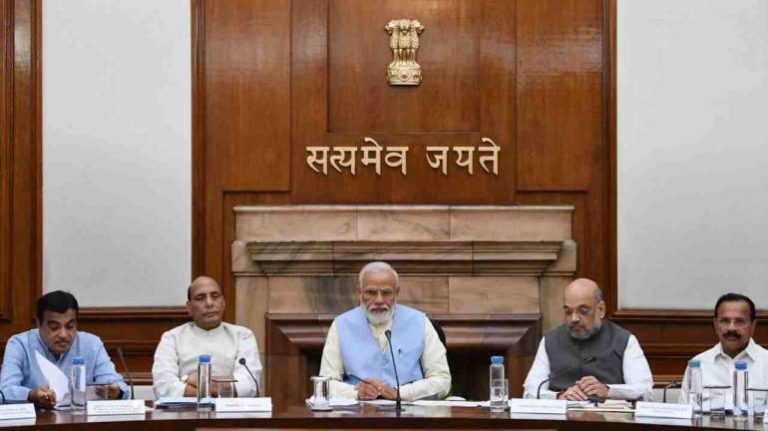
One Nation, One Poll: Here is why the Mayawatis, Akhilesh Yadavs and Owaisis of the Country dread it

If you were to ask the majority of this country if they want “One Nation, One Poll” the answer would be an overwhelming yes.

People might not have the figures–Rs 6,000 crores on exchequer alone in recent Lok Sabha Polls and many times more by parties and candidates; Or  the numbers on manpower—one assembly seat in Lucknow alone has over 300 polling booths and engages 2000 men on polling day; Or the imagination to guess how many lakhs of police, para-military forces, bureaucracy are pressed into service. Yet, they can sense a gap in their daily lives like a drawn tooth.

The erudite amongst us offer debating points we exhale in the musty air of a bar amidst gathered gentry. So Akhilesh Mishra tells us in Indian Express how it affects Rajya Sabha; how parties can make outlandish promises (Like Arvind Kejriwal on free Metro for women); how at least 15 state elections anyway fall more within a year either side of a Lok Sabha poll.

So what’s the problem?

The likes of Congress, TMC, BSP, SP, AAP, DMK, RJD, AIMIM etc sure have a problem for they stayed away from the all-party meeting Prime Minister Narendra Modi called upon on Wednesday. They saw it as an attack on the Constitution, the “federal” character of our set-up; and blurring the local and national issues which could affect a voter’s judgment.

All this is humbug. Indian voters know how to choose in a state or in a Lok Sabha elections. The constitution is for people of India and any measure which is good for them, must come into force. Such Constitutional changes could be made between ad breaks on television. It takes nothing. As for the scaremongering on President’s Rule by stealth; what-if-government-in-Centre falls, these are easily fixable issues: For example, get the no-confidence-motion out of the way at the start of a new Parliament. And if I may ask how it has helped democracy when sworn enemies—Congress and JD (S)—joined hands only to usurp Karnataka last year?

The reason likes of BSP or SP, Congress or RJD, TMC or DMK or AIMIM don’t want “One Nation, One Poll” is caste and religion. With national issues delinked, the ones of dalits vs suvarans (upper caste); Muslims vs Hindus; Tamil or Bengali Asmita easily gain currency. Narrow parochial issues keep these parties relevant. The faces of Mayawati, Akhilesh Yadav and Asaduddin Owaisi remain in circulation. The nation loses its steam on the tracks of targeted growth.

Just recall the incidents or speeches which happen around state polls. In Delhi, it was fake attack on churches in 2015, Una incident in Gujarat, Bheema Koregaon in Maharashtra: All were intended to sharpen the caste and religious divide. “Ramzaade” vs “haraamzaade” speeches surface. Quota politics come into play. What room is there left to discuss developmental issues threadbare?

In a paper to Niti Aayog last year, Bibek Debroy and Kishore Desai offered an easy way out to the cacophony of whether state assemblies could be dramatically reduced or enlarged so as it coincides with the Lok Sabha polls. They pointed out that 15 state elections anyway fall in and around Lok Sabha dates.  The remaining states could be bunched together around the mid-way mark of a Lok Sabha term. So, one Lok Sabha elections and two for state assemblies in a span of five years is the way forward.

It’s not to say the road ahead is easy. For, there is also this matter of panchayat elections and its 30 lakh representatives. The matter of getting all political parties aboard.

But then so was the issue with GST. It’s a reality now. There are examples galore around the world where simultaneous elections are held, including in the US where a voter not only chooses his President but also 20 different representatives on a single ballot. Sweden has one election and so is the case with South Africa.

The fact is, in the early years of Republic of India, elections were held simultaneously in 1951, 1957, 1962 and 1967. It fell into abeyance because assemblies began getting dissolved due to Centre’s interference. The dissolution of Lok Sabha in 1970 was the final nail which broke up the elections in India.