Home Blog Page 6267

Rahul Gandhi seen busy with his phone during President’s address to the joint session of Parliament

A day after the Lok Sabha unanimously elected Om Birla as the Speaker, President Ram Nath Kovind addressed a joint session of the Parliament on June 20, 2019.

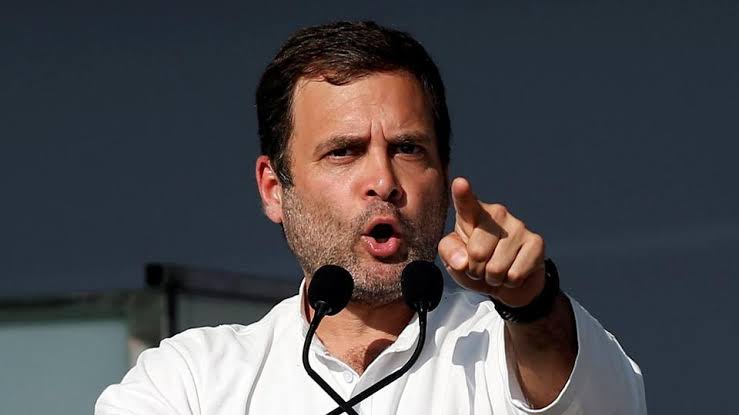
While all other members of the Parliament, including Prime Minister Narendra Modi, were seen listening to the President’s speech with attention with full honour, Congress President Rahul Gandhi, showing complete disregard, was seen using his mobile phone.

During the entire presidential speech which was telecast live by Lok Sabha TV and several other News channels, Rahul Gandhi was seen busy with his mobile phone several times.

The Congress president was sitting beside his mother Sonia Gandhi, and at least once Sonia Gandhi was seen asking him to be attentive. In another incident when Sonia Gandhi was thumping the desk along with other MPs when the president mentioned the surgical strikes, Rahul Gandhi didn’t do it, and it seemed that he was trying to stop his mother from doing so.

However, this kind of idiosyncrasy is nothing new for the ‘entitled prince’, who has shown similar disregard for the supreme legislative body in the past too.

Rahul Gandhi’s ‘infamous winks’ during the parliament sessions have attracted severe criticisms and mockery in the past.

Recently, after a much long drawn drama over his resignation for the post of the party President, Rahul was back to his old shenanigans. In his first appearance in the Parliament after Modi led government resumed office, throwing out the grand old party in the Lok Sabha elections, Rahul was once again caught winking.

This was, however, not his first time. Be it during the Rafale debate in January 2019 or July 20, last year, during the no-confidence motion against the Modi government, Rahul has not left a single opportunity to attract peoples attention by performing similar bizarre stunts.

In February, Prime Minister Narendra Modi, while addressing the 16th Lok Sabha had recounted various antics Rahul had done over the last five years.

Taking a dig at Rahul Gandhi’s bizarre hug-and-wink drama, PM Modi said, “Pehli baar is sadan mein aane par hi mujhe pata chala ki gale milna aur gale padna mein kya antar hota hai.” [First time after coming to the Parliament, I got to know the difference between ‘gale lagna‘ (hugging) and ‘gale padna‘ (throw oneself on).] He further added, “Is sadan mein pehli baar aankhon ki gustakhiyan wala khel bhi hua” (For the first time, this Parliament saw the ‘aankhon ki gustakhiyan’ scenes being played live too.)

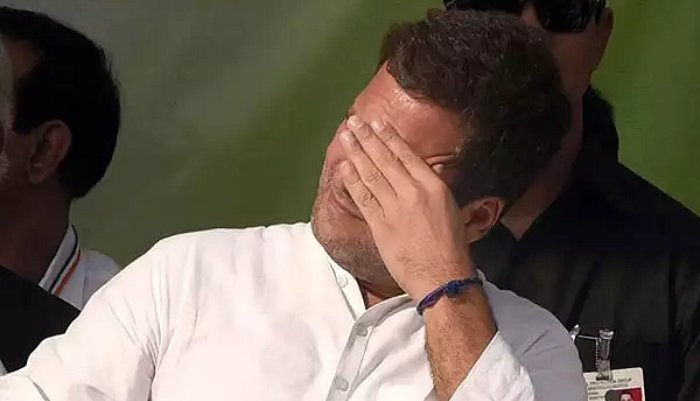
Nevertheless, Rahul’s buffoonery is not limited to only his ‘hugs and winks’. Earlier, in 2016, Rahul Gandhi, who was the party vice-president then, was caught taking a ‘nap’ in Lok Sabha. Amid the heated debate between the BJP MPs and Opposition benches during the debate then, television cameras panned to show Rahul Gandhi sitting with his hands on his forehead seemingly disinterested in what as going around him.

Amusingly, his party had then jumped to his defence saying that the Congress scion was not sleeping, but was in “deep thoughts”.

This kind of disdain is not only limited to Rahul Gandhi. His party leaders, very much take examples for their chieftain. In January 2019, the Congress MP’s were audaciously seen flying paper planes in the Parliament. The then Lok Sabha speaker, Sumitra Mahajan, had interrupted and criticised the Congress MPs for their unseemly behaviour.

Anti-Semitic Indian origin Imam questions Tory Leadership hopefuls about ‘Islamophobia’ during BBC debate, loses job

A British Imam of Indian origin, who had appeared on a UK Prime Ministerial debate on BBC, is now on the dock for controversial comments he had made in the past regarding Jews and rape.

Imam Abdullah Patel was a member of the public invited by the BBC to question the leadership of the Tory Party during the debate. He had asked Boris Johnson about Islamophobia and whether “words had consequences”. Patel was one of the most commented upon members of the public on the night.

Since then, Patel was back into the spotlight due to obnoxious remarks he had made on Twitter. “Every political figure on the Zionist’s payroll is scaring the world about Corbyn. They don’t like him. He seems best suited to tackle them,” read a tweet which was perceived to be anti-semitic. The irony of an anti-semite complaining about alleged Islamophobia wasn’t lost on anyone either.

Patel denied that his comment was anti-semitic and that it referred to Israel’s policies. “The criticism was not of the Jewish community because if you go through my tweets, you’d see support for the Jewish community. They’re our brothers and sisters, and the Jewish community and I – especially in Gloucester – work very closely together. We actually visited a synagogue just a while ago,” he said.

Screenshot of Patel”

Another tweet of his read, “Lets make something clear: ‘Generally, men are the predators, but women need to realise this and be smarter. It takes 2 to tango, and if you put yourself in that position, don’t expect every man to pass up the opportunity to take advantage of you. Don’t be alone with a man!’”

The BBC, in a statement, said that Patel had recently deactivated and reactivated his account on Twitter. “Had we been aware of the views he expressed there he would not have been selected,” a spokesperson for the broadcaster said.


Patel was also suspended as Deputy Head of Al-Ashraf Primary School at Gloucester in the west of England. “The Trust has decided to suspend him from all school duties with immediate effect until a full investigation is carried out. The school and trust do not share the views attributed to him,” said Yakub Patel, the Chair of the Al-Madani Educational Trust, which runs the girls’ school.

The BBC has come under intense criticism over its failure to perform a proper background check of the people it had invited as it was revealed that one other supposed member of the public was actually from the Labour Party.

The Sun said, “If the scandal of the BBC’s Tory leadership debate doesn’t trigger wholesale reform over its political bias nothing will. It has rarely been more blatant. Here was the corporation caught red-handed passing off Corbyn stooges as ordinary people chosen to ask searching questions of the candidates for PM.”

The Sun also remarked that “the BBC is awash with lefties using the broadcaster, funded by your compulsory licence fee, to push their anti-Tory, anti-capitalist, pro-socialism agenda. They don’t recognise their bias because in their warped worldview they occupy the centre ground, not to mention the moral high ground, and not the far left where most people see them.”

The Tory Leadership, too, has threatened to boycott future BBC debates after the debacle.

Video and statistics highlights from New Zealand v South Africa Match

Finally a nail-biting finish and the best match of the World Cup without a doubt. A low scoring match has always been a better contest than high scoring games.

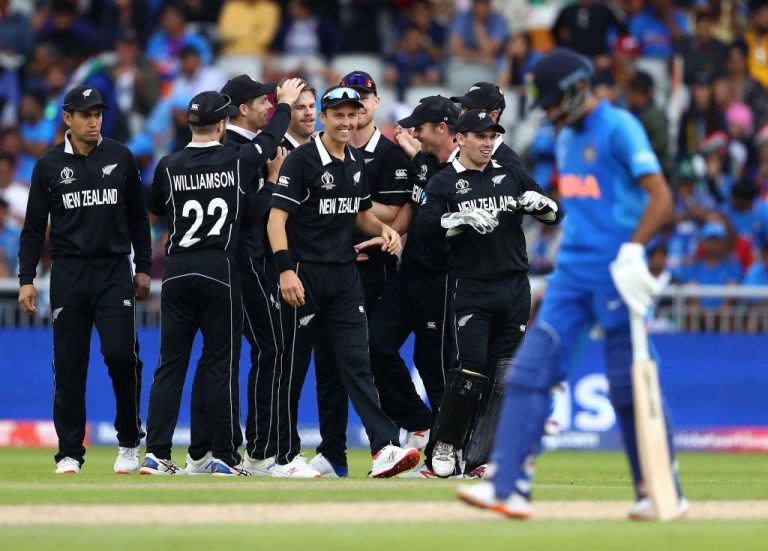
After winning the toss, Kane Williamson decided to bowl; first, the match had a late start due to a wet outfield and was reduced to 49 overs a side.

South Africa had a bad start to the innings, losing their in-form batsman de Kock in the second over of the day. However, Hashim Amla finally scored some runs for the team in this competition. He scored a slow 55, his first half-century of the tournament, and also reached the milestone of 8000 runs in ODI during his innings.

South Africa were 136 for 4 in 32.3 overs when Miller joined van der Dussen in the middle. They both added some quick runs in the last few overs, making sure that the bowlers have something on the board to fight. Ferguson took three wickets for New Zealand, restricting South Africa on 241 in 49 overs.

Watch: South African Innings

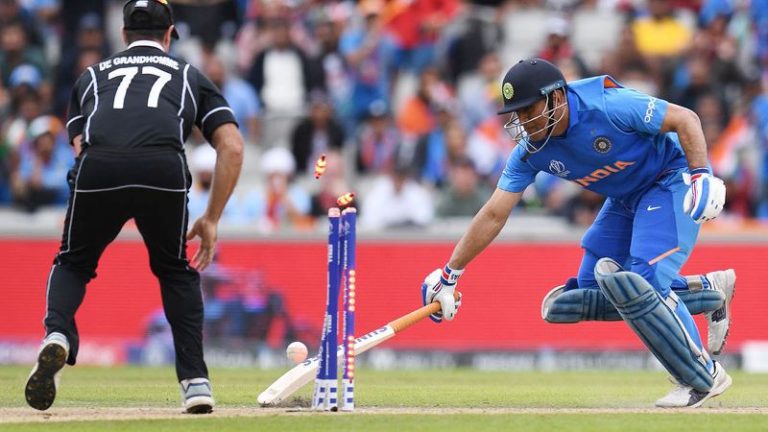
New Zealand started in the same fashion as South Africa. They lost their opener, Colin Munro early on. Kane Williamson and Martin Guptill added 60 runs for the 2nd wicket before Guptill lost his balance and got out hit wicket (one of the rare dismissals). The Kiwis were in the spot of bother as New Zealand lost three wickets in the space of 8 runs. With 80 for 4, South Africa had a chance to win the match against a dominant team.

However, Kane Williamson kept his calm, as he first added with 57 runs with Jimmy Neesham for the 5th wicket and then 91 runs with Colin de Grandhomme for the 6th wicket. He scored a boundary in the penultimate over before hitting a six (which also brought up his hundred) in the last over of the match to seal the win.

Watch: New Zealand Innings

STATS

  • Williamson became only the second Kiwi captain after Stephen Fleming to score a hundred in the World Cup tournament.
  • Hashim Amla reached 8000 runs milestone in 176, second fastest to score these many runs, Kohli is the fastest who reached the milestone in 175 innings.
  • Kane Williamson is now the fastest to reach 1000 ODI runs in England, he took 17 innings, Rohit who held the record before Williamson, took 18 innings.

World Cup Match Preview of Australia v Bangladesh: Tigers against the Kangaroos

A confident Bangladesh will play against a dominant Australians on Thursday at Trent Bridge. Australia has won 4 out of 5 games they played but they should be cautious against Bangladesh who is high on confidence after their spectacular win against West Indies.

Australia’s only problem in the tournament is their middle order, which is somehow not able to score runs even after the top 3 gave them several good starts. As per Haddin, they are still looking for the best combination for Thursday’s match.

As per the coach, Justin Langer, 4 pacers will play in the XI, with Maxwell and Finch to take care in the spin department. Despite failing in a number of occasions Khawaja is set to play against Bangladesh as the team management still trusts in his ability to score runs for Australia.

Bangladesh has uplifted their game on the world stage, being the number 5 team in the points table, they are capable to reach the semis of this tournament. Their batsmen are in great form and bowlers doing the job perfectly well for them. The only concern is their fielding and its high for them to improve at this stage of the tournament.

Bangladesh has only one win against Australia in ODIs and yet to open an account against them in a World Cup clash. This could be their day of creating history.

There will be sunny spells and a gentle to the moderate breeze during the day at Trent Bridge.

Players to watch out

Aaron Finch, the leading run scorer for Australia in this World Cup. He was struggling with form during the ODI series in India but since then he has not only got his form back but also won almost every game for Australia. He will be looking for scoring another hundred on the batting track of Trent Bridge.

Liton Das played a flamboyant knock of 94 runs against West Indies which made it possible for Bangladesh to chase down the target of 322 in 41 overs. Along with Shakib and Rahim, he can play little cameos in middle and last overs to keep the run rate above 6 an over.

Australia v Bangladesh in ODIs:

Overall: Matches 20, Australia Won 18, Bangladesh Won 1, No Result 1

World Cup: Matches 2, Australia Won 2, Bangladesh Won 0

Recent Form (most recent first): Australia  W W L W W, Bangladesh W NR L L W

ICC Rankings: Australia (5), Bangladesh (8)

Upcoming Records:

Shakib Al Hasan has scored 924 runs in World Cup and needs 76 more to become the first Bangladesh player to reach the 1,000 runs milestone.

Pat Cummins has taken 93 wickets and needs 7 more to become the seventeenth Australian player to reach the 100 ODI wickets milestone.

Squads:

Australia: Aaron Finch (capt), Jason Behrendorff, Alex Carey (wk), Nathan Coulter-Nile, Pat Cummins, Usman Khawaja, Nathan Lyon, Shaun Marsh, Glenn Maxwell, Kane Richardson, Steve Smith, Mitchell Starc, Marcus Stoinis, David Warner, Adam Zampa.

Bangladesh: Mashrafe Mortaza (capt), Abu Jayed, Liton Das (wk), Mahmudullah, Mehidy Hasan, Mohammad Mithun (wk), Mohammad Saifuddin, Mosaddek Hossain, Mushfiqur Rahim (wk), Mustafizur Rahman, Rubel Hossain, Sabbir Rahman, Shakib Al Hasan, Soumya Sarkar, Tamim Iqbal.

Filmmaker Rakesh Roshan’s daughter accuses him of hitting her for having a love affair with a Muslim and calling him a terrorist

The war of words between Bollywood actor Hrithik Roshan and the ‘Queen’ actress, Kangana Ranaut which had taken an ugly course three years ago, is back to haunt the Roshan’s, after Hrithik’ sister, Sunaina Roshan came out to extend her support to the actress and made some serious allegations against her family.

Sunaina Roshan, while speaking to Pinkvilla, Thursday, in a response to Kangana’s sister Rangoli Chandel’s Tweet revealed some shocking details about her family.

Rangoli Chandel had taken to Twitter to reveal that Sunaina was being physically assaulted by her family because she was in love with a Muslim man from Delhi. She even claimed that Sunaina had been asking Kangana for help in the matter.


Meanwhile, Sunaina, while speaking to Pinkvilla said, that she is living in ‘hell as usual’ and that she is aware that Rangoli tweeted. She confirmed that the details tweeted by Rangoli were the truth and she wants the truth to come out. ‘I am fine with her tweeting’, Sunaina said and further revealed that she will be meeting Rangoli and Kangana as they are helping her bring justice. “I know this stance of mine will go against me but I don’t care,” Sunaina said.

Talking about her family being against her dating a Muslim man, Sunaina confessed that hat her father (Rakesh Roshan) slapped her and told her that the Muslim guy Sunaina is in love with is a terrorist.

Sunaina, however, refuting her father’s claims said, “Ruhail isn’t. If he was one, would he go scot-free and work in the media? Wouldn’t he have been behind bars? They don’t want me to meet him. I don’t know about marriage but right now I want to be with Ruhail. Just because he is Muslim, they cannot accept him. If he was a terrorist, why would he be open in the media? Why would he be all over Google?.”

Talking about her brother Hrithik Roshan’s views on Ruhail, Sunaina said: “Hrithik has no take as he is under my father’s guidance right now. Nobody is okay with my relationship, neither Hrithik nor my father.

Sunaina had earlier taken to Twitter to reveal her condition and had also extended her support to the ‘queen’ actress, Kangana Ranaut.


Concluding her stance about this ‘unfortunate situation’, Sunaina said that she got in touch with Kangana to ask for help because according to her, Kangana represents women power. “I support women power and I support Kangana today. Kangana is a woman and she has the right to ask for help and so do I. She wants justice and so do I”, Sunaina said in her interview to Pinkvilla.

Sunaina further cleared that though she was not aware of the details of what happened between Hrithik Roshan and Kangana Ranaut, she thinks her brother Hrithik Roshan should come out in the open with any proof that he has against Kangana Ranaut.

For the uninitiated, Hrithik and Kangana have been involved in a nasty legal battle, which started when the actress supposedly referred to him as a ‘silly ex’. Hrithik has always denied being romantically involved with Kangana.

“I have always been extremely fond of Kangana but two years ago, when she won a national award, I messaged her, she told me ‘Don’t be friends with me or be in touch because of the family,’ and I was wondering what was happening as I wasn’t aware of what was happening. Nobody told me. That’s when I asked my family what is going on and if my brother has any proof, tell him to put it out into the open. Why is he hiding the proof?” she added.

Just a few days back, the Queen actress in an interview to Mumbai Mirror said that she and Sunaina have been good friends but after the dispute the Roshans claim a different perspective. Kangana further said, “Yes, she has been in touch with me, but I don’t want to take advantage of her family dispute. Sunaina is still a friend but I will not hit somebody when they are down.”

Meanwhile, Hrithik Roshan’s ex-wife Sussanne Khan has defended him by asking people to respect a family’s “tough period”. Sussanne issued a statement on her official Instagram, in which she wrote, “As a part of my experience with all concerned and in my life span of being a part of this close-knit family, I know Sunaina, to be an extremely loving warm, caring person, who is in an unfortunate situation. Sunaina’s father is undergoing a major health crisis. Her mother is herself vulnerable, to say the least. Please respect a family’s tough periods, each family goes through such times. I needed to say this as someone who has been a part of this family for long.”

Disgraced former IPS officer Sanjeev Bhatt sentenced to life imprisonment in custodial death case

Disgraced former IPS officer Sanjeev Bhatt has been sentenced to life imprisonment in a custodial death case. As per reports, the Jamnagar court has pronounced its verdict sentencing Bhatt to life imprisonment in the 1989 custodial death case.


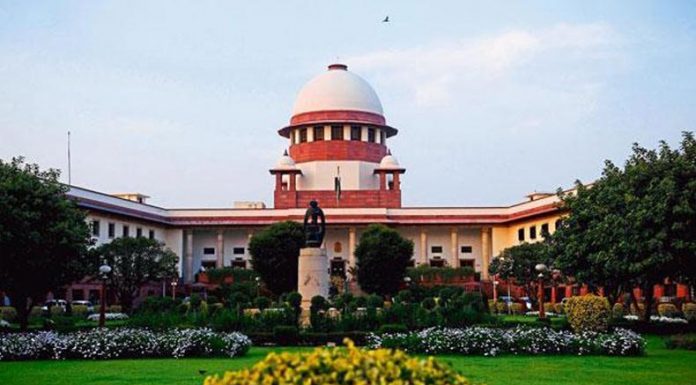
Last week, the Supreme Court had dismissed Bhat’s plea seeking a fresh examination of witnesses in the case. Bhatt had moved to the SC challenging a Gujarat HC order that had declined his request to summon certain additional witnesses for examination in the 1989 custodial death case against him.

The Gujarat HC had stated that the trial court has finished hearing the matter and has already reserved judgement for June 20.

Bhatt was the prime accused in the 1989 custodial death case where he was posted as the ASP in Jamnagar. Bhatt had allegedly detained over a hundred people during a communal riot and one of them had died.

The case concerns with the death of one Prabhudas Vaishnani who had died to to the injuries inflicted upon him under police custody. Six other policemen along with  Bhatt were also the accused in the case.

Bhatt is facing charges under another case where he is accused of planting drugs to frame a person in Banaskantha.

The Partition of Bengal: Supported by all sections of Bengali Hindus to protect their own lives and identity

My history textbooks in school did not say much on the partition of Bengal in 1947. Who exactly created the entity called West Bengal as a state in India, who consented to that plan, who was the leader of this movement – all remained unanswered in the West Bengal’s history textbooks. However, from very many propaganda booklets of the leftists, I learnt that Dr Shyama Prasad Mukherjee and his Hindu Mahasabha was the culprit.

It was made to sound like a Gospel truth that the Hindu Mahasabha, for being a communal party, must be wrong always. Therefore, the bad thing, namely the partition of India happened being dictated by them. The Hindu Mahasabha-cum-Shyama Prasad Mukherjee must be crucified for all the problems emanating out of the partition of Bengal such as the great refugee problem of West Bengal. This fictitious history has become part of the Bengali consciousness for the last two-three generations.

Change happens. Truth unravels in its own mysterious way. Today a large majority of the Bengalis possibly know that the Communist think tank that created this fictitious history was completely in favour of Pakistan and partition of India. By Gangadhar Adhikari’s thesis of 1942, they declared that India could be independent only after the creation of Pakistan. That was the progressive party line. Catering to that party line, lyricist Hemanga Biswas of Indian People’s Theatre Association wrote a song (translation mine):

…শোনকংগ্রেসনেতাগণ

মুসলমানেরআত্মশাসন

নামানিলেহয়নামিলন

দেখচিন্তাকরি।

[Listen, Congress Leader! No Hindu Muslim Unity, when you cannot concur to Muslim self-rule.]

(Source: Ananda Bazar Patrika, 22 November 2005, Editorial page article by Kalikaprasad Bhattacharya)

The proposal of Pakistan stated it as a homeland for Muslims while the rest of India as a homeland for others. No doubt everyone understood that actualisation of this proposal means massive Hindu exodus from Pakistan to India. Endorsing the demand for Pakistan, poet Hemanga supplied language (translation mine) in a definitely communal tone:

দীনইসলামেরনিদ্মহলেহাঁকেভোরেরআজান

জাগ্জাগ্রেমুসলমান।

[The Faith of Islam calls you, Musalman! Arise and awake with the morning azan.]

If the progressive left needs to blame anyone for the partition and refugee crisis, it has to be themselves first.

Yes, indeed the greatest ideological opponents of Shyama Prasad, the communists, too agree to the principal role of Shyama Prasad towards the partition of Bengal to carve out a Hindu Bengali homeland. He and the Hindu Mahasabha were self-declared champions of the Hindu interest. And, it is none other than Dr B.R. Ambedkar who warned the Bengali Hindus about their existence in 1945 (‘Pakistan or The Partition of India’, Dr B. R. Ambedkar, Vol.8, Education Dept, Govt of Maharashtra, Bombay, 1990, page 294):

According to Muslim Canon Law, the world is divided into two camps, Dar-ul-Islam (abode of Islam) and Dar-ul-Harb (abode of war). A country is Dar-ul-Islam when it is ruled by Muslims. A country is Dar-ul-Harb when Muslims only reside in it but are not rulers of it. That being the Canon Law of the Muslims, India cannot be the common motherland of the Hindus and the Musalmans. It can be the land of the Musalmans – but it cannot be the land of the ‘Hindus and the Musalmans living as equals’. Further, it can be the land of the Musalmans only when it is governed by the Muslims. The moment the land becomes subject to the authority of a non-Muslim power, it ceases to be the land of the Muslims.

The warning of Dr Ambedkar was perhaps a bit abstract for the understanding of the Bengali Hindus. They received the opportunity for a first-hand application of the idea narrated by Ambedkar on 16 August 1946 when the ruling party of Undivided Bengal, the Muslim League, began its Direct Action against the Hindus. A detailed description of this ruthless massacre of this Hindus was tendered by Amitabha Ghosh, IAAS, and son of the pre-eminent scholar Acharya Debaprasad Ghosh. Kolkata turned red from the bloodshed of thousands of hapless Hindus. Many famous persons were killed or attacked during this Hindu genocide, such as musician Harendra Ghosh, actor Chhabi Biswas, mathematician Yadav Chakraborty, Raja Debendra Mallick or police officer S. N. Mukherjee.

And, next happened even greater genocide in Noakhali of East Bengal. It was the night of the Lakshmi Puja in October. Journalist Animitra Chakraborty writes:

All of a sudden, the stillness of the night was shattered by the army of Qasim Ali, the leader of the Noakhali region of the Muslim League. They were duly assisted by the forces of Ghulam Sarwar. Their goal was the destruction of the Hindus. Two months ago, the ruthless attacks of the Muslim League for the destruction of the Hindus had happened in Kolkata. In the end-game, it had invited ferocious revenge from the Hindus. The Muslim Leadership sought brutal retaliation. Within hours, regions like Ramgunj, Begumgunj, Raipur, Lakshmipur, Chhagalanaiya and Sandwip were devastated by brutal murders and rapes. Even the regions like Hajigunj, Faridgonj, Chandpur, Laksham and Chauddagram of the neighbouring Tipera district suffered. The Hindu extermination was executed with perfect planning. None knows the number of casualties of this genocide — how many lost lives, how many Hindu women were raped, how many were force-fed beef, how many were forcibly circumcised, how many Hindu women were gang-raped and made into a prostitute from a housewife, how many were turned into widows. Last 80 years were not sufficient to account for all of them.

The genocides of Kolkata and Noakhali amply illustrated the warning of Ambedkar and the important message of Shyama Prasad to the Bengali Hindus. It may be kept in perspective that at that time only Undivided Bengal was ruled by the Muslim League and the ruling party itself called for and organised the massacre of the Hindus. Therefore, understanding the fate of Hindus in Muslim League ruled prospective Pakistan required no guesswork.  The only question was whether the refugee Bengalis should take shelter in a non-Bengali province of India or in the partitioned Bengal (West Bengal) created as the Hindu homeland? The answer is obvious, isn’t it?

Shyama Prasad formed the Bengal Partition League for facilitating the partition of Bengal in the interest of a homeland for Bengali Hindus along with Upendra Nath Banerjee, a prominent revolutionary and Hemanta Kumar Sarkar,  a peasant leader. Then, shall we deduce that it is Shyama Prasad who caused the partition of Bengal?

No, it was not a one-man show. Shyama Prasad was the charioteer in the chariot of Hindu Bengali sentiments. He was the priest of the Durga Puja collectively organised by the Hindu Bengalis of all strata irrespective of party, caste, occupation or income.  Shyama Prasad only manifested this idea of the Hindu Bengalis through his skills, no more no less.

Nirmal Chandra Chatterjee, the father of prominent communist leader Somnath Chatterjee, described partition of Bengal as the question of life and death for Hindu Bengalis. The majority of the leaders of the Bengal Congress such as Dr Bidhan Chandra Roy, Kshitishchandra Niyogi, Dr Pramathnatha Banerjee argued in favour of the partition of Bengal in the provincial Congress meeting on April 4, 1947. Atulya Ghosh, another Congressman of distinction, was in charge of finalising the boundaries of the West Bengal. It is Ghosh’s effort that paid off to keep the districts of Malda and Murshidabad including Farakka in West Bengal in the interest of navigability of the Kolkata port. Nowadays many fictitious history writers attempt to project Sarat Bose who argued for a united Bengal, as the voice of the Bengali Hindus. Hindu Bengalis saw no leader of theirs in Bose.

76 public meetings were held to gather the momentum of public opinion towards the partition of Bengal. Only 12 out of these 76 were organised by Shyama Prasad’s Hindu Mahasabha with another 5 being jointly organised by Congress and the Hindu Mahasabha. Most of the meetings were organised by Bengal Congress. The largest assembly happened in Kolkata, presided over by Sir Jadunath Sarkar, the doyen of historians. Eminent scientist Meghnad Saha who was socialist and later elected to Loksabha with the Revolutionary Socialist Party (RSP) affiliation, advocated for the partition of Bengal. Other noted non-political personalities like historian Ramesh Chandra Majumdar, linguist Suniti Kumar Chatterji all were in favour of the partition of Bengal. Among the Dalit leaders an ex-schedule caste minister of Bengal Premahari Barman and P. R. Thakur, the leader of the Matua community, all advocated for the partition of Bengal. Jogendra Nath Mondal who self-admittedly committed a blunder in joining Pakistan was not the most prominent face of the dalits.

The Communist leadership had advocated for Pakistan and handing over the entire Bengal to Pakistan, however, the grassroots workers were realising the folly of this stand. Kalyan Dutta, a communist ideologue and professor, noted in his autobiography that in the Khidirpur dockyard the Hindu communist workers were attacked by their Muslim party comrades on the fateful day of August 16, 1947. The Hindu workers were utterly perplexed. They did show their party membership card to their Muslim comrades and begged for their own lives. Their lives, however, were not spared. Was it a reason that the communist Tram employees union of Kolkata observed a strike called by Shyama Prasad on 23 April 1947 to gather momentum for the movement in defiance with their communist party line?

The elite Hindu Bengalis and landlords were members of the British Indian Association. Among them were the kings of Bardhman and Kasimbazar. They expressed their support for the partition of Bengal in their annual convention held in March 1947.

All these point out to the fact that Hindu Bengalis of all economic class—labourer, peasant, urban middle class or landlord— and of all political opinions—Congressi, Hindu Mahasabha-ite and Socialist—were solidly in favour of the partition of Bengal. It was not a one-man show.

This is the age of statistics. 23 April 1947, the Amritabazar Patrika published a Gallup poll held on the previous day in which more than five and a half lakh people participated. Among them, more than 98 percent were in favour of the partition and only about half a percent against it. This data squarely shows the isolation of the likes of Hemen Biswas, Yogen Mandal or Sarat Bose among Bengali Hindus. As a matter of fact, the non-Muslim assembly of Bengal endorsed the proposal of the partition of Bengal by a majority of 58 to 21. Among these 58 votes, only one came from the Hindu Mahasabha.

The depth of the Hindu Bengali emotion was summarily expressed by noted litterateur Bibhutibhushan Bandopadhyay, the author of Pather Panchali on 25 June 1947. It was only five days after the creation of West Bengal. In a letter, he wrote (translation mine),

নতুন বঙ্গ ভাগ হয়ে গেল ভালই হল। বাঙালী হিন্দুরা হাঁপ ছেড়ে বাঁচবে।

Good that Bengal was partitioned. Bengali Hindus will heave a sigh of relief.

The Hindu Bengalis went for the partition of Bengal on a united force for a single reason. It was for the preservation of their existence. Our ancestors were not stupid. Never did they think that being a slave to Arab imperialism abandoning own rich heritage is a hallmark of humanity. Nor were they without scruples. They saw above their narrow self-interest and cared for their heritage and cultural identity. It is this love for own culture that made Prafulla Sarkar, the founder of the ABP group, write the book Kshayishnu Hindu (the waning Hindus). If someone calls them communal for their love for own rich culture, that adjective is as vain as calling revolutionary Kshdiram Basu or Bhagat Singh a terrorist.

The study of history is for learning the right course of action to unveil a bright future. West Bengal was founded as a homeland for Hindu Bengalis. No Bangladeshi Muslim has any right over this Hindu homeland. However, each and every Hindu refugee from Bangladesh is entitled to a place in this homeland. A violation of this understanding of our forefathers is most unwelcome. Calling out our ancestors as communal fools and drumming upon own liberal nature is egoistic and idiotic too. Our ancestors did not conceive of a West Bengal for providing shelter to Rohingyas and Bangladesh Muslims. They never saw a future West Bengal with citizenship of Hindu refugees being questioned.

In this context, Citizenship Amendment Bill is pending in the parliament. This bill may have one or two lacunas but this bill is definitely one step forward towards acknowledging the historical truth. This bill joins history and the present perspective. Citizenship Amendment Bill in the present form or an even more advanced version of this bill must immediately be passed for preserving the existence of the Bengali Hindus. In this hour of transition, let us take an oath to continue with the culture of Gaudapada.

(This article was originally published in Bangodesh.com in Bengali)

Between 2010-2015, child care centres in Maharashtra wasted govt money by registering 75,000 bogus children: Report

The Public Accounts Committee (PAC) of the Maharashtra state Legislature has made an observation suggesting that nearly 75,000 bogus or ineligible children were registered in child care institutions, leading to siphoning of state government’s funds, reports DNA.

According to the report, the Public Accounts Committee (PAC) also pointed out the existing loopholes in the functioning of these institutions. The PAC found out that these child care institutions did not segregate children in need of care and protection from juveniles lodged there on criminal charges. The PAC feels that these juvenile offenders can influence other inmates and render them vulnerable to crimes like theft, drug use and sex abuse.

In its report on the General and Social Sector for the year ended March 2015, the Comptroller and Auditor General (CAG) had also pointed to operational inefficiencies in these centres, which are meant to provide institutional care to children in need.

“Between 2010 and 2015, a total of 95,000 children were taking benefit of these schemes in 1,153 child care institutions. During an inspection, it was found that a large number of children, who had homes of their own, had been admitted to these child care institutions. When the department examined every case during the inspection, it was found that only 17,000 of these children were found to be eligible for admissions. The other children were handed over to their parents. The department told the committee that at present, these child care institutions have around 21,000 children. This means, more than 75,000 bogus or ineligible children were registered here and crores of public money were siphoned off from the government on unnecessary expenses,” the report said.

The report accused the child welfare committees and those responsible for overseeing their functioning at the district and state level of neglecting their duty of providing institutional care and social rehabilitation to children in need.

“If a detailed examination of each case was conducted while admitting every child to in these homes and only those eligible were admitted, it would have helped restrict the number of inmates,” the PAC said, adding that budgeted funds could have been used more effectively.

The PAC opined that crores of government money have been spent unnecessarily and dismissed the excuses that it was inadvertent or due to negligence. This is a serious issue and the possibility of connivance to siphon off funds cannot be denied, and hence, it needs detailed and urgent investigation, said the Public Accounts Committee.

Bats are the reason behind power cuts in Madhya Pradesh, say officials in Kamal Nath government

According to the latest revelations by the Kamal Nath government in Madhya Pradesh, bats are responsible for the rampant power cuts in the state. As per reports, officers in the Kamal Nath government have claimed that the tiny flying mammals are the reason the state is reeling under a power supply crisis.

Madhya Pradesh has been suffering from frequent and rampant power cuts since months. As the harsh summer keeps the mercury high, frequent power cuts in the state have made life unbearable for people in the state.

The Congress government in Madhya Pradesh has only been indulging in blame game over the issue of power cuts. Initially, the Kamal Nath government had claimed that the previous BJP government had installed faulty generators. Then they had stated through official communications that human intervention by BJP’s people in power department is causing the power cuts.

Finally, they had now blamed the fruit-eating mammals for the power failures in the state. Recently, when power minister Priyavrat Singh visited the senior officials at the power department, they reportedly argued that bats hang upside down from electric wires, due to which the wires stick together and cause power failures.

The argument was even reportedly published in an official statement. However, Priyavrat Singh has reportedly clarified that he does not believe it.

Singh has reportedly asked for the formation of technical teams to examine transformers. He has also asked senior-level officials to frequently tour their respective areas and for the formation of WhatsApp groups for junior engineer level employees for better communication and problem-solving.

Priyavrat Singh was quoted by Aaj Tak saying that he has learned from officers in the department that there are a large number of bats living in old Bhopal area, causing frequent power failures.

Singh then stated that he has asked the officials to keep bats away from the wires and at the same time take care of the environment.

He also stated that he has asked the officers to install ultrasonic devices and work on insulating the wires and keeping the transformers from overloading.

Former CM Shivraj Singh Chouhan has stated that the Kamal Nath government has lost its mental balance.

It is notable here that in 2003, power cuts were one of the main issues that had caused Congress’ catastrophic loss in the state elections. In the last 15 years of BJP rule, the power cuts were reportedly never a serious issue and the state saw mostly uninterrupted supply.

Madhya Pradesh’s power cuts have recently gained much attention on social media after Urdu poet Rahat Indori had taken to Twitter to complain about frequent power cuts.

Newspaper report suggests Rahul Gandhi may step down as Congress President, Ashok Gehlot to take over

After the poll debacle in 2019 Lok Sabha Elections, Rahul Gandhi was reportedly set on resigning as the Congress President despite persuasion from senior leaders to continue. He had even tendered his resignation which was rejected by Congress Working Committee. Now a newspaper report suggests that Rahul Gandhi may step down as the President of Congress and Rajasthan Chief Minister Ashok Gehlot may take over.

According to a report in Navbharat Times, Congress seems to have made up its mind to let Rahul Gandhi step down and hand over the reins of the working of the party to Rajasthan Chief Minister Ashok Gehlot.

The report, however, says that it is not yet evident whether Ashok Gehlot will be the only President or there would be other Presidents of the Congress party who would share the workload.

According to the report in Navbharat Times, Congress has already asked Ashok Gehlot to stay prepared for the added responsibility in the coming days.

On Rahul Gandhi birthday, when Ashok Gehlot had gone to wish, according to this report he tried to persuade Rahul Gandhi to continue as the Congress President, however, Rahul Gandhi was adamant and said that unless a new leadership is chosen, the Congress party cannot revive itself and make a fresh start.

Rahul Gandhi has apparently also made clear that when he steps down, Priyanka Gandhi Vadra’s name also cannot be considered as the Party President. The report touted this as a result of PM Modi making ‘dynasty politics’ a poll plank.

Ashok Gehlot is reportedly being chosen because he has experience in running the party affairs considering Congress performed well under his guidance in the 2017 Gujarat Assembly Elections.

One of the other reasons that Gehlot is being considered, according to Navbharat Times, is because he is from a backward class, and if Congress hopes to revive itself, it needs the votes of the backward classes which are currently in support of PM Modi. Gehlot also has a better relationship with Sonia and Rahul Gandhi as compared to several other senior leaders of the party.

The report also says that if Ashok Gehlot is made the Congress President, Sachin Pilot may become the Chief Minister of Rajasthan.