Home Blog Page 6493

Coward, gutless, visionless, losers: ‘Neutral’ media has a meltdown after Priyanka Gandhi Vadra is not fielded as Congress candidate against PM Modi

It was on 28th March that Congress workers had asked Priyanka Gandhi Vadra, Rahul Gandhi’s sister to contest from Rae Bareilly, her mother Sonia Gandhi’s bastion. At the time, Priyanka Gandhi Vadra had retorted – ‘why not Varanasi’? Almost a month of dilly-dallying later, Congress has decided to field Ajay Rai against the formidable Prime Minister Modi from Varanasi and the “neutral” media cannot stop outraging.

Like jilted lovers, the Congress ecosystem that masquerades as “neutral”  and “independent” journalists, had a meltdown. They couldn’t believe for the life of them that the woman who was supposed to be their saviour from “fascist” Modi had chickened out. They said that Congress and their original Prince who is fast turning out to be a dud even for them has given PM Modi and the BJP a walkover.

Barkha Dutt who often sympathises with terrorists like Burhan Wani and peddles the Nazi-like narrative of giving excuses for the Kashmiri Pandit genocide said that Priyanka should not have expressed her willingness to fight from Varanasi if Congress wasn’t willing to field her. We understand her pain, after all, hope once built and then shattered, does ache the heart.


Abhisar Sharma, another known loyalist of the Congress and AAP (the allegiance depends on who at that point of time can defeat Modi in his mind) also lashed out at the Congress party. Imagine a young boy after being dumped by the girl of his dreams lashing out at her and everything related to her. Abhisar, much like that heartbroken boy, lashed out at Rahul. Cowards. Bhasmasuri. Gutless. Rahul has no authority, the tirade, while all true, was endless and rather amusing coming from Sharma.


Harinder Baweja, like that jilted lover’s best friend, said it was stupid of them to fall for the narrative of Priyanka Gandhi Vadra taking on PM Modi anyway.


Barkha Dutt then said it was Congress that floated the promise. It was them.


Then there was the common friend between jilted lovers who had to blame both parties, somehow. She can’t afford to anger either. She loves them both. They must share the blame.


After all of this, there was the old fufa who found out about the break-up and took it upon himself to hand out some advice. Of wisdom earned through years of being spurned, mocked, rejected and hurt because of his inherently unpleasant nature.


Then there was the token friend of the other lover who came to defend the decision to break up. The lone brave voice.


Then there was the venom. When after being jilted, the other, potentially less cool and far more stupid, but the safe bet lover seems far more appealing.


And the tears just won’t stop flowing… arriving at a moment when tears give way to anger. It is all a part of processing the grief, the loss, the humiliation…


The last stage in the process of grieving.. it was him. Not me.


The media first put its eggs in the Rahul Gandhi basket, and when that appeared to have holes big enough to fit chickens, they decided to pin their hopes on Priyanka Gandhi Vadra. The Modi juggernaut is not an easy conundrum. They hoped that Priyanka Gandhi Vadra would be their saviour. They tried their best to prop the brother-sister duo as the messiahs, but alas, perhaps they are finally realising that they bet on a losing horse.

While Congress condemns Sadhvi Pragya’s candidature, Priya Dutt campaigns with her convicted brother Sanjay Dutt

Mumbai North Central Congress candidate Priya Dutt has been campaigning with her terror convict brother Sanjay Dutt, exposing Congress’ sheer hypocrisy. Earlier, many Congress leaders and media personalities were found chastising the BJP for giving a ticket to Sadhvi Pragya Thakur to contest in 2019 Lok Sabha elections.

Last week, Congress candidate Priya Dutt had targetted the Sadhvi Pragya Thakur after she had expressed her agony regarding the alleged torture inflicted on her by late IPS officer Hemanth Karkare during the Malegaon blasts investigation. Reacting to her statements, Priya Dutt had attacked Sadvi Pragya Thakur while claiming that BJP does not respect brave martyrs.


However, Congress candidate Priya Dutt, after lamenting about BJP’s choice of candidate in Bhopal brought in her brother Sanjay Dutt, who was convicted for involvement in 1993 Mumbai terror attack, to campaign for her ahead of the Lok Sabha elections. The 1993 Mumbai blasts had killed around 257 people while injuring 1,400.

While the opposition and media slammed the BJP’s decision to field Sadhvi Pragya Thakur, who is still an accused in the court case where the NIA has already given her a clean-chit, their silence when convicts like Sanjay Dutt are actively campaigning for a Congress candidate was questioned by many on social media.

Social media users reacted to Sanjay Dutt campaigning for Priya Dutt and questioned the hypocrisy of the Mumbai North Central Congress candidate. Columnist Shefali Vaidya asked whether it was acceptable to take help from a man who was convicted in the Mumbai terror attack case.


Some other users questioned the silence of the media over Priya Dutt’s decision to involve a convict in the Lok Sabha election campaigning.


Priya Dutt has shared on her Twitter handle that her brother Sanjay Dutt will be again campaigning with her in a road show later today in Mumbai.


Sanjay Dutt was arrested in April 1993 under the Terrorist and Disruptive Activities (Prevention Act) TADA, for illegally possessing a 9 mm pistol and an AK 56 assault rifle obtained from gangster Abu Salem. Dutt’s was the most high profile arrest post the 1992-93 riots and the March 1993 serial blasts in Mumbai. It was alleged that Dutt knew about the blasts that took place after he bought weapons.

Lok Sabha 2019: Congress not even confident of crossing 150 seats mark, Kamal Nath puts the figure at 122

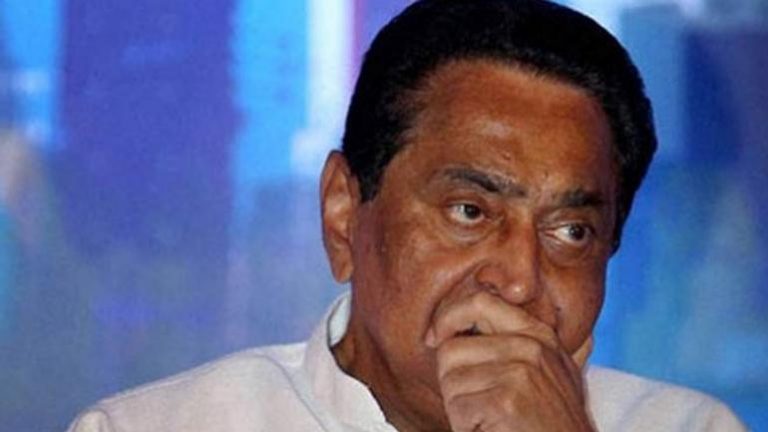
Congress leader and Madhya Pradesh Chief Minister Kamal Nath is confident about how the Congress will fare in the current elections. He is hopeful of at least tripling Congress’ seat share to – wait for it – 122.


Out of 543 constituencies, in 2014, Congress was reduced to 44 seats. Instead of aiming for a full majority, Congress seems to have resigned to its fate and would perhaps be content if it even crosses the three-digit figure. In conversation with a BBC journalist, Kamal Nath reportedly said that the Congress will triple its seat tally and win 122 seats. Of course, while three times 44 is 132, Kamal Nath seems to have mixed up the maths.

In an unrelated news, earlier this month, over 300 IT sleuths conducted raids on Kamal Nath’s associates and huge stash of unaccounted cash was reportedly recovered. I-T dept says ‘major political party’ received Rs 20 cr through hawala and Congress leader Ahmed Patel had reached the residence of AICC official being raided to what appeared to be an attempt at firefighting.

All this while, BJP is aiming for a 300+ seat tally. While he did not give any specific answer on whether Congress will support a ‘third front’ he vaguely said that the goal of all the parties is to keep the BJP out of power.

Kamal Nath’s display of lack of confidence in Congress’ victory does not seem to have gone down well with Congress-friendly journalists.


Just as the election is reaching its peak with PM Modi filing his nomination for Varanasi seat tomorrow, Congress already seems to have surrendered itself and has even stopped pretending that it believes it will win.

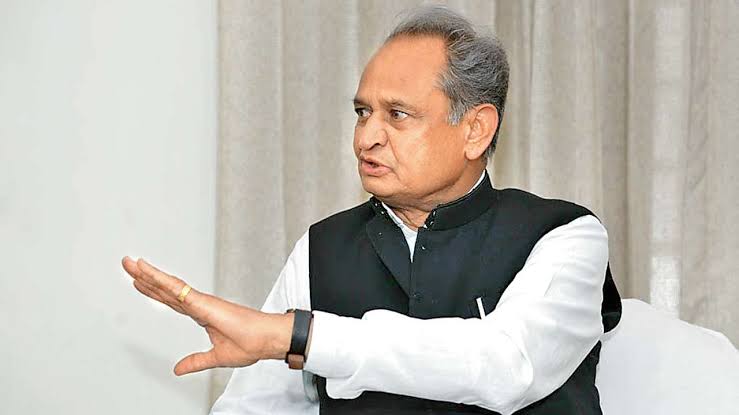
Rajasthan CM defends Dynasty politics, says PM Modi doesn’t understand because he has no children

A couple of days ago PM Modi took a swipe at Rajasthan CM Ashok Gehlot in one of his rallies in Jodhpur saying that the chief minister is busy canvassing for his son door to door on the streets of Jodhpur to ‘save his son’ and not the Congress party.

This remark by PM Modi rattled Rajasthan CM Ashok Gehlot and he attacked Modi saying that he wouldn’t understand what it means to strive for one’s children because he has none. “Modi has no family. Every father strives for the success of his children. But Modi won’t understand this as he has no children.”

Brazening out his stand on dynasty politics, Gehlot said, “Every father in the world puts in the effort to help his children. What’s new If I’m striving for my son?” Apart from this, Gehlot also alleged that Modi does not care about the country’s democratic system altogether. Gehlot asserted that PM Modi has no time to pay attention to the judiciary, which is under pressure as serious charges are levelled against the country’s Chief Justice. “Modi is deliberately shying away from these issues to hide his failures,” Gehlot said.

Speaking on the charges of non-fulfilment of the farmers’ debt waiver in the state, Gehlot defended saying that it has not been much time for his party to form a government in the state, but they have waived two lakh rupees loan of farmers through CCB banks. Blaming non-cooperation from the nationalized banks, Gehlot said that because of them the remaining farmers are not able to get the benefit.

“Modi has control of these banks and he doesn’t want the Banks to release funds for farm waivers,” Gehlot said. It is pertinent to note that Congress president Rahul Gandhi had promised loan waivers within 10 days of coming to power. However, reports from various states such as Karnataka, Chhattisgarh, Madhya Pradesh and Rajasthan reveal that there have been discrepancies in granting of loan waivers even after months of Congress forming government in these states.

Congress leader Sam Pitroda says removing RSS-linked people from institutions would be the first priority of Congress govt

0

Gandhi family loyalist and Rahul Gandhi’s advisor Sam Pitroda has said that if the Congress party comes to power after the Lok Sabha elections, everyone in the government who is related to the RSS will be removed within 100 days.

The chairman of the Indian Overseas Congress Chief said that removing persons associated with RSS from government institutions will be the first priority should a Congress-led government occupies Delhi. He alleged that the current Modi government has filled institutions under the government with such people that it is having an effect on the functioning of the institutions. As an example, Pitroda said that due to the appointment of a person with RSS background at the Consulate General of India office in Chicago, people are facing problems.

Sam Pitroda said that after removing persons associated with RSS from the government, the second job of a Congress government would be to start working on promises made in the manifesto. He said that the respective departments would be given the targets of 50, 100 and 150 days to fulfil the promises. But he could not say when the election promise of removing the AFSPA and sedition law will be implemented, saying these are not his domains.

Although Sam Pitroda could not say how many seats his party is expected to win, he said that Congress may be able to form a coalition government. In that situation, the coalition partners will decide who will be the PM.

It can be noted that after Congress party came to power in Madhya Pradesh, Rajasthan and Chhattisgarh after assembly elections last year, the newly elected governments had done large scale transfers of officers to bring persons loyal to the Congress party on key posts of the administrations.

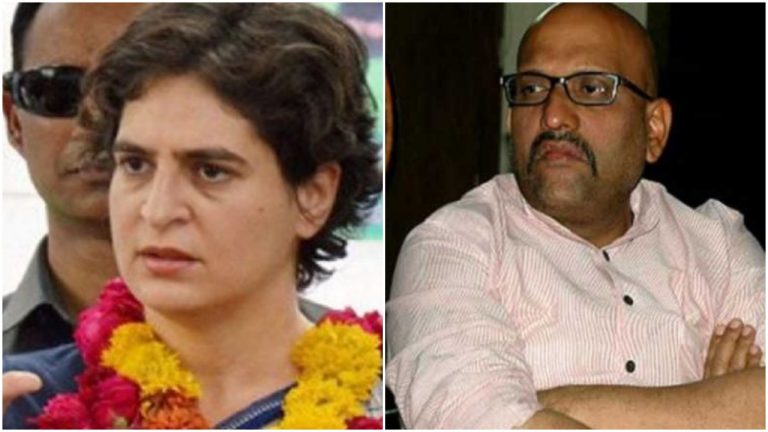
Fearing defeat of Gandhi scion Priyanka Vadra, Congress fields Ajay Rai against Prime Minister Modi in Varanasi

Congress party has finally decided to field a candidate against Prime Minister Narendra Modi in Varanasi. The Congress party has fielded Ajay Rai amidst the speculation that Gandhi scion and Congress general secretary Priyanka Gandhi Vadra would be contesting against PM Modi.

Reportedly, Congress President Rahul Gandhi seems to have favoured a local strongman Ajay Rai over his sister Priyanka Gandhi Vadra to take on PM Modi from BJP fortress Varanasi. Ajay Rai, a five-time MLA from Uttar Pradesh had contested 2014 Lok Sabha elections against Narendra Modi from Varanasi as a Congress candidate. However, he was able to secure only 75,614 votes.

There were speculations that Congress party would be fielding Gandhi scion Priyanka Gandhi Vadra from Varanasi. It seems that Congress party sensing a huge defeat for Priyanka Gandhi against Modi has backtracked the decision. The defeat for a member of Gandhi Parivar would be disastrous to the Congress party and also for the morale of the party workers. Hence, a decision not to field her against PM Modi seems to have been made after taking this factor into account.

The Congress and their media ecosystem were initially hoping that Priyanka Gandhi contesting against Narendra Modi would act as a speed breaker against the Modi juggernaut. The Lutyens ecosystem had already declared Priyanka Gandhi as a warrior and was also in a hurry to build up a contingency to project her as a brave woman who took against the might of Narendra Modi if she had lost from Varanasi against Modi.

Prime Minister Narendra Modi had contested from Varanasi for the first time in 2014 and had secured a massive victory over AAP chief Arvind Kejriwal with over margin of 3 lakh votes. By contesting from the ancient city of Varanasi, Prime Minister Modi had a civilisational point as Varanasi is considered a city of temples. Kashi, a city that rises from the feet of Ganga has been a symbol of Hindu faith for millennia.

Transforming Varanasi into a Smart City while safeguarding its spiritual essence: The Modi doctrine of governance

Varanasi, represented by PM Narendra Modi during 2014, forms a key part of the political landscape of India. In spite of this, infrastructure developments have been too few and unorganized by previous Governments. Under the Modi Government’s leadership, Varanasi is being transformed into a Smart City while safeguarding the spiritual essence of this place. This will ensure Varanasi becomes picturesque, progressive, secure, organized, pure and unified

Importance of Varanasi on the political landscape of India

Varanasi grew as an important industrial centre, famous for its muslin and silk fabrics, perfumes, ivory works, and sculpture. But it is better known as the abode of Lord Shiva, and the spiritual capital of the nation. Varanasi is represented in the Parliament of India by the current Prime Minister of India Narendra Modi who won the Lok Sabha elections in 2014 after defeating Arvind Kejriwal.

Out of eight seats in Varanasi, the BJP and the alliance currently holds three seats. This includes the Congress stronghold of Pindra, from where party MLA Ajay Rai is contesting again. The Samajwadi Party has Rohaniya and Sevapuri seats, while the BSP has MLAs from Ajagara and Shivpur.

Employment and Industries of Varanasi

According to the 2006 City Development Plan for Varanasi, approximately 29% of Varanasi’s population is employed. Approximately 40% are employed in manufacturing, 26% work in trade and commerce, 19% work in other services, 8% work in transport and communication, 4% work in agriculture, 2% work in construction, and 2% are marginal workers (working for less than half of the year).

Silk weaving is the dominant industry in Varanasi. Tourism is Varanasi’s second most important industry.

Projects announced for Varanasi

Until September 2018, Rs. 42,514 Cr worth of projects has been announced for Varanasi.

Amounts of projects announced for Varanasi from 2014 till Sept 2018. Rs. 42,514 Cr worth projects for Varanasi have been announced since 2014. A major chunk of the investments has been in 2014 and 2015.

The announcements included projects such as:

    • Rs 362 crore: underground cabling work to free old Varanasi areas from dangling power cables
    • Rs 253 crore: Stormwater drainage scheme
    • Rs 212 crore: Trade Facilitation Centre in Bada Lalpur
    • Rs 158 Crore: A Gas pipeline to Varanasi
    • RS 111 crore: Lahartara Cancer hospital
    • Rs 134 crore: Varanasi urban potable water supply scheme phase 1
    • Rs 208 crore: Multi-modal terminal
    • Rs 759.36 crore: Ring road the first phase completed
    • Rs 812.59 crore: Four-lane Babatpur-Varanasi road, Part of NH-56

Mega infrastructure projects for Varanasi. Expansion of three national highway comprises of Rs. 4,000 Crore of investments. Projects such as beautification of Ganga Ghats project, Varanasi airport to city highway, Cancer hospital and several other infrastructure related investments.

A long list of over 300 projects worth more than Rs 40,000 crore that the BJP has been brought to Varanasi in the last four years. Few of them were recently announced during PM’s tour of Varanasi.

Projects announced during PM’s tour of Varanasi

PM Modi announced the following during his tour of Varanasi in September 2018

    • Inaugurated and layed the foundation stones of projects worth Rs 550 crore. These projects will not only help Varanasi but also the nearby villages grow by making a centre in Varanasi to boost technology and increase knowledge.
    • Development work in Varanasi is being done keeping its tradition and heritage intact. The challenge lies in keeping the image of the city as it is while integrating modern technologies with it.
    • The problem of electricity wires hanging haphazardly has been solved. Now, these wires have been removed from large parts of the city. In other places, the work for underground cabling is progressing rapidly. The foundation stone of the electricity centre is to boost the electrification drive. LED bulbs installed have cut down electricity bills.
    • Road development projects worth crores of rupees are been undertaken in Varanasi. The roads connecting Varanasi to other important places and states are being widened. The work for the Manduadih flyover has also been completed. Many other roads have been widened so that people don’t face inconvenience. The ring road project which was kept pending by the previous government who paid no attention to it, has also been restarted.
    • People coming to the airport of Varanasi are witnessing the development of the city. The number of people flying into Varanasi has increased as has the number of tourists.
    • The beauty of the city has also improved. Ghats now welcome tourists not with garbage but with lights. Not only boats, but even cruise ships can be seen cruising down the Ganga now.
    • Rail connectivity in Varanasi has also improved in comparison to other places. The rail network has been strengthened.
    • World leaders have visited including Japan PM Shinzo Abe. The Pravasi Bhartiya Diwas is going to be a big moment for Varanasi. Each and every local is am an ambassador of this state.
    • For the cleanliness of the Ganga work has been going one where more than 200 schemes worth around Rs 21, 000 crore have been cleared. More than Rs 600 crore have been allocated for Varanasi. Steps are being taken to stop garbage from the cities from flowing into the river.

The focus has been to develop Varanasi and turn it into a Smart City. Tackling Ganga cleaning, promoting tourism, launching cruises, doubling flights, developing infrastructure, developing civic amenities, Urja Ganga project, cleaning the Ghats, promoting entrepreneurship etc.

The smart city development plan for it has been planned on the following principles: ‘Suramya Kashi (picturesque); Samunnat Kashi (progressive); Surakshit Kashi (secure); Sanyojit Kashi (organized); Nirmal Kashi (pure) and Ekikrit Kashi (unified)’.

Purpose of Making ‘The Maha Yojana’

On the basis of the functional relations of various land use by determining the area of adequate land for various land uses under the city limits of Varanasi city, make a rational proposal of various land use in the city as per the nature of the future physical development of the town.

Providing a planned direction for future development by employing unplanned constructions in the present.

Representation of the proposal at different stages for the decentralization of intensive population density and centred business functions of the ancient city.

Give a planned physical nature in accordance with the assurance classification of various types of commercial activities and their support activities.

Provision of future residential and community facilities, utilities and services of different areas for different income groups for balanced development of the town.

Such provision of industrial and commercial areas with the provision of easy and smooth arrangements for the city’s traffic and transport, so that these areas remain in tune with the urban social, economic structure.

Guidance for the future development of the city for Varanasi Development Authority and to specify the proper direction of development programs of private government / semi-government institutions.

For the purpose of maintaining the historic nature of the city, the determination of policies and policies related to the protection of religious and cultural, artistic and historical monuments here. Provision of suitable routes in the present and future development areas of the town.

To prevent unplanned and uncontrolled development in the adjoining areas of the city and town and to provide direction for future well-planned development. The Varanasi Maha Yojana was created for the year 2011. 18449.95-hectare land was proposed for 16,21,000 population in the Maha Yojana. A total of 9614.22-hectare land has been developed until the year 2010, which is 52.11% of the proposed area. The actual favourable development of 8644.72 hectares of land has been contrary to the proposed development of 46.86% and 969.50 hectares of proposed land use has been adverse to the proposed land use, which is 5.25% of proposed land use.

Conclusion

While Varanasi has been looked at as the religious centre of the nation, there was a critical need for providing key infrastructure developments. Such infrastructure developments have not been provided at this scale during the previous government’s tenor. The NDA Government has taken up this challenge and added Rs. 40,000 Cr worth of projects to revamp the entire city.

The Maha Yojana will be instrumental towards establishing industrial and commercial areas in the city, with facilitation for easy flow of traffic. This Yojana will ensure the organic growth of the city, in a planned and controlled manner. All these developments are being considered without hampering the religious fabric that underlines this city. These developments will ensure Varanasi becomes picturesque, progressive, secure, organized, pure and unified.

A Sri Lankan church escaped terror attack as it ended its Easter Sunday Mass early

Reports have emerged confirming that St Mary’s Catholic Cathedral in Batticaloa town in Sri Lanka was the initial target of the suicide bomber who eventually blew himself up at the nearby Zion Church after realising that the Easter mass at St Mary’s had already ended.

According to a report in the Daily Mirror, the bomb blast that killed a total of 29 people, including 14 children, occurred around 9 am at the Zion Church on Central Road in the heart of the town, just when the mass was to begin. St Mary’s Cathedral is also located on the same road.

Locals and residents confirmed that a suspicious man had first entered the St Mary’s Catholic Cathedral half an hour earlier and the Catholic priest also confirmed that he had seen the same man lurking around the church the previous day as well.

St. Mary’s Cathedral, Batticaloa, Srilanka

Actually, what helped the St Mary’ church escape the bomb blast, was that the priest in charge had called the Easter Service at 7 am instead of the usual 7.30 am, half an hour earlier than the usual time. So, by 8.30 am when the suicide bomber arrived, most of the people who had congregated left. Therefore, he headed towards Zion Church where the bomb attack was eventually conducted.

The Zion Church was one of three churches and three luxury hotels which were targeted by suicide bombers, who carried out 8 coordinated dastardly bomb attacks in Sri Lanka on Easter Sunday killing over 350 people and wounding hundreds.

St. Mary’s Cathedral and Zion Church on Google Earth

Narrating his encounter with the suspect, Pastor Ganeshamoorthy Thirukumaran or Pastor Kumaran of Zion Church said, “I noticed a person standing near the pastor’s office, with a bag on his shoulder and clutching another bag to his chest.

“I asked him who he was, and why he was standing there. He replied that he had just come to observe what was happening at the church and asked me details about the church,” Pastor furthered.

The man identified himself as ‘Umar’ from the nearby Oddamaavadi Town, Pastor Kumaran reportedly said who also confirmed that the suspect was of medium height and looked in his 30s.

“I then invited him into the church as I thought he was like the many new people who come to our church. I didn’t have any doubts or suspicions about him,” confirmed Pastor Kumaran.

He recollected of asking a senior worshipper, Brother Stanley to speak to the visitor. The suspect’s demeanour and answers raised suspicion in the eyes of Brother Stanley who requested the bomber to leave the church premises.

The man, in turn, tried to force his way into the church. When his path was blocked, he reportedly detonated the bomb just outside the church, close to a group of children.

Unfortunately, Pastor Kumaran’s son was also among the children who died in the explosion.

According to Batticaloa Division Police Superintendent Nuwan Mendis, the head of the suspected bomber was found on the roof of a house near the church.

Mendis confirmed that investigators were trying to identify the killer through CCTV footage “and other methods”.

Sansad Adarsh Gram Yojana: How have the villages adopted by Modi, Rahul Gandhi and Sonia Gandhi fared

A ground report from Prime Minister Modi’s adopted village is a story of an experiment gone right.


In October 2014, Prime Minister Modi launched ‘Sansad Adarsh Gram Yojana’ a rural development programme under which members of parliament ‘adopt’ villages and work towards the development of the villages. Under this scheme, each MP is required to choose one village each from the constituency that they represent, except their own village or the village of their in-laws and fix parameters and make it a model village. Under that scheme, Prime Minister Modi first adopted Jayapur, a village on the outskirts f his constituency, Varanasi.

The above report by CNNNews18 shows that over 400 toilets, 16 bio-toilets have been built, banks and ATM services have been made possible over 100 streetlights have been installed and electricity is available 24 hours. In the video, it can be seen that potable water is available from even the roadside tap, something that is not possible even in big urban cities. There has been an insurance cover for 2,500 people in the village and new classrooms are constructed in primary schools.

In Jayapur, one ‘Atal Nagar’ is also developed where the vanvasis (forest dwellers) are given pakka homes to live. Efforts are made to provide modern facilities to the poor people in the village. A Mumbai-based food processing company has contributed towards the development of ‘Atal Nagar’. Atal Nagar has 24 hour water, literacy classes, temple, garden and solar lights installed. Cottage industries are also set up to help people with employment. A resident of Atal Nagar says that he lived in a hut before PM Modi built these houses for them.

In contrasts to this, Congress President Rahul Gandhi had initially criticised the Yojana when it was launched. “Simply adopting a village is not enough, empower people, “Rahul Gandhi had said soon after the scheme was launched. However, Rahul Gandhi and Sonia Gandhi reluctantly adopted a village each in Amethi and Rae Bareli. While Sonia Gandhi adopted one ‘Udwa’ village from Jagatpur block in Rae Bareli, Rahul Gandhi has adopted ‘Deeh’ village in Jagdishpur block in Amethi. Jagdishpur was ‘industrialised’ during his father Rajiv Gandhi’s tenure as the Prime Minister.


However, despite ‘adopting’ the villages, the MPs of these parliamentary constituencies seem to have taken them for granted. A report from 2017 during the Uttar Pradesh state assembly elections shows the dismal state of the village. In April 2017, only 19 out of the 608 households who live in Sonia Gandhi’s adopted village had a toilet. Others have to go to farms to relieve themselves. The women have to make this trip before dawn. 40 Kms away from the city Rae Bareli, Udwa had fragile tin-roofed houses where one even has to bend to enter the house. “Villagers say she has hardly visited, neither has any Congress leader inquired about their requirements,” the report from 2017 read. A report from April 3, 2018 reads that in Udwa village, the school students were found cleaning classrooms with brooms even as teachers sat there. The toilets were locked and opened only when students needed to use. There was no running water and it looked as if it was not cleaned since months.

Similar is the fate of the Jagdishpur village adopted by Rahul Gandhi. A primary school in Jagdishpur had only one teacher present. Principal’s room was filled with sacks of ration food and classrooms had heaps of coal. Students roamed about as their food was cooked in their classrooms. Nothing seems to have changed in all these years. A report from 2015 about Jagdishpur states how Rahul was critical of the Sansad Adarsh Gram Yojana and made sure the villagers who were pining their hopes on him for some development work knew that he is not really interested. “People were angry, there was some loose talk of burning his effigy but we shushed that up,” a farmer had said when Rahul Gandhi had dismissed the scheme after adopting the village as tokenism.

According to a news portal website ‘UttarPradesh.org’, till March 2018, the only sign of development in Rahul Gandhi’s adopted village is a water tank. That too had not started functioning till a year back. The village head had reportedly said that despite completion of almost four years of adoption of the village, there was nothing that was done for the village that sets them apart from the other villages. The hospital was at least 10 km away from the village and no work was undertaken for banks and higher educational institutes. He said that if Rahul Gandhi were to try even a little bit, the village could have undergone a transformation.

On the other hand, Prime Minister Modi in October 2018 adopted a fourth village under the scheme. After adopting Jayapur, PM Modi went on to adopt Nagapur, Kakarhia and Domari village. Similarly, Home Minister Rajnath Singh, Railways Minister Piyush Goyal, Petroleum Minister Dharmendra Pradhan, Textiles Minister Smriti Irani, External Affairs Minister Sushma Swaraj, Defence Minister Nirmala Sitharaman and Rural Development Minister N S Tomar have each adopted three villages. BJP allies Ram Vilas Paswan and Harsimrat Kaur Badal have also adopted three villages each in their respective constituencies.

Watch: When asked whether they would support Rahul Gandhi, people declare “No”

As election season heats up with the soaring summer temperatures in India, the contests, rivalry, and political games are proving to be quite an entertainer for the people of India. With three phases of the elections now being over and four more remaining, the shades and moods of democracy are a delight to watch some times.

In a video shared on social media, Madhya Pradesh chief minister Kamal Nath was seen in a candid conversation with India Today’s Rahul Kanwal in his show Jab We Met aired on 24 April, where he travels to different parts of the country to interview political leaders.


In the video, Rahul Kanwal is seen walking with MP CM Kamal Nath conversing on political issues where the CM approaches some people gathered near a fence wall to watch. Kamal Nath asks the people whether they will support Rahul Gandhi in the upcoming elections. The people immediately reply “No”. When asked whom they will rather support, they say, ‘Kamal Nath’.

The video suggests that at a local level, leaders like Kamal Nath, even though they are corrupt and allegedly had a hand in the 1884 genocide of Sikhs, still have more acceptability compared to Rahul.

Interestingly, Rahul Kanwal is seen saying to Kamal Nath that he might get in trouble for this.


The interaction might have been brief and may not reflect the mood of the voters like some opinion polls or predictions. But it does reflect the disenchantment of the people from the Nehru-Gandhi dynasty. The Indian voter has changed a lot. No longer can the Nehru-Gandhi dynasty expect to win over voters by just flashing their faces and smiles.

However, BJP spokesperson Suresh Nakhua has claimed that India Today had deleted the video of the people’s interaction with Kamal Nath after they uploaded it.


In the run-up to the general elections, it was evident that most regional parties in the opposition did not want Rahul Gandhi as their potential PM candidate. Mamata Banerjee, Mayawati, and Chandrababu Naidu had openly criticised the idea when DMK endorsed Rahul as the PM candidate. This also shows that the era where the Gandhi dynasty dictated terms in Indian politics might be long over. Congress had tried fielding Priyanka Gandhi as another desperate attempt to cash in the ‘Naamdar power’ but that stunt too seems to have failed miserably.

This is also in contrast to the supporters of BJP, because, while the opposition might get support for local leaders from the masses, perhaps no BJP supporter will ever say that they do not want PM Modi. In fact, in most interactions seen in news shows and social media, BJP supporters in even the most rural, remote regions say they are voting for PM Modi.