Home Blog Page 6570

Intel report says Pakistan is planning to poison the ration stocks of security forces in Jammu and Kashmir

Pakistan intends to kill Indian soldiers deployed in Kashmir by poisoning their ration, a note issued by the criminal investigation department of Jammu & Kashmir has revealed. The intelligence report says that Pakistan’s ISI and its agents are planning the move.

The letter reportedly states, “chatter floating by a Pakistani number claims that Pakistan MI (military intelligence) and ISI agents operation in Kashmir are planning to mix poison in ration stocks of security forces deployed in the region”.

In light of the intel, the J&K government has asserted necessary security measures must be taken to ensure the security of the ration deposits for the security personnel, especially in the state. It also remarks that ration procured for the use of security forces across India should be subjected to frequent checks to rule out any untoward incident or attempt.

The intel has come at a time when tensions have been prevailing between the two countries in the aftermath of the Pulwama terror attack and the subsequent airstrikes conducted by the Indian Air Force to eliminate terrorist camps across the border. Pakistani jets had attempted to attack Indian military installations in response to the airstrikes against the terror camps as well.

Things have escalated at the Line of Control as well as numerous reports have surfaced which indicate heavy shelling from both sides of the border.

India has now changed the meaning of ‘Abhinandan’: PM Modi

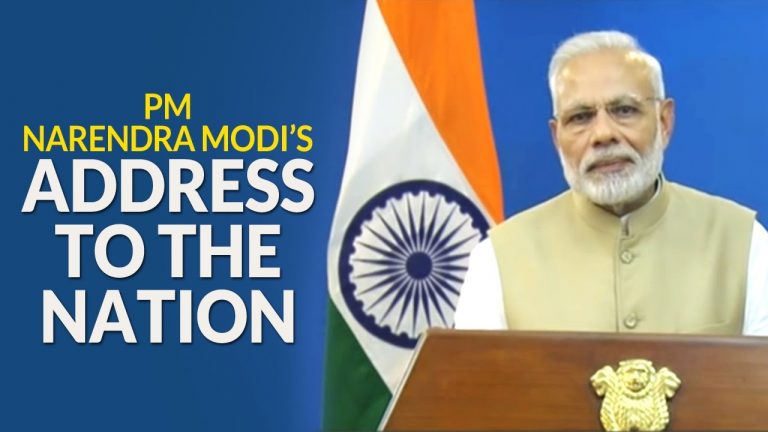
“The world looks at and notices what India does today. It is the country’s strength and power that can change meanings in dictionaries. The word ‘Abhinandan’ meant ‘congratulations’ in English at one point. Now it has a completely different meaning,” said PM Modi at the ‘Construction Technology India’ 19′ conclave today.

PM Modi was referring to Wing Commander Abhinandan Varthaman’s return from Pakistan last evening after spending 72 hours in Pakistan Army’s captivity. Wg Cmdr Abhinandan was a prisoner of war in Pakistan after he tried to chase down Pakistan’s F16 jet which was targeting Indian military installation on a MiG 21 and was shot down. He ejected, but landed in Pakistan-occupied-Kashmir territory.

PM Modi then narrated his government’s efforts in the housing sector, and how it is making gigantic moves to provide affordable housing to all. He urged people belonging to the housing sector to add fuel to the initiative of New India, that aims to provide a better lifestyle to common citizens of India. He said that that he expects members of the conclave to develop or learn new innovation techniques from the world so that they can be used in the Indian context.

PM Modi asserted that to boost Housing Projects, his government has launched seven flagship programmes: Swach Bharat Abhiyan, Pradhan Mantri Awas Yojana, Deen Dayal Updhaya Antyodadaya Yojana, National Rural Livelihood Mission, HRIDAY( Heritage City Development and Augmentation Yojna) scheme and the AMRIT (Affordable Medicine and reliable implants for treatment) scheme.

PM Modi said that he wishes that by 2022, that every Indian has a pucca house to live. He said his government is helping both people of the housing sector and homebuyers, by reducing taxes and GST. He talked about the announcement made during the Budget 2019 about the full rebate of income tax for income up to ₹5 lakh., and tax respite to people having more than 1 house on rent. He also said that GST council has reduced tax on the affordable house from 8% to 1% and tax on under0contruction house from 12% to 5%.

Masood Azhar is under Pakistan army’s care, receiving regular dialysis in their hospital

The chief of terror outfit Jaish-e-Muhammad, Masood Azhar is reportedly undergoing treatment in a Pakistan Army Hospital. According to security officials, Azhar is suspected of being diagnosed with renal failure and undergoes regular dialysis at the Pak army hospital in Rawalpindi, Pakistan.

The report comes days after Pakistan Foreign Minister Shah Mehmood Qureshi said that the JeM chief is “really unwell”.

A few days ago, Pakistan Foreign Minister Qureshi went on record to confirm that the chief of proscribed terror outfit Jaish-e-Muhammad, Masood Azhar is indeed in Pakistan, though in sick condition and unwell to the extent that he cannot move out of his house.

In another instance, in an interview shared by the BBC yesterday, Qureshi candidly admitted that their government is in contact with Jaish-e-Mohammad leadership. Later, on realising the enormity of his claim and its repercussions, he appeared to scramble for words to salvage himself from the situation. When the interviewer points out that JeM is a terror outfit, Qureshi tries to clumsily defend it by equating it with the perceived Human Rights violations in Jammu and Kashmir.

In the aftermath of the Pulwama attack, that killed 40 CRPF personnel and whose responsibility was claimed by Pakistan based Jaish-e-Muhammad, the Intelligence agencies revealed that the Pakistan Army had issued an advisory to Hafeez Saeed and Masood Azhar to remain low profile until the international pressure on the Pulwama attack fizzles out. This protective advice from the Pakistan Army uncovers the charade of Pakistan’s PM and his delegates who have been in a continuous denial mode, ranting the similar rhetorics of Pakistan not being behind the terror attack.

The successive admissions of Masood Azhar’s presence in Pakistan by a senior leader such as Pak foreign minister and the corroborating report from the security officials confirm that the chief of Jaish-e-Muhammad is in Pakistan and is operating under the tutelage of the Pakistan Army. The recent report that Masood Azhar is being treated at Pakistan Army Hospital in Rawalpindi establishes beyond any reasonable doubt the connivance of Pakistan’s establishment with the terror outfit JeM. Pakistan’s claims of acting against the terrorists operating on its soil then ring hollow as terrorists like Masood Azhar and Hafeez Saeed continue to enjoy Pakistan Army patronage to carry out their nefarious designs against India.

United States of America seeks information from Pakistan about their misuse of F16: Reports

In what could spell further trouble for Pakistan, the United States of America has reportedly sought information from Pakistan about their misuse of American made F16 fighter jets which were used in Pakistan’s misadventure against India.


After India had struck terror camps by an airstrike deep inside Pakistani territory in Balakot, Pakistan had violated Indian airspace using F16 fighter jets. They had also attempted to target Indian military installations, a misadventure that was successfully thwarted by Indian airforce.

When Pakistan acquired F16s from the USA, it came with an end-use monitoring agreement that said that Pakistan could use the F16s to defend itself and its war, albeit a fictitious one, against terror. However, Pakistan could not use the F16s to escalate or for any form of aggression against a sovereign nation.

Pakistan’s bold attempt to target Indian military installations was an act of escalation and aggression against a sovereign country and thus, was in contravention of the end-use monitoring agreement.

Pakistan had also tried to deny that F16s were used to breach Indian airspace, however, the Indian Armed Forces had recently held a press conference where they presented proof that the missile parts recovered by India in Indian territory were that of the AMRAAM missile which can only be used by an American made F16.

After the proof was presented, Pakistan again tried to lie and obfuscate claiming that the missile number in the evidence presented by India was of a lot sold to Taiwan. However, this was a lie. The lot was sold both to Pakistan and Taiwan and the specific serial number etched in the missile found by India was sold to Pakistan as evidenced by the contract details between America and Pakistan available on public domain.

Behind the red alert: There’s more to the airspace lockdown in Pakistan than meets the eye

The frenzy of screenshots of flight tracking apps all over social media revealing empty airspace in Pakistan has been fuelling the mill of speculations of a war brewing. The country is on high alert, no doubt, owing to the Indian Air Force’s unexpected strikes against terror camps in Balakot, which Pakistan indignantly claims as an attack on their soil. But what purpose does an immediate lockdown of the airspace serve, other than to raise guard in anticipation of further attacks? Curiously, the Indian state gave no indication of escalation, their stance being the strikes were ‘non-military’ action against terror.

Considering the circumstances of the stand-off between the two states, which is merely an out-in-the-open acknowledgement of the strain that has been felt quite tangible for many months now, it does not make sense why Pakistan would want to shut down its entire airspace to commercial aircraft? Even if we assume that India is in the mood to hammer Pakistan, why did Pakistan not shut just its Eastern airspace?

Wars have been fought over territory and resources – to acquire and dominate, but rarely do we study the role of resources needed to start or sustain a war in the first place. Strangely so in the age of nuclear armaments, where any threat of war is assessed purely on the basis of a potential nuclear escalation. We may now safely guess that Pakistan isn’t quite willing or prepared to press the red button. Shutting the air space isn’t a prerequisite for it. So we have room to speculate about the resources they have for a conventional war if that’s what they are preparing for. Here’s an overview:

For those interested in energy economics it’s a well-known fact that Pakistan has an underdeveloped energy sector and struggles to meet the fuel and power demands of its citizens.

A recent report in 2018 by the International Renewable Energy Agency stated that half the rural population in Pakistan doesn’t have access to electricity. The report starts by asserting that the increasing gap between energy supply and demand has reached as high as 7 GW and has severely affected the economic and social development in the country.  The situation is further complicated by Pakistan’s overdependence on imported hydrocarbon energy supplies. Pakistan energy dependence is roughly 45% natural gas followed by 35% fuel oil. In contrast, the energy mix of Bangladesh is roughly 55% natural gas and 25% fuel oil.

Here’s a look into their fuel consumption: Pakistan’s use of energy sources is led by the industrial sector at 35.4% (IRENA, 2018) and followed by transportation 32.4% (IRENA, 2018).

If this is a dismal picture of their energy resources with regards to regular fuel, where do they stand with regards to jet fuel usage?

Based on EIA data from the Index Mundi site, Pakistan produces 4,000 barrels per day (bpd) of jet fuel. The world’s biggest producer in the US at 1,471,000 bpd and India is at no.6 producing 219,000 bpd. For a country the size of Pakistan, this is too small a number and the criticality of the situation is further accentuated by their troubled relationships with neighbouring countries and unique geographic challenges.

A 2017 Dawn article stated that Pakistan was struggling to meet the jet fuel supply requirements for commercial and defence aircraft. Apparently, defence officials had voiced their concerns on this as well. Sources indicate that Pakistan State Oil (PSO) had issued several warnings to the petroleum division of the Ministry of Energy about the possibility of dry-outs at several airports in the country.

The Dawn (2017) article predicted a likelihood of the airports of Lahore, Sialkot, Multan, Faisalabad and Islamabad running dry of jet fuel by December that year. The tendering and supply chain cycle within Pakistan at that time were ill-equipped to address this shortage by quick imports. For this reason, the PSO had asked the government to ensure the regulated production of jet fuel to them by the largest refineries in Pakistan. PSO went on to get assurances from the government to allow them to import jet fuel bypassing standard processes in the event local refineries are unable to meet the regulated jet fuel production demands.

The energy situation in Pakistan took at interesting turn in 2015 when Pakistan started its first LNG import terminal at Port Qasim in Karachi, followed by the second one at the same location in 2017. Based on an article in The News (2018), the Pakistan government’s shift from furnace oil to cleaner-burning natural gas for power generation has created the unique situation of refineries in Pakistan having to likely shut down due to an excess of furnace oil. The article went on to say that the Oil Companies Advisory Council (OCAC) had warned towards the end of 2018 that all major refineries in Pakistan are operating at suboptimal levels and are heading towards shutdowns if the offtake of furnace oil for consumption of power plants aren’t increased urgently.

The furnace fuel oil consumption slowdown has seriously affected all the major refineries in Pakistan including Pak Arab Refinery (PARCO), Pakistan Refinery Limited (PRL), National Refinery Limited (NRL) and Attock Refinery Limited (ARL). PARCO which is a joint venture between the governments of Pakistan and Abu Dhabi has been facing one of the lowest production levels. Reports indicate the refinery is running at 65% and is facing the likelihood of shutdown if the offtake of furnace oil isn’t increased soon.

Due to the nature of the refining process, a shutdown will mean that the entire hydrocarbon supply chain will be broken resulting in the refinery not being able to produce jet fuel which is critical to the Pakistan Air Force (PAF). Now we arrive at a theory, based on ample clues, of how shutting down airspace is not simply a cautionary measure for Pakistan but an inevitable and a desperate move to conserve jet fuel for any state of readiness that the current situation demands. Going further, it might even shed light on the worryingly (for Pakistan) slow reflexes of the PAF during the IAF’s Balakot strikes. While they ‘scrambled’ (the PAF’s own words) to figure out what hit them, the furious citizens took to social media to question the efficacy of their fighter jets and the alertness of the Forces. Perhaps the clue is inside the fuel tanks.

References:

  1. Half of rural population in Pakistan still lack access to electricity, reveals report https://tribune.com.pk/story/1683780/2-half-villages-pakistan-still-lack-access-electricity-reveals-report/
  2. Renewables Readiness Assessment: Pakistan https://irena.org/publications/2018/Apr/Renewables-Readiness-Assessment-Pakistan
  3. Speeding up rural electrification https://www.dawn.com/news/1427982
  4. Transforming the power sector in Bangladesh https://www.pwc.in/assets/pdfs/industries/power-mining/executive-summary-pwc-bippa-report-on-transforming-the-power-sector-in-bangladesh/transforming-the-power-sector-in-bangladesh.pdf
  5. Fuel import bill surges 30pc https://www.dawn.com/news/1434196
  6. Pakistan’s energy-related imports increase 34% to $1.27b https://tribune.com.pk/story/1786223/2-pakistans-energy-related-imports-increase-34-1-27b/
  7. Jet Fuel Production by Country https://www.indexmundi.com/energy/?product=jet-fuel&graph=production&display=rank
  8. Jet fuel shortage on the horizon in Pakistan https://www.dawn.com/news/1375390
  9. Analysis: Pakistan oil refineries fear shutdown on rising fuel oil stocks https://www.spglobal.com/platts/en/market-insights/latest-news/oil/113018-analysis-pakistan-oil-refineries-fear-shutdown-on-rising-fuel-oil-stocks
  10. Oil refineries fear shutdown on slow offtakes of furnace oil https://www.thenews.com.pk/print/399061-oil-refineries-fear-shutdown-on-slow-offtakes-of-furnace-oil
  11. Pakistanhttps://atlas.media.mit.edu/en/profile/country/pak/
  12. Engro Corporation Limited https://www.engro.com/our-business/
  13. Pakistan GasPort http://www.ag.com.pk/pakistan-gasport/
  14. Pakistan’s second LNG import terminal to restart on Dec. 8 – company https://in.reuters.com/article/pakistan-lng-gasport/pakistans-second-lng-import-terminal-to-restart-on-dec-8-company-idINKBN1E11X6
  15. PARCO – Pak Arab Refinery Limited https://www.parco.com.pk/

Parody country Pakistan proposes deluded resolution to award Nobel Peace Prize to Imran Khan

Pakistanis are hoping for a Nobel Peace Prize for their Prime Minister Imran Khan for returning Wing Commander Abhinandan to India as a ‘peace gesture’. Since the decision was made, they have been trending #NobelPeacePrizeForImranKhan on social media.

It appears it’s not just the general population of Pakistan which believes Imran Khan ought to be awarded the Nobel Peace Prize for the ‘peace gesture’. This, despite the fact that Pakistan was unable to fully adhere to the Geneva Conventions. Pakistan has now proposed a resolution in its National Assembly asking for the same. The deluded resolution was signed by none other than Information and Broadcast Minister Chaudhary Fawad Hussain.

The resolution states, “Prime Minister Imran Khan played a sagacious role in reducing recent tension between Pakistan and India which was created due to the war mongering attitude of Indian leadership. The aggression manifested by Indian leadership had brought the two nuclear states to the brink of war, endangering the lives of tens of millions of people on both sides of the border. The situation was averted due to the proactive and deft handling of the situation by Prime Minister Imran Khan. Keeping in view his contribution towards peace in the region, Prime Minister Imran Khan may be given Nobel Peace Prize.”

As it turns out, the resolution is the third great idea to have come out of Pakistan in less than 30 hours. The first was their Climate Change Minister Malik Amin Aslam’s assertion that Pakistan will lodge a complaint against India at the UN for ‘ecoterrorism’. Then, apparently, the best military minds in the country believed that it was a great idea to release a poorly edited propaganda video of Wing Commander Abhinandan after calling his release unconditional. Amusingly, the heavily edited videos are now being removed from all media platforms by Pakistanis.

And now, Fawad Hussain appears to believe Imran Khan deserves the Nobel Peace Prize for demonstrating that Pakistan has mastered the skill of partially adhering to international conventions.

It’s unclear how sheltering terrorists and waging a proxy war against neighbouring countries can be reconciled with popular perceptions of peace.

It isn’t entirely unheard of for warmongers to be nominated for or even win the Nobel Peace Prize. Former U.S. President Barack Obama after receiving the Nobel Peace Prize went on to wage war against Libya and destabilized it. Then, proceeded to initiate an effort to destabilize Syria with the goal of removing Bashar al-Assad but was unsuccessful in his attempt.

Watch: Piyush Goyal takes a dig at propaganda peddling journalists, leaves audience in splits

Railway Minister Piyush Goyal, who has earned accolades for his role in achieving 100% electrification in Indian villages during his sting as the power minister, was interacting with Journalist Rahul Kanwal during a session in the India Ideas Conclave organised by the India Today Group.

Goyal, during the interaction, hilariously mimicked how some journalists operate in their desperation to get some anti-Modi comments from common people in India.


In the video clip, Goyal is seen telling that when declaring that every household in India will have an electricity connection, there are some journalists who will hunt down a consumer whose connection has been cut off because he did not pay the bills. The journalist will then badger him saying, “Modi did not give you electricity”. Even when the consumer says his connection was cut off as he did not pay the bills, the journalist will shove the mic in his face urging the person to blame Modi for not providing him electricity.

Goyal’s recital of how many journalists behave in their haste to discredit the Modi government was actually very accurate. Because there have been several such instances.

Last year, ABP News’ Punya Prasun Vajpayee had run a show where he had claimed how a female farmer in Chhattisgarh had stated that she was asked to give certain answers in an interaction with the PM. Vajpayee’s report was even quoted by Rahul Gandhi, where he had targetted the PM for wanting to hear what pleases him. In the media persons’ haste to get their required anti-Modi narrative, they had not even given the farmer a chance to explain her answer.

However, in a detailed interview with MyNation, the farmer herself had stated how she was misquoted by ABP News and her income had indeed doubled after she had shifted from conventional farming methods to fruit farming.

In another such incident, a reporter from India Today itself was caught urging and directing a group of people to be excited about Priyanka Gandhi’s appointment as the Congress General Secretary. She was heavily criticised on social media for ‘stage managing’ people and coaxing them to appear happy and ecstatic about Priyanka’s entry into politics.

Another incident that had caused hilarious reactions over social media when a journalist from India Today (again) had tried very hard to lead, fool and confuse a crowd of students in Odisha to say if Rahul Gandhi will make a good PM. However, his attempts only resulted in boos and laughter from the audience.

Goyal’s perfect enactment of how desperate journalists can become to get a suitable anti-Modi answer from common people to suit their narrative has resulted in many hilarious reactions on social media.


Hatred for PM Modi and his government has often made many journalists and politicians peddle blatant fake news and lies. Goyal’s words were a small reminder of that.

Osama Bin Laden’s son new Al-Qaeda chief, UN blacklists Hamza Bin Laden

The UN has blacklisted Osama Bin Laden’s son, Hamza, calling him the next probable chief the dreaded terror organisation, Al-Qaeda. Hamza is now subjected to travel ban, assets freeze and an arms embargo as he is being described as the most probable successor to Al-Zawahiri, the current leader of Al-Qaeda.

Saudi Arabia has also revoked his citizenship via a royal decree in November last year. Hamza has reportedly, as a member of Al-Qaeda, called for its followers to commit terror attacks.

The US Department of State has also announced a reward of up to USD 1 million for any information on Hamza. As per reports, it be believed that according to the items seized during the death of Osama at his hiding place in Pakistan, he was grooming Hamza to take over the as the next chief after him.

Hamza is reportedly married to Mohammed Atta’s daughter. Mohammed Atta was the lead hijacker in the September 11, 2001 attacks on World Trade Centre in the US. Hamza is currently believed to be based near the Afghanistan-Pakistan border.

Government cracks down on Jamaat-e-Islami, seals its offices, bank accounts seized, assets frozen

The government continues its crackdown on Jamaat-e-Islami, the banned outfit which is suspected of funding the terror organisation Hizbul Mujahideen and has now sealed its offices in the valley. On February 28, the Government of India banned Jamaat-e-Islami following the ghastly terror attack in Pulwama.

According to reports, 350 leaders of the organization have been detained by the government, 70-Srinagar based bank accounts have been seized, and assets worth Rs 52 crore have been confiscated and action has been initiated under the Unlawful Activities (Prevention) Act. The government crackdown has also affected the separatist organization’s 400 schools, 350 mosques and 1000 seminaries across Jammu and Kashmir.

According to a top government official, quoted by TOI, the District Magistrate will ask the Police to make a list of inventories. Then, another list will be made to check the legality of the properties. Currently, it is estimated that Jamat-e-Islami has properties worth Rs 4,500 crores.

Police can also book the members of organizations under the section of Public Safety Act (PSA) or Section 151 CrPC (arrest to prevent the commission of cognizable offences). The police will also try to find if the member to be booked under these section has any previous cases on him, so as to make the case stronger.

JeI has been declared as “unlawful organisation” under the Unlawful Activities (Prevention) Act, 1967 by the government. It was banned after it was proved to have been in touch with terror outfits and that it lends support to extremist activities and terrorism in Jammu and Kashmir and other parts of the country.

It is said that JeI is supporting demands from secession from India, and has been supporting terrorist and separatist groups. Its top leader includes Abdul Hamid Fayaz, Zahid Ali, Mudasir Ahmad, Ghulam Qadir.

How many more brave soldiers must die before people gather the courage to acknowledge the inconvenient truth?

The Pulwama terror attack plan may well have been hatched in Pakistan, it was executed by a Kashmiri youth, an Indian, who presumably has voting rights too, says Ashish Dhar, co-founder of Pragyata and Upword. “Why a citizen of India would wage a war against the State?” asks Dhar in his video.

He lists out various reasons given by politician and mediapersons regarding why the youth of Kashmir takes up arms against the nation. He says one of the major reasons they do so is because of unemployment. To which, Dhar questions what about people from other states with comparable unemployment rates. We hardly hear about insurgencies in such states, says Dhar.

Dhar then lists out other such ‘explanations’ provided for the volatility in the valley and debunks them. “What is it that drives an average Kashmiri Muslim like Adil Dar or Burhan Wani to militate against the Indian State? Unfortunately, there is no answer,” he said. Ashish Dhar then analyses statements of the terrorists to try and understand their psyche.

He explains how this is more of a civilizational problem than a political one. He says it in as many words that no amount of political discourse will solve the Kashmir problem till it is taken in the civilizational context.

You can watch the video here: