Home Blog Page 6921

Uttar Pradesh: Idols of Ram, Laxman, Janki stolen from temple in Mau

0

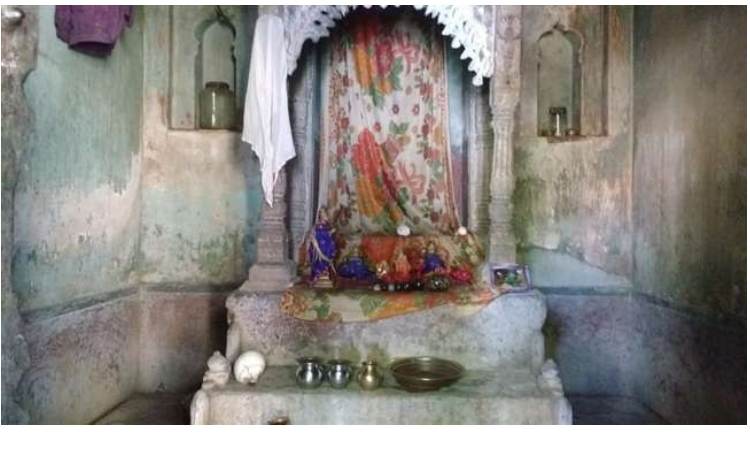
In yet another incident of idol theft, three Ashtadhatu idols of Lord Ram, Janaki and Lakshman have been stolen from a Ram-Janaki temple in Lakhnaur area in Mau, Uttar Pradesh as reported  by Jagran.

The temple from where the idols have been stolen was built by the ancestors of one Rajendra Pandey. Rajendra Pandey’s family used to perform the rituals in the temple. The stolen idols weighed 45 kg, each idol weighing 15 kg and are estimated to be worth crores in the international market. On Tuesday night, when the whole Pandey family went off to sleep, the thieves broke into the temple and took away the idols along with the broken lock. The police were informed when the Pandey family found out about the theft the next morning.

On getting the information of theft, the local police along with a SWAT team and forensic experts arrived on the spot. Inspector-in-chargee Neeraj Kumar Pathak and SWAT incharge Rajesh Yadav arrived at the spot to examine the situation while evidence was collected. Rajendra Pandey has lodged an FIR against unidentified persons.

A special team has been formed under the direction Superintendent of Police Lalit Kumar in relation to the incident of idol theft. A search operation has been started by the team to trace the thieves and the idols.

This is the second incident of idol-theft reported this month. In a similar incident, which took place on Oct 16, two 114 year old idols were stolen from a Ram-Janaki temple in Vaishali, Bihar.

Ram Mandir is a matter of national self-respect and pride, government should acquire land for its construction: RSS

0

The Rashtriya Swayamsevak Sangh (RSS) in its working committee meeting today said that the Ram Mandir issue is neither a Hindu-Muslim issue nor a mandir-masjid issue.

“When Babur invaded Ayodhya, they didn’t have lack of land to offer namaz. There was a lot of land, they could have built a masjid anywhere. But they attacked and destroyed the temple. Even studies by the Archeological Survey of India, it has been proven that there was a temple there. Islamic scholars also believe that namaz offered on forcefully captured land does not get accepted. Even the Supreme Court has said that it is not necessary to offer namaz inside a mosque,” the RSS said in a press release.

Adding that the Ram Mandir is important for the self-respect of the nation as well as pride. “The way Sardar Patel redeveloped Somnath temple and the then President of India Dr Rajendra Prasad had performed the installation ceremony, similarly, the government should acquire land and build the Ram Mandir. For this, the government should bring an ordinance,” said RSS functionary Arun Kumar.

Chidambaram uncooperative, case needs custodial interrogation: ED tells court

0

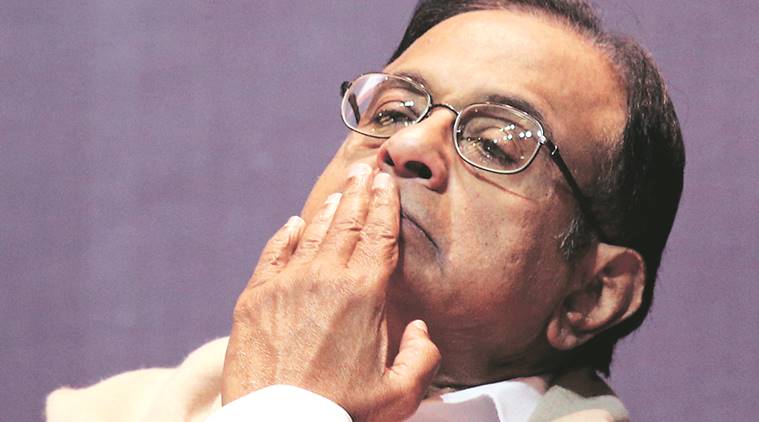
Seeking custodial interrogation of former UPA minister P Chidambaram, the Enforcement Directorate on Wednesday opposed the anticipatory bail plea of the minister in the Aircel-Maxis case in a Delhi court today.

The ED which filed its case in the Delhi court cited in its appeal that P Chidambaram was uncooperative in the probe and had remained evasive in his answers.


Special judge OP Saini will be hearing Chidambaram’s plea on Thursday. On October 8, the court had extended the interim protection from arrest granted to Chidambaram and his son Karti in the Aircel-Maxis case filed by the CBI and the ED till November 1. Chidambaram had filed the appeal for protection from arrest in the ED case on May 30 this year after which he got relief from the court on various occasions.

During CBI’s probe into 2G spectrum case, the details of Aircel- Maxis deal surfaced which subsequently lead to revealing how Congress leader, P Chidambaram, who was the finance minister in 2006, allegedly granted a Foreign Investment Promotion Board (FIPB) approval to a foreign firm when only the Cabinet Committee on Economic Affairs (CCEA) was empowered to do it. ED has alleged that a payment of Rs 26 lakhs was made by Aircel Televentures Ltd to ASCPL, allegedly linked to P Chidambaram’s son Karti Chidambaram for an approval.

The CBI had earlier named P Chidambaram, his son Karti and 16 others in relation to alleged criminal misconduct related to approvals of investment deals. The CBI had also accused him as ‘willful lawbreaker’ in its charge sheet filed in July.

The Enforcement Directorate on October 25 had filed a supplementary charge sheet against Chidambaram in the Aircel-Maxis money laundering case, accusing him of conspiring with foreign investors to clear their venture. Chidambaram is accused of violating FIPB norms in the INX media case too. The ED has also been investigating the involvement of Chidambaram in the Rs 3,500-crore Aircel-Maxis deal and the INX Media case involving Rs 305 crore.

Indira Gandhi and 5 lesser known Wikileaks cables: Of Nuclear technology, corruption and foreign relations

On the 31st of October, 34 years ago, the then Prime Minister of India, Indira Gandhi, was assassinated by members of her own security. As a Prime Minister of India, her accomplishments and failures are quite well known. However, there are certain aspects of her regime that have not garnered much attention. There are some other startling revelations that were made in Wikileaks cables.

Indira Gandhi’s willingness to share India’s nuclear technology with Pakistan

In 2013 it was revealed that Indira Gandhi was willing to share India’s nuclear technology with Pakistan after its first nuclear test in 1974. The US embassy quoted her as saying, “I have explained in my letter to Prime Minister Bhutto the peaceful nature and the economic purposes of this experiment and have also stated that India is willing to share her nuclear technology with Pakistan in the same way she is willing to share it with other countries, provided proper conditions for understanding and trust are created. I once again repeat this assurance.”

There also appears to a genuine desire to assuage Pakistan’s concern regarding India’s nuclear tests. One cable mentions that Prime Minister Indira Gandhi wrote to her Pakistani counterpart that India’s nuclear tests did not constitute any threat to Pakistan. However, it also mentions that as far the author of the cable is concerned, they can confirm that the letter only stressed that scientific experiments by India should not be allowed to become a controversy.

The desire for peace after the war of 1971

In another letter to her Pakistani counterpart, Prime Minister Indira Gandhi elaborated on India’s opposition to the US resuming its arms supplies to Pakistan. “We have regretted this decision because it threatens to increase tensions in our region,” she wrote. The letter also reveals that after India’s war with Pakistan in 1971, Indira Gandhi did seek to establish peace between the two countries. Imploring the Pakistani administration to desist from creating an arms race in the region and maintain an environment that could felicitate cooperation, she insisted that both sides must be more cautious about their public posturing.

She wrote, “We feel strongly that both our countries must desist from propaganda against each other. Nothing can be more damaging to the prospects of cooperation and the fulfilment of agreements already reached than the resumption of hostile public postures. From our side, I can assure you we will do nothing to encourage suspicion and hostility towards Pakistan and I hope your government will also exercise similar restraints.”

A Mole in Indira’s inner circle

In 2013, it was by WikiLeaks cables that the USA had a mole inside Indira’s inner circle who is constantly referred to as a “household” source. In a US Embassy cable that claimed Sanjay Gandhi and her secretary R.K. Dhawan was the figured behind the imposition of emergency, it is said, “This is confirmed by a source close to the PM’s household. Both are non-ideological, extremely authoritarian in their general approach, and focused only on keeping Mrs Gandhi in power.”

A year later, a WikiLeaks cable showed that Rajiv Gandhi’s close friend Subramanian Swamy was passing some information. The cable says, “Subramanian Swamy suggested to department officer ten days ago that he heard Mrs Gandhi was prompted to set the March election date because she wanted to square things away in view of her failing health.”

Washington’s unease with Indira Gandhi’s rhetoric

There was also a concern in Washington regarding what they perceived as India’s duplicity. A cable talks about the India government under Indira Gandhi being very vocal in public in its criticism of the US military presence at Vietnam but mentions Hurbert Humphrey, the then Vice President and Democratic Party nominee for US Presidential Elections 1968, claiming that Indira Gandhi had told him in private that “It was absolutely essential that we (American Forces) were there”.

The said cable also reveals that the Americans believed the Indian government looked up to the United States to keep China under check. The cable also indicates that the Indians recognized the Chinese threat much earlier than the Americans. The cable further states, “India, it is sometimes hinted, protests against the US presence at Diego Garcia for form’s sake and to please its Parliament and that in reality, the Indians are glad that the US is there to check the growing Soviet power in the region.”

Another cable reveals that foreign powers were concerned about Indira’s Gandhi rhetoric that foreign powers were meddling with internal affairs of the country. Their “concern” and “dismay” was conveyed to the Government of India through Ambassador Saxbe and that they were evidently “disturbed”. Ambassador Saxbe can be seen saying in a separate cable, “In the best light, Mrs Gandhi’s elections could be seen as pre-election rhetoric; they could also be seen as justification for not holding elections.”

The Massive Corruption

Most startling revelations that were made by WikiLeaks on Indira Gandhi, however, as we have reported earlier, were the instances of the massive corruption in the Indira Gandhi government. The now unclassified cables reveal that there was bribery involved as well as deliberate tweaking of tenders so that the contract was always awarded to a preordained bidder. It was also observed that punishment for bribery was “rare” but if there was a politician from the opposition camp involved in bribery, then there was strict punishment.

‘Shiv bhakts’ would have needed visa to visit Somnath, PM Modi takes a jibe at Rahul Gandhi

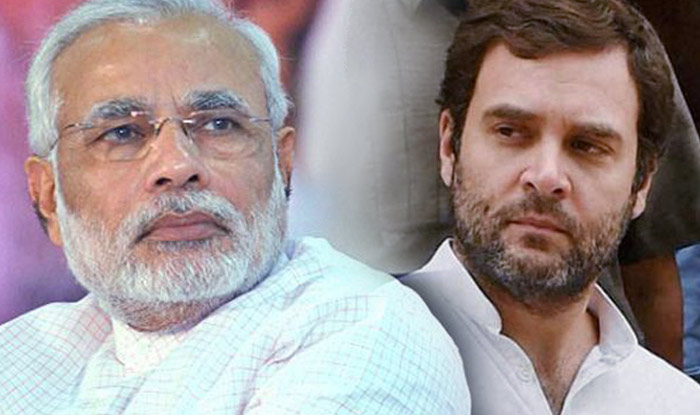
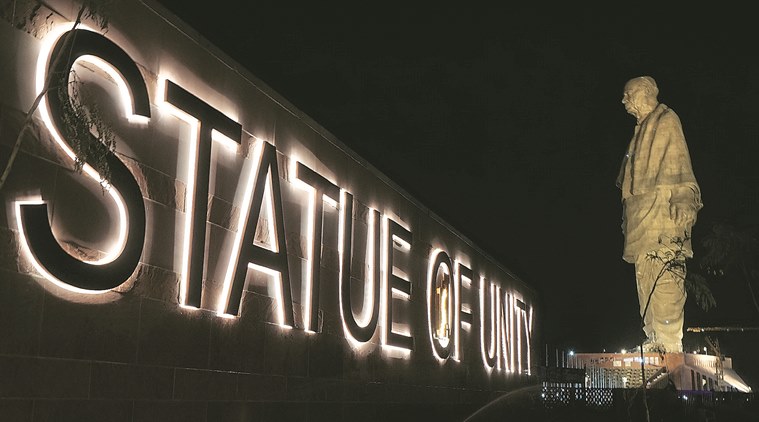
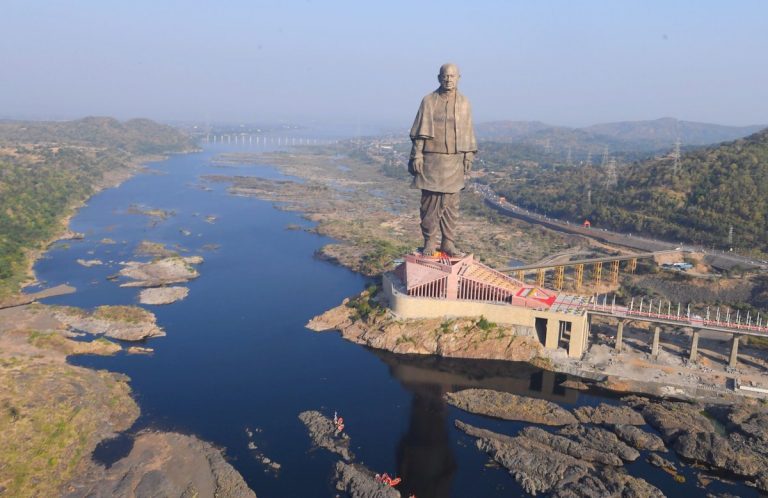
While inaugurating the world’s tallest statue, Statue of Unity, Prime Minister Narendra Modi today took a jibe on Congress President Rahul Gandhi and said had it not been for Sardar Vallabhbhai Patel, ‘Shiv Bhakts’ would have needed a visa to visit Somnath.

Modi was referring to Sardar Patel’s efforts of uniting the princely states of India after independence. Princely states of Junagadh, Travancore, Jodhpur, Hyderabad and Bhopal had initially turned down the offer to be part of India. Junagadh, one of the most important states comprising of the Kathiawar region was ruled by Muhammad Mahabat Khanji III over the predominantly Hindu population, who chose to side with Pakistan, much to the displeasure of people.

On 16th September 1947, when Pakistan accepted Junagadh’s Nawab’s Instrument of Accession, India was enraged. Sardar Patel was of the opinion that if Junagadh goes to Pakistan, it will flare the communal tension in the state. Junagadh was surrounded by India from all sides and Arabian sea through which it could reach Pakistan.

SaurashtraKart.jpg
By Dr. Andreas Birken at German Wikipedia – Own work (Autor), CC BY-SA 3.0 de, Link

Fearing for his life, the Nawab fled to Karachi, Pakistan, with his family. While Patel offered Pakistan to allow a plebiscite in Junagadh, he eventually sent in troops to force annexation of three of its principalities. Owing to the shortage of funds and forces, the Dewan was forced to accede to the Indian government. Eventually, on February 20, 1948, a plebiscite was held in the state wherein all but 91 out of the 1,90,870 who voted chose to side with India.

Hence, had it not been for Sardar Patel, the Asiatic Lions of Gir and the Somnath temple which is located in Junagadh would have become part of Pakistan and Congress President Rahul Gandhi, who has recently discovered his ‘Shiv Bhakt‘ side and often goes on temple runs during elections, might have required visa to worship at Somnath.

Vogue magazine would have advised Priya Ramani that putting my name would invite libel: MJ Akbar in Delhi court

0

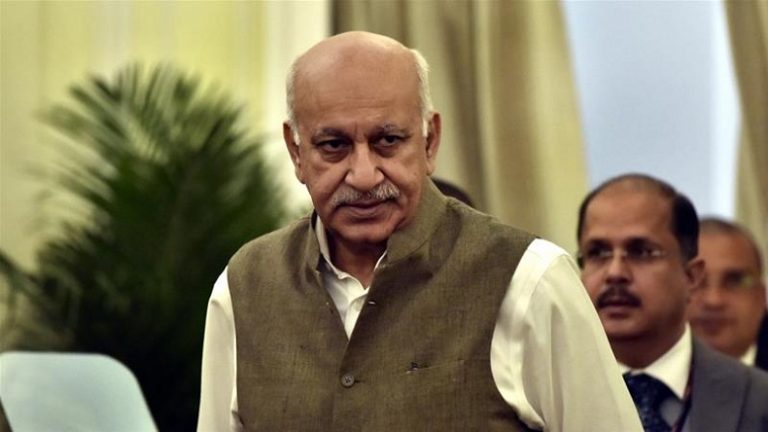
Former MoS, External Affairs MJ Akbar had filed a defamation suit against journalist Priya Ramani after the later accused him of sexual harassment. He had resigned from his post after Ramani and several other women accused him of sexual misconduct. The allegations had caused quite a furore in the media in the wake of the #Metoo movement gathering storm in the country.

Appearing in the court today, Akbar reiterated his stand, stating that Ramani had not mentioned his name in her article “To the Harvey Weinsteins of the World” because she would have been advised by the Vogue magazine that including his name would invite libel.


Citing anomaly in Priya Ramani’s conduct, while recording his statement in Delhi’s Patiala House court, MJ Akbar asserted that she had earlier absolved him of any misbehaviour in an article written in the Vogue magazine. Akbar stated that Ramani herself had stated that his name was not there because he did not do anything.


Defending his resignation on the raging #MeToo controversy, MJ Akbar also stated in the court that there was an immediate damage to his reputation because of the obscene nature of the concocted accusations levelled against him and that he voluntarily resigned from the post for seeking justice in his personal capacity.

Akbar stated in court that he had worked for four decades to build a stellar reputation and that has suffered damage because of the “Scurrilous nature of the false and concocted allegations.”

 Ramani was the first woman to name Akbar for sexual misconduct as the #MeToo campaign gathered steam in the country last month. 20 women have pledged to testify sexual misconduct by the veteran editor during his stint in The Telegraph and The Asian Age. The list includes Prerna Singh Bindra, Ghazala Wahab, Shutapa Paul, Anju Bharti, Suparna Sharma, Shuma Raha, Malini Bhupta, Kanika Gahlout, Kadambari M Wade, Majlie de Puy Kamp, and Ruth David.

Many big names have come out in the #MeToo movement in India. Several personalities from media and entertainment industries have been called out for their alleged sexually harassing and predatory behaviour.

The tallest statue in the world should serve as a reminder: It is time to reclaim our History

V.P. Menon wrote his book “The story of the integration of the Indian States” in 1961, narrating the story of how modern India was crafted. The magnum opus of a retired civil servant, which spoke about the merger of 565 princely states into the Indian Union. Inexplicably, for many decades, it was difficult to find this book in bookstores across the country.

In no other nation would a stalwart be relegated to the past in this manner. One would imagine that a book that lauds an unmatchable hero like Sardar Patel and his superhuman effort to craft the map as it stands today would be read by every Indian. Instead, as India walked on the path of altering-history soon after the Independence, Menon’s book became more and more difficult to find. This changed only in the last two decades, as electronic copies of the book surfaced and were widely circulated.

As Prime Minister Narendra Modi dedicated the Statue of Unity to the nation on Sardar Patel’s birth anniversary, there is no better time to read what Sardar Patel achieved for India, creating a modern nation from Kashmir to Kanyakumari and from Junagadh to Assam. The unification of Hyderabad would remain the most glorious of these hundreds of stories, which Sardar Patel helmed.

The unification of Hyderabad with the Republic of India was so glorious; it continues to hurt the modern day political considerations.

Hyderabad state, ruled by the Nizam, preferred to stay independent. As India started taking shaping up, with princely states signing the Instrument of Accession, the Nizam instead appointed diplomats to European countries. Nizam tried to persuade the Portuguese to sell him the Goa region, then controlled by the Portuguese. This would have given naval access to the Nizam.

Hyderabad was not an insignificant state. With an area of over 82,000 square miles, it was home to more than 17 million Indians. An overwhelming 87% of them were Hindus, though the state was ruled by Nizam Osman Ali Khan, and seen as close to Pakistan. Sardar Patel knew Hyderabad was non-negotiable – it was the link between North and the South, between what was known as Hindustan and Deccan in the centuries gone by.

Nizam found support in Razakars– a ragtag army of locals, owing allegiance to the Ittehad-ul-Muslimeen. This army plundered the state as voices in the run-up to the unification with India started to rise. From 1946 to September 1948, when Hyderabad finally acceded, this army continued to commit unthinkable atrocities in the Nizam’s territory against an unhappy citizenry.

This is the army Sardar Patel destroyed as part of Operation Polo, which resulted in Hyderabad becoming an integral part of India. Between September 13 and September 17 in 1948, Indian Army fought with the Razakars, a battle which culminated in the Nizam receiving a firm and tall Sardar Patel with folded hands and a bent back at the airport. Unfortunately, thousands, perhaps hundreds of thousands of people were killed in the ensuing battles, before Sardar Patel got his job done in Hyderabad.

V.P. Menon has described these events candidly and vividly. The modern-day Hyderabad, however, does not celebrate September 17 as the Telangana Liberation Day. There are two reasons.

Firstly, any such celebration would bring forth the glory of Sardar Patel, and match him in the official historical pantheon of exclusive heroes of Indian Independence – Gandhi and Nehru.

Secondly, the All India Ittehad-ul-Muslimeen (AIMIM) is now a political force to reckon with in Telangana, especially in Hyderabad. The party has controlled the Hyderabad Lok Sabha seat uninterrupted since 1984.

No government in Telangana and in the erstwhile Andhra Pradesh wants to upset either the Nehru-Gandhi clan or the Owaisis of the All India Ittehad-ul-Muslimeen. This is also true of the current Telangana Rashtra Samithi (TRS) government.

When the Bharatiya Janata Party (BJP) President Amit Shah raised the issue of the Telangana Liberation Day in an election rally in the state earlier in the week, he was not just talking about important symbolism but also about honouring the real legacy of Sardar Patel and of celebrating his heroics.

The Telangana BJP leader G. Kishan Reddy recently wrote about the need to celebrate the historical events of September 17, 1948. He wrote – “In September 1948, Sardar Patel sanctioned Operation Polo and ensured that Indian troops freed millions of patriotic Hindus and Muslims from the whimsical tyranny of the Nizam. Seventy years later, it is to appease the political inheritors of the Nizam’s legacy that the people of the modern-day state of Telangana are not allowed to celebrate the Hyderabad Liberation Day.”

India today bows its head in deference to the great Sardar Patel. India today takes price in the Statue of Unity. One can only hope that the tallest statue in the world can serve as a permanent reminder to our citizenry about the importance of reclaiming Sardar’s legacy. One can only hope that the imposing Statue of Unity can also remind us, that it is time we reclaim the History of various parts of the country, especially, Hyderabad.

Amit Shah has already hinted that the BJP will make reclaiming of Hyderabad pride as a poll issue. Even if it does not manage to generate enough interest in the 2019 assembly election, focusing on September 17 celebrations will eventually be a true tribute to Sardar Patel.

Statue of Unity is not just a great symbol for generations to come, but it is also a great opportunity to amplify individual works of the Sardar. Hyderabad is a great first candidate.


Two JeM terrorists killed in Tral encounter, one believed to be Masood Azhar’s nephew

0

Two terrorists from the Jaish-e-Muhammad (JeM) outfit were killed in an encounter by security forces Pulwama’s Tral on Tuesday. Media reports have claimed that one of the slain terrorists, Usman Haider, was the nephew of Jaish-e-Mohammad head, Masood Azhar.

According to reports, a group of terrorists were tracked to a residential house in Chankitar area of Tral on Tuesday. The terrorists reportedly opened fire at the security forces, leading to an encounter. The security forces had also reportedly cautioned the locals to stay away from the encounter zone.

Swayam Prakash Pani, Inspector General of Police (IGP) Kashmir, had later confirmed that the bodies of the two terrorists have been recovered. He also reportedly added that the killed terrorists were a part of the module responsible for recent stand-off attacks in and around Tral.

Reports say that while the house the terrorists were hiding in was reduced to a rubble following the fierce encounter, the recovered bodies were charred. It was also claimed that one UGBL-Barrel rifle has also been recovered from the encounter site.

As per reports, security forces in the area were concerned about repeated sniper attacks by JeM terrorists which had claimed the lives of 3 security personnel and injured 5. The forces had reportedly stated that a team of 4 snipers had infiltrated across from the LoC and were carrying out the attacks in Tral area. Usman Haider was reportedly the leader of the group.

Although the identity of the killed terrorists was not revealed initially, today the Jammu and Kashmir police have reportedly confirmed that one of the terrorists was in fact, Usman Haider, Masood Azhar’s nephew. Haider’s pictures released in the social media by the terror outfit picture him carrying an American M4 rifle, a sophisticated weapon used by the NATO forces in Afghanistan. Police statements have stated that they are yet to recover the M4.

As per reports, Haider is the second nephew of Masood Azhar killed by Indian security forces. His other nephew, Talha Rashid was killed by security forces in an encounter in Pulwama in November last year. An M4 carbine rifle was also reportedly recovered from Rashid’s person. According to reports, the terrorist outfit JeM had released a statement late on Tuesday confirming that Usman Haider and another terrorist have been killed by Indian forces. The encounter was carried out by a joint team of Rashtriya Rifles, SOG and CRPF.

South Korea President thanks PM Modi for sending customised ‘Modi vests’, usual suspects see red

0

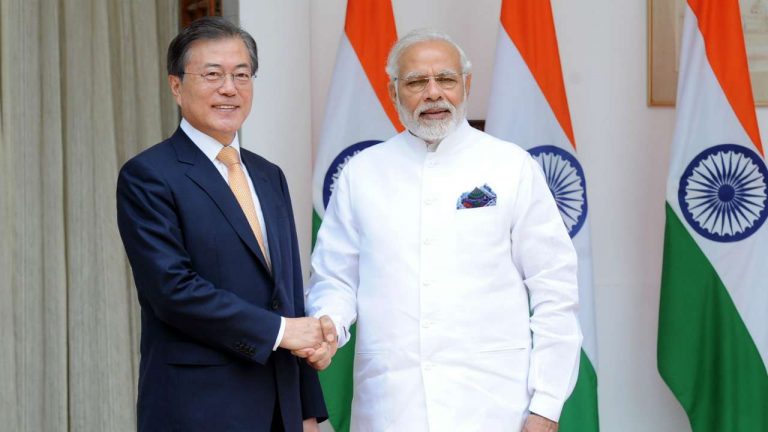
In a major endorsement to ‘Make in India’ initiative, the President of the Republic of Korea, Moon Jae-in has taken to his Twitter account to laud Indian traditional wear and thanked Modi for the kind gesture of sending customised ‘Modi Vests’, meticulously tailored to fit him. He also said that the Modi vests conform with the Korean dressing sense and can be worn easily in Korea.


During his official visit to India, President Moon Jae-in was particularly impressed by the vests worn by Prime Minister Narendra Modi and had complemented PM Modi for the same. Taking bonhomie to another level and acknowledging Moon Jae-in’s complement, PM Modi gifted him a few customised Modi vests, all scrupulously tailored to fit him.

President Moon Jae-in was also touched by PM Modi’s thoughtful message in Korean on Twitter after winning the Seoul Peace Prize. He congratulated PM Modi on this accomplishment.


But this seems to have not gone down well with the known Modi detractors. Omar Abdullah, fuming at the name of ‘Modi vests’ tweeted that Modi had usurped Nehru jacket’s name and has started calling it Modi vests. Clearly, those who have attributed every small thing that the country did since independence to Gandhi-Nehru dynasty are fazed by an outsider who is making India proud with his sense of diplomacy and realpolitik.


Ashok Swain, a congenital Modi hater, and a known dynasty supporter undermined PM Modi by saying that he can never be Nehru and took a cheap jibe at him. Evidently, the tweets by Korean President expressing gratitude to the PM Modi for sending him ‘Modi Vests’  have rubbed a section of self-proclaimed intellectuals the wrong way.


President of Korea, Moon Jae-in was on an official 3-day visit to India in July this year. The two leaders had bilateral talks on a wide range of issues and later delivered a joint statement. The two leaders also addressed India-South Korea CEOs and held extensive talks at the roundtable.

PM Modi asserted that South Korean companies are not only strengthening ‘Make in India’ initiative but are also generating employment opportunities in India. He thanked the South Korean president for his cooperation.

Modi was one of the few world leaders to congratulate Moon on his election last year.

While criticising the Statue of Unity, ‘liberals’ indulge in blatant lies and whataboutery

As prime minister Narendra Modi officially dedicated the Statue of Unity to the nation today, a section of people, mostly from the left-liberal group, intensified their criticism of the iconic project. In attacking the statue, they also indulged in whataboutery, reminding how ‘bhakts’ had criticised statues that Mayawati had built as UP chief minister and memorials of Gandhi-Nehru family members.

They also say that the statue cost too much money which could have spent better some other welfare project. The liberals also complain that BJP is trying to appropriate the legacy of Sardar Ballavbhai Patel, who was a Congress leader, and who ironically had banned RSS at one point in time.

It is unfathomable how can someone compare statue of the iron man of India built almost 70 years after his death to the dozens of statues that Mayawati had built during her own lifetime. And no, people didn’t attack Mayawati for building B R Ambedkar statues, most of the criticism was aimed at statues of Mayawati herself, and her party’s election symbol, the Elephant. And it was not that only ‘bhakts’ criticised the Mayawati statues, it was criticised by people from all political ideologies, including prominent journalists.

In fact, those ‘bhakts’ and eminent journalists shared the same feelings, no problem with parks and Ambedkar statues, but why build your own statues, that too so many?


However, Rajdeep has sung a different tune day, perhaps because it is the Modi government that has built and inaugurated the statue of liberty.


It is actually unbelievable that someone would compare Statue of Unity with Gandhi-Nehru family memorials. The criticism for the later is that there are too many of them. During Congress government, all government programs, schemes, institutions, infrastructure were only named after someone or other from the family, other than Mahatma Gandhi. Even though Congress party itself had several tall leaders in its long history, they were always ignored.

We had an IIM named after Rajiv Gandhi, we have national parks named after persons of the family. We have so many Nehru stadiums in the country that it actually gets confusing. There are thousands of statues of the Nehru family members in the country. Liberals also say that bhakts complain about Teen Murti Bhawan made Nehru memorial, which was Jawaharlal’s Nehru’s house. But the fact is, it was not an ancestral property of Nehru, it was built by British India government using public money, which was made official residence of PM after independence.

The cost argument is the most ridiculous one by far. It is argued that too much money is being spent on the statue. Well, this argument is made every time a big project comes up, not just a statue. Be it a high-speed train project, a space exploration program, or something else, there will always be someone who will say that it is a waste of money which would better be spent on building hospitals and schools. The sectors like health and education, that liberals say should get all the money, are not suffering due to lack of money. The combined budget of central and state governments in public welfare projects are enormous, and it’s not that government has deducted money from other essential sectors for the statue.

Majority of the cost of the statue is borne by the Gujarat government, as around ₹2400 crore has come from the state, out of total ₹3000 crore total cost. The project is not just a statue, there are several tourist attractions included in the project. In includes convention hall, amusement park, visitor centres, memorial garden, hotel, research centre, library etc.

Gujarat is already a top tourist destination in the nation with its historical monuments, and it is expected that the Statue of Unity will become a must visit place in the schedule of tourists. Over time, the statue will recover its cost, and due to the visit of both domestic and international tourists, the local economy will also flourish. The project will also provide direct and indirect employment to hundreds of people.

During its long rule, Congress failed to appropriately honour the great leaders of the country who brought us independence. Congress prime ministers were busy giving Bharat Ratna awards to themselves, so it was left to BJP government to honour non-Nehru family leaders of the freedom struggle. If people argue that other leaders our nation need not be honoured, then we have nothing to say.

The contribution of Patel or Bose was no less than the contribution of Nehru and Gandhi in the freedom struggle, and the current government is also only doing what should have been done decades ago.

Some also argue that why ‘bhakts’ hate Nehru but love Patel, both Congress leaders. There is a probable reason for that. There is a perception that just after independence while forming our country, Patel did a much better job than Nehru. It is argued that Sardar Patel integrated Hyderabad into the union of India smoothly, while Nehru blundered in Kashmir, the consequence of which is still being suffered by the country.