Home Blog Page 7020

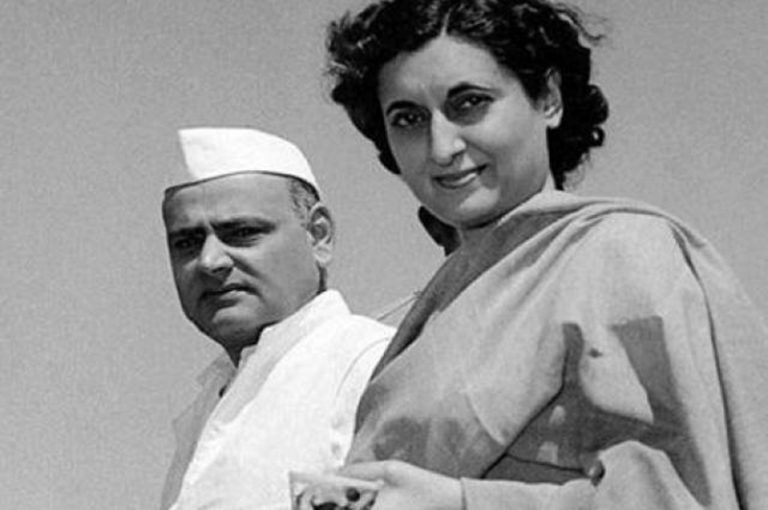
The politics and the necessity of forgetting Feroze Gandhy

“Love is so short, Forgetting is so long,” wrote Pablo Neruda in his much popular poem ‘Tonight I Can Write the Saddest Lines’.

When the silence rises in the current political scenario where Rahul Gandhi and his associates are too keen to rewrite and manipulate their own familial history to capitalize on a resurgent Saffron wave sweeping across the nation, to which they credit the rise of Narendra Modi; one can only pause and lament such cynical shamelessness of the Congress and their prodigal prince. Mostly men are helpless creatures of their circumstances and better remembered than judged past their times. Their lives must, however, be read, understood and analysed so as to understand whether the circumstances then created must be amended or allowed to perpetuate till eternity. Forgetting is neither a solution, not appropriate. Congress, however, has always had a narrow politics-centric view which forced them to modify, manipulate and even malign the history to suit their current political designs. We often complain that the Congress has erased from our modern history anything which is non-Congress.

We are wrong there. As I had pointed out in my previous post on Lokmanya Tilak, they have been equally brutal with their own. As Sonia Gandhi took the mantle, given her own history of decade-long contemplation on taking Indian citizenship, then taking the whole constitutional structure for a ride by becoming a parallel power structure without constitutional accountability; the Congress went with a vengeance of anything in the history which wasn’t only non-Congress, rather they clinically anything which was non-Family. In the process, they graduated from erasing non-family personalities in Congress to erasing even family personalities who stood independent of Nehru-cult even from within the family.

The same family which went great lengths expressing grief over the demise of DMK Patriarch at the age of 94, forget to post even one message commemorating the death anniversary of Grandfather of Rahul Gandhi (or Ghandy) and Father-in-Law of Mrs Sonia Gandhi on the 8th of September, who left with his life largely unlived at the age of 48.

Today is his Birthday and if we go by the silence today on his birthday. The Congress scion, the Grandson, who in his urge to prove his Brahminical antecedents hasn’t even bothered to even retweet a solitary, customary tweet placed by the party commemorating the Birth Anniversary of his Parsi Grandfather. Congress and Congress-leaning Political Pundits, refuse to believe this rejection of Congress is due to misgovernance and corruption of the government and utter disdain towards national sensibilities and political decorum.

Their favourite theory is that suddenly the Hindu majority population of India, which has always been tolerant and welcoming to conflicting faiths and ideas, has grown intolerant and has chosen, in Narendra Modi. Thus, the only way to correct this aberration is to become Hindu-er than BJP. They tend to ignore how the whole lot of Hindus pleaded with the Congress to give the second term to the most-loved President of India, who incidentally was a Muslim, and was hated by the Congress. So now that the alignment with the Churches in North-East has failed, declaration of Congress as a Muslim party has failed in bringing political benefits to the party, being Brahmin is the next bet for the party which continues to fall on the scales of political and public probity. In such an environment, where the political strategy is limited to establishing Rahul Gandhi as Janeudhari Brahmin, a Parsi Grandfather does not fit into the narrative.

This could probably explain the singular and solitary  impersonal tribute to the Congressman and Grandfather of Rahul Gandhi from the Party, and an absolute and confounding silence from the Prince himself whose grandfather’s birth anniversary it was today on the 12th of September, 2018 (well, the death anniversary too passed this week only on 8th of September and was treated by the Congress with equally cold silence).


The current Congress leadership has been using the surname of the same gentleman, after twisting “Ghandy” to Gandhi, giving the impression of being the inheritor of the legacy of Mahatma Gandhi, by virtue of having Feroze Ghandy as the grandfather, whose surname sounded similar; but refuses to acknowledge the existence of the man whose name they continue to milk shamelessly.

This is, however, not the tendency of the current breed, rather this has been the trend since long. The way his name has been buried under the Earth is an example of the vengeful forgetfulness of the first family of their own who do not fit in the narrative and their grand idea of divine right to rule over this nation. Books and books have been written about Nehru, Indira and the family, but rarely would you find any biography of Feroze Gandhi. The family has been pushing any memory of his into the oblivion with a steadfast silence that for a family which has painted the country “Nehru-Gandhi”, we do not find even a mention, forget the memorial of Feroze Gandhi.

In his book “Feroze: The Forgotten Gandhi”, Swedish writer Bertil Falk laments how there is so little of material in public domain available for the man who once held such prominent place in such a prominent family. When he set about to write the biography, and in the process of research, came across Mr PD Tandon. He quotes Late Shri PD Tandon, senior Journalist who observed the Nehru Family over three generations as a loyalist, very closely, who responded to Mr Falk’s statement that he thought that Feroze is underestimated with “He was not underestimated. He was not overestimated. He was estimated. That’s it.”

He too had no answer when asked by Falk as to why would a man like Feroze not deserve even one decent biography. All that we have in the name of this extremely honest and well-written biography of Feroze Gandhi is a biographical sketch by Feroze’s associate from Rae Bareli Shri Onkar Nath Bhargava, published in 1971 and another by Shanti Bhushan’s Deshbakt Firoz Gandhi published in 1976, and later translated into English in 1977 as Feroze Gandhi: Socialist, Democrat, Secular.

Feroze Gandhi could quote from Bhagwad Gita extempore, spoke pure Allahabadi dialect and was a true middle-class Parsi, unlike foreign educated Nehru who came across the realities of rural India only when he came across the peasant movement, when in his thirties. In spite of wild speculations about something as basic as the religion of Feroze Ghandhy, the Nehru Family maintained a studied silence. Feroze was born to on 12th September 1912, in Mumbai, fifth child to a simple and religious Gujarati Parsi, Jehangir Faredoon Ghandy and Rattimai Commissariat.

He was adopted by his maternal aunt, Shirin Commissariat, who was the first Parsi woman to become a Fellow of the Royal College of Surgeons and was in-charge of Lady Dufferin College. Bertil Falk puts to rest two rumours about Feroze Gandhi, namely that of a Muslim father named Nawab Khan and another of a rich Hindu father named Raj Bahadur Kamla Prasad Kakkar. Feroze as a boy remained aloof of the turbulent politics of the time for long. This despite the fact that when the Prince of Wales visited India in the middle of raging local hostilities against the British in the aftermath of Jalianwala Bagh massacre on 11th November 1921, he was escorted to the port in safety by Jehangir Fareedon Gandhi. The prince was accompanied by his young relative Louis Mountbatten. Feroze was in Allahabad at that time, under the guardianship of his aunt Shirin. His first brush with the freedom movement was when he was Sixteen in 1928, most likely accidental.

One day, Feroze saw a frail woman fainting under the summer sun protesting against the British outside Ewing Christian college and jumped to help. This woman was later to become his Mother-in-law and was called Kamala Nehru. On 1st of April, 1930, Feroze left school and joined the freedom movement. Feroze was imprisoned in 1930 for taking part in Civil Disobedience movement. Feroze organized 1932 movement in Allahabad. Feroze was a ground-level worker and not an eloquent speaker. He was promptly arrested once again.

When he came out of the prison in 1933, he proposed to Indira Nehru. Feroze was Twenty-one then and Indira, Sixteen. Indira refused believing it was too early to get married. Feroze by that time, at the age of Twenty-one, was no longer a political novice, having been to the prison thrice. Feroze accompanied Mrs Kamala Nehru to the Sanatorium in Bhowali in her last days. When Indira was sent to England for studies, Feroze was to follow her, armed with a recommendation from Nehru to study in the London School of Economics. His days there were primarily spent in activism, working with Krishna Menon for India League. Bertil quotes a confirmation of Feroze’s stint in London from Emma Caseley, Acting Alumni Relations Manager of London School of Economics Foundation. She wrote to Bertil and I quote from Bertil’s account:

“According to our records, Feroze Jehangir Gandhi, date of Birth 12th September 1912, was admitted to the School to read for BSc (Econ) degree in September 1937. In the April of the following year, he appears to have had a severe attack of pleurisy and to have decided soon afterwards to withdraw from his course in the School. The last record of his attending a lecture at the School relates to 4th May 1938. In our files, his name is spelt as Gandhy.”

He never returned to LSE after May 1938, but he did not return to India either. He stayed put in London. Of the five years, Feroze spent in London, he studied for Eight Months. He did not receive his graduate degree. Indira moved to Switzerland from London at the end of 1939 and stayed there for around one year. Feroze was to return to India in 1941 only, with Indira as his fiance. They married in 1942, after initial opposition of Nehru. Feroze was not much welcomed in the family and as per Aruna Asaf Ali’s account, Nehru’s sister Vijaylakshmi Pandit resented this new addition to the Nehru family with the same intensity with which she disliked Kamala Nehru. While she called the former “Mill-operator’s daughter, this new man in the household was from “a shopkeepers’ family”.

in 1942, when Police crackdown happened, Feroze with his earlier history of freedom struggle was a much bigger name than Indira. He was sent to the prison for the fourth time in his life, this time after a gap of Nine years. Next few years, before and after independence was spent by Nehru in trying to tame the young men, domesticating him and putting him in a job which would match the status of the elite Nehru family. He was initially installed in the National Herald as Director-in-Charge in early 1947. The then Manager, TN Singh resigned. It was Feroze who was to lead the organization to bankruptcy. To be fair, Feroze tried his best but lacked intellectual heft or academic background to run a Newspaper. As fate would have it, Feroze entered into the Constituent Assembly from Uttar Pradesh, at the behest of the then Chief Minister and a good friend of Nehru, Shri GB Pant and became the last person to sign on the Constitution on 24th of January, 1950, Nehru being the first to put his signature. Feroze was slipped into parliament silently and silently he stayed there, until 1952, when he decided to earn what he got as Nehru’s son-in-law.

In 1952, Feroze decided to drop out of the by then, bankrupt media house and contest elections from Rae Bareli. He remained a silent backbencher in the parliament for long and then on 6th of December, 1955 decided to make a speech which attacked the Government for corruption like never before, charging Bharat Insurance Company owned by Dalmia-Jain Group with misappropriation of funds to the tune of 22 Lakh rupees. This resulted in the nationalization of about 250 Insurance companies and merged into Life Insurance Corporation of India. His another speech on 16th of December,1957 about Mundhra Scam charging a conspiracy between Haridas Mundhra and the Government, he made then Finance Minister, TT Krishnamachariresign and earned for himself the name of Giant Killer. This time LIC was on his target, having made dubious investments in Mudhra’s companies. A committee was appointed under Chief Justice of Mumbai High Court, MC Chagla. The committee confirmed wrongdoing, sentencing Haridas Mundhra for 22 years. Quite unlike Rahul Gandhi, Feroze Gandhy was quite meticulous in his research and substantive in his charges.

The way a middle-class Parsi man has been erased out of not only family history, rather also out of the collective memory of the nation, does raise questions about the first family of Indian polity whose own record and built-up reports of hardships faced in the independence struggle seem to be trumped up and exaggerated, to say the least. This is not an attempt to judge the past through the eyes of the present. This is an attempt to understand the present in the light of the past.

Hindi Diwas: Is Narendra Modi-led government imposing Hindi in non-Hindi speaking states? An explainer

It was on 14th September 1949, the Constituent Assembly of India adopted Hindi as the official language of the newly formed nation. The language was chosen owing to its penetration and number of speakers who could understand the language in the country. 14th September is celebrated as ‘Hindi Diwas’ because of this. Under the Official Language Rules 1976, all government offices are encouraged to communicate in Hindi so that it reaches out to more common people.

When the Constitution was framed, the writers of Constitution had decided that Hindi and English can be the Official Languages of India for the first 15 years. On 28 January 1965, exactly 15 years later, English should be removed from Official Language and Hindi shall continue to be the sole Official Language of India. A 1955 Kher Commission Report submitted to the President reiterated this. The common sentiment was that English was the language of British and it reminded the people of colonial days and using Hindi can remove that thought.

However, anti-Hindi agitations down south made Nehru amend the Official Language Act of 1963 in 1965 suggesting that English can continue to be the Official Language of the states until the State Legislative Assembly passes a resolution to adopt Hindi as sole Official Language. So, the states that do not want Hindi can continue to use English apart from its native tongue. However, the makers of the Act, gave provision that 10 years later a committee is formed to ensure Hindi reaches the nook and corner of the country, thereby replacing English and that it is also in tandem with the regional language.

Committee of Parliament on Official Languages was formed in 1976 under Indira Gandhi-led Congress government as a part of the Official Language Rules under section 4 of the Official Language Act 1963. The motive of this committee is to assess the penetration of Hindi language across India and to make sure that all wings of government are well equipped with Hindi, such that the colonial language English can be replaced by native Hindi. Hindi in Devanagari script was chosen because of its closeness with Sanskrit.

Since the issue was a matter of linguistic tension and taking into account the size of India, it was decided that the Committee would submit eight separate reports detailing the progress made in spreading Hindi to the whole of India and submitting recommendations to Ministries. This report will be sent by President to both the houses and also to all State governments. The first report was submitted in January 1987 and eight reports were submitted in August 2005 followed by a ninth report, which was a comprehensive report of all eight reports and recommendation to the President. The ninth report was prepared by a committee headed by the then Home Minister, P. Chidambaram.

This committee recommended 117 points to make sure Hindi reaches far and wide. These recommendations were forwarded to the President on 2nd June 2011. While the recommendations to propagate the use of Hindi was made during the UPA, it is often shown as the current BJP-led NDA government is insisting on ‘Hindi imposition’. The committee led by Chidambaram recommended that newly recruited employees working in Central Government office need to be imparted training in Hindi within a year of joining as well as an increase in usage of Hindi on computers in Central Government offices. The committee even stressed that the Central government employees do their work in Hindi on Computers. You may read more on the report here.

All Modi government did was to extend the recommendations to social media. However, the same Chidambaram who headed the committee which talked about spreading Hindi far and wide across the nation, warned Modi of ‘dire’ consequences if he tries to spread Hindi in non-Hindi speaking states.

Amusingly, all the committees were set up by the governments prior to 2014 and recommendations were forwarded to ministries before Modi became the prime minister but it is usually portrayed as if Narendra Modi has been pushing for Hindi. Last year there was an outrage on Hindi signages in Namma Metro in Bengaluru, saying that the Narendra Modi-led government is ‘imposing Hindi. Considering Namma Metro is a joint venture between the government of India and the state government, and it is the duty of the government of India to promote Hindi as per Article 351 of the Constitution of India.

Article 351, Constitution of India

And while people may be against the idea of promoting Hindi itself as a language opposing the promotion of Hindi is actually a constitutional amendment. Till the above article exists in the Constitution, the government of India is dutybound to promote Hindi.

Uttar Pradesh: Ganesh sthapana disrupted in a Muslim dominated area, police denies communal tension

0

Ganesh sthapana on Ganesh Chaturthi was reportedly disrupted in Karbala, New Agra Colony of Uttar Pradesh which is a Muslim dominated area. The festival, which coincides with the Muharram, the month of mourning for Muslims, was being celebrated by the people from Valmiki community who live in the lane in the area. However, when the people tried to put up the Ganesha idol in Banne Khan chowk, some Muslims opposed the same. Later, some people from Bajrang Dal came and insisted the idol be placed there. Following which, police was called in to contain the tension.

Speaking to OpIndia, Inspector Aditya of New Agra Thana said, “It is essentially a Muslim dominated area and the people from Valmiki community live in a lane in that area. Usually they bring and put up the idol for Ganesh Chaturthi in their own lane, but this time, they put it up in Banne Khan chowk, which people objected. We had deployed some police officers in the area to make sure the matter does not escalate.”

“People from Bajrang Dal came to create a ruckus, but there was no communal tension at all and matter is under control,” he added.

Watch: IG responsible for Pahad Singh’s surrender talks about how Naxals use sophisticated technology

Recently, after some ‘activists’ were arrested for their alleged involvement with Naxals, a large section of the intelligentsia erupted with cries of how a fascist regime was cracking down on free speech and dissent. They asserted that these were mere activists who worked for the rights of the adivasis and that to allege that they had connections with the Naxals was basically cracking down on do-gooders who disagreed with the current Modi regime.

Busting this narrative, OpIndia conducted an interview with Pahad Singh, a Naxal who had surrendered after 18 years in the jungle. A high ranking Naxal as Pahad Singh himself revealed that one of the ‘activists’ who was arrested, Arun Ferreira, was present at a high-level meet of CPI (Maoists) which is a banned terror outfit. He also revealed that Pahad Singh himself was made the secretary of two areas in that meeting, and Central Committee Members were also present. He asserted that Ferreira was a member of the Rajya committee of CPI (Maoists).

Pahad Singh perhaps managed to successfully shatter one part of the narrative that surrounded the raid and subsequent house arrest of these ‘activists’ by placing Ferreira directly a high-ranking Naxal meet.

However, there is another part of the narrative which is equally important. Some of these ‘activists’ have also been accused of sending emails that not only hinted at an assassination attempt on the Prime Minister’s life but also planning of how arms and ammunition can be smuggled, arranging the finance for the “movement” etc. The police had also spoken of an email by ‘activist’ Sudha Bhardwaj to one Comrade Prakash which had chilling details of how security forces can be ambushed.

Many sympathisers alleged that the entire case was fabricated because if these people were Naxals, they certainly wouldn’t use emails to plan an assassination plot and other details such as smuggling of arms and ambush of security forces.

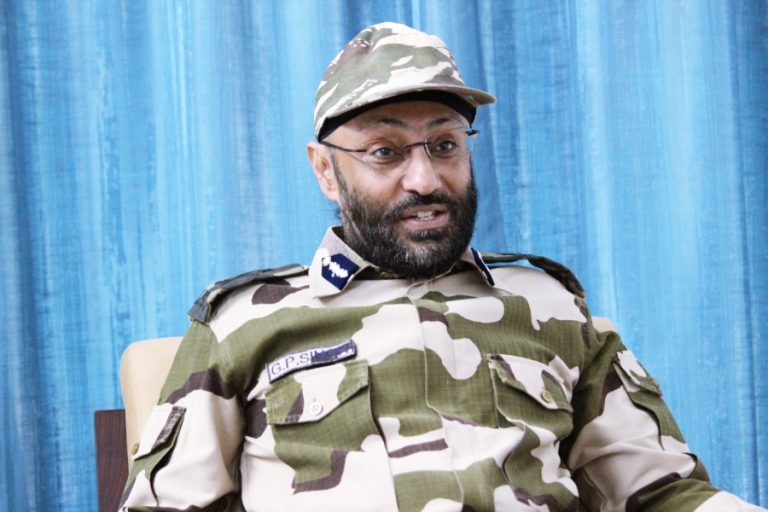
After the interview which OpIndia conducted with Pahad Singh, IG G P Singh who was instrumental in Pahad Singh’s surrender was also interviewed. GP Singh has been working in Naxal affected areas for the better part of his career and was tracking Pahad Singh since the time he picked up the weapon. He used to be in touch with family in order to coax him into surrendering. Finally, after 18 long years, when GP Singh became the IG of Durg, Chattisgarh, Pahad Singh decided to surrender to him.

In the course of the interview, GP Singh was also asked about the relationship the Naxals share with technology in the light of the ‘intelligentsia’ and left activists asserting that since PM’s assassination plot and other material recovered was planned on email, the entire episode must be fake and got up.

IG GP Singh said that any organisation in today’s day and age has to use the latest technology. He gave the example of Osama Bin Laden and that he had, in the year 2000, written about how he communicates with his cadre all across the world. He said he used a sophisticated messaging system that could be used from any cyber cafe. While the messages might look innocuous to anyone else, the recipient would understand how to decode those messages.

Coming to the Naxals, he said many times they have intercepted email exchanges but they are encrypted emails. He said that they are always encrypted by a strong encryption key using PGP software which is difficult to crack. These organisations do use technology and in fact, use the latest technology because, for them, their survival is paramount.

Talking about the latest developments, he says it is also possible that the “Urban Naxals have not been trained to that level” and now that their emails have been caught, they have been exposed in a big way.

He reiterated that the Naxals, especially the higher management use the latest technology and sometimes go way ahead of the security forces. Once caught, he said, the encryption on the emails have to be breached, which is often a difficult task.

[youtube https://www.youtube.com/watch?v=eXv98kN6ugM]

Media still unsure about ABVP’s affiliation, even though it’s mentioned on their website

On 13th September 2018, elections to Delhi University Students Union (DUSU) was held, and the result of the same came by midnight. In the keenly contested election, Akhil Bharatiya Vidyarthi Parishad Parishad (ABVP) won three posts, while National Students’ Union of India (NSUI) won the post. Chatr-Yuva Sangharsh Samiti (CYSS), the student wing of AAP drew a blank. NSUI is the student wing of Congress party and ABVP is the student wing of Rashtriya Swayamsevak Sangh (RSS).

While nobody has any doubt about the affiliation of NSUI and CYSS, it seems many are not aware/confused about the affiliation of ABVP, who mistake it for student wing of Bharatiya Janata Party (BJP). And this includes several mainstream media outlets and news agencies. While covering the news of DUSU election, several media houses reported that ABVP is BJP’s student wing.

News agency PTI introduced ABVP as “BJP’s student wing”.

NDTV thought that the contest was between Congress affiliated NSUI and the BJP-backed ABVP.

Times Now was confused between BJP and RSS, so they decided that ABVP is the student wing of the both BJP and RSS.


News18 had no such doubt, they are sure that ABVP is the student wing of BJP.


Another news agency UNI also thinks that BJP’s student wing is ABVP.

In the live update of the elections by Firstpost, ABVP keeps swinging between BJP and RSS.

Asian Age also wrote that ABVP is affiliated with BJP.

The same mistake was repeated by many other media houses.

It may be noted that BJP has its own separate student wing, Bharatiya Janata Yuva Morcha (BJYM), and ABVP is not its student wing. In fact, ABVP is a much older organisation than BJP. ABVP was founded in 1949, while BJP came into existence in 1980 only.

But media keeps mistaking ABVP to be the student wing of BJP, the DUSU elections were not the first time the did it. In fact, ABVP’s website specifically mentions that it is not BJP’s wing. It says, “ABVP is not the students’ wing of BJP. We are an independent organisation. You may call us the students’ wing of RSS.”

Over 60,000 fake ration cards detected in Tripura during digitisation drive

0

Tripura Law Minister Ratan Lal Nath has stated that his government has detected over 60,000 fake ration cards and around 2,90,000 fake beneficiaries of the Public Distribution System (PDS) during a digitisation drive. He also said that the state government was focusing on digitisation and e-government services to curb corruption and bring accountability in public services.

“We conducted a verification through a digitisation drive and found that 62,340 rations cards and 2,90,776 PDS consumers are fake,” Nath said on Wednesday. In Tripura, ration cards are given to an entire family including the names of all the members instead of an individual.

During the erstwhile Left regime, a total of 9,62,046 ration cards were registered with the state food department. But the current government found only 8,99,706 cards to be genuine. During CPI(M) rule, 39,40,277 beneficiaries of the PDS were registered with the government but after the digitization drive, the incumbent government found only 36,59,501 to be authentic.

During its campaign, the BJP had promised to increase social security pension benefits. “We promised to hike social security pension benefits in our Vision Document. At the same time, we are also trying to identify fake beneficiaries”, Nath told reporters.

After his ‘indefinite hunger strike’ fails in 19 days, Hardik Patel to go on a month long retreat to ‘strategise’

0

After an embarrassing end to his 19-day fast against the Gujarat government, Hardik Patel has now decided to focus on his health, reports DNA. He has reportedly decided to take a month-long break to create a new strategy to pressurize the government to accepts his demands, as his ‘indefinite hunger strike’ did not yield any results.

According to reports, Hardik Patel will be now heading to Jindal Institute of Naturopathy in Bengaluru for a detox programme. One of the PAAS leaders has reportedly said that Hardik Patel may have suffered Kidney problems as a result of his long fast and is planning to go on a break to regain the lost health. It is being reported that once Hardik Patel comes back from the retreat, he would think of new strategies to fulfil his demands. “It is also possible that he may start Bharat Bhraman Yatra approaching different leaders across the nation for support,” said Hardik’s close aide.

“The fast caught the attention of very few people in Gujarat, although several controversies started during the 19 days and many political celebrities visited him,” said a leader close to Patel. “This has forced Hardik (Patel) to think of other ways of protest against the BJP government and he will muse on the same during his month-long break”, the aide added.

Hardik Patel, once the face of Patidar agitation is now seen as a controversial leader of the community. Hardik Patel seems to have lost the plot in the Patidar agitation, as he had to end his indefinite fast on the 19th day, as it turned out to be counterproductive for him, as not only Gujarat government did not give any importance to it, but also some section of Patidar community seem to have upset about Hardik causing embarrassment to their community.

Hardik Patel started his ‘indefinite fast’ on August 25 in Ahmedabad demanding reservation for Patidars in government jobs and higher education and debt waiver for farmers. A controversy had erupted during his fast, as the PAAS leader had refused to let doctors take blood and urine tests and also let doctors weigh him. It was reported that despite not having food, Hardik Patel had actually gained weight.

Hardik Patel is now convicted for causing riots in Mehasana and has been found guilty of charges related to arson and creating a ruckus at the office of BJP MLA Rushikesh Patel. He is also accused of large-scale violence in the state of Gujarat during the 2015 Patidar Andolan seeking reservations for Patidar community. A sedition case is also going on against him in an Ahmedabad court.

Maharashtra court issues arrest warrant against Chandrababu Naidu in a 2010 case

0

The judicial first class magistrate of Dharmabad in Nanded district in Maharashtra issued an arrest warrant against Andhra Pradesh Chief Minister Chandrababu Naidu and 15 others in a 2010 Babli project agitation case. The Telegu Desam Party (TDP) in 2010 had accused the controversial Babli project over Godavari river as an illegal project and claimed that the barrages over Godavari will dry out districts.

The local court in Maharashtra has directed the police to arrest all the accused and produce them in the court by 21 September. Back in 2010, Naidu and others, including state Water Resource Minister Devineni Umamaheswara Rao and Social Welfare Minister N Anand Babu, who were then in the Opposition in Andhra Pradesh, were arrested and put up in a jail in Pune for the agitation staged by them against the Babli reservoir project. Naidu and his party leaders are facing the charge of defying the prohibitory orders of the local police and visiting the Babli project.

With Telangana set to go to polls after the assembly was dissolved by the Telangana cabinet, the TDP is believed to be keen on attend before court to not only declare his respect for the judiciary but also for political considerations. The BJP and the TDP parted ways earlier this year in March.

DUSU elections: ABVP wins 3 out of 4 top posts

0

Following a high drama, Akhil Bharatiya Vidyarthi Parishad Parishad (ABVP), the students’ wing of the Rashtriya Swayamsevak Sangh (RSS), has won 3 out of 4 posts in the recently concluded students’ union elections in Delhi University.


ABVP’s candidates Ankiv Basoya, Shakti Singh and Jyoti Choudhary won the posts of president, vice president & joint secretary respectively whereas National Students’ Union of India (NSUI), Congress’ students’ arm won the post of secretary. Earlier today, the counting had been suspended for a few hours after 6 EVMs stopped working. Accusing the administration and the police of being ‘involved’ in the malfunctioning of EVMs, the NSUI chief Fairoz Khan urged everyone to raise their voices against ‘democracy’s brutal execution’.

ABVP, in response, said that this is a ‘Congress and Aam Aadmi Party style of politics’ as they (NSUI and CYSS, students’ wings of respective parties) started spreading rumours of on tampered EVMs.

Shia Waqf board chief claims Rahul Gandhi and Ghulam Nabi Azad pressurised him to save Vijay Mallya

0

Shia Waqf Board Chairman Waseem Rizvi has claimed that when he wanted to lodge an FIR against Vijay Mallya for encroachment of board land, Rahul Gandhi and Ghulam Nabi Azad pressurized him not to do so. Speaking to ANI, Rizvi stated that Vijay Mallya was allegedly running an illegal liquor factory in Meerut on a property that belonged to the Shia Waqf Board.


Rizvi has further stated that when he got to know about the encroachment, he sent a notice to Mallya on behalf of the Waqf board and wanted to initiate legal action against him. He further stated that the then SSP of Meerut had flatly declined to lodge an FIR against Vijay Mallya. When he tried to complain to higher authorities regarding the matter, he received a call from senior Congress leader Ghulam Nabi Azad who made him talk to Rahul Gandhi over the phone. Rizvi added that Rahul Gandhi had told him that Vijay Mallya is a decent man and Rizvi should not initiate action against him.

Rizvi further adds that he had tried to complaint to many persons including the then chief secretary of Uttar Pradesh that the state administration is being pressurized not to lodge an FIR against Vijay Mallya, but his efforts were fruitless.

Rizvi’s statement comes at the wake of Congress President Rahul Gandhi claiming that Finance Minister Arun Jaitley had struck a deal with Vijay Mallya and did not inform the authorities of his planned escape from the country. The Congress and the BJP had been in a fierce verbal battle after over the issue after a Congress leader claimed that he had seen Arun Jaitley speaking to Mallya near the central hall of parliament just prior to his escape from the country. BJP had denied the accusations and had blamed the Congress of working in tandem with Vijay Mallya. Arun Jaitley had also denied the allegations and stated that he had never given any appointment to Mallya and Mallya had only abused his privileges as an MP and tried to talk to him outside Parliament but he had brushed him off and asked him to attempt talking to his bankers instead of him.