Home Blog Page 7038

The kind of Indian Atheists and why they continue to be Hindus, unlike Abrahamics and Marxists

In the last 20 years or so we have personally seen a healthy rise of skepticism or atheism in India. If we were to look at the absolute numbers from the 2001 census to the 2011 census, the number of people who are in the category of “religion not stated” has risen from 7 lakhs to 29 lakhs. According to the Global Index of Religiosity and Atheism, the number of non-religious people in India has risen by 6% from the year 2005 to 2012.

Now someone might look at these numbers and say that atheism has hardly made a dent in India. But, atheism/skepticism in India has never been about the rejection of the Hindu identity. If the surveyors were to add another category which stated “Hindu Atheist/Skeptic” I could say with a relative sense of certainty that we will see a drastic increase in the percentages.

To understand this phenomenon, even more, we will have to categorise Indian Skeptics intro three broad categories:

  1. Marxist Atheists: These are the people who will probably be the single largest chunk out of the 29 lakhs mentioned in the “religion not stated” category from the 2011 census. They claim to be “rationalists”, although their claim to rationality is up for debate.
  2. Wannabe Atheists: These are the 2nd largest group in the “religion not stated” category. They are wannabes, which means, they have basically taken up the label of an atheist because they think it is “cool” or maybe because they saw some videos of Richard Dawkins, Christopher Hitchens, Sam Harris, Daniel Dennett etc. on YouTube. The probabilities of them ever reading a Hindu text are in the very low percentile. Many wannabe atheists also call themselves Hindus and that is why government surveys will never reflect the true picture of skepticism in India.
  3. Dharmic Skeptics: These are the individuals that firmly associate with the larger Hindu identity. They follow the Carvaka/Lokayata Darshana. They have a distinctly Indian way of looking at the world. They critique Eastern Philosophies using modern science as well as the pramanas that they think are valid.

One might ask a question as to why have I bothered to classify Indian Skepticism in such broad categories? The reason is very simple – we live in a very Euro-centric world today. All our conversations, our terminologies, the verbal tools we apply to understand our place in the world today, stems from a template that is essentially European/Western/American. A person who is born and raised in India usually tries to make sense of their own culture/”religion” using categories that stem from a language that was built on a specific Judeo Christian template.

You could be a believer or a skeptic, but the language used while discussing Eastern Faiths remains Euro-centric.

I could use my own case as an example. My own personal journey was a steady progression from being a wannabe atheist to a Dharmic Skeptic. By the time I had turned 18 I had started questioning the claims made by my fellow “co-religionists”. The conversation would always be around “how do you know there is a God?”. But the words we were using while debating each other were God, Soul, Rebirth, Idol Worshipping etc. Fun fact, the 1st religious books I ever read were the Bible and the Quran. In my own case, I had rejected my religion i.e. “Hinduism” without reading a word or any text of that “religion”. I had assumed that all religions preach the same things and the horror that I had faced post reading the Quran and The Bible was sufficient proof for my 20-year-old brain to reject the entire Pantheon of Eastern thought that included 1000’s of texts. It would be a fair assumption to say that I was a skeptic who suffered from “the sameness disease”.

So this article is my attempt to explain how Dharmic Skepticism does not overlap with the Western Neo Atheistic movement at multiple levels. I will try to put forward how the challenge presented to Beliefs/Philosophies/”Religions” that originate in India in the current intellectual climate is based out of an inaccurate or in some cases a completely wrong, or an utter lack of understanding of the same philosophies.

Post-September 11th the West saw a sudden surge in books written under the “Neo Atheism” category. It started with Sam Harris’ 2004 book titled “The End of Faith“. Then came Richard Dawkins book, “The God Delusion“ and Daniel Dennett’s book, “Breaking the Spell“ followed by Christopher Hitchens book “God Is Not Great.” in 2007. These books were a direct assault on religions. This was the probably the 1st time that a large number of authors were extremely vocal about their lack of belief in mythical supernatural deities.

But all these books had one common factor. They did attack religions, but which ones were they attacking? If one was to do a careful reading of all the authors you will find that the core focus of their assault was on the three big monotheistic religions i.e. Judaism, Christianity and Islam. There was no analysis of any eastern philosophy. The “exception” was Christopher Hitchens who tries to reject the Eastern philosophies in a very ham-handed way in his book via Chapter 14 titled “There is no Eastern Solution” where he writes a total of 10 pages which are basically about his experience in the Osho Ashram in Pune to the Zen Buddhists in Japan and the LTTE in Sri Lanka. In all those 10 pages one cannot find a single quotation of a verse from any of the 1000′ of books in the Indian Pantheon. One has to ask a question then that if Christopher Hitchens can cite the Bible and Quran to reject those religions why did he not do the same with Eastern philosophies?

But the tsunami that was “Neo-atheism” was not going to leave India unaffected. The authors and their works did make their way into India and the arguments that they presented in their books were cut, copy and pasted by Indian skeptics to reject Eastern Darshanas. And this is the crux of my problem.  I want to clarify one point before we go any further. This article is not an attack on Dawkins, Hitchens, Dennett, Harris at all. This is an attempt to explain a very basic point i.e. If you want to reject an idea study that idea in detail first. Just because the atheists in the West have rejected Eastern philosophies we don’t need to reject them. What if their reasons are flawed? We need to use our own brains, do our homework and then accept or reject any idea. We should not copy anyone blindly. It can lead to potentially bad results. This article is not about bashing the “Neo Atheism authors”. In fact, I like all those authors and they helped me a lot in understanding their cultures/religions. But, their understanding did not help me in understanding my culture/religions.

The level of information about Eastern philosophy, epistemology, dialectics among the Neo Atheism movement is insufficient. One can make a slight exception for Sam Harris who has studied some forms of Buddhism and the teachings of Ramana Maharishi. But, even post that if we were to read all the works of Sam Harris you will not see Sam Harris citing one verse from a single text of Buddhism or Sri Ramana’s teachings. In his book “Waking Up” Sam uses the same method applied by Christopher Hitchens where his rejection of certain aspects of the East are on the basis of the behaviour of some of the gurus like Osho (So much for differentiating ideas from individuals) or an argument where Harris states ” We can also grant that Eastern wisdom has not produced societies or political institutions that are any better than their Western counterparts; in fact, one could argue that India has survived as the world’s largest democracy only because of institutions that were built under British rule. Nor has the East led the world in scientific discovery. Nevertheless, there is something to the notion of uniquely Eastern wisdom, and most of it has been concentrated in or derived from the tradition of Buddhism”.

An honest assessment of Harris’ understanding of the East can be summed by a quote from Dennis Waite from his review of his book Waking Up. He states ” He excuses his failure to cover any teaching in any depth by claiming that he is looking for the ‘diamond’ amongst the presumed detritus that forms the bulk of most ‘religions’. To be able to “focus on the most promising lines of spiritual enquiry”, one requires an in-depth understanding, to begin with. Harris’ statements purporting to present ideas from Advaita demonstrate that he does not have such in-depth knowledge. This is scarcely surprising, given that his principal source is Sri Poonja. He refers to Poonja as “one of the greatest living exponents of Advaita Vedanta”! This is so far wide of the mark that it very clearly highlights Harris’ ignorance of the subject to anyone who is genuinely familiar with the teaching.”

The standard mistakes made by “Neo-Atheists” as well as Marxist and Wannabe Atheists in India while critiquing Eastern Darshanas are:

  1. They are called religions in the sense of how they are in the West.
  2. They are presented as top-down ideologies.
  3. The Eastern Ishwar is mistaken to be the Abrahamic God
  4. The Abrahamic soul is imposed on the Eastern Atman.
  5. Not even a single primary text is cited while the Eastern Darshanas are being rejected.

The Neo-Atheist ideology cannot wrap its head around the reality of being Hindu and being a materialist/skeptic/atheist. This is the reason that I have consciously stayed away from the Neo-Atheist movement. As a Dharmic Skeptic, I cannot relate to that line of thinking. My debate with individual Darshanas within the larger Hindu Samaj is at the level of their individual beliefs, and it varies from Darshana to Darshana.

We cannot debate a Samkhya Darshana expert the same way we would debate an Advaita Vedanta follower. They use different pramanas. The debate with them will be based on specific beliefs of that individual Darshana. Samkhya has no Eshwar. In such a scenario how can we use the Neo Atheistic paradigm that automatically assumes religions have a belief in a supernatural deity?

We can find out what type of an atheist one is by a simple exercise. Just ask them how many Darshanas does Hinduism have? Do they even know what a Darshana means? And what do pramanas mean? And which Darshana uses which pramanas?

When I started my quest to understand Abrahamic religions I spent a lot of time and energy in reading primary religious texts of those religions. And even today  I would say that my understanding of Islam & Christianity is not scholarly. But, it is far better than what the Neo-atheists and their imitations in India know about Eastern philosophies. I did not share my views on Islam or Christianity until I read the Bible and the Quran along with other supporting material.

So my request to every single person who is from India and calls him/herself a skeptic/atheist please try to understand what you are rejecting. There are various claims within the Hindu pantheon that should be questioned. But, as skeptics, we should raise the standard of our questioning. If we use alien templates provided by the Neo-Atheists and try to reject Indian Darshanas the results could be extremely bad. Let us not end up like the entire Ex Muslim movement where we might have a growing population of Indians who have no community to fall back on. Just because Islam has a problem with blasphemy, it does not mean Eastern Philosophies are the same. The issue is not whether we should question the claims within Hinduism, the issue is what should we question.

So if you are someone who calls him/herself a skeptic/atheist and happens to be from an Indian background I request you to start understanding Hindu Darshanas on their terms. And then question them, criticise them and challenge them. But do it with the right understanding or be a skeptic and just say “I don’t know”.
Even in sarcasm, seems only a Naxal sympathizer would say #MeTooUrbanNaxal

0

In 2013, then Home Minister Sushil Shinde said that BJP is a terrorist organization; specifically, that BJP is running terrorist training camps.

Untitled.png

It should be noted that when asked to explain his views, the former Home Minister of India offered no proof and instead said that it had appeared “so many times in papers.”

Home Minister of India getting his inputs on national security issues through newspapers. Anyway.

Understandably, the BJP and RSS were furious when these remarks were made in 2013 and they created quite an uproar at the time. Incidentally, I do not remember any freedom loving liberals speaking out at the time against an obvious effort by the ruling party to crush the voice of the main opposition by labelling them, terrorists.

Anyway.

What I want to point out is this: while BJP and the Hindu right protested vociferously against the smear, do you remember the Hindu right embracing something like “#MeTooTerrorist” whether in jest or in sarcasm?

No.

Because no matter what happens, nobody in his senses would be willing to pick up the tag of “terrorist”, even as a joke. The tag of terrorist is just too vile and too despicable.

Compare this to the ready ease with which the left has embraced #MeTooUrbanNaxal.

Of course, I understand that they started it as a form of sarcasm. But the eagerness with which they embraced the term “Naxal” suggests that the participants did actually identify and sympathize with Naxals at some level or the other.

In a charged political environment, rhetoric and hyperbole fly from all sides. I’ll give you a simple example. A favourite thing for the Indian left, for instance, is to call the Hindu nationalists as “Nazis.”

This assertion is based on a very hypocritical reading of history by looking at a few lines penned by Golwalkar nearly a century ago. Whereas it is deliberately forgotten that World War – 2 began with Hitler invading Poland jointly with his Communist ally Stalin.

Despite the insults and despite the hypocrisy of the left, I am yet to see the Hindu right embrace the tag of “Nazi” whether in a show of jest, sarcasm or defiance.

#MeTooNazi never became a cause among Hindu nationalists. Because the word “Nazi” is just too reprehensible for anyone to label themselves with. No matter what.

Similarly, after the Kathua incident, it was in fashion among leftists to try to tar the Hindu right as rapists or even child rapists.

Did you see Hindu nationalists trending #MeTooRapist or #MeTooChildRapist as a counter? Of course not.

Because, no matter what, no person will call himself a Nazi, a rapist or a child rapist even as a form of sarcasm. The tag is just too horrible.

On the other hand, you might have noticed that nowadays many on the Hindu right do actually call themselves “Bhakts” or “Internet Hindus”. Because, even though the left originally used such tags as insults, the literal meanings of these words were completely inoffensive.

The fact that somebody would willingly call himself a Naxal suggests that the person is comfortable, at some level, with the Naxals.

This possibility also goes well with the observation that the left, in general, has a very high comfort level with mass murder, terrorism and dictatorship. Worldwide, the Communist Party has run some of the most brutal regimes ever, those of Stalin, Mao and Pol Pot, killing an estimated 1000 lakh people. There are places in the world where you can go and see heaps of human skulls and skeletons left behind by Communism.

Now, even if I give India’s leftist intellectuals a wide berth and say that they do not endorse those massacres, basic marketing principles would suggest that these people would shun a brand that has become as toxic as “Communist”.  That these people would want to rebrand themselves. However, we observe exactly the opposite: leftist organizations label themselves as CPI(X), CPI(Y), CPI(XY) and so on…each group trying its best to claim a slice of the toxic Communist brand.

In other words, they don’t try to run away from the legacy of mass murder, they take great pride in displaying their connection to it. They use the same red colour and variations on the hammer and sickle theme, somehow trying to make sure the whole world knows that they are intellectual cousins of Stalin and Mao.

To be fair, the Communists never made any effort to hide anything. Usually, the portraits of Stalin are displayed quite prominently in Communist Party offices.

And now we have people who are “proud” to call themselves Naxals.

You know what? They just might actually be Naxals.

Kerala police stalls arrest of Kerala Bishop despite incriminating evidence, reports Goa Chronicle

0

As reported by Goa Chronicle, despite finding incriminating evidence against Bishop Franco Mulakkal of the Archdiocese of Jalandhar, Punjab, for allegedly raping a nun from Kerala, the Kerala Police is yet to arrest the accused. We had earlier reported how a nun from Kerala had accused the Bishop of raping her 13 times between the years 2014 and 2016 at Mission of Jesus Sisters convent’s guest house in Kurvailangad.

As per Goa Chronicle report, earlier this week, the victim who accused the Bishop of raping her on multiple occasions filed a complaint with the police alleging that she has been receiving death threats since she has filed the complaint against the Bishop. She also revealed that it is not only she but also people close to her, who have been on the receiving end of multiple death threats since she filed the charges against the Bishop.

The Bishop when questioned initially denied the allegation completely and stated that he was not present at the nun’s convent on 5th May, 2014. The nun had mentioned this specific date and place in the police complaint as the first of many rapes that were allegedly committed by the Bishop. The Bishop claimed that he was present at the convent in Thodupuzha, Idukki on that particular date.

In their investigation, Kerala police have reportedly found that the initial statement given by the Bishop was a falsified one. The police in their interrogation with the nun-in-charge at the Thodupuzha convent found out that Bishop Franco had not arrived on the 5th May in that particular convent. Moreover, the visitor’s register diary in possession of the police does not show any entry made by the name of Bishop Franco at the Thodupuzha convent on that day.

The nun-in-charge initially did not come forth with the truth but after persistent questioning, she revealed that the initial statement of her conforming Bishop Franco’s presence at the convent was false and she was instructed by the accused Bishop to give a falsified statement to the police.

Another startling revelation mentioned in the Goa Chronicle report is the information that the police received from the driver of the accused Bishop. The driver confirmed that he had dropped Bishop Franco at the St. Francis Mission Home – A convent of the missionaries of Jesus sisters, a convent the rape accused belonged to on 5th May, 2014.

Despite the new evidence, Kerala Police is yet to arrest the Bishop. According to the report, the investigating officers are under a lot of pressure from senior police officials and political leaders.

This is not the first time the church has been accused of sexual misconduct. This particular issue has plagued the church for many years now. Not only in India but around the world sexual misconduct in churches and the unwillingness of the church to take substantive action against such behaviour, has been reported. It is worth mentioning the same Bishop held special prayers and protests during the Kathua case and the church accused  Hindus in West Bengal ‘Nun-rape’ case which later turned out to be committed by Bangladeshi’s. The only question here is why the Church chooses to remain silent over such grave and continuous allegations of sexual misconduct in their own religious establishments.

BuzzFeed maintains silence even as their employee attempts to dox, stalk and threaten a woman who disagreed with him

0

BuzzFeed India employee Pranav Dixit yesterday bullied a woman on Twitter, stalked her on professional networking site LinkedIn, reached out to her employers just because she countered him on his views. Ironically, the BuzzFeed journalist was calling the list being prepared by filmmaker Vivek Agnihotri on ‘Urban Naxals’ as ‘hit list’ of those who disagree with the current government.

Pranav Dixit comparing the list of ‘Urban Naxals’ to a ‘hit list’ on social media

Following the crackdown on supposed Maoists last week, filmmaker Vivek Agnihotri posted a message asking people to make a list of those who are defending ‘Urban Naxals’ the title of his popular book as well as a term to refer to those living in the cities and embedded in the mainstream society, but aiding movements that aim to weaken or break down the nation-state through violence. Pranav Dixit, however, thought this is a ‘hit list’, something the Nazis would make, to target individuals. He said that such a list risks ‘real-world violence’. To that, one Twitter user Seema Trivedi disagreed with him and called him out for trying to whip up a hysteria.

Twitter user Seema Trivedi’s contrary view

Trivedi tried to reason with Dixit and said that such playing up a harmless list like that is like creating a panic and putting thoughts in the heads of the people.

But something snapped and Pranav Dixit went and stalked Trivedi on social media platforms and reach out to her employers for an ‘official statement’ on her contrary views.

BuzzFeed employee doxxing a woman for not agreeing with his views

He even wanted to use BuzzFeed as a platform to bully Trivedi, in an attempt to intimidate her from expressing her views. This when BuzzFeed as a platform has always tried to portray itself as champions of freedom of speech. Because, how dare you ‘troll the press’?

Pranav Dixit justifying his stalkerly behaviour by calling it ‘journalism’

This is not the first time Dixit has used the threats and bullying as a means to silence those who disagree with him.

Pranav Dixit threatening to ‘hunt down’ someone who disagreed with him.

Ironically, Dixit has written on online bullying and how Twitter needs to ‘step it up’ on BuzzFeed, after talking to ‘survivors of harassment, journalists and cops’.

Pranav Dixit’s article on online harassment

Perhaps BuzzFeed could do an article on Pranav Dixit’s ‘targets’ who have been on the receiving end of his bullying and abuses. Speaking of abuses, Dixit also casually likes to use the ‘f-word’ for women on Twitter.

Pranav Dixit abusing a woman because he didn’t agree with her views

Not taking it lying down, Trivedi reached out to BuzzFeed for their employee using their platform to intimidate her.


While Dixit offered a half-hearted ‘apology’ saying that his threats were ‘out of line’, Twitter users aren’t convinced and slammed Buzzfeed for maintaining an uncomfortable silence.


People in powerful positions using their platforms to go after common citizens whom they don’t agree with is not new. A journalist associated with TheWire, Swati Chaturvedi, wrote a book doxxing private individuals and labelling them as ‘trolls’ just because most supported Prime Minister Modi. She, too, had doxxed OpIndia co-founder and gone after his personal life. Similarly, TMC MP Derek O’Brien has used his Parliamentary privilege to name and shame Twitter users who disagree with him and has even used ‘naming and shaming in the Parliament’ as a way to silence those who disagree with him.

India at the Asian Games – Plenty of highs, a few lows, and a lot of hope for the future

0

As curtains come down on the 18th Asian Games at Jakarta in Indonesia, India can look back at the games with a lot of satisfaction. This was the best ever performance at the Asian Games for the Indian contingent as they ended up with their highest ever tally of 69 medals, 15 of them Gold.

Apart from the number of medals, the heartening thing was the new grounds that were broken during these games by the Indian athletes.

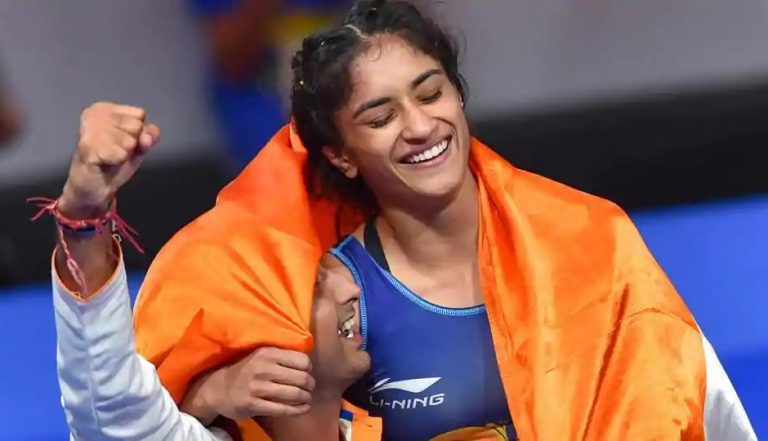
First ever Gold in women’s wrestling was won by Vinesh Phogat, another champion from the famous Phogat family. Rahi Sarnobat won the first ever Gold in women’s shooting for India. Saina Nehwal won the first ever medal for India in women’s badminton, quickly followed by the first ever Silver in the event by PV Sindhu.

Manika Batra became the first ever female Table Tennis player to get a medal for India as she won the Bronze in Mixed event with Sharath Kamal. Swapna Barman delivered the performance of the games by becoming the first Indian heptathlete to win a Gold while fighting severe pain in her jaw.

Neeraj Chopra got India its first ever Gold in Javelin Throw, an event where the top 4 throws were by the Indian star. Triple jumper Arpinder Singh got India Gold in Triple Jump with a jump of 16.77 Metres.

There were more firsts in Sepak Takraw and Men’s Table Tennis where India won its first ever medals. Bridge, included for the first time at the Asian Games, was also a happy hunting ground for India with 1 Gold and 1 Bronze medal.

Among these highs, there were quite a few disappointments as well though. Veteran wrestler Sushil Kumar, a huge favourite, bowed out in the first round itself. Indian Kabaddi teams missed the Gold medals for the first time since the event has been included in the Asian Games with Iran beating both men’s and women’s teams in semifinal and final respectively.

Hockey teams, after dominating the group stages, stumbled at the crucial moments to end up with Bronze in men’s event and silver in women’s event. Boxing, an event that got India 9 medals in 2010 and 5 medals in 2014, got only 2 medals this time with Amit Panghal winning Gold and Vikas Krishan having to settle for Bronze after an eye injury cut short his games.

However, there is plenty to be optimistic about as we move forward. A number of Indian youngsters made their mark at these games with Saurabh Chaudhary, Shardul Vihan, Hima Das, Pincky Balhara, Muskan Kirar all in their teens right now, and can only get better with experience.

Then there is 20 years old Neeraj Chopra who has captured the imagination of the Indians and has already become our biggest hope for that elusive Athletics medal at the Olympics, something we haven’t won as an independent nation.

There is also 16 years old Manu Bhaker, who couldn’t win a medal this time but the CWG Gold Medalist did break Games record during the qualifying round and she will be back at the next games, hopefully to win the Gold.

One can just hope that the momentum will continue and we will surge higher in the medals table as well during the next Asian Games at Hangzhou, China in 2022.

Buddhist Monk arrested in Bodhgaya for the sexual exploitation of his students

0

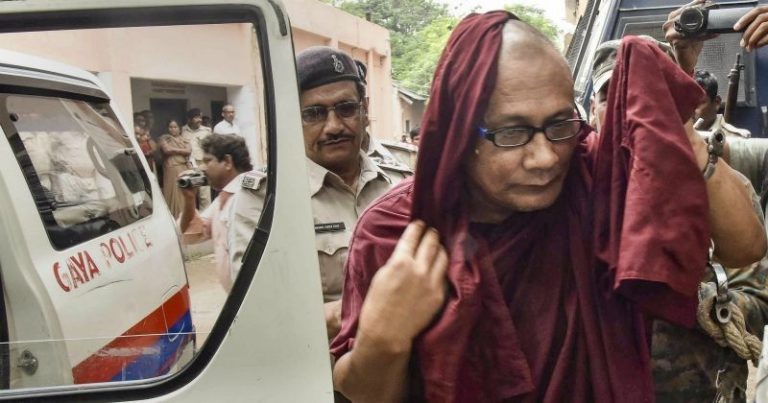
In another incident of sexual exploitation of minors, a Buddhist monk was arrested for allegedly sexually abusing 15 children, all aged between seven (7) to twelve (12), in a meditation centre at Bodhgaya, Bihar on Wednesday. Bhante Shangpriya, a Bangladeshi national, was the head monk at Prajna Jyoti Novice School and Meditation Centre.

The children were brought specially from the North-eastern states, particularly from Tripura and Assam, for training to the said Buddhist Monastery in Bihar. These children were allegedly engaged as sex workers and sent to other states, especially Kolkata to prospective clients.

The children also accused the head monk of locking them up them in a room with food and water for prolonged periods of time. They were also subjected to brutal physical punishment if they did not adhere to the Monk’s unprincipled command to join him in a nude dance at night.

The special investigation team which arrested the monk was constituted by Gaya’s senior superintendent of police (SSP) Rajeev Mishra on Thursday to probe the alleged physical and sexual abuse of 15 children at the centre. It is headed by Bodh Gaya’s deputy superintendent of police Raman Kumar Chaudhary and monitored by city superintendent of police Anil Kumar. The head Monk has been sentenced to 14-days judicial custody and has been sent to Bodhgaya Jail.

It is reported that the victim’s parents paid around 1000 rs each for their wards to come to the Monastery for schooling. Police are still searching for an individual named Arun Kumar, who is said to be instrumental in bringing the children from Assam to the Pilgrimage town.

All the children rescued are from Karbi Anglogn district of Assam, the ordeal of these child monks came to light after one child rang a former teacher in Mumbai, who then informed their parents who came to Bodhgaya and took these children to the police station.

The International Buddhist council (IBC) held an emergency meeting on Thursday in Bodhgaya and passed a resolution condemning the heinous crime against the children in the name of religious teaching.

“The district administration should initiate steps to ensure the registration of the remaining monasteries to keep a vigil on their functioning,” the secretary said.

The council’s secretary Pragya Bhante said while talking to reporters that there are more than 160 Buddhist monasteries across Bodh Gaya of which only 55 are registered either with the council or with Bodh Gaya Temple Management Committee (BTMC). The council also resolved to extend its cooperation to the investigation team to bring out the truth.

There has been a surge of sexual abuse directed towards minors in religious institutions in the country in the recent past. We had earlier reported many such incidents around the country.

Kanhaiya Kumar to contest from Begusarai for the upcoming Lok Sabha polls

0

Kanhaiya Kumar, the controversial JNU student leader is all set to contest the next Lok Sabha elections from Begusarai of Bihar. As per reports, he will be contesting from the Communist Party of India (Marxist) as a part of ‘mahagathbandhan’ which comprises of RJD, Congress, NCP, Jitan Ram Manjhi-led HAM(S), Loktantrik Janta Dal of Sharad Yadav and all left parties. Kanhaiya Kumar comes from the Bihat Panchayat under Barauni block of Begusarai district.

Reportedly, Lalu Prasad Yadav and his son Tejashwi Yadav of the RJD have agreed to let Kanhaiya Kumar contest from the Begusarai seat, which is considered to be a Communist stronghold. It is reported that Kanhaiya Kumar will be contesting on a CPM ticket and will be endorsed as a common candidate by the grand alliance.

CPM leader Satyanarayan Singh said that Kanhaiya would be contesting from Begusarai seat. He said even Kanhaiya Kumar had given his consent to the contest from that constituency. Reportedly, there is yet to be formal talks on the issue of seat sharing. “During an informal talk, Lalu Ji himself told us to offer Begursarai seat to Kanhaiya”, Singh said.

Recently, Kanhaiya Kumar had been part of another controversy, as his close aide had accused him of being a ‘liar’ and ‘casteist’. Jayant Jigyasu, a ‘close friend’ and aide of Kanhaiya, had given a detailed account of how his concerns over the rights of backwards were sidelined and ridiculed by Kanhaiya Kumar over the years.

We had earlier reported that how Kanhaiya Kumar had used a disreputable journal, which is blacklisted internationally, to get his article published for PhD thesis submission.

Pentagon to cancel $300 million aid to Pakistan for its failure to curb Islamist terror

0

In yet another setback for Pakistan, the Pentagon has sought the US Congress to reprogram $300 million of its Coalition Support Fund (CSF) for Pakistan because of Pakistan’s failure to act decisively in support of the US South Asia Strategy.

The United States has been pushing Pakistan for a long time now, to crack down on safe havens for terrorists operating inside the country. It had also announced a freeze on the aid at the beginning of the year, which is reported to be worth almost $2 billion.

The US believes that Pakistan’s Inter-Services Intelligence (ISI) agency and other terrorist groups have been influential in the region. The White House believes that ISI has been providing support through the supply of arms and funds to terrorists not only for ideological reasons, but also to counter the rising Indian influence in Afghanistan.

Jim Mattis, the Defence Secretary has refused to give any necessary certification to the Congress for authorisation of these funds, as the US believes that Pakistan has failed to take any concrete measures against terrorist groups like Haqqani network and Lashkar-e-Taiba.

“Due to a lack of Pakistani decisive actions in support of the South Asia Strategy, the remaining $300 million (actually $323.6 million to include non-Pakistan funds) was reprogrammed by DoD in the June/July 2018 time frame for other urgent priorities before the funds expire on September 30, 2018,” Pentagon Spokesman Kone Faulkner told PTI.

“This is not a new decision or a new announcement. In 2018, the DoD Appropriations Act, published on March 23, 2018, you can find the verbiage detailing $500M was rescinded by Congress upon the 2018 DoD Appropriations Act’s passage which is all public,” he said. He further added that the United States would continue to press Pakistan to indiscriminately target all terrorist groups, including the Haqqani Network and LET in the region.

Since Donald Trump took over as the President of the United States, it has been more aggressive in its approach towards South Asia, especially Pakistan. The Trump administration has started substantially cutting down the aid Pakistan used to receive under its Coalition Support Fund (CSF). Earlier in August, the Trump administration had suspended more than a decade-long military training programme of Pakistani personnel at US institutions.

Reportedly, Pakistan has received more than $33 billion as assistance from the United States since 2002, of which it has received $14 billion alone in the form of CSF, a US Defence Department to reimburse allies who have supported the US in counterinsurgency operations.

FIR filed against Robert Vadra in the Gurugram land deal case

0

A fresh FIR has been lodged against Congress President Rahul Gandhi’s brother in law Robert Vadra, former Haryana chief minister Bhupinder Singh Hooda and others for alleged irregularities in the land deals in Gurugram. The case was filed after a resident of Rathiwas village in Gurugram, one Surendra Sharma, filed a complaint alleging huge losses to the exchequer because of the deal. Sharma has alleged that Vadra’s company Sky Light Hospitality, with a registered capital of Rs. 1 lakh in 2007 and 2008, bought 3.5 acres of land in Shikohpur village (now sector 83) from Onkareshwar Properties for Rs. 7.5 crore.

Vadra has been under the cloud of controversy since the shady land deals in Haryana and Rajasthan have emerged. Earlier, Rajasthan government had ordered probe in the land deals and had even recommended a CBI probe in the controversial land deals executed by a company allegedly owned by Vadra.

In December last year, the ED had arrested two people in the Bikaner land scam case involving Vadra under the Prevention of Money Laundering Act. The ED had registered a criminal complaint regarding the matter in 2015 after taking cognisance of state police’s FIR based on local tehseel’s allegations of a forgery in the Skylight’s purchase of 275 Bigha land in Bikaner’s Kolayat area. Earlier this year, the ED had attached land of one Jaiprakash Bagarwa, who is believed to be a close aide of Vadra.

Meanwhile, Robert Vadra has defended himself by claiming the FIR against him is because of ‘election season’ and it is to divert the attention from increasing oil prices by bringing in a ‘decade old’ case.


The case has been registered under various sections like IPC 120-B (Criminal Conspiracy) , 420 (Cheating), 467 (Forgery), 468 (Forgery for purpose of cheating) , 471 (using as genuine a forged document) and Section 13 of Prevention of Corruption Act, 1988 (Criminal Misconduct by a public servant) in Khedki Daula police station of Haryana.

India signs agreement with Nepal to help build Kathmandu-Raxaul railway link

0

India has agreed to build a rail link between Nepal’s capital Kathmandu and Bihar’s Raxaul, which is close to Nepal’s border. According to reports, this move is to facilitate smoother passenger and cargo movement between the two countries.

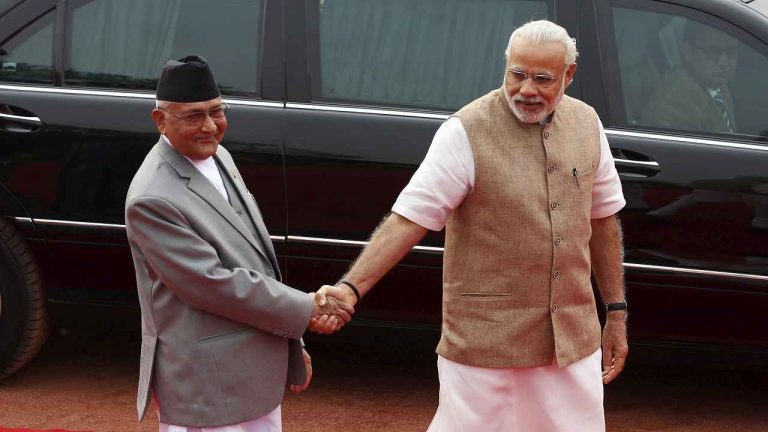
On Friday an agreement was signed between Manjeev Singh Puri and secretary of Nepal’s physical infrastructure ministry. The MoU was signed in presence of PM Modi and his Nepalese conterpart KP Sharma Oli. The agreement was signed on the sidelines of the BIMSTEC summit. This was the third meeting between PM Modi and KP Oli in 2018.


India’s Konkan railways corporation Ltd will conduct the preliminary engineering and traffic survey of the planned 130 km line. The Indian embassy in Nepal reportedly informed in a released statement that The planned line will connect Indian border town of Raxaul, Eastern Bihar to Nepal’s capital Kathmandu.  The planned rail track when completed will become the second rail track within the landlocked country. The only existing rail track is one 35 km stretch in its southern plains. It is notable here that nepal is land-locked and has a difficult himalayan terrain. China is also reportedly trying to lure Nepal with a rail link project.

The funding and the construction plans of the proposed rail line will be finalized after the Konkan railways submit their survey report. Two-third of the all the trade from Nepal is reportedly routed through Raxaul and for cargo, trucks are mostly used. The proposed rail link is expected to not only facilitate trade and trasport between the two neighbors but also  help to further cement healthy bilateral relationships.

In his last visit to Nepal in may, PM Modi had announced a special bus service from Janakpur to Ayodhya. He had also announced that India will link the Janakpur dham temple, which is revered as the birthplace of Sita to its list of tourism plan under the Ramayana circuit.